Coffee Table for Couch with Chaise: A Sizing Guide

A lot of living rooms hit the same snag. The chaise sectional fits, the rug fits, then the coffee table goes in and suddenly the room feels clumsy. Knees hit corners, the walkway near the chaise gets pinched, and the person on the main cushion has to lean too far forward just to set down a drink.
Most sizing advice misses the issue. A coffee table for a couch with chaise should not be planned like it's sitting in front of one long straight sofa. The chaise changes the room. It creates one active seating line and one extension that affects traffic, reach, and sightlines. That's why so many first picks look right in a photo and feel wrong in daily use.
At Gates Home Furnishings, that practical approach has mattered since Est. 1946, when George Gates built the business around “Service and Value.” That still holds up. Good furniture isn't just about style. It has to work when somebody kicks their feet up, walks past the chaise, and uses the room every day.
Why Chaise Layouts Change the Coffee Table Rules
You see this happen in real living rooms all the time. A family buys a sectional with a chaise, then drops in a coffee table sized for the full footprint. On day one, it looks balanced. By day three, everyone is reaching too far from the upright seats, and the walkway beside the chaise feels crowded.
The chaise is not the sizing anchor
The chaise changes how the room works, but it should not control the coffee table size.
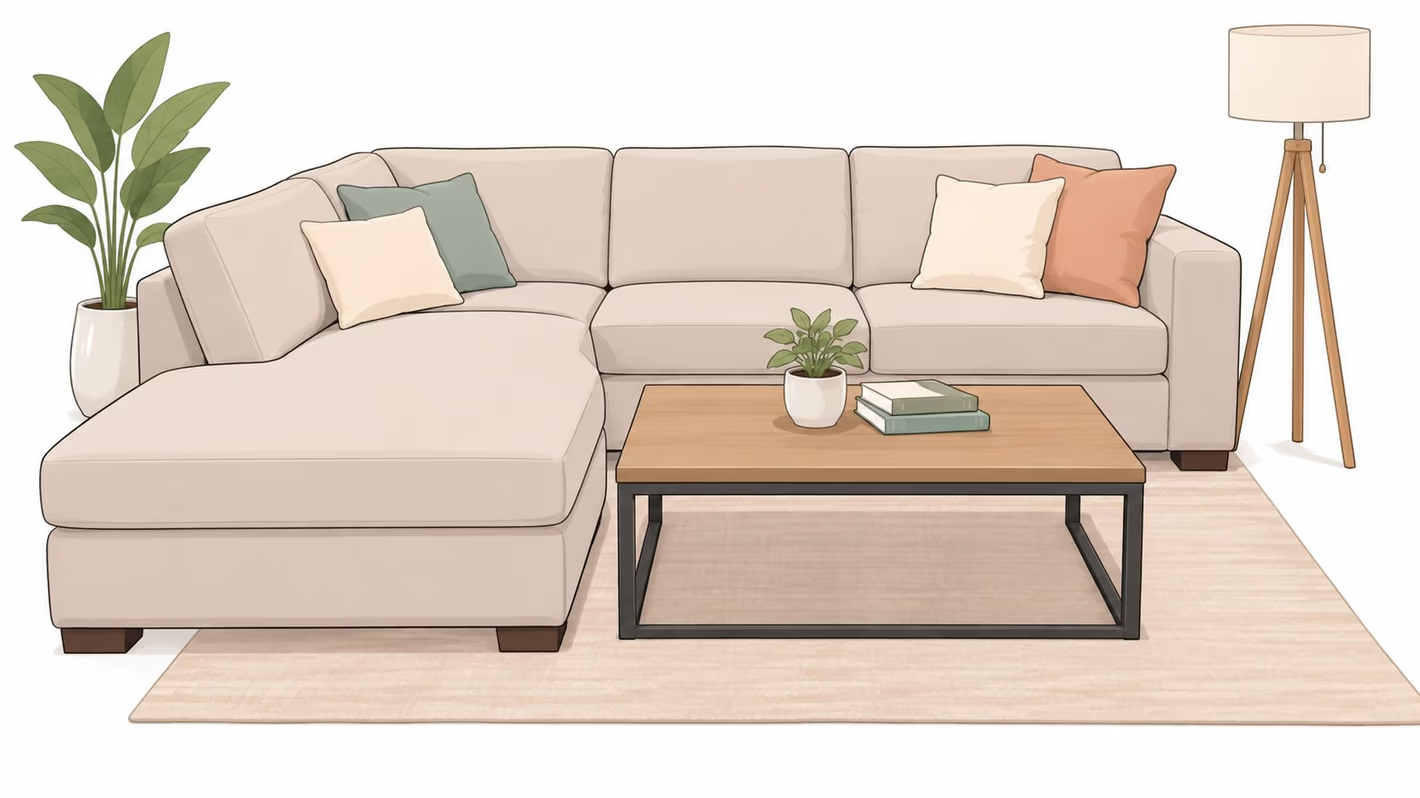
The usable zone is the open seating line. That is where people sit upright, talk, eat, set down a mug, and reach for the remote. The chaise is an extension for lounging, not the center point for table placement. If you size and center the table to the chaise, the table shifts away from the seats that need it most.
That is the rule to remember. The coffee table should serve the open seating line, not the chaise itself.
What goes wrong in real rooms
A chaise pulls your eye outward, so people assume the table needs to fill that extra visual space. That instinct causes trouble. A longer or deeper table usually pushes into the traffic path near the chaise and leaves the main seat with the worst reach.
The common mistake is simple. Shoppers treat the sectional like one big rectangle when it really behaves like a straight sofa with a side extension.
Center the table on the full L-shape, and the room gets clumsy. The person on the main cushion has to lean forward or sideways to use the table comfortably. The person walking past the chaise has less room to move. The layout looks even on paper and feels off in daily use.
For shoppers comparing sofa shapes first, the same principle shows up in this guide on what you should know before buying a sectional. The seating shape has to lead the table choice. If you get that part right, the rest of the layout gets much easier.
Measure the Seating and the Room First
You get home with a coffee table that looked right in the store, set it in front of the sectional, and now the chaise walkway is pinched and the main seat still has a bad reach. That usually happens because the room got measured like one big L instead of a straight seating line with a side extension.
Start at the spot people use. Measure the straight run of seats from arm to arm, or across the main back cushions if the arms flare out. Use that number to judge table length. The chaise does not belong in that calculation because the table is there to serve the open seating line.
Then measure the room around that seating line. You need the distance from the front edge of the main seat to the next obstacle, whether that is another chair, a media console, or a fireplace hearth. That dimension decides how much table depth the room can handle without making the whole setup clumsy.
Leave the right clearance. A coffee table usually works best with about 16 to 18 inches between the table and the main seat edge. Once that gap gets much wider, people stop using the table comfortably. The traffic path by the chaise needs its own protection too. Leave enough open floor for a real walkway, roughly 30 inches where people regularly pass.
That last measurement matters more than shoppers expect.
A chaise makes the room look like it has more usable floor than it really does. It doesn't. The part that gets crowded first is usually the pass-through beside the chaise, not the space in front of it.
Use this checklist before you shop:
- Main seating length: Measure only the straight seating run.
- Chaise projection: Measure from the inside corner to the end of the chaise.
- Open floor depth: Measure from the main seat edge to the next obstacle.
- Walkway beside the chaise: Measure the pass-through and protect enough space for easy movement.
If you want a clean way to map the room before you start comparing sizes, use this guide to measuring furniture for your space.
Pick the Shape That Fits an L-Shape Seating Line
You feel a bad coffee table shape right away. Your knees catch the corner, the walkway by the chaise tightens up, and the table ends up serving the wrong seat.
With a chaise sectional, the open seating line is the target. The chaise is the extension. That one distinction clears up a lot of bad table choices.
Rectangles work best in long, open setups
A rectangular table earns its keep when the straight sofa run is long enough to support it and the room has enough depth in front of the main seats. Set it parallel to that main seating line. That is the working edge people use for drinks, remotes, and conversation.
Do not aim the table at the chaise. Once a rectangle starts filling the inside corner of the L, it stops helping and starts blocking movement.
Round and oval shapes fix tight layouts fast
If the room feels pinched, stop forcing a rectangle into it. A round or oval table usually handles a chaise layout better because it keeps the path cleaner and softens the turn around the corner of the sectional.
Round tables are especially useful when the chaise sits close to a traffic lane. Oval tables keep some of the usable length of a rectangle without putting a hard corner in the wrong place.
Pick the shape by the problem you need to solve
| Shape | Best Chaise Layout | Watch Out For |
|---|---|---|
| Rectangle | Long open seating run with decent floor depth | Can crowd the chaise walkway |
| Round | Tight rooms and busy pass-through spaces | Less usable edge length for trays or laptops |
| Oval | Rooms that need softer corners but still want length | Can still feel oversized if too deep |
| Square | Compact loveseat-and-chaise setups | Looks too stubby in front of a longer sectional |
| Nesting | Mixed use rooms where reach and floor space need to flex | Can look messy if pieces drift out of place |
A chaise throws off symmetry. The table shape should settle the room down and serve the seats people use upright.
If you want a quick visual for how shape changes movement and reach, this guide to table shapes and seating arrangements applies surprisingly well beyond the dining room.
Match Height, Material, and Durability to Daily Use
A chaise fools people here. They sit back on the long cushion, see all that extra depth, and buy a table that is too tall, too delicate, or too far out in front to use comfortably from the actual seating line.
Height should follow the main seat
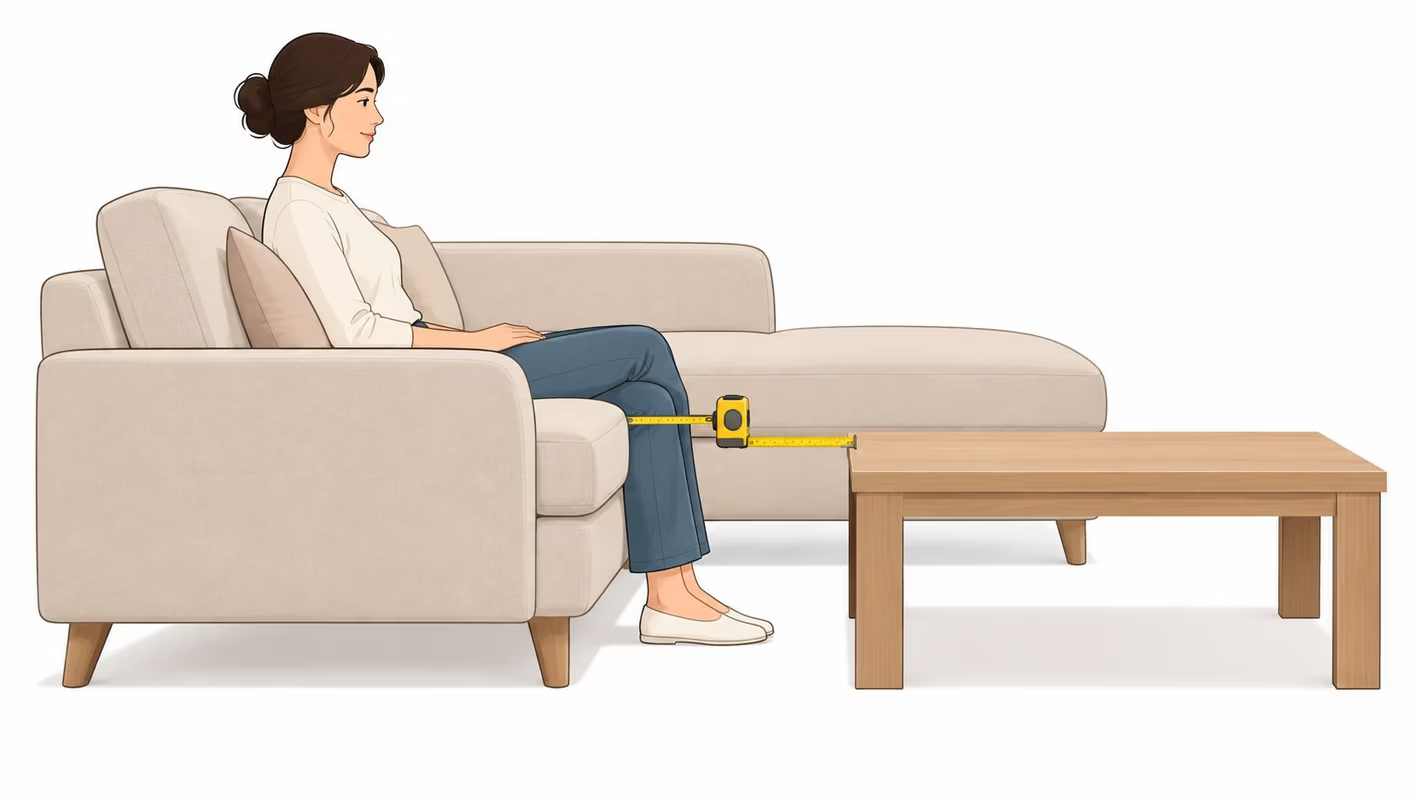
Set coffee table height by the upright seat cushions, not the chaise pad. The chaise is for stretching out. The open seat line is where people set a drink, reach for the remote, or rest a plate without sitting forward awkwardly.
A table that lands around seat height, or a touch lower, usually feels right. Go too high and it starts acting like a dining surface. Go too low and everybody has to bend and reach more than they should. In a chaise setup, that gets old fast because the table already tends to sit slightly off center to serve the open side of the sectional.
Pick materials by how your house actually runs
Daily use should decide the build.
- Solid wood: Best for long-term wear, repairs, and a warmer look that can handle real living.
- Metal base: Good for easy cleanup and a lighter profile under a bulky sectional.
- Glass top: Best only if the room feels visually heavy and you are willing to keep up with fingerprints and smudges.
- Upholstered storage ottoman: Smart for homes with young kids, hard shins, and a lot of casual lounging.
If you are comparing wood builds, this solid wood vs. veneer guide clears up what changes in durability, repairability, and price.
Durability shows up fastest on the chaise side
The chaise user reaches from an angle, shifts weight sideways, and tends to pull a table closer if it is not planted well. That exposes cheap construction immediately.
Check these details before you buy:
- A stable base: It should stay put when someone leans in from the corner seat or chaise edge.
- Levelers: Helpful on older floors and worth having on any four-leg table.
- A finish that hides daily wear: Blankets, trays, feet, and pet claws all find the coffee table.
- Softened corners: Better in tighter layouts where traffic passes the front corner.
- Enough weight to stay put: A table should not scoot every time somebody props up their legs.
At Gates Home Furnishings, shoppers usually figure this out the right way. Sit in the main seat first. Then check the reach from the inside corner and chaise edge. If the table works only for the chaise lounger and not for the people sitting upright, it is the wrong table for that sectional.
Static Storage or Nesting Tables for Chaise Setups
A chaise changes how people use the table. The lounger wants a surface nearby, but the table still has to serve the upright seats first. That is the part many shoppers get wrong.
Start with this rule. Buy for the open seating line, not for the chaise cushion. The chaise is an extension. It should not bully the whole table choice.
Three options that solve three different problems
A static coffee table works best when you want one dependable center surface and the room is tight enough that extra pieces would clutter the path. A storage ottoman or lift-top table makes more sense when blankets, remotes, and chargers pile up near the main seats. A nesting set earns its keep when the chaise projects into open space and one person regularly wants a pull-close surface without dragging the whole table out of position.
Here is the practical breakdown:
| Feature | Static Table | Storage Ottoman or Storage Table | Nesting Set |
|---|---|---|---|
| Best for the main seating line | Strong | Good | Good |
| Best for the chaise user | Fair | Fair | Strong |
| Flexibility when guests spread out | Limited | Moderate | High |
| Hidden storage | Some models | Strong | Limited |
| Easy to keep centered in the room | Strong | Strong | Moderate |
| Best fit for open traffic around the chaise | Fair | Fair | Strong |
The blunt recommendation
Choose a nesting set if the chaise sits on the open side of the room and people walk around it. You can keep the larger table centered where the seated conversation happens, then pull the smaller piece toward the chaise when somebody stretches out.
Choose one static storage table if the room is compact and daily clutter is a problem. A single piece usually looks cleaner, stays put better, and avoids the scattered look that small movable tables can create in a tight layout. If you want hidden storage, these coffee tables with storage for living rooms fit chaise sectionals well because the mess usually collects closest to the main seats, not out at the chaise tip.
Skip oversized square tables in most chaise layouts. They eat walkway space and over-serve the chaise side while leaving the upright seats reaching too far.
Style the Table Around the Chaise Extension
A chaise should read like part of the room, not like a furniture add-on stuck to one side. Styling helps, but only if the table stays loyal to the main seating line.
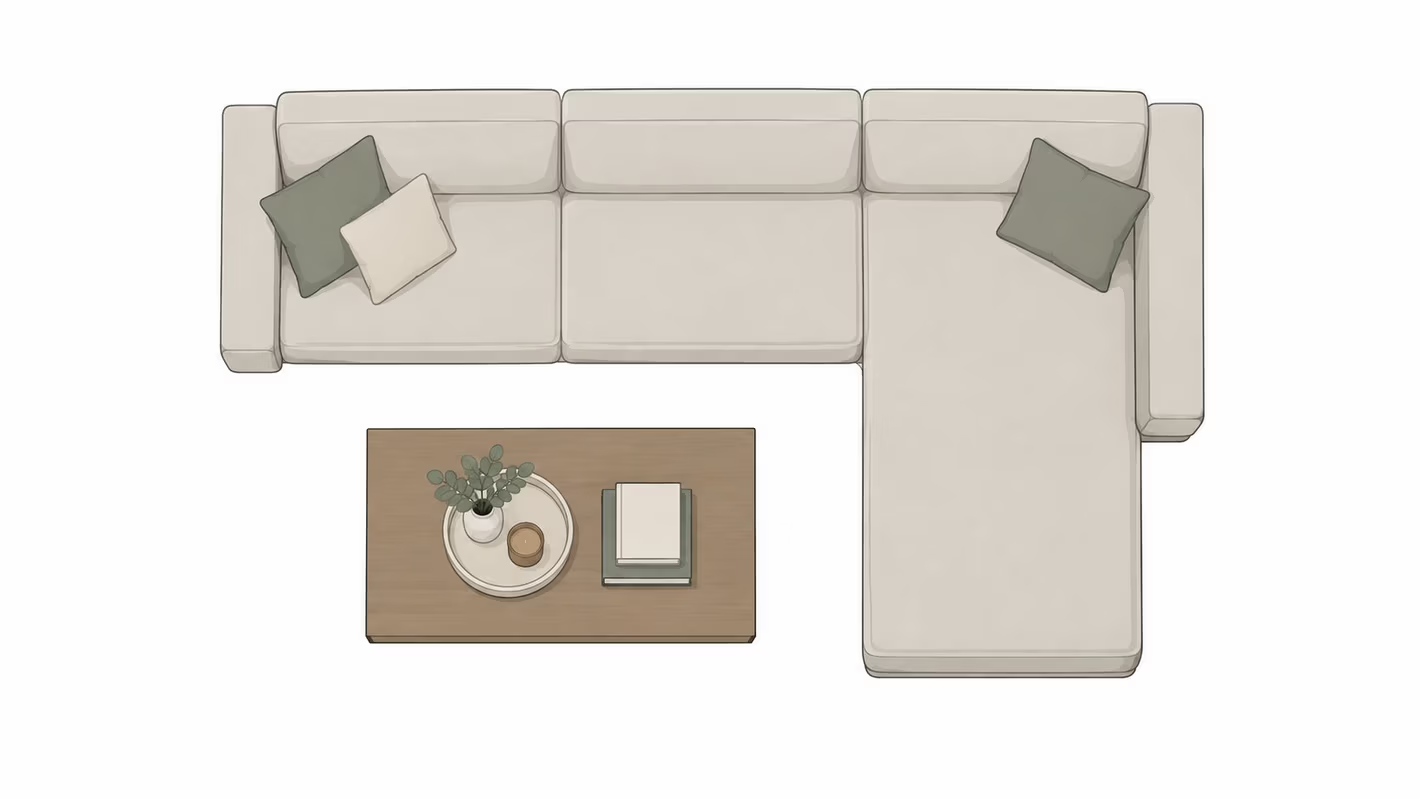
Style from the sofa run, not from the chaise tip
Center the biggest tray, stack of books, or vase to the straight sofa run. That keeps the room balanced. If decor gets pulled toward the chaise end, the whole layout starts looking lopsided.
The visual fix is simple:
- Keep the heaviest object centered to the main seat line.
- Use the chaise side for support pieces like a slim side table or floor lamp.
- Let the rug unify the L-shape so the coffee table doesn't have to do all the visual work.
For walls behind a sectional, oversized art can help tie the longer line and the chaise extension together. A useful place to look for ideas is large canvas art for living room, especially when the chaise wall needs scale without crowding the furniture.
Two room examples that make sense
In a 12 by 14 living room, a left-facing chaise usually looks cleaner with a 36-inch oval table centered on the main sofa run. The oval keeps corners out of the walkway and still gives enough usable top for daily living.
In a 14 by 16 room with a right-facing chaise, nesting tables often make more sense. One stays in front of the main cushion line. The second can slide toward the chaise arm when somebody wants a laptop, book, or drink nearby.
See It in the Showroom Before You Decide
Bring your main-seat width and chaise projection, then test reach from all three seats before you buy.
A chaise room can look right on paper and still feel wrong the second you sit down. The mistake I see all the time is shoppers checking the table from the chaise and ignoring the open seating line. Do the opposite. The chaise is the extension. The table has to serve the people sitting along the main sofa run, because that is where the shared use happens.
Test it like it will be used at home
Sit in the inside corner, the middle seat, and the seat farthest from the chaise. Set your hand down the way you would at home for a drink, remote, or plate. If one person has an easy reach and the other two have to lean, the table is off center, too deep, or the wrong shape.
Then stand up and walk the path along the chaise side.
That quick walk tells you more than a tape measure. You will notice fast if a square corner clips the traffic lane, if an oval keeps the path cleaner, or if nesting tables give you better flexibility than one fixed piece.
A 30,000 sq. ft. showroom in Grants Pass helps because you can test those clearances with full sectional layouts instead of guessing from a tag or a website photo. Shoppers from Grants Pass, Medford, Central Point, Ashland, and the Rogue Valley can sit, reach, and walk the setup before making the call.
Why seeing materials in person still matters
Finish photos flatten texture and scale. In person, you can tell whether a top will show every fingerprint, whether a sharp corner feels risky in a tight chaise walkway, and whether the base leaves enough foot room for the seats that use the table most.
That matters more with chaise sectionals than with straight sofas. The table is rarely viewed head-on from one perfect spot. You see it from the main sofa run, from the corner, and from the open side of the room. A piece that looks balanced from one angle but heavy on the chaise end usually feels wrong at home too.
Gates also makes the practical side easier. Gates Easy Pay offers $0 down, 6-month interest-free, and no-credit-needed options. White-glove delivery includes professional assembly, and mattress haul-away is available when that is part of a larger room update.
Since 1946, that has been the point. Practical help, honest fit checks, and furniture that works in a real living room.
For shoppers in Grants Pass and across Southern Oregon, Gates offers sectionals, coffee tables, storage pieces, and Unique Finds that make a chaise layout work in real life, not just in a staged photo. The 30,000 sq. ft. showroom gives buyers room to test reach, height, and walkway clearance before committing, and the team handles white-glove delivery and flexible Gates Easy Pay options after the decision is made. Visit Gates Home Furnishings to compare coffee table options for a couch with chaise in person or browse the collection online.