Natural Wood Finishes a Practical Guide for Real Homes


A lot of shoppers stand in front of a dining table and think they're choosing a wood. Most of the time, they're really choosing a finish.
In a showroom, that moment usually looks simple. One table has a soft matte surface that shows every pore and grain line. The other has more shine and looks a little sleeker from across the room. But the bigger difference doesn't show up until a year later, when one top has blended in family wear gracefully and the other makes every scratch stand out.
That's why natural wood finishes deserve a more practical conversation. For most homes in Grants Pass, Medford, Central Point, Ashland, and across the Rogue Valley, the question isn't whether a finish looks natural on day one. It's whether that finish matches the room, the wear, the indoor air concerns, and the kind of maintenance a household will keep up with.
Why the Finish on Your Furniture Matters More Than You Think
A couple stands in front of two dining tables. One is teak with a hand-rubbed, matte surface. The other has a glossier top that looks crisp under the lights. They both look good. They won't live the same life.
The finish decides how a table feels under a hand, how it reacts to a wet glass, and how it wears after years of weeknight dinners, elbows, school projects, and coffee cups. Wood species gets the spotlight, but the finish is the working layer that takes the abuse every day.
The finish is what your family actually touches
A natural-looking finish often lets more of the wood's character show through. The U.S. Forest Service notes that penetrating finishes create a more “natural” look because they let more of the wood show, while also warning that the more natural a finish is, the less durable it generally becomes in service (Forest Service guidance on wood finishes).
That trade-off matters in real homes. A finish can make scratches less obvious, or it can turn every ding into a bright visual line. It can allow a quick touch-up, or force a full strip-and-refinish job.
Practical rule: When shoppers say they want a table that “ages well,” they're talking about finish behavior, not just wood color.
A good natural finish works with the wood, not against it
Penetrating systems such as oils and hardwax oils soak into the wood instead of sitting only on top. That's why they often look softer and feel warmer. They also tend to be easier to spot repair than thick film finishes, which is one reason many households prefer them on dining furniture and statement pieces.
For anyone trying to avoid the usual cycle of scratches, rings, and panic, the better place to start is a care plan, not a color sample. This guide to protecting wood furniture from scratches and stains is a useful companion if the piece is already in the home.
Long-term choices beat showroom-first choices
A finish isn't an afterthought. It's a maintenance contract you sign with your furniture.
That practical mindset has shaped Gates since Est. 1946, when George Gates built the business around his promise of Service and Value. In a real furniture store, good advice starts with how a piece will live in a house, not how it photographs under bright lights.
What Counts as a Natural Wood Finish
“Natural” gets used like it means one thing. It doesn't. In furniture, it usually refers to finish families that highlight visible grain and avoid the thick, plastic-like look many buyers want to avoid.
Historically, natural finishes became especially important in the late 1930s, when interest grew around preserving the brown and red tones of woods like western redcedar and redwood instead of covering them up. That same historical record also shows the meaning shifted over time toward finishes that protected wood while still leaving grain and color visible (Forest Products Laboratory history of natural finishes).
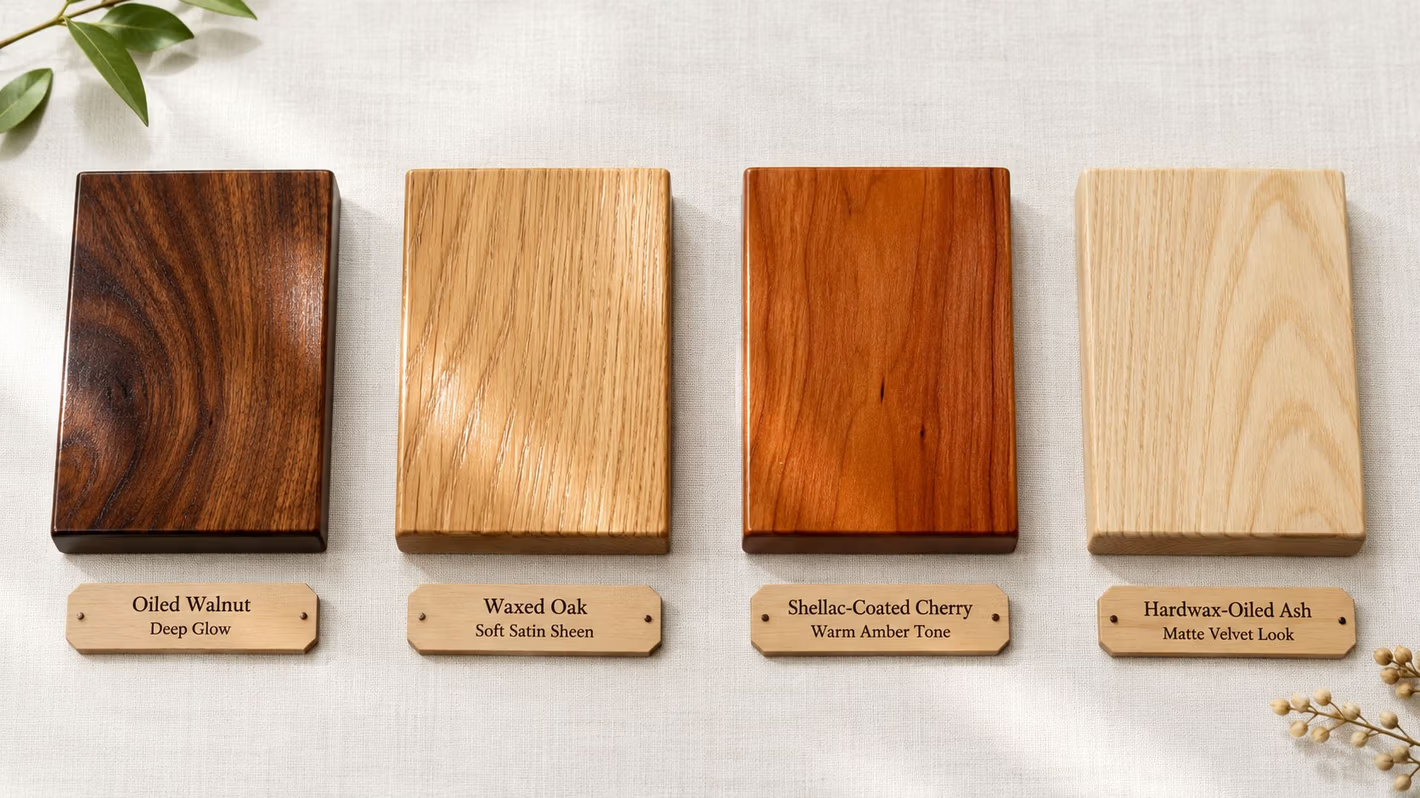
Four finish families shoppers see most often
Drying oils
Think of oils as something the wood drinks. Linseed, tung, and Danish-style oil blends soak into the fibers and deepen color. They usually leave an in-the-wood look instead of a built-up coat.
Waxes
Wax acts more like a thin skin on the surface. Paste and liquid waxes can soften sheen, add a silky touch, and slightly help with minor moisture exposure. By themselves, they aren't the first choice for hard daily wear.
Shellac
Shellac behaves more like a clear envelope. It forms a film rather than disappearing fully into the grain. It's often chosen when someone wants warmth and a classic furniture glow.
Hardwax oils
Hardwax oils combine both ideas. Part of the finish penetrates, and part stays near the surface as a protective layer. That hybrid behavior is why so many buyers confuse them with simple oils when they perform differently.
Why they all get called natural
They're grouped together because they usually preserve visible wood character better than heavy film finishes. But they're not interchangeable. The look might be similar from a few feet away, while the care routine is completely different.
That distinction also matters when people compare solid wood furniture with veneered construction, because the finish can change how each surface ages and how repairs are handled. A simple primer on solid wood vs veneer helps clarify what the finish is sitting on top of.
For households shopping for nursery pieces or family furniture, it also helps to read through guidance on safe wood finishes for kids, especially before assuming “natural” automatically means low exposure or low odor.
Oils Waxes Shellac and Hardwax Oils Compared
Most finish guides sort products by ingredients. Buyers do better sorting them by daily-life questions. How does it look after six months. What happens after a water ring. Can the spot be repaired without starting over.
Natural Wood Finishes at a Glance
| Finish Family | Appearance | Durability | Repairability | Indoor-Air Impact | Maintenance |
|---|---|---|---|---|---|
| Oil | Matte to low sheen, very close to raw wood | Modest protection, especially against spills and impact | Usually easy to refresh locally | Depends on formula and cure behavior | Regular refresh coats |
| Wax | Soft sheen, silky feel | Light protection, weaker against water and heat | Easy to rebuff and reapply | Varies by product, often mild but not zero-emission by default | Frequent upkeep |
| Shellac | Warm glow, more built surface than oil | Fair in gentle settings, weaker against heat and alcohol | Repairable, but sensitive in daily dining use | Depends on solvent and curing conditions | Moderate upkeep |
| Hardwax Oil | Matte to satin, natural grain with a bit more body | Better balanced for family use | Strong spot-repair advantage | Depends on formulation, still needs cure time and ventilation | Periodic refresh, less constant fuss |
Appearance and wear pattern
Oil gives the most “bare wood but better” look of the four. It enriches the grain without making the surface look coated. That's ideal for people who dislike shine.
Wax softens light and adds touch appeal, but it can dull or mark sooner in hard-working spaces. Shellac looks warmer and more formal. Hardwax oil usually lands in the sweet spot, still natural-looking, but with a little more visual finish and better day-to-day control.
Durability and repairability
Buyers should slow down. Natural oil and hard-wax oil finishes are penetration-based systems rather than film-forming coatings, so scratches are often less visually obvious than on polyurethane. The trade-off is lower impact protection because the wood itself remains less shielded. That makes them especially useful when spot repair matters and a full strip refinish would be overkill (penetrating finish trade-offs in practical furniture use).
Shellac repairs fairly well, but it's less forgiving around heat and alcohol exposure. Straight wax is easy to freshen, but it's not the finish to trust on a busy kitchen table.
On active furniture, the best finish isn't the one that hides life forever. It's the one that can recover gracefully after life happens.
Indoor-air behavior and maintenance rhythm
“Natural” does not automatically mean zero emissions. Recent built-environment research notes that conventional solvent-heavy finishes can emit high VOCs, but plant-based oils and waxes can also release biogenic VOCs such as terpenes and aldehydes. The same conference materials cited findings of aqueous acrylic coatings around 150–400 µg/m³ TVOCs after 28 days, UV-cured coatings often below 100 µg/m³, and measurable emissions from plant-based oils and waxes as well (built-environment review of finish emissions).
That means the useful question isn't “natural or not.” It's this:
- Bedroom furniture: lower odor during cure may matter more than maximum impact resistance.
- Dining surfaces: repairability and spill response usually matter more.
- Family-room pieces: the best fit is often the one a household will maintain.
If the piece is teak, maintenance choices get even more specific. A basic overview of how to restore teak helps separate weathering from finish failure.
Matching the Finish to the Room and How You Live
The right finish depends less on style labels and more on traffic, spills, sunlight, and household habits. A finish that feels perfect in a guest room can feel fussy in a kitchen by month two.
Recent market coverage points in one direction aesthetically. Natural oak, walnut, honey, and medium-brown tones are rising, matte and satin sheens are preferred because they reduce glare and hide wear better, and buyers want wood to “look like real wood,” including visible variation and texture (wood finish trend coverage for 2026). That still leaves the practical question unanswered. Which finish belongs in which room.
Natural Finish Recommendations by Room and Use Level
| Room / Piece | Recommended Finish | Why It Works | Typical Refresh |
|---|---|---|---|
| Guest bedroom dresser | Oil or light hardwax oil | Soft look, easy upkeep in a low-traffic setting | As needed when the surface looks dry |
| Primary bedroom nightstand | Hardwax oil | Better around water glasses and daily handling | Periodic refresh |
| Family-room coffee table | Hardwax oil | Better balance of ring resistance and spot repair | Occasional maintenance coat |
| Sideboard or console | Oil or hardwax oil | Preserves grain and handles moderate contact well | Light refresh when wear shows |
| Daily-use dining table | Hardwax oil | Better suited for spills, wiping, and repeated use | Scheduled upkeep |
| Entry bench | Hardwax oil | Handles touch, bags, and seasonal moisture better than straight wax | Occasional maintenance coat |
| Decorative accent piece | Wax over oil, if low use | Strong tactile appeal, softer look | More frequent rebuffing |
A room-by-room way to think
Low-traffic bedrooms and guest spaces can live happily with a simpler oil or oil-wax look. Those pieces don't see the same constant wipe-down cycle as a dining top.
Family-room pieces need a different standard. Coffee tables and sideboards collect cups, remotes, snack plates, and sunlight. Hardwax oil usually gives the better balance there because households can refresh a worn patch without turning the job into a full refinishing project.
The room should pick the finish
Bathrooms, covered outdoor spaces, and entry areas in Southern Oregon add their own twist. Seasonal humidity shifts, wet jackets, and warmer indoor heat can expose weak finish choices quickly.
Showroom shortcut: Pick the finish for the life the piece will live, not the look it had under display lighting.
That's especially true in a 30,000 sq. ft. showroom, where a surface may look calm and perfect until someone pictures it next to kids' homework, takeout containers, or a sunny window facing the Rogue Valley afternoon.
Why Reclaimed Wood and Teak Deserve a Natural Finish
Reclaimed wood and teak already arrive with a story in the grain. Old nail marks, checking, tonal variation, mineral streaks, and age-darkened texture aren't defects to hide. They're the reason people fall for the piece in the first place.
That's why thick, plastic-looking topcoats often feel wrong on these woods. They can mute the texture that makes them interesting, and when they fail, they tend to fail visibly.
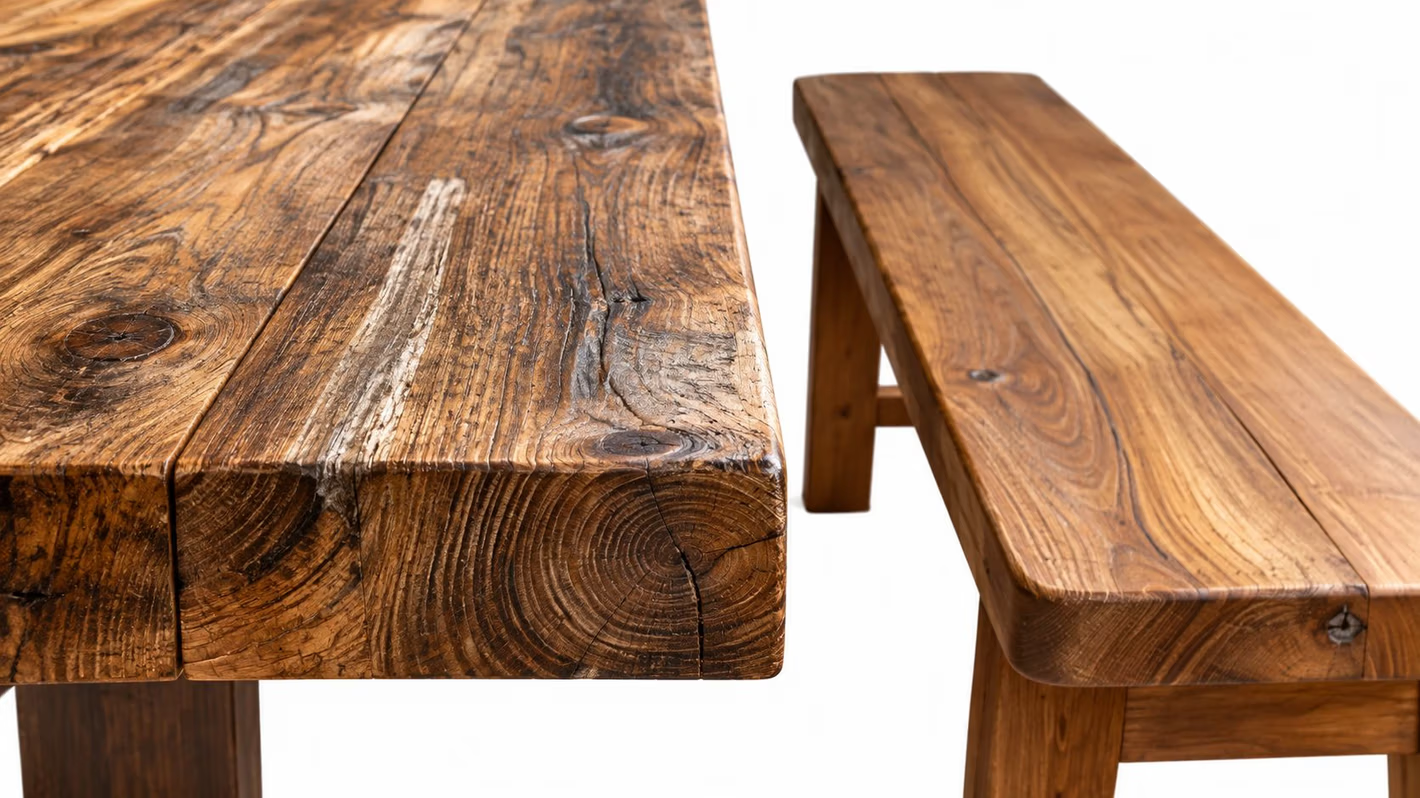
Reclaimed wood benefits from a finish that respects patina
Reclaimed wood furniture can help reduce deforestation and lower the energy used in lumber processing because it reuses existing material instead of requiring fresh timber harvests. It's also described as reducing transportation fuel use and keeping usable lumber in service rather than cutting down young, healthy trees (reclaimed wood sustainability overview).
A penetrating finish suits that ethic well. It enhances grain and lets the piece continue to age naturally, instead of trapping all that history under a thick visual shell.
Teak is the clearest example
Reclaimed teak has an especially strong case for natural wood finishes because the wood itself is naturally dense and durable. Its natural oils and silica are widely noted for helping it resist moisture, rot, insects, fungi, and warping, while reclaimed sourcing reduces pressure on forests by repurposing old structures.
For outdoor-adjacent styling ideas, seeing how teak is used in a cushioned arm chair for patios can help homeowners picture how the wood's texture works with softer materials.
Why these pieces stand out in a showroom
Unique Finds matter. Reclaimed wood, teak, and one-of-a-kind statement pieces don't compete on sameness. They compete on character. A natural finish usually lets that character stay visible.
For Southern Oregon shoppers trying to compare styles in person, browsing reclaimed wood furniture near Grants Pass can help narrow down which pieces are better candidates for an oil-forward or hardwax approach.
Applying and Maintaining a Natural Finish at Home
Natural wood finishes are manageable for a careful homeowner. Most jobs don't require a spray booth or a truckload of specialty gear. They require patience, clean rags, and restraint.
The biggest mistake is applying too much. With oils and hardwax oils, thin coats usually work better than heavy ones that sit on the surface and cure unevenly.
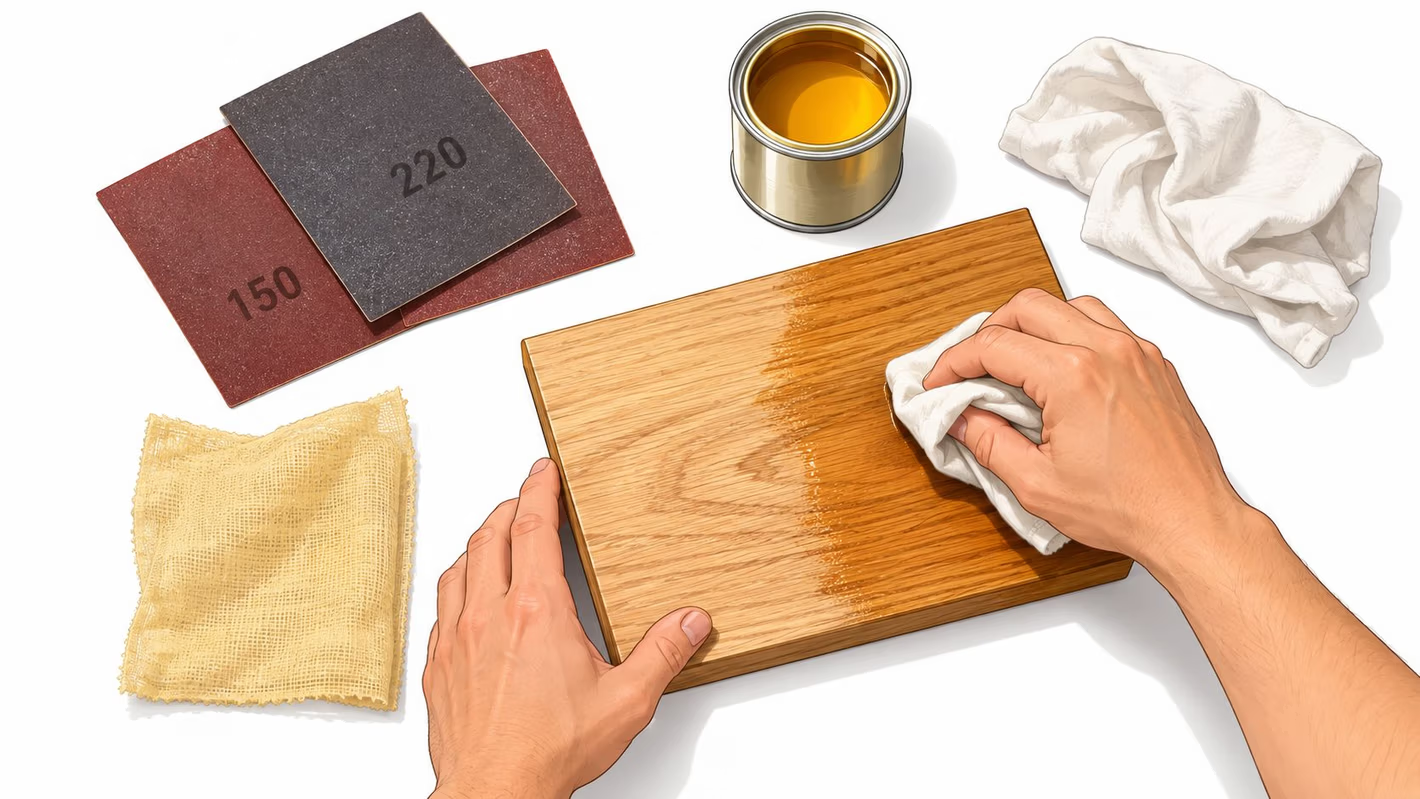
A simple home routine
- Start with surface prep: Light sanding creates an even surface and opens the wood for a more uniform result.
- Remove all dust: Dust left in the grain becomes part of the finish if it isn't wiped away thoroughly.
- Apply thin, controlled coats: Use a rag or applicator pad and work evenly with the grain.
- Buff off excess: If the surface looks wet long after application, there's usually too much finish sitting on top.
- Let cure before judging the result: Many problems come from touching, stacking, or using the piece too early.
The Forest Service's older finish research also helps explain why coat count matters so much. On ponderosa pine, a linseed-oil-based semitransparent stain showed moisture-excluding effectiveness of 62% after 1 day with one coat, 98% after 1 day with four coats, and 99% after 1 day with six coats (Forest Service finish performance data). Furniture finishing isn't identical to that test setup, but the lesson carries over. Formulation and application thickness affect performance.
Maintenance that works in real homes
Most natural-finish furniture responds well to a mild routine:
- Dust gently: A microfiber cloth handles most of the weekly work.
- Clean spills promptly: Use a damp rag with mild soap if needed.
- Skip harsh sprays: Ammonia-heavy or silicone-heavy cleaners can create headaches later.
- Refresh before failure: A light maintenance coat is easier than rescuing a neglected surface.
For anyone caring for existing tables, dressers, or teak accents, this guide on how to care for wood furniture is a practical place to start.
Myths Southern Oregon Shoppers Bring into the Showroom
The same three myths come up again and again when shoppers compare reclaimed pieces, teak tables, and matte-finish bedroom furniture. They sound reasonable. They're incomplete.

Myth one says natural means zero VOCs
It doesn't. Some natural or plant-based finishes still release odor and measurable compounds during curing. The word “natural” describes part of the material story, not the whole indoor-air story.
That matters in houses closed up for colder weather, in bedrooms, and in homes using woodstove heat where ventilation patterns change through the season.
Myth two says natural means maintenance-free
It doesn't mean that either. Oiled and waxed surfaces usually need periodic attention. The fairer way to describe them is maintainable, not maintenance-free.
That's an important distinction in Southern Oregon. Dry summers, wet fall weather, and indoor heating can all change how wood looks and feels over time. A refresh coat is normal care, not product failure.
Natural finishes ask for small, repeatable care. In return, they usually avoid the all-or-nothing drama of a failed film finish.
Myth three says matte means unprotected
A softer sheen doesn't mean bare wood. Hardwax oils and rubbed wax systems can create a genuine protective barrier while still looking quiet and understated.
That's one reason matte and satin surfaces appeal to households that want real wood character without a slick, plastic-looking top. In a furniture setting, that softer appearance often hides wear better too.
A better question to ask in the showroom
Instead of asking whether a finish is “the natural one,” shoppers get better answers when they ask:
- Where will this piece sit
- How often will it get wiped down
- Will this household do refresh maintenance
- Is low odor during curing a major concern
- Does this piece need spot repair or maximum shielding
Those questions lead to honest recommendations. They also fit the way a family-owned store should work. Since 1946, George Gates' promise of Service and Value has meant helping people choose what fits their home, not what sounds simplest on a sales tag.
See It and Feel It for Yourself
Screens flatten this whole decision. A photo can show color. It can't show whether a tabletop feels dry and grain-forward, silky with wax, or slightly more sealed under a hardwax system.
That's where an in-person visit still matters. In Grants Pass, a shopper can put a hand on two different surfaces and know more in ten seconds than they'll learn from an hour of reading product labels.
What a real comparison looks like
Inside the 30,000 sq. ft. showroom in Grants Pass, finish differences become obvious fast. A reclaimed oak dining table with a hand-rubbed surface reads differently than a more sealed dining top. A teak bench shows wear and patina differently than a smoother lacquered accent.
For shoppers from Medford, Central Point, Ashland, and around the broader Rogue Valley, that side-by-side testing is the useful part. Comfort can be tested on a sofa or mattress. Finish can be tested the same way, by touch and by light.
The furniture context matters too
Natural wood finishes don't live in isolation. They live on pieces people use every day.
A showroom that carries brands like La-Z-Boy, Flexsteel, Ashley, and Beautyrest gives shoppers context. A finish on a dining table needs to work differently than a finish on a bedroom chest or reclaimed accent cabinet. That's also where Unique Finds stand apart, especially one-of-a-kind teak and reclaimed wood pieces that won't look or wear like mass-produced boxes.
Service after the sale matters with wood furniture
Finish decisions are easier when the service doesn't stop at checkout. White-glove delivery matters because good furniture care starts with proper placement, assembly, and setup. Delivery models that go beyond doorstep drop-off commonly include in-home placement and assembly, and some also remove packaging or old items.
That's the practical difference many households want. Not boxes left on a porch. Professional setup, and in the mattress side of the store, haul-away service for the old set.
Financing matters too when the right piece is the right piece but the timing is awkward. Gates Easy Pay includes $0 down, 6-month interest-free options, and no-credit-needed options, which makes it easier to choose durable furniture without forcing a rushed compromise on materials or finish.
For reclaimed pieces especially, there's another long-view benefit. Reclaimed furniture is increasingly framed around circular-economy benefits such as waste diversion, landfill reduction, and keeping embodied carbon locked up rather than released through disposal. One source specifically notes that reclaimed furniture can keep sound lumber out of the waste stream for another generation or more (circular-economy case for reclaimed wood furniture).
A finish decision gets easier when it happens in front of an actual table, bench, or cabinet. One surface feels right. The other doesn't. That's usually the answer.
For shoppers weighing teak, reclaimed wood, or any other visible-grain piece, Gates Home Furnishings offers a practical place to compare natural wood finishes in person and see how they behave on real furniture. Visit our Grants Pass showroom to test surfaces, explore Unique Finds, and get help choosing a finish that fits the way your home lives.