Reclaimed Wood Accent Table: How to Choose One


A Saturday morning furniture search often starts with a simple problem: the sofa is in place, the lamp is ready, and the empty space beside the chair still looks unfinished. A reclaimed wood accent table seems like an easy answer until the shopper has to choose between weathered character, clean modern lines, the right height, and a price that reflects more than a distressed finish.
A good table should fit the room, feel stable, and earn its place through daily use. The showroom test matters because photographs can't reveal a wobble, a sharp knot, an awkward edge, or a finish that feels sticky under the hand. The guidance below reflects the practical questions shoppers ask while handling tables in person, not just reading specifications online.
Walking the Showroom Floor Looking for the Right Table
On a Saturday morning in the 30,000-square-foot Grants Pass showroom, a couple from Cave-Inland stopped in front of a row of reclaimed wood accent tables and pointed at the display with the familiar expression of shoppers who didn't know where to begin. They weren't looking for a statement piece at first. They wanted somewhere to set a drink, a book, and a reading lamp beside an upholstered chair.
The first test was height. They pulled a nearby chair forward, placed a hand on its arm, and compared that level with each tabletop. One table sat too low to reach comfortably. Another was tall enough for easy use but crowded the chair visually. A third table landed just below the arm and immediately felt right.
Next came the surface test. A hand moved across weathered oak, pausing at a shallow knot and an old nail hole. The knot looked like character from one direction, but its edge felt sharp enough to catch a sleeve. That table needed to be rejected, regardless of how attractive it looked from across the room.
Showroom rule: If a table doesn't feel comfortable, stable, and proportionate beside a real chair, it won't become more convincing after delivery.
Within the first ten minutes, the couple had narrowed the decision to three questions:
- Does it work with the existing upholstery? Warm wood can complement neutral fabric, while a gray or heavily distressed finish may compete with patterned seating.
- Does the shape suit the traffic path? Round tops soften tight corners. Rectangular tops offer more usable surface along a sofa.
- Does the character add value or create trouble? Nail holes, knots, and saw marks should feel intentional, not like unfinished hazards.
For broader ideas about preserving and reusing wood surfaces, shoppers can also browse eco-friendly floor restoration. Those same principles apply when evaluating a reclaimed piece, namely honest material, careful preparation, and a finish that respects the wood.
Shoppers who need a larger piece for an entryway can compare the proportions with this reclaimed wood entryway table guide before choosing a smaller accent table.
What a Reclaimed Wood Accent Table Actually Is
A reclaimed wood accent table is a small occasional table made partly or entirely from lumber that served another purpose before becoming furniture. The wood may come from an old building, beam, floor, wall, or other structure. A responsible maker cleans it, removes nails and hardware, checks for damage, cuts or re-mills the boards, and builds the table around the material's existing condition.
The supply chain resembles a thrift store for wood. Instead of receiving identical new boards, the maker sorts through pieces with different histories, colors, grain patterns, holes, saw marks, and weather exposure. One plank may show paint ghosts from a barn wall. Another may carry the dense grain and marks of an old structural beam. That history is what gives the finished table depth that new lumber can't reproduce.
Common sources include:
- Barn beams and siding, often selected for weathered surfaces, old nail holes, and visible grain.
- Industrial factory floors, which can provide dense boards with wear patterns from years of use.
- Shipping pallets, but only when the material is suitable, traceable, and safely processed for furniture.
- Wine barrels, sometimes reused for curved bases, tops, or decorative details.
- Demolition pulls from older houses, including flooring, framing, and trim that can be reworked into furniture components.
The label still needs scrutiny. Distressed wood isn't automatically reclaimed wood. New lumber can be scraped, stained, dented, or painted to imitate age. Engineered wood with a reclaimed veneer is a different construction, and particleboard with a reclaimed-looking sticker isn't reclaimed timber.
A buyer should ask which parts are reclaimed, where the lumber came from, how it was prepared, and whether the visible surface is original or newly manufactured. A table can use reclaimed wood selectively and still be a well-made product, but the description should be clear. The value comes from honest construction, not from a vague rustic story.
Common Styles You Will See on the Floor
Reclaimed material doesn't lock a room into farmhouse decor. The same wood can look casual, industrial, refined, coastal, or distinctly modern depending on the edge, base, stain, and amount of texture left visible. The quickest way to choose is to match the table's strongest visual cue with the room's existing furniture.
Farmhouse
Farmhouse tables usually pair turned or tapered wood legs with whitewashed, warm honey, or softly distressed finishes. They work well beside slipcovered seating, woven textures, and rooms that already feel relaxed.
- Best for: Comfortable living rooms and casual reading corners.
- Watch out for: Too much matching distressing can make the room feel themed.
- Pairs well with: Linen upholstery, woven baskets, and warm lighting.
Industrial
Industrial designs combine a thick reclaimed top with metal legs, brackets, or visible fasteners. The hardware is part of the design rather than something hidden.
- Best for: Lofts, media rooms, and rooms with darker metals.
- Watch out for: Exposed hardware shouldn't create sharp corners beside a walkway.
- Pairs well with: Leather seating, black metal lamps, and concrete or stone accents.
Modern
Modern tables keep the silhouette clean and let one distinctive plank or slab provide the interest. The base may be narrow, geometric, or visually recessed so the wood remains the hero.
- Best for: Neutral rooms that need one natural focal point.
- Watch out for: A heavily irregular top can undermine an otherwise crisp composition.
- Pairs well with: Simple upholstery, sculptural lighting, and uncluttered surfaces.
Coastal
Coastal versions lean toward limed gray, pale driftwood, or softly bleached tones. Slatted bases and lighter visual weight help the table feel airy.
- Best for: Bright rooms, cottages, and spaces with blue, sand, or white accents.
- Watch out for: Very pale finishes can show dark marks quickly.
- Pairs well with: Performance fabrics, rattan, and light-colored rugs.
Transitional
Transitional tables blend a softly shaped top with straight legs and restrained toe lines. They are useful when the room mixes traditional upholstery with cleaner contemporary pieces.
- Best for: Homes that need flexibility through future furniture changes.
- Watch out for: Excessive rustic texture may overpower refined seating.
- Pairs well with: Customized sofas, brass accents, and medium-tone wood furniture.
| Style | Signature Cues | Best For | Watch Out For |
|---|---|---|---|
| Farmhouse | Turned or tapered wood legs, whitewash, honey stain | Relaxed living rooms | Over-coordinated distressing |
| Industrial | Thick top, metal base, visible hardware | Loft-inspired rooms | Sharp brackets or busy hardware |
| Modern | Clean lines, focused grain, restrained base | Minimal or neutral interiors | Irregular edges that feel accidental |
| Coastal | Limed gray finish, slatted base, pale tones | Bright, airy spaces | Finishes that mark easily |
| Transitional | Soft shapes, straight legs, controlled detail | Mixed traditional and modern rooms | Texture that feels too rustic |
For a related larger-scale option, the reclaimed wood entryway table format shows how the same material can anchor a room without relying on a farmhouse silhouette.
Sizing, Proportions, and Finishes That Make a Table Work
The most reliable height rule is simple. A chair-side accent table should sit level with or slightly below the adjacent arm. That keeps a drink, lamp switch, or book within reach without forcing the shopper to lean forward. A table that's visibly taller than the arm often feels intrusive, while one that's too low becomes a decorative pedestal rather than useful furniture.
Chair-side tables commonly fall within the 22 to 26 inch height range, while lower coffee-style options often sit around 16 to 18 inches, based on the intended use and surrounding seating. These dimensions are practical starting points, not substitutes for measuring the actual chair, sofa, walkway, and lamp.
Match the table to the room
A compact round table often works best beside a chair where people walk around the furniture. A rectangular table gives more usable length beside a sofa but needs enough clearance for knees and passing feet. In a small room, a thick slab can make the table feel much larger than its footprint suggests.
| Room / Use | Recommended Height | Recommended Width or Diameter | Best Finish Match |
|---|---|---|---|
| Chair side | 22 to 26 inches | Compact round or narrow rectangle | Natural oil or warm honey |
| Sofa end | Near the sofa arm | Width sized to the sofa end and walkway | Medium stain or transitional finish |
| Reading corner | Level with or just below chair arm | Small round top for easy reach | Satin finish with visible grain |
| Coffee-style placement | 16 to 18 inches | Broad enough for shared use | Driftwood gray or dark matte |
| Tight passage | Near adjacent arm height | Narrow profile with softened edge | Light finish that reduces visual weight |
Finish changes how the wood behaves visually. Whitewash and honey tones brighten the grain and suit relaxed rooms. Driftwood gray cools the composition and can work with coastal or contemporary upholstery. Natural oil keeps the surface tactile and emphasizes the original grain. Dark matte stain adds weight and hides some everyday marks, but it can make a thick top look imposing in a small space.
Edge profile matters just as much. A softened edge is more comfortable beside seating, while a squared edge looks sharper but demands better placement. A chunky base and deep slab create a grounded, rustic presence. A slim base and thinner top make the same reclaimed material easier to use in a tighter room.
Before ordering, shoppers should measure from the floor to the chair arm, mark the table footprint with painter's tape, and walk around it carrying a laundry basket or serving tray. A table that passes that test is far more likely to work at home. A reclaimed wood table top can also help shoppers compare thickness, grain, and finish expectations when evaluating a custom or larger piece.
Honest Pros and Cons Buyers Should Weigh
Reclaimed wood earns its premium when the material, construction, and provenance are real. It shouldn't earn that premium merely because a new board has been dented and stained. Eco-friendly or reclaimed furniture can command 40% to 70% higher retail prices than conventional designs, according to market coverage of the eco-friendly furniture category. For a small accent table, that premium needs to show up in the wood, the joinery, the finish, or the uniqueness of the piece.
The demand is substantial. Reclaimed or recycled wood held 46.52% of the recycled furniture market in 2025 and was projected to grow at an 8.11% CAGR through 2031, according to the reclaimed furniture market reference. That supports the material's staying power, but it doesn't make every table a good purchase.
The advantages
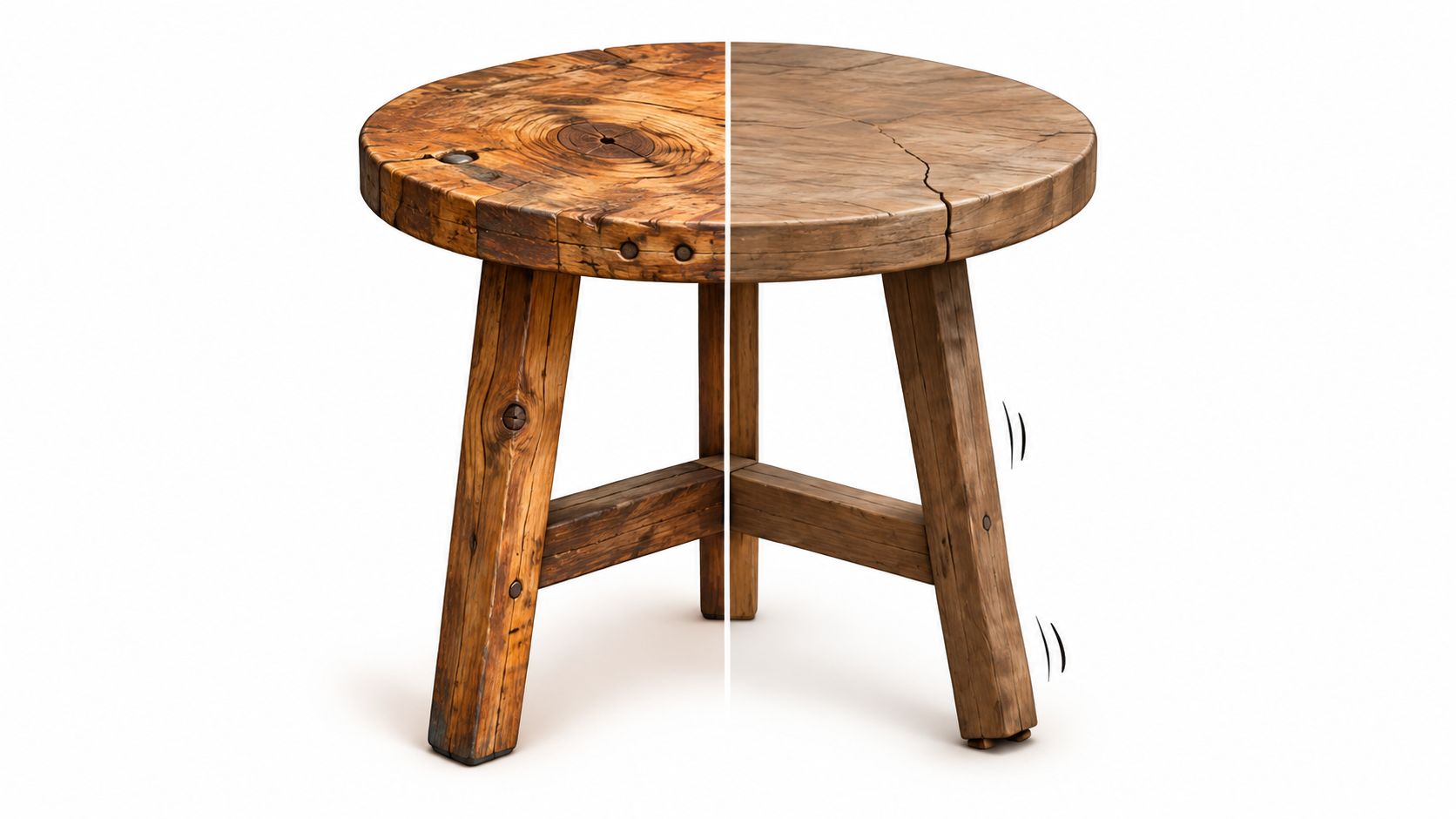
- Authentic character: Nail holes, knots, saw marks, and weathering give each table a surface that can't be duplicated exactly.
- Resource reuse: Salvaging existing lumber can reduce the need for newly harvested material when sourcing, processing, transport, and longevity are handled responsibly.
- Visual strength: A well-chosen table can anchor a neutral room without adding another bold color.
- Style range: The material works with farmhouse, industrial, modern, coastal, and transitional settings.
- Construction potential: Older structural timber may offer dense, substantial material, but the maker still has to inspect and build it correctly.
The drawbacks
Seasonal movement is the most important practical concern. A solid reclaimed top can expand or contract by about 1/4 inch or more across its width during a humid-to-dry cycle, and air-dried reclaimed wood at roughly 12% to 15% moisture content may continue shrinking after construction, as explained in this reclaimed wood furniture buying guide. Minor checking or seam changes may be normal, but poor attachment methods can create serious stress.
Reclaimed tables can also be heavy, difficult to reposition, and inconsistent in color. Buyers should reject pieces with lingering odors, uncertain pest treatment, unstable joints, tacky finish, or sharp exposed defects. The environmental story depends on local sourcing, refinishing, transport, and how long the table remains useful. A locally made, durable table with honest documentation is a stronger choice than a heavily transported piece that only looks reclaimed.
Care and Maintenance That Protects the Wood
A reclaimed wood accent table belongs in a normal home, but it needs a steadier environment than a porch or sunroom. Aim for indoor humidity between 35% and 55%, and keep the table away from direct sun, heating vents, and fireplaces. Those locations create uneven drying and heating that can exaggerate movement, discoloration, or surface checking.
Hairline checks and slight seam changes can appear during the first year as the wood adjusts to indoor conditions. That doesn't automatically indicate failure. The concern is a split that grows quickly, a joint that opens visibly, a top that rocks, or a fastener that starts pulling against the wood.
Placement rule: Give reclaimed wood a stable room, a little breathing space, and protection from concentrated heat.
Clean gently
Dust with a soft, dry cloth. For a sticky spot, use a lightly damp cloth with mild soap and water, then dry the area promptly. Avoid silicone polishes, ammonia, and bleach because they can leave residue or damage the finish.
Use coasters under drinks and trivets beneath hot dishes. Rotate decorative objects so one vase, tray, or lamp doesn't shield one patch of wood while the rest changes color. Felt pads under accessories can prevent scratches, but they should be clean and replaced when grit collects beneath them.
Maintain the finish
An oil-finished table can often be refreshed every 6 to 12 months with a quality hard wax or furniture oil, provided the product matches the existing finish. Apply a thin, even coat, allow the recommended curing time, and don't leave the surface tacky. A polyurethane or lacquer film should be cleaned rather than repeatedly oiled unless the manufacturer specifically allows it.
Small scratches usually call for a touch-up marker matched to the wood, not aggressive sanding. Sanding can erase saw marks, patina, and the very character that justified choosing reclaimed material. Detailed guidance is available in this reclaimed wood furniture cleaning guide.
For indoor-air quality, finish selection matters. VOC emissions in furniture are commonly associated with coatings, resins, and other finishes rather than the wood itself, while pressed wood made with urea-formaldehyde resins is a significant household source identified by the Environmental Protection Agency's formaldehyde guidance. A low-emission finish strategy, ventilation, and humidity control are sensible priorities, especially in compact living spaces.

Buying Locally from a Trusted Southern Oregon Store
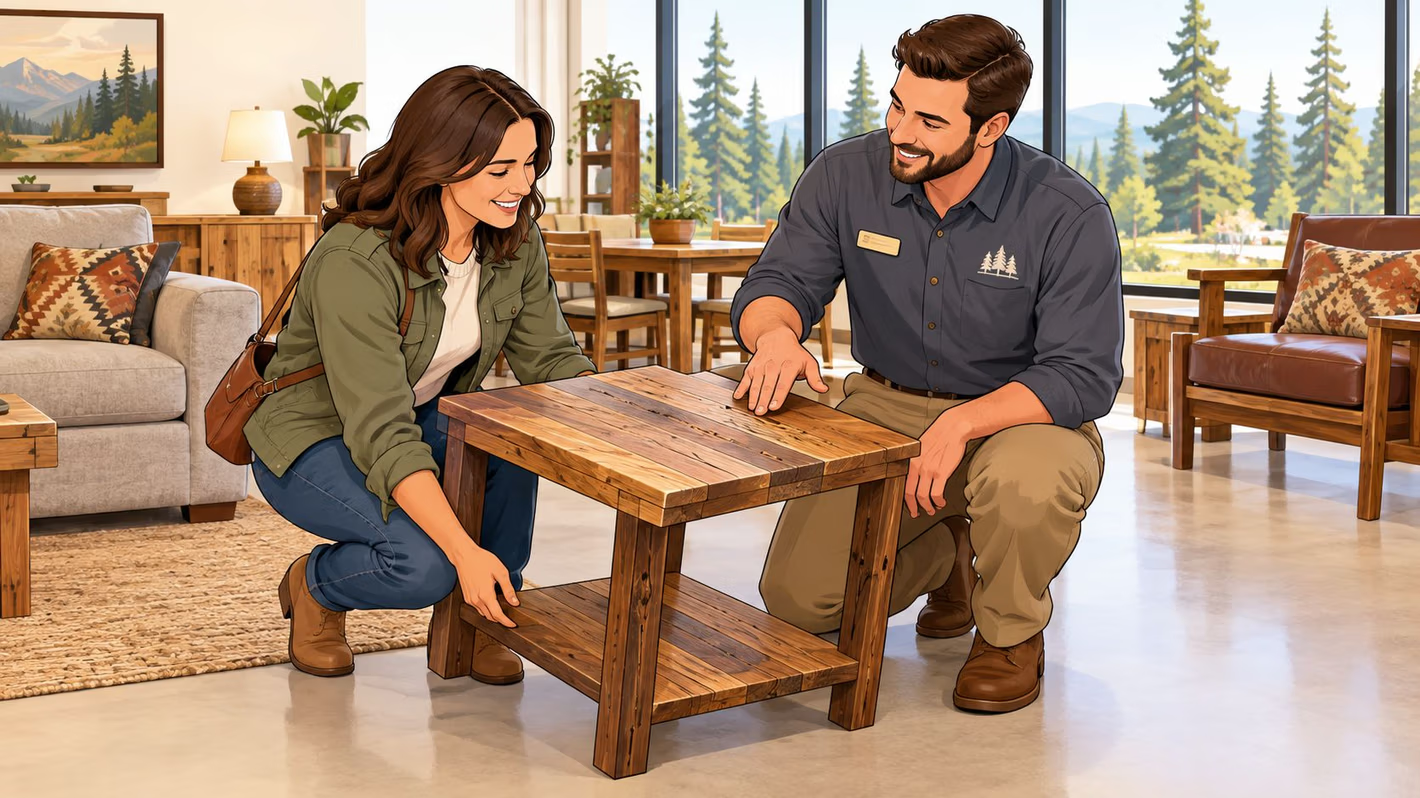
A local purchase gives shoppers something an online listing can't provide, namely a chance to test the table before committing. At the Grants Pass showroom, a buyer can place a hand on the top, check for wobble, inspect the underside, compare finish sheen, and judge whether the table's weight is practical for the room.
The selection also changes. Gates Home Furnishings carries Unique Finds, including reclaimed wood, teak, and one-of-a-kind statement pieces that aren't presented as identical big-box inventory. A shopper may find an end table, cocktail table, or unusual accent piece with a grain pattern worth seeing in person, but a unique find may not be reorderable once it sells.
Four decisions to make in one visit
- Test the construction. Push lightly against the top, check the joints, inspect the edge, and lift one corner. A stable table should feel purposeful, not flimsy or loose.
- Compare the finish with the room. Bring upholstery or flooring photos, then view the wood beside fabrics, lamps, and nearby case goods.
- Review payment options. Gates Easy Pay includes $0 down, six equal payments, no-interest options when paid in full within the promotional period, and no-credit-needed financing or lease-to-own programs. Promotional terms should be read carefully. Deferred-interest offers can charge interest from the purchase date if the balance isn't paid in full by the deadline, as explained by the Consumer Financial Protection Bureau.
- Protect the final delivery. White-glove delivery should mean more than a box left at the curb. Professional services commonly include room-of-choice placement, unboxing, assembly, installation, and packaging haul-away or recycling, as described in this white-glove delivery overview. Gates also offers Care Shield protection for accidental spills and tears.
For shoppers across Grants Pass, Medford, Central Point, Ashland, and the broader Rogue Valley, reclaimed wood furniture near Southern Oregon can be a useful starting point before making the drive.
The local buying checklist is short:
- Touch the table.
- Measure the surrounding furniture.
- Confirm the payment terms.
- Arrange delivery and protection.
Visit Our Grants Pass Showroom or Browse Online
You can judge a reclaimed wood accent table properly only after seeing its surface, proportions, and finish in person. At the Grants Pass showroom, 30,000 square feet of stocked furniture includes living room, dining, bedroom, mattress, and Unique Finds collections. An advisor can sketch a layout, compare table heights, and identify an in-stock piece available for immediate pickup.
Bring your measurements. Check the table beside your sofa, chair, flooring, or existing coffee table, then inspect how its color changes under the showroom lighting. The store is convenient for shoppers from Rogue River, Cave Junction, Medford, Ashland, and throughout the Rogue Valley. Confirm parking, accessibility, and current hours before driving over.
Online browsing suits shoppers working with a tight corner or comparing several finishes. Filter the collection by material, finish, and price, then review delivery choices from home. Southern Oregon delivery lets shoppers outside Grants Pass consider reclaimed wood without treating curbside drop-off as the only option.
Gates carries established national furniture categories alongside reclaimed wood and teak Unique Finds. That range gives you a useful reality check. Reclaimed wood earns its premium when the grain, construction, and character improve the room. If the table forces every surrounding piece to change, skip it and choose a quieter finish.
The business was founded in 1946 by WWII veteran George Gates Jr. and built around George Gates' original promise of “Service and Value.” Judge that promise through practical help: honest table testing, clear financing terms, professional setup, and support after delivery.
Visit the Grants Pass showroom to test current arrivals, browse online, or call ahead about recently received pieces.
Gates Home Furnishings offers reclaimed wood accent tables, teak Unique Finds, flexible Gates Easy Pay options, and professional white-glove delivery across Southern Oregon. Visit Gates Home Furnishings to browse online or test a table at the Grants Pass showroom before bringing it home.