Lift Chair with Heat and Massage Buying Guide


A family member may be spending more time than usual in the living room, struggling to stand from a low sofa, or searching for warmth after a long day of stiff joints. A lift chair with heat and massage can help with the daily movement of sitting and standing, but the chair should be chosen as a piece of supportive equipment, not as a gadget loaded with impressive buttons.
The right purchase depends on fit, control independence, safe operating limits, reliable wiring, and careful installation. Comfort matters, but so do the frame, motor, clearance, serviceability, and the user's ability to operate the handset without confusion. Gates Home Furnishings has helped Southern Oregon households make practical furniture decisions since 1946, guided by George Gates Jr.’s original promise of “Service and Value.”
The Evolution of Therapeutic Comfort at Home
A resident in Grants Pass might begin the search with a simple problem. Standing from a chair has become tiring, knees feel stiff after sitting, and ordinary upholstery offers no assistance when it's time to get up. The first priority is a controlled lift position. The next is a comfortable seat that supports daily reading, television, conversation, and rest.
That combination has changed the category. The modern lift chair is no longer limited to basic mobility assistance. Manufacturers have added reclining positions, warmth, vibration, headrest adjustments, and other comfort features, turning a practical seating solution into a more wellness-oriented product.
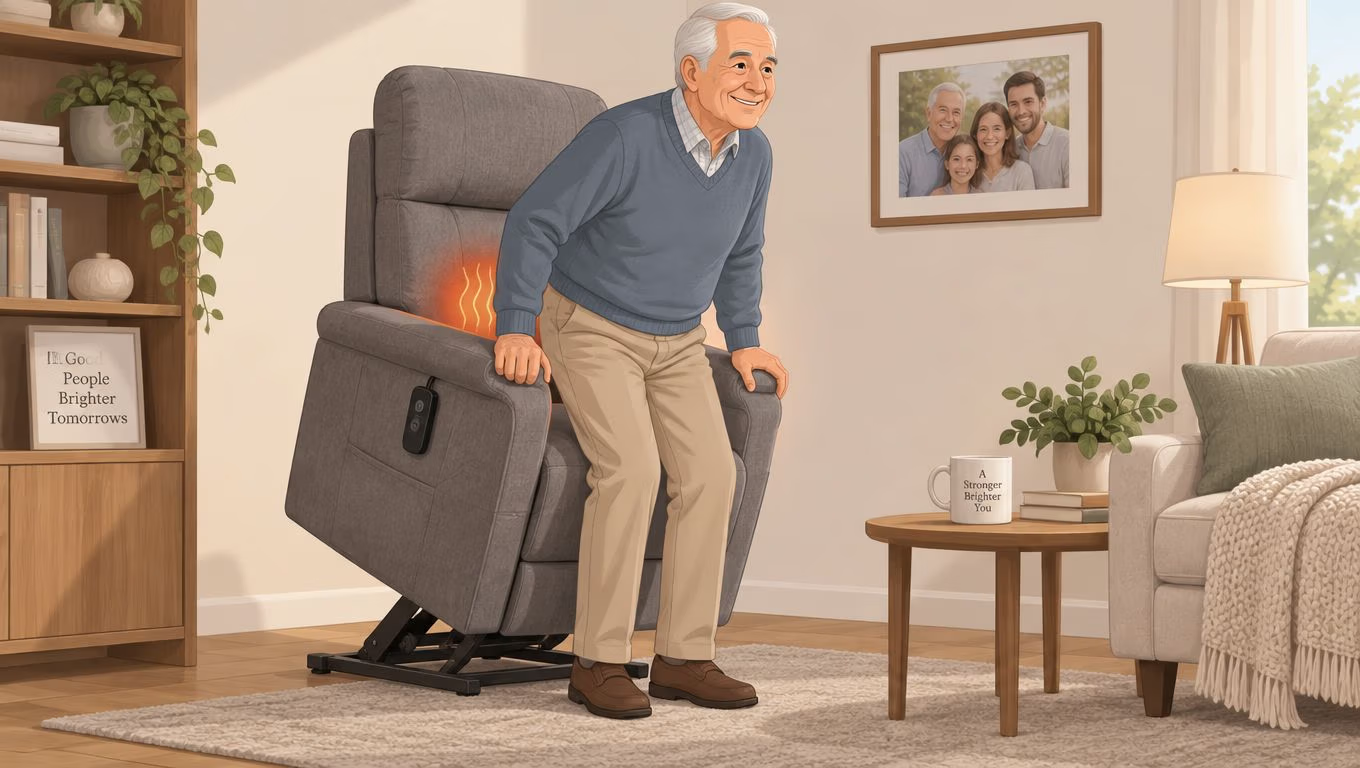
From mobility aid to comfort furniture
Industry histories trace the modern electric lift chair to the 1980s, when La-Z-Boy introduced the first electric lift chair and helped establish the market. Later designs added heat and massage as manufacturers responded to demand for seating that combined assistance with relaxation. A 2024 market summary reports that chairs with heat, massage, and zero-gravity features represent about 18% of new product introductions, while another market summary places heat and massage in around 41% of newly launched lift chairs. These figures come from the category history summarized by USA Medical Supply's lift chair overview.
The numbers point to a clear shift. Heat and massage aren't fringe add-ons anymore, but their presence doesn't guarantee useful performance. A buyer still needs to ask where the vibration reaches, whether heat operates separately, how the controls feel, and whether the chair suits the person's body.
For older adults and caregivers, the larger daily-living picture matters too. A practical guide to best daily living aids for elderly can help families consider supportive equipment beyond a single chair. The lift mechanism may make standing easier, while the recline and comfort features can make the chair more inviting for regular use.
Why category growth matters to shoppers
The lift chair category has become a substantial global furniture segment. One market estimate places worldwide lift chair sales at US$4.3 billion in 2024, with a projection of US$6.2 billion by 2030, implying a 6.3% CAGR from 2024 through 2030. The same estimate places the U.S. market at US$1.2 billion in 2024 and projects China to reach US$1.3 billion by 2030, according to Acumen Research and Consulting's lift chair market estimate.
That scale suggests steady, multi-year demand rather than a passing furniture fashion. It also gives shoppers more choice, which makes careful comparison more important. At the Gates showroom, the focus remains practical: does the chair help the user rise, does the seat feel stable, and can the person operate the comfort features without frustration?
Sizing and Weight Capacities for the Perfect Fit
A lift chair only provides meaningful support when its proportions match the user. A seat that's too deep leaves the lower back unsupported. One that's too narrow restricts movement, while an armrest positioned too far away can make transfers awkward. The correct model should fit both the person and the room.
Measure the person first
Begin with the user seated on a firm, flat surface.
- Seat height: Measure from the floor to the back of the knees. The feet should rest comfortably on the floor when seated, without the knees sitting awkwardly high.
- Seat depth: Measure from the back of the hips to the back of the knees. The chair should support the thighs without pressing sharply behind the knees.
- Seat width: Measure across the hips and add room for ordinary clothing. The user shouldn't feel squeezed, but excessive width can reduce lateral support.
- Armrest relationship: Check the distance from the seat to the armrests. Arms should rest naturally, and the user should be able to push or steady themselves without reaching.
- Back and head support: The backrest should meet the user's shoulders and head in a natural position. A headrest that's too low can leave the neck unsupported.
Practical rule: A chair shouldn't be selected by appearance alone. The user needs to sit in it, operate the lift, and test the fully reclined position.
Weight capacity deserves equal attention. It reflects the load the frame, lift mechanism, and motor are designed to manage. A buyer should check the manufacturer's stated capacity and avoid treating a close match as an acceptable match. The chair should also feel steady as it moves through its lift and recline cycles.
Measure the room around the mechanism
The room needs more than floor space for the chair's footprint. Measure behind the chair for its recline clearance and in front for the legrest extension. Keep walking paths clear, especially near doorways, side tables, and routes used by someone with a cane or walker.
A simple room check should include:
- Measure the doorway, hallway turns, and final placement area.
- Mark the chair's likely footprint with painter's tape.
- Mark the forward area needed for the footrest.
- Check that the reclined chair won't block a doorway or strike a wall.
- Identify where the power cord will run without creating a trip hazard.
Gates' furniture measuring guide provides a useful reference before a showroom visit. Measurements should travel with the shopper, along with the user's height, weight, and preferred sitting position.
Test the actual movement
The lift should raise the user gradually and predictably. The handset should be easy to identify and press, particularly for someone with limited dexterity or vision. The chair should also return to a stable seated position without forcing the user to lean, twist, or pull on the armrests.
The 30,000-square-foot Gates showroom in Grants Pass gives shoppers room to test seating and compare proportions side by side. That hands-on check is particularly valuable for residents from Medford, Central Point, Ashland, and across the Rogue Valley, because online dimensions rarely communicate how a cushion, armrest, and lift angle feel together.
Comparing Heat and Massage Feature Architectures
A product page may list “massage” and “heat” without explaining how those systems work. That omission matters. Basic vibration nodes, air bladders, and zoned heating create different sensations, and control logic determines whether the user can choose one feature without activating the other.
A common architecture uses multiple vibration nodes or air bladders with selectable modes and intensity levels. Heat may be distributed separately across the shoulders, lumbar area, and seat. Benchmark specifications in major-market products include 8 vibration nodes with 3 massage modes and 3 intensity levels, or 3-zone heat with 3 heat levels and a separate massage system, as shown in this power lift recliner feature example.
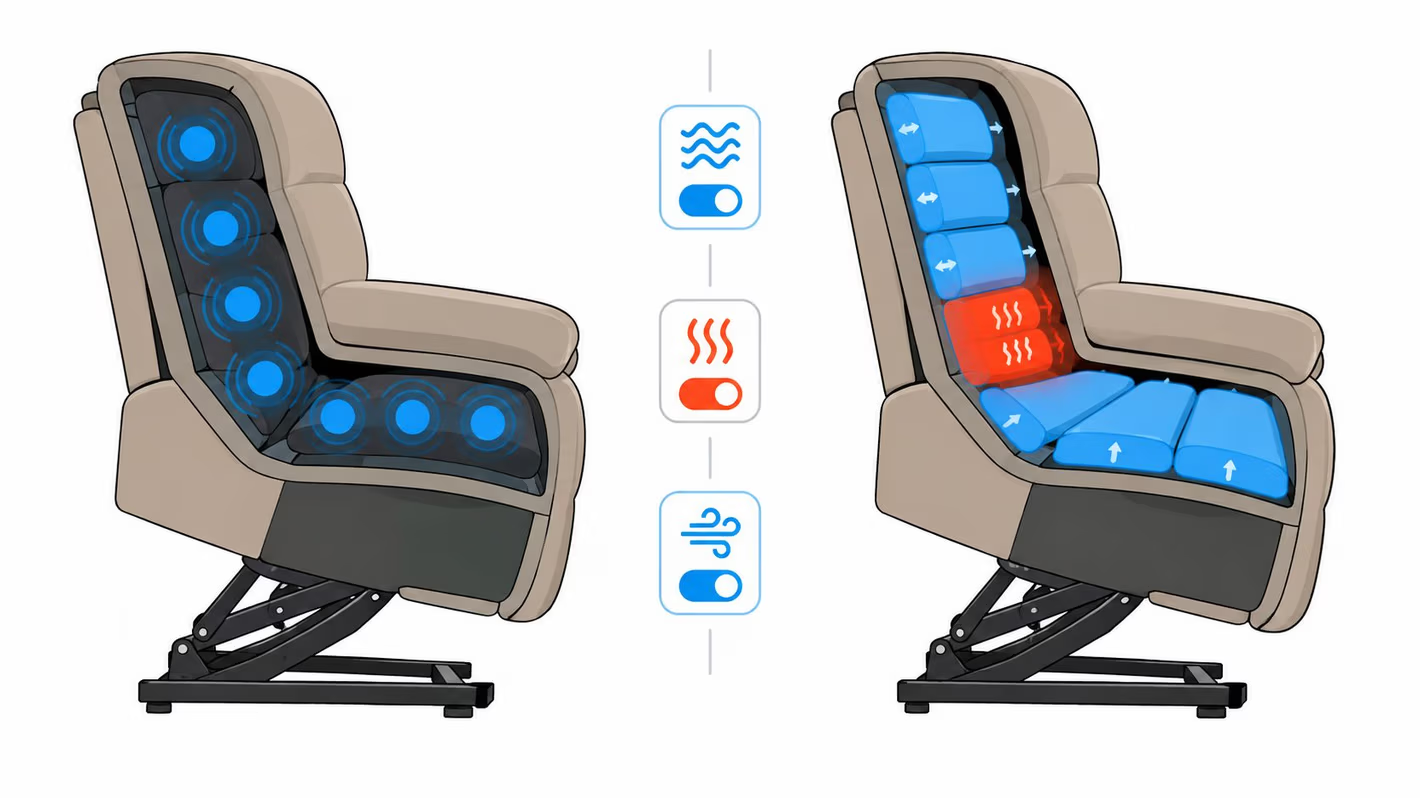
Feature Architecture Comparison
| Feature Type | Basic Models | Premium Models |
|---|---|---|
| Massage delivery | Simple vibration from fixed areas | Multiple nodes or air bladders with selectable zones |
| Massage adjustment | Limited presets or intensity choices | Several modes and more refined intensity control |
| Heat coverage | One broad heating area | Separate shoulder, lumbar, and seat zones |
| Heat adjustment | Often one or a small number of settings | Multiple heat levels with clearer zone control |
| Control relationship | Heat may require massage to run | Heat and massage can operate independently |
| Service considerations | Fewer components, simpler troubleshooting | More components, requiring clear wiring and service support |
Independent controls are not optional
A frequent implementation problem occurs when heat and massage share the same control logic. Some manufacturer documentation allows heat to run with or without massage. Other designs require heat to operate only while massage is active. A buyer should test this before purchase rather than assume the handset offers complete independence.
The control check should cover:
- Separate activation: Can heat run without vibration?
- Timer behavior: Does each function shut off on its own timer?
- Intensity adjustment: Can the user lower heat or vibration independently?
- Safety cutoff: Does the system stop automatically if a connection fails or the mechanism moves?
- Handset clarity: Are buttons labeled plainly and easy to reach?
The distinction between relaxation vibration and clinical treatment also deserves plain language. A chair can provide pleasant warmth and vibration, but its massage system shouldn't automatically be described as therapeutic treatment. Readers interested in broader developments can review this discussion of modern pain relief technology advances, then speak with a qualified clinician about personal medical needs.
Look past feature counts
Safety and serviceability deserve more attention than a long list of massage presets. Relevant testing and standards references include IEC 60601-1-2, IEC 60335-1, ISO 14971, EN 12182, and British Standard BS8474 entrapment-risk guidance for riser and lift mechanisms, as outlined by Living Made Easy's chair selection guidance.
ETL certification can also be a useful purchasing checkpoint when listed for the model. The most reliable question isn't “How many modes does it have?” It's “Can the user operate the chair safely, and can the retailer support the chair if a connection or motor problem appears?” Shoppers can review power reclining seating types to compare the broader range of powered seating configurations.
Safety Protocols and Daily Usage Realities
A lift chair with heat and massage isn't a standard recliner that can run every function indefinitely. Heating elements need operating limits, vibration systems need sensible session lengths, and the user needs to notice discomfort before it becomes a skin or muscle problem.
Most manufacturer guidance recommends automatic heat shutoff after about 20 minutes, while one product manual notes that the heating feature may take up to 30 minutes to produce noticeable effects. The same documentation advises medical consultation before use in certain circumstances and warns that prolonged exposure can affect sensitive skin. Buyers should read the manual for the exact model, as timer behavior varies.
Safe daily use starts with restraint
More intensity isn't automatically more comfort. Many chairs provide straightforward vibration presets and limited heat adjustment, so the value lies in controlled warmth, a well-fitted seat, easy operation, and automatic shutoff rather than endless runtime.
A sensible routine includes:
- Start low: Use the lowest heat and massage settings first.
- Stay within the timer: Let the automatic shutoff work as designed.
- Check the skin: Look for unusual redness, irritation, or discomfort after use.
- Avoid sleeping with heat active: A sleeping user may not notice excessive warmth.
- Stop at warning signs: Discontinue use if pain, numbness, burning, dizziness, or unusual swelling occurs.
Older adults, people with sensitive skin, and users with back pain should ask a physician whether heat or vibration is appropriate. Extra care is warranted for anyone with reduced sensation or circulation concerns, because the body may not signal excessive heat quickly enough.
Safety first: A lift chair supports movement, but heat and massage features don't replace medical advice or prescribed treatment.
Maintenance protects the comfort system
Electrical connections are often more important than the decorative feature list. Manufacturer manuals warn that wet conditions, exposed wiring, and improper connections can disable the heat or massage functions and create hazards. Cords should remain dry, connections should stay secure, and the mechanism should never be operated with damaged wiring.
The chair also needs clear space around moving parts. Keep children, pets, blankets, and loose objects away from the lift and legrest mechanism. Families working on broader fall-prevention routines can also review Velma cognitive support for fall prevention for practical household considerations.
A chair with a seat belt may be appropriate for some users and situations, but the belt doesn't replace correct sizing or supervision. Families can review lift chair seat belt options when a caregiver or clinician recommends additional positioning support. The operating manual remains the final authority for the chair's controls, limits, and maintenance schedule.
White-Glove Delivery and Long-Term Protection
A lift chair's first safety test happens before the user sits down. The chair needs to arrive intact, pass through the home without damage, stand level on the floor, and connect correctly. Curbside delivery leaves too much responsibility with the household, especially when the buyer is helping an older adult or managing a narrow doorway.
White-glove delivery is a premium last-mile service that typically includes room-of-choice placement, assembly or installation, basic checks, and removal of packaging debris, rather than curbside drop-off, as explained by Ryder's white-glove delivery overview.
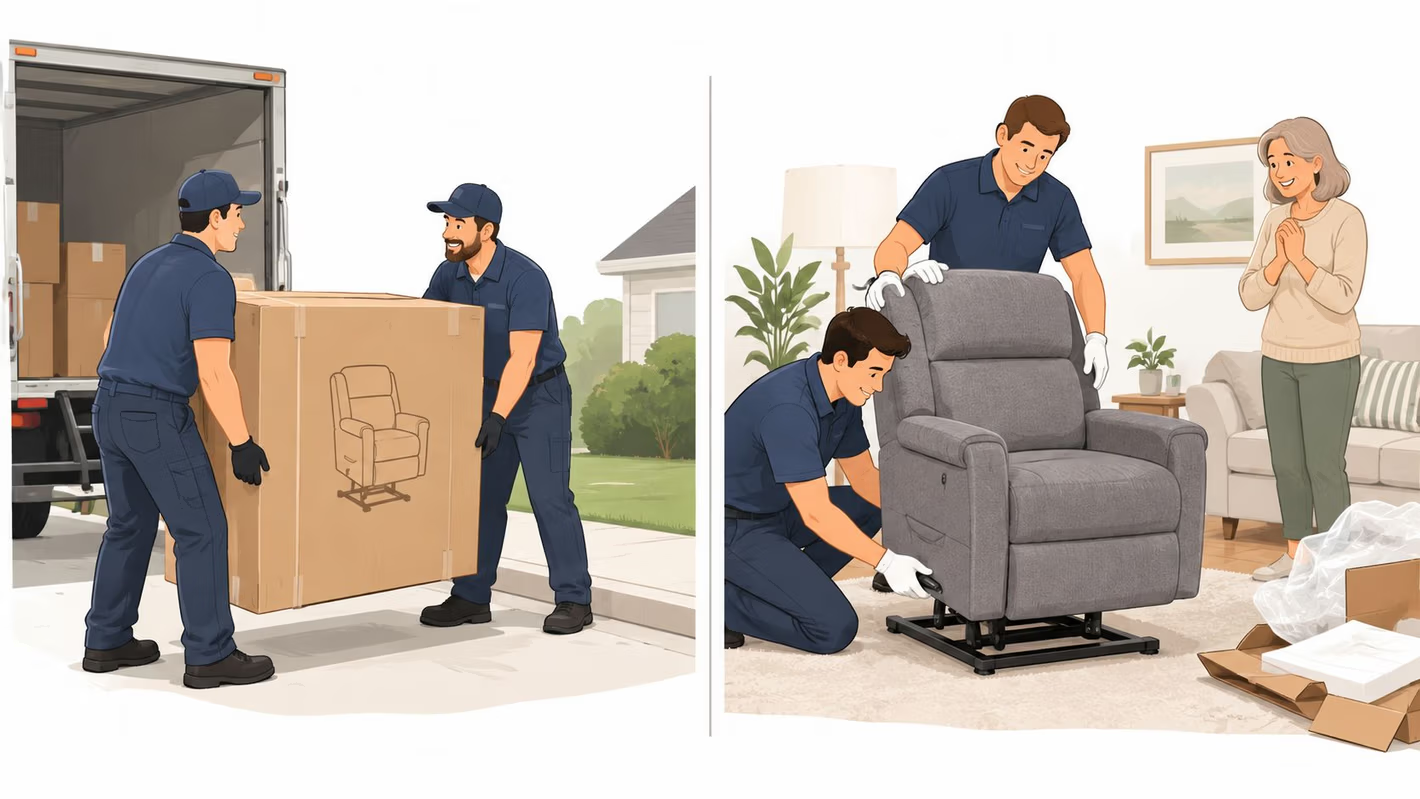
Assembly affects performance
A powered chair contains a lift mechanism, reclining components, electrical connections, and moving upholstery. Improper handling can strain the frame, pinch a cable, misalign a connection, or leave the chair positioned too close to a wall. Professional installers can place the chair where it belongs and verify the basic operation before the household takes responsibility.
Gates Home Furnishings provides professional in-home delivery with heavy lifting, assembly, setup, and packaging removal. The service isn't about ceremony. It reduces the chance that a family will have to move a heavy chair, decode connection points, or discover a placement problem after the delivery crew has left.
The delivery team should check:
- Room placement: The chair sits in the intended location with usable clearance.
- Power connection: The cord is connected safely and routed away from walking paths.
- Movement: Lift, recline, and legrest functions operate without obstruction.
- Controls: The handset responds and the user understands the essential buttons.
- Packaging removal: Cardboard and protective material leave with the delivery team.
More detail about the process appears in the guide to what white-glove delivery service includes.
Protect the upholstery and the investment
A protection plan can make sense when the chair will serve as a primary household seat. Gates Care Shield provides coverage for accidental spills and tears, giving families a way to address everyday mishaps rather than treating every upholstery problem as a permanent loss. Coverage terms should be reviewed carefully before purchase, including exclusions, claim procedures, and eligible materials.
Maintenance still begins with ordinary habits. Blot spills promptly, follow the upholstery care instructions, keep food and drinks away from moving controls, and don't pull the chair by its arms or legrest. Families should also keep the manual, delivery paperwork, and warranty information in an accessible place.
Professional setup and protection coverage solve different problems. Delivery helps the chair begin its service life correctly. Care coverage helps address accidental damage after the chair becomes part of daily living.
Flexible Financing and Visiting Our Showroom
A supportive chair has to fit the household budget as well as the user's body. Gates Easy Pay offers several paths for budget-conscious shoppers, including $0 down, 6-month interest-free options, and no-credit-needed financing. Promotional terms and approval requirements can vary, so customers should review the complete agreement before choosing a payment path.
Furniture financing can make a necessary purchase easier to plan, particularly when a household needs seating that supports daily mobility rather than a decorative replacement. The available options are described in the guide to Gates furniture financing options.
Test the chair before choosing it
Online research helps narrow the field, but it can't answer every comfort question. A shopper needs to feel whether the seat depth supports the legs, whether the armrests are at a useful height, and whether the lift motion feels controlled. The motor's sound, handset layout, cushion firmness, and upholstery feel also become clearer in person.
The 30,000-square-foot showroom in Grants Pass provides space for side-by-side furniture testing and comparison, a concrete advantage for shoppers who don't want to make a decision from photographs alone. Residents from Medford, Central Point, Ashland, and elsewhere in Southern Oregon can bring room measurements and compare models in a single visit.
Consider the rest of the room
A lift chair should work with the home around it. Gates' collections include brands such as La-Z-Boy, Flexsteel, Ashley, and Beautyrest, along with living room, bedroom, dining, and mattress furnishings. The store also carries Unique Finds, including reclaimed wood, teak, and one-of-a-kind statement pieces that add character beyond standard mass-market furniture.
That mix matters because supportive seating rarely lives in isolation. The chair may need to coordinate with an existing sofa, fit beside a reclaimed wood table, or support a broader living-room refresh. A local showroom lets the household consider comfort and visual fit together.
Ask the right questions at the appointment
A useful showroom visit should produce clear answers, not just a favorite color. Shoppers should ask:
- Fit: Which size suits the user's height, depth, and weight?
- Controls: Can heat operate independently from massage?
- Safety: What timer and cutoff behavior does the model use?
- Delivery: Does the service include assembly, placement, testing, and packaging removal?
- Protection: What accidental damage does the care plan cover?
- Financing: Which Gates Easy Pay option matches the household's budget and approval situation?
The most responsible recommendation is the chair that the user can enter, operate, and leave comfortably every day. Features should support that outcome, not distract from it.
Gates Home Furnishings offers lift chairs with supportive power movement and comfort-focused configurations, along with sizing guidance, Gates Easy Pay financing, professional white-glove delivery, and Gates Care Shield protection. Visit Gates Home Furnishings to browse the collection online or visit the Grants Pass showroom to test a lift chair with heat and massage in person.