Real Mattress Topper Benefits for Better Sleep

Waking up sore, throwing off the blankets at midnight, or wondering why a familiar bed suddenly feels wrong can make a new mattress seem like the only answer. For many homeowners and renters in Grants Pass, Medford, Central Point, Ashland, and across Southern Oregon, that conclusion comes too quickly. The right mattress topper benefits can include pressure relief, better motion control, and meaningful temperature support, but only when the existing mattress is still structurally sound.
A topper isn't a thin mattress protector. It's a separate comfort layer that changes how the bed feels beneath the sleeper. Used carefully, it can be a practical bridge between an aging comfort layer and a full mattress replacement. Used on a sagging or damaged bed, it can become an expensive disguise for a problem that won't disappear.
Why Your Bed Might Need a Second Chance
A common Southern Oregon morning starts with a familiar complaint: the sleeper went to bed tired and woke up uncomfortable. The shoulders hurt after sleeping on one side, the lower back feels tight, or the sheets were kicked away several times during a warm night. The mattress may not be completely worn out. It may no longer provide the surface feel that suited the sleeper when it was newer.
That distinction matters. A mattress topper sits directly on top of the existing mattress and adds a substantial layer of cushioning or responsive support. A mattress protector serves a different job. It is generally a thin protective barrier against moisture, stains, and everyday wear, while a topper changes pressure response, contouring, and sometimes thermal comfort.
Practical rule: A topper changes the feel of a bed. It doesn't rebuild the bed underneath it.
A structurally healthy mattress that feels too firm is a strong topper candidate. The same is true when the support remains even but the upper comfort layer feels flat, hard, or less forgiving than it once did. In those cases, replacing the entire mattress may solve the problem, but it may not be the most sensible first move for a budget-conscious household.
Before buying anything, shoppers can review the signs that indicate it's time to replace a mattress. A topper deserves consideration when the mattress has a stable foundation, no pronounced center dip, and no obvious internal damage. It deserves skepticism when the bed's structure has already failed.
For a renter in an older Grants Pass home, a topper can also offer flexibility. It may make a firm guest-room mattress more comfortable without changing the entire room. For a homeowner furnishing a new bedroom, it can fine-tune the feel of a mattress that provides the right support but not enough cushioning.
The smartest approach is diagnostic, not impulsive. Identify whether the complaint is surface comfort, pressure, movement, or heat. Then choose a layer designed for that specific issue. If the complaint is deep sagging or broken support, the better investment is a new mattress.
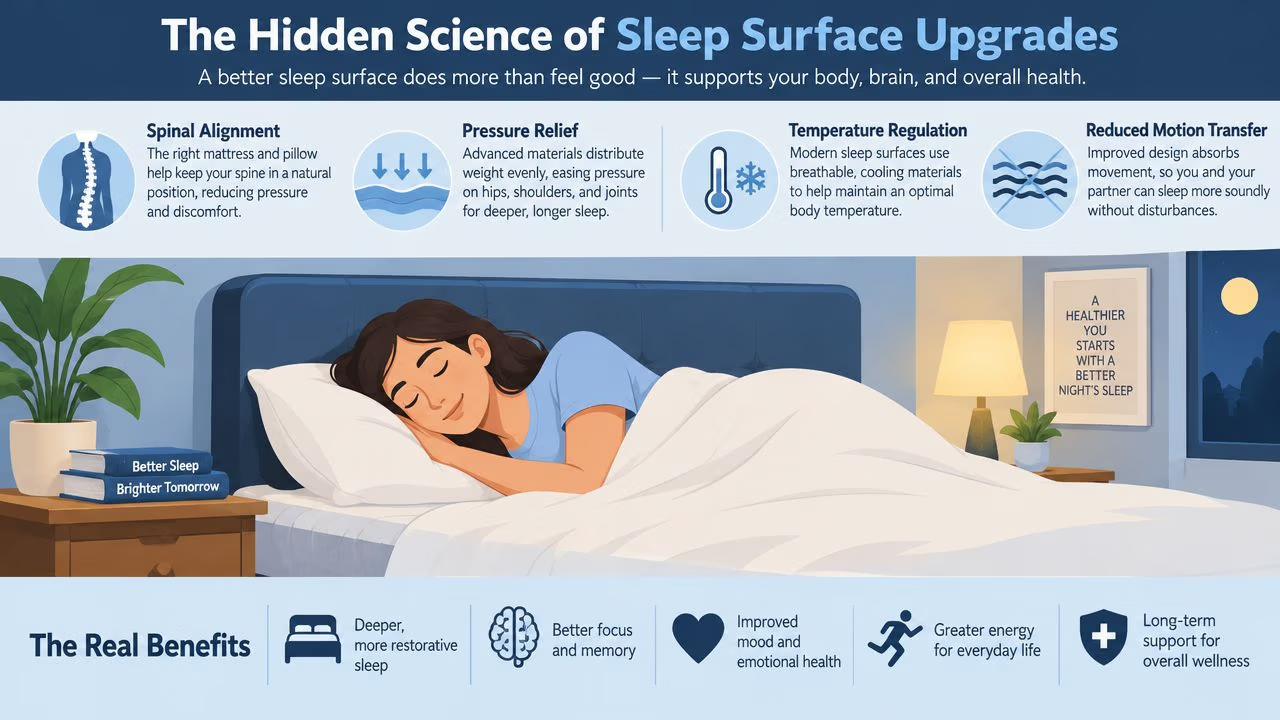
The Hidden Science of Sleep Surface Upgrades
Most shoppers begin with softness, but the sleep surface also affects how the body handles heat and pressure during the night. A topper can influence the boundary between the sleeper and the mattress, which makes material selection more important than the word “plush” suggests.
Heat changes sleep, not just comfort
Overheated bedrooms are especially frustrating during warm Rogue Valley nights. A randomized double-blind crossover study involving 15 healthy young adults found that a high-heat-conductivity mattress topper improved sleep in hot conditions. At 32°C, total sleep time increased by 21.4 ± 16.1 minutes, sleep efficiency improved, REM sleep duration increased, and awakening duration decreased compared with the control mattress. The findings are detailed in the randomized sleep study on thermal mattress toppers.
The same study found that the topper still produced a longer N3 sleep stage duration at 22°C, with p = 0.03, and higher slow-oscillation spectral density, also with p = 0.03. That matters because N3 sleep and slow oscillations are associated with restorative sleep physiology. The practical lesson is clear: thermal management isn't merely about feeling less sticky. It can affect the conditions that support deeper sleep.
A separate 2018 sleep-lab study compared high-rebound and low-rebound mattress toppers in younger and older adults. Minimum core body temperature dropped to 36.05°C versus 36.35°C in younger subjects and 36.47°C versus 36.55°C in older subjects. The temperature decline was linked to increases in deep-sleep delta power of +27.8% in younger people and +24.7% in older people between 11:00 and 01:00, as reported in the sleep-surface and thermoregulation study.
The material still determines the outcome
Those findings don't mean every topper improves sleep in the same way. A dense foam layer may contour well but hold more warmth. A breathable construction may feel cooler but provide less of the enveloping pressure relief a side sleeper wants. A high-rebound design may create a different response from a slow-conforming one.
That is why a useful resource on why quality bedding matters should be considered alongside the topper's actual construction. Sheets, protectors, room temperature, and the underlying mattress all influence the final result.
The choice between an innerspring and a foam sleep surface also shapes how a topper performs. A guide to innerspring versus memory foam can help shoppers understand why a topper may soften the surface without changing the deeper support behavior of the mattress.
A topper isn't a luxury by definition. For a hot sleeper whose mattress is otherwise stable, it can be a targeted thermal upgrade. For someone with a structurally failing bed, it won't replace proper support.
Matching Materials to Your Specific Sleep Complaint
The right material depends on the complaint, not on a generic promise of better sleep. Memory foam, latex, polyfoam, and down alternatives each create a different response under the body. A shopper who chooses based only on thickness or a soft showroom feel may bring home a layer that solves one problem while creating another.
A practical material comparison
| Sleep Complaint | Best Material | Why It Works |
|---|---|---|
| Shoulder and hip pressure | Memory foam or polyfoam | Conforming foam compresses beneath heavier areas and redistributes body weight across a broader surface. |
| Partner movement | Memory foam | Dense, viscoelastic foam absorbs and dampens surface movement before it travels across the bed. |
| Sleeping hot | Breathable latex, high-heat-conductivity construction, or a cooling-focused design | Airflow and thermal management can reduce the warmth associated with some dense foams. |
| A firm mattress that needs cushioning | Polyfoam or memory foam | Added comfort material changes the upper pressure profile without replacing the mattress core. |
| A preference for buoyant movement | Latex or high-rebound foam | Responsive materials make repositioning easier and avoid the deeply enveloping feel of slow foam. |
| Gentle surface softness | Down alternative or fiber fill | Lofted fibers create a softer initial feel without the pronounced contour of foam. |
Memory foam helps couples, with limits
Memory foam is a sensible choice when a partner's tossing and turning is the main complaint. The dense, viscoelastic structure absorbs and dampens movement before it spreads across the surface. Independent guidance describes close-conforming materials such as memory foam as having a moderate impact on motion transfer, while deeper movement from mechanically linked coils may be muffled without being eliminated, as explained in the motion isolation research methodology.
That limitation should guide expectations. A topper can reduce surface-level vibration, but it can't fully override a highly responsive base mattress. Couples may notice a real improvement, but the underlying construction still sets the ceiling.
Pressure relief requires correct placement
Side sleepers usually place more load on the shoulders and hips. A conforming layer compresses beneath those areas and spreads force over more of the sleep surface, which can reduce the feeling of concentrated pressure. A clinical comparison of mattress surfaces found that a topper solution significantly lowered heel and head pressure by more than 30% versus other surfaces, according to the clinical pressure-distribution study.
That doesn't make every foam layer appropriate for every body. A very soft topper can let the hips sink too far, while a firm responsive layer may leave a side sleeper feeling blocked at the shoulder. Readers dealing with recurring discomfort can review how to choose a mattress for back pain before deciding whether the problem calls for cushioning, support, or a new mattress altogether.
Heat retention deserves honest attention
Memory foam can be excellent for motion isolation and pressure relief, but some dense constructions feel warm. Hot sleepers should look for breathable or thermal-management features rather than assuming all foam performs alike. Latex and high-rebound materials may feel more responsive and less enveloping, while a fiber-filled topper offers softness with a different support profile.
In high-risk care settings, material selection requires extra caution. A Cochrane review reported low-certainty evidence that foam surfaces may increase pressure-ulcer incidence compared with alternating-pressure air surfaces, with a risk ratio of 1.59, 95% CI 0.86 to 2.95, and compared with reactive air surfaces, with a risk ratio of 2.40, 95% CI 1.04 to 5.54, as summarized in this review of cooling mattress topper evidence. A household topper isn't a substitute for a clinically selected support surface where medical risk is involved.
How to Know If a Topper Can Actually Save Your Bed
A topper can rescue an uncomfortable surface. It can't rescue failed structure. The difference is easy to miss when a new layer feels pleasant for the first few nights, so the existing mattress should be inspected before any purchase.
Start with the support system
Remove thick bedding and examine the mattress in normal lighting. Look for a pronounced dip in the center, uneven edges, damaged fabric, exposed components, or signs that the mattress no longer lies level. Then lie in the usual sleeping position and notice whether the body feels supported or pulled toward a low spot.
A topper may be appropriate when:
- The mattress is level: The surface has no obvious structural collapse or deep hollow.
- The feel is too firm: The bed supports the body evenly but creates pressure at the shoulders, hips, or other contact points.
- The comfort layer feels tired: The upper padding has lost softness, while the base still feels stable.
- Heat is the main complaint: The mattress is supportive, but the sleep surface traps warmth.
- Movement is the issue: The core remains usable, but surface vibration disturbs a partner.
The purpose of this inspection is financial as much as physical. A well-chosen topper can postpone a full purchase when the mattress still has useful support. It shouldn't become a reason to keep sleeping on a bed that is visibly failing.
Know the red flags
Deep sagging, broken coils, a pronounced center dip, and persistent instability point toward replacement. A topper follows the shape beneath it. If the foundation drops under the hips, the topper may soften the sensation without restoring alignment.
The same warning applies when recurring pain continues despite changes in sleep position and bedding. Comfort preferences vary, but no topper can correct every support problem. If the bed feels unstable when the sleeper turns, or if the perimeter collapses when sitting down, the mattress may have reached the end of its useful role.
Protective care can slow everyday wear, but it can't reverse structural damage. Guidance on mattress care tips can help preserve a sound bed and keep a new topper cleaner. Care is maintenance, not reconstruction.
A topper is a smart bridge when the mattress is sound. It is wasted money when the mattress has lost its shape.
The decision should be made after comparing the cost and expected service of both options. If the complaint is surface-specific, choose a topper. If the complaint comes from the bed's support core, choose a new mattress.
Sizing, Thickness, and Keeping It in Place
A topper only works well when it fits the mattress beneath it. An incorrect size can leave exposed edges, create bunching, or allow the layer to migrate during the night. Before shopping, measure the mattress length and width, then account for the added height when checking the fitted sheet.
Thickness changes the feel
Common market offerings are often about 5–6 cm thick, enough to change feel and pressure response while remaining less disruptive than a full mattress replacement, according to the mattress topper specifications guide.
A thinner layer usually makes a more restrained adjustment. It can soften a firm surface without completely changing the mattress's response. A thicker layer makes a more obvious difference and can provide greater cushioning, but it may also make the bed feel less stable or make it harder to move across the surface.
The sleeper's position matters:
- Side sleepers often need enough depth for the shoulders and hips to settle without pressing into the mattress below.
- Back sleepers usually need cushioning that doesn't let the pelvis sink excessively.
- Stomach sleepers should be cautious with very plush layers because too much sink can strain alignment.
- Couples should consider how added softness affects turning, edge use, and movement between partners.
Stop sliding and bunching
A fitted sheet with adequate depth is the first line of defense. If the topper shifts, an anchor band or a properly sized non-slip mat can help secure the layer between the mattress and sheet. The bed frame should also sit level, since an uneven base can make any topper move.
A waterproof protector belongs above the topper when spills, pets, children, or moisture are concerns. It should be breathable enough to avoid undermining the thermal purpose of a cooling layer. Foam generally needs spot cleaning and careful drying rather than saturation, and manufacturer instructions should take priority.
A topper shouldn't be folded, compressed, or stored damp. Rotating it according to its care instructions can help distribute wear, although the underlying construction determines how much maintenance is appropriate. The best setup combines the correct size, a compatible sheet, a protective layer, and a mattress that remains stable beneath it.
The Value of Testing Comfort in Our Grants Pass Showroom
A topper can look perfect online and still feel wrong under your shoulders or hips. Body shape, sleep position, firmness preference, and heat sensitivity all change the experience. A short showroom test cannot reproduce a full night, but it can quickly rule out surfaces that create pressure, trap heat, or feel unstable.

A local test answers practical questions
The 30,000-square-foot showroom in Grants Pass gives Southern Oregon shoppers space to compare sleep surfaces without relying on screen descriptions. Lie down in your usual position, turn as you would at home, and notice whether the surface responds quickly or holds you in place. Pay attention to heat, pressure, and how supported your lower back feels.
A knowledgeable associate can help connect those observations to the right solution. The Gates Sleep Care system keeps the conversation centered on the actual complaint first, then the material. If the bed feels too firm, a topper may improve pressure relief. If the mattress sags, feels unstable, or has lost its support, replacing the mattress is the smarter use of your budget.
The mattress gallery includes a curated selection of mattress and furniture collections for broader bedroom and home comfort needs.
Service should feel personal
Since 1946, Gates Home Furnishings has carried forward George Gates Jr.'s original promise of “Service and Value.” That approach matters when you are deciding whether a topper can solve the problem or whether a new mattress will provide better long-term support.
The showroom's Unique Finds, including reclaimed wood, teak, and one-of-a-kind statement pieces, give the store character beyond standard bedroom furniture. Sleep guidance receives the same hands-on attention, with practical recommendations instead of pressure to choose the most elaborate option.
Visitors from Medford, Central Point, Ashland, and nearby Rogue Valley communities can test comfort in Grants Pass before committing. Bring the key details of your current bed, including its firmness, age, visible wear, and main nighttime complaint. A clear starting point makes the appointment more useful and keeps the recommendation grounded. Surface softness, cooler materials, and deeper sleep comfort all matter, but a topper should improve the bed you have, not disguise a failing foundation.
Flexible Financing and White-Glove Delivery for Your Upgrade
Once the right sleep surface has been selected, the purchase should fit the household's budget and logistics. Gates Easy Pay offers $0 down, 6-month interest-free options, and no-credit-needed financing choices, subject to program terms and approval. Shoppers can review the available furniture financing options before visiting or ask the showroom team to explain the current choices.
A sensible process is straightforward:
- Confirm the problem. Decide whether the topper addresses surface comfort, heat, pressure, or movement.
- Check the bed underneath. Don't finance a topper for a mattress with serious structural damage.
- Measure the mattress. Match the topper size and check fitted-sheet depth.
- Ask about protection. A waterproof protector can help guard the new layer against spills and moisture.
- Plan delivery. Confirm access, stairs, room placement, and removal needs before the scheduled date.
Professional delivery removes much of the physical hassle. White-Glove Delivery means the team does not just drop boxes at the doorway. The service includes professional assembly, in-home setup, and mattress haul-away, so customers aren't left wrestling a bulky sleep product up stairs or trying to dispose of the old mattress alone.
A topper may be a modest change, but it still deserves proper installation. The surface should lie flat, the bedding should fit without compressing the edges, and the room should be ready before delivery arrives. Gates Home Furnishings serves households in Grants Pass, Medford, Central Point, Ashland, and the broader Southern Oregon region with a local approach to both selection and service.
Gates Home Furnishings offers mattress guidance, sleep-surface testing, flexible Gates Easy Pay options, and White-Glove Delivery with professional setup and mattress haul-away. Visit Gates Home Furnishings to compare your topper options online, or visit the Grants Pass showroom to test comfort in person and make a smart choice for better rest.