Coffee Tables with Storage: A Smart Buying Guide


The remotes have disappeared between the sofa cushions again. A child's toys have migrated to the couch, a board game is waiting on the floor, and charging cables are gathering beside the nearest outlet. In a Grants Pass living room, where the coffee table often serves as snack station, homework surface, and family landing zone, an empty tabletop is wasted opportunity.
Coffee tables with storage solve that problem by combining a useful surface with drawers, shelves, cabinets, or a concealed compartment. They can clear visual clutter without adding another cabinet, keep blankets close during a Rogue Valley evening, and give a tired accent piece a more practical role. The right table, however, must fit the sofa, the traffic path, and the household's habits. A clever mechanism is only helpful if it opens easily, stays steady, and holds what the family uses.
Why a Storage Coffee Table Might Be the Smartest Piece in Your Living Room
A typical evening tells the story. Someone reaches for the remote, another person looks for a game piece, and a laptop needs somewhere safe while dinner is being cleared. The coffee table sits at the center of all that activity, so it should do more than hold a decorative tray.
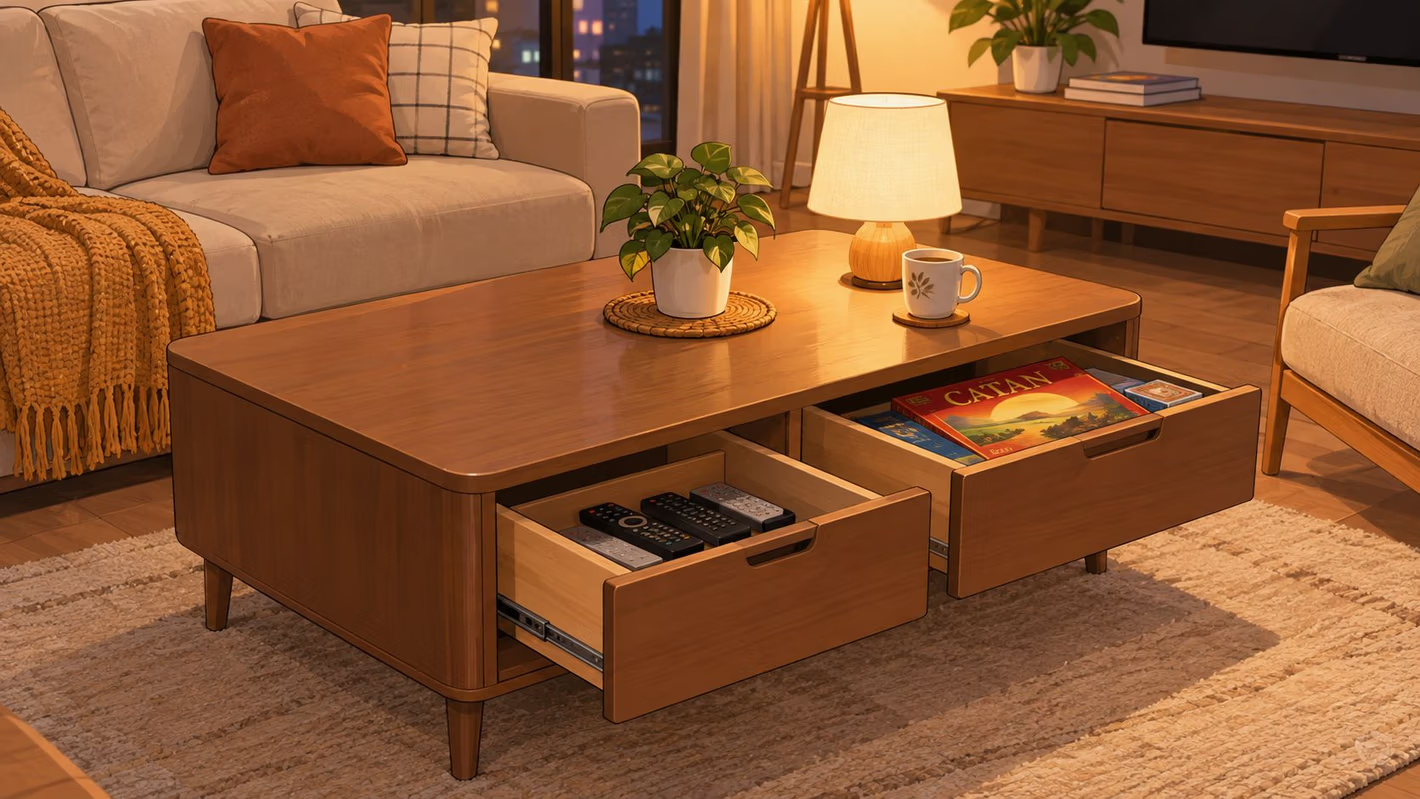
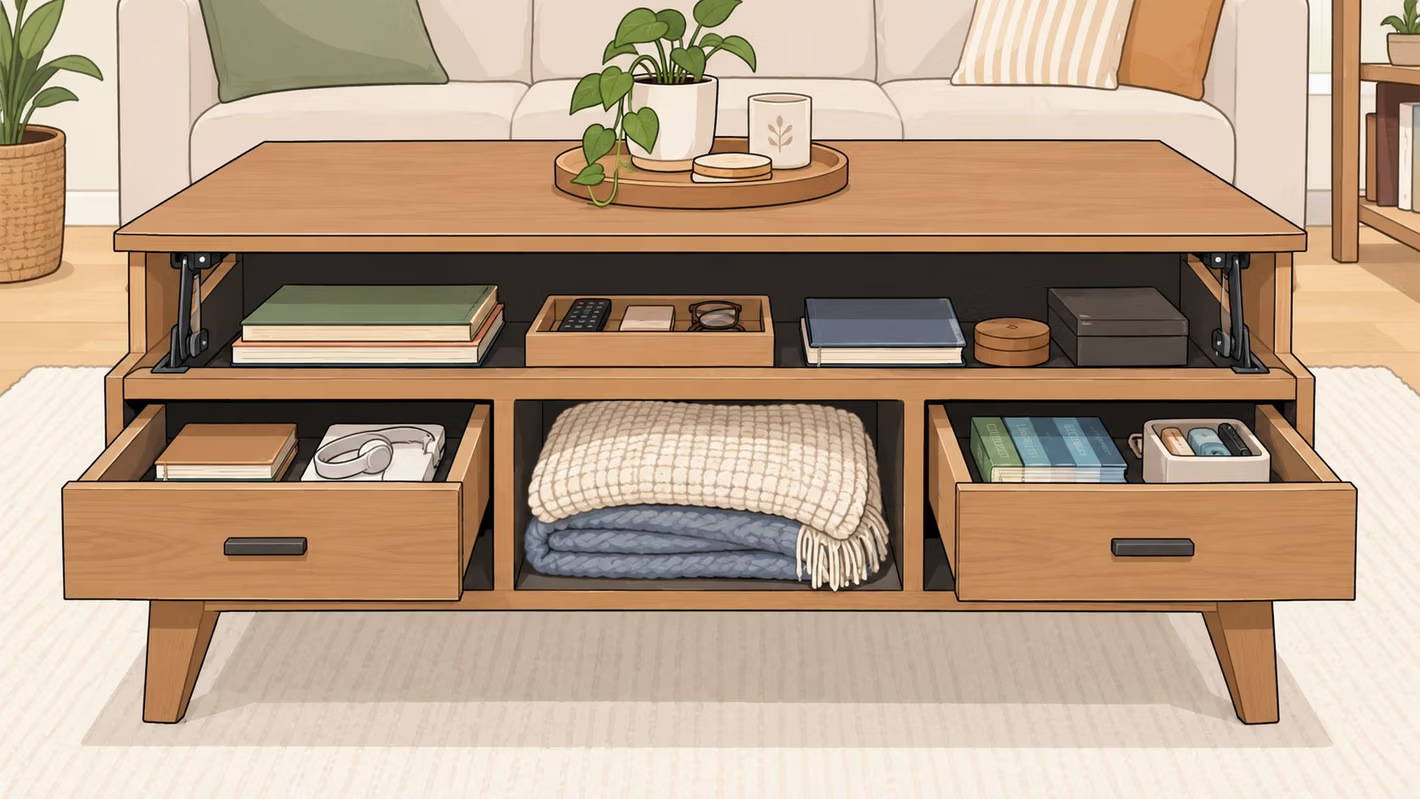
A storage model can keep the daily items close without leaving them scattered across the room. Drawers suit remotes and small electronics, shelves make books and baskets easy to reach, and a concealed cavity gives blankets or toys a quick place to disappear. A lift-top version can also create a temporary surface for a laptop or a board game, although it shouldn't be treated as a permanent desk.
A practical response to smaller rooms
Storage-integrated coffee tables belong to a broader move toward multifunctional furniture. One industry analysis values the global home storage market at USD 82.3 billion in 2024 and projects USD 135.7 billion by 2035, with a 4.6% CAGR from 2025 to 2035. Another report places the broader home storage and organization market at USD 12.4 billion in 2024, projecting USD 18.3 billion by 2028. Its living-room category represents about 28% of the total, compared with 19% in 2020, while lift-top coffee tables grew 15% in 2024. (industry analysis of living-room storage furniture)
That shift makes sense in homes where every piece has to earn its footprint. A table can handle movie-night snacks, hide charging cables, and hold a throw without consuming the floor area required by a separate storage unit.
For additional ideas on organizing the whole room, Gates' living-room storage solutions offer a useful starting point. Local shoppers can then compare the ideas against actual sofa sizes, rugs, walkways, and family routines.
What a Coffee Table with Storage Actually Does
A coffee table with storage is a low, central table designed for both everyday use and organized containment. The top holds drinks, books, decorative objects, and small items, while the lower structure provides a drawer, shelf, cabinet, cubby, or hidden compartment.
A plain accent table has a narrower job. It may hold a tray, lamp, or vase, but it doesn't offer a deliberate place for the items that normally create living-room clutter. A storage coffee table turns the central surface into a working piece of furniture rather than a purely decorative one.
The main terms made simple
- Drawer: A sliding compartment suited to remotes, reading glasses, game pieces, and charging accessories.
- Shelf: An open platform for baskets, books, blankets, or items that need quick access.
- Cabinet: A concealed compartment behind a door, useful when visual tidiness matters more than instant reach.
- Lift-top: A hinged surface that rises toward the user and can create a more comfortable temporary work or eating position.
- Hinged lid: A top that opens to reveal a cavity, often used for larger soft goods.
- Open cubby: A fixed, accessible section that keeps contents visible and easy to retrieve.
A storage ottoman differs because its upholstered top and softer edges make it suitable for feet, extra seating, or a tray. A trunk-style table usually emphasizes one large enclosed compartment and a substantial, box-like profile. A lift-top table combines a hinged or spring-assisted surface with interior storage, so it offers more flexibility but also introduces more hardware to inspect.
Start with the items that need a home
Before shopping, households should gather the objects that currently sit on the floor or sofa. Remotes and small devices point toward drawers, while blankets and board games need a deeper cavity or open shelf. A family that wants to hide everything quickly should prioritize enclosed storage, while a reader who reaches for books throughout the day may prefer visible shelving.
Gates' decluttering and storage furniture guide can help households identify which pieces need frequent access and which can stay tucked away. That distinction prevents a table from becoming a second junk drawer.
Storage Styles Compared from Drawers to Lift Tops
A storage table earns its floor space by matching the way your household uses the room. Drawers keep small items sorted, open shelves make retrieval quick, and lift tops add a work surface with concealed storage. Choose the mechanism first, then judge the finish and shape.
Storage Mechanism Comparison
| Mechanism | Best For | Access Speed | Capacity | Trade-offs |
|---|---|---|---|---|
| Full drawer bank | Families with many small items | Fast | Moderate, divided space | Less internal depth and more hardware |
| Single soft-close drawer | Remotes, chargers, and reading materials | Fast | Moderate | Limited to one compartment |
| Open lower shelf | Baskets, books, and blankets | Immediate | Generous | Contents collect dust and remain visible |
| Cabinet doors with adjustable shelves | Concealing mixed clutter | Moderate | Flexible | Doors need swing clearance |
| Lift-top or hinged surface | Temporary laptop, snack, or game surface | Moderate | Generous concealed space | Added weight, cost, and mechanism wear |
Full drawer banks deliver the cleanest sorting system, but their divided interiors reject bulky blankets and games. A single soft-close drawer is simpler to maintain and suits remotes, chargers, and reading materials. Open shelves hold baskets well, though everything remains visible and needs regular dusting.
Cabinet doors hide mixed clutter and give the room a calmer appearance. Check the swing path before buying. A door that hits a sofa leg or catches on a rug edge will frustrate you every day.
Lift tops deserve a close inspection because the mechanism changes how the table functions. They can provide roughly 3 to 6 cubic feet of concealed storage, with larger examples approaching 7 cubic feet, enough for blankets, cables, laptops, or board games. The same market examples list tabletop limits around 100 to 200 pounds, open-shelf limits around 33 to 40 pounds, and drawer limits around 16.5 pounds. The frame usually carries more weight than the storage components, but the hardware still needs careful handling.
Southern Oregon's changing humidity makes construction details worth checking at the showroom. Test drawer alignment and hinge action, inspect the edge finishing, and press lightly on the frame for unwanted movement. A useful resource on organizing small individual items is this reusable pod storage guide. The same principle applies inside a coffee table: frequently used objects need an assigned, accessible place.
For shoppers considering a hinged surface, Gates' lift-top coffee table collection offers a focused way to compare opening styles before visiting the showroom. Ask about available financing while you compare mechanisms, especially when a stronger frame or smoother hardware raises the purchase cost.
Sizing Your Storage Table for Real Life Comfort
A storage coffee table should support the sofa, not crowd it. Start with the room's seating geometry. A practical target is a table about two-thirds the sofa length, positioned within 2 inches above or below the seat height, with 16 to 18 inches of clearance from the seating edge. These proportions keep drinks and stored items within reach without forcing knees against the table.
Storage makes accurate sizing even more important. Drawers and lift tops need room to open, and a deep case can restrict movement between the sofa and a doorway. Common examples measure around 40 to 48 inches long, 18 to 22 inches high, and 20 to 24 inches deep, giving useful capacity without overwhelming many living rooms.
Coffee Table Sizing Quick Reference
| Sofa arrangement | Recommended table length | Main sizing priority | Watch out for |
|---|---|---|---|
| Short sofa | About half to two-thirds of sofa length | Keep the table compact and easy to reach | A deep table can leave too little room for knees |
| Standard sofa | About two-thirds of sofa length | Match the seat height closely | Drawers or lift tops need unobstructed opening space |
| Long sofa or sectional | About two-thirds of the main seating length | Relate the table to the primary seating zone | A chaise, recliner footrest, or corner walkway may require a shorter or narrower table |
A separate furniture measuring guide places the table roughly 14 to 18 inches from the sofa and keeps its length within 8 to 12 inches of the sofa length. Those figures can differ from the more conservative clearance recommendation, so test the actual room rather than following a rule blindly. Deep cushions, frequent reaching, and children moving through the seating area all favor the wider clearance.
Measure the path, not just the rug
Depth determines both storage capacity and circulation. A lift-top with extra depth may hold more, yet it can narrow the route to the kitchen or hallway. Round and oval tables remove sharp corners from busy walking lines. Rectangular tables often make better use of a narrow room, provided the corners do not interrupt the main path.
A smaller table is the right choice when it preserves movement around the seating group. Before visiting a showroom, measure the sofa, seat height, rug, door swings, and routes to nearby rooms. At Gates Home Furnishings' 30,000-square-foot showroom in Grants Pass, shoppers can test table scale beside sofas instead of judging dimensions from a screen. Ask about financing while comparing sizes, especially if the room requires a more compact design with storage hardware that remains easy to operate.
Choosing the Right Style and Material for Your Home
Material choice should follow household behavior, not a trend photograph. A family with children, pets, and frequent snacks needs a finish that can tolerate daily handling. A quieter sitting room may justify a more delicate surface if the owners are willing to maintain it.
Match the material to the room
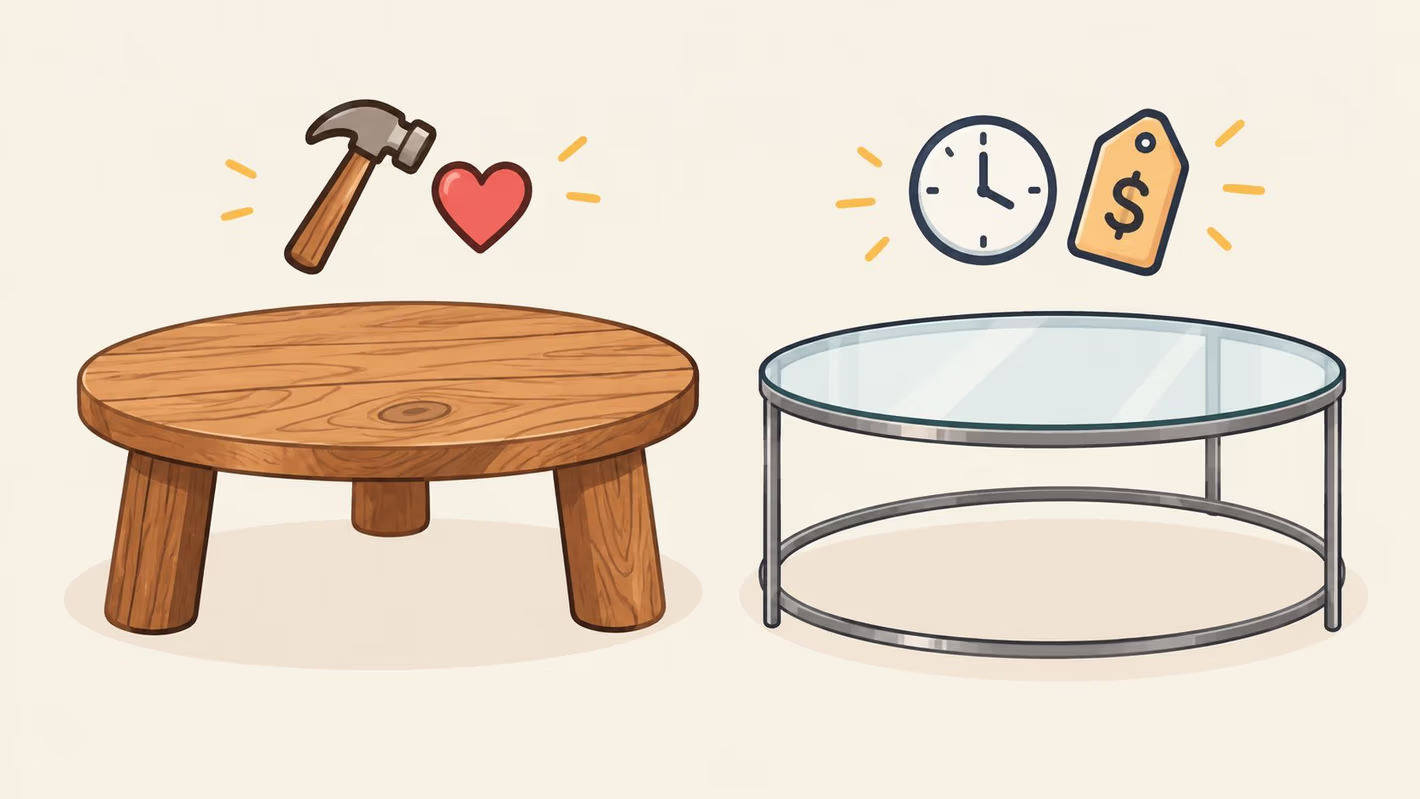
Solid wood brings visible grain, warmth, and a substantial feel. It also adds weight, and natural wood needs sensible humidity control so seasonal movement doesn't become a maintenance surprise. Reclaimed wood and teak can give a room the character of a one-of-a-kind piece, especially when the rest of the furniture feels too uniform.
Engineered wood and laminate offer broad finish variety and generally lighter pricing. They can perform well for ordinary household use, but edge protection, even loading, and careful cleaning matter. These materials make sense for renters, first homes, and rooms where the table may eventually move.
Metal frames suit modern or industrial interiors and can make a storage table feel visually lighter. Metal may feel colder beside soft upholstery, so wood shelving or a warmer finish can balance the look.
Glass tops preserve an open sightline and can make a small room feel less crowded. Fingerprints show quickly, and glass doesn't conceal the visual presence of items stored on an open lower shelf.
Let the home's direction guide the finish
Farmhouse rooms usually benefit from textured wood and straightforward hardware. Mid-century modern spaces pair well with tapered legs, restrained profiles, and warm timber tones. Coastal rooms can use pale finishes, woven baskets, and open storage, provided the table doesn't become a display shelf for every small object.
For a busier household, a medium wood tone often hides everyday marks better than a very dark glossy finish. Families with young children may also prefer rounded corners or an oval shape. The shape and finish should support the room's movement, not just echo the sofa.
Readers comparing construction choices can use Gates' solid wood and veneer guide before making a decision. The strongest recommendation remains simple, test the finish in person. Touch the edge, inspect the grain, open the storage, and view the table beside upholstery under real showroom lighting.
Styling and Maintenance Tips That Keep It Working
A storage coffee table works best when the top remains usable. A decorative arrangement that blocks a drawer or prevents a lift-top from opening defeats the purpose of the furniture.
Keep the surface useful
A low tray can group remotes, coasters, and a small decorative object without scattering them across the top. Books can form a short stack, while a bowl or shallow basket keeps smaller items contained. Leave the opening path clear around drawers and hinged surfaces.
Interior storage should follow frequency:
- Daily items: Place remotes, reading glasses, and chargers in the easiest compartment.
- Weekly items: Store game controllers, magazines, or craft supplies where access takes a little more effort.
- Occasional items: Put spare blankets and seasonal accessories in the deepest cavity.
- Family items: Use labeled baskets when several people share the table.
Protect the finish and hardware
Wood usually needs a soft, lightly damp cloth followed by a dry one. Metal benefits from prompt removal of fingerprints and spills, while glass needs a cleaner appropriate for the finish and a careful wipe around the frame. Laminate should be kept free of standing moisture, especially near seams and edges.
Solid wood also benefits from stable indoor conditions. Furniture should not sit tight against a heat source, and households should check for loose pulls, screws, hinges, and glides as the seasons change. A small amount of manufacturer-approved lubricant can help some mechanisms, but excess product can attract dust or damage nearby surfaces.
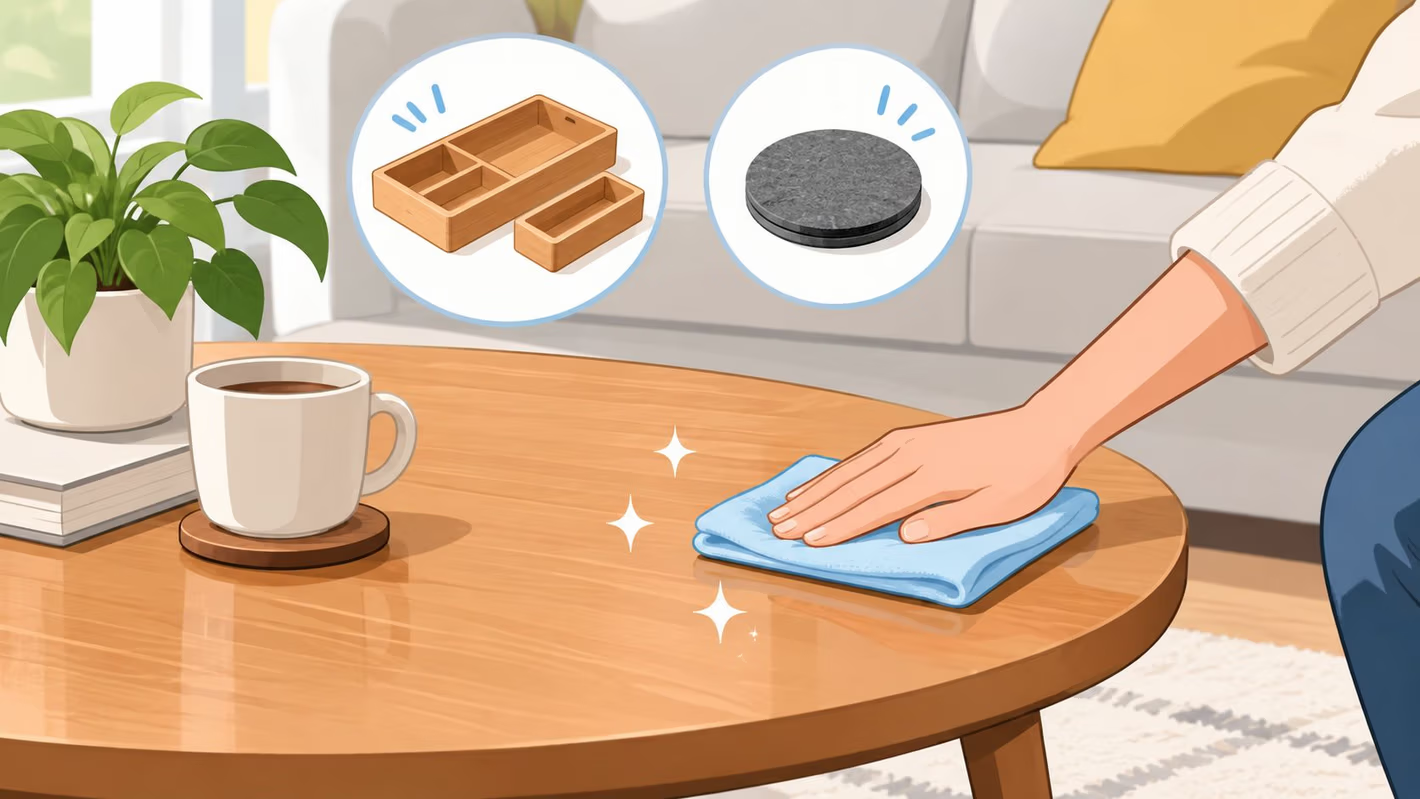
Felt pads under trays and accessories reduce scratches, and rotating decorative pieces keeps the room fresh without crowding the table. The best routine is brief and regular, open the compartments, remove stray items, wipe the surfaces, and test the hardware before a small issue becomes a failure.
Shopping Local with Gates Home Furnishings
A coffee table is easier to judge in a room than in a product photo. At Gates Home Furnishings in Grants Pass, shoppers can open drawers, test lift-top hinges, check whether a cabinet door needs too much floor clearance, and compare the table with nearby sofas. Sitting down matters because seat height and reach feel different from what measurements suggest.
The store has served Southern Oregon since 1946, when George Gates Jr. founded the business on the promise of “Service and Value.” That philosophy remains relevant to a purchase involving fit, finish, hardware, delivery, and long-term use. The showroom serves Grants Pass, Medford, Central Point, Ashland, and the broader Rogue Valley.
What to settle before purchase
- Bring measurements: Include sofa length, seat height, rug dimensions, walkway width, and doorway measurements.
- Test the mechanism: Open every drawer and lift surface fully. Check whether the motion feels controlled and whether the top stays stable.
- Ask about construction: Confirm the materials, weight limits, hardware, finish care, and whether replacement parts are available.
- Review delivery: In-stock and special-order timing can differ, so shoppers should ask about the expected schedule before completing the purchase.
- Plan placement: Professional in-home delivery can handle heavy solid-wood pieces, assembly, and setup rather than leaving a household with unopened boxes.
Gates carries brands including La-Z-Boy, Flexsteel, Ashley, and Beautyrest, alongside its Unique Finds, such as reclaimed wood, teak, and one-of-a-kind statement pieces. Clearance and outlet areas can also help budget-conscious shoppers find a practical table without abandoning the storage requirement.
Financing is available through Gates Easy Pay, including $0 down, 6-month interest-free options, and no-credit-needed options, subject to the applicable program terms. Shoppers can also request finish swatches or arrange an in-home measurement consultation. For coordinating artwork after the table is selected, a room match art finder can help narrow the visual direction without replacing the value of seeing finishes in person.
Gates Home Furnishings offers storage coffee tables, nearby seating for scale testing, Unique Finds in reclaimed wood and teak, flexible Gates Easy Pay options, and professional white-glove delivery with assembly and mattress haul-away. Visit the Gates Home Furnishings showroom in Grants Pass to test the mechanisms and measure the fit, or browse the collection online before planning a visit.