How to Furnish a New Home on a Budget Without Overspending

The truck is gone, the keys are in your hand, and the living room is still a stack of boxes. The bed is a mattress on the floor, dinner is on a card table, and a sofa you liked is sitting in an open tab next to the moving bill. That is the week most Grants Pass and Rogue Valley households start furnishing, not the week they finish it.
Furnishing a new home on a budget is a cash question before it is a style question. Rent or the mortgage, utilities, the move, and insurance come out first. What is left is the money that can buy a bed, a seat, and a table without borrowing against next month. A lower sticker that fails in two years, or a delivery you did not price, costs more than waiting.
We would rather see a home sleep well and sit well than see every wall styled on move-in weekend. The order below puts the pieces you use every day first, prices them by the years they last, and treats assembly and haul-away as part of the bill.
Split Your Budget Room by Room
Start with the cash you can spend, not with a room you want to finish. Write down what is in the account after the move. Subtract the next rent or mortgage payment, utilities, leftover moving costs, insurance, and a starter emergency reserve. The remainder is the furnishing budget. If that number is smaller than the wish list, the wish list loses.
A first-year plan does not have to fill the house. In 2024, Americans who moved in the previous five years budgeted an average of $1,588 for updates to their new home, according to Lemonade's survey with Talker Research of 2,000 movers. Use that figure as a sanity check. A household with $1,500 to $2,000 can cover sleep and one seating piece. A household with more can follow the shares below and still hold money back.
Say the furnishing budget is $10,000. The split keeps sleep and daily seating ahead of everything else, and it holds 10% until the truck has left.
| Room | Share of Budget | Amount on $10,000 | Buy Order |
|---|---|---|---|
| Bedroom (bed, mattress, nightstands) | 25% | $2,500 | 1 |
| Living room (sofa, recliner, tables) | 30% | $3,000 | 2 |
| Dining room (table and chairs) | 15% | $1,500 | 3 |
| Home office (desk and chair) | 10% | $1,000 | 4 |
| Entryway and storage | 5% | $500 | 5 |
| Decor and accents | 5% | $500 | 6 |
| Contingency reserve | 10% | $1,000 | Held back |
How to scale the shares
Multiply each share by your own furnishing budget. On $4,000, the bedroom share is $1,000, the living room share is $1,200, and the contingency is $400. On $6,000, those three lines are $1,500, $1,800, and $600. The percentages stay put. Only the dollars change. A smaller plan drops the later rows until cash returns.
What the buy order protects
Buy in the order column, not in the order a showroom walk tempts you.
Sleep comes first. A real mattress and a stable frame decide how the first month feels. Nightstands can be simple.
Seating is second. The sofa or recliner is the piece the household uses every evening. One good seat beats a matched set you cannot afford to keep.
Dining is third. A table and enough chairs for the people who live there. Extra chairs can wait for a holiday.
A desk is fourth, and only if someone works at home most days. A temporary surface is fine until the bed and sofa are paid.
Storage is fifth, then decor last. Lamps and rugs matter, but they should not displace the bed.
Patience with that order is a money habit, not a decorating trick. A short set of quotes on building wealth from The Money Maniac is a useful reminder that keeping cash intact beats filling every corner at once.
Practical rule: The contingency is not spending money. It pays for a stair carry, a forgotten lamp for the bedroom, or a haul-away you did not see on the tag. Spend it on decor and the next surprise comes out of rent.
Measure Every Room Before You Shop
A piece that will not fit is the most expensive “deal” on a furnishing plan. Returns, restocking, and a second delivery eat the contingency before you have bought a lamp. Measure the room and the path into it, then shop.
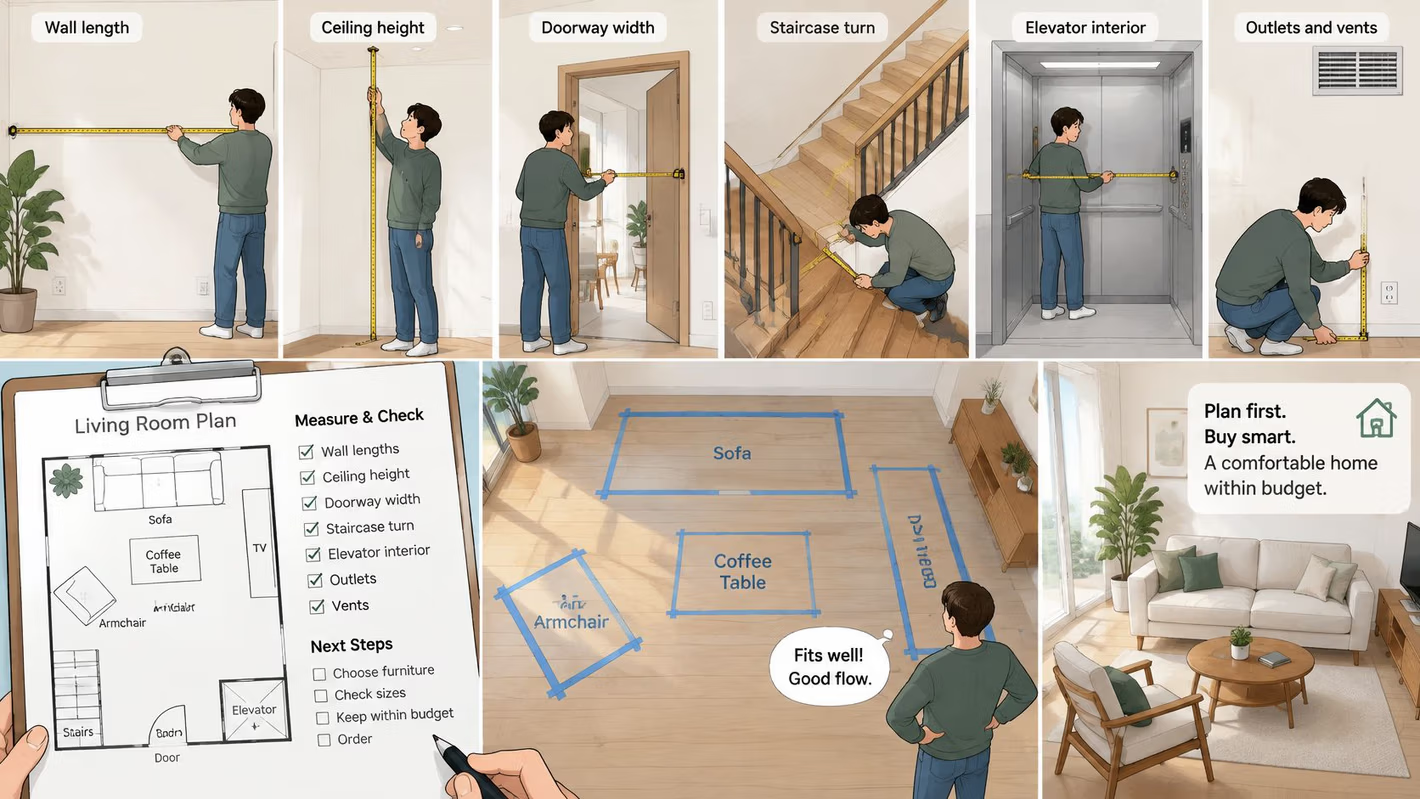
Walk the measurement in this order. Each step exists because a different mistake shows up at delivery.
- Record the shell of the room. Measure wall lengths, ceiling height, doorways, stair turns, elevator interiors, outlets, and vents. Sketch them on a simple floor plan. A sofa that clears the wall can still block the only heat vent.
- Tape the footprint, not a rectangle from the tag. Include a sectional's full length and a dining table with chairs pulled out. Tape on the floor shows whether two people can pass.
- Add clearance people use. Keep about 800 mm (roughly 31 inches) of walkway, and about 900 mm behind a pulled-out dining chair where the room allows. Product width alone does not include knees or a walker.
- Open every door and drawer in your head, then in the tape. A dresser against a wall is useless if the drawer hits the bed. A cabinet door that stops at 45 degrees will annoy you every morning.
- Check seat height against the person who will use it. Most adult chair seats sit around 400 to 450 mm, and about 430 mm is a sound target for a non-adjustable chair. Seniors and anyone with a stiff hip need that check before the chair comes home. Knees should clear the seat, and arms should rest without a shrug.
- Prove the delivery path. Door casings, a tight stair landing, and a hallway corner fail more sectionals than the living room does. If the piece cannot turn, it becomes a paid return.
These clearances come from ordinary interior practice, and a fuller walk-through sits in our guide to measuring furniture. Photograph each room with the tape still on the floor. Those photos let you compare a floor sample on your phone without guessing.
Bring the photos and the sketch when you shop. We will measure with you again before delivery, and the room should be cleared the day the piece arrives so it can go where you planned.
Compare Cost Per Year and Source Pieces Wisely
The cheapest tag is often the expensive sofa. In 2023, 85% of surveyed shoppers said they had bought or sold used items during the previous year, and 78% cited getting a good deal as a reason for buying used, in a GlobalData survey of 1,500 consumers. A good deal is the cost spread over the years you keep it, not the number on the sticker.
A simple cost-per-year check
Divide the price by the years you expect to use the piece. Then add delivery, assembly, and any cushion you will replace, and subtract a realistic resale if you might move.
An $800 sofa that sags in four years costs $200 a year. A $1,600 solid-frame sofa with cushions you can replace, kept for ten years, costs $160 a year, even before you count a second delivery you never had to book. The higher tag wins. The same math flips for a trend pillow or a kid's desk you will outgrow. There, a lower price and a shorter life are the rational buy.
Three rules keep the math honest.
Buy now when failure is expensive or uncomfortable. That is the mattress and the seat you use every night. A cheap sleep set that you replace in a year wipes out the “savings.”
Buy used, outlet, or clearance when the structure is the value. Tables, bookcases, and dressers with tight joints do not care that the finish is a year old.
Wait on decor and anything you chose because it is current. Those dollars belong in the 5% accent share, or in next year's cash.
Where each piece should come from
| Source | Best For | Check Before You Buy |
|---|---|---|
| Gates Outlet clearance and special values | Sofas, dining sets and bedroom pieces in excellent condition | Confirm the piece's condition, returns and any replacement parts |
| Previously owned solid wood | Dressers, bookcases, side tables and dining chairs | Test joints, drawer glides and upholstery seams for wobble and wear |
| Unique Finds (reclaimed wood and teak) | Statement tables, consoles and one-of-a-kind living room pieces | Inspect joints, fasteners, finishes and moisture damage, since reclaimed material varies |
| New from a full-line store | Mattresses, sleep sets and high-use seating | Compare the total cost, including delivery, assembly and protection, against the outlet option |
Outlet and scratch-and-dent stock is where a sound frame often shows up below a new price. Our scratch and dent furniture page is the place to see what is on the floor this week, since that inventory turns over.
Run the same three checks on every source. Wiggle the frame at the arms and the back posts. Open every drawer and door, then close them without lifting. Look under cushions and along the feet for moisture stains, sagging foam, and loose hardware. Reclaimed wood and teak vary by the building they came from, so a pretty top with a soft joint is a no.
If a component fails later, repair or replacement of that part beats throwing out the whole piece. And if a delivered item is wrong, Gates Home Furnishings offers a 14-day satisfaction guarantee: notify the store within 14 days of delivery and you may re-select merchandise of equal or greater value, or take a full refund, excluding bedding.
Add Textiles, Lighting and Appliances to the Plan
Furniture is not the whole first month. Window coverings, a couple of lamps, a rug, and towels show up the week you realize the bedroom faces the street. List them before you shop so they do not raid the bed budget.
Appliances are the line that surprises people. In a 2024 Realtor.com survey reported by Investopedia, 40% of users who moved into a new home also purchased new appliances. Walk the kitchen before you assign dollars. If the range and refrigerator stay, leave them off the furnishing plan. If they do not, they are their own line, and the contingency is the only furnishing money that should touch them.
Buy the non-furniture basics in this order.
Window coverings for the bedroom and living room come first. Privacy and sleep matter more than a styled coffee table. A simple rod and panels beat custom drapes you cannot afford until month six.
Two or three lamps at eye level come next, one for each main seat. Overhead light alone leaves a room harsh at night and pushes people back to the phone. Our notes on how to put a living room in the best light walk through lamp height without adding fixtures you do not need.
One area rug comes third, sized so the front legs of the sofa sit on it. That single rug makes the seating feel finished. Measure it against your floor plan, not against the size printed on the tag. A rug that stops short of the sofa looks smaller than the room and rarely goes back without a fee.
Bath and kitchen textiles wait until the large pieces are in the house. Towels and a drying mat are real needs, and they are cheap enough to buy after you know delivery did not eat the reserve.
Keep rugs, lamps, and textiles inside the 5% decor share. If they overflow, cut the rug size or borrow a lamp from another room. Do not shrink the mattress or the sofa to pay for them.
Finance Without Overextending Your Budget
A sofa payment may look manageable on its own, but rent, utilities, and existing installment plans come due on the same calendar. Set a monthly furnishing limit using the cash left after essentials, then choose purchases that fit it. Buy-now-pay-later can make unplanned purchases easier, so check the full balance and payment dates before committing.
- Put every due date on one calendar, including rent, utilities, and plans you already have.
- Read the offer terms. A no-interest promotion differs from deferred interest, which may be charged back if you miss the payoff date.
- Check the cost of a late payment in dollars. A missed date can erase the savings from a promotion.
- Keep to your monthly cap. If your limit is $150, a plan requiring $220 does not fit, even with $0 down.
If a payment would push you toward a short-term advance, wait on the purchase. Learn how cash advance apps work and what borrowing to cover a gap could cost before treating one as furniture money.
What Gates Easy Pay is for
Compare Gates Easy Pay with any separate installment plan before taking on another payment. The available options include $0 down with 6 equal payments, no-interest terms if the balance is paid in full within the promotional period, no-credit-needed financing, and lease-to-own programs. Approval is online. Read the current terms on the Gates furniture financing options page, and consider financing the bed and main seat first.
Let dining and storage wait until the first plan is half paid. Keep decor as a cash purchase. A lamp financed because its monthly payment looks small can add another due date to an already tight budget.
How Delivery and Setup Protect Your Budget
A sofa's price is only part of the cost. Add delivery, assembly, packaging disposal, and any separate haul-away before comparing furniture prices. A lower-priced piece can cost more overall if you need to arrange extra help or transport.
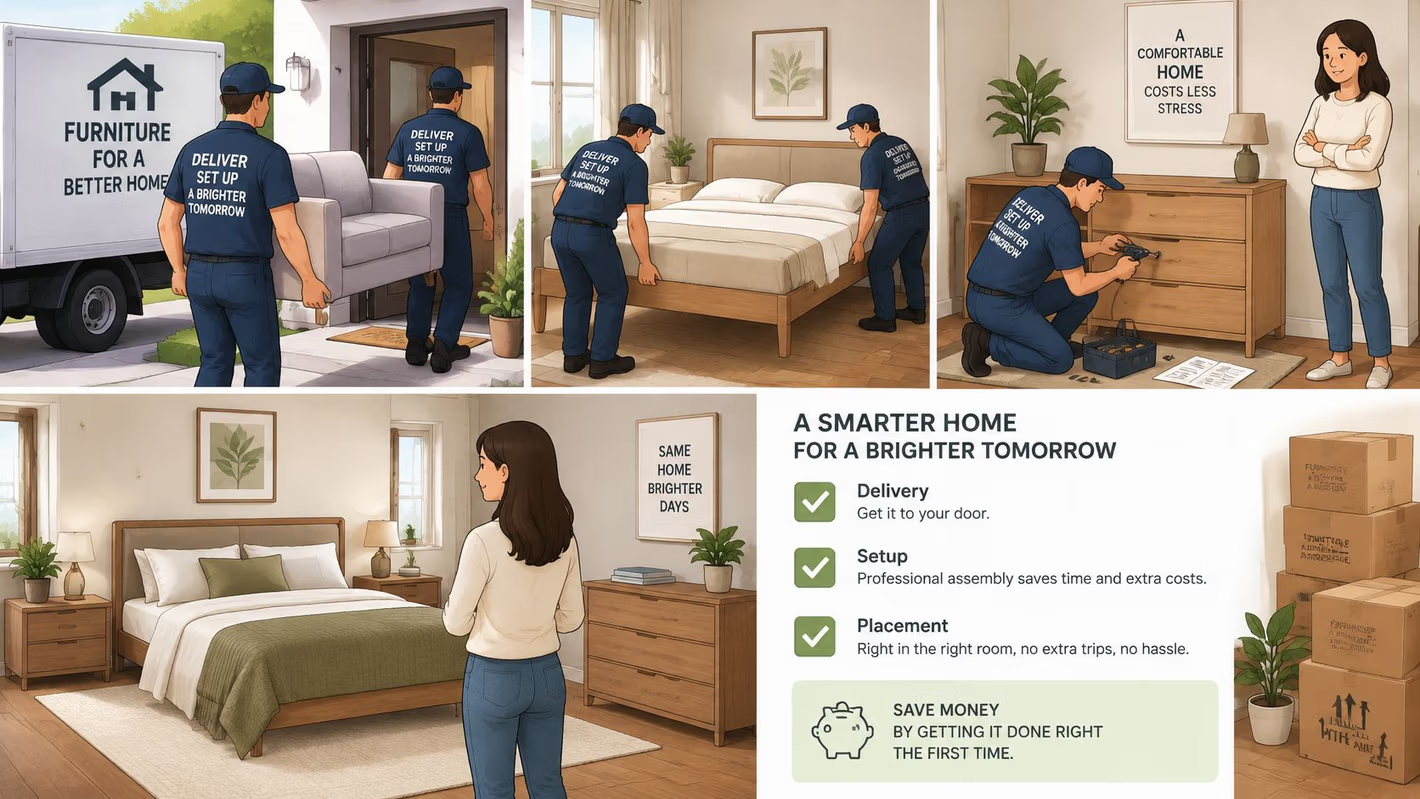
Gates Home Furnishings delivers to the room of your choice, unpacks and assembles the furniture, and places it where you want it. Review the furniture delivery and assembly details before checkout so you know what to prepare.
- Confirm the destination. If setting up in the designated room is not feasible, delivery goes to an accessible area instead.
- Clear the room and the route. Remove obstacles from the space where the furniture will go, including the path from the entrance.
- Measure again before delivery. Check the furniture dimensions against doorways, halls, and stairs, as well as the destination room.
- Ask about mattress haul-away. Gates removes an old mattress or foundation when delivering a new one if the old item is safe and sanitary to move.
- Check the furniture and learn its features. After delivery, Gates inspects the furniture, cleans and corrects minor defects, and shows you how to use it. Packaging materials are taken away for recycling and disposal.
A sectional forced through a landing becomes a budget problem. Gates Home Furnishings is not responsible for damage that could result when furniture is moved through narrow halls, doorways, or stairwells with limited maneuverability. Measure tight turns carefully and raise any access concerns before delivery.
Include delivery and setup in the total, then compare the full cost with other options. The right choice protects your cash flow and avoids unexpected work after the furniture arrives.
Visit Our Grants Pass Showroom to Start
A recliner can look comfortable online and still feel wrong after ten minutes. In Gates Home Furnishings' Grants Pass showroom, sit in the styles you are considering and compare how the seats support you. Check the mattress options in person, too, before committing a large share of your budget to something you use every night.
The showroom carries brands including La-Z-Boy, Flexsteel, Ashley and Beautyrest, along with reclaimed-wood and teak pieces. If you are still choosing among living room, dining room or bedroom furniture, ask to speak with a qualified staff interior decorator. They can discuss your tastes, lifestyle and budget, then help plan the room. Decorating assistance is free with a qualified purchase.
Use the visit to settle one decision at a time: first the piece you will use most, then the next purchase your cash flow can support. Gates designers can also guide you in choosing fabric and planning a complete room layout. Keep the dollar limit for the visit clear, so a useful upgrade does not crowd out another planned purchase.
Gates Home Furnishings has served the Rogue Valley since 1946. Visit the Grants Pass showroom to compare furniture in person, or browse the collection online if you are planning from farther away.