Reclaimed Wood Entryway Table Your Complete Guide


The front door opens, shoes pile up, keys disappear, and the wall by the entry stays empty because nothing feels quite right there. That's a familiar problem in Grants Pass, Medford, and across the Rogue Valley. The entryway works hard every day, but it often gets treated like leftover space.
A reclaimed wood entryway table fixes that fast. It gives the drop zone a purpose, adds warmth the moment someone walks in, and brings in character that flat-pack furniture just doesn't have. In homes with mountain views, muddy boots, busy kids, and changing seasons, that kind of piece earns its keep.
Since 1946, George Gates Jr. built this business around a simple promise of Service and Value. That same mindset applies here. A good entryway table shouldn't just look good for a weekend. It should still make sense years later, after real life has happened around it.
Table of Contents
- Your Entryway's First Impression
- What Makes Reclaimed Wood So Special
- Finding the Perfect Fit for Your Entryway
- Exploring Styles and Construction
- Styling Your New Entryway Table
- Caring for Reclaimed Wood in Southern Oregon
- Experience the Gates Difference in Grants Pass
Your Entryway's First Impression
A bare wall by the front door makes a house feel unfinished. A cluttered one feels worse. The right table turns that spot into something useful without making the entrance feel cramped.
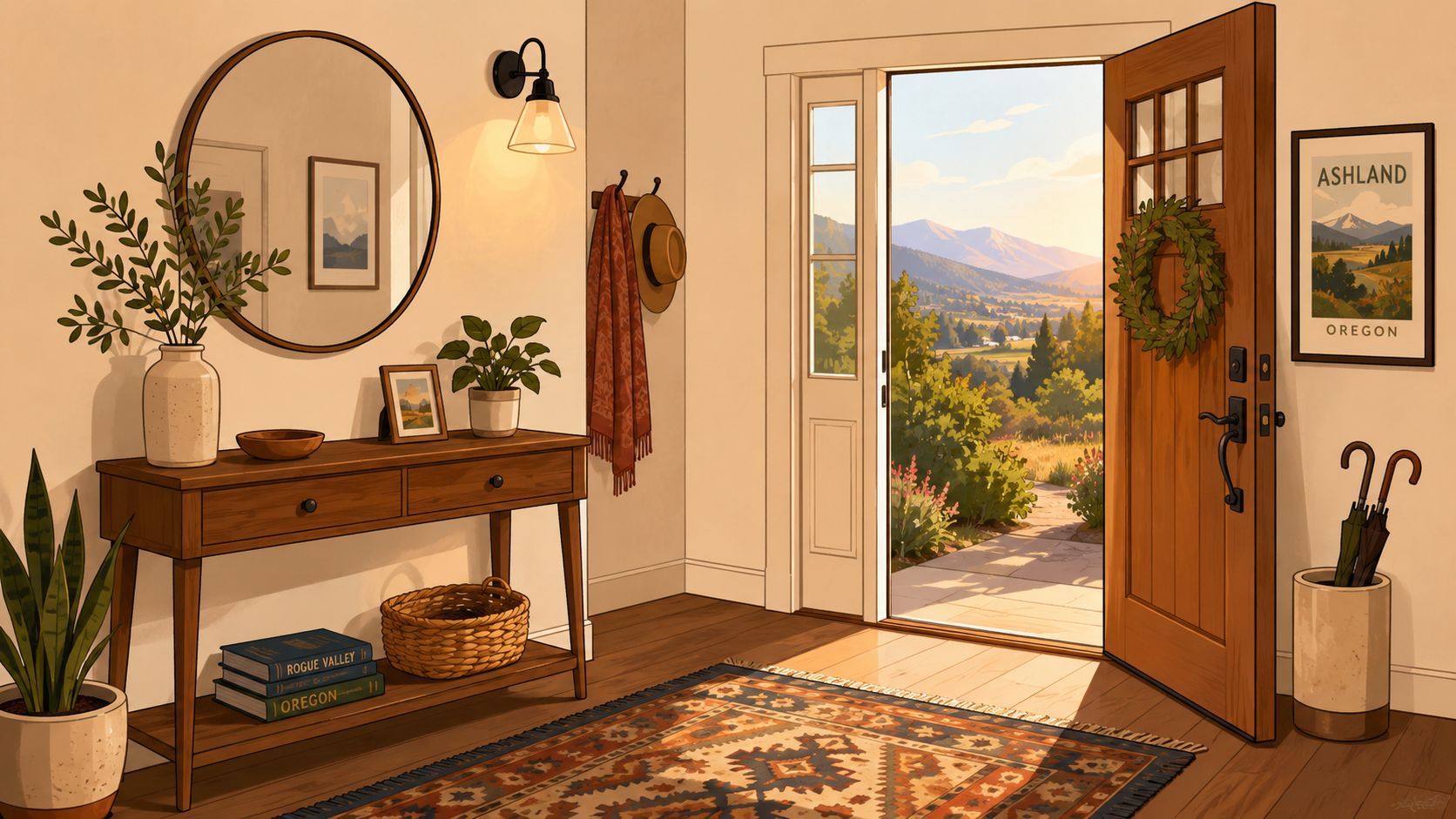
A reclaimed wood entryway table works because it does two jobs at once. It holds the daily essentials, and it gives the home an immediate sense of personality. Scuffs, grain variation, old saw marks, and aged color make the piece feel grounded instead of generic.
In Southern Oregon homes, that matters. Many entryways open straight into the living space, so the furniture near the door sets the tone for everything else. A reclaimed table says the home is lived in, cared for, and designed with intention.
For anyone sorting out entry styling, this guide to entry table design ideas and essentials is a useful place to start. It helps narrow down what belongs there and what just creates clutter.
A strong entryway doesn't need more furniture. It needs the right furniture in the right size.
The best reclaimed pieces also age well visually. New scratches don't ruin the look. Seasonal decor doesn't fight with the material. Everyday use tends to add character instead of exposing wear.
That's why this category has staying power. It isn't just about filling a wall. It's about giving one of the busiest spots in the house a surface that can handle real life and still look better than it did the day it arrived.
What Makes Reclaimed Wood So Special
Reclaimed wood earns its place in an entryway because it brings age, density, and visible character that new lumber rarely matches. Old-growth boards were often cut from slower-growing trees, so the grain tends to be tighter and the surface reads richer the longer you live with it.
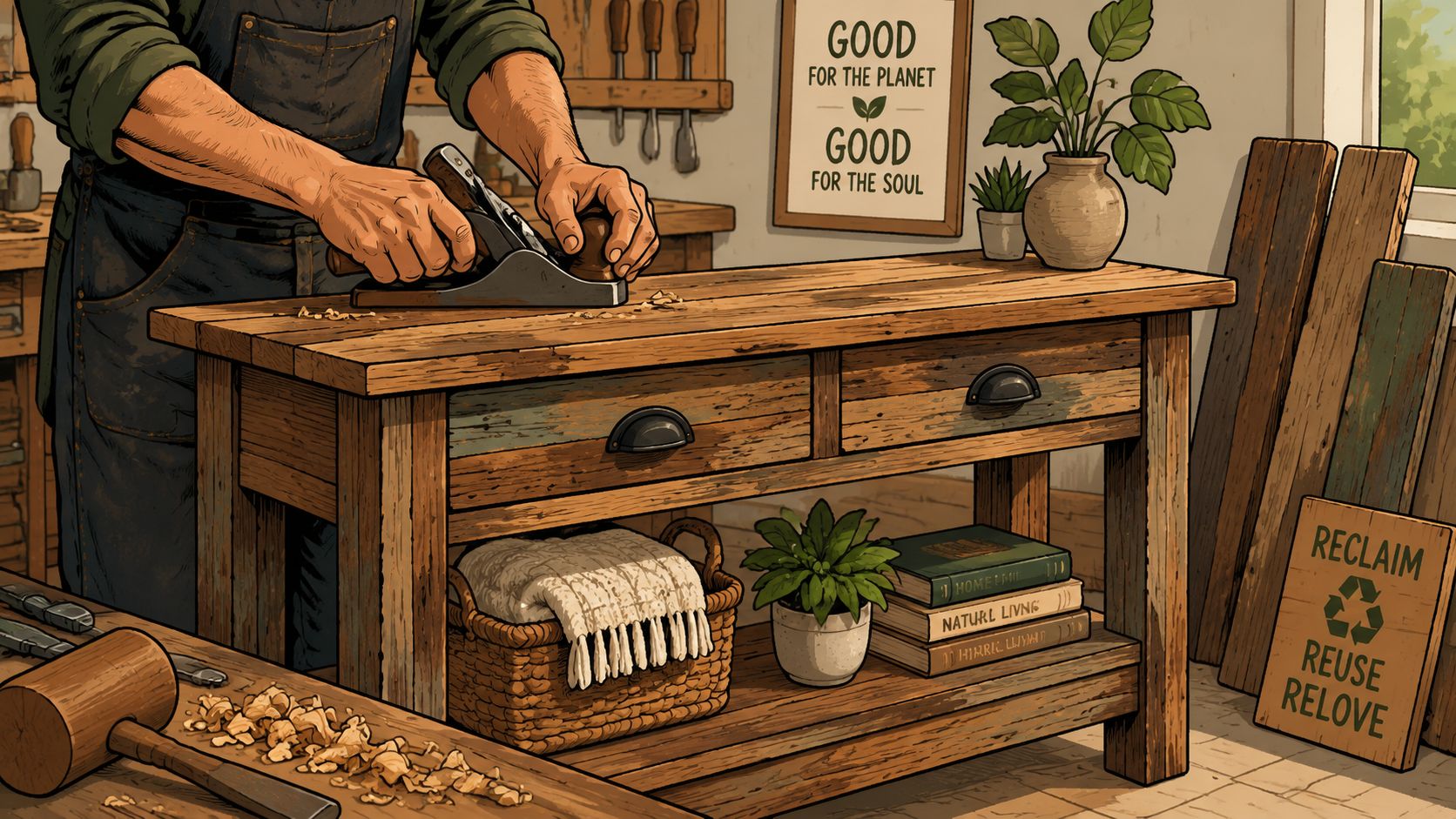
It starts with a real material history
A reclaimed wood entryway table carries marks that happened over decades, not marks stamped on in a factory. Nail holes, saw kerfs, weathering, mineral streaks, and color shifts give the piece depth. Those details matter because they keep the table from looking flat or mass-produced.
Reuse matters, too. The U.S. Environmental Protection Agency reports that wood is a major part of the municipal solid waste stream, and its 2018 Facts and Figures report on materials, waste, and recycling shows how much usable material still ends up discarded instead of repurposed. Good reclaimed furniture puts some of that wood back to work in a form that can last for years.
Here is what usually makes reclaimed wood stand out:
- Natural variation in grain that gives the top movement
- Patina from age and use that cannot be copied well
- Board-to-board color changes that make the piece feel collected, not manufactured
- Small repaired imperfections that add honesty instead of looking like damage
Those are the features you want.
It rewards owners who want furniture with staying power
Reclaimed wood also fits real homes better than many people expect. A simple console can read rustic, refined, industrial, or traditional depending on the base, finish, and hardware. For readers curious about how the material can become an ultimate luxury statement for Atlanta homes, the bigger lesson is clear. Reclaimed wood is flexible, but it never feels generic.
That long-term ownership piece matters even more in Southern Oregon. Our dry summers and heated interiors in winter can pull moisture from wood fast. Boards may shrink a little, joints can open slightly, and the top can feel drier than it did when it first came home. Reclaimed wood usually handles that aging with more grace than thin, factory-perfect surfaces, but it still needs the right finish and basic seasonal care.
That is one reason natural furniture styles in Oregon homes make sense here. They look right on day one, and they keep making sense after years of keys dropped on the top, bags slid across the edge, and seasonal humidity changes.
Reclaimed wood gives an entryway weight, warmth, and a look that improves with honest use.
A good reclaimed wood entryway table does more than look interesting in a photo. It lives well. That is what makes it special.
Finding the Perfect Fit for Your Entryway
You come in with groceries, kick the door shut with your heel, and the table catches your bag every time. That is not a style problem. It is a size problem, and it is the mistake that ruins more entryways than any bad finish choice ever will.
Measure the room before shopping
Start with traffic flow. Your entry table has one job before it does anything decorative. It needs to stay out of the way.
Measure the wall, then measure the space the door needs to open, then measure the walking path you use. Include baseboards, trim, vents, and any light switch or outlet that limits placement. In Southern Oregon homes, that practical approach matters even more because people tend to keep entry spaces working hard year-round, with wet jackets in winter, dusty shoes in summer, and daily in-and-out use that exposes a bad fit fast.
You do not need a complicated formula. You need honest numbers.
Use this quick check:
- Wall width: Make sure the table has breathing room on both sides.
- Usable depth: Measure from the wall to the edge of your clear walking space.
- Door swing: Open the door fully before you commit to a deeper top.
- Height above the table: Check mirrors, windowsills, art, and switches.
Choose depth before style
Depth decides whether a table feels helpful or annoying. In a narrow foyer or hallway, a slim profile usually wins. It leaves room to move, and it keeps the entry from feeling cramped the moment you walk in.
A bulky console belongs in an open entry with real square footage. In a tighter home, extra depth becomes a daily nuisance. People brush past it. Bags hit the corners. The piece starts to feel like an obstacle instead of furniture.
Buy for clearance first. Then choose the look you want.
That rule also pays off over time. Reclaimed wood is durable, but in our dry summers and heated winters, a table set in a tight traffic lane gets bumped, scraped, and dried out faster than one that fits the space. Good placement cuts down on edge wear and keeps the finish looking better longer.
Scale is easier to judge in person than on a product page. Thick tops, lower shelves, and heavy bases can make a table feel larger than the measurements suggest. If you want to compare proportions before bringing one home, browse reclaimed wood furniture near Grants Pass and pay close attention to how open or heavy each base looks.
The right entryway table should catch your keys, hold up to real use, and never interrupt the path through the house. If you notice it every time you squeeze past it, keep shopping.
Exploring Styles and Construction
Style matters, but build quality decides what your entryway table looks like after five Southern Oregon winters and five dry summers.
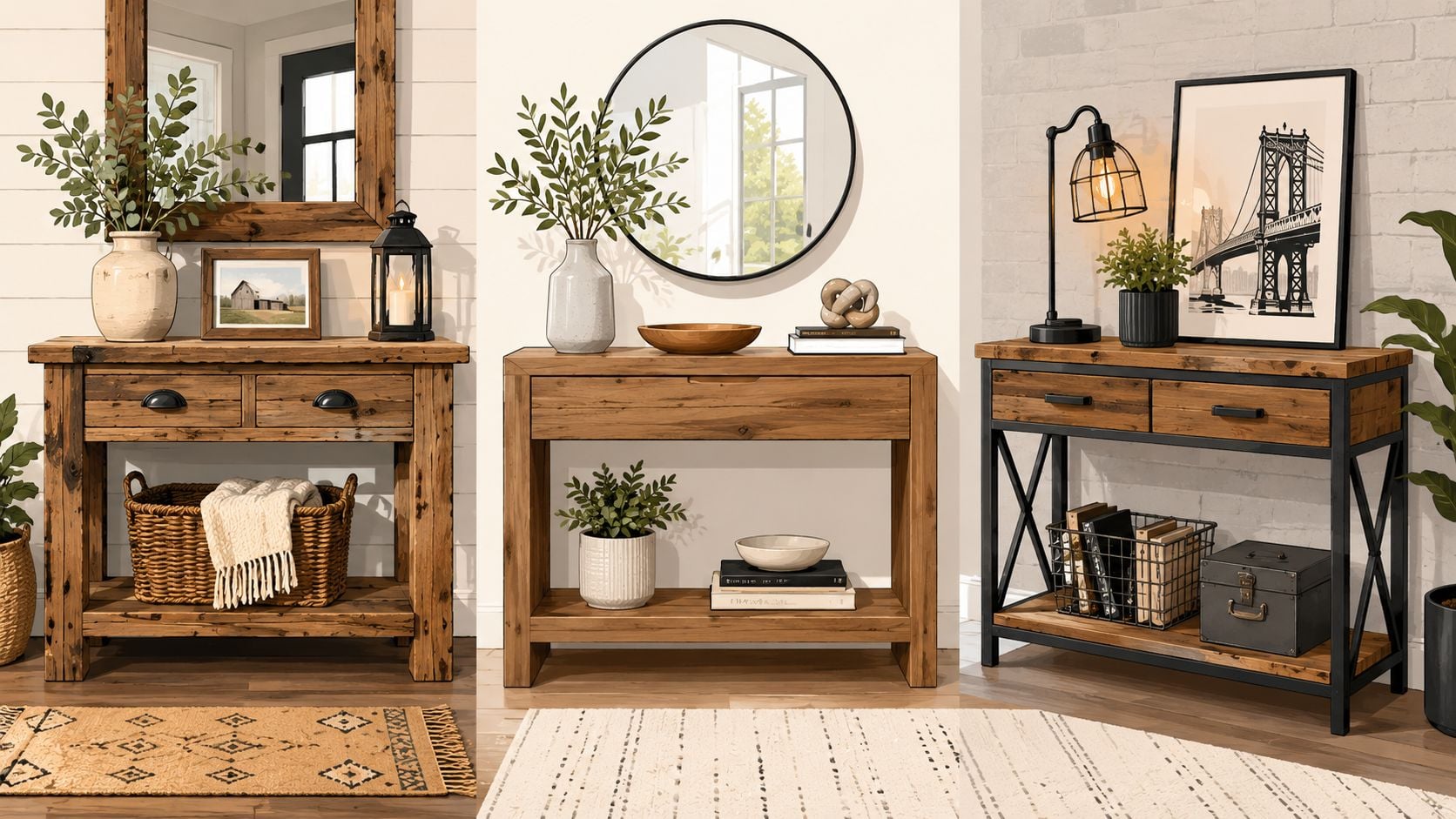
Reclaimed wood works in more homes than people expect. You can go rustic with a thick top and square legs, industrial with a metal base and cleaner lines, or quieter and more minimal with simple joinery that lets the wood carry the look. If you are sorting out the difference between warmer rustic pieces and cleaner metal-and-wood designs, this guide to industrial and rustic furniture styles will help you choose the right direction.
My advice is simple. Buy the style you want to see every day, but inspect the parts you will be dealing with every year.
Reclaimed lumber has history, density, nail marks, old fastener holes, and natural variation from board to board. That character is the appeal. It also means sloppy construction shows up faster. In Grants Pass, where indoor heat dries a home out in winter and summer air can be hard on wood finishes, weak joints and rushed assembly do not stay hidden for long.
Check these points before you buy:
- Corner blocks, braces, or solid apron support under the top
- Predrilled fasteners instead of screws forced straight into old wood
- Tight joinery at leg connections and frame intersections
- A level stance with no rocking on a hard floor
- A finish that feels sealed but not plastic-heavy, especially on the top surface
A reclaimed wood entryway table should feel solid when you push on it from the side. If it shifts in the showroom, it will only get looser once seasonal movement starts working on it at home.
Good construction also makes maintenance easier. A stable base keeps the top from twisting. A properly sealed surface gives you more time to wipe up damp gloves, rain spots, and condensation before the wood drinks it in. That matters here because entry tables near the door catch temperature swings, dust, and moisture changes that many online guides barely mention.
Style should support how you live. An open metal base is easier to clean around and often feels lighter in a smaller entry. A chunky trestle or shelf base gives you more presence, but it also creates more corners to dust and more places for grit to collect. Homeowners who want an entry that feels calm and intentional can borrow a few placement ideas from Jackpot Candles' feng shui guide, then pair those ideas with a table built to handle real use.
Choose the look you like. Judge the build even harder. That is how you end up with a piece that still feels steady, useful, and worth owning years from now.
Styling Your New Entryway Table
A reclaimed wood table already has visual weight. Styling should support that, not bury it. The fastest way to ruin the look is to crowd the top with too many little objects.
Build a setup that works on busy mornings
The most useful entryway arrangements usually mix one practical item, one taller anchor, and one personal touch. That might mean a tray for keys, a lamp for warmth, and a framed photo or small plant.
A balanced setup often includes:
- A tray or bowl to catch keys, sunglasses, and loose change
- A lamp to soften the room at night
- A mirror or art above to give the wall presence
- One natural element like greenery, branches, or stoneware
For homeowners interested in flow and placement, Jackpot Candles' feng shui guide offers useful ideas for making an entrance feel calmer and more intentional.
Keep the surface honest
The wood should still be visible. That's the whole point of choosing reclaimed material in the first place. Leave open space so the grain, patina, and texture can breathe.
A good entry table arrangement often follows the rule of three without feeling staged. Vary heights, keep the center easy to access, and don't stack so much decor on the top that daily life has nowhere to land.
One practical example works well in many Rogue Valley homes. A lamp on one end, a low tray in the middle, and a basket or stool underneath creates a setup that looks finished but still handles mail, dog leashes, and the usual daily shuffle.
Styling should make the table easier to live with. If every object has to be moved before someone can set down groceries, the setup needs editing.
Caring for Reclaimed Wood in Southern Oregon
You come in on a January evening with wet shoes, set the mail down, hang a damp coat by the door, and call it good. That routine is exactly why entryway tables in Southern Oregon age faster than people expect.
A reclaimed wood entryway table lives in one of the toughest spots in the house. In Grants Pass and across the Rogue Valley, the wood has to deal with dry summer air, smoky open-window days, winter damp, and daily temperature swings at the front door. Reclaimed lumber already has character. It still moves with the seasons, and the entryway gives it more stress than a dining room or bedroom ever will.
The biggest maintenance problem is not dramatic cracking. It is repeated small exposure. Wet cuffs brushed across the edge. Condensation under a ceramic vase. Afternoon sun hitting one side of the top while cool air slips in from the door. That is how finishes wear down and boards start to look tired before their time.
Good care is simple, but it has to be consistent.
- Wipe up water right away. Do not let rain, drips, or condensation sit on the surface or collect along plank seams.
- Dust with a soft cloth. For routine cleaning, use a dry cloth or one that is only slightly damp. Skip harsh sprays and oily polishes that leave buildup.
- Use protection under hard decor. Felt pads under lamps, trays, and pottery prevent scratches and dull rings.
- Watch the door-facing side. If one end gets more outside air or sun, rotate decor and check that area more often.
- Inspect the finish with the seasons. If the top looks dry, chalky, or uneven, address it early before the wood starts absorbing moisture.
For a practical routine you can follow, use this guide on how to care for wood furniture. If you are comparing coatings and want to understand what helps create a lasting finish on treated wood, that background is useful too.
One strong opinion from our side. Do not treat reclaimed wood like it is maintenance-free just because it already has knots, saw marks, or old nail holes. Weathered character is part of the appeal. Neglect is not.
A well-built reclaimed table can last for decades in Southern Oregon. The owners who get that lifespan are the ones who pay attention during the first few minutes after a wet day, not the ones shopping for repair products after the finish has already failed.
Experience the Gates Difference in Grants Pass
You walk in after a wet January afternoon, set your keys on the table, and do not think twice about the moisture on your sleeve. In Southern Oregon, that small moment matters. A reclaimed wood entryway table has to handle damp coats in winter, dry indoor heat in summer, and daily traffic all year. Start with a poorly built piece, and you will see the problems first at the front door.
That is why buying local, and buying from people who know how furniture lives in this climate, matters more than chasing a reclaimed look online. Ethical sourcing and sound construction are harder to judge from a listing than people expect. Old wood can be beautiful and still be a poor choice if the joinery is weak, the top is unstable, or the finish is not suited for real household use.
Gates Home Furnishings gives Grants Pass shoppers a practical advantage. You can inspect reclaimed console tables in person, compare reclaimed pine and reclaimed teak options side by side, and check the details that affect ownership years from now. Look at the board seams. Run your hand across the finish. Check whether the base feels solid or wobbles under light pressure. Those are the details that separate a good purchase from a future repair bill.
Seeing the piece in person also helps you judge scale accurately. Entryway tables often fail in one of two ways. They are too deep for a narrow passage, or too light to stay stable near an active front door. A large showroom in Grants Pass gives shoppers from across the Rogue Valley room to compare sizes, finishes, and construction without guessing from a screen.
Service after the sale counts too. Delivery and in-home setup help prevent the scrapes, loose legs, and rushed assembly mistakes that shorten a table's life before it ever settles into the house. Payment options matter as well, but long-term value comes from bringing home a piece that is built well, fits the space, and can handle Southern Oregon conditions with routine care.
That is the standard Gates has carried since 1946. Service and value are not slogans around here. They mean helping local families choose furniture they will still respect, use, and maintain years from now.
For anyone ready to find a reclaimed wood entryway table that fits the home, the climate, and the way the household lives, Gates Home Furnishings is worth a visit. Stop by the Grants Pass showroom to see the finish, size, and construction in person, or browse the collection online and start narrowing down the right piece for the entryway.