Reclaimed Wood Table Top Buying Guide for 2026


A customer in Grants Pass often arrives with the same dilemma: two reclaimed tops look appealing, but one feels too rustic, the other too plain, and neither comes with an obvious answer about durability. A reclaimed wood table top can anchor a dining room, entryway, or living area, but the right choice depends on much more than color. Species, moisture, mounting, finish, proportions, and the room itself all matter.
This guide focuses on what shoppers should inspect before buying, along with the cleaner, more transitional direction reclaimed furniture is taking in 2026. The advice applies whether a homeowner is furnishing a house in Grants Pass, updating a rental in Medford, or searching throughout the Rogue Valley for a distinctive piece.
What a Reclaimed Wood Table Top Really Is
A young carpenter comparing two boards faces the same decision as a showroom shopper. One top may be darker, with nail holes and deep oxidation streaks. Another may be lighter, smoother, and easier to pair with modern seating. Neither is automatically better. The useful question is whether the material, construction, and finish suit the room.

A reclaimed wood table top is a solid or laminated surface made from timber salvaged from older structures rather than freshly cut trees. Sources can include barns, factories, warehouses, wine tanks, bridges, and demolished homes. The original setting leaves clues. Barn boards may show weathering and nail holes, while industrial beams can display saw marks, darker oxidation, or a more restrained surface.
Before the wood becomes furniture, makers remove nails and other hardware, inspect the boards, dry them, plane the usable faces, and re-edge them for assembly. Some stock is kiln-dried, while other material is air-dried. Small checks, knots, old fastener marks, and changes in color usually represent the wood's history, not manufacturing errors.
Construction styles change the character
A solid plank top keeps the strongest sense of individual boards. A butcher-block style top uses shorter pieces or arranged blocks, creating a more patterned surface. A live-edge slab preserves the natural outer contour of the tree, so its silhouette becomes part of the design.
The base matters just as much. A trestle base reinforces a traditional feel, a pedestal keeps the space beneath the top visually open, and hairpin or X-frame legs push the piece toward industrial or modern design. Shoppers comparing options can review reclaimed wood furniture near Grants Pass before visiting.
Showroom rule: Every reclaimed top is different. Inspect the actual piece, rather than relying only on a product description or a finished-room photograph.
Why Reclaimed Wood Became a Premium Choice
Reclaimed lumber didn't become premium because it looks old. Its appeal grew from a combination of history, scarcity, craftsmanship, and design flexibility. Reuse of wood from abandoned structures was already common in Germany by the 1940s and on the U.S. East Coast by the 1970s. The West Coast movement gained momentum in the 1980s and broader traction in the 1990s as upcycling became more popular, as documented by DutchCrafters' history of reclaimed wood furniture.
Some reclaimed boards originated from trees that began growing 300 to 500 years ago, according to the same historical reference. That doesn't mean every reclaimed tabletop contains centuries-old timber, but it explains why certain boards have tight grain, unusual density, and a visual depth that new lumber struggles to reproduce.
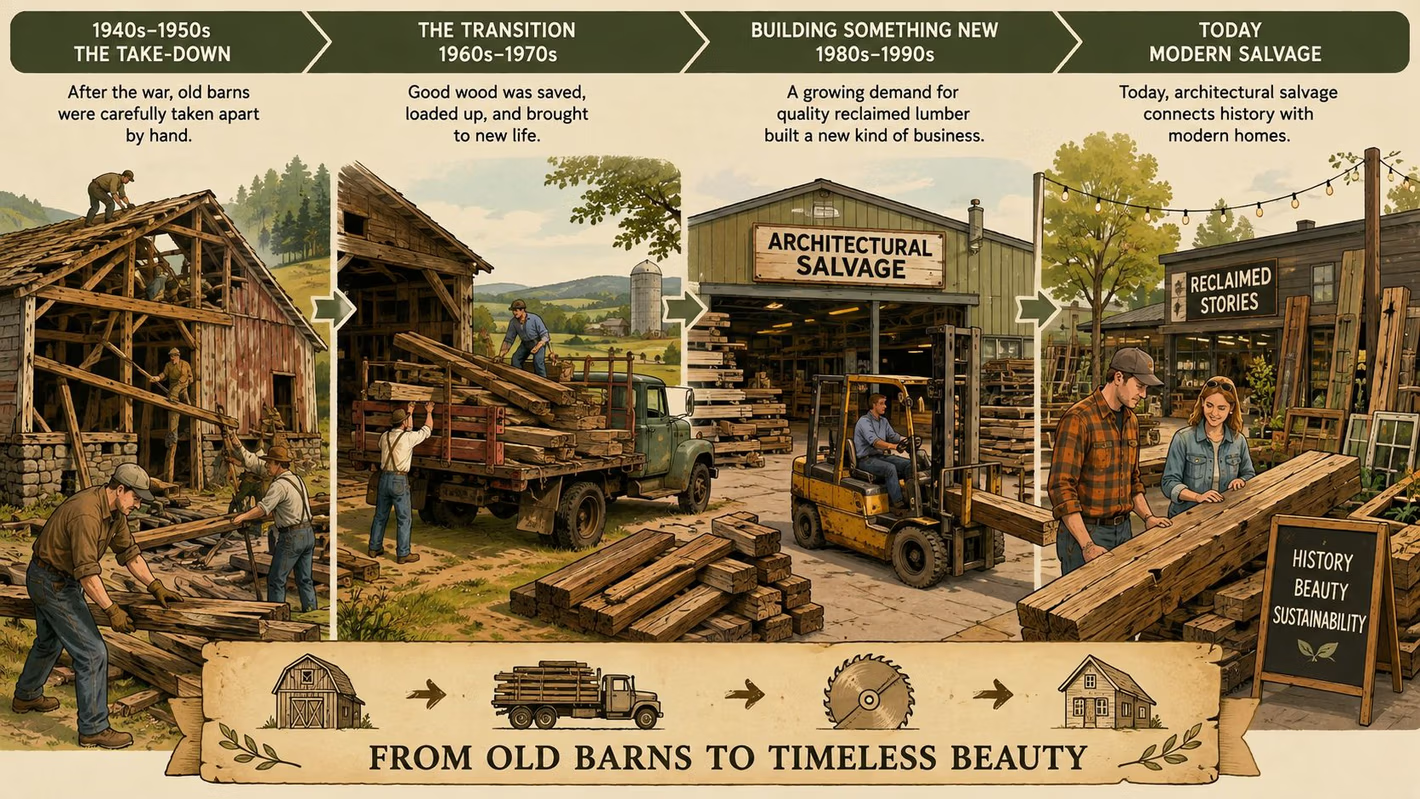
Sustainability adds value, but it isn't the whole story
Reclaimed wood gives usable timber another life and reduces the need to treat every furniture project as a fresh-material purchase. Buyers who want to understand sourcing, construction, and broader material choices can explore sustainable furniture options, but a reclaimed label still deserves scrutiny. The source, contamination controls, drying process, and finish determine whether the piece is responsibly made.
The market has also moved well beyond a niche sustainability concept. One independent estimate placed the global reclaimed lumber market at USD 54.34 billion in 2022, with a projection of USD 78.16 billion by 2030 at a 4.7% CAGR. Furniture ranks among the largest uses, and one industry estimate placed furniture's share at 32.6% in 2024. Those figures help explain why tabletops have become such a visible part of the category. Grand View Research's reclaimed lumber market overview provides the market context.
The design direction is changing, too. Reclaimed wood is no longer limited to farmhouse rooms filled with distressed finishes. Cleaner edges, matte surfaces, slim bases, and transitional styling let the grain provide warmth without making the room feel themed.
Wood Species, Finishes, and Looks Worth Knowing
The species sets the table's character before finish or styling enters the picture. It affects grain movement, surface feel, visual weight, and resistance to everyday use. In Southern Oregon showrooms, reclaimed tops commonly appear in Douglas fir, oak, pine, walnut, elm, chestnut, and teak.
| Species | Typical Look | Hardness | Best Room Style | Recommended Finish |
|---|---|---|---|---|
| Douglas fir | Warm honey tone with pronounced grain | Moderate | Modern organic, lodge, transitional | Matte oil |
| Oak | Open grain with red or white variation | Hard and heavy | Transitional, classic, contemporary | Low-sheen varnish |
| Pine | Knots, softer texture, rustic patina | Softer | Casual farmhouse, cottage, relaxed modern | Wax or matte oil |
| Walnut | Rich chocolate brown with quieter grain | Hard | Refined modern, library, formal dining | Matte hardwax oil |
| Elm or chestnut | Uncommon grain and historic character | Varies by board | Statement interiors and heirloom settings | Clear matte finish |
| Teak | Dense, warm, naturally substantial appearance | Dense hardwood | Indoor-outdoor influence, modern, transitional | Low-sheen protective finish |
Teak brings more visual and physical weight than pine or fir. Its air-dried density is commonly placed around 650 to 670 kg/m³, or about 41 to 42 lb/ft³, which helps explain its reputation for strength, stability, and wear resistance. For entertaining areas, this patio bar material comparison offers a useful way to compare surface durability and finish expectations. For a deeper look at construction, see our guide to solid wood vs. veneer.
Match the board pattern to the room
Wide planks give a calm, architectural surface. Mixed-width boards make the reclaimed origin more visible and create a collected look. Herringbone adds pattern and movement, while end-grain construction produces a block-like texture suited to heavily used surfaces. Live-edge slabs make the strongest sculptural statement, so leave visual space around their irregular outline.
Finish controls how strongly the wood speaks. Matte oil stays close to the natural surface. Hand-rubbed wax adds gentle sheen without a plastic appearance. Low-sheen conversion varnish makes cleanup simpler. Cerused or lime-washed treatments lighten the grain and work well in transitional rooms.
The 2026 direction favors raw, matte, and sanded-back finishes over high-gloss surfaces, according to TrendHunter's reclaimed wood design feature. That shift suits rooms moving beyond farmhouse styling. Choose lighter wood for darker rooms, tighter grain for cleaner modern interiors, and harder species with matte finishes for busy households. The right top should add warmth without making the room feel themed.
Durability, Moisture, and What to Inspect
Reclaimed wood is not automatically table-tough. Its age may add character, but stability depends on moisture content, drying, construction, and finish quality.
At about 70°F and 40% relative humidity, wood reaches an equilibrium moisture content of roughly 7.7%. Typical indoor equilibrium moisture content generally falls in the 6% to 9% range when relative humidity stays around 30% to 50%, according to Kerf Works' moisture and EMC guidance. For a Southern Oregon home, the important point is that the top should be conditioned to the environment where it will live, not merely labeled “old.”
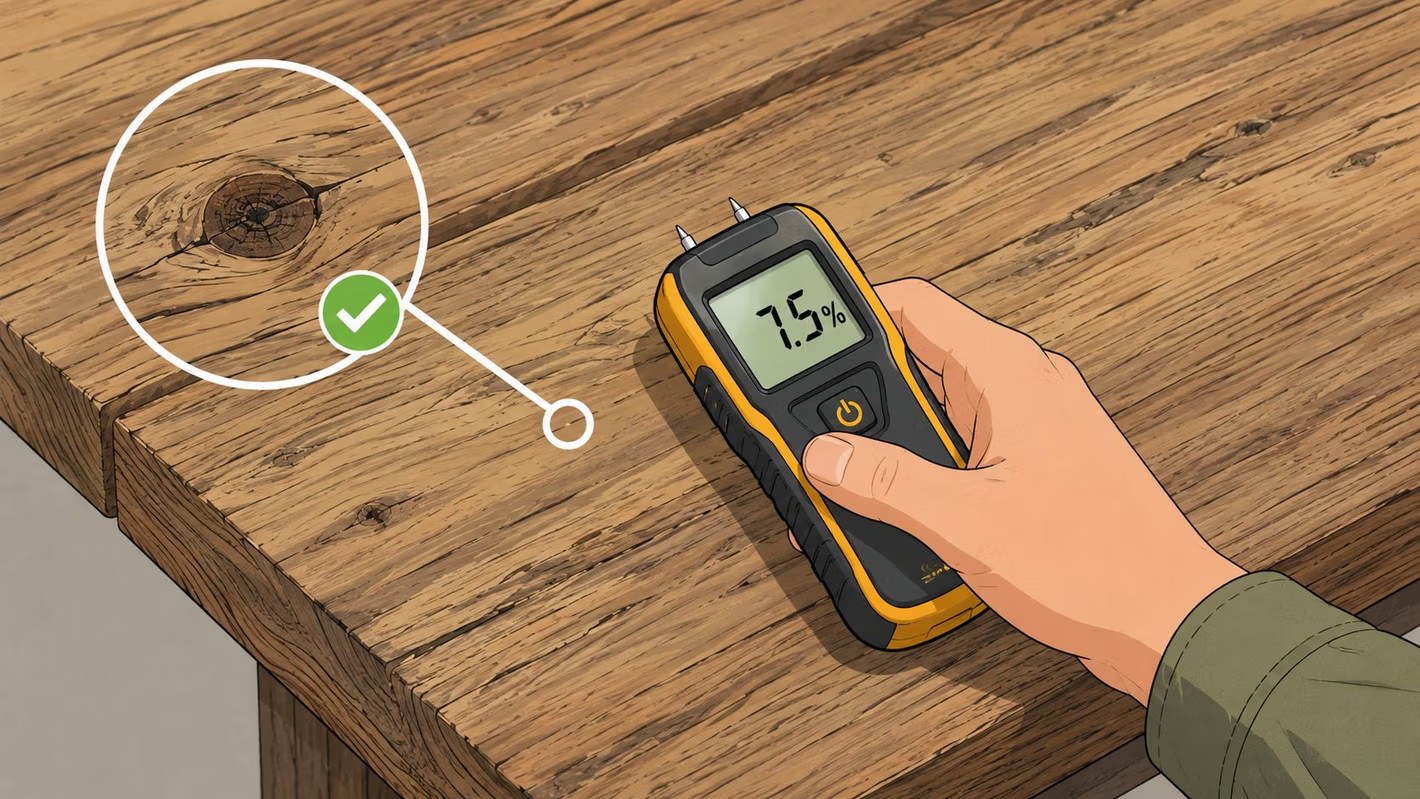
Four checks separate a sound top from a risky one
Measure moisture. If the wood remains more than about 2 percentage points away from its final service EMC, it can continue shrinking or swelling after assembly. Ask to see a moisture-meter reading rather than accepting age as proof of stability.
Ask how it was dried. Kiln-dried stock usually offers more controlled preparation, while air-dried boards can still be appropriate when the maker has allowed adequate conditioning and designed around movement.
Study the mounting hardware. Figure-8 fasteners, Z-clips, elongated screw holes, hidden steel brackets, and well-executed butterfly joinery can support the top without trapping seasonal movement. Guidance from Woodweb on tabletop movement explains why rigid fastening can cause trouble.
Inspect the finish. End grain and edges reveal weaknesses first. A sealed underside helps reduce uneven moisture exposure, while patchy finish, open cracks, or exposed glue lines deserve direct questions.
Checking is a shallow surface crack that can contribute to character. Splitting is a structural concern when it continues through the board or opens at a joint. In the showroom, press gently on knots, run a hand across seams, look for daylight between boards, and confirm that the finish feels even.
For readers choosing candle styles around wood furniture, top candle wick trends for 2025 offers a separate design reference. Candles should still sit on a stable protective surface, away from the tabletop's edges and finish.
For minor surface issues, shoppers can also review furniture scratch repair guidance, but deep splits and movement-related damage need professional assessment.
Sizing, Placement, and Styling in Real Rooms
Measure the room before falling for the slab. Dining chairs need usable clearance around the table, and the top should leave a clear path through the room rather than forcing people to squeeze past one another.
A practical layout target is 36 inches around all sides for minimum clearance, 42 inches for a more comfortable passage, and 48 inches for a generous arrangement. Those measurements should include the space occupied by pulled-out chairs.
| Top Size (L x D) | Seats Comfortably | Best Room |
|---|---|---|
| 48 x 30 inches | Four | Compact dining area or apartment |
| 60 x 36 inches | Four to six | Breakfast room or smaller dining room |
| 72 x 40 inches | Six | Standard dining room |
| 84 x 42 inches | Six to eight | Larger dining room |
| 96 x 44 inches | Eight or more | Open dining area or entertaining space |
A 72-by-40-inch top can seat six adults comfortably when the base and chair placement leave adequate elbow room. Bar and counter layouts require different height and overhang decisions, so a practical kitchen bar dimensions guide can help when the piece will serve as a raised surface.
Give the top a job beyond dining
A reclaimed top can become an entryway statement piece, a sofa-back console, or a writing desk. Entryway surfaces need manageable depth and room for traffic. Console tops should stay visually lighter, while a desk needs comfortable leg clearance and a finish that tolerates writing, devices, and daily contact.
The 2026 look favors reclaimed wood with slim tapered wood legs, matte black steel, and restrained hardware. A cleaner base keeps the old timber from overwhelming the room. Avoid direct sun when possible to slow fading, leave about 2 inches from walls for air circulation, and use a rug large enough to visually anchor the entire dining arrangement.
Why Buying Local Matters for This Category
Reclaimed wood is an experience purchase, not a blind-cart purchase. Online photographs can hide a sharp edge, a repaired split, an odor from an old structure, an uneven finish, or a color that looks completely different in natural light. A showroom lets a shopper compare actual tops side by side and decide whether the patina feels intentional or too distressed.
A 30,000-square-foot showroom in Grants Pass gives Southern Oregon customers room to test proportions, chair comfort, base styles, and finish colors together. That matters because a tabletop rarely exists alone. The same reclaimed surface may look heavy with a thick trestle base, balanced with a pedestal, or unexpectedly contemporary with slim metal legs.
Local service answers practical questions
A knowledgeable local dealer should be able to explain where the wood came from, how it was prepared, whether the top is sealed on both faces, and what mounting system supports it. The buyer should also be able to inspect the underside, feel the seams, and ask how the piece will travel from showroom to home.
Professional delivery matters with heavy solid wood. White-glove service commonly includes a trained two-person team carrying the item into the room of choice, removing packaging, completing light assembly or installation, inspecting the piece with the receiver, and hauling away debris, as described by Qeepl Logistics' white-glove service guide. Another white-glove delivery guide describes the service as including in-home placement, assembly, installation, packaging removal, and optional haul-away.
Practical test: If the seller can't explain how the top was dried, mounted, finished, and delivered, the low price may not be the bargain it appears to be.
Gates Home Furnishings has served Grants Pass, Medford, Central Point, Ashland, and the broader Rogue Valley since 1946, when George Gates built the business around the promise of “Service and Value.” Today, that philosophy appears in the physical inspection experience, flexible Gates Easy Pay options, and delivery support. Available options include $0 down, 6-month interest-free financing, and no-credit-needed programs, subject to approval and program terms.
Custom Orders, Delivery, and Long-Term Care
A custom reclaimed top should begin with a conversation, not a deposit and a vague finish label. The buyer and furniture advisor need to settle the dimensions, edge profile, species, board layout, base style, and finish before fabrication begins.
The custom path
Start with room measurements and the intended use. A dining top needs different proportions from an entry console, while a conference surface may require additional support and cable planning. In-house samples help shoppers compare matte oil, wax, low-sheen varnish, and lighter treatments under the same showroom lighting.
The maker should provide shop drawings, finish samples, or photographs for approval before production. Lead times vary with slab availability and complexity, so a responsible seller gives a realistic schedule rather than promising an exact date before the material is secured. Customers considering a custom piece can review the custom-order starting guide before meeting with a design advisor.
Delivery should include room-of-choice placement, careful handling, assembly when needed, and debris removal. A curbside drop leaves the homeowner responsible for moving a heavy, delicate surface through doorways and up stairs. White-glove delivery is the sensible choice for a substantial reclaimed top, especially when the base requires precise alignment.
Acclimation and daily care
After delivery, the top should remain in its intended room for 72 hours before base attachment. Indoor humidity should stay around 40% to 55%, and the furniture should remain away from direct heat sources and harsh sunlight.
Routine care is straightforward:
- Dusting: Use a clean microfiber cloth.
- Oil finishes: Apply paste wax occasionally when the manufacturer allows it.
- Spills: Wipe them promptly instead of letting moisture sit.
- Cleaning: Avoid harsh cleaners, abrasive pads, and soaking the surface.
- Protection: Use coasters, felt pads, and trivets beneath hot or rough objects.
Protection plans can extend coverage beyond the manufacturer's warranty for eligible accidental spills, tears, finish problems, or structural concerns. Financing through the showroom can also spread the purchase over time, but shoppers should review the terms before selecting a program.
Finding Your Reclaimed Wood Table Top
The right reclaimed wood table top usually becomes obvious after the practical questions are answered. The best piece isn't necessarily the darkest, oldest-looking, or most irregular. It's the top whose species, dimensions, construction, finish, and base work together in the room.
Inventory changes because reclaimed boards come from limited sources. A slab with a particular nail pattern, saw mark, oxidation streak, or edge profile may not be available again once it sells. That one-of-a-kind quality is part of the appeal, but it also means shoppers should inspect current inventory instead of waiting for an identical replacement.
A useful showroom checklist
- Call ahead: Confirm whether the desired species, size, and base style are currently available.
- Request photos: Ask for close views of the top, edges, seams, underside, and finish.
- Book time to compare: Viewing several tops together makes color and scale easier to judge.
- Ask about custom work: Dining, entryway, console, and conference applications may need different construction.
- Clarify delivery: Confirm room placement, assembly, packaging removal, and mattress haul-away where applicable.
- Review financing: Ask about Gates Easy Pay, including $0 down, 6-month interest-free, and no-credit-needed options.
- Discuss protection: Learn what the Gates Care Shield plan covers before completing the purchase.
Gates' Unique Finds include reclaimed wood, teak, and other one-of-a-kind statement pieces that offer more personality than standard stock furniture. The same showroom also carries La-Z-Boy, Flexsteel, Ashley, and Beautyrest, allowing shoppers to coordinate a reclaimed table with seating and other rooms while keeping the selection process local.
Visit Gates Home Furnishings in Grants Pass to handle reclaimed tops, compare finishes, test dining comfort, and discuss local delivery or a custom build. The family-owned Southern Oregon team can also help shoppers browse available Unique Finds online and choose a table that delivers character without sacrificing practical construction.