Norris Furniture Clearance Outlet Guide


You've probably stood in a furniture store, liked the price tag on one sofa, then wondered why the matching chair looked nothing like it, or why the “clearance” piece felt like a gamble. That's the exact moment a clearance outlet can make sense, if you know how to shop it. For Southern Oregon families, the smartest route is simple, understand what the outlet format is, inspect each piece like you mean it, and only buy when the value is real.
What a Furniture Clearance Outlet Really Is
A good clearance outlet is not a random corner of marked-down leftovers. It is a separate retail format built to move overstock, floor models, discontinued styles, returns, and damaged or open-box pieces with speed and clarity. That matters because the outlet model runs on turnover, not long-term display, and the shopper who understands that gets better results.
A shopper in Grants Pass or Medford may see a tag that looks too good to ignore and assume every item is “on sale.” That is not how these stores work. A true clearance outlet is a fast-moving inventory lane, where the condition, price, and availability of each piece can change quickly. Our own Gates Outlet follows that same logic, with daily refreshes for people who want value without waiting on special orders.
A standalone outlet also operates differently from a markdown shelf inside a full showroom. It is built for constant movement, higher density, and faster decisions. If you want to compare the outlet format with a full shopping experience, start with Gates Outlet in Grants Pass.
Practical rule: If the item looks good, the condition checks out, and the delivery path is clear, a clearance outlet can be the right buy. If you still need fabric choices, exact finishes, or a coordinated room plan, hold out for the full showroom.
Clearance outlet shopping also comes with trade-offs buyers should expect up front. Warranty coverage can be thinner on some pieces, return windows may be tighter, and inventory can disappear the same day it arrives. That is normal. The smart buyer asks what category the piece falls into, checks for missing parts, looks for wear that affects use, and decides whether the discount matches the risk.
How Clearance Inventory Turns Over and What Condition Categories Mean
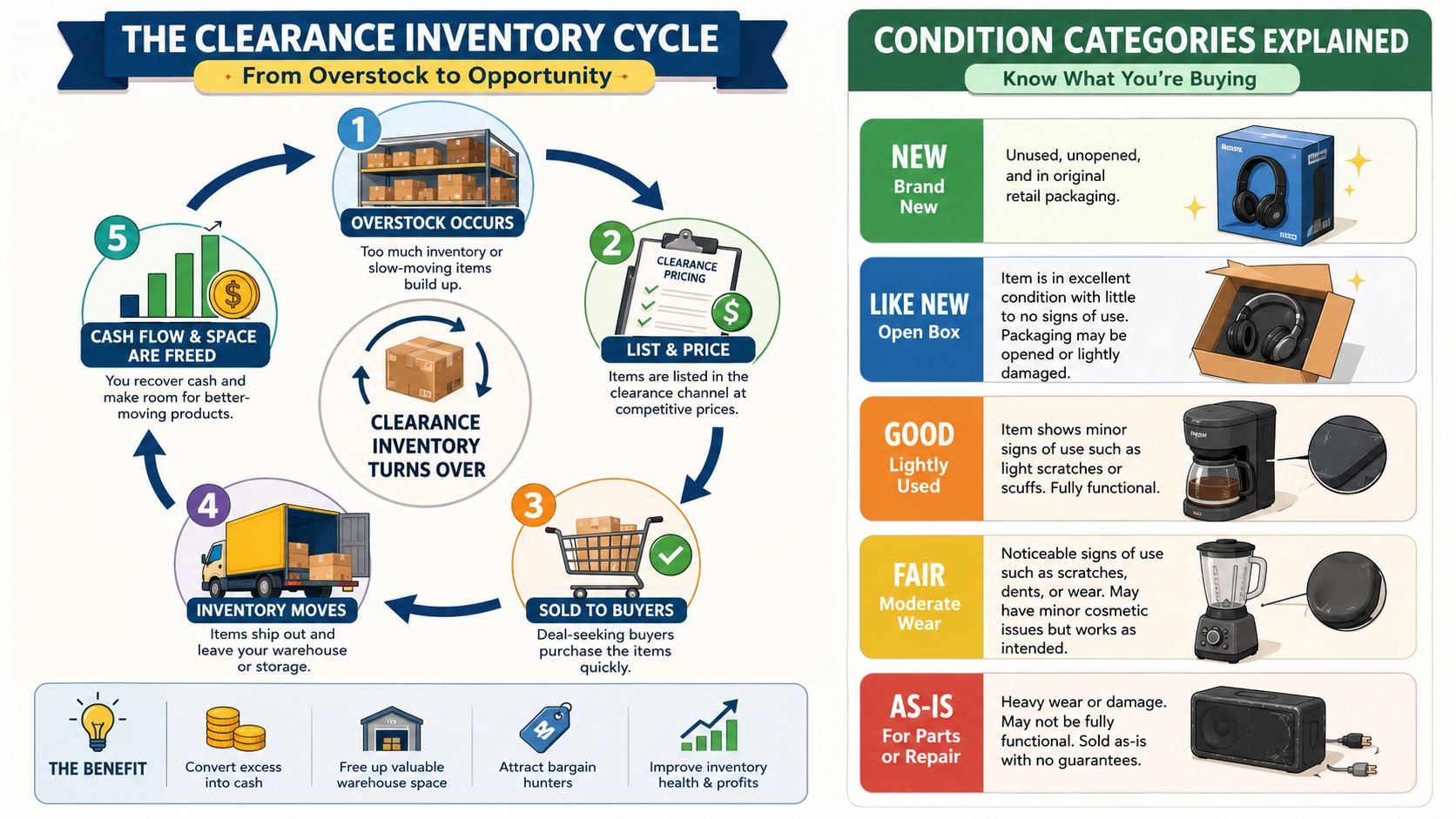
Clearance pricing makes sense only when the shopper knows what kind of piece is in front of them. The four categories that matter most are floor models, scratch-and-dent, discontinued, and open-box. Each one carries a different risk profile, and each one deserves a different inspection mindset.
The category name tells you almost everything
A floor model has usually been handled more than a boxed item, so the wear is often cosmetic and visible. Scratch-and-dent pieces can have surface damage, which may be minor or may hide a bigger problem. Discontinued inventory is often the least worrisome if it's been stored well, because the main issue is selection, not condition.
Open-box pieces sit somewhere else entirely. They may be returned, partially assembled, or displayed and then reboxed. That's why the label alone never tells the whole story. The key question is whether the item's wear, completeness, and remaining support still make the price worthwhile.
Bottom line: A clearance item is not automatically damaged. Many are simply old styles, excess stock, or display pieces that need to move.
That's where outlet shopping gets volatile. Industry guidance notes that clearance areas often feature discounted damaged, returned, overstock, or discontinued goods, and that dense merchandising helps customers see more inventory quickly industry guidance on outlet merchandising and clearance stock. The trade-off is obvious, faster sell-through, less customization, and tighter service terms than standard retail.
Shoppers who want a budget shortcut should read the label carefully and then inspect the piece like a buyer, not a browser. For a deeper breakdown of surface flaws and what they mean, this guide is useful: scratch-and-dent furniture basics.
Your Pre-Purchase Inspection Checklist and Negotiation Tips
A clearance price only works if the piece survives a real inspection. Start with the structure, then move to comfort, then ask about terms. That order matters because a pretty finish can hide a weak frame, and a deep discount won't fix a bad seat.
Check the frame before anything else
Press on the arms, seat rails, and corners. If the piece flexes, rattles, or shifts in ways that don't feel solid, walk away or discount the offer heavily. Look at joints, staples, and exposed corners, because sloppy assembly usually shows up there first.
For upholstered seating, test cushion compression and the sit feel. A cushion that bottoms out too quickly is already past its comfortable life. For recliners and lift chairs, cycle every mechanism several times and watch for uneven movement, noise, or lag.
Mattresses need a different eye. Check the comfort layers, edge support, and any visible indentation or sagging. If a clearance mattress feels too soft at the edge or loses support in the center, the discount probably isn't enough.
Before buying, compare the house rules against your needs. A shopper who wants to save money as a household should focus on total cost, not just sticker price. Delivery, assembly, and warranty coverage can change the value fast.
Ask these questions before the register rings:
- What condition category is this? Get the exact label, not a vague answer.
- Is it final sale? That one detail changes the risk a lot.
- What warranty still applies? Don't assume coverage survives clearance pricing.
- Are all parts included? Missing hardware turns a deal into a headache.
- Can it be delivered assembled? Heavy items get expensive in a hurry if the service is unclear.
Negotiation at an outlet works best when the flaw is specific and visible. A scuffed leg, small fabric pull, or minor finish issue gives you a reasonable opening. A buyer who points to a clear defect usually gets a better result than someone trying to haggle just because the tag says clearance.
For a room-by-room mindset, this checklist helps keep the focus on fit and comfort: what to look for in a new sofa or chair.
Clearance Outlet Versus Full-Line Showroom Trade-Offs
A clearance outlet and a full-line showroom solve different shopping problems. The outlet is built for immediate value on items that are already made, already on hand, and usually priced to move. The showroom is built for choice, customization, and a cleaner path to long-term support.
That difference shows up the moment you walk the floor. In a spacious 30,000 sq. ft. showroom in Grants Pass, shoppers can sit, compare finishes, and test comfort in person. Bigger showroom footprints matter because they hold more styles, more sizes, and more room setups under one roof. A full-line showroom gives you a wider field to choose from, while the outlet floor asks you to work with what is available right now.
| Factor | Clearance Outlet | Full-Line Showroom |
|---|---|---|
| Price | Lower on in-stock pieces | Higher, with more room for customization |
| Selection breadth | Limited to current inventory | Wider mix of styles, sizes, and rooms |
| Customization options | Usually minimal | More fabrics, finishes, and configurations |
| Warranty coverage | Often reduced or specific to the item | Typically cleaner manufacturer coverage |
| Delivery service | Can vary by piece and condition | More predictable and coordinated |
Clearance wins when the buyer needs a sofa, bed, or dining piece now and can accept the item exactly as it sits. Full-line retail wins when the room needs matching finishes, a specific fabric, or a more formal warranty setup. That trade-off is simple, and it should stay simple.
If the purchase is for a first apartment, a guest room, or a temporary home setup, clearance usually makes the most sense. If the room is a long-term investment, the showroom often earns its keep with better choice and less compromise. Smart shoppers use both options for the job each one handles best, and they compare the total cost, not just the tag. A good place to start is this guide on how to shop for furniture smartly.
Timing Your Visit and Managing Inventory Volatility
Clearance inventory rewards the shopper who arrives early and decides quickly. New pieces often show up when the floor changes, and the best items don't sit around long. If the goal is value, timing matters as much as price.
Visit when the floor is freshest
Weekday mornings usually give the best shot at first look on new arrivals. End-of-month shopping can be useful when stores want aging stock gone. Seasonal transitions are also worth watching, because floor models and discontinued looks tend to move out when new collections come in.
The hard truth is that clearance stock is volatile by nature. A piece that looks perfect today may be gone tomorrow, and that's not a flaw in the system. It's the system.
Call ahead before driving across town. A five-minute phone check can save a wasted trip from Ashland, Central Point, or Medford.
Shoppers also need to ask the right hold questions. Can the store reserve the item for a short window? Does payment lock it in? Is the online listing synchronized with what's on the floor? Those details make a real difference, especially for budget buyers trying to coordinate pickup, delivery, and decision-making.
The best strategy is simple. Check inventory online if it's posted, call ahead, and be ready with measurements and a target room plan. If the piece fits your space and the condition is honest, move fast. If the store can't explain availability clearly, treat that as a warning sign and keep looking.
Financing and Delivery Options for Clearance Purchases
Clearance shouldn't mean cash-only or service-light. A good local furniture buy still needs a payment plan that fits the household and a delivery process that protects the piece. Buyers who ignore those two costs often lose the savings they thought they found.

Budget tools should match the item
Flexible financing like $0 down, 6-month interest-free, and no-credit-needed options can make a clearance purchase much easier to manage. That matters for families replacing a sofa, upgrading a mattress, or furnishing a room after a move. The point is not to stretch the budget, it's to keep the purchase manageable.
Delivery matters just as much. Clearance furniture can be bulky, awkward, or already assembled, so professional setup saves time and prevents damage. White-glove service is the right standard here, because dropping a box at the curb is not the same thing as completing the sale.
A cheap item that costs more in hauling, assembly, or replacement parts is not a bargain.
Shoppers should also think about doorways, stairs, and room access before paying. A useful planning resource on that issue is how to fit furniture through a door. That kind of check keeps the savings intact and avoids the most common delivery-day surprise.
For buyers comparing payment structures, this overview is worth reading: furniture financing options. The right financing and delivery setup turns a clearance find into a clean, low-stress purchase instead of a project.
Your Next Steps for Furniture Shopping in Southern Oregon
Start with the inventory that's available now, not the room you wish existed. Measure the space, write down the needed dimensions, and note which pieces must arrive assembled. Then visit in person so the comfort test is real, not imagined.
Bring the inspection checklist, ask about condition categories, and press for clear answers on warranty and delivery. If the item is a floor model or open-box piece, inspect it with extra care. If it's a discontinued style in good shape, that can be one of the smartest buys on the floor.
For shoppers in Grants Pass, Medford, Central Point, Ashland, and across the Rogue Valley, the best move is to see the piece, sit on it, and judge the finish in daylight. A 30,000-square-foot showroom gives buyers room to compare comfort and browse Unique Finds like reclaimed wood, teak, and one-of-a-kind statement pieces. That's where the original 1946 promise of Service and Value still matters most.
Gates Home Furnishings pairs local service with practical buying guidance, so shoppers can make a clearance decision without guessing. Visit the Gates Home Furnishings showroom in Grants Pass or browse the collection online to find clearance values, comfort-tested seating, and pieces that fit the way Southern Oregon families really live.