Deep Seating Sectional Sofa Buying Guide for Comfort and Fit


A couple in Grants Pass can choose a sectional that looks perfectly scaled in a showroom photo, then discover a different reality at home. Movie night leaves one person perched on the edge, another folded into the corner, and everyone competing for the recliner. The problem often isn't the fabric or the color. It's the relationship between seat depth, body proportions, room circulation, and daily habits.
A deep seating sectional sofa can be an excellent fit for families who stretch out, sit cross-legged, work casually from the living room, or share the couch with pets. It can also make a smaller room feel blocked and leave shorter adults without dependable back support. The right choice is therefore a body-and-room equation, not a contest to find the largest measurement.
Why Deep Seating Has Become Its Own Category
A sectional can look perfectly scaled in our Grants Pass showroom and still feel wrong at home. We have helped Southern Oregon families find that one person keeps shifting for back support, another sinks into the corner, and movie night ends with someone claiming a separate chair. The issue is rarely appearance alone. It is the relationship between seat depth, body proportions, room circulation, and daily habits.
A deep seating sectional sofa suits households that stretch out, sit cross-legged, work casually from the living room, or share the couch with pets. It can also crowd a compact room or leave shorter adults without reliable support. We treat comfort as a body-and-room equation. A larger sofa is not automatically a better sofa.
From formal sitting to everyday lounging
Older sofa designs generally encouraged an upright posture for conversation. Over time, household routines changed, and seating expanded to support reading, television, casual laptop use, children's play, pets, and longer evening gatherings. Sectionals also became more common in shared living spaces, where one piece needed to support several postures at once.
That progression explains why deep seating now stands apart from conventional sofas. Its defining feature is not merely a larger outer frame. The seat, back cushions, and overall scale work together to support reclining, sideways sitting, and relaxed leg positions. A configuration can feel generous to one person and awkward to another if its depth does not match the sitter or leaves too little space for movement.
Our showroom experience reinforces that distinction. We ask how each household uses the room before discussing style. Someone who sits upright for conversation may need a different balance of depth and back support than someone who lounges with feet tucked up. The sectional must also leave a clear route between seating, tables, doors, and the rest of the room.
Why families notice the difference
Deep seating often works well for:
- Movie nights: People can recline without balancing on the front edge.
- Flexible lounging: Adults can sit sideways or cross-legged when the cushion supports those positions.
- Shared living: Children and pets have more room without taking every designated seat.
- Casual hosting: Guests can relax instead of maintaining a formal posture.
The style has moved beyond a dedicated family room into the main living space. A low, generous sectional can look intentional when its scale fits the rug, tables, lighting, and circulation. Our overview of living room trends shows why softer, lounge-oriented silhouettes continue to draw interest.
The practical test is simple: deep seating should create usable comfort, not just visual bulk. We consider the sitter's height, preferred posture, cushion support, and available floor space together. When those pieces align, the sectional earns its footprint.
Defining Dimensions and What the Numbers Really Mean
A sectional specification sheet can feel like a list of disconnected measurements. The useful approach is to translate each dimension into a physical experience before comparing styles.
Start with the measurements people confuse
Overall depth runs from the back of the frame to the furthest front point. It determines how much floor space the sectional occupies. Seat depth measures the usable cushion area from the front edge toward the back support, although loose pillows can change the effective sitting depth.
Seat height affects how easily a person can sit down and stand up. A lower seat often feels relaxed and informal, while a higher seat can provide more practical support for adults who prefer easier transfers. Arm height influences how enclosed the sectional feels and whether an arm works comfortably as a head or elbow rest. Back height determines the amount of shoulder, neck, and upper-back support.
A 24-inch seat depth can work well for upright conversation when the back cushion holds the sitter forward. A 28- to 30-inch depth gives more room for cross-legged sitting or sideways lounging. A depth of 32 inches or more signals a true lounger, but it may require additional pillows for shorter users.
Read the numbers as a comfort sequence
The historical progression toward deeper seating provides useful context, but the specification still needs to match the sitter. A deep cushion with a thick back pillow may feel less deep than its listed measurement. A tight back can preserve more usable space, while a loose pillow can be moved to change lumbar support.
| Measurement | Standard Range | What It Means In Use |
|---|---|---|
| Seat depth | 24 to 25 inches | Supports a more upright posture and easier conversation |
| Seat depth | 28 to 30 inches | Encourages cross-legged sitting and relaxed lounging |
| Seat depth | 32 inches and above | Creates a pronounced lounging surface and needs careful body-fit testing |
| Overall sectional depth | 28 to 35 inches | Uses a substantial footprint and requires room planning |
| Extra-deep overall depth | 35 inches and above | Can create a cocoon-like feel while reducing circulation space |
These ranges should be treated as starting points rather than guarantees. The furniture measuring guide can help households record the sofa's full footprint, not just the seat measurement.
Picture the main configurations
An L-shaped sectional places a return or chaise against one side, making it useful for a corner or a room with a clear focal wall. A U-shaped sectional creates a more enclosed conversation zone and needs open space on more than one side. A chaise configuration extends lounging in one direction and can work well along a long wall, provided the extension doesn't interrupt a doorway or main walkway.
The right configuration depends on where people enter, where they face the television or fireplace, and which paths need to remain open. A sectional can have comfortable dimensions on paper and still fail if its return blocks storage, windows, or the route to the kitchen.
Measurement habit: Record both the sectional's outside footprint and its usable seat dimensions. The first protects the room, while the second protects the sitter.
Matching Seat Depth to Real Bodies and Real Habits
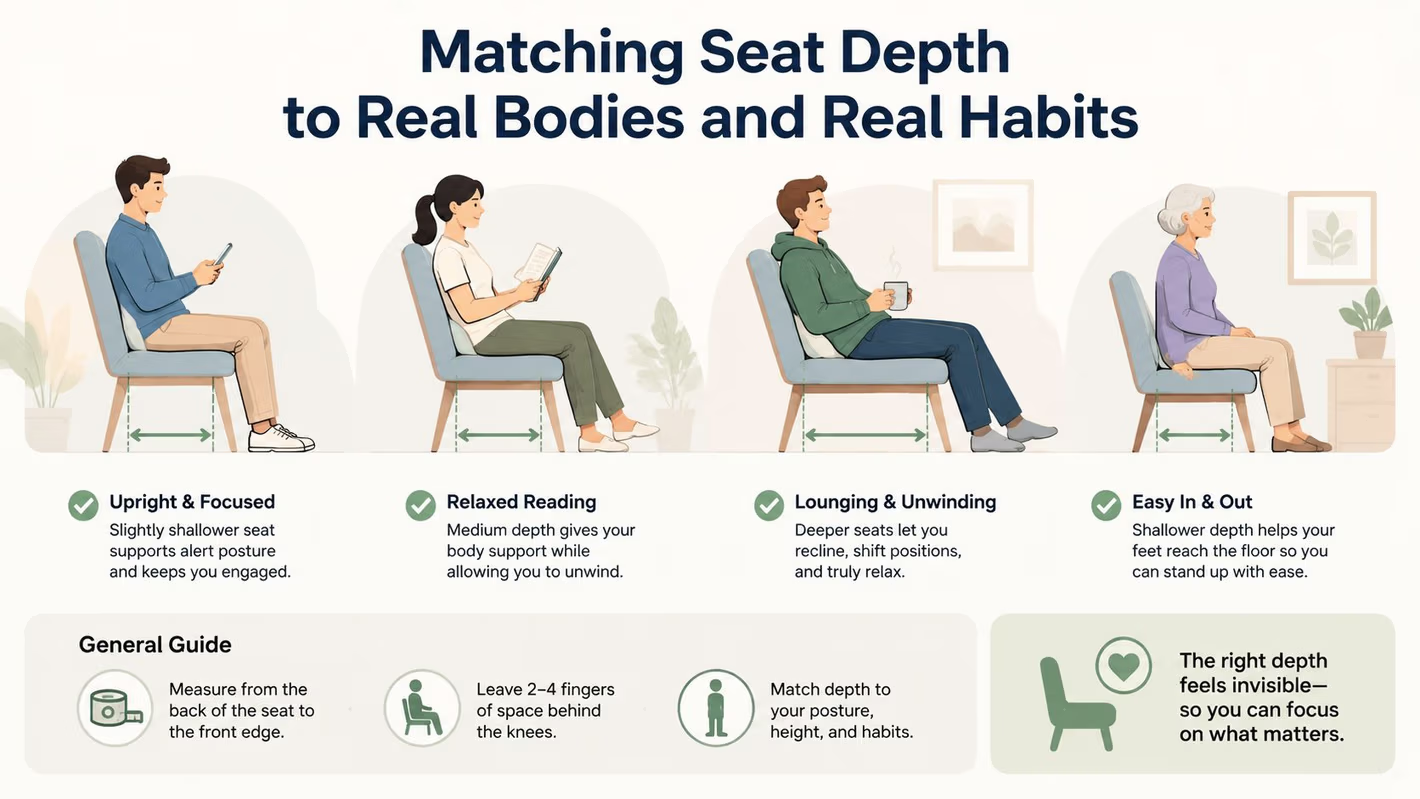
A deep sectional can feel perfect for one person and awkward for another. In our Grants Pass showroom, we check the whole fit: leg length, sitting posture, back-cushion firmness, seat height, and how the household uses the room. Comfort works like a body-and-room equation, not a bigger-is-better rule.
A taller adult may benefit from a deeper cushion because the thighs stay supported farther from the backrest. A shorter adult may need a shallower seat or a substantial lumbar pillow. Without that support, the pelvis rolls backward, the shoulders round, and the sitter gradually slides into the corner.
Use the knee-to-cushion rule
Height helps guide seat-depth choices, but it cannot determine the answer by itself. The practical check is the space between the back of the knee and the front edge of the cushion. A properly fitted seat should leave about 1 to 2 inches there, reducing pressure near the area behind the knee. These measurements are included in this seat depth and height comfort guide.
In the showroom, we have the sitter place both feet on the floor, settle against the back support, and check that small gap. We then test the posture the household uses, whether that means upright conversation, legs tucked underneath, or reclining diagonally. Our guide to choosing the best sofa for your body and habits can help organize those preferences before a purchase.
Match the sectional to household needs
- Taller loungers: Deeper seats can provide the thigh support needed for stretching out.
- Shorter adults: A shallower seat, firmer back pillow, or movable lumbar cushion can reduce slouching.
- Seniors: Supportive back cushioning and a suitable seat height may matter more than extra depth, since standing should feel controlled.
- Families with children: Cleanable, resilient upholstery and practical cushion support may serve daily life better than an extremely deep profile.
- Cross-legged sitters: A generous seat can support this posture, provided the back support remains stable.
- Conversation-focused households: Moderate depth often keeps faces and voices oriented toward one another.
The two-thumb test adds a quick second check. After sitting back, the lower back should feel supported rather than suspended. If someone needs a large pile of pillows to avoid collapsing backward, the sectional may be too deep or too soft for that body.
One seating study found that a seat depth of about 40.2 cm felt more comfortable and caused less discomfort after 90 minutes than deeper or shallower alternatives. The practical lesson is straightforward: fit and duration matter as much as overall size.
Measuring Your Room Before You Fall in Love
A deep sectional can fit one wall and still make the room feel unusable. We measure the complete footprint, including every return, chaise, arm, and corner, then test how that footprint affects the routes your household uses each day. Comfort depends on both the body and the room around it.
Start with painter's tape on the floor. Mark the outside edges of the proposed sectional, then add the coffee table, ottomans, doors, and any space needed for drawers or cabinet doors to open. Walk through the taped layout while carrying a laundry basket or another bulky item. If that feels awkward, daily movement will feel awkward too.
Protect circulation first
Deep sectionals often measure 28 to 35 inches in overall depth, while extra-deep models reach 35 inches and above. Plan about 30 to 36 inches of clearance along the walkways your household uses most. You can review the measuring process in this sectional measurement guide.
Keep these routes clear:
- Entry routes: Protect the main doorway and the path toward the kitchen.
- Furniture access: Leave room for drawers, cabinets, recliner movement, and storage lids.
- Window areas: Keep curtains, vents, and frequently opened windows accessible.
- Conversation space: Allow enough distance between seating and the table for people to sit and move comfortably.
A deep seat already reaches farther into the room, so every extra inch can affect traffic flow. A sectional should support lounging without turning the coffee table into an obstacle.
Choose the shape according to the room
| Room Shape | Recommended Configuration | Minimum Clearance | Key Consideration |
|---|---|---|---|
| Square room | L-shape | 30 to 36 inches around walkways | Use the corner while protecting the main path |
| Open-concept room | U-shape | 30 to 36 inches on traffic sides | Create conversation zones without closing the room |
| Long, narrow room | Chaise extension | 30 to 36 inches along the circulation route | Keep the chaise from narrowing the passage |
| Mixed-use living room | Compact L-shape or modular layout | 30 to 36 inches near doors and storage | Preserve flexibility for guests and everyday movement |
Before ordering, measure more than the living room. Check stair turns, elevator openings, patio doors, and narrow hallways. Ceiling height also matters if the sectional arrives with a tall recliner, sleeper mechanism, or high-backed piece.
At our Grants Pass showroom, we treat the taped footprint like a rehearsal. It shows whether a configuration supports family life or merely fills the room. Careful planning can prevent returns and redelivery complications, while keeping the sectional from becoming the only thing anyone notices.
Frames, Cushion Fills, and Upholstery That Hold Up
Deep seating places repeated pressure on the frame, suspension, cushions, and fabric. A sectional can feel wonderfully soft during a brief test and still lack the internal support needed for sustained use. Buyers should ask what sits beneath the upholstery, not only how the surface feels.
Begin with the frame and suspension
Kiln-dried hardwood is valued for stability because controlled drying helps limit moisture-related movement. Engineered wood can perform well when it is properly designed and reinforced, while metal may suit certain structural applications. The material name alone doesn't settle the question. Corner blocks, solid joinery, and the quality of the connections often determine how the frame handles daily movement.
Joinery with reinforced corner blocks generally offers more dependable structural support than staples used alone. Eight-way hand-tied springs can provide a carefully distributed suspension system, while other spring or webbing systems may also be appropriate when correctly engineered. The practical showroom test is to sit in the center and at the edge, shift position, and listen for movement or creaking.
Match cushion fill to the desired sit
High-resilience foam wrapped in down can balance a structured sit with a softer surface. All-foam cushions tend to provide firmer, more predictable support, which may help seniors and people who prefer easier stand-up support. Feather-down blends create a relaxed, sink-in feel but require regular fluffing and rotation to maintain an even appearance.
Deep cushions need maintenance because the household uses more of their surface area. Rotate removable cushions monthly when the design allows, fluff loose back pillows, and address uneven compression before a permanent impression develops.
Select upholstery for the household
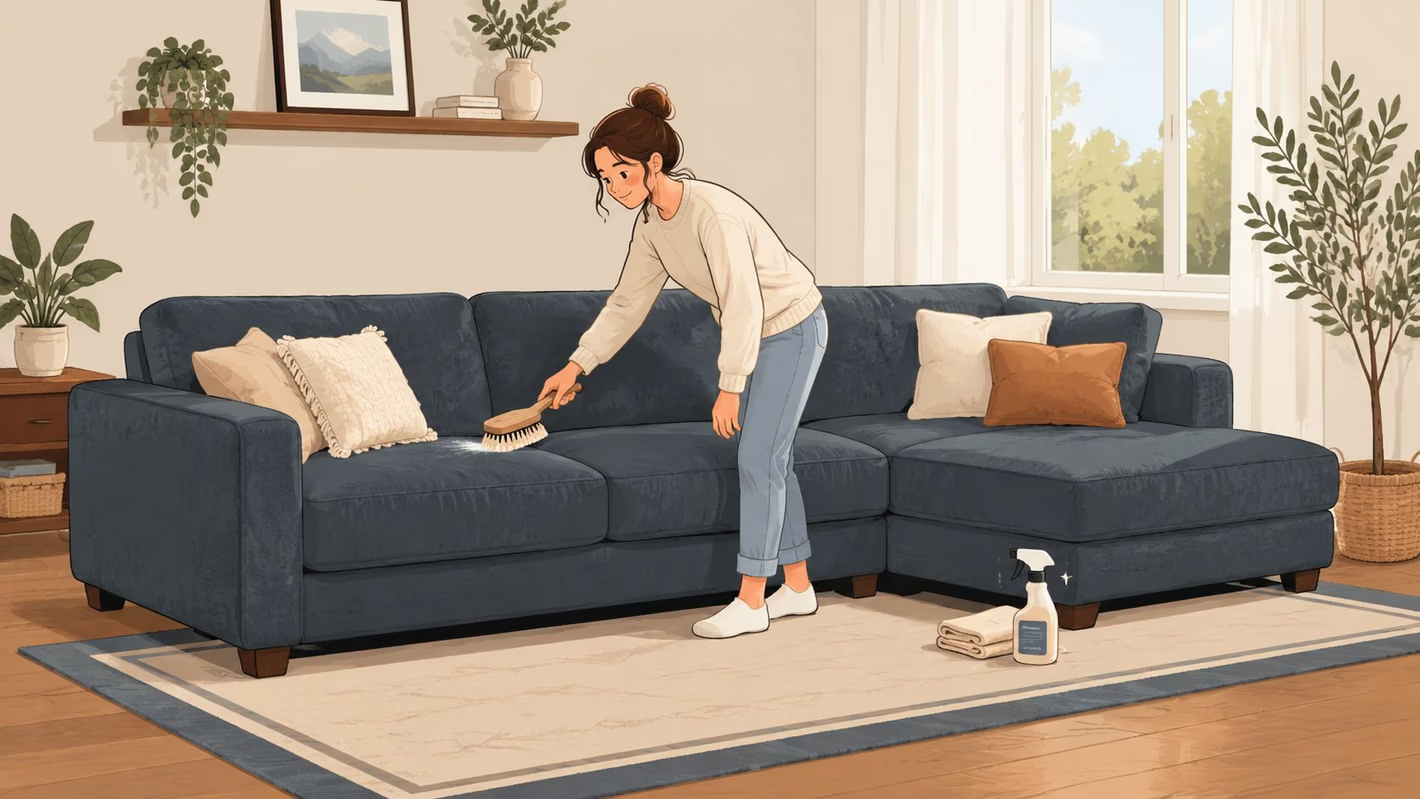
- Performance fabrics: A practical choice for children, dogs, cats, and frequent spills. Look for tightly woven surfaces and care instructions that fit the household's routine.
- Top-grain leather: Offers a durable surface that can develop character over time, making it suitable for buyers who prefer a material that ages visibly.
- Tight-woven textiles: Useful in busy family rooms because a dense weave can reduce snagging and help the upholstery handle repeated contact.
- Textured fabrics: Add visual warmth, but their cleaning requirements should be checked before purchase.
A family that hosts often may prioritize a resilient, easy-care textile. A quieter household may choose feather-down softness or leather character. The upholstery materials guide provides a useful foundation for comparing those tradeoffs.
Styling and Daily Care That Keep It Looking New
A deep seating sectional sofa has a generous visual presence, so surrounding pieces should give it structure. A rug can anchor the arrangement, especially when the sectional's front legs sit fully on the rug pile. That placement connects the seating to the room instead of making it appear parked on top of a small island.
Throw pillows should support the sectional's shape rather than fill every open space. Mixing larger back pillows with smaller accents softens a long seat line, while leaving room for people to sit keeps the styling functional.
Give the center of the room enough reach
A coffee table placed roughly 14 to 18 inches from the seat edge can keep drinks and books within reach without crowding knees. The table should also be wide enough to serve the middle of a chaise, where people often lounge far from the arm.
A large sectional doesn't require a large collection of accessories. One substantial rug, a reachable table, a floor lamp, and a few well-placed textiles can create a finished arrangement without making the room feel congested.
Build simple care habits
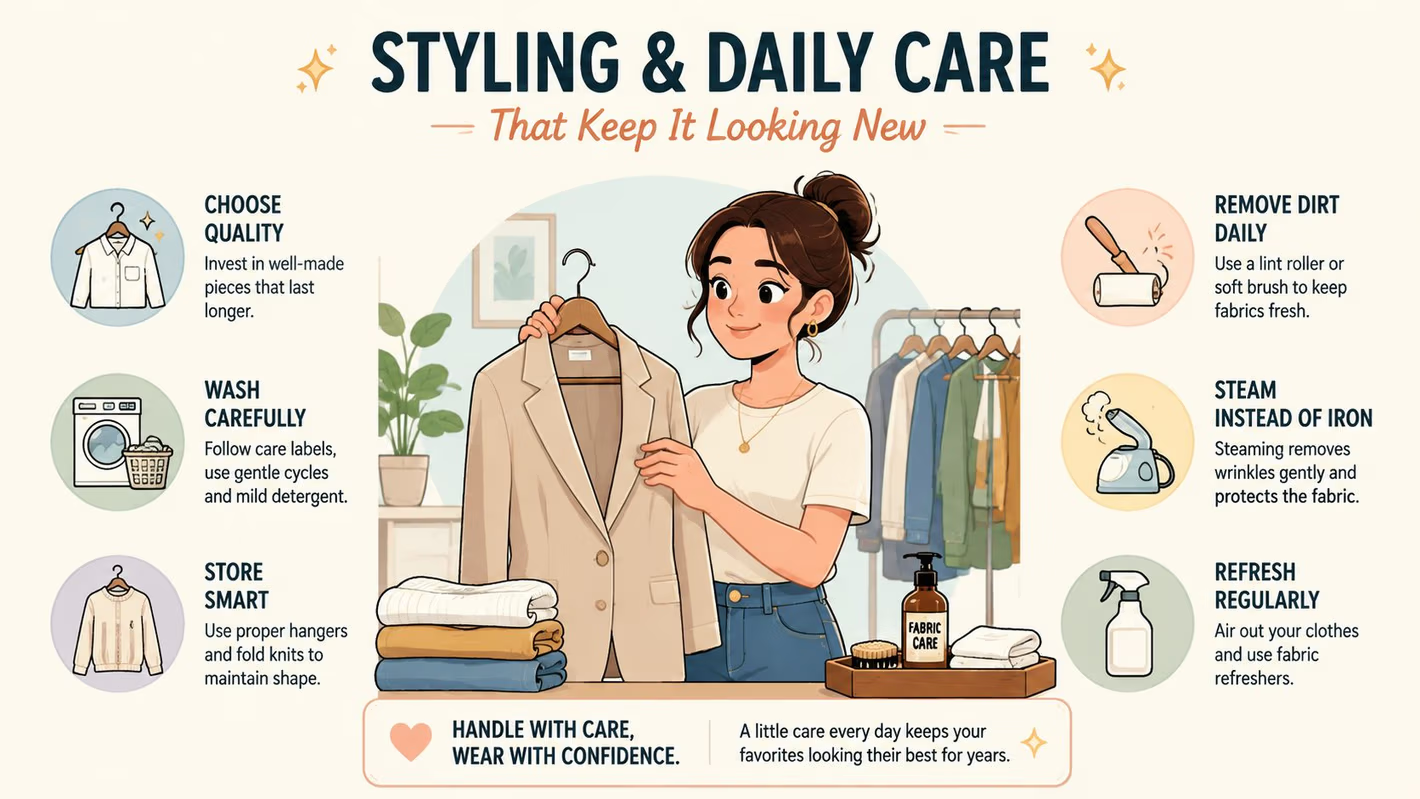
- Rotate cushions monthly: Change pressure points before one favorite seat develops a visible depression.
- Vacuum weekly: Use a soft upholstery brush to remove crumbs, hair, and grit without rough treatment.
- Condition leather every six months: Follow the upholstery maker's care directions and test products discreetly first.
- Blot spills immediately: Press with a clean, dry cloth instead of rubbing the liquid deeper into the fabric.
- Protect high-wear zones: Arm covers and headrest protectors can reduce soil and friction where people touch the sectional most.
- Keep backup covers available: Homes with young children or shedding pets may benefit from washable slipcovers.
For households that need an additional protective layer, this resource on how to protect a three seat sofa offers practical ideas that can be adapted to sectional seating.
Care should fit real life. A household that won't rotate cushions or follow specialized cleaning instructions should select upholstery with a simpler maintenance routine.
Bringing It Home From Our Grants Pass Showroom
The showroom visit turns measurements into something a tape measure can't provide. Gates Home Furnishings' 30,000-square-foot Grants Pass showroom gives Southern Oregon households room to compare sectional scale, seat depth, cushion support, fabric texture, wood tones, and finishes in person. A shopper can sit upright, lounge sideways, test a chaise, and notice whether the back support still works after several minutes.
The store has served Grants Pass, Medford, Central Point, Ashland, and the broader Rogue Valley since 1946, when George Gates built the business around the promise of “Service and Value.” That philosophy still shapes the process. The team helps shoppers compare brands carried in the store, including La-Z-Boy, Flexsteel, Ashley, and Beautyrest, while also showing the Unique Finds collection of reclaimed wood, teak, and one-of-a-kind statement pieces.
A local process prevents avoidable surprises
A consultation can begin with the room's measurements and continue with fabric swatches, configuration choices, and delivery planning. For customers who need extra confirmation, the team can arrange a complimentary in-home measurement to check doorways, stair turns, and ceiling clearance before the sectional is finalized.
That step is particularly useful for homes around the Grants Pass Auto Mall stretch, older houses with tighter turns, and rooms connected to patios or narrow hallways. Recognizable routes near the Caveman Bridge and Riverside Park also make the showroom easy to place within a local furniture-shopping day.
Delivery should include setup, not just arrival
A deep sectional may arrive in multiple pieces, and correct assembly affects both stability and appearance. Gates' furniture delivery and assembly service is designed around professional in-home handling rather than leaving customers with heavy boxes and a set of instructions.
The white-glove service includes professional assembly and setup, along with haul-away of the old sofa. Gates Home Furnishings describes its delivery approach as more than a box drop, which matters when a large sectional must be positioned, connected, and checked in the room.
Financing can also be discussed before the purchase is completed. Gates Easy Pay includes $0 down, 6 equal payments, no-interest options when paid in full within the promotional period, and no-credit-needed financing or lease-to-own programs. Terms and eligibility should be reviewed with the store, just as warranty registration and any available protection coverage should be completed after delivery.
A successful purchase ends with a sectional that fits the body, the room, and the household's routines. Southern Oregon shoppers can test that equation in person, confirm the measurements at home, and select a delivery window that works for the family.
Gates Home Furnishings offers deep seating sectionals, supportive seating, flexible Gates Easy Pay options, professional assembly, and white-glove delivery with old-sofa haul-away. Visit Gates Home Furnishings in Grants Pass to test seat depth, compare fabrics, bring room measurements, and find a sectional that fits both the people and the living space.