What Is Teak Wood Furniture: Southern Oregon’s Best


What is teak wood furniture, really? It's more than a warm-colored table or a weather-resistant patio chair. The material's value depends on the part of the tree used, how the piece was built, where the wood came from, and how the owner expects it to age. For Southern Oregon homes, those details matter because indoor heating, seasonal humidity, bright sun, rain, and everyday family use all test furniture differently.
Teak can be a long-life choice for living rooms, dining spaces, bedrooms, and covered patios, but “teak” on a label doesn't guarantee identical quality. The most dependable pieces use well-selected heartwood, sound joinery, appropriate drying, and a traceable source. That's the standard worth applying whether a shopper is furnishing a Grants Pass home, settling into Medford, or looking for a distinctive piece somewhere in the Rogue Valley.
Why Teak Remains a Favorite in Southern Oregon Homes
Why does teak continue to feel right in Southern Oregon homes, from Grants Pass living rooms to patios overlooking the Rogue Valley? A homeowner may first notice the golden-brown color and expressive grain, but the lasting appeal comes from the way beauty and practical resilience work together.
Teak furniture is made primarily from the heartwood of Tectona grandis, a tropical hardwood valued for durability, appearance, and dimensional stability. The species occurs naturally in India, Myanmar, Laos, and Thailand, and it was introduced to Java, Indonesia, approximately 400 to 600 years ago, as documented by the Food and Agriculture Organization's teak overview. Its fine grain, mellow color, and exceptional durability have made it important in furniture, shipbuilding, and decorative architectural work.
A warm material with a steady presence
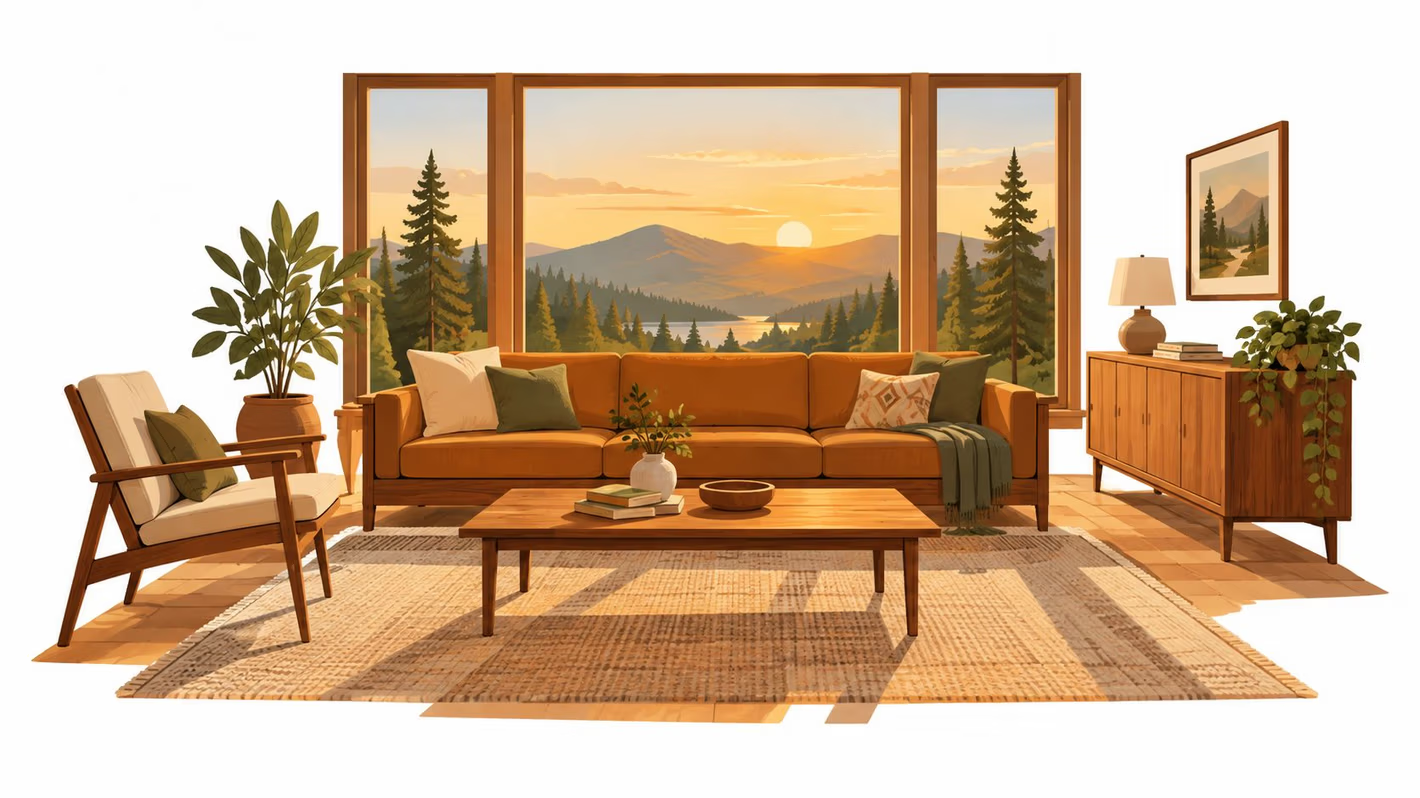
Consider a teak console near a bright window in a Grants Pass home. Its honey-brown surface brings warmth to a room with plaster, stone, upholstery, or metal, while the grain gives the piece enough character to stand on its own. Unlike a short-lived decorating trend, teak can move comfortably between traditional, mid-century, rustic, and contemporary interiors.
That flexibility helps explain why teak appears in dining tables, cabinets, chairs, sofa tables, accent tables, and outdoor furnishings. It can be the quiet foundation of a room or the one-of-a-kind statement piece that gives an otherwise familiar space personality.
Why local buyers value longevity
Southern Oregon homeowners often want furniture that can handle real use without looking disposable. Teak's relative stability as temperature and moisture change helps reduce the tendency to split, warp, or distort compared with less stable woods, although construction and wood quality still matter. A dining table should remain useful through family meals, holiday gatherings, and everyday work, not become fragile just because the season changes.
Gates Home Furnishings has served Grants Pass, Medford, and the wider Rogue Valley since 1946, guided by George Gates' original promise of “Service and Value.” That philosophy fits teak especially well. A durable material deserves careful selection, honest information, and service that helps a household live with the piece for years.
What Makes Teak So Distinctive
The answer to what is teak wood furniture starts with heartwood, not just the species name. Heartwood is the mature inner wood of the tree. In teak, it contains naturally occurring oils and extractives that contribute to moisture resistance, decay resistance, and the material's familiar tactile feel.
The USDA Forest Service describes teak heartwood as naturally durable and highly dimensionally stable, with a coarse, usually straight grain and an oily surface. A mature-teak study measured mean basic density at approximately 607 kg/m³, with values ranging from 579 to 633 kg/m³ between trees, as reported in this USDA Forest Service teak technical guide. That density gives furniture useful resistance to dents and wear without making it an unusually difficult wood to handle.
Oils, grain, and movement
Teak's natural oils and extractive compounds help limit water penetration and support resistance to fungi, termites, and moisture-related deterioration. Those same oils can make the surface less receptive to some adhesives and finishes, so a manufacturer must prepare and construct the piece properly.
Dimensional stability is especially useful in broad panels. A large dining tabletop, cabinet door, or console surface expands and contracts as indoor humidity changes. Teak's lower moisture-related movement can reduce the likelihood of opening joints, cupping, or misaligned doors, though it can't eliminate movement entirely.
A useful comparison is available in this wood furniture guide for choosing hardwoods. The practical lesson is simple: the wood's natural properties matter, but craftsmanship decides how those properties perform in a finished piece.
Practical rule: Dense heartwood supports durability, but good joinery, proper drying, and sensible panel construction determine whether a table or cabinet stays dependable.
What buyers should inspect
The 30,000-square-foot showroom in Grants Pass gives shoppers room to examine surfaces, open doors, test drawers, and compare construction in person. When evaluating a solid teak item, look for:
- End grain: Visible end grain can help distinguish solid wood from a surface treatment, though it isn't the only test.
- Joinery: Tight, clean connections matter more than decorative claims.
- Panel construction: Broad panels should show thoughtful construction that allows normal seasonal movement.
- Surface description: “Teak finish” doesn't mean solid teak heartwood.
- Feel and consistency: A piece should feel substantial and show a coherent relationship between grain, color, and construction.
Gates' Unique Finds include reclaimed wood, teak, and one-of-a-kind statement pieces, so each item deserves individual inspection rather than an assumption based on the word “teak.”
The Lasting Benefits of Teak Furniture
What makes teak furniture worth considering for a Southern Oregon home? Its value comes from how well it handles ordinary use, changing moisture, and the long transition from new furniture to a piece with visible character. Teak heartwood naturally resists fungi, termites, marine borers, and decay, while its stability supports reliable performance indoors and outdoors.
The FAO's technical information on teak records teak used on dry sites lasting more than 700 years and teak in ground contact remaining serviceable for more than 25 years. Those figures describe timber performance, not a promise for every furniture item. Wood quality, construction, exposure, and maintenance still shape the result.
What those benchmarks mean at home
An indoor teak dining table will not last for centuries just because it is teak. A well-made table can, however, become a dependable household fixture rather than a short-term replacement. A teak cabinet can tolerate regular opening, closing, and cleaning, while a dining surface can develop a warmer, more distinctive appearance without losing its basic usefulness.
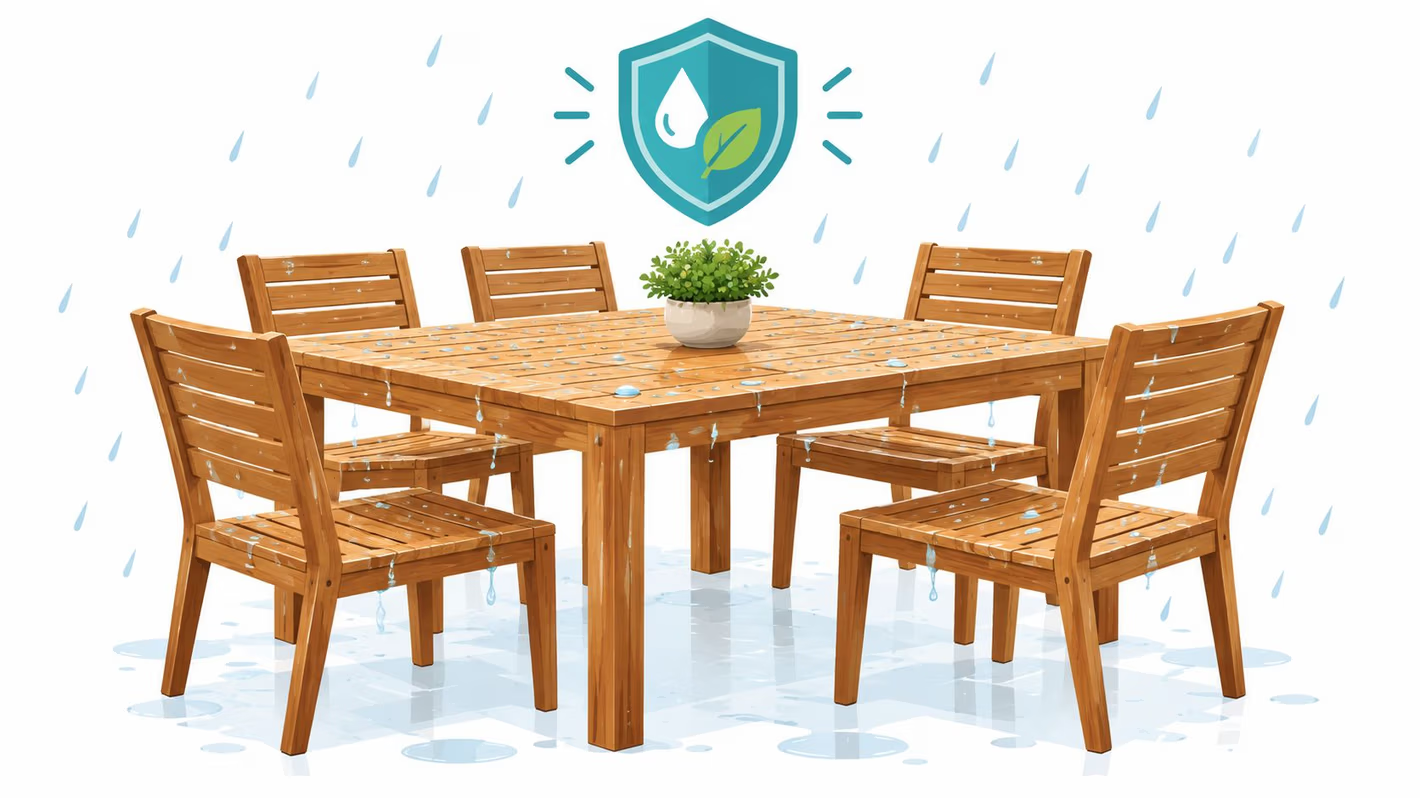
Outdoor furniture faces rain, ultraviolet exposure, dust, and repeated wetting and drying. Teak's natural resistance gives it a practical advantage in Southern Oregon, where covered patios and open-air spaces still experience seasonal weather. Good drainage, airflow, sound joinery, and sensible placement remain necessary. Resilience reduces the burden of exposure, but it does not remove the need for care.
Queensland government timber data lists teak at approximately 670 kg/m³ at 12% moisture content, with shrinkage to that moisture level of about 2.2% tangentially and 1.2% radially. The same Queensland teak timber data classifies teak as durability Class 1 above ground, associated with an expected service life of more than 40 years under appropriate conditions. In-ground durability is lower, Class 2, with an estimated 15 to 25 years.
Value means fewer compromises
Teak is not automatically right for every room or budget. It may cost more than simpler woods, and uncertain origin or weak joinery should prompt careful questions. Its value becomes clearer when you want substantial furniture with a long usable life, repair potential, and an appearance that matures rather than quickly dates.
That practical standard fits Gates Home Furnishings' founding promise of Service and Value, established in 1946. Our sustainable furniture options give shoppers another way to consider materials, construction, and provenance. Responsibly sourced furniture that stays in use can support sustainability, while longevity never excuses unclear harvesting practices. We also look for locally sourced Unique Finds, helping Southern Oregon homes bring in pieces with character and a service history behind them.
Solid Teak vs. Veneer and Reclaimed Options
A teak label can describe very different products. Solid teak heartwood, teak veneer, and unspecified reclaimed wood may all have attractive surfaces, but they don't carry the same information about thickness, structure, moisture history, or repair potential.
Solid heartwood uses teak throughout the main wooden components. It can usually be sanded or repaired more extensively than a thin surface layer, although every piece still has limits. Veneer uses a thin teak layer over another substrate, which can provide visual consistency and dimensional control when manufactured well. It isn't inferior by definition, but the construction should be described accurately.
Three buying situations
| Option | Strength | What requires attention |
|---|---|---|
| Solid teak heartwood | Substantial material with strong repair and longevity potential | Species, heartwood quality, drying, and joinery |
| Teak veneer | Efficient use of teak with a stable engineered core | Veneer thickness, edge treatment, substrate, and finish |
| Unspecified reclaimed wood | Character, history, and a distinctive appearance | Previous moisture exposure, structural condition, pests, and unclear species |
A reclaimed piece may be wonderful, but “reclaimed” alone doesn't prove responsible sourcing or structural soundness. Buyers should ask whether the seller can identify the species, explain the wood's previous exposure, and describe repairs or stabilization.
The same careful eye helps with other home materials. For readers comparing outdoor materials around a property, this guide to paver driveways in Austin offers a useful reminder that visible appearance and underlying construction both affect long-term performance.
Provenance is part of quality
Asia holds more than 95% of the world's teak resources, and India manages about 35% of planted teak forests, according to this FAO report on teak trade and resources. Between 2005 and 2014, global annual trade in teak roundwood averaged more than 1 million cubic meters, with imports valued at approximately US$487 million per year. The same report identifies India as importing 74% of internationally traded teak roundwood, Thailand 16%, and China 10%.
Those figures explain why provenance deserves attention. Species identification doesn't establish legal or responsible harvesting. A buyer should ask for the country of harvest, plantation or forest source, chain-of-custody documentation, and credible certification. The solid wood versus veneer guide can help shoppers assess construction, while the seller should supply the sourcing information.
Caring for Your Teak Indoors and Outdoors
Teak care depends on the finish and the desired appearance. Outdoor teak naturally shifts from warm golden-brown toward silver-gray as sunlight, rain, and air weather the surface. That change is generally a surface process, not proof that the furniture has lost its structural usefulness.
A straightforward outdoor routine
Keep outdoor teak clean, dry between wet periods, and clear of conditions that hold water against the wood. A practical routine looks like this:
- Remove debris gently. Brush away leaves, dirt, and grit before they remain trapped in joints or textured areas.
- Wash with mild soap and water. Use a soft brush for embedded debris, then let the furniture dry naturally.
- Protect drainage and airflow. Keep legs raised from standing water and avoid tight covers that trap moisture.
- Skip aggressive pressure washing. High pressure can damage surface fibers and leave the wood rough.
- Choose the finish deliberately. Use a compatible teak sealer only when preserving the brown tone is the goal.
Teak oil can restore or deepen the golden appearance, but oiling is mainly an aesthetic decision for sound teak. Excessive or unsuitable oil can create a sticky surface, uneven darkening, or incompatibility with a later finish.
Outdoor teak doesn't need to look newly installed to be healthy. Silver-gray weathering is a legitimate design choice.
Indoor care in Southern Oregon
Inside a home, dust with a soft cloth and clean spills promptly. Large panels and joints still respond to seasonal humidity, so furniture shouldn't be placed where heat or dry air hits one area constantly. For a finished piece, use the cleaner recommended for that finish and test any unfamiliar product in an inconspicuous spot.
Indoor buyers who are planning a complete patio arrangement may find patio design tools for exploring layouts useful before deciding where teak furniture will sit. The design should preserve walking space, airflow, and protection from persistent wetness, not only create a pleasing view.
Choosing Quality Teak at Gates Home Furnishings
A dependable teak purchase starts with questions, not assumptions. The word “teak” identifies a material category, but it doesn't reveal whether the piece uses solid heartwood, veneer, sapwood, or an unspecified reclaimed source. A careful seller should be able to discuss construction and provenance in clear language.
Questions worth asking
- What exactly is the material? Ask whether the piece is solid teak heartwood, teak veneer, sapwood, or a teak-look finish.
- Where was it harvested? Request the country of harvest and any available plantation, forest, or chain-of-custody information.
- How was it built? Inspect joints, doors, drawers, hardware, panel construction, and the quality of the finish.
- What care does it need? Confirm whether the surface is factory-finished, sealed, oiled, or intended to weather naturally.
- How will delivery work? Ask whether the team will assemble and position the piece safely in the home.
Gates Home Furnishings' Unique Finds include reclaimed wood, teak, and one-of-a-kind statement pieces, alongside established brands such as La-Z-Boy, Flexsteel, Ashley, and Beautyrest. Shoppers can examine available pieces in the 30,000-square-foot Grants Pass showroom, test comfort, study surfaces, and speak with staff about fit and care before bringing furniture home.
For a dining room, a teak dining table and chairs should be evaluated as a complete system. Table proportions, chair comfort, traffic flow, finish, and maintenance expectations all matter. The same practical standard applies to a teak sofa table, accent table, cabinet, or reclaimed statement piece.
Service after the selection
Gates Easy Pay offers $0 down, 6-month interest-free options, and no-credit-needed financing options, subject to program terms and approval. That flexibility can help a household choose a durable piece without treating quality as an afterthought.
White-glove delivery means the team doesn't just drop boxes at the door. Professional delivery includes assembly and setup, with mattress haul-away available when a mattress purchase is part of the order. Service extends across Grants Pass and the Rogue Valley, including Medford, Central Point, and Ashland.
Gates Home Furnishings offers carefully selected teak, reclaimed wood, and other distinctive furniture for Southern Oregon homes, with practical guidance on construction, sourcing, and care. Visit Gates Home Furnishings online or stop by the Grants Pass showroom to see the Unique Finds in person and choose a piece built for everyday life.