Oversized Double Chaise Lounge Buying Guide


A family in Grants Pass finds a sectional that looks perfect online, wide enough for movie night and deep enough for an afternoon nap. Then the tape measure comes out, and the questions change. Will anyone be able to walk past it, sit upright in it, or get it through the front door?
Why a Double Chaise Lounge Changes the Room
That shift, from appearance to everyday use, is the right place to start. An oversized double chaise lounge isn't a chair that can be nudged into a corner when guests arrive. It's a permanent anchor that shapes where people sit, where they walk, and how much open floor remains.
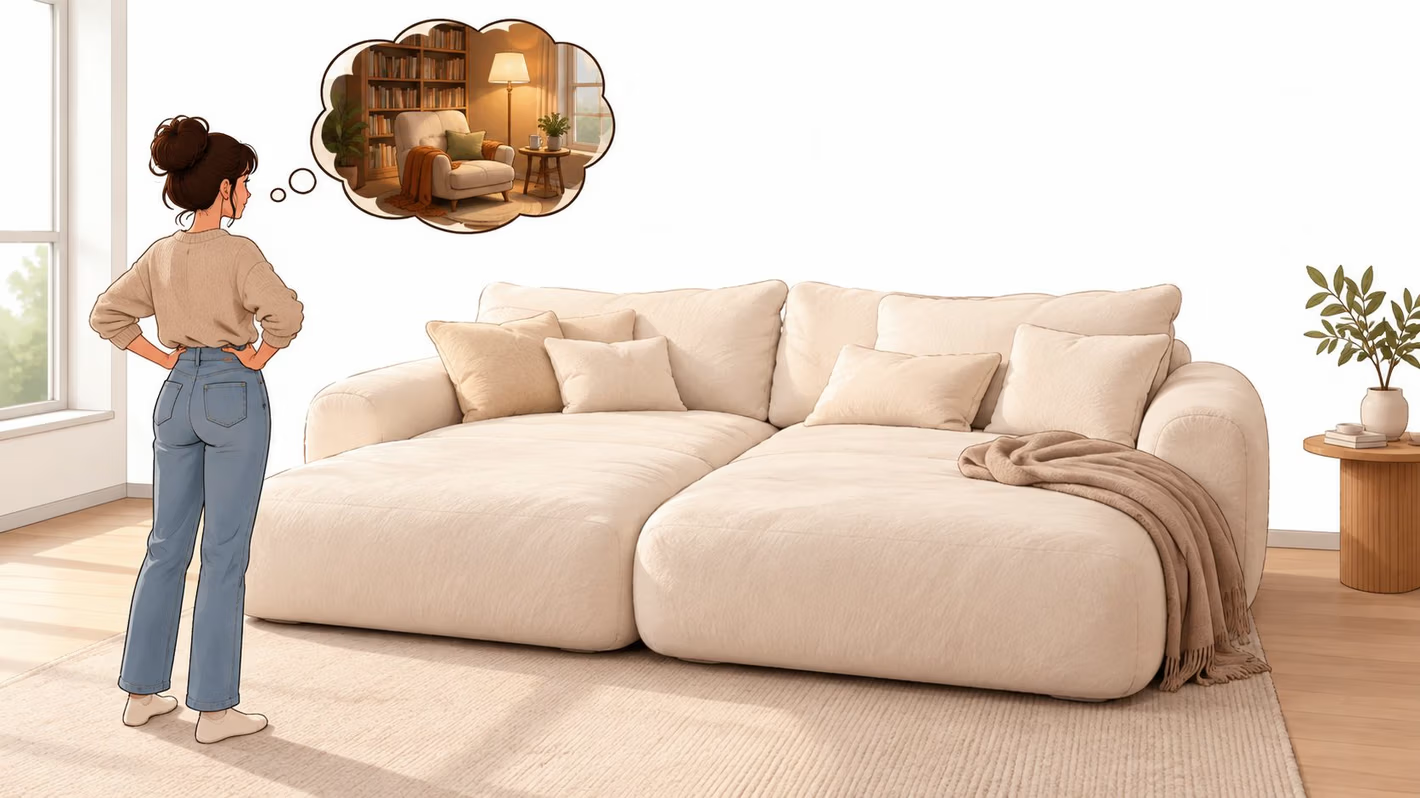
In a large living room or open-plan family space, that permanence can be a strength. Two people can stretch out without negotiating for the same corner, and the rest of the household still has upright seats for conversation. The piece becomes the gathering zone instead of one item among several competing chairs.
The Trade Off Readers Often Miss
Generous lounging space takes floor space every hour of the day, not only during movie night. A chaise that blocks a traffic path, crowds a side table, or forces someone to climb over an extended seat will create friction long after delivery day. Comfort and circulation have to be planned together.
A double chaise works best when the room still works around it, with clear paths, reachable tables, and seats people can enter and leave easily.
Visual weight matters too. One large, low seating block changes what the walls need, which is why some households pair a restrained upholstery color with large canvas art for living room to balance the scale above the back cushions. The art doesn't fix a tight layout, but proportion above and below eye level helps a big piece look intentional.
For Southern Oregon households, we recommend thinking like a neighbor who's moved furniture through older Grants Pass homes, newer Medford builds, and rental doorways alike. Since 1946, our family's promise of Service and Value has meant asking about the room before talking about fabric. That habit prevents the most common disappointment, a lounge that's comfortable in the showroom but awkward at home.
How Oversized Double Chaise Lounges Are Built
There's no single, standardized product hiding behind this label. An oversized double chaise lounge is usually a large sectional configuration built from connected modules, meaning a main sofa run plus two extended chaise sections where legs can stretch forward. Manufacturers combine those modules in different orders, so two products with similar names can occupy very different footprints.
A useful mental model has three parts. First comes the upright seating run, where people sit with feet on the floor. Second come the chaise extensions, which project toward the room and support the legs. Third comes the connection system that keeps modules aligned instead of drifting apart during use.
Shapes Created From the Same Modules
An L-shaped layout typically places chaise seating along one side or at both ends of an angled arrangement, leaving the other side of the room more open. A U-shaped layout wraps seating around three sides of a central area, which suits group conversation but demands more width and careful entry points. Straight sofa-plus-double-chaise designs keep the back against one wall while both chaises project forward.
Published sizing references place sofa-plus-double-chaise designs at approximately 126 to 157 inches on the long side and 59 to 69 inches in overall depth, with seating for roughly 5 to 7 people, while other sizing data for U-shaped designs lists about 165 inches overall, approximately 80 inches of chaise depth, and a seat height near 16 inches, according to published sectional sizing guidance for chaise configurations. Those ranges explain why a name alone can't predict fit. There's no universal industry standard for sectional dimensions.
Shoppers should learn six terms before comparing models.
- Overall width: The full left-to-right measurement, including arms.
- Overall depth: The full front-to-back measurement of the frame.
- Chaise projection: How far the extended seat reaches into the room.
- Seat depth: The usable distance from the front edge to the back cushion.
- Seat height: The distance from floor to seat, ideally checked under load.
- Module layout: The order and orientation of each connected piece.
Upholstery sits on top of that structure, so material choice affects texture and care without changing the footprint. Readers comparing fabrics can review guidance on choosing upholstery materials for everyday furniture before narrowing colors. The structural question comes first, because a beautiful fabric can't shorten a chaise or move a connector.
Compare Sizes, Layouts, and Styles
Comparison gets easier when shoppers stop ranking products by the word oversized. The useful comparison is footprint against usable seats, open floor, and the way people move through the room. A slightly smaller configuration that preserves a walking path often serves a household better than the largest model that fits against the wall.
Sofas and sectionals represented 30.92% of 2025 revenue in the living and dining furniture market, and contemporary guides commonly place large sectionals at 120 to 150 inches or more in width while L-shaped formats may extend from approximately 94 to 156 inches, as reported in living and dining furniture market share analysis. That context confirms sectionals are central to living rooms, but market popularity doesn't tell a household which size belongs in a specific room.
| Configuration | Typical planning concern | Best use pattern | Measure before buying |
|---|---|---|---|
| Compact double chaise | Limited upright seating between chaises | One or two loungers plus occasional guests | Overall width and chaise projection |
| Expansive sofa with double chaise | Forward projection into traffic paths | Family viewing and reading in a primary room | Overall depth and usable seat depth |
| L-shaped double chaise | Corner placement and access to inner seats | Conversation grouped around a corner | Both wall runs and entry clearance |
| U-shaped double chaise | Largest footprint and fewer entry points | Larger gatherings in an open-plan space | Full footprint and central table clearance |
Style Changes Visual Weight, Not Fit
Modern designs often use lower backs and cleaner lines, so a large footprint can look lighter even when it occupies the same floor area. Traditional designs may add higher backs and fuller arms, increasing visual presence and sometimes overall width. Transitional styles fall between those poles, while lodge-inspired rooms often pair substantial seating with wood tables and textured fabrics.
None of those labels guarantees comfort or durability. Before ordering, households can apply the same discipline used to choose durable outdoor furniture, checking construction, exposure, and care needs instead of relying on a style name. Indoors, the equivalent checks are frame stability, cushion support, connector security, and manufacturer care instructions.
A room sketch makes the comparison concrete. Mark doors, windows, heat vents, and the television or conversation focal point, then draw each configuration at full size. Practical living room furniture layout guidance for traffic and focal points helps households test whether side tables remain reachable and whether the chaise interrupts the natural path from entry to kitchen or hallway.
Judge Comfort by Seat Depth and Support
Exterior depth tells a shopper how much room the furniture occupies. Usable seat depth tells whether a body can sit in it well. That distinction causes more confusion than any other part of buying an oversized double chaise lounge, because a deep-looking seat can still leave a shorter person without back support.
Research on sofa pressure distribution found that increasing seat depth changes contact area and pressure patterns, with pressure measures rising and then falling as depth increases, which means deeper isn't automatically more comfortable, as described in research on sofa seat depth and pressure distribution. The practical measurement is the compressed cushion-to-back distance, taken while someone is seated. Uncompressed showroom dimensions can hide how far the body sinks.
A Three Posture Fit Test
A useful showroom test includes upright conversation, reclined reading, and side-lying relaxation. In the upright position, the lower back should contact the back cushion while thighs remain supported and feet stay on the floor. In the reclined position, the head and shoulders shouldn't be pushed forward, and a book or tablet should feel stable without constant arm tension.
Side-lying reveals a different issue. The chaise should support hips and legs without a hard ridge at a module seam, and the user should be able to roll toward the edge and stand without climbing over loose cushions. Testing with two people of different heights exposes problems that one shopper might miss.
- Feet supported: Dangling feet often signal excessive depth or height for that user.
- Front edge comfort: The edge shouldn't press sharply under the knees.
- Lumbar contact: Sliding forward to reach the floor usually means back support is lost.
- Easy exit: Standing shouldn't require pulling on a side table or another person.
Support for Older and Shorter Users
Age-friendly comfort deserves direct attention rather than assumptions. Research on older adults identifies seat comfort, backrest height, cushion firmness, durability, and seat-depth discomfort as key decision factors, and 43% of surveyed adults aged 60 and over reported using a sofa for at least five hours daily, according to research on sofa use and comfort among older adults. At that level of daily use, small fit problems become major ones.
A very deep chaise can move the lower back away from support, leave feet unsupported, and make standing harder. Loose or adjustable back cushions help because they shorten the effective depth for upright sitting while preserving length for reclining. Firmer, stable support may also serve seniors better than maximum softness, especially during entry and exit.
The buying question to ask: What is the effective seat depth under load, and how does back support change when the user reclines?
Households comparing deeper models can review options and considerations for deep seating sectional sofas with those questions in hand. The goal isn't the deepest seat in the store. It's the depth that supports thighs, back, and feet across the postures the household uses every day.
Where the Lounge Fits in Everyday Life
A family room in Central Point might host homework at one end, a game on television, and a grandparent who needs a supportive upright seat. A double chaise can give two people room to stretch while the center seats handle conversation. It works when the television viewing angle, table access, and walking path all remain clear.
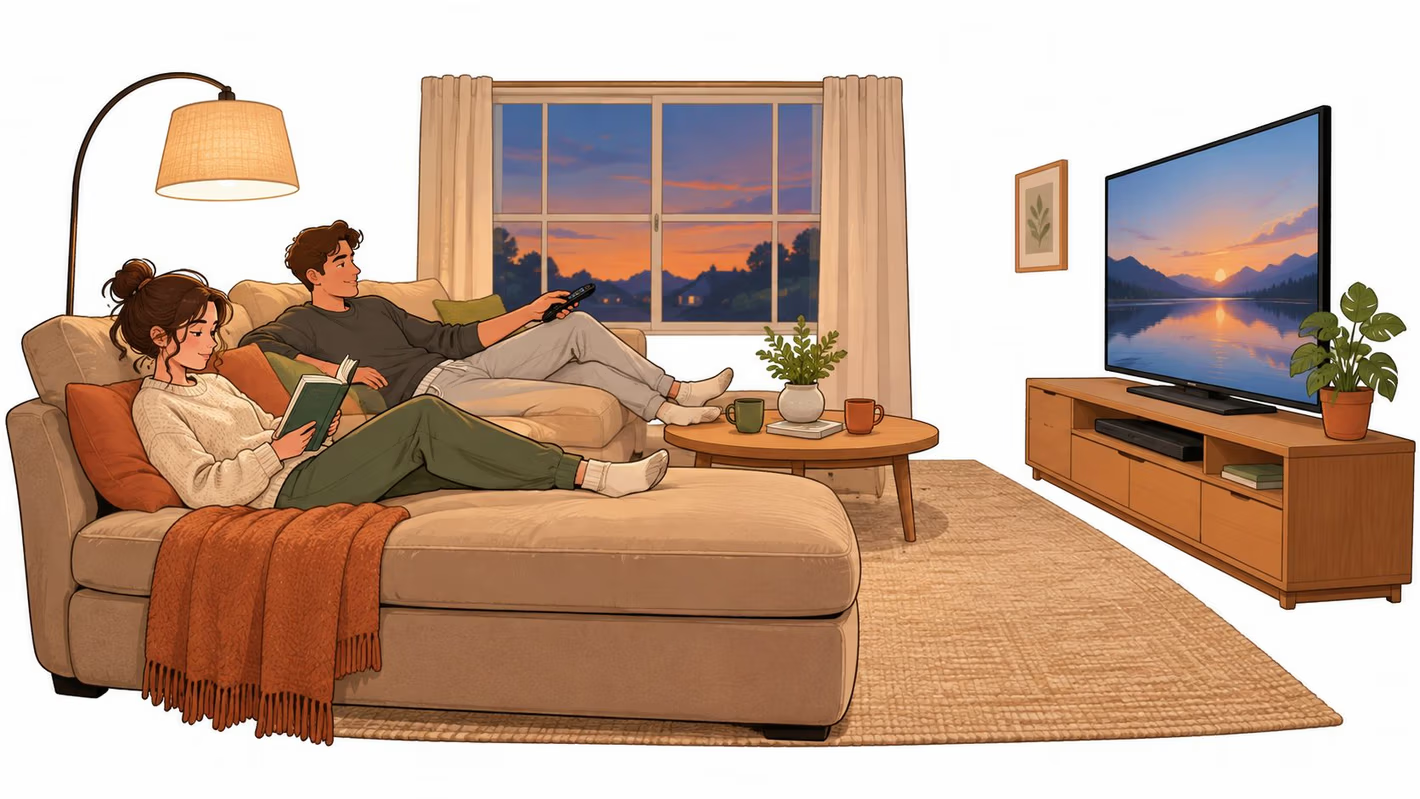
A reading retreat creates different demands. One extended surface near a window may be enough, and the second chaise could be valuable only if another reader regularly joins. Otherwise, the extra projection may take space that a bookcase, floor lamp, or open rug area would use better.
Multigenerational Gatherings and Rentals
Multigenerational homes in the Rogue Valley need variety, not just capacity. Children may sprawl happily, while an older relative needs firm support, a reachable arm, and a clear route out of the seat. A configuration succeeds when nobody is trapped in the middle or forced to cross over another person's legs.
Renters face another calculation. A large configuration can be difficult to move, may not suit the next home's layout, and can dominate a compact living room. Separable modules reduce that risk, but tenants should still confirm doorway access and whether the full arrangement can be reduced to a smaller layout later.
Consider an Ashland household that hosts friends after outdoor activities. Muddy shoes, pets moving between rooms, and people carrying drinks all argue for a clear path beside the chaise. If guests must step over extended seating to reach the kitchen, the lounge has become an obstacle rather than a gathering place.
The strongest use case is consistent. Several people lounge or gather in the same room most days, side tables can stay within reach, and the household prefers one coordinated seating system over separate chairs. When gatherings are occasional and floor space serves exercise, play, or flexible work, a smaller sectional may be the more honest fit.
Plan the Footprint Before the Furniture Arrives
Measuring only the longest wall is the mistake that creates the most delivery surprises. A product can fit against that wall and still block a doorway, cover a vent, or fail at a hallway turn. Planning needs two maps, one for the final room layout and one for the route from truck to that position.
Large chaise listings can exceed 64 inches in width and reach 60 to 75 inches in front-to-back depth, dimensions that can consume more usable floor area than shoppers expect, as shown in large chaise lounge dimension listings. Overall frame depth determines traffic blockage and delivery feasibility. Usable seat depth determines posture, so both numbers belong on the plan.
Tape the Full Footprint on the Floor
Start with painter's tape at the manufacturer's overall width and depth. Include the full chaise projection, not just the sofa back line. Then live with the outline for a day, walking normal routes, opening doors, and placing temporary boxes where tables or lamps would stand.
- Measure the room: Record wall lengths, door swings, windows, vents, and outlets.
- Tape the footprint: Mark width, depth, and both chaise projections at full size.
- Test circulation: Walk every normal route without stepping inside the taped area.
- Check table reach: Sit in chairs placed inside the outline and reach for planned surfaces.
- Measure access: Record door, hallway, stair, elevator, and ceiling clearances.
- Check diagonal turns: Confirm space at right-angle corners, not just straight passages.
Detailed step by step guidance on measuring furniture and access routes can help households record those numbers consistently. Photograph tight turns and bring the measurements to the showroom. A salesperson can compare them with module sizes before an order is placed.
Printable Pre Delivery Checklist
- Final position: Footprint taped and photographed at home.
- Entry route: Front door, halls, stairs, and turns measured.
- Module plan: Each piece labeled with its intended position.
- Clearance kept open: Walking path beside the open chaise preserved.
- Delivery questions ready: Assembly, connector alignment, and packaging removal confirmed.
Older Southern Oregon homes, split-level entries, and rural properties can each present different access challenges. Treating the sectional as furniture and as a permanent circulation obstacle sounds cautious, but it's accurate. Once installed, people will move around it thousands of times.
Compare Styles, Brands, and Local Service
A double chaise lounge is a lasting room decision, so compare how each option is built and how it works for the people who will use it. At Gates Home Furnishings, collections span different construction styles and price points. Match a specific sectional's layout and support to the room rather than relying on a label to answer every comfort question.
In the showroom, check back height, cushion recovery, seam placement, and how firmly the modules connect. Ask for warranty terms in writing and confirm which parts are covered. Fabric can look different under home lighting, so bring flooring or paint samples if you have them.
Why Testing Scale in Person Matters
Our 30,000-square-foot Grants Pass showroom gives shoppers room to compare furniture scale before committing. Published dimensions are useful, but they can't show how easily someone sits down, stretches out, or walks around a chaise. Home measurements and in-person testing answer different parts of the fit question.
That local experience helps households from Grants Pass, Medford, Central Point, Ashland, and the wider Rogue Valley. Bring room dimensions, photos of tight entry turns, and the heights of regular users. Staff can help compare configurations against those needs, including whether the seat depth feels comfortable and the layout leaves usable room to move.
Shoppers comparing places to buy living room furniture in Southern Oregon can ask each retailer the same questions about delivery access, assembly, and connector inspection. Consistent questions make service differences easier to see and keep a large purchase focused on fit, not just showroom appeal.
Adding Character Around the Seating
Our Unique Finds include reclaimed wood, teak, and one-of-a-kind statement pieces that can complement a sectional without being mistaken for part of the lounge. Reclaimed teak is generally salvaged from older structures such as houses, boats, bridges, railway sleepers, or warehouses. For new teak, ask whether claims identify responsible forestry or applicable certification such as FSC. Guidance on verifying reclaimed and new teak material claims explains why those details matter. Grain, knots, color, and nail marks vary because the wood has been used before.
A reclaimed console behind a sofa or a teak side table beside a chaise can add character while keeping the seating choice centered on comfort and support. Ask specifically about a piece's origin and finish. Reclaimed material does not automatically mean sustainable, so clear answers help you choose with confidence.
Protect Your Investment and Complete the Purchase
Delivery day is an inspection opportunity, not just a drop-off. Before accepting an oversized double chaise lounge, check that feet sit level, connectors are tight, cushion support feels even, and the frame doesn't shift when someone sits near an edge. Misaligned modules are easier to correct while the delivery team is still present.
Structural checks matter because a wide chaise invites off-center use. Furniture testing guidance identifies static load, fatigue, impact, and stability as core performance categories, with North American seating commonly evaluated under BIFMA X5.1 and European or UK products under EN 1022 and EN 1728 procedures, according to furniture testing guidance for load, stability, and durability. Ask whether tested capacity applies to the whole unit or each seat position, and whether chaise connectors are mechanically secured.
Care Without Guesswork
Vacuum upholstery with attachments approved by the manufacturer and follow the care code attached to the specific fabric. Address spills promptly, but don't assume one cleaner suits every material. Test any recommended product in an inconspicuous area first, and keep written instructions with the purchase records.
Rotate or fluff cushions when the manufacturer recommends it, especially where one chaise receives daily use. Periodically inspect connectors, feet, seams, and areas where users sit on the front edge. Early tightening or professional advice can prevent a small alignment issue from becoming uneven wear.
Softness on the first day is a weak predictor of satisfaction. Stable connectors, even support, and a clean delivery inspection matter more over years of use.
Our white-glove delivery approach means professional in-home delivery, assembly, and setup rather than boxes left at the curb, and mattress haul-away is available when a purchase includes that service. The Gates Care Shield protection plan offers coverage for accidental spills and tears, with terms that should be reviewed before enrollment. For a large sectional, setup includes confirming level placement and aligned connections in the final position.
Financing should be just as clear. Gates Easy Pay includes $0 down, 6-month interest-free options when paid in full during the promotional period, and no-credit-needed options, subject to the applicable program terms. Shoppers should confirm payment schedule and eligibility before ordering rather than treating financing as an afterthought.
Final Choice Checklist
- Fit confirmed: Room, circulation, and delivery route measured.
- Body fit tested: Three postures tried by users of different heights.
- Structure checked: Capacity, connectors, stability, and warranty clarified.
- Care understood: Fabric instructions and protection options reviewed.
- Purchase terms clear: Delivery, assembly, and financing confirmed in writing.
Southern Oregon's favorite furniture destination has served local families since Est. 1946, when George Gates built the business on Service and Value. That promise still points to the same practical advice, choose the lounge that fits the people and the room, then protect it properly. Visit our Grants Pass showroom or browse our collection online to compare configurations with measurements in hand.
Bring room measurements, access photos, and the three posture test to Gates Home Furnishings, where our team can help compare oversized double chaise lounge configurations, upholstery, delivery setup, and Gates Easy Pay options. Visit the 30,000-square-foot Grants Pass showroom to test seat depth and scale in person, or browse the collection online before coming in.