Hybrid Mattress Comparison Guide

A couple from Grants Pass can spend an hour comparing two mattresses that both carry the word “hybrid” on the label, then discover that one feels lively and cool while the other feels soft, slow, and warm. The label only tells part of the story. The hybrid mattress comparison happens inside the build, where coil design, comfort materials, firmness, edge reinforcement, and cover fabrics determine what the body feels.
A careful showroom test matters more than a quick sit at the edge. The 30,000-square-foot Gates showroom in Grants Pass gives Southern Oregon shoppers room to compare mattresses properly, with guidance from a local team that has helped households furnish their homes since 1946.
Why Hybrid Mattresses Are Worth a Second Look
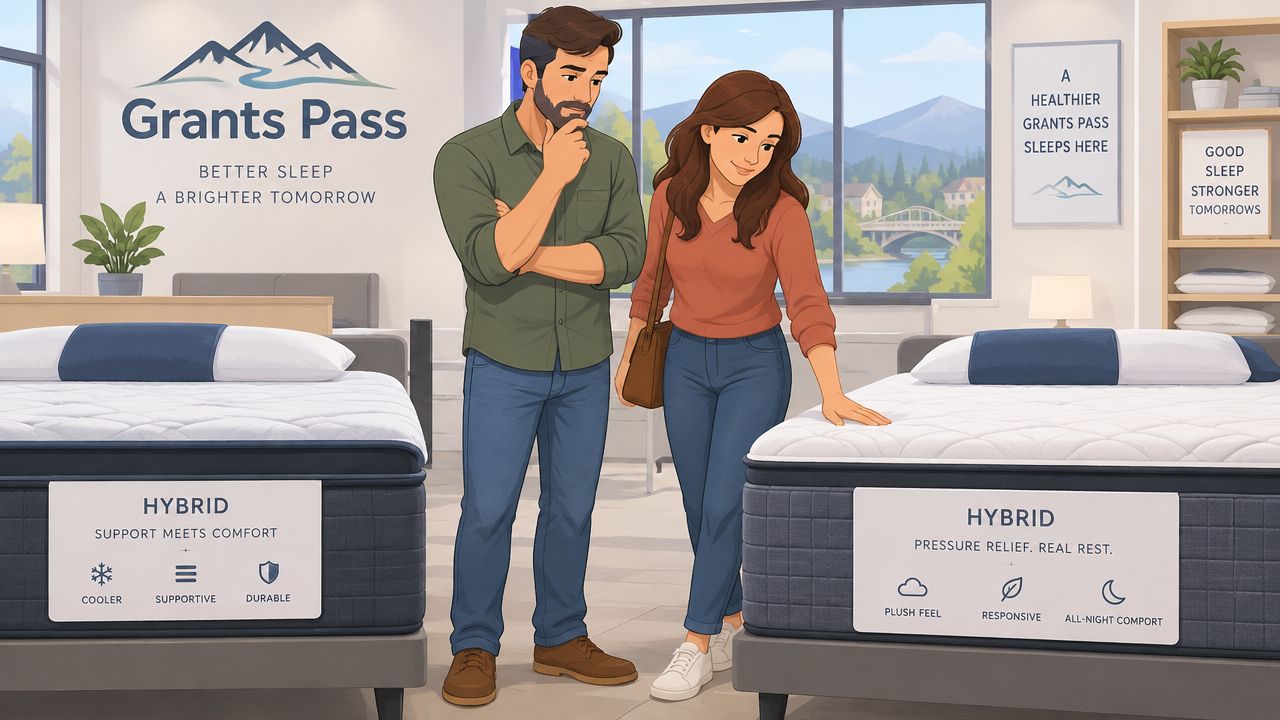
A couple from Grants Pass stands between two beds labeled hybrid. Both look well made. One feels cool and lively under the body, while the other feels softer, slower, and warmer. One partner wants easy movement and airflow. The other needs cushioning around the shoulders and hips.
Start with the build, not the label. Coil design, comfort layers, firmness, edge reinforcement, and the cover determine what you feel during a showroom test.
The middle ground has become a serious category
Hybrids now occupy a broad part of the mattress market. Their appeal is straightforward: a coil system can provide airflow, response, and perimeter stability, while foam or latex can cushion pressure points that a traditional spring bed may leave exposed. The industry overview explains the hybrid category's changing market position
That combination gives shoppers more useful choices. A plush hybrid can soften the first impression. A firm, zoned build can provide stronger resistance through the middle. A latex hybrid may feel springy and quick, while a thick memory-foam hybrid can feel slower and more enveloping.
Those differences matter more than the word hybrid on the tag. In our Grants Pass showroom, compare how quickly each surface lets you change position, whether your hips sink too far, and whether the edge stays steady when you sit or lie near it.
What makes the construction appealing
Individually wrapped coils can respond more independently than a connected spring unit. Foam or latex above the coils can cushion the shoulders and hips, while zoning can add firmer support where the body needs more resistance. The result can feel balanced, but only when the layers suit the sleeper.
A good in-store test exposes the trade-offs quickly. Lie in your usual sleep position long enough to notice pressure at the shoulders, hips, and lower back. Roll from side to side. Then sit near the edge and pay attention to whether the mattress holds you up or lets you slide outward.
Showroom rule: Choose a hybrid when you want cushioning with a responsive surface, airflow, and dependable edge support.
A hybrid cannot solve every sleep concern. Keep room for consistent bedtime habits and other factors that affect rest. This locally focused guide to better sleep offers practical guidance beyond mattress construction. Use the bed to support those habits, not to replace them.
What a Hybrid Mattress Is Built From
In the Grants Pass showroom, two mattresses labeled hybrid can feel nothing alike. Compare the build from the bottom up, then confirm each layer with your body. The support core, transition layer, comfort stack, and cover all shape the result you feel in the first few minutes.
Start with the support core
The support core carries your weight and controls the mattress's stability, bounce, and resistance.
| Layer | Common Materials | What It Does |
|---|---|---|
| Support core | Pocketed coils, Bonnell coils, continuous wire, offset coils | Carries body weight, controls stability, and influences bounce |
| Transition layer | Polyfoam, firmer memory foam, latex, microcoils | Prevents the sleeper from feeling the coil unit directly |
| Comfort stack | Memory foam, polyfoam, latex, microcoils | Relieves pressure and establishes the main surface feel |
| Cover | Cotton, wool, Tencel, phase-change knit | Changes breathability, quilting, softness, and temperature perception |
Bonnell coils are interconnected, so they produce a familiar spring response. Continuous-wire systems use linked wire structures for broad support. Offset coils hinge under pressure and can offer a more conforming response. Pocketed coils are individually wrapped, so each spring can respond with less dependence on the others and help limit motion transfer. Sleep Foundation explains hybrid construction and pocketed-coil support.
Coil gauge, count, height, and arrangement matter, yet none should decide the purchase by itself. A larger coil count cannot make up for thin comfort layers or a weak edge. Zoned coils may feel firmer beneath the lower back and hips. Pocket-on-pocket systems add another responsive coil layer, which you should test for excessive bounce or unwanted pressure.
Lie on the mattress in your normal position. If your hips drop or your lower back feels unsupported, the coil design and upper layers are not working together for you.
Read the transition and comfort layers
The transition layer keeps your body from meeting the coil unit too abruptly. It also controls how quickly you settle into the bed. A weak transition can make a mattress feel harsh, unstable, or too soft beneath the surface.
The comfort stack supplies the first impression and much of the lasting pressure relief. Memory foam contours closely and can reduce pressure. Polyfoam responds faster and feels more buoyant. Latex offers elastic support with quick recovery. Microcoils can add ventilation and responsive cushioning above the main support unit.
Some builds include copper or graphite infusions, marketed for heat management. Talalay and Dunlop latex also create different feels and use different manufacturing approaches. Judge both with your shoulder and hip during a side-sleep test. The right layer eases pressure while keeping your hips from sinking too far.
Don't overlook the cover
A cover changes the opening feel. Tencel, cotton, and wool may feel breathable and natural, while phase-change knits can provide a cooler initial sensation. Dense quilting softens the surface, but too much padding can hide the support underneath.
Certification labels help with background research. CertiPUR-US, GOTS, and GREENGUARD Gold address different foam, textile, and indoor-air considerations. They provide useful construction information, but your in-store test still decides whether the finished build suits you.
How Hybrids Compare to Innerspring, Foam, and Latex
A shopper in Grants Pass can usually feel the difference between these mattress builds within a few minutes. Lie on your usual side, roll onto your back, and notice whether your shoulders and hips feel cushioned, supported, or pushed upward. Compare the construction, not just the category name.
| Feature | Hybrid | Innerspring | Memory Foam | Latex |
|---|---|---|---|---|
| Cooling | Often strong when coils and covers allow airflow | Usually breathable | Can feel warmer with dense foam | Generally breathable and buoyant |
| Bounce | Moderate to strong | Strong | Minimal to moderate | Responsive and springy |
| Motion isolation | Good with pocketed coils | Often weaker | Usually excellent | Moderate |
| Edge support | Often strong | Usually strong | Depends on reinforcement | Depends on construction |
| Pressure relief | Strong with well-matched comfort layers | More limited without cushioning | Deep contouring | Cushioned with more lift |
| Best fit | Shoppers wanting balanced performance | Traditional spring preference | Maximum contouring and isolation | Natural responsiveness and pressure relief |
The category scores matter less than the feel beneath you. On a hybrid, press near the edge, change positions, and ask whether the surface cushions your joints without trapping your body. A bed that looks supportive on paper can still feel unstable if the comfort layers are too soft or the perimeter lacks reinforcement.
Cooling depends on the build
Coils can create room for air movement, but the entire mattress controls temperature. Thick, dense foam, heavy quilting, or a tight cover can make a coil mattress feel warmer. The hybrid testing guide from RTINGS discusses why cooling depends on construction rather than the label alone, and that matches what shoppers can check in person.
Lie on the bed long enough to notice heat building beneath your shoulders and lower back. A latex-over-coil build often feels more buoyant and ventilated than a thick memory-foam hybrid. The cover and comfort stack matter as much as the coil unit.
The practical choice
Traditional innerspring beds suit shoppers who want a familiar, lively feel and firm support. Memory foam fits sleepers who prefer close contouring and strong motion isolation. Latex suits people who want quick response, a resilient surface, and pressure relief without a sinking sensation.
Hybrids make the strongest starting point for shoppers seeking pressure relief, airflow, edge support, and easier movement in one mattress. Compare how each build handles your body rather than choosing by label. Use this hybrid mattress versus memory foam guide for a closer look at that specific decision, then test the actual mattress at Gates Home Furnishings in Grants Pass.
Hybrid Price Tiers and What You Get at Each Level
Price should reflect the build, not the label. Compare the layers, coil unit, edge work, and cover, then ask what you can feel when you lie on the mattress in our Grants Pass showroom.
| Price Tier | Coil Type | Comfort Layers | Typical Warranty | Best For |
|---|---|---|---|---|
| Value | Basic pocketed coils | Simpler polyfoam or thinner foam layers | Verify the written terms | Budget-focused shoppers |
| Mid-range | Pocketed or zoned coils | More substantial foam and cooling cover | Review coverage and exclusions | Most everyday buyers |
| Premium | Zoned, reinforced, or layered coil systems | Latex, advanced foam, or specialty covers | Check prorating and sagging terms | Comfort-focused shoppers |
| Luxury | Premium pocketed or specialized coil systems | Broad natural-material or advanced comfort stacks | Read service conditions carefully | Shoppers seeking refined materials |
At the value level, expect dependable basic support with less cushioning detail and fewer refinements. A mid-range hybrid often adds better zoning, thicker comfort layers, and a more breathable cover. Feel for steadier support under your waist and enough cushioning at your shoulders and hips.
Premium builds may add latex, stronger perimeter reinforcement, or a more carefully tuned comfort stack. Luxury models can feature natural materials, elaborate quilting, and specialized coil work. Pay the difference only when you can feel better pressure relief, steadier support, easier movement, or improved edge stability.
What to ask about before choosing
Ask whether the coils are pocketed, whether the perimeter is reinforced, and what material sits directly beneath the cover. Those details affect motion, edge feel, and how quickly the surface responds when you turn. Foam density can influence durability and firmness, though manufacturers do not always display it in a useful side-by-side format.
Read the written warranty before choosing a tier. It should explain sagging coverage, structural defects, exclusions, and whether service terms change over time. A warranty covers manufacturing conditions, not whether the mattress suits your body or sleeping position.
Use this mattress brand comparison to review construction and brand features before visiting the Mattress Gallery. Gates Home Furnishings carries La-Z-Boy, Flexsteel, Ashley, and Beautyrest, along with mattress options selected for different comfort needs.
Flexible payment options may shape the final choice. Gates Easy Pay includes $0 down, 6-month interest-free options, and no-credit-needed options, subject to program terms. Outlet mattress specials offer another route for shoppers who prioritize immediate value over the newest cover fabric or finish. Compare the actual feel first, then decide whether the added materials earn their place in the price.
Testing a Hybrid the Right Way in Our Showroom
A mattress test should resemble sleep, not a furniture inspection. Sitting for a moment on the edge tells very little about pressure relief, lumbar support, or motion transfer.
Use the same sequence on every candidate
A repeatable test makes comparison fair:
- Start in the usual sleep position. Side sleepers should check shoulder and hip comfort. Back sleepers should notice whether the lower back feels supported. Stomach sleepers should watch for excessive sinking at the hips.
- Stay on the mattress for at least 10 minutes. Early softness can change as the body settles into the comfort layers.
- Change positions naturally. A responsive hybrid should allow movement without forcing the sleeper to climb out of a deep depression.
- Check the lower back. A hand sliding beneath the lumbar area can reveal a gap caused by insufficient support or pressure from excessive firmness.
- Test the edge. Sit, lie near the perimeter, and notice whether the edge remains stable.
- Test motion with a partner. One person should turn, sit, and rise while the other stays still.
The mattress buying guide from Gates offers additional questions to bring to the showroom floor.
Couples and hot sleepers need extra checks
Couples should lie on the mattress together, not take turns separately. The heavier partner should move while the lighter partner evaluates disturbance, and both should test whether the perimeter allows comfortable use of the full surface.
Hot sleepers can press into the cover and notice its quilting, texture, and immediate temperature. After several minutes, the sleeper should check whether the surface feels warmer than expected. The goal isn't to trust a “cooling” label. It's to evaluate the entire build.
Ask the sleep-care staff to explain the coil unit and, where appropriate, show how the mattress is constructed. Gates' Sleep Care assessment includes a needs conversation, comfort consultation, and side-by-side testing. Shoppers may also ask about the standard 100-night exchange program and its conditions before committing.
Matching Hybrid Builds to Sleep Styles and Bodies
A hybrid comparison works best at the build level. In our Grants Pass showroom, start with the pressure you feel at your shoulders, hips, or midsection, then check how quickly the mattress responds when you move. The same bed can cradle one sleeper comfortably and leave another with shoulder pressure or unwanted hip sink.
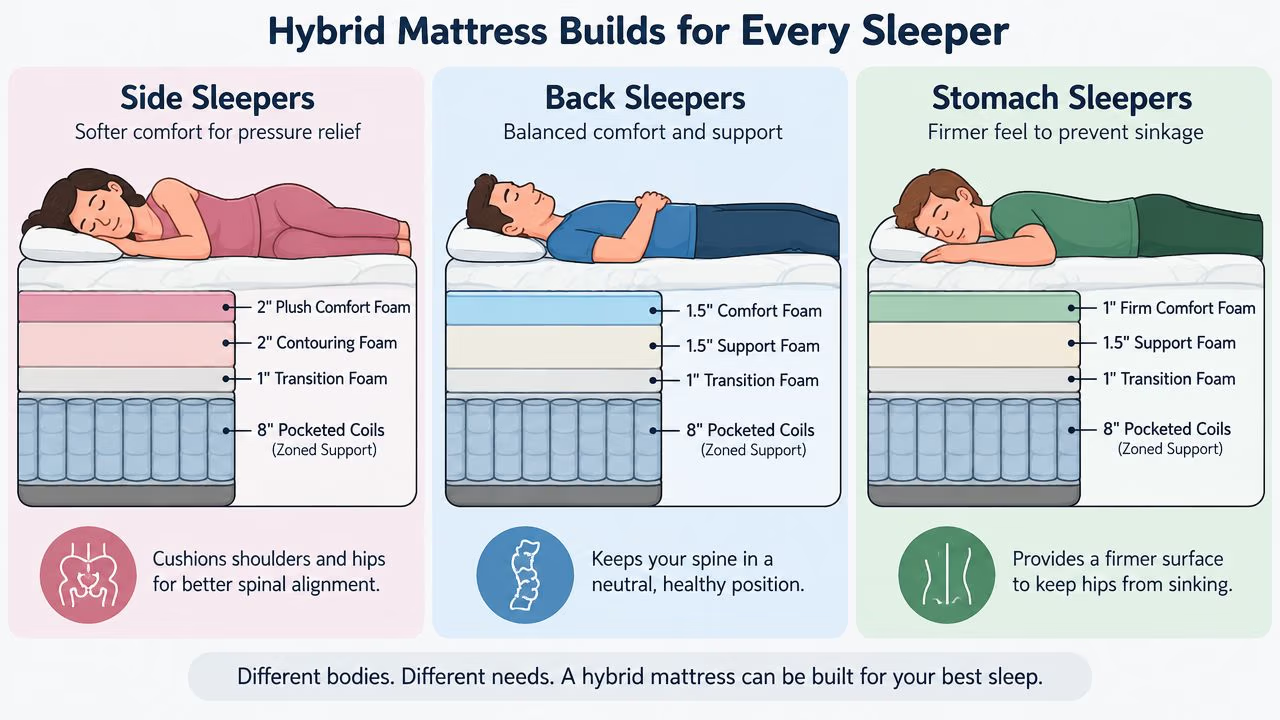
Match the comfort stack to the sleep position
Side sleepers should look for cushioning that lets the shoulders and hips settle without allowing the midsection to sag. A thicker comfort stack over pocketed coils often feels better, but test whether the surface still pushes back when you lie on your side.
Back sleepers usually need an even surface with dependable lumbar support. Zoned coils and a moderate comfort layer can support the body without creating a hard spot beneath the lower back. Lie still, then bend one knee and notice whether the mattress keeps your pelvis level.
Stomach sleepers should choose a firmer hybrid that limits hip sink. A thinner comfort stack and supportive coil core typically suit this position better than a very plush top.
Combination sleepers need quick recovery. Pocketed coils with responsive foam or latex make turning easier than a slow, tightly conforming surface. Roll from side to back in the showroom and notice whether the mattress follows your movement or holds you in place.
Use this mattress selection resource to organize body-type observations before testing.
Solve the main complaint directly
For couples, individually wrapped coils can limit movement transfer, while reinforced perimeters make the full sleep surface more usable. Lie together and have one partner turn or sit while the other notices the disturbance. A zoned coil layout can also add firmer support beneath areas that carry more weight, but judge it by whether your lower back feels supported rather than pressured.
Plus-size shoppers should inspect the support core, mattress profile, edge structure, and stated weight guidance. A thick top will not prevent unwanted sink when the support system underneath feels too soft.
Hot sleepers should compare latex-over-coil builds with hybrids using ventilated foam or specialty infusions. Allergy-sensitive shoppers can ask about CertiPUR-US-certified foams and natural-fiber covers, then verify the materials instead of relying on broad marketing language.
Your Hybrid Buying Checklist and Next Steps
The final decision should include service terms, not just the feel of the mattress. A comfortable bed can become frustrating if delivery, exchange, warranty, or protection details remain unclear.
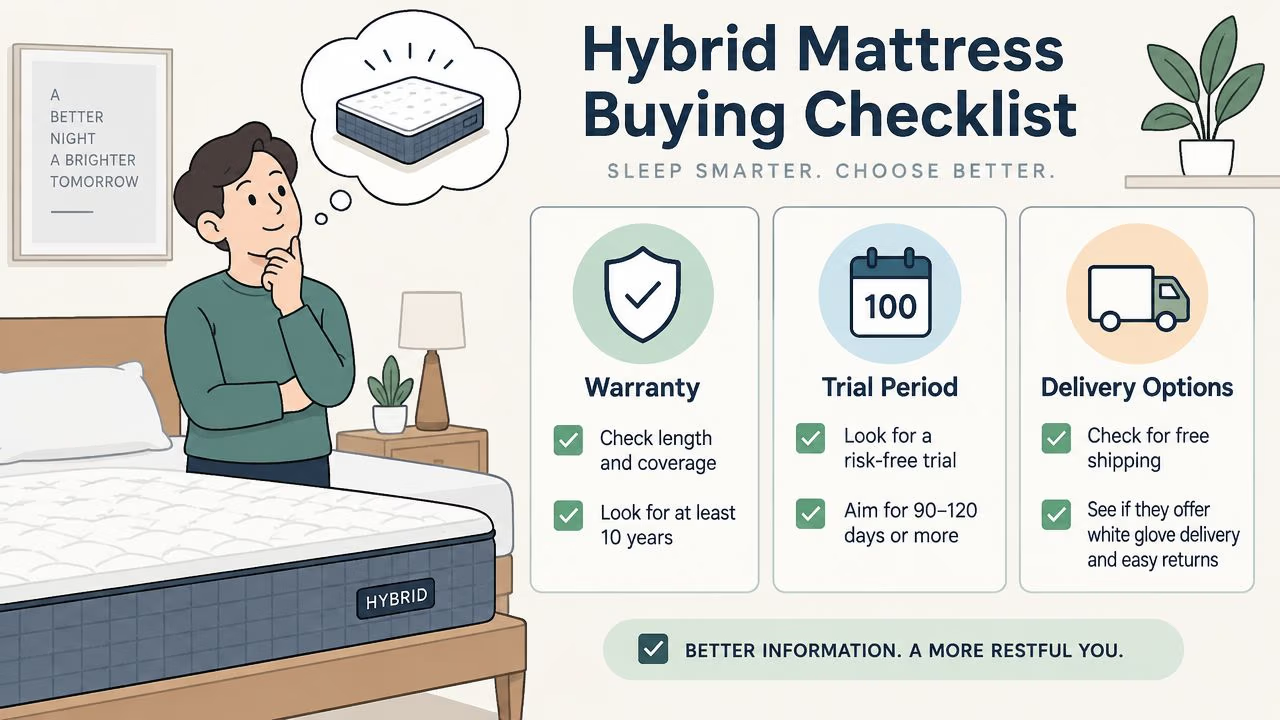
Take this checklist to the showroom
Bring these questions: What is the trial or exchange window? What does the warranty exclude? Who sets up the mattress, and what happens to the old one?
- Confirm the construction: Ask about coil type, zoning, edge reinforcement, comfort materials, and cover fabric.
- Review the written warranty: Check structural coverage, sagging terms, prorating, and required foundation support.
- Understand the sleep trial: Verify the length, exchange conditions, fees, and whether the mattress must be used with a protector.
- Ask about delivery: Confirm professional setup, room placement, packaging removal, and mattress haul-away.
- Consider protection: Ask whether a mattress protection plan covers accidental spills, stains, or tears and review its exclusions.
- Record the recommendation: Keep the model name, firmness, size, foundation requirement, and delivery details together.
Gates' Sleep Care process keeps the purchase practical. It begins with a conversation about sleep position, comfort history, temperature, partner movement, and budget. Shoppers then compare suitable mattresses side by side, receive a written recommendation, schedule delivery, and follow up after the first 30 nights.
Plan the payment and delivery
Gates Easy Pay provides flexible financing choices, including $0 down, 6-month interest-free options, and no-credit-needed financing. Approval, promotional periods, and account terms apply, so shoppers should review the agreement before signing. Outlet and clearance options may suit buyers willing to choose a floor model or current special value.
Professional delivery matters with a hybrid mattress because these beds can be heavy and difficult to position safely. Gates provides white-glove delivery, including assembly, setup, and mattress haul-away. The team doesn't merely drop a box at the door.
Fresh bedding also supports a clean sleep environment. Shoppers can review this practical fresh sheets sleep quality tip from SleepHabits, then ask the showroom team about protectors and care requirements. The new mattress buying tips from Gates can help organize the final questions.
Gates Home Furnishings has served Grants Pass and the Rogue Valley since 1946, founded by George Gates Jr. on the promise of “Service and Value.” The showroom also carries bedroom furniture and distinctive Unique Finds, including reclaimed wood, teak, and one-of-a-kind statement pieces for shoppers furnishing more than the mattress alone.
Visit the 30,000-square-foot Gates Home Furnishings showroom in Grants Pass to test hybrid mattresses in real sleep positions, compare comfort layers, and receive a Sleep Care consultation. The local team serves Medford, Central Point, Ashland, and the broader Southern Oregon region, with white-glove delivery, mattress haul-away, Gates Easy Pay, and online shopping available through Gates Home Furnishings.