Recliners with Ottoman: How to Choose the Right One


A Grants Pass homeowner can find two recliners that look nearly identical, sit in both, and still get stuck on one question: what should happen with the ottoman? That hesitation is justified. With recliners with ottoman, the footrest isn't a decorative extra. It determines how the chair supports the legs, how much floor space the room needs, and whether the seating area feels anchored or constantly in the way.
The right set should fit the room, the people using it, and the household routine. A reading chair in a quiet corner has different requirements from a daily family-room recliner, a lift chair for a senior, or a compact seat in an apartment near downtown Grants Pass. Gates Home Furnishings has served Southern Oregon since 1946, founded by George Gates Jr. on a promise of “Service and Value.” That same practical approach still matters when a customer is deciding whether the ottoman deserves as much attention as the chair.
Why the Ottoman Drives the Decision
A shopper can fall in love with the chair and still choose the wrong set by treating the ottoman as an afterthought. A fixed ottoman keeps the arrangement visually tidy and establishes one permanent lounging position. A free-glide or locking ottoman changes the traffic pattern, because it can move with the user, shift toward a conversation area, or stay put when the chair reclines.
That difference matters in a Grants Pass living room where the chair may share space with a sofa, coffee table, doorway, and walking route. The ottoman creates a second piece of furniture, not merely an extension of the chair. It needs room for the legs, room for safe movement around it, and enough stability to support the feet without sliding away.
Practical rule: If the ottoman doesn't work in the room's daily traffic pattern, the chair won't feel convenient for long.
The ottoman also affects posture. Raising the lower legs can relieve pressure during relaxation, but only when the height and distance match the user. An ottoman that's too high bends the knees sharply. One that's too low leaves the calves unsupported. The wrong position can make a chair feel comfortable for a few minutes and awkward after a longer sit.
A showroom decision, not a catalog footnote
At Gates Home Furnishings, staff discuss the ottoman as part of the seating system. A customer comparing a manual recliner with a separate ottoman may need a different configuration from someone choosing a power recliner for nightly television or a lift chair for easier standing. The choice should follow the intended use, not just the upholstery color.
A free-standing piece can also offer more design flexibility. Some ottomans become extra seating when locked, while others are shaped only for leg support. The Four Hands ottoman collection illustrates why an ottoman can contribute to the room's function and style beyond foot support.
Before choosing a set, evaluate three things:
- Room behavior: Will the ottoman stay in one place, slide as needed, or serve more than one person?
- Mechanism pairing: Does the ottoman remain stable while the chair reclines, rises, or moves close to a wall?
- Body support: Does it support the lower legs without forcing the knees into an uncomfortable angle?
The measurement, mechanism, and material choices all follow from that first decision.
Measuring Your Living Room for Recliner and Ottoman Clearance
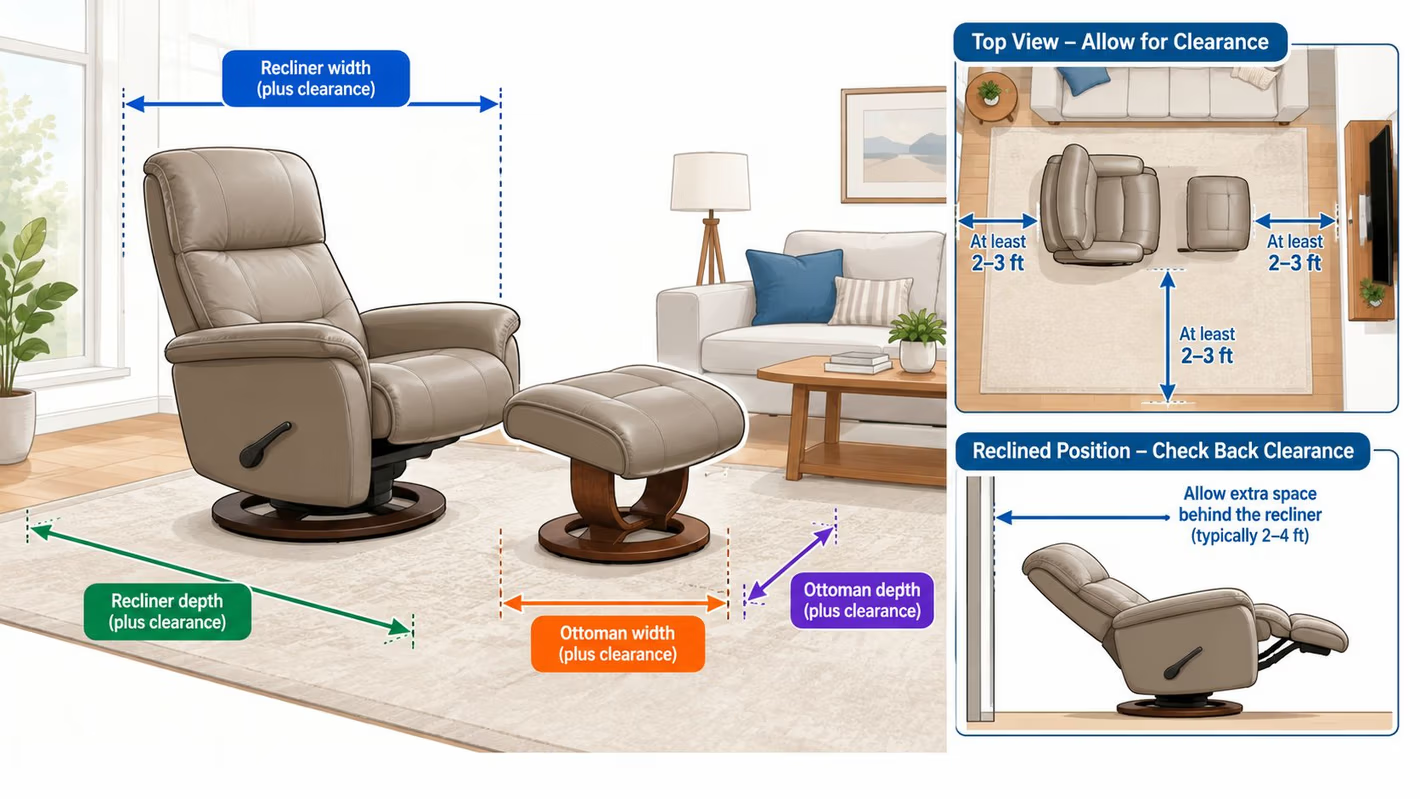
The delivery crew arrives, and the recliner fits through the door. Then the footrest opens into the coffee table, while the ottoman blocks the path to the hallway. Avoid that mistake by measuring the complete seating setup before choosing the upholstery or finish. Gates' guide to measuring furniture gives the working dimensions for recliner width, depth, height, and full-recline length, along with the recommended 1 to 3 feet of operating and walkway space. Use those figures as your starting point, then confirm the actual chair and ottoman dimensions in the showroom.
Start with the fully open footprint
Mark the chair's upright width and depth on the floor with painter's tape. Extend that outline to the point where the footrest ends when fully open. The closed footprint tells you whether the chair fits at rest. The open footprint tells you whether you can use it without striking a coffee table, crossing a walkway, or crowding another seat.
Measure behind the chair as carefully as you measure in front. Check the wall, baseboard trim, outlets, window casing, radiator, and vent. A wall-hugger may require less rear clearance, while a traditional reclining mechanism travels backward as the footrest rises. Leave room for the chair to operate, not merely room for its frame.
Mark the ottoman's circulation zone
Measure the ottoman on its own. Mark its full width and depth, then outline the path people need around it. Keep a 24-inch side passage where the ottoman sits between the chair and a doorway or sofa. If the room cannot provide that clearance, choose a smaller ottoman or change the arrangement.
Use this order:
- Mark the chair: Tape the upright footprint and fully reclined length.
- Mark the ottoman: Place its complete position in front of the chair.
- Check the walkway: Keep doors, hallways, and side passages open.
- Place the coffee table: Leave enough space to reach it without stepping over the ottoman.
- Test the sightline: Sit in the marked chair position and check the television angle, window view, and conversation orientation.
A small measuring error can turn a comfortable layout into a daily obstacle. Check door swings twice, especially when a door opens into the ottoman zone. The ottoman decides whether the room remains easy to use after the recliner is fully open.
Customers who want help can ask Gates' in-home delivery team to verify measurements on-site before placement. The team can also handle professional assembly and setup, rather than leaving boxed furniture at the door. For another practical reference, see the Gates guide to measuring furniture.
Recliner Mechanisms and Ottoman Styles Compared
The mechanism should determine the ottoman style, not the other way around. Manual and power recliners usually offer the broadest pairing choices, including fixed, free-glide, and locking ottomans. Lift-assist chairs need more stability during the rise motion, so a fixed, weighted ottoman is generally the sensible match.
Wall-hugger recliners suit tighter rooms because they reduce the rear travel required during operation. Their ottoman still needs a defined position, and a compact locking design prevents it from drifting as the user reclines. A free-glide ottoman can be useful in a flexible room, but it becomes frustrating if the casters roll every time the user puts weight on it.
Match the chair to the room first
| Mechanism | Ottoman Compatibility | Typical Clearance | Best For |
|---|---|---|---|
| Manual lever | Fixed, free-glide, or locking | Full rear and front recline zone | Straightforward daily lounging |
| Power recline | Fixed, free-glide, or locking | Space for powered footrest travel | Controlled positioning and premium comfort |
| Lift-assist | Fixed and weighted | Stable front zone for rising | Users who need help standing |
| Wall-hugger | Compact fixed or locking | Reduced rear wall clearance | Smaller Grants Pass living rooms |
A manual lever keeps operation simple and can work well when the user wants direct control. Power recline suits someone who wants gradual adjustment or has difficulty operating a manual handle. Lift-assist adds a different safety consideration, because the chair must rise without the ottoman shifting under the user's feet.
Manufacturers increasingly publish specifications such as ottoman weight, glide range, and lock type. Those details deserve more attention than a quick visual match. A light ottoman may look elegant but move too easily. A heavy fixed ottoman may provide dependable support but limit the room's flexibility.
Fixed, free-glide, or locking
A fixed ottoman creates the cleanest, most anchored arrangement. A free-glide ottoman allows the user to adjust leg position or move the piece aside for guests. A locking ottoman combines mobility with control, which makes it a strong choice for multipurpose rooms.
The most useful pairing depends on how the room operates. A family room with frequent foot traffic needs control. A dedicated reading corner can tolerate a fixed piece. A compact apartment may benefit from an ottoman that moves away when the room changes function.
Gates' overview of power reclining seating helps shoppers understand how powered mechanisms differ before they choose the matching foot support. Room size comes first, mechanism second, and ottoman style third.
Matching Fabric and Leather to Your Daily Life
Southern Oregon homes put upholstery through real work. Rogue Valley summers bring dust, children track in pine needles, and pets often treat the ottoman like a second bed. Material selection should account for those habits, not just the color under showroom lighting.
Performance microfiber is a practical choice for households focused on stain resistance and easy maintenance. Tightly woven fabrics work well in high-traffic zones because their surface leaves fewer obvious openings for everyday wear. Leather offers a different payoff. Quality top-grain leather can age gracefully with proper conditioning, but it may feel firmer at first and needs care to preserve its finish.
Compare the daily trade-offs
- Performance microfiber: Comfortable and generally forgiving around spills, though it can attract static and pet hair.
- Tightly woven fabric: A sensible high-traffic option with a substantial hand, but texture and cleaning instructions vary.
- Top-grain leather: Durable, breathable, and capable of developing character, provided the household maintains it properly.
- Bonded leather: A lower-cost compromise that can offer a leather appearance, but it typically has a shorter service life than top-grain leather.
A pet owner may prefer microfiber because it feels less precious. A buyer furnishing a formal sitting room may accept leather's initial firmness for its long-term aging. Neither material wins every situation.
Test the swatch like the household will
Don't judge upholstery by sight alone. Press the swatch, rub it with a sleeve, and dampen a corner to understand how it responds to pressure and moisture. The point isn't to damage the sample. It's to expose the difference between a fabric that looks attractive and one that feels practical.
The performance fabric furniture options from Gates provide a useful starting point for shoppers who need durability without abandoning comfort. For households that want an extra layer of protection or a way to refresh an existing piece, Casamé Home's collection offers couch-cover ideas that can help manage everyday wear.
The better question is the five-year cost, not the one-day splurge. A less expensive covering that needs early replacement may cost more in inconvenience and replacement than a properly chosen durable material. Consider cleaning, pet behavior, sunlight, skin contact, and how often the ottoman will be used before settling on the finish.
Sizing for Real Comfort Across Different Users
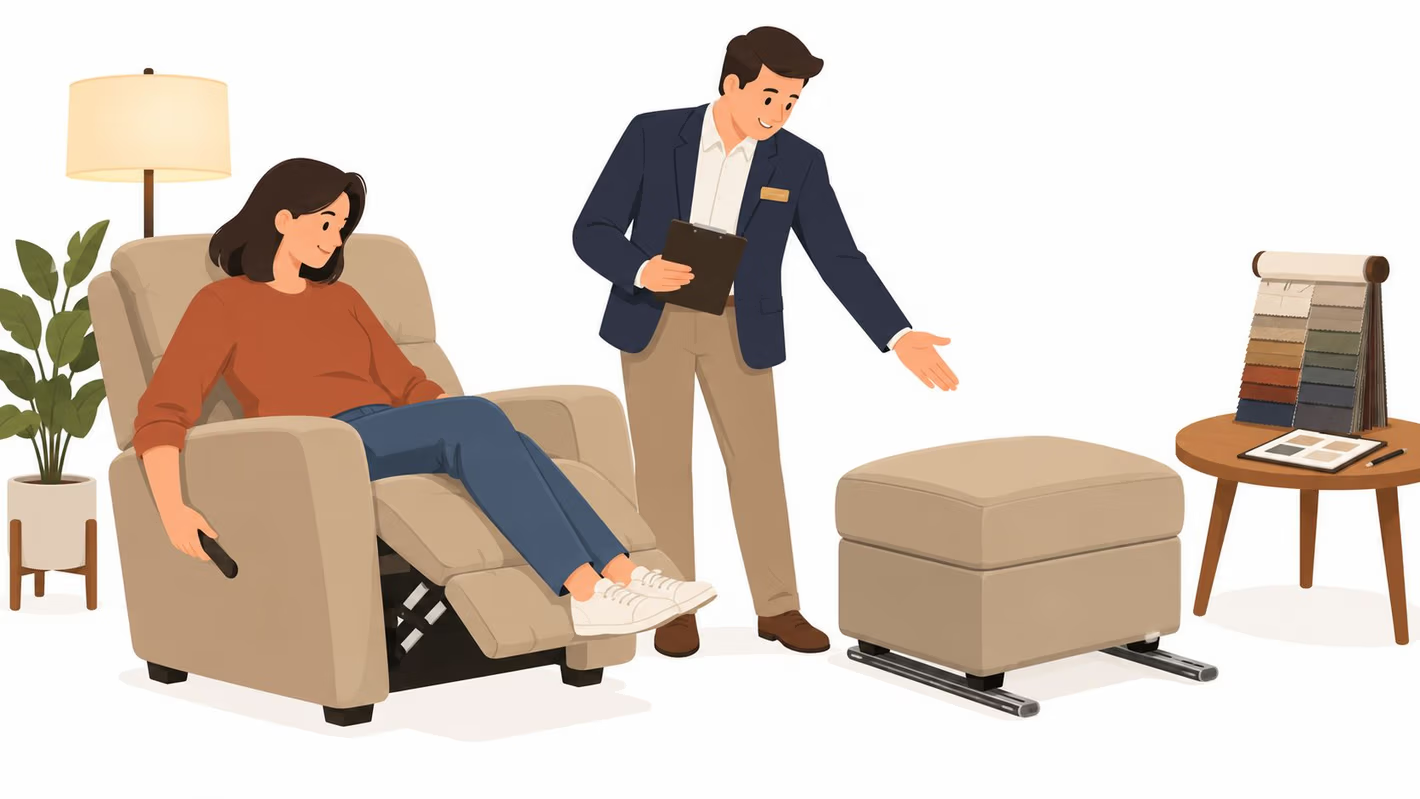
A recliner can look spacious and still fit the wrong body. Start with the person, not the chair's overall size. Common industry ranges put seat height around 17 to 19 inches, seat width around 20 to 30 inches, and seat depth around 20 to 24 inches. Treat those figures as a starting point only. The sales team at Gates can confirm the exact dimensions of any model on the floor, then help match them to the user's measurements.
Compare the person to the chair
A shorter buyer usually needs a lower seat, shallower depth, and arms that let the shoulders rest naturally. A taller buyer needs more seat depth, a higher back, and an ottoman long enough to support the calves without leaving the heels suspended.
Bring three measurements to the showroom:
- Lower-leg length: Measure from the floor to the back of the knee while seated. This helps identify a workable seat height and ottoman position.
- Hip width: Measure across the hips, allowing room for clothing and ordinary movement. A chair should feel supported, not tight.
- Torso length: Check the distance from the seat to the shoulders and head. A short back can leave a tall user without upper-body support.
Seat depth causes many fit problems. A deep cushion may feel luxurious at first, but it fails if the user cannot keep the back against the lumbar support. Shorter users may slide or perch forward. Taller users can feel cramped when the cushion ends too soon. Adjusting with a pillow may help, but it should not compensate for a poor basic fit.
The ottoman must fit the legs
The ottoman drives comfort as much as the recliner itself. It should support the lower legs without pushing the knees sharply upward. Check its height, distance from the seat, and surface angle together. The user should settle into position without repeatedly shifting the feet.
Comfort at a deep recline tends to decline the longer someone stays seated, so a recliner with an ottoman is for relaxation, not an assumption of all-day support or overnight sleeping. The Gates showroom lets shoppers test that relationship in person, with the ottoman placed where the legs rest.
A buyer around 5 feet 4 inches should prioritize a shorter seat depth and confirm that the ottoman does not raise the knees too high. A buyer around 6 feet 2 inches should look for a deeper seat, taller back, and longer leg support. The chair must fit the user before it fits the room's style. That hands-on approach reflects Gates' long-standing service philosophy, rooted in Grants Pass and Southern Oregon, where practical advice and careful delivery matter as much as the sale.
Test, Buy, and Have It Delivered the Right Way
The showroom is where measurements become physical evidence. Online dimensions help narrow the choices, but a seated test reveals whether the handle, power control, lumbar curve, footrest, and ottoman suit the user.
At Gates Home Furnishings' 30,000-square-foot showroom in Grants Pass, a customer can test several seating types in one visit. The practical sequence is straightforward:
- Sit upright first: Check whether the feet reach the floor and the lower back meets the support.
- Operate the recliner: Test lever resistance, power controls, or lift-assist movement.
- Use the ottoman: Push it, lock it, and check whether it supports the calves without forcing the knees upward.
- Hold the position: Sit in the preferred recline for at least five minutes.
- Check the room scale: Compare the chair's visual weight with the customer's intended living room.
A design consultant can turn the room measurements and household routine into a manageable shortlist. That conversation should include whether the chair is used for reading, television, visits, recovery, or daily naps. The outlet floor may also provide a better value for shoppers who want immediate availability or a lower price without abandoning an in-person test.
Confirm the service details before purchase
Flexible financing can help a buyer avoid choosing a poorly fitting chair just because it is the only one within an immediate cash budget. Gates Easy Pay includes $0 down, 6-month interest-free options, and no-credit-needed financing or lease-to-own programs, subject to the applicable terms.
Delivery should be treated as part of the purchase, especially with a heavy chair and a separate ottoman. White-glove-style service can include assembly, placement, setup, packaging removal, and old furniture or mattress removal when arranged through the provider. Gates' delivery service is built around professional assembly and mattress haul-away rather than just dropping boxes at the curb.
The buying checklist is short:
- Measure the room: Include upright, reclined, rear, front, and side clearance.
- Test the motion: Operate the recliner and move the ottoman.
- Confirm the mechanism: Match manual, power, lift-assist, or wall-hugger operation to the user.
- Verify the material: Test the upholstery against cleaning and household demands.
- Schedule the setup: Confirm placement, assembly, and haul-away needs before delivery.
The ultimate recliner buying guide can help organize those questions before the showroom visit.
Your Pre-Purchase Recap and Next Step
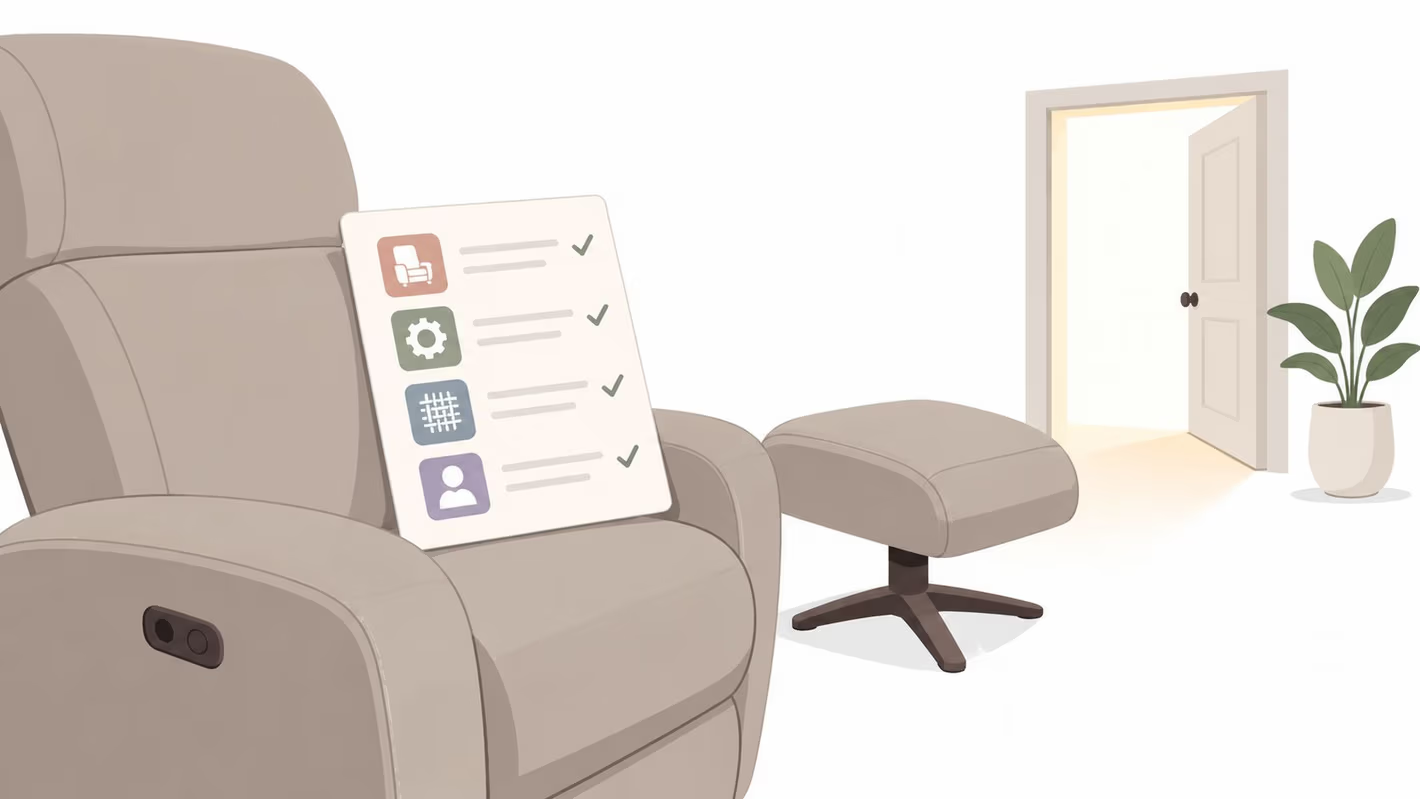
The strongest recliner purchase comes from treating the chair and ottoman as one working arrangement. The ottoman controls leg support and circulation. The mechanism controls movement and stability. The upholstery determines how the set handles daily life, while the dimensions determine whether the person in the chair can relax.
Use this five-point check
- Confirm clearance: Mark the wall gap, full recline length, ottoman position, door swing, and walking zones.
- Choose the mechanism: Select manual, power, lift-assist, or wall-hugger operation based on the user's routine and mobility.
- Match the ottoman: Decide whether fixed, free-glide, or locking support fits the room's traffic.
- Rule in the material: Consider dust, pets, children, sunlight, cleaning, and long-term wear before choosing fabric or leather.
- Validate service: Confirm financing, placement, assembly, protection options, and haul-away before the delivery truck arrives.
Gates Home Furnishings carries brands including La-Z-Boy, Flexsteel, Ashley, and Beautyrest, along with recliners, lift chairs, living-room pieces, and distinctive Unique Finds made with reclaimed wood and teak. Those one-of-a-kind pieces can add personality that a standardized room arrangement often lacks, while outlet values give budget-conscious shoppers another path.
The company's 1946 founding also has a practical meaning for a large purchase. A long-running local furniture business can provide an accessible place to ask about service, parts, delivery, and future needs instead of treating the transaction as finished when the box leaves the warehouse. That follow-through supports the kind of long-term relationship that makes a first recliner purchase more reassuring.

Residents of Grants Pass, Medford, Central Point, Ashland, and the broader Rogue Valley can test the actual chair, sit with the ottoman in place, and ask staff to tape out the floor before ordering. That hands-on process is more useful than guessing from a screen, particularly when a recliner will serve as a daily seat.
Gates Home Furnishings offers recliners with ottoman, lift chairs, power seating, outlet values, and professional white-glove delivery with assembly and mattress haul-away. Visit Gates Home Furnishings in Grants Pass to test the fit in person, or browse the collection online before making the trip.