Gold Animal Head Wall Decor: Find Your Perfect Piece


A blank wall can make an otherwise beautiful room feel unfinished, especially when the sofa is in place, the rug is chosen, and the lighting is already doing its job. Gold animal head wall decor solves that problem with a focal point that feels polished without being fussy, and it fits surprisingly well in homes that lean warm, rustic, or modern. In Southern Oregon, that balance matters, because a metallic accent needs to complement reclaimed wood, natural textures, and comfortable everyday living.
This motif isn't a passing novelty. The Metropolitan Museum of Art dates an Achaemenid gold ram's-head ornament to ca. 6th–4th century BCE, which means animal-head forms in precious metal were already part of luxury decoration more than 2,400 years ago in the ancient Iranian world, tied to status, craftsmanship, and symbolic imagery rather than mass-market décor The Met's collection record. That long history gives today's wall pieces a sense of depth that feels right at home in a carefully layered room.
For homeowners in Grants Pass, Medford, Ashland, and across the Rogue Valley, that history pairs well with the way local interiors often mix old and new. A sculptural animal head can look at ease beside a weathered console, a precisely upholstered sectional, or a simple mantel that needs one strong accent. If the room already has texture, a single metallic focal point can finish it beautifully, much like a well-chosen Brazilian sodalite table brings interest through stone, color, and form.
Our family has been helping neighbors since 1946, when George Gates built the business on a promise of “Service and Value.” That same idea still matters, because good design should feel approachable, not intimidating. For shoppers who like to browse a local example first, stag wall decor offers a useful starting point for the look and scale conversation.
A Timeless Trend for Your Southern Oregon Home
Gold animal heads work because they bridge two worlds at once, luxury and playfulness. The form is sculptural enough to feel intentional, but it doesn't demand a formal room or a highly styled house. In practice, that makes it useful for homes that mix craftsman details, modern farmhouse lines, and casual, lived-in comfort.
Why the look lasts
A trend lasts when it can adapt, and this one has already done that across centuries. The historical lineage gives it credibility, while the metallic finish gives it flexibility in today's interiors. In a room with natural wood beams or a stone fireplace, the gold surface creates contrast without needing bright color or extra pattern.
Design rule: A statement accent feels more timeless when it brings a clear shape, a restrained finish, and one strong visual purpose.
That's part of why this style fits Southern Oregon so well. Homes here often lean warm and grounded, so a gold animal head can provide just enough glamour to lift the room without overpowering it. The result is a space that feels curated, not staged.
Gates' design philosophy, rooted in Est. 1946 and the original “Service and Value” promise, lines up with that same idea. Good decorating advice should help people make a room feel finished with confidence, not with guesswork. If a wall needs presence, one strong sculptural piece often does more than several small items.
Choosing Your Perfect Gold Animal Head
The best piece is the one that fits the room, the wall, and the furniture beneath it. Size comes first, because a dramatic shape can still look elegant if it respects the proportions around it. Material comes next, since lightweight resin and heavier cast metal behave differently on the wall and over time.

Start with scale, not style
The easiest mistake is falling for the finish before checking the footprint. A piece should relate to the furniture below it, whether that's a sofa, console, bed, or mantel, so the wall looks intentional instead of crowded. That logic also helps in rooms with lower ceilings, where oversized metallic decor can crowd the space faster than expected.
The practical way to shop is simple. Measure the width of the furniture first, then look for a wall piece that feels visually anchored to that span rather than floating above it. A sculptural animal head can be bold, but it still needs breathing room around the edges.
Compare the material before you commit
Lightweight resin is easier to handle and usually simpler to hang. Cast metal feels more substantial and often reads as more permanent, but it also asks for stronger support and more careful placement. The right choice depends on the wall surface, the room traffic, and how often the piece may need to be moved.
Ask what the finish actually is
Many shoppers encounter a common challenge. A gold look can come from paint, plating, powder coating, or another surface treatment, and those options do not perform the same way. The U.S. Consumer Product Safety Commission continues to treat lead in consumer coatings as a serious hazard, so finish transparency matters in family spaces and anywhere children may reach Consumer Product Safety Commission.
If a seller can't explain the finish clearly, that's a reason to slow down.
A useful way to sort through the options is to ask three direct questions.
- How is the surface finished? That helps reveal whether the piece is sealed, painted, plated, or coated.
- What does the body weigh? Weight affects stability, hanging hardware, and long-term wall stress.
- Where will it live? A nursery, bedroom, and entryway all have different handling and safety needs.
For shoppers who like a more sculptural, collected look, expert advice on selecting Asian sculptures offers a helpful way to think about proportion, presence, and placement without treating the wall like a showroom display.
Safe and Secure Mounting Techniques
A striking wall piece only works if it stays where it belongs. That's especially true with metal or resin animal heads, which can project away from the wall and put extra strain on the fasteners. The most reliable installations are the ones built around the wall itself, not just the sculpture.
Anchor for the wall, not just the weight
For durable installation of metal wall decor, the safest approach is to anchor into wall studs whenever possible, or use drywall anchors rated above the object's weight. Failures usually happen at the connection between the fastener and the wall, not because the artwork itself is flawed mounting guidance. That's why a secure anchor matters more than a decorative bracket.
Before tightening anything, check level and lateral stability. A piece can look centered at first and still drift if the anchor isn't carrying the load evenly. Irregular shapes need a little extra patience because their balance point isn't always obvious from the front.
A simple hanging checklist
- Find the structural support first. A stud gives the most confidence when the wall allows it.
- Choose hardware with margin. The anchor should be rated higher than the piece's actual load.
- Test for side-to-side movement. If the piece shifts, the mount needs adjustment before final tightening.
- Recheck after installation. A quick second look helps catch a tilt or loose point before it becomes a problem.
Practical rule: If the mount feels uncertain during installation, it will feel uncertain every day after that.
For households that would rather skip the hardware hassle, professional assembly and secure placement can save time and stress. A good delivery team doesn't just drop off boxes, it handles the setup carefully so the finished piece looks right and stays secure.
For a step-by-step hanging reference, the step-by-step guide to hanging your picture with precision is a helpful companion when the wall calls for a little more planning.
Styling Your Decor Room by Room
A gold animal head can feel dramatic in one room and subtly elegant in another. The difference usually comes down to what it's hanging above, how much visual movement already exists in the space, and whether the room wants a single focal point or a more layered composition.

In the living room
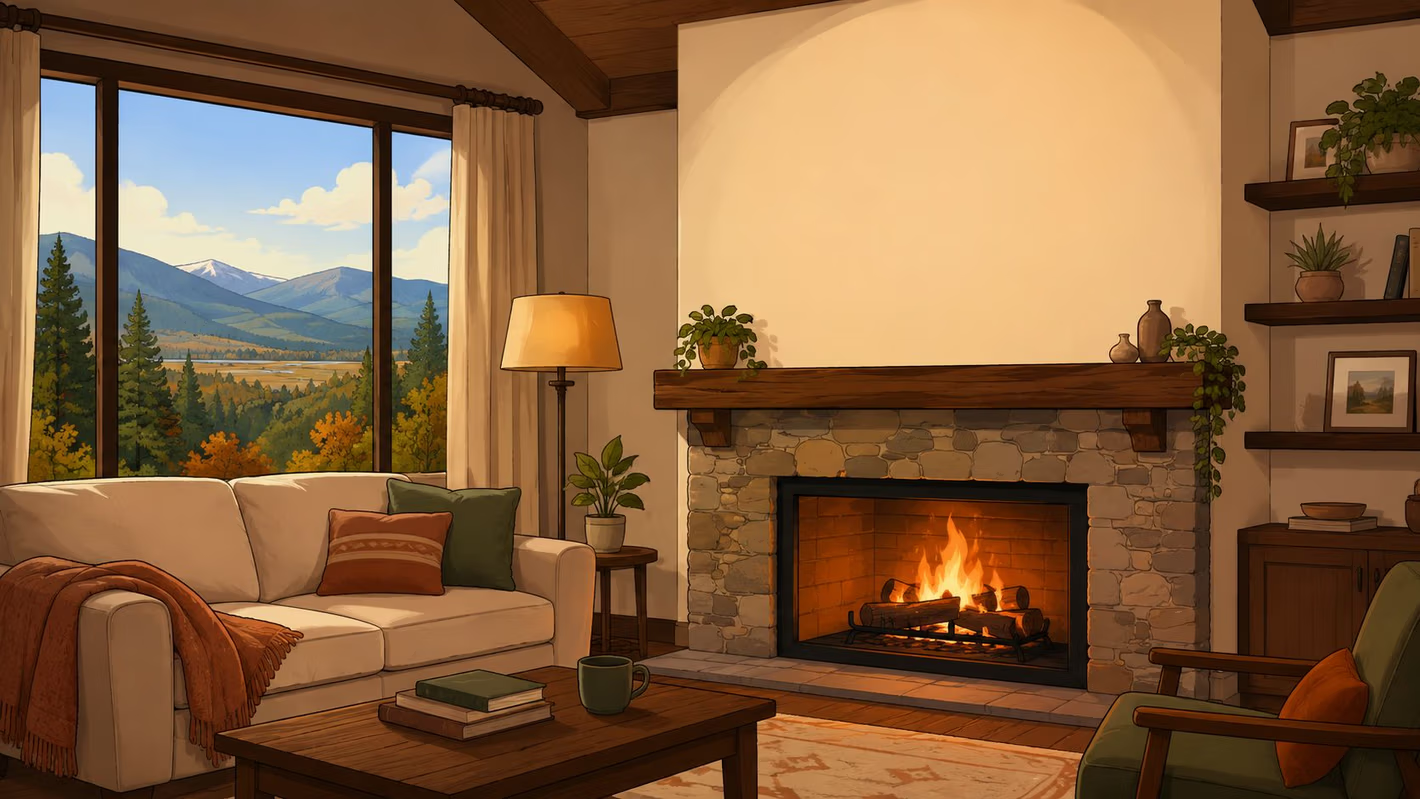
Above a fireplace or sofa, the piece should feel like a deliberate anchor. In a Medford living room, for example, a gold stag or lion can work beautifully against a stone mantel or a neutral wall, especially when the rest of the room has soft upholstery and grounded furniture. The key is to let the animal head be the focal point, not one more object competing with lamps, art, and pillows.
In the bedroom
A bedroom calls for a softer read. Above a headboard, a smaller or more refined animal head can add personality without making the room feel busy at bedtime. A warm metallic finish pairs especially well with linen bedding, wood nightstands, and lower-contrast palettes.
In the dining room or entry
Dining rooms can handle a bolder expression because people spend time looking across the space, not just at one wall. A gold animal head over a console or buffet gives the room a conversational edge. In an entry, it can act as a quick signature moment, especially when the surrounding wall stays simple.
A useful comparison point is a planted accent with calm, sculptural form. Integrating bonsai into home decor can create the same sense of curated restraint, which is helpful when deciding whether the room needs more drama or more balance.
For layout help, how to style a living room is worth referencing when the wall piece needs to relate to seating, tables, and sightlines all at once.
Pairing Colors and Textures Like a Pro
Gold looks strongest when the room gives it something to contrast against. Deep colors make the finish feel richer, while warm neutrals let it read as softer and more organic. The goal is not to make the decor match everything, but to let it stand out for the right reasons.

Use color to control the mood
A darker wall or textile backdrop gives gold a more dramatic presence. That works well if the room already has a strong focal point and just needs a metallic note to sharpen the composition. On the other hand, beige, cream, tan, and soft taupe keep the look relaxed and approachable, which suits everyday family spaces.
Mix the finish with natural materials
The best pairing is often the least expected one, a sleek metallic wall piece beside reclaimed wood, teak, or other natural textures. That contrast keeps the decor from feeling cold or overly polished. It also helps a sculptural animal head feel at home in the kind of layered rooms many Rogue Valley homes already have.
A few combinations work especially well.
- Gold plus wood grain: Adds warmth and keeps the piece from feeling formal.
- Gold plus matte upholstery: Softens the shine and creates visual balance.
- Gold plus textured wall paint: Gives the surface depth so the decor doesn't look flat.
A metallic finish rarely looks better than it does beside something tactile.
That's why one-of-a-kind pieces matter. The reclaimed wood and teak character found in Unique Finds can make the gold accent feel collected instead of novelty-driven, which is the difference between a room that looks decorated and a room that looks considered. For a room that already has color, texture, and personality, the wall decor should finish the story, not start a new one.
For a broader palette reference, an expert's guide to the perfect color palette can help narrow down whether the room needs contrast, softness, or a little of both.
Care and Sourcing in the Rogue Valley
Gold-finished decor stays attractive longer when it's handled gently. A soft dry cloth usually does the job for routine dusting, and harsh cleaners are best avoided because they can dull or damage the finish. Keeping the piece out of heavy splash zones and away from constant hand contact also helps preserve the surface.
For neighbors in Grants Pass, Medford, Central Point, Ashland, and the broader Rogue Valley, seeing a sculptural piece in person can make the decision much easier. Since 1946, Gates Home Furnishings has served the Grants Pass community from its 30,000-square-foot showroom, with a curated selection of furniture and unique decor Gates Home Furnishings. That matters when the goal is to compare scale, finish, and character before bringing something home.
For shoppers looking for unusual accents, unique home decor pieces can be a smart place to look for items that feel more personal than ordinary wall art. The Gates Outlet can also be a practical stop for value-minded decorating, and Gates Easy Pay helps remove budget friction when the right piece shows up.
Visit our Grants Pass Showroom or browse our collection online to find gold animal head wall decor that fits your room, your style, and your home. A CTA for Gates Home Furnishings.