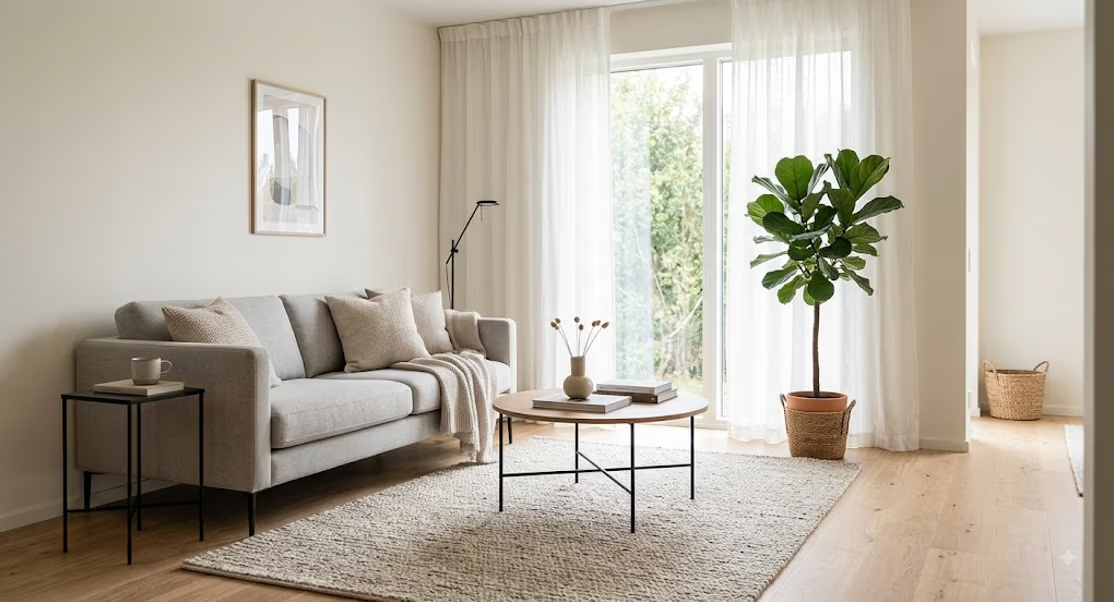
Ceramic Coffee Table Buying Guide for Southern Oregon Homes


A ceramic coffee table can solve a very specific living-room problem. It needs to look polished in a room that already has a sofa, lamps, rugs, and everyday clutter, but it also has to handle mugs, snacks, remotes, and the occasional bump from busy foot traffic. In Southern Oregon homes, that balance matters even more because many living rooms have to work hard, from relaxed family rooms in Grants Pass to tighter seating areas in Medford, Central Point, and Ashland.
Ceramic has moved into premium interiors because it combines durability, visual texture, and easy-care appeal. That broader shift shows up in the ceramic home market, which reached USD 6.7 billion in 2023 and was projected to reach USD 8.1 billion by 2028, a 4.1% CAGR; another forecast placed the ceramic tableware market at USD 13.43 billion in 2025 and USD 24.91 billion by 2034, a 7.11% CAGR (Fortune Business Insights). For a homeowner, that tells a simple story, ceramic is no longer a niche finish, it's part of mainstream design language.
Gates Home Furnishings has been part of that local furnishing conversation since 1946, when George Gates Jr. founded the business in a 5,000-square-foot store at 7th and H Street in Grants Pass (Gates history). That long run still centers on the same promise, Service and Value, and it helps explain why ceramic tables make sense as both a style choice and a practical one.
Introduction to Ceramic Coffee Tables
A good ceramic coffee table usually starts with a simple question, what does the room need most, a quieter surface or a stronger visual anchor? In a well-used living room, the answer is often both. Ceramic can bring a crisp, finished look without feeling fragile or fussy, which is why it fits so naturally into homes that want design and everyday usefulness in the same piece.
Why ceramic keeps showing up in living rooms
The appeal comes from the surface itself. Ceramic tends to give a room a more refined feel than plain laminate, while still offering a hard-wearing top that stands up well to routine use. Buyers often notice that it looks “finished” in a way that wood, glass, or metal may not, especially when the rest of the room already has a lot of texture.
A local furniture floor makes that difference easier to judge. In a 30,000-square-foot showroom like Gates in Grants Pass, shoppers can see how a ceramic top reads under real lighting and next to upholstered seating, not just in a photo. That matters because the same table can feel sleek in one room and overly formal in another, depending on the sofa, rug, and floor color around it.
Practical rule: A ceramic table should look like it belongs in the room before anyone puts a tray or candle on it.
What this guide helps a buyer decide
The first decision is not style, it's fit. A coffee table that looks beautiful but blocks movement will annoy people every single day. A table that fits the circulation path, supports the seating layout, and suits the room's finish palette will feel right much longer.
This guide breaks the purchase into manageable parts, material, construction, size, care, and styling. It also keeps the focus on real homes in Southern Oregon, where a living room may need to feel relaxed on a rainy evening, polished enough for guests, and durable enough for daily family use.
Understanding Ceramic Material and Construction
Ceramic sounds simple until the buyer has to compare bodies, finishes, and support systems. The surface may look like one clean slab, but what matters is how the piece was fired, what it sits on, and how much stress the frame allows it to carry. That's where ceramic coffee tables either age gracefully or start chipping at the edges.
What the firing process changes
Porcelain is fired at higher temperatures than earthenware or stoneware, which creates a denser, low-porosity surface with better stain resistance but also more brittleness at unsupported edges. In plain language, it behaves more like a tightly packed shell than a soft, porous one. That's useful for spill tolerance, because a denser surface is less likely to absorb stains or odors from daily use.
That same density does come with a tradeoff. Ceramic materials are strong in compression, but weaker under impact and tension, so a dropped object or stress at a poorly supported corner can lead to a chip or crack. For a coffee table, that means the visible top is only part of the story. The support underneath matters just as much.
The most reliable pieces use a rigid substrate, minimal flex, and careful edge detailing. A slab that sits on a frame with weak support may look substantial, but movement in the base can transfer stress into the top.
What to check before buying
The best way to judge construction is to look for the parts that reduce movement and protect the edge. A buyer can think about it the way one thinks about a countertop, the surface gets all the attention, but the cabinet or base keeps it usable over time.

A helpful way to shop is to read product details carefully. Terms like reinforced substrate, edge protection, and full-surface support signal that the maker has thought about real use, not just showroom appeal. For anyone comparing materials and descriptions, this guide to reading furniture product descriptions is a useful companion.
A ceramic top can be the durable part of the table, but only if the structure below it prevents flex.
Comparing Key Attributes and Buying Considerations
Ceramic makes the most sense when a buyer compares it against the other common tabletop choices. Wood brings warmth, glass brings openness, and metal brings a sharper modern edge, but ceramic often sits in the middle, giving a room more visual interest than a plain finish while still handling daily use well. That balance is why it's worth comparing the options side by side instead of shopping by looks alone.
Material Comparison for Coffee Tables
| Material | Durability | Maintenance | Style Variety | Price Range |
|---|---|---|---|---|
| Ceramic | Strong surface performance, but edge support matters | Easy surface care, chips need attention | Wide, from matte and textured to polished looks | Varies by build and finish |
| Wood | Comfortable and familiar, but dents and scratches show | Needs more routine care | Very broad, from rustic to refined | Varies widely |
| Glass | Visually light, but more exposed to impact | Simple cleaning, fingerprints show fast | Best for open, airy rooms | Often moderate |
| Metal | Tough and structured, but can feel cold | Usually simple wiping | Good for industrial and modern spaces | Varies with design |
The table above helps narrow the choice, but the room itself should make the final call. A ceramic top works especially well when the rest of the room already has softness, such as fabric upholstery, a textured rug, or wood flooring. In that setting, the ceramic surface adds contrast without overwhelming the space.
The room-fit questions that matter most
Coffee tables need about 14–18 inches of clearance from seating to allow comfortable movement and balanced proportions in the living room (Danetti). That spacing keeps knees from bumping the table and gives enough room for someone to pass without turning sideways. It also makes serving drinks or setting down a book feel effortless instead of awkward.
Shape matters just as much as clearance. Round and oval tables soften tighter rooms and reduce sharp corners around sectionals, while rectangular tables usually make more sense in longer seating layouts. The right choice depends less on trend and more on traffic flow.
For a more structured way to choose, this smart furniture-shopping guide is a useful reference. A buyer can use it to think through budget, proportions, and room priorities before falling for a finish alone.
If the table interrupts walking paths or sits too far from the sofa, the room will feel off no matter how beautiful the top looks.
Care Maintenance and Longevity Tips
Ceramic can be low-porosity and easy to live with, but it still rewards gentle habits. A table that sees daily use will last longer when the owner treats the surface like a finished material, not an indestructible one. That means small routines matter, especially in a home with kids, pets, or frequent guests.
A simple care routine that protects the finish
Start with soft, regular wiping. A pH-neutral cleaner and a non-abrasive cloth are safer than harsh scrubbing products, which can dull the finish or leave residue in textured areas. Coasters and placemats also help more than people expect, not because ceramic is fragile in the way wood can be, but because constant contact from hot mugs and rough dish bottoms can slowly wear at the surface look.
Small damage deserves quick attention. Existing care guides often overlook long-term repairability, but ceramic tops need prompt sealing of minor chips to maintain appearance and help prevent moisture infiltration (BKCI Andri). That matters because a tiny chip can stay cosmetic for a while, then worsen if liquid gets into the damaged edge.
When repair beats replacement
Not every flaw means the table is done. Minor chips can often be filled or sealed, especially when the damage is local and the support structure underneath is still solid. The goal is to stop small cosmetic issues from becoming a larger maintenance problem.
Practical rule: Chips near an edge need faster attention than marks in the center of the top.
A buyer should also watch the joints and seams around the base. If the table rocks, shifts, or flexes when weight is set on it, that movement can stress the top over time. Stable placement on an even floor helps, too, because repeated wobble is harder on a ceramic surface than steady daily use.
For a seasonal reminder on upkeep, this fall furniture maintenance checklist fits well into a normal home care routine. In practice, the best ceramic tables are the ones that stay visually calm because the care habits are simple and consistent.
Styling Ideas for Southern Oregon Interiors
Ceramic coffee tables work especially well in Southern Oregon because many local homes mix relaxed materials, natural light, and practical seating. A shiny, overly delicate piece can feel out of place, while a ceramic top with the right base can settle into the room without losing personality. The trick is pairing the table with the room's existing texture instead of fighting it.

Three room directions that fit the region
A farmhouse living room in Grants Pass often looks best with a matte-glazed round ceramic table, a comfortable sofa, and reclaimed wood accents. That combination keeps the room warm and grounded, while the ceramic top gives it a cleaner finish than a fully wood table would.
A minimalist sectional in Medford usually needs a sleeker shape. A porcelain slab with a low-profile base can hold the center of the room without breaking up the open feel, especially when the rest of the space is already uncluttered.
A Central Point living room can handle more contrast. A teak-framed ceramic top brings together natural wood tone and a smooth surface, which works well when the room already uses layered rugs, woven accents, or soft neutral upholstery.
Small styling details that make the table work
One easy way to keep the table from looking bare is to use a few pieces with different heights and textures. A stack of books, a shallow bowl, and one natural object usually feels more settled than a crowded tray of small decor. That approach also lets the ceramic surface stay visible, which is part of the point.
For a simple source of styling inspiration, these eco-friendly candle alternatives offer ideas for households that want atmosphere without overloading the table with heavy decor. The broader lesson is the same, let the ceramic top breathe.
Shoppers looking for standout materials can also find Unique Finds like reclaimed wood, teak, and one-of-a-kind statement pieces in a destination showroom setting. This guide to decorating a coffee table like a pro is a useful complement for anyone who wants the finished table to feel curated rather than crowded.
In a Southern Oregon living room, the ceramic table should echo the house's natural materials, not compete with them.
Conclusion and How Gates Makes It Easy
A ceramic coffee table makes sense when the buyer wants a surface that looks refined, handles daily life, and fits the room instead of fighting it. That choice still comes down to details, the support under the top, the edge finish, the shape, and the spacing around the sofa. Once those pieces are right, the table becomes one of the easiest things in the room to live with.
Price can vary with construction and finish. Some ceramic tables sit closer to simple, budget-friendly options, while artisan porcelain tops and more detailed builds sit much higher, so it helps to compare the structure before the style alone wins the sale. Seeing the table in person matters here because a top that looks cool in a photo can feel too heavy, too glossy, or too small once it's next to real seating.
That's where the local showroom experience helps. Gates Home Furnishings at 700 SW 6th St, Grants Pass, OR 97526, is open Monday through Saturday from 10:00 AM to 6:00 PM and Sunday from 12:00 PM to 4:00 PM (Grants Pass Chamber listing). Shoppers can test comfort in the 30,000-square-foot showroom, explore La-Z-Boy, Flexsteel, Ashley, and Beautyrest, and look at furniture across living room, bedroom, dining room, entertainment, and more.
Gates Easy Pay also keeps the purchase flexible with $0 down, 6-month interest-free options, and no-credit-needed choices. For delivery, professional assembly and haul-away make the move-in part easier than hauling a box home and figuring it out later.
Visit our Grants Pass Showroom to see ceramic coffee tables in person, compare finishes with your sofa, and find a piece that fits your room, your budget, and your daily routine.