Designer Furniture Outlets: A Smarter Buying Guide


A sale tag isn't a verdict on a piece of furniture. In a Grants Pass living room that needs seating this month, a lower price may solve a real problem, but the reason for the markdown matters as much as the number on the tag.
Designer furniture outlets can offer a practical way to furnish a home, provided shoppers look past the discount and judge how a piece is built, what condition it's in, and what it may cost to keep. That's the kind of decision George Gates' 1946 promise of “Service and Value” calls for: a useful piece at a fair price, not a bargain that becomes a burden.
What Designer Furniture Outlets Actually Sell
A lower outlet price does not automatically mean better value. The tag may reflect a floor sample, discontinued style, overstock, open-box return, or one-of-a-kind find. Each tells a different story about the piece. A regular showroom order works differently: you select a fabric, size, or finish, then wait for the manufacturer's lead time.
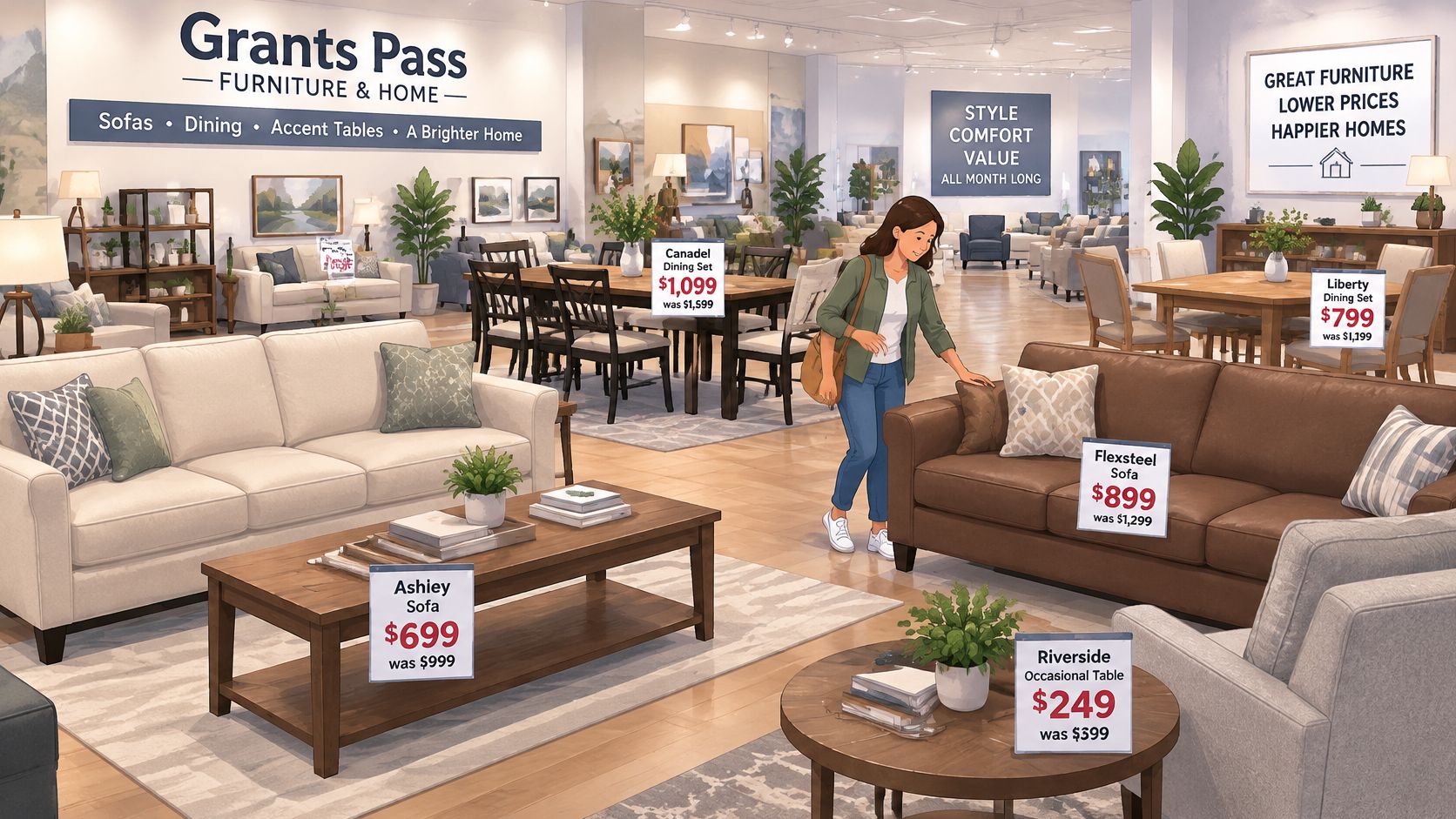
For a Grants Pass household replacing a worn sofa, outlet stock may provide a seat sooner than a special order. A Medford renter furnishing a bedroom or a Central Point family seeking a dining table may find the same benefit. The useful question is whether the piece fits the room and suits everyday use, not how far its price has dropped.
That distinction matters because discounts shape what shoppers expect. According to Furniture Today's coverage of the First Insight study, 86% of respondents said discounting in department stores and mass merchants influenced their expectations when shopping for furniture. The study also found 80% said they'd definitely or probably buy furniture that met their needs at the deepest discount tested, which was 40%. And 76% of baby boomers said they wouldn't pay full price for furniture and several other major-ticket categories.
Those figures help explain why outlets and clearance rooms draw shoppers across the Rogue Valley. A markdown is only the starting point; its reason helps show what the price means for the piece.
When a Markdown Is Real Value
A lower outlet tag earns its place when you can explain what caused the markdown and what the piece will cost to own over time. Check the actual item, not just the label. The table below helps connect each markdown reason to a practical question.
| Reason for the markdown | What the price usually means | Main thing to verify | Keep or walk |
|---|---|---|---|
| Floor sample | Used on the sales floor, so finish or fabric may show light wear | Cushion recovery, mechanism cycle, and stable joints | Keep when structure and comfort are sound |
| Discontinued run | Complete design that may not be reorderable | Fabric or finish code and whether replacement parts exist | Keep if matching pieces won't be needed later |
| Overstock or special buy | New goods bought or cleared in a limited quantity | Tags, carton condition, and a complete set | Keep when every piece matches and is undamaged |
| Cosmetic second | A small finish, fabric, or veneer flaw | Exact size and location of the mark, noted in writing | Keep if the flaw will be hidden in the room |
| As-is clearance | A deep cut with fewer promises | Joints, stains, odor, missing hardware, and return limits | Walk if damage is structural or undisclosed |
| Open-box or delivery return | A returned piece that may be perfect or repaired | Why it returned and what was corrected | Keep only with a written disclosure |
A floor sample can be a sound choice if its frame feels stable, its recliner moves smoothly, and its cushions recover after someone sits. A scuff on the back of a chair may matter little when that side will face a wall. With a discontinued dining set, check whether you could live without matching chairs later.
For overstock, count the chairs or other pieces included, compare the tags, and make sure finish codes match. A set that is short a chair or mixes finishes may cost more to complete than its price suggests. For a cosmetic second, have the mark's location and size recorded in writing. If a piece is as-is or returned, ask why it was marked down and get any repair details in writing.
A $600 sofa with a cracked frame costs more than a $1,100 one that lasts ten years.
That is the lifetime-cost question in plain terms: consider the price alongside construction, expected use, and whether a problem can be repaired. A reclaimed-wood console or a well-built recliner may justify a higher initial cost if it serves the household longer. Mintel's home-shopping report discusses shoppers' attention to long-term performance as well as the first price. For a closer look at weighing furniture choices, use a practical furniture-shopping guide.
For example, an overstock dining set is a stronger value when every chair is present, the finish codes match, and the cartons show no damage.
The Tradeoffs Worth Weighing First
Designer furniture outlets suit some rooms and shoppers better than others. The main benefit is a lower ticket on familiar brands such as La-Z-Boy, Flexsteel, Ashley, and Beautyrest, along with a chance to find distinctive pieces that aren't part of a standard catalog order. A new mover may also appreciate an in-stock sofa, bed, or dining set instead of waiting for a special order.
The limits are just as practical. Outlet selection changes, so a piece that fits today may be gone tomorrow. The fabric, finish, and size are usually the ones on hand, discontinued goods may be harder to match later, and an as-is sale can come with narrower return options. Wear on a floor sample is part of the price, not a surprise to discover at home.
Think of an outlet like a farmers' market stall, not a catalog. The shopper gets what arrived, and the strongest finds tend to go first.
An outlet may fit well for:
- A household furnishing several rooms: A lower ticket can help cover a living room, bedroom, or dining area without stretching the budget as far.
- A comfort-focused shopper: A senior comparing recliners can sit in the actual piece and check how the seat and controls feel.
- A style-minded buyer: A one-of-a-kind statement piece can bring character to a room without requiring a matching suite.
A special order may fit better for:
- An exact sectional plan: A specific configuration or fabric may matter more than immediate availability.
- A required lift-chair specification: The right fit and functions may be essential, not optional.
- A set that must grow later: Someone planning to add matching chairs or other pieces may prefer a line that can be reordered.
The decision is straightforward: if an outlet piece solves the room's needs now and passes the checks ahead, its tradeoffs may be fair. If the exact size, fabric, or future match matters more, a special order is the more suitable route.
Pieces That Earn a Place at Home
A lower tag does not make a piece a good fit by itself. The decision depends on what the item offers, how it suits the room, and whether its materials and construction make sense for the way it will be used.
A Medford shopper might find a discontinued reclining sofa that fits the main seating wall. The recline mechanism works smoothly, the fabric code is recorded, and the household is comfortable with the possibility that a matching loveseat may not return. If the room works without future additions, the sofa can still be a practical choice.
A Central Point household looking at an overstock dining table and four chairs can compare each chair's tag and inspect the tabletop for open seams. A complete six-piece set at a 40% markdown is worth more than a single chair at the same price, provided the set fits the room and suits daily use.
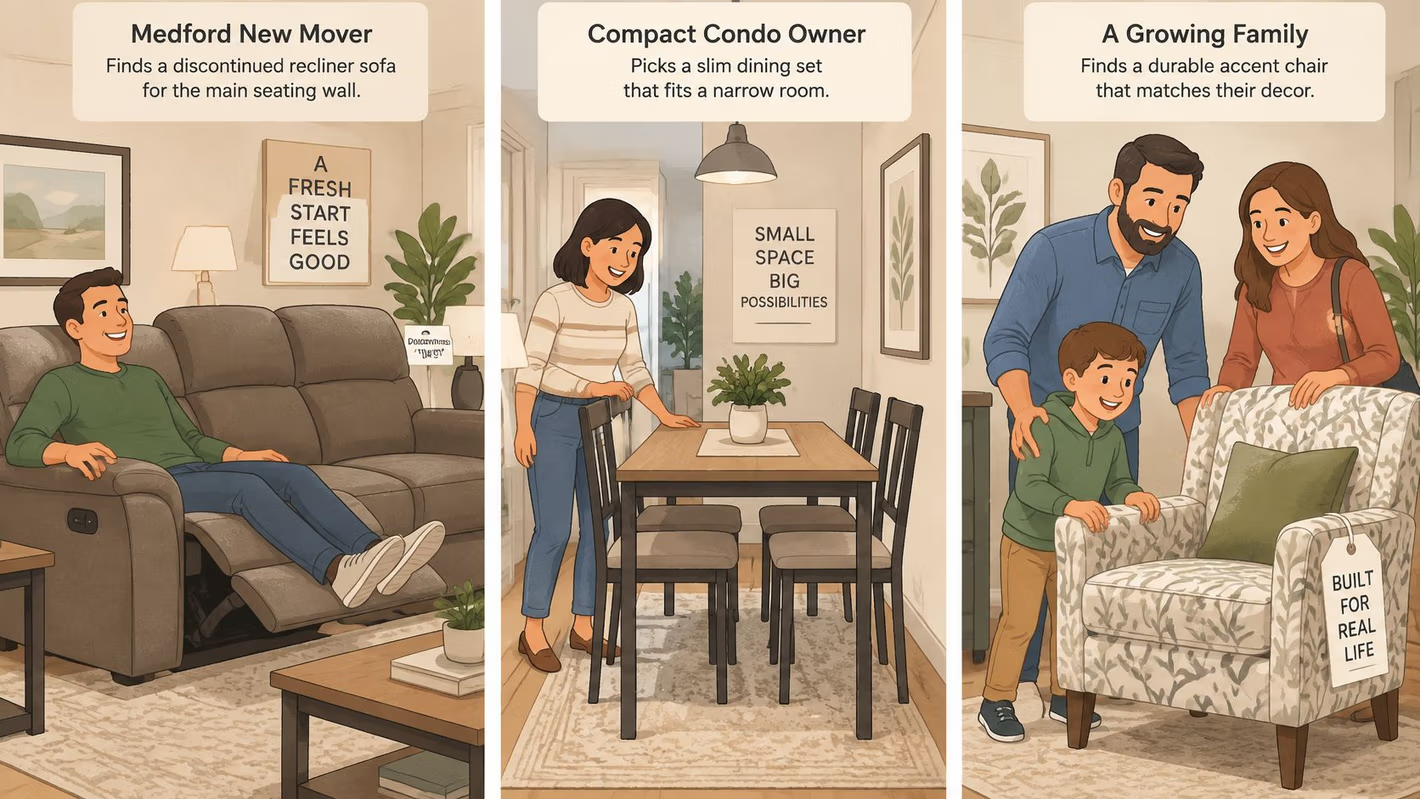
In an Ashland living room, a reclaimed-wood or teak console from Gates' Unique Finds may earn its place through its character rather than a matching catalog number. Astro West's sodalite side table offers another example of a natural-material accent that can stand on its own. Gates' statement furniture pieces can also help shoppers consider what might serve as a room's focal point.
Sustainability claims deserve a closer look than a label alone. The Mordor Intelligence report on the U.S. sustainable-furniture market projects growth from $12.72 billion in 2025 to $13.39 billion in 2026, and reports that 80% of environmentally motivated shoppers review verifiable sustainability data before choosing furniture. For context on secondhand demand, recommerce findings cited in the section report that 54% of surveyed U.S. consumers bought secondhand for a unique or one-of-a-kind piece, while 34% cited access to quality at a lower price.
For reclaimed wood, teak, or a clearance find, ask questions that connect the item's claims to its everyday use:
- What was reclaimed? Ask whether the source material is known and which parts of the piece use it.
- How was it finished? A specific answer gives more to consider than a broad environmental label.
- Can the piece be repaired? Find out whether its hardware, finish, or moving parts can be serviced.
- How long might it stay in the home? A durable item used for years and delivered a shorter distance within Southern Oregon may be a more meaningful choice than a vague green claim tied to long-distance shipping.
For questions about wood construction, use the inspection checklist to assess the materials and how the piece is built. A useful choice is one whose qualities match the room, the household's needs, and the years of use ahead.
How to Find the Right Outlet Day
Arrive with three measured rooms and one decision to make. A sofa, dining table, or bed only counts as a find if it suits the space, the way you live, and the cost of getting it home. Shoppers from Grants Pass, Medford, Central Point, and Ashland can use a few simple steps to make their outlet visit more focused.
Start with the Gates website's outlet section, labeled Shop Outlet Finds. Note a couple of categories to explore, such as sofas, beds, or dining furniture, while remembering that outlet stock can change before you arrive.
Measure the route into the room, not just the spot where the furniture will sit. Write down doorway widths, stair turns, and the available floor area, with enough clearance to turn the piece into position. A sofa can fit along a wall and still be too difficult to bring through the entry.
If your schedule allows, choose a quieter time to visit. With more room to look around, you can take your time considering which piece is worth its price and asking about the reason for a markdown. For tips on choosing when to shop for furniture, consider how your timing affects the options you can examine.
Use the Grants Pass showroom to compare pieces in person. Sit on the furniture and check whether its scale and color suit your room. A phone photo of the space can help with that comparison. Take time to test a recliner, too: sit, recline, and notice how it feels in the position you'll use.
If your first choice is unavailable or doesn't suit the room, ask whether a similar in-stock piece is available. Delivery dates for furniture that is not in stock are tentative because they depend on manufacturer lead times. Keep that timing in mind when deciding whether an outlet find fits your plans.
When a piece seems promising but the room still needs a clearer direction, ask to speak with a qualified Gates interior decorator. Gates' decorators discuss your tastes, lifestyle, and budget to help plan a living room, dining room, or bedroom. That conversation can help you judge whether the outlet piece belongs in the room, or whether another choice would be a better fit.
What to Inspect Before You Buy
An outlet tag can explain a lower price, but it cannot tell you whether the furniture is sound. Check the piece itself, then consider how its materials and care needs fit your home.
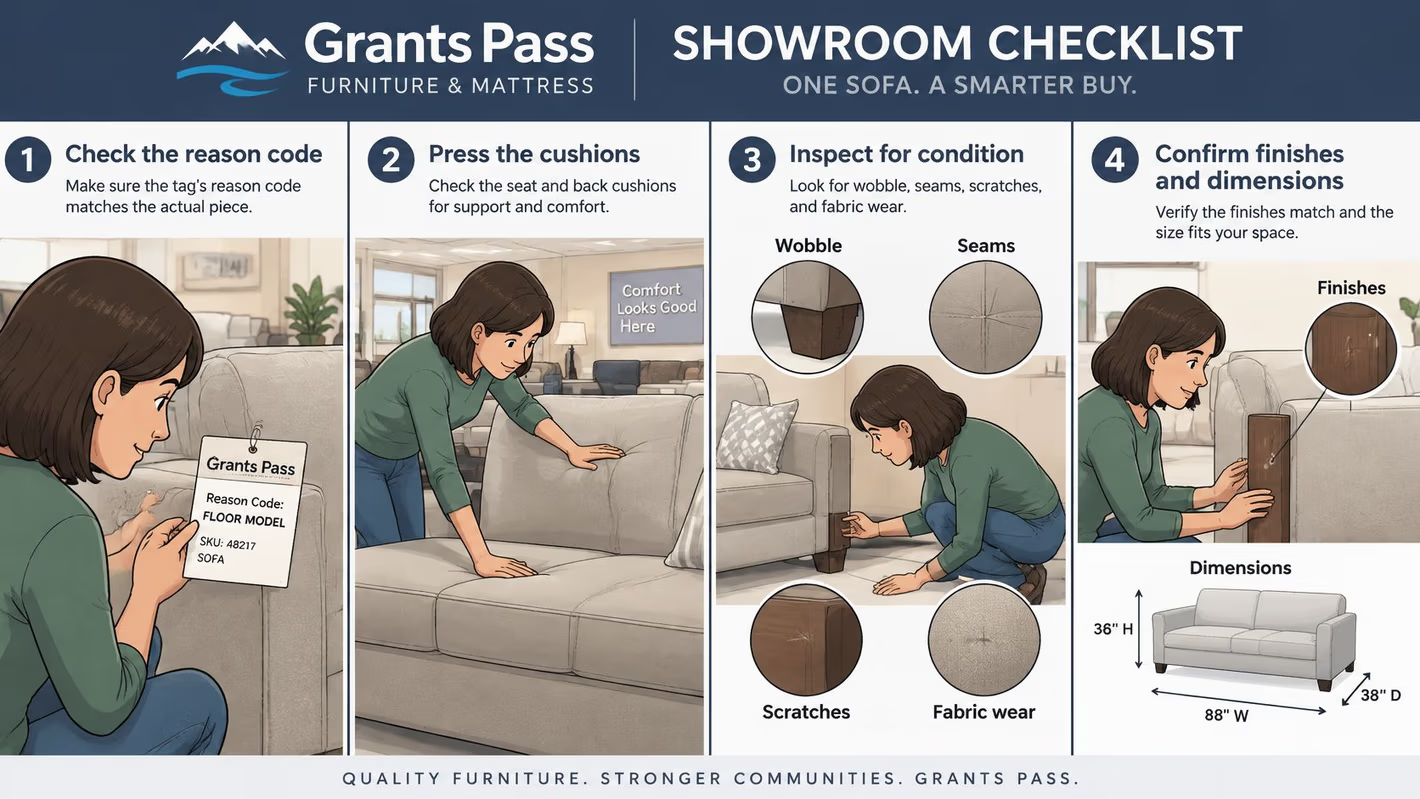
Start with the tag. Confirm that its reason matches what you can see. If it says floor sample but you notice an unlisted repair or mark, ask for the difference to be recorded.
Next, check the frame and joints. Press the seat deck, lean gently on the arms, and see whether the legs wobble or connections shift. In a sofa, the frame and support work together like a building's structure. This guide to understanding sofa construction explains why those parts matter as much as the upholstery.
Move the parts that open or shift. Pull drawers out and check that the slides travel evenly. Look under tables for loose fasteners or corner blocks, and inspect recliner attachments and the connection between the seat and back. Operate each powered or manual function separately. Listen for unusual sounds and notice hesitation, uneven motion, or looseness.
Now examine the upholstery. Check seams, zipper tracks, and whether cushion covers match. Press each cushion and compare how evenly it rebounds. A smooth surface does not show how well the cushion will hold its shape. Look for the fabric-content label and cleaning code, too, so you know what care the material calls for.
Inspect the finish in good light. Look for cracks, lifting veneer, water rings, and lingering odors. Ask whether panels are solid wood, veneer, or fiberboard, and check that exposed edges are sealed. Gates' guide to solid wood versus veneer can help explain the difference between these materials.
Abrasion-test results can offer one clue about surface wear, not a complete measure of quality. Eurofins' furniture and décor testing overview describes testing areas for furniture and décor. Ask which test method applies to the fabric and what the result covers. Abrasion results do not establish comfort or frame quality.
Before you pay, photograph visible flaws and have their locations and condition written on the order. That record gives both sides a clear description of the piece you are buying.
How the Purchase Gets Home Safely
A low outlet price is only part of the decision. Before paying, clarify the delivery tasks, timing, return terms, and protection in writing. That way, the order is clear before the furniture is on its way.
Ask how outlet returns work and which pieces you must bring back for service. Gates requires customers to return easily transported parts, such as unattached cushions, removable drawers, lamps, and accessories, to its service department.
Delivery labels can mean different things, so confirm what the crew will do. Gates offers professional in-home delivery, assembly, and setup. Ask which tasks are included for your order and what to expect when the crew arrives.
| Service level | What the crew handles | What to confirm |
|---|---|---|
| Threshold drop-off | Carries the item past the doorway | Whether placement, assembly, or cleanup is included |
| Full white-glove delivery | Room-of-choice placement, unpacking, assembly, and packaging removal | Which assembly and cleanup tasks are included |
| Mattress white-glove | Positions the mattress on the foundation and removes packaging | Whether setup and packaging removal are included |
A mattress white-glove delivery explainer describes how room placement, setup, and packaging removal differ from a doorstep drop-off. For a general example of arranging furniture pickup and delivery in Sydney, see the pickup and delivery guide.
Check the protection terms before signing. Gates Care Shield covers accidental spills and tears. Read the plan's terms and exclusions so you know what it covers.
If financing would help, Gates Easy Pay offers $0 down and 6 equal payments, along with no-interest options if paid in full within the promotional period and no-credit-needed financing. Review the agreement's payment terms before choosing a plan.
Delivery dates for items not in stock are tentative and based on manufacturer lead times. If a product has not arrived, the delivery date on the invoice may change.
Keep the order and service details together. After delivery, Gates inspects the furniture and cleans and corrects minor defects. Retain the markdown reason, any agreed price, return terms, delivery tasks, and protection details with your paperwork.
Come See the Grants Pass Outlet
A low outlet price is only a good value if the piece suits your room and holds up to everyday use. At the Grants Pass showroom, shoppers from Grants Pass, Medford, Ashland, and the wider Rogue Valley can assess furniture in person before buying.
The Gates Outlet offers up to 80% off clearance and closeouts. Gates will also match a lower price on Flexsteel, Beautyrest, La-Z-Boy, or Ashley furniture offered in the Grants Pass, Ashland, or Medford area. Ask a Gates Furniture Design Consultant for current commercial furniture specials and pricing.
Take time to check the construction and condition, not just the tag. A loose frame or a missing matching cushion may make a marked-down piece a poor fit, even if the price looks appealing. Compare the cost with what you need to complete the room, then decide whether the savings still make sense.
Visit the Grants Pass showroom or browse the collection online. If you'd like help planning a living room, dining room, or bedroom before the drive, ask to speak with a qualified staff interior decorator. For current options, visit Gates Home Furnishings.