How to Fix Sagging Sofa Cushions: Repair Costs Explained

The favorite spot on the sofa has become a hollow. The cushions look better after a quick plump, but the next evening brings the same sinking feeling. Before buying stuffing or sliding a board underneath, check whether the problem is inside the cushion or beneath it.
Knowing how to fix sagging sofa cushions starts with separating worn filling from failed support. A targeted repair can make a serviceable sofa comfortable again, while adding material to the wrong layer can waste money and strain the upholstery.
Diagnose the Failure Before You Buy Materials
Sagging can start in the foam, the surrounding fiber wrap, the cushion cover, or the seat deck. Those parts need different repairs. FoamOnline's cushion troubleshooting guide identifies compressed filling, weakened webbing, worn springs, and poorly fitted inserts as distinct causes, and explains why replacement foam won't correct a weak foundation.
Check the cushion and deck separately
- Remove the cushions and let them recover. Place them on a clean, flat surface and leave them unloaded for a few minutes. A persistent hollow suggests fatigued foam, while a cushion that regains its shape needs closer inspection of its wrap and support.
- Press across the exposed seat platform. Compare the center, front edge, and neighboring seating positions. Look for unusually deep movement, loose fasteners, drooping webbing, or a depression that remains without anyone sitting.
- Compare the cushion dimensions. Unzip the cover if its construction permits, then compare the relaxed insert with an undamaged matching cushion or the original specifications. Check the edges as well as the middle, because a collapsed front edge can change the sitting position even when the center looks acceptable.
Don't assume every seating position has identical construction. A chaise, reclining seat, or center section may feel different by design, so compare like with like.
Sagging symptoms, causes and fixes
| Symptom | Likely cause | Fix |
|---|---|---|
| Cushion stays flat after it is lifted off the sofa | Compressed or fatigued foam | Replace the foam insert |
| Cushion looks fine on the floor but sinks when installed | Stretched webbing, broken springs or weak deck | Repair the deck before touching the cushion |
| Cushion rebounds but still sits low | Displaced wrap or oversized cover | Refit the wrap or resize the cover |
| Whole seat dips across the platform | Failed webbing or springs | Re-secure or replace webbing and springs |
| Cushion is lumpy or uneven | Shifted fill or misplaced batting | Redistribute or re-wrap the fill |
Foam deterioration isn't just a cosmetic issue. A United Nations Industrial Development Organization technical report describes compression set, the permanent deformation that can remain after repeated loading, and identifies fatigue resistance as a factor in polyurethane service life.
Repair priority: Fix the lowest failed layer first, starting with the frame or suspension and working upward.
When damage extends beyond an isolated cushion, these signs it's time to replace furniture can help frame the repair-or-replace decision. Photograph any structural damage before covering it again, especially if warranty service may apply.
Fluff, Rotate and Refill Cushions First
Fluffing and rewrapping suit cushions whose cores still recover and provide support. They improve shape and surface comfort, but they won't rebuild crushed foam or repair broken suspension. The upholstery troubleshooting handbook distinguishes wrap migration and cover-fit problems from failures that require a new core or structural work.
Refresh resilient cushions without overfilling
- Rotate and flip where the design allows. Move interchangeable cushions between seating positions and turn reversible cushions over. Don't flip a cushion with a purpose-made nonslip underside or a shaped top.
- Separate and redistribute the filling. Knead loose-fill cushions gently from the edges toward the center, then work material into empty corners. For foam-core seats, smooth the surrounding wrap rather than pulling at the foam.
- Inspect the cover and zipper. Align the seams with the insert's edges and check whether the core has twisted inside. A stretched cover may need alteration rather than more filling.
- Refresh the polyester batting. Remove badly flattened or bunched wrap and fit an even replacement around the core. Use a light wrap rather than thick overlaps, keeping the front corners smooth.
- Refit and sit-test. Work the insert fully into the cover before closing the zipper. If closing it requires force, remove the insert and correct the fit instead of pulling harder.
Keep the wrap consistent across matching seats. Uneven padding can leave the sofa looking repaired in patches, with different front-edge heights and firmness from cushion to cushion.
For background on how cushion depth affects support and fit, DME Superstore's guide to choosing the right seat cushion thickness offers useful context. Sofa inserts still need to match their own covers and seating construction, rather than a thickness selected in isolation.
Judge comfort rather than fullness
A successful refresh should leave smooth seams, filled corners, and a cushion that retains its shape through an ordinary sitting session. Check again after getting up, not just immediately after stuffing.
Avoid stacking thin foam scraps to raise a low area. Pieces can shift independently and create ridges, while loose fiber packed around a damaged core can conceal the hollow without providing dependable support.
The distinction between cushion construction and surface softness also matters when choosing another sofa. This sofa buying guide helps connect those comfort preferences with the overall purchase.
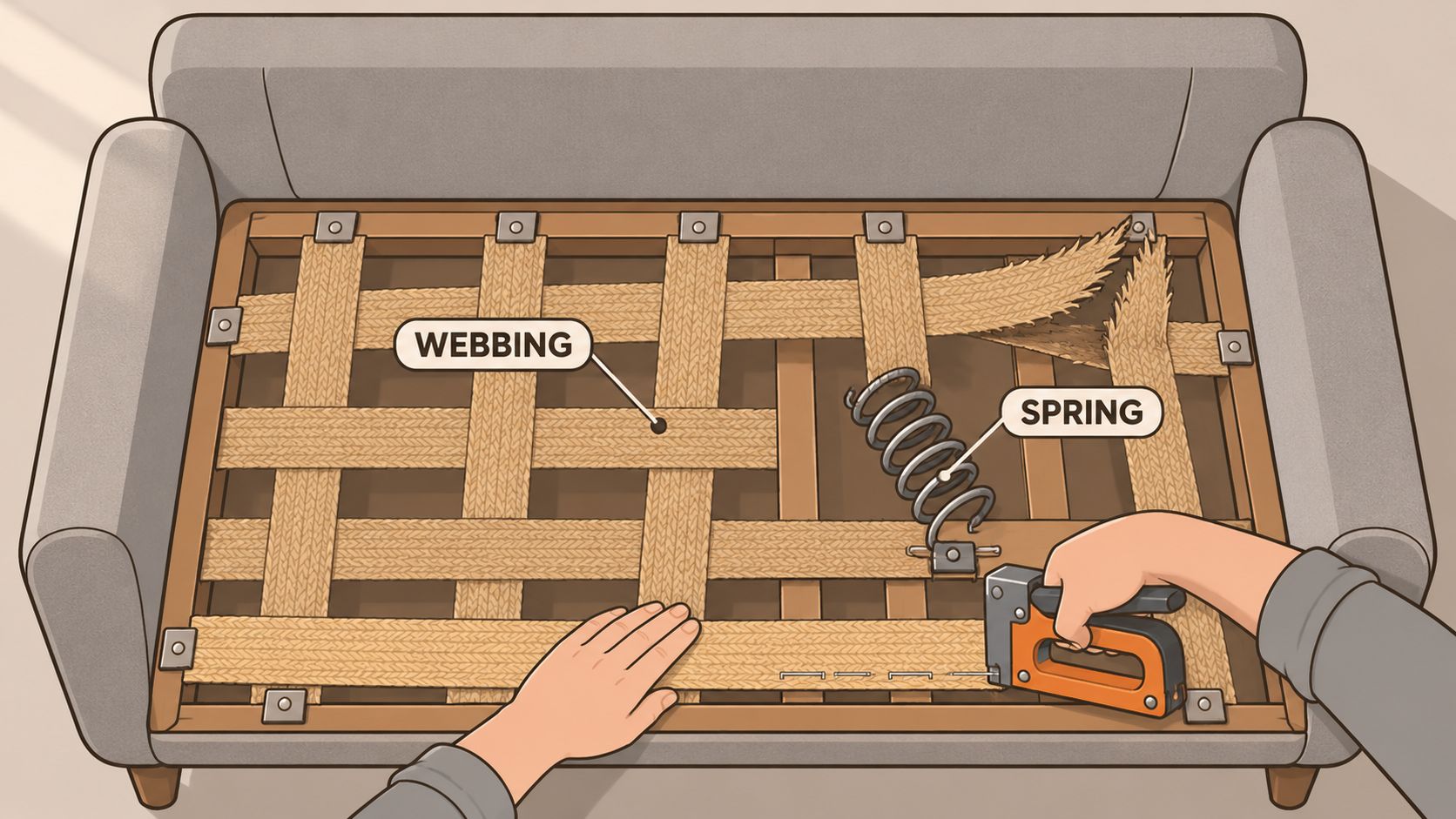
The exposed suspension below shows the separate layer that plumping cannot repair.
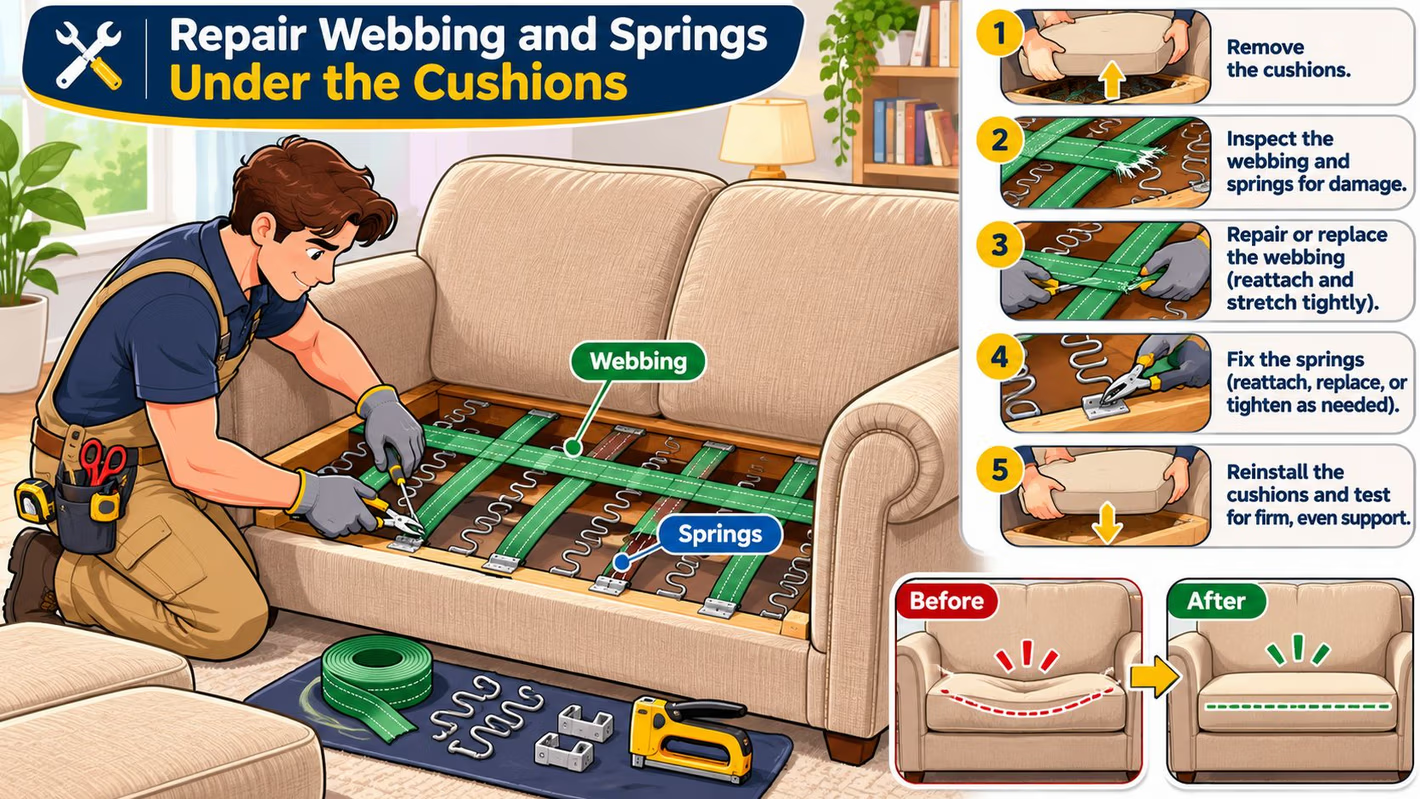
Repair Webbing and Springs Under the Cushions
A weak deck needs structural attention, not additional cushioning. Upholstery conservation guidance from the American Institute for Conservation's Wooden Artifacts Group documents stretched or broken webbing and displaced springs, with repairs involving replacement support and re-secured springs.
Access usually starts beneath the sofa, behind the thin dust cover. Get help positioning the furniture securely, unplug powered furniture, and photograph the fastenings before removing anything. Don't reach blindly through torn fabric where spring ends or staples may be exposed.
A clear view of the frame helps separate an isolated fastening problem from widespread failure.
Limited repairs a capable owner can tackle
- Loose webbing fasteners. Refasten intact webbing into sound wood using suitable upholstery staples and a stapler capable of setting them fully.
- An isolated damaged strap. Replace it with matching upholstery webbing, using a webbing stretcher to establish tension without distorting the frame.
- An accessible spring clip. Reattach only when the spring is undamaged, tension can be controlled safely, and the correct clip and fastening method are known.
Don't substitute cable ties for structural spring hardware. A repair must hold under repeated seating loads, not merely stay together while the sofa is upside down.
Warning signs that mean stop
Cracked rails, loose frame joints, multiple failed springs, corroded metal, and exposed sharp spring ends call for an upholsterer. A wobbling recliner mechanism also needs professional assessment; power and reclining assemblies shouldn't be opened without the manufacturer's guidance.
Check warranty terms before altering the structure. Cutting upholstery or changing hardware can complicate assessment of the original defect.
A plywood panel can change seat firmness, but it isn't a universal repair. It won't restore collapsed foam, and it can make the seat harsh or interfere with moving mechanisms.
For a comparison between repairable wear and construction worth seeking in a replacement, consider these features to look for in a sofa or chair.
After structural work, press across the platform before reinstalling the cushions. Sit normally, listen for movement, and inspect the repaired fastenings again after a week of ordinary use.
Replace the Foam Insert the Right Way
Replace foam that crumbles, stays visibly crushed, or has permanently lost thickness. Loose filling can improve the outline, but the core still has to carry the seated load. That distinction matters when a cushion looks slightly low but still feels supportive when pressed. It also matters when the cover seems tight while the foam inside has gone soft.
Density and firmness aren't interchangeable. Density helps assess durability; firmness, commonly expressed as ILD, describes resistance to indentation. Comfort depends on how those specs work with cushion thickness, user weight, and the suspension below. Choose a comfortable ILD only after confirming the core has enough resilience for the seat.
Match specifications to the seat
Confirm thickness, user weight, and suspension before ordering.
| Use case | Density | Firmness (ILD) | Notes |
|---|---|---|---|
| Indoor seat minimum | About 1.8 lb/ft³, about 29 kg/m³, according to Tempest's upholstery guidance | Select for cushion thickness and user weight | Lowest density suited to daily indoor seating |
| Heavier users or high-traffic sofa | 2.0–2.2 lb/ft³, 32–35 kg/m³ | 35–40 | Better durability for frequent sitting, according to the same guidance |
| Standard sofa-seat replacement | 2.0–2.5 lb/ft³ | 35–40 | Typically cut 4–5 inches thick, as recommended by We Love Upholstery |
Avoid choosing solely by the phrase high density: ask for the actual specification, suitable use, and available durability or warranty information. A dense core that mismatches the cover or seat platform can still feel wrong. For perspective on cover fabrics, fills, and supporting components, review the guide to upholstery materials before settling on the insert.
Measure and fit in the right order
- Measure the relaxed insert and empty cover. Record length, front-to-back depth, thickness, curves, and notches. Compare badly distorted foam with an intact matching insert instead of copying the collapsed shape.
- Order to the cover's internal dimensions. Lay the empty cover flat without stretching it and measure between seams. Account for the intended wrap with the foam cutter rather than adding arbitrary thickness.
- Test the bare core first. Check that it reaches the corners and aligns with the cover before trimming the wrap. An oversized insert can distort seams and load the zipper; an undersized insert allows slumping.
- Add a thin polyester or Dacron wrap. Smooth it over the crown and front edge without bulky corner overlaps. The wrap softens the outline and helps the cover slide over the core.
- Close gently and test each seat. Stop if the zipper strains, and correct the fit before continuing. Compare front-edge height and sitting feel with neighboring cushions.
Comfort check: Preserve the intended seat height before trying to make a cushion feel fuller through added thickness alone.
If the cover is stretched, fragile, or worn through, sound foam will not restore the shape it is meant to hold. Plan the cover repair or replacement with the insert, then refit the cushion as one assembly.
Compare Repair Costs and Choose the Right Fix
Repair options, costs and expected lifespan
| Repair | Typical cost | Typical time | Expected lifespan |
|---|---|---|---|
| Fluff, rotate and flip cushions | $0 | Minutes | Temporary shape improvement; repeat as needed |
| Add extra stuffing | $10–$30, according to Meliusly's repair guide | Allow time to open, redistribute, and refit | 1–3 months, according to the same guide |
| Add one or two layers of polyester batting | $20–$30, according to MillerWaldrop's cushion guide | Remove the insert, wrap evenly, and refit | A refresh for sound foam, not a cure for core failure |
| DIY foam and batting replacement | $80–$250, according to Sectionals of America's repair guide | 2–4 hours, according to the same guide | Longer-term repair when foam matches the use and the deck is sound |
These are published planning estimates, not quotes from Gates Home Furnishings. The sources don't establish a fixed service life for every batting refresh or replacement core, so an exact lifespan would be misleading. Read the options from least intervention to more substantial rebuilding. The inexpensive choice makes sense only when it addresses the identified failure. A cheap cushion refresh is poor value if the seat still drops into damaged suspension afterward.
Choose the repair that preserves sound parts
Stay with a refresh when the core and deck are sound. If redistribution and fresh wrap restore an even seat, there's little reason to discard the insert. Keep checking that the cover isn't hiding a persistent depression.
Replace the core when the cushion is the isolated failure. This is often the clearest repair for a sofa whose upholstery, frame, and suspension remain serviceable. Match neighboring cushions carefully, especially when replacing only the most-used seat. A new insert should restore the seat without overfilling the cover or changing the intended height.
Choose professional work when structural damage is involved. An upholsterer can assess whether spring replacement also requires new clips, webbing, or frame work. Paying for proper access and rebuilding is more useful than repeatedly covering the symptoms. This matters most when the cushion is only revealing a lower failure in the seat deck.
Consider replacement when several major parts need attention. A worn-through cover, weak frame, failed deck, and flattened cushions create a different budget decision from an isolated insert. Include all required work rather than comparing a complete replacement with the price of foam alone. For a different shape, fabric, or configuration, a custom upholstered sofa offers another route to compare against rebuilding.
Compare the complete job
Before ordering materials, list what the project requires:
- Cushion materials. Include cut foam, wrap, and any lining that needs replacement.
- Cover work. Account for damaged zippers, torn seams, or alterations needed to restore fit.
- Structural work. Include access, suspension repairs, frame assessment, and replacement dust-cover fabric.
- Consistency. Decide whether a single repaired seat will feel acceptable beside older cushions.
A sofa that's worth keeping may justify substantial upholstery work, particularly when its size and shape suit the room. Repeated small purchases become poor value when the rest of the furniture is deteriorating. The practical test is simple: compare the cost of fixing all failing parts with the cost of starting over, then choose the option that leaves the fewest unresolved weaknesses.
Understand service and warranty responsibilities
Unattached cushions must be brought by the customer to the Gates service department for service. The same rule applies to other easily transported components, including removable drawers, lamps, and accessories. Calling before transporting parts helps establish what information and components are needed.
Gates Home Furnishings repairs or replaces a defective furniture component rather than replacing the entire product. Parts for warranted defects or workmanship are provided at no charge, but after the one-year free service period, transportation and labor charges apply to repairs or installation of warranted parts.
That component-first approach suits a furniture and mattress store carrying sofas, sectionals, recliners, beds, dining tables, mattresses, and other room categories. It also keeps the decision focused on the failed part instead of treating sagging as a reason to replace everything.
For replacement purchases, Gates Easy Pay offers $0 down and 6 equal payments, subject to the applicable program terms. Gates Home Furnishings also shows customers the features of their new furniture and teaches them how to use it. Delivery includes professional unpacking, assembly, placement in the room of the customer's choice, and removal of packaging materials for recycling and disposal. When a new mattress or foundation is delivered, the old one is hauled away if it's safe and sanitary to do so.