Dining Room Sets for Apartments: A Local Guide


A small apartment dining area often has to do several jobs before breakfast is cleared. The table may hold a laptop in the afternoon, craft supplies in the evening, and a full meal when friends visit. In Grants Pass, Medford, and throughout Southern Oregon, the right dining set needs to preserve walking space while standing up to daily use, moves, spills, and changing household needs.
The strongest dining room sets for apartments aren't just smaller versions of formal furniture. They use practical proportions, flexible seating, durable finishes, and delivery support suited to apartment buildings. Gates Home Furnishings has served the Rogue Valley since 1946, following George Gates Jr.’s original promise of “Service and Value” while helping local renters and homeowners furnish spaces that work hard.
Measuring Your Apartment Dining Space
A dining set that fits the floor plan can still make an apartment difficult to use. The missed detail is usually chair clearance. Measure for the tabletop, pulled-out chairs, seated diners, and the walking route behind them before choosing a set.
Start with the full footprint
Measure the entire dining zone, not only the open patch where the table may sit. Record walls, kitchen cabinets, counters, sofa arms, doors, heating vents, windows, and furniture that will remain in place. In an apartment, the dining area often connects the kitchen and living room, so the route through the room matters as much as the table dimensions.
Use this planning sequence:
- Measure the room boundaries. Write down the usable length and width, then mark every obstruction.
- Mark the table footprint. Painter's tape on the floor shows the proposed size more accurately than a product photo.
- Add chair pull-out space. Mark how far each chair must move back for someone to sit comfortably.
- Test the circulation route. Walk around the taped footprint while another person pulls out a chair.
- Check neighboring functions. Make sure someone can reach the kitchen and that a seated diner will not block the main walkway.
A common apartment-planning benchmark allows about 90 cm, or 3 feet, between the table edge and nearby walls or furniture. That clearance gives diners room to pull out chairs and lets people pass behind them. For homes where cooking and dining happen at the same time, general small dining layout guidance recommends about 120 cm between a dining table and kitchen cabinets. Use this small-space furniture measuring guide to document the room before visiting a showroom or arranging delivery.
Apartment buildings add another measurement check. Record doorway widths, hallway turns, elevator dimensions, stair landings, and any narrow entry points. A set that fits the dining area may still fail at the front door or during an upper-floor delivery. In Southern Oregon apartment communities, confirming these details early helps prevent a difficult delivery appointment.
Size the seating before shopping
Compact four-seat tables commonly measure about 120 to 140 cm in length, according to small dining layout guidance. A round table around 24 to 30 inches generally suits one or two diners, while 30 to 36 inches can serve two to three in a compact arrangement, as described in this small dining table sizing guide.
Those figures describe the tabletop alone. Each diner needs roughly 60 cm of table width, and 90 cm of surrounding clearance remains the safer planning target. Slim chairs can work better than bulky seating, even when both options pair with the same table. Test the chair width, arm height, and pull-out distance together.
Practical rule: A table is not apartment-friendly if its chairs cannot move back without trapping someone in the kitchen or living room.
Plan for more than meals. One 2023 survey found that 68% of people use dining rooms for studying, working, or hobbies in addition to eating, while an industry summary reported that about 80% of designers see traditional dining rooms as less essential in current floor plans. These findings, cited in this apartment dining furniture overview, support measuring for laptops, projects, and daily storage access as well as dinners.
Measure the tabletop before ordering linens. This tablecloth size guide helps match the finished table to its cloth while keeping fabric clear of chairs and walking paths.
Choosing the Right Table Shape and Material
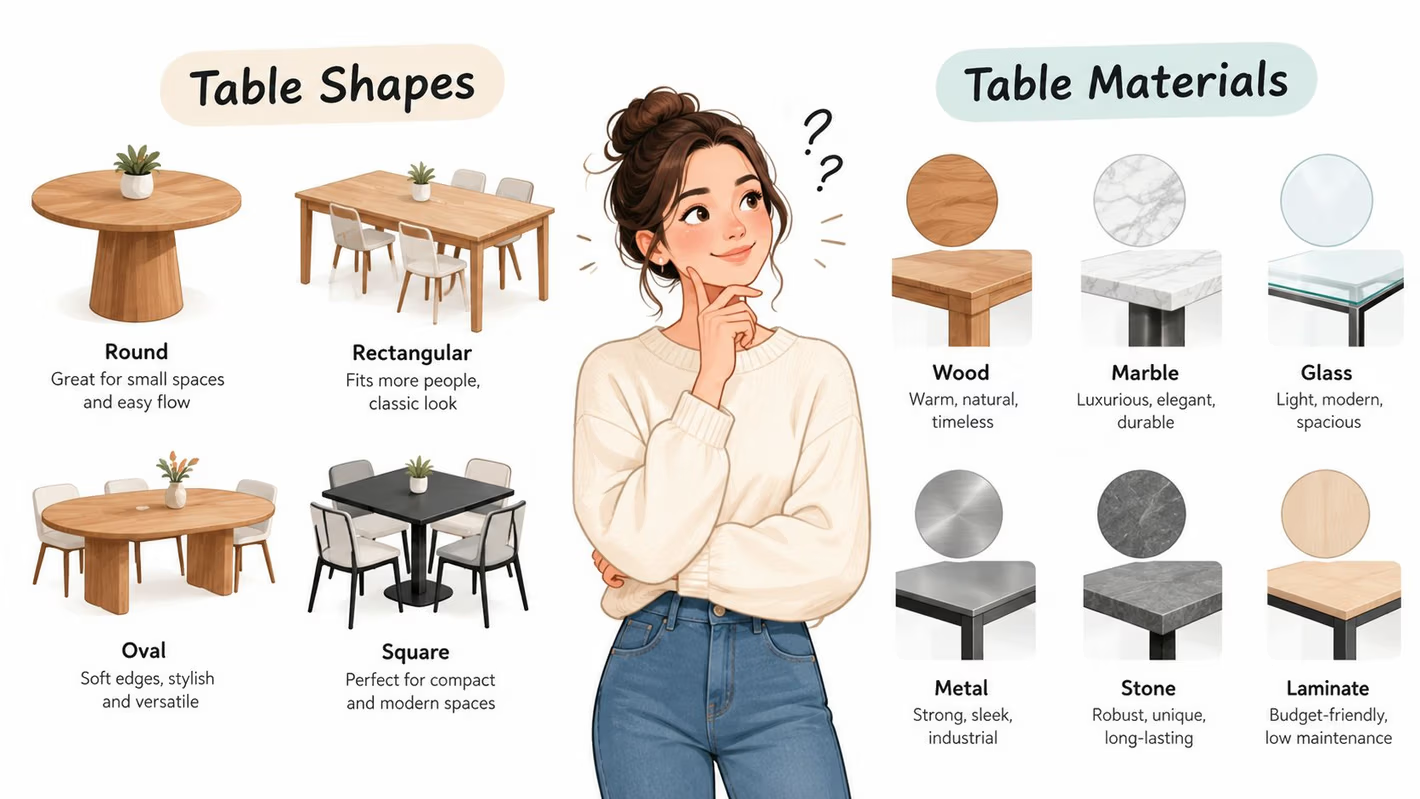
Shape determines how people move. Material determines how the set handles real apartment life. A household that hosts occasionally may need an extendable table, while a two-person household eating in a narrow open-plan area may get more value from a small round pedestal table.
Compare the shapes honestly
Round tables make tight routes easier because they remove sharp corners. A pedestal base can improve legroom and prevent diners from bumping into corner legs. For apartment dining spaces around 9 by 9 to 11 by 11 feet, a 42 to 48 inch diameter pedestal table is often recommended as a strong fit, according to this round dining table room-size guide.
Oval tables offer much of the same circulation benefit while providing a longer visual line. They suit open-plan rooms where a rectangular table would feel too rigid, and they can create a smoother transition between a living area and the kitchen.
Drop-leaf tables earn their place in especially tight apartments. The leaves can stay lowered for daily meals and rise when visitors arrive. The tradeoff is that the supporting structure and hinges need careful inspection, particularly in a home where the table will be opened and closed often.
Extendable tables work for households that need a compact daily footprint but occasional guest capacity. They should be measured in both closed and fully extended positions. A set that fits perfectly every day may block a walkway during a gathering if the expanded footprint wasn't marked in advance.
A round table can improve circulation, while an extendable table can improve hosting flexibility. Neither solves every problem. A shopper comparing complete configurations may find this resource on choosing a 7 piece round dining set useful for thinking through seat count, base design, and room proportion.
Choose materials for the household
Material selection should reflect the apartment's maintenance routine, not just the showroom finish.
- Laminated MDF: A laminated wood-grain finish offers a useful balance of lighter weight, cost, and stain resistance. That combination suits renters and households expecting frequent moves.
- Glass: A glass top can make a small room look visually open, but fingerprints and smudges show quickly. It works best where regular wiping isn't a burden.
- Solid wood: Oak, walnut, and other warm woods bring lasting character and can age gracefully. The added weight may matter during a move, so delivery access and stairwell conditions deserve attention.
- Mixed materials: Wood with metal, upholstered seating, or a glass accent can keep a matching set from looking heavy in an open-plan room.
A solid wood and veneer furniture guide helps shoppers examine construction rather than relying on a finish photograph. For high-turnover apartment living, the strongest choice is usually the material that cleans easily, moves reasonably well, and won't cause daily frustration.
Smart Seating and Multifunctional Storage Solutions
A compact dining set can look right in the showroom and still frustrate you at home. In a Southern Oregon apartment, the best arrangement must handle daily meals, occasional guests, changing work needs, and the wear that comes with frequent use. Choose seating and storage for the way your household really lives, not just for a matching finish.
Let seating do more than one job
A bench is often the smartest choice along a wall. It can slide fully beneath the tabletop, keep a walkway open when the room changes function, and seat people more flexibly than two separate chairs. Back support is more limited, so use a bench for everyday meals rather than unusually long gatherings. Choose a sturdy, easy-clean surface if children, pets, or frequent entertaining are part of the household routine.
Slim armless chairs remain the safest all-around recommendation for most apartment dining sets. Wide arms and deep cushions consume clearance quickly, while heavy frames make rearranging and moving harder. Ergonomic guidance commonly places table height around 28 to 30 inches and chair seat height around 17 to 19 inches, creating a 10 to 12 inch difference for comfortable leg clearance. Learn how to match seat height and table height in our guide to how to choose dining room chairs.
The same guidance recommends 24 inches of table width per diner as a minimum, with 26 inches as more comfortable, and 15 to 18 inches of seat depth to reduce pressure behind the thighs. Measure the chair with its back and arms included, then leave enough room to pull it out without striking a wall or cabinet.
Folding chairs handle occasional hosting, but they need a real storage location. Check that a closet or bedroom door area can hold them without blocking access or scraping walls. A mixed arrangement often works well, with everyday chairs on one side and a bench against the wall.
Add storage without visual weight
Dining storage earns its place by solving a specific problem. A shallow sideboard can hold linens, serving pieces, and board games. A table drawer keeps napkins and placemats nearby without adding another cabinet. Open shelving displays pottery, but it also collects dust, so closed storage usually suits renters who want less daily upkeep.
Match the storage to the household:
- For a two-person household: A small drawer or narrow cabinet may hold daily linens and serving utensils.
- For shared homes: Closed storage keeps craft materials, chargers, and paperwork off the tabletop.
- For entertainers: An extendable table and nearby cabinet provide guest capacity without leaving the room set up for hosting every day.
- For renters who move often: Lighter modular pieces are easier to carry through stairwells and reposition after a lease change.
Apartment dining spaces often serve as workstations, homework areas, craft tables, and gathering spots. Select a set that supports those activities without making the room feel like a storage area. A drawer, shelf, or extension leaf should earn its footprint through regular use.
Keep practical pieces distinctive
Durability does not require an anonymous look. Gates Home Furnishings' Unique Finds include reclaimed wood, teak, and one-of-a-kind statement pieces that can give a compact room a focal point without adding unnecessary furniture. A reclaimed wood bench can warm up a simple table, while a teak accent cabinet can make useful storage feel deliberate.
Daily care also affects how long a set remains attractive. Review these tips from Eco Clean Solutions, then follow the cleaning and finish instructions supplied with the furniture. In a rental or a busy Southern Oregon home, easy maintenance and sturdy construction matter more than delicate details that make every spill stressful. A family-owned local furniture team can also help you judge whether a piece suits apartment use, repeated rearranging, and the practical realities of your home.
Navigating Delivery and Protection in Apartment Buildings
Apartment delivery can go wrong before the furniture reaches the front door. Narrow entrances, elevators, stairwells, parking restrictions, and shared hallways all create problems that a curbside drop-off leaves to the customer.
Curbside service stops too early
A large dining table delivered to the building entrance still needs to reach the apartment, survive the trip through the hallway, and get assembled correctly. One person wrestling with a tabletop near an elevator can damage walls, doors, or the furniture itself. Packaging then remains in the apartment or hallway until someone finds a disposal solution.
Professional delivery removes much of that burden. A service description for furniture delivery identifies possible steps including unboxing, assembly, inspection, placement in the room of choice, and optional haul-away of old furniture or packaging, with assembly sometimes offered separately or as a bundled service. That approach is especially useful for an upper-floor apartment or a home with limited storage.
The white-glove delivery service explanation gives shoppers a useful checklist of services to confirm before purchase. The Gates team handles professional assembly and setup rather than just dropping boxes at the curb. The company also provides mattress haul-away as part of its broader in-home service, a useful detail for a household coordinating several furniture deliveries during a move.
Protect the room and the investment
A delivery appointment should include more than a date. The resident should confirm elevator rules, building access, parking instructions, doorway dimensions, and whether old furniture needs removal. A photo of the route can help the delivery team identify tight turns before arrival.
Protection coverage also deserves attention in a busy apartment. Dining tables face drink rings, food spills, scratches from daily objects, and accidental damage during rearranging. A protection plan with accidental spill coverage can make sense for households with children, pets, frequent guests, or little time for complicated repairs.
The Gates Care Shield protection plan is designed to provide coverage against accidental spills and tears. That doesn't replace sensible care, but it can reduce the anxiety that comes with using a dining set every day. A dining table should support life in the apartment, not force residents to treat every meal like a showroom visit.
Budgeting with Flexible Financing and Local Outlet Finds
A dining set budget should include more than the ticket price. Delivery, assembly, protection, seating capacity, and future moving costs all affect value. The lowest initial price can become expensive if the finish fails quickly or the set needs replacement after a move.
Build a useful budget
A practical apartment-furnishing budget starts with the household's real priorities:
- Set the daily seating requirement. Pay for occasional capacity only when hosting matters.
- Reserve room for delivery and setup. A large table is difficult to assemble safely without adequate help.
- Choose durability before decoration. A cleanable finish and stable construction usually matter more than a complicated silhouette.
- Keep a moving lens. Heavy pieces may be worthwhile for a long-term home, while lighter construction can make sense for a renter expecting relocation.
- Compare the complete set. Matching chairs designed for the table can prevent the extra cost and awkward proportions that come from piecing together mismatched seating.
A household furnishing a first apartment doesn't need to compromise on every feature. The better approach is to spend on the parts handled every day, then save on decorative details that can be added later.
Use flexible payment options carefully
Gates Easy Pay offers options that include $0 down, six-month interest-free financing, and no-credit-needed options, subject to the applicable program terms. The company also provides online financing for shoppers who prefer a private application process. Full details belong in the furniture-financing information for Gates Easy Pay options, where a shopper can review the available arrangements before selecting a dining set.
Financing should match a payment the household can manage comfortably. A larger set isn't a smart purchase if the monthly obligation creates pressure elsewhere. Flexible terms are most useful when they help a household buy a durable, properly sized set instead of settling for a temporary option that will need replacement.
Check local outlet inventory
The Gates Outlet gives budget-conscious shoppers another route to quality furniture through clearance pieces and special values. Outlet inventory changes frequently, so a patient shopper may find a table, bench, or dining cabinet that solves the room's main problem without requiring a full-price purchase.
Outlet shopping works best with a prepared list. The shopper should bring the room measurements, doorway dimensions, preferred seat count, and a short material preference. Clearance furniture still deserves a careful inspection of joints, drawer operation, finish condition, and included hardware. A good value is a piece that fits the space and the household's routine, not merely one with a reduced tag.
Visit Our Grants Pass Showroom to Test Your Options
Measurements narrow your choices, but they cannot tell you whether a chair supports your posture or whether a table feels stable. Visit the showroom before ordering, especially when your apartment must handle daily meals, work sessions, guests, and limited circulation space.
Test the complete arrangement
At the 30,000-square-foot showroom in Grants Pass, you can sit in dining chairs, check knee clearance, and compare table shapes at full scale. Pull each chair out, test the tabletop height, and walk around the arrangement as you would between the kitchen and living area. A few minutes of testing can reveal a chair that pinches your legs, a bench that lacks support, or a table that blocks the main path.
Bring your room measurements, doorway width, and preferred seat count. A renter near the Rogue River may need a compact set that leaves room for everyday movement. A household in Medford or Central Point may want a table that serves weekday meals without taking over the living area. An Ashland apartment may call for warm wood that gives an open-plan room more character. The testing process stays practical while the right choice changes from home to home.
See construction and character up close
Gates Home Furnishings carries complete dining furniture, plus individual tables, chairs, benches, and storage pieces selected for apartment proportions. The Unique Finds collection includes reclaimed wood, teak, and one-of-a-kind statement pieces for shoppers who want personality without filling the room with oversized furniture.
The family-owned company has served Southern Oregon since 1946, when George Gates Jr. established the promise of “Service and Value.” That history supports a useful local showroom experience. Staff can help assess proportions, delivery access, and the practical differences between a bench, round table, and extendable arrangement. They can also discuss how the chosen pieces will enter an apartment building and reach the intended room.
The Grants Pass showroom serves shoppers from Medford, Central Point, Ashland, and across the Rogue Valley. Test comfort, construction, and fit in person before choosing furniture that will support daily life.
Gates Home Furnishings offers apartment-ready dining sets, Gates Easy Pay options, Unique Finds in reclaimed wood and teak, and professional in-home delivery with assembly and mattress haul-away. Browse Gates Home Furnishings online or visit the Grants Pass showroom to test your dining arrangement.