Dining Room Sets Bar Height How to Choose Well

The taller dining set looks right in the photo. It seems made for coffee near the kitchen, friends stopping by, and a room that needs a clear dining spot without another wall. Then the practical questions start: Will the stools fit underneath? Can a child climb up safely? Will visiting family enjoy sitting there?
For Southern Oregon households comparing dining room sets, bar height is a household-fit decision before it's a style decision. A good choice starts with the people who'll use it, then the measurements, materials, and everyday habits that make it comfortable.
What Bar Height Dining Room Sets Really Are
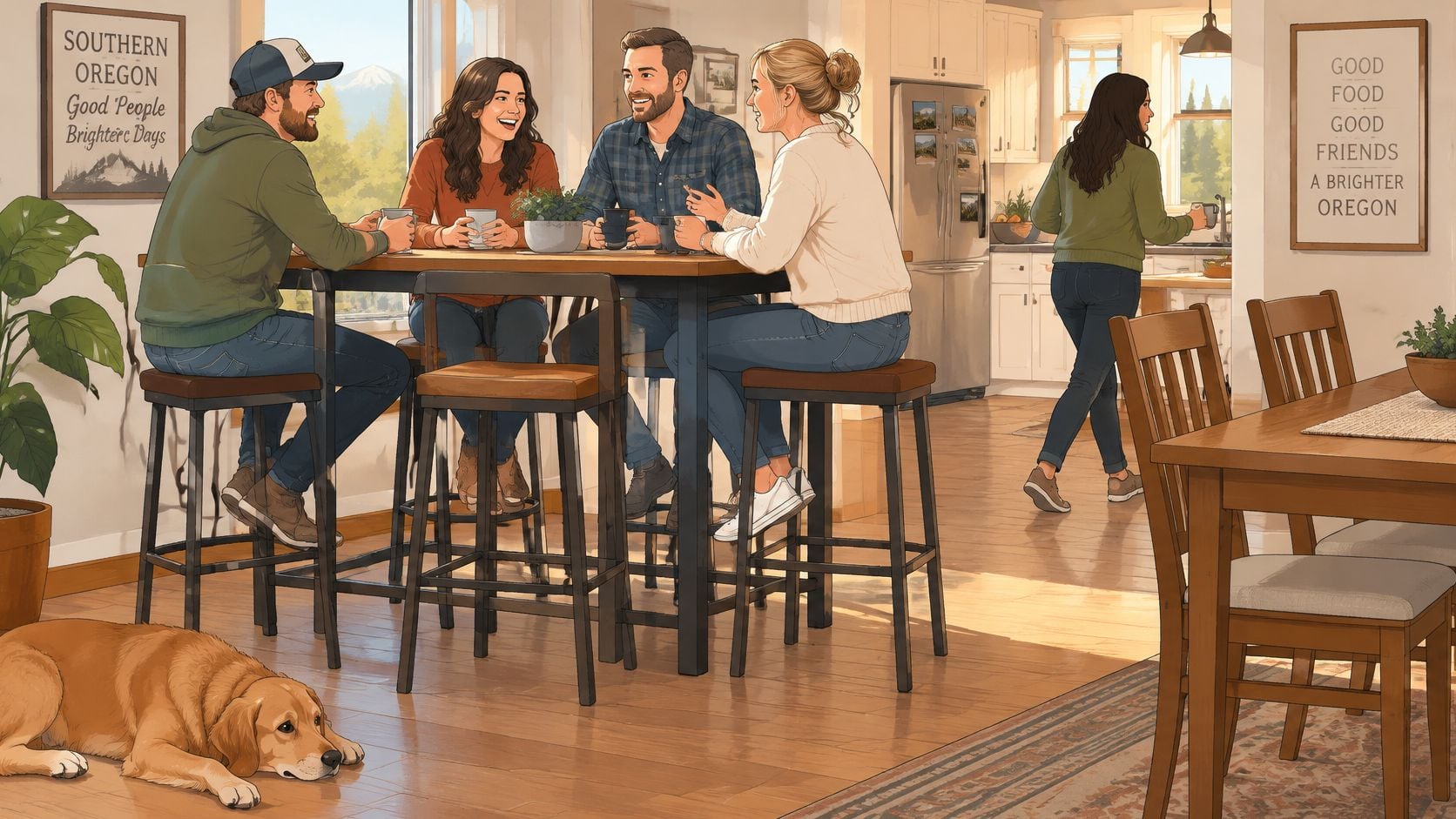
Friends gather around a taller table just off a Rogue Valley kitchen. Someone settles onto a stool with coffee, feet resting on a rail, while another person pauses beside the table to join the conversation. That easy connection between seated guests and people passing through is part of the appeal.
A bar-height dining set is a table-and-stool combination designed around that raised perch. It isn't a conventional table with taller chairs pushed underneath.
The relationship that makes the set work
A typical bar-height surface stands 40–42 inches above the floor, paired with seats around 28–30 inches high, leaving roughly 10–12 inches between the seat and tabletop, according to this guide to bar-height and counter-height furniture. The seat, tabletop, and foot support need to work together, much like a step and its handrail.
That relationship explains why a stool can look right beside a table but feel wrong during dinner. A diner needs somewhere secure for their feet and enough room to sit without lifting their shoulders or crowding their knees.
Where the raised format belongs
Bar-height furniture is worth considering for spaces where dining blends with conversation and other activities:
- Kitchen-adjacent breakfast areas: A casual place for coffee or a quick meal.
- Game rooms: A gathering spot that feels separate from lounge seating.
- Open-plan rooms: A higher tabletop can mark the dining area without a partition.
- Entertainment spaces: A place where guests may alternate between sitting and standing.
The format deserves more caution when the main purpose is a long, seated meal or when someone needs an uncomplicated sit-to-stand movement. A relaxed appearance doesn't guarantee relaxed seating for every person.
Since George Gates Jr. founded Gates in 1946, his promise of “Service and Value” has shaped the store's approach to helping Grants Pass and Rogue Valley households choose furniture. Applied to dining, that means treating a catalog photo as a starting point, not proof of comfort.
How Bar Height Compares with Other Table Heights
Counter height and bar height aren't interchangeable. They may share similar wood finishes, stool shapes, and casual styling, but the names describe different table-and-seat relationships.
Start with the surface measurement, not the appearance. Then check the seating that belongs with it.
Standard, Counter, and Bar Dining Heights
The measurements below follow this table and stool measurement guide, which lists standard surfaces at 28–30 inches, counter surfaces at 35–36 inches with 24–27-inch seats, and bar surfaces at 40–42 inches with 28–33-inch seats.
| Format | Table surface | Seat height | Best everyday use |
|---|---|---|---|
| Standard dining | 28–30 inches | Dining chairs matched to the table | Seated meals and flexible household dining |
| Counter height | Typically 35–36 inches | About 24–27 inches | Breakfast spaces and kitchen-connected dining |
| Bar height | Usually 40–42 inches | About 28–33 inches | Casual gathering and entertainment areas |
The broader bar-stool range isn't a promise that every stool will fit every bar table. It's a category range, and the complete pairing still needs checking.
Published guides also vary slightly in where they draw category boundaries. The guide cited earlier places bar surfaces near 100–105 cm and standard dining near 70–75 cm, roughly 25–35 cm apart. Metric and imperial listings describe the same basic distinction: bar furniture sits noticeably higher.
Measure the seat, not the silhouette
A tall backrest can make a counter stool look like a bar stool. What matters is the height from the floor to the top of the actual seat or cushion, not the highest point of the furniture.
The common ordering mistake is choosing counter stools for a true bar table because the color and frame match. The result may leave diners sitting too low, reaching upward toward their plates.
Practical rule: Match the measurements before matching the finish.
The gap described earlier is only a starting point. A thick tabletop apron, the frame beneath the top, can take away usable thigh room even when the advertised surface height seems suitable.
For another terminology reference while comparing product descriptions, the height advice from Simply Hospitality is a useful companion resource. Keep the actual table and seat specifications beside any label such as counter, bar, or high-top.
When a Bar Height Set Fits Your Household
A pub-style table isn't automatically a better family table. The useful question is simpler: Can everyone in the household safely use this set every day?
Consider the whole movement, not just the moment someone is seated. A person must approach the stool, climb onto it, find foot support, stay balanced, and get down again. That sequence can be awkward for children, older adults, or anyone with limited balance or mobility.
Accessibility changes the decision
The U.S. Access Board's dining-surface guidance specifies accessible surfaces 28–34 inches above the floor, with compliant knee and toe clearance, including 27 inches of knee height and 30 inches of width. Supporting accessible table-planning guidance identifies a 30-by-48-inch clear floor area at an accessible seating position.
A bar-height tabletop sits above that accessible surface range. It can't substitute for a usable wheelchair dining position just because the room has enough space around it.
The underside matters, too. A pedestal, storage shelf, or deep apron may prevent a wheelchair from approaching the eating surface even when the tabletop itself is at a suitable height.
Choose yes, no, or a split layout
A practical household check includes more than whether someone can reach the plate:
- Seat firmness: Does the person feel supported rather than sunk into a cushion?
- Foot support: Can their feet rest securely without searching for a rail?
- Stool stability: Does the seat stay steady while they get on and off?
- Back support: Can they sit comfortably without constantly holding themselves upright?
- Approach space: Can they reach the seat without squeezing between furniture?
If everyone passes that check and the room serves casual gatherings, bar height may suit the household. If a regular diner struggles, a standard-height main table is often the more welcoming choice.
A split layout can also work: a taller gathering table plus an accessible dining surface elsewhere. Counter height may deserve a separate test, but it shouldn't be treated as automatically accessible.
A dining place should let someone join the meal, not require them to overcome the furniture first.
For a smaller home, compare the actual layout options in Gates' guide to dining room sets for apartments. Choosing a smaller footprint needn't mean choosing a harder seat to use.
How to Measure and Choose the Right Set
Start at the doorway with a tape measure and a clear view of the room. A table can fit inside a marked rectangle while its occupied stools block the route to the kitchen.
Record the room's fixed obstacles, including door swings, cabinetry, and nearby furniture. Then check the set as people will use it, with seats pulled out rather than tucked neatly underneath.
Work from the floor upward
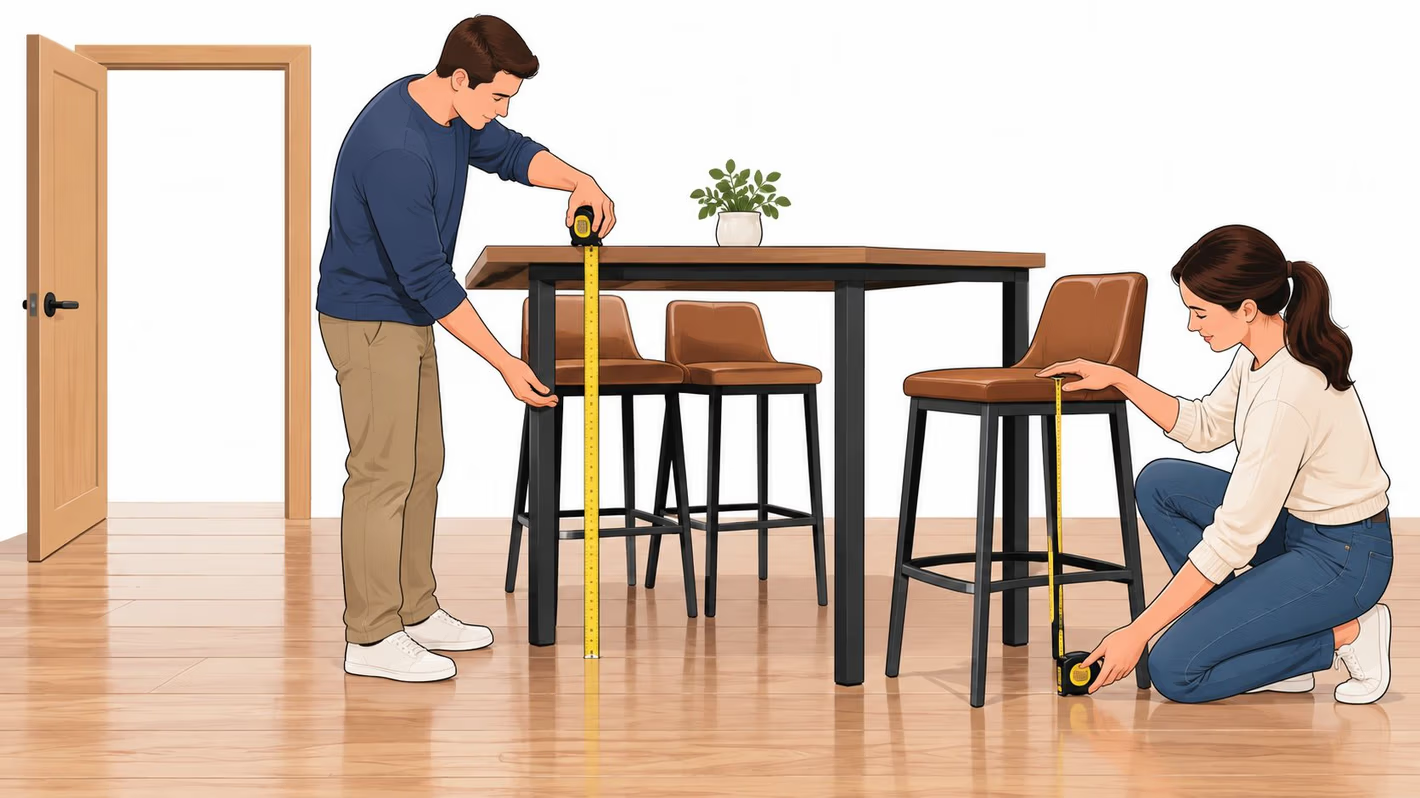
Use a consistent measuring routine:
- Measure the lowest obstruction: Record the floor-to-underside height at the apron, not just the top surface.
- Check the finished seat: Measure to the cushion's top rather than an exposed frame rail.
- Try the seated position: Knees shouldn't press into the apron, and arms should rest naturally.
- Pull the stool out: Make sure its legs clear the table base and neighboring seating.
- Walk past an occupied seat: Test the route people will use during dinner.
Bring those notes alongside a room photo. Gates' dining table size guide can help organize the broader footprint decision.
Count usable places, not advertised seats
Horizontal room is a separate measurement from seat height. Planning guidance allows about 24 inches of table width per person and approximately 12 inches of knee-space depth beneath a 42-inch surface, compared with 15 inches at a 36-inch counter and 18 inches at a 30-inch dining surface, according to these seating-width and overhang guidelines.
For a rectangular table, examine the usable edge between legs rather than dividing the entire length without accounting for obstructions. At a round table, test neighboring elbows and the base position. A compact pub table should be judged by its usable dining places, not how many stools can touch its perimeter.
For a project extending onto a patio, the resource on outdoor kitchen bar dimensions for Prescott offers related planning context. Outdoor cabinetry and indoor dining furniture still need their own measurements.
Test the complete combination
Gates' 30,000-square-foot showroom in Grants Pass provides a place to test comfort in person for shoppers from Medford, Central Point, Ashland, and the wider Rogue Valley. Bring the household members whose seating needs are easiest to overlook.
Before choosing, confirm whether the listed set includes stools, whether replacement seating can be ordered, and whether the footrest feels secure. A photograph won't answer those questions as clearly as sitting at the actual table.
Materials and Durability Worth Looking For
A finish sample can help with color. It can't show whether a stool shifts when someone settles into it or whether a foot rail feels solid under everyday use.
Construction deserves close attention on tall seating because people use the frame while getting into position. Look beyond the tabletop to the joints, base, seat attachment, and footrest.
Compare materials by household habits
Rather than assuming a material name guarantees durability, inspect the particular piece and its care requirements:
- Solid wood: Ask about the finish, cleaning instructions, and options for repairing visible wear.
- Veneer: Check exposed edges and ask how the surface should be protected from spills and heat.
- Metal: Examine connections, floor contact, and whether the frame remains steady during a sit test.
- Upholstered seating: Check cushion firmness, seams, and the recommended cleaning method for the covering.
The solid wood versus veneer guide can help separate material preferences from assumptions. For a household with children or pets, easy-to-follow care instructions may matter more than a finish that looks perfect under showroom lighting.
A heavier-looking base isn't enough on its own. Check its actual stability, ask about levelers for an uneven floor, and examine whether every foot makes proper contact.
Footrests and replacement seating deserve attention
A guide to dining-table ergonomics identifies footrests roughly 7–12 inches above the floor as helpful for stability and reducing unsupported-leg fatigue. The household sit test still determines whether a particular rail is reachable and comfortable.
Buying check: Ask about replacement stools before choosing a set that depends on a distinctive seat shape or finish.
Gates carries household furniture brands including La-Z-Boy, Flexsteel, Ashley, and Beautyrest. Those names span seating, dining, and sleep, so shoppers should ask about the actual dining piece's construction rather than assume every brand supplies every furniture category.
For a different look, Unique Finds includes reclaimed wood, teak, and one-of-a-kind statement pieces outside the usual matching-set approach. Confirm the dimensions and seating compatibility of each individual piece.
Someone planning a dedicated entertaining corner may also find inspiration in ways to create a personal whiskey space. Keep decorative ambitions separate from the construction checks that make the seating usable. Budget-conscious shoppers can also check the Gates Outlet for complete-set values as its selection changes.
Styling and Care for Bar Height Dining Sets
A taller table already has a noticeable presence in a room. Styling works best when it supports that shape without crowding the surface or competing with the people seated around it.
Choose a direction that suits the rest of the home. There's no need to turn the dining area into a separate theme.
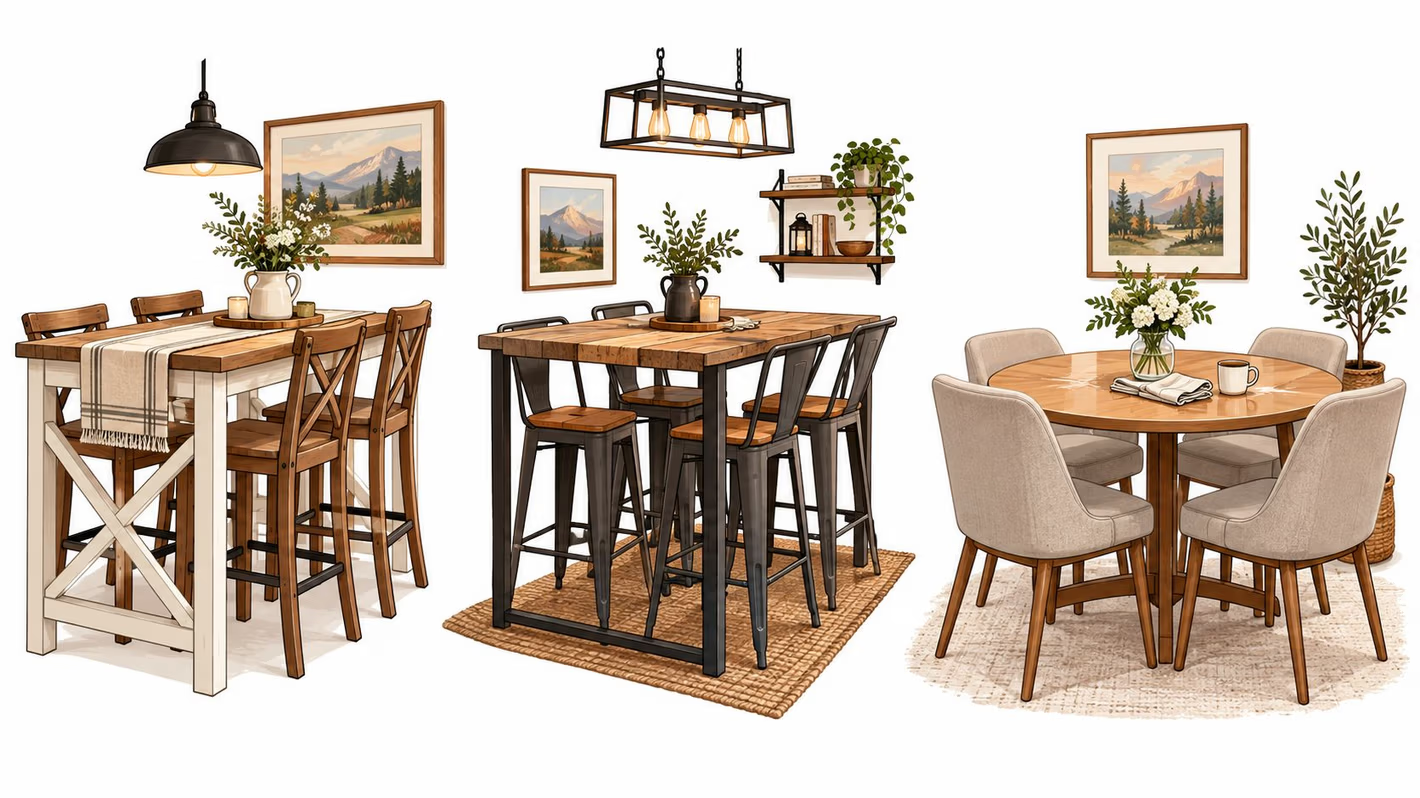
Room ideas that leave space for dinner
A farmhouse arrangement might pair a trestle table with simple pendants and a linen runner. Keep the runner short enough that it doesn't drag against stools or interfere with someone getting seated.
For a craftsman-inspired room, try a wood top with straightforward metal stools and accessories that repeat colors already present in the room. A darker vintage table can stand on its own with carved legs and a single chandelier, rather than a collection of competing decorations.
Gates' dining room style guide offers more ways to connect a dining set with existing furnishings.
A few decorating habits keep the arrangement comfortable:
- Group small accessories in odd numbers: Keep the grouping compact enough to move easily before meals.
- Vary decorative heights: Let a low bowl sit beside a modest vase rather than filling the center with tall objects.
- Keep visual weight lower: Use restrained tabletop arrangements so the tall furniture doesn't feel top-heavy.
- Check lighting while seated and standing: Pendants should clear heads and leave a comfortable view across the table.
A light fixture positioned for the old table needs another check when the replacement surface is taller. Don't assume its existing placement still works.
Build care into the daily routine
Use coasters and wipe up spills promptly, following the manufacturer's instructions for wood, teak, metal, and upholstery. Ask which cleaning products suit the specific finish before bringing it home.
Check stool hardware after the first busy month, then follow the manufacturer's maintenance recommendations. Rotate removable cushions where the design allows, and address looseness rather than letting someone keep using an unstable seat.
Gates Care Shield is optional protection for accidental spills and tears, subject to the plan's terms. It complements ordinary care; it doesn't replace careful cleaning, routine checks, or sensible use.
Shop Bar Height Sets in Grants Pass
The most useful showroom visit begins with a short list of household needs, not a favorite finish alone. Bring room measurements, a photo, and a clear idea of who'll use the table most often.
Gates' Grants Pass team can help compare a complete set, a different seating arrangement, or a special-order possibility. Shoppers comparing from Medford, Central Point, Ashland, or elsewhere in Southern Oregon can start with the online inventory and use the dining furniture shopping guide to prepare questions.
Plan the purchase without rushing the fit
The store's service philosophy remains tied to George Gates' original promise. Help choosing should include straightforward answers about what's included, what can be ordered, and how the furniture will reach the room.
Gates Easy Pay offers several payment paths:
- $0 down and six equal payments: An option for spreading the purchase across a payment schedule.
- Six-month interest-free options: Ask about the offer's eligibility and full-payment requirements within the promotional period.
- No-credit-needed and lease-to-own paths: Review the applicable agreement and total cost before deciding.
- Online-only financing: A private way to complete the approval process.
Financing should support a suitable purchase, not turn an uncomfortable set into a compromise that stays in the home. Ask the team to explain the applicable terms before committing.
Arrange delivery around the actual room
White-glove delivery means carrying the furniture inside, handling professional assembly, and setting it in place. It isn't just leaving boxes at the door for the household to manage.
Confirm access details and the delivery scope when ordering. Mattress haul-away is available when the delivery includes sleep furniture, so that service belongs in the discussion when furnishing more than the dining area.
Outlet shoppers can ask about current values, while those seeking an individual statement piece can explore Unique Finds. Either route should lead back to the same practical result: furniture that fits the room and the people using it.
Gates Home Furnishings offers dining sets, seating guidance, flexible payment options, and professional in-home setup to help Southern Oregon households choose comfortably. Visit Gates Home Furnishings at the Grants Pass showroom to try a bar-height table and its stools together, or browse the collection online and ask about a size that passes the household fit test.