How to Choose Dining Room Chairs That Actually Fit


You've chosen the table, approved the finish, and found dining chairs that look perfect in the room. Then dinner starts. Before long, someone is shifting in the seat, pressing against the table, or standing up to relieve pressure behind the knees. The problem usually isn't the style. It's the fit.
The smartest way to learn how to choose dining room chairs is to treat each chair like something worn by the body, not something admired from across the room. Seat height, seat depth, width, back support, and stability all matter once a meal lasts longer than a quick bite. The right chair should work for everyday life, from Tuesday-night homework to a relaxed family dinner.
Why Most Dining Chair Choices Go Wrong
A Grants Pass homeowner once brought home a sleek set of dining chairs after choosing them mainly for their clean profile and attractive upholstery. The chairs looked excellent around the table. After one hosted dinner, the verdict changed. The arms sat too high, the back felt shallow, and the front edge pressed into the backs of the thighs. Guests spent the meal shifting weight instead of enjoying conversation.
That experience is common because shoppers often measure the table, compare fabric swatches, and save trend photos, but skip the diner's body. A chair is a wearable object. Its proportions either support the person sitting in it or create pressure points that become more irritating as the meal continues.
The three ways a chair fails
The chair looks right but measures wrong. A seat can appear proportional while sitting too high or too low for the tabletop. The recommended relationship is generally a seat positioned 10 to 12 inches below the tabletop, which usually places a standard dining chair around 17 to 19 inches high for a table measuring 28 to 30 inches high (Lumens' seating-height guide).
The chair fits the table but fights the person. A technically correct seat height doesn't guarantee a comfortable seat depth. A shorter adult may need a shallower seat to keep the back supported, while a taller diner may need more room from the seat edge to the backrest.
The chair suits a dinner party but not daily life. Formal chairs often get judged under showroom lighting, then used for meals, paperwork, family gatherings, and long conversations. A chair that feels acceptable for a few minutes may become a poor choice when the household uses it every day.
Practical rule: If a chair causes pressure behind the knees, forces the shoulders forward, or requires constant repositioning, its style isn't enough to justify the purchase.
The fix starts with measurements, but it ends with a real sitting test. Table compatibility gets a chair into consideration. Body fit determines whether it stays there.
Measuring for the Right Fit at Your Table
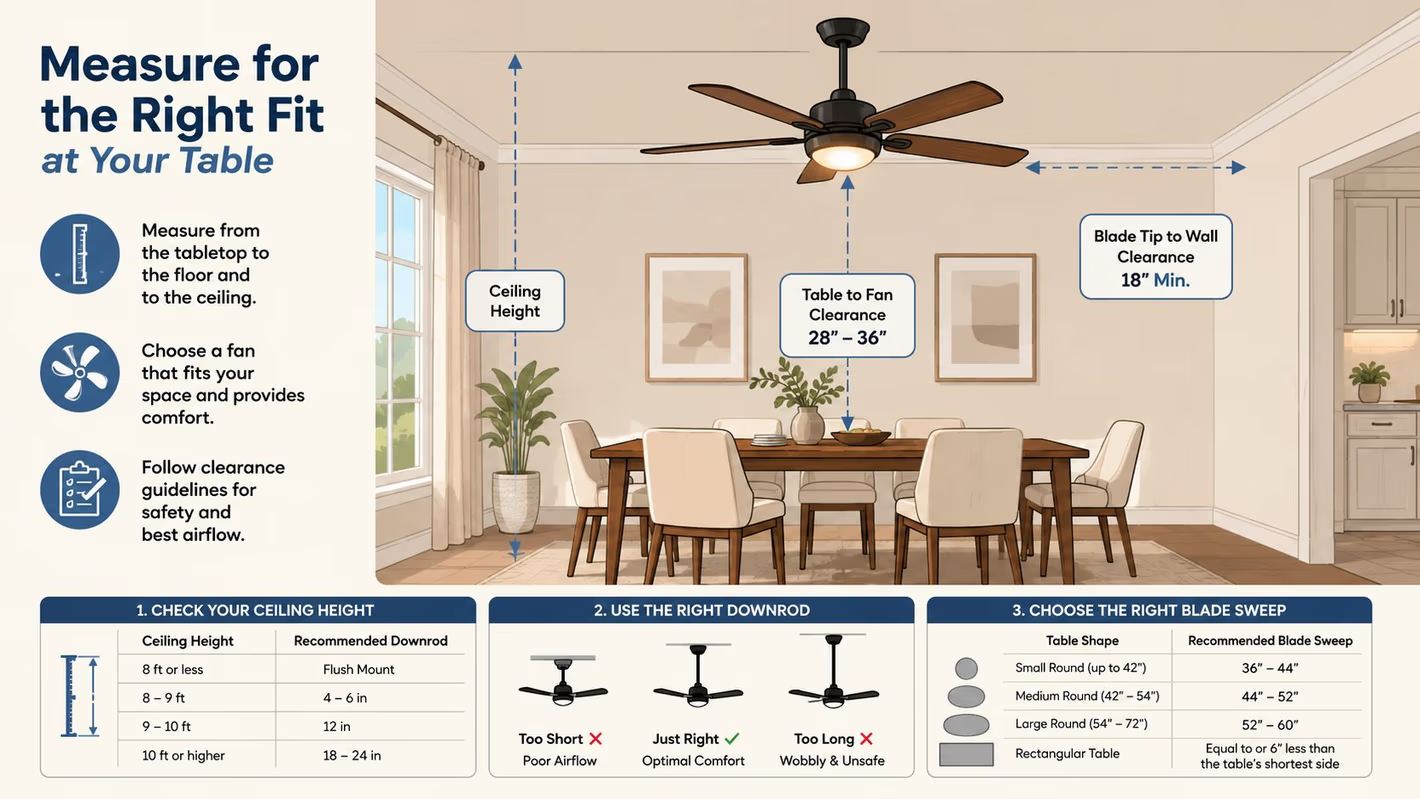
A chair can match the table and still fit the wrong diner. Measure the table first, then measure the person who will sit there most often. A standard seat is about 18 inches high, and standard-height dining chairs usually measure 18 to 20 inches from floor to seat. They typically suit tables around 28 to 30 inches high, leaving about 10 to 12 inches of clearance for the legs (The Inside's dining-chair height guide; Hernest's size guidance).
Use this measurement sequence
Measure tabletop height. Measure from the floor to the tabletop. Then measure beneath the top, including the apron if the table has one. The lowest obstruction determines usable clearance, not the tabletop alone.
Set the seat height. Keep the seat roughly 10 to 12 inches below the tabletop. For a standard 28 to 30 inch table, that usually means a seat around 17 to 19 inches (Lumens' seating-height guide). A chair just 2 inches too high can make longer meals uncomfortable by reducing legroom and lifting the knees.
Measure popliteal height. Sit with your feet flat and measure from the floor to the back of the knee. Choose a seat about 1 to 1.5 inches lower than that measurement, then confirm roughly 9 to 12 inches of clearance beneath the table (ergonomic seating research). This is the check that catches the person who cannot comfortably use the usual 18-inch chair.
Check seat depth. Dining-chair depth commonly falls around 15 to 18 inches, but the diner's proportions decide the better number (Edward Martin's dining-chair dimensions guide). Sit fully back. If the seat edge presses behind the knees or the backrest stays out of reach, choose a shallower seat. Taller diners may need more depth.
Check width and spacing. Everyday chairs commonly measure 16 to 22 inches wide. Allow about 24 to 26 inches of eating space per person, plus 6 inches between chairs, or roughly 30 to 32 inches per diner. Measure armchairs separately, since their arms can take more room than the seat itself.
Use this dining table height guide to connect tabletop dimensions with chair selection. If the dining area shares space with an island or peninsula, the countertop overhang guide helps you judge legroom at the adjoining surface.
Reject a chair that creates pressure behind the knees or prevents back contact. A riser can help a low seat, while a shorter table or different chair may be required when the seat is too tall. Custom seat heights suit unusual proportions, but body fit should decide the purchase.
Materials, Frames, and Finishes Worth Choosing
Material selection should follow household behavior. A family with young children needs a chair that tolerates spills and constant movement. A formal dining room may justify delicate upholstery, but only if the household accepts more careful maintenance.
Solid hardwood frames, including maple, oak, and beech, provide a sturdy foundation and generally outlast softwoods and MDF. They also weigh more, which matters if the dining area gets rearranged often. Metal frames handle spills well and suit active households, but they can feel colder and need proper floor glides to avoid scratches.
Choose the upholstery for the routine
Tight-weave performance fabric is the practical daily-use choice. Leather develops character over time, but it can scuff. Bouclé and linen bring softness and texture, yet they demand more caution around family meals and messy projects.
The finish deserves equal attention. A durable catalyzed varnish is a stronger choice at heavily handled joints than a more delicate lacquer. Painted chairs often show chips first at corners and edges, so inspect those areas before buying.
| Material | Best For | Weak Spot |
|---|---|---|
| Solid hardwood | Long-term daily use and households wanting repairable structure | Heavier and often more expensive |
| Metal | Active homes, frequent spills, and modern interiors | Can feel cold and scratch floors without glides |
| Performance fabric | Everyday meals, children, and easier spot care | Still needs prompt spill treatment |
| Leather | Buyers who want a surface that develops character | Scuffs and scratches remain visible |
| Bouclé or linen | Low-mess homes seeking texture | Staining and wear require more attention |
For a closer look at cleaning, durability, and fabric construction, the upholstery materials guide gives shoppers useful vocabulary before they compare samples. The showroom also carries recognized furniture lines such as La-Z-Boy, Flexsteel, Ashley, and Beautyrest, alongside distinctive Unique Finds made with reclaimed wood, teak, and other character-rich materials.
Testing Comfort the Way We Do in Our Showroom
A dining chair deserves a real audit, not a quick perch. At the 30,000-square-foot showroom in Grants Pass, shoppers can test comfort at full scale and compare several silhouettes in one visit. The goal is to recreate ordinary use, not to admire the chair from a distance.
Follow the sit, lean, twist, and stand test
Sit normally. Keep both feet flat on the floor and aim for knees near a natural right angle. Check that the seat front doesn't press into the back of the knees.
Stay seated for several minutes. After the first comfortable impression fades, notice whether the cushion creates pressure or whether the back keeps the pelvis supported.
Lean back. The lumbar curve should support the lower back without pushing the shoulders forward. A backrest that feels aggressive in the showroom won't become gentler at home.
Twist gently left and right. Frame movement should feel controlled. Creaking, shifting, or obvious flexing can signal weak joinery or loose connections.
Push down on the arms. Armchairs should remain stable when the sitter uses the arms to reposition or rise. Any leg wobble is a hard pass.
Stand without using the table. This matters for older adults and anyone who gets up often during a meal. A low or poorly angled seat can make standing unnecessarily difficult.
Inspect underneath. Look for orderly staples, secure webbing, and solid corner blocks. These details reveal construction quality better than a styled showroom display.

A chair should sit flat without rocking or swaying. Load stability is a worthwhile screening step because many engineered dining chairs are designed to exceed 250 to 300 pounds per seat, while wobble and weak joinery remain warning signs regardless of the stated capacity (Edward Martin's buying guide).
Shoppers who want a calmer, more informed purchase can review the furniture buying journey before visiting. The useful question isn't whether a chair feels impressive for a moment. It's whether the chair still feels supportive after repeated sitting, standing, and reaching.
Matching, Mixing, and Making Them Your Own
Matching chairs create order. Mixing chairs creates personality. Neither approach is automatically better, but the room should make the decision clear.
A matching set works well with a substantial walnut or oak table, a formal dining room, or an interior that already has one strong designer look. It also simplifies replacement because every chair shares the same profile, finish, and upholstery.
Mixed seating makes more sense around an eclectic or farmhouse table, in a home with collected pieces, or when only two chairs need replacing. The safest rule is to hold one element constant and vary the others. Keep the seat heights within a half-inch across the table, use a consistent finish such as black, walnut, or natural oak, and let the shape or upholstery change.
| Factor | Match the Set | Mix the Styles |
|---|---|---|
| Overall impression | Formal and predictable | Personal and layered |
| Best setting | Coordinated rooms and substantial wood tables | Eclectic rooms and collected interiors |
| Replacement strategy | Simple visual continuity | Useful when only some chairs need replacing |
| Main risk | Can feel overly expected | Can look disorganized without a constant |
| Recommended limit | One chair style | Two chair styles per table |
Three different chair styles usually read as chaotic unless the room has a very deliberate design scheme. For a table longer than 84 inches, armchairs at the heads with side chairs along the sides establish hierarchy without requiring a second complete set.
The guide to mixing furniture styles can help refine the combination. In the showroom, place swatches and finish samples beside the table's wood tone rather than judging each chair alone. The strongest mix looks intentional from every seat.
Comfort Versus Style and How to Budget Honestly
Style photographs well. Comfort survives Tuesday-night pasta, family board games, and a long birthday dinner. A chair that cuts circulation behind the knee or leaves the back unsupported will be remembered for the wrong reason, no matter how attractive it looked in the room.
A sound budget treats chairs as the most frequently used part of the dining set. Four to six chairs can cost more than a basic table because each chair carries its own frame, cushion, upholstery, hardware, and finishing work.
Spend on the body, save on the legs
The strongest buying priority is the part that touches the diner. Put money into:
- Seat fit: Correct height and depth prevent pressure and poor posture.
- Cushion quality: A supportive cushion matters more than decorative stitching.
- Frame stability: A chair that rocks will become irritating quickly.
- Cleanable upholstery: Daily-use fabric should match the household's spill tolerance.
- Arm proportions: Armchairs need enough width and clearance to remain practical.
A plain hardwood leg can look excellent when the seat and back are well designed. Decorative carving cannot rescue a seat that's too deep, too high, or too narrow.
There's also a long design history behind today's choices. Chair use in ancient Egypt dates back more than 4,000 years, while 1927 marked Ludwig Mies van der Rohe's MR side chair and 1969 brought Frank Gehry's cardboard Wiggle chair, milestones that helped expand dining seating beyond traditional wood forms (iconic dining chairs history). The lesson is useful: materials and shapes change, but the body still needs support.
Financing can make a better-fitting chair easier to manage without choosing solely by the lowest upfront cost. Gates Easy Pay includes $0 down, 6-month interest-free options, and no-credit-needed financing options, subject to applicable terms. That flexibility matters when the right chair costs more because it provides better construction, upholstery, or individualized support.
Ordering, Delivery, and Caring for the Chairs You Pick
The final purchase should confirm every detail that affected the decision in the showroom. Verify the exact fabric grade, leg finish, seat construction, arm height, and whether the seat can be removed for future reupholstery. Product pages that list seat height, seat depth, fabric grade, and cushioning details make comparison easier, but the physical sample still matters.
Before placing an order, check:
- The finish sample: Wood tones can appear different under showroom, daylight, and home lighting.
- The cushion specification: Daily-use seating needs dependable support, not just a soft first impression.
- The delivery path: Measure doorways, stair turns, and tight hallways before the truck arrives.
- The assembly plan: Confirm whether professional assembly happens in the home.
- The inspection policy: Ask how damage, incorrect scale, or a finish mismatch gets handled.
Local ordering has practical advantages. A team serving Grants Pass and nearby communities in Medford, Central Point, Ashland, and the broader Rogue Valley can discuss room scale in person, coordinate delivery, and help resolve fit concerns without making the homeowner manage every step alone.
Protect the chair and the floor
Use a weekly upholstery-brush vacuuming routine to clear crumbs from seams and crevices. Rotate removable seats every three months to distribute wear, tighten frame bolts annually with a modest quarter-turn when needed, and blot spills rather than rubbing them. Prompt care helps prevent staining on performance fabrics and protects finished wood from moisture marks.
Floor protection deserves attention, especially with metal or hard-wood legs. The Flacks Flooring hardwood protection advice offers practical guidance on glides and preventing furniture from marking a finished floor.
Professional service should include more than leaving boxes at the door. Gates Home Furnishings provides professional delivery and assembly so the crew can handle setup properly. That white-glove approach includes professional assembly and mattress haul-away, rather than just dropping cartons inside.
Gates Home Furnishings has served Grants Pass and Southern Oregon since 1946, founded by George Gates Jr. on the promise of “Service and Value.” Visit the Gates Home Furnishings showroom to test dining chairs in person, explore Unique Finds in reclaimed wood and teak, and ask about Gates Easy Pay, including $0 down, 6-month interest-free, and no-credit-needed options.