Chair & Ottoman: A Guide for Southern Oregon


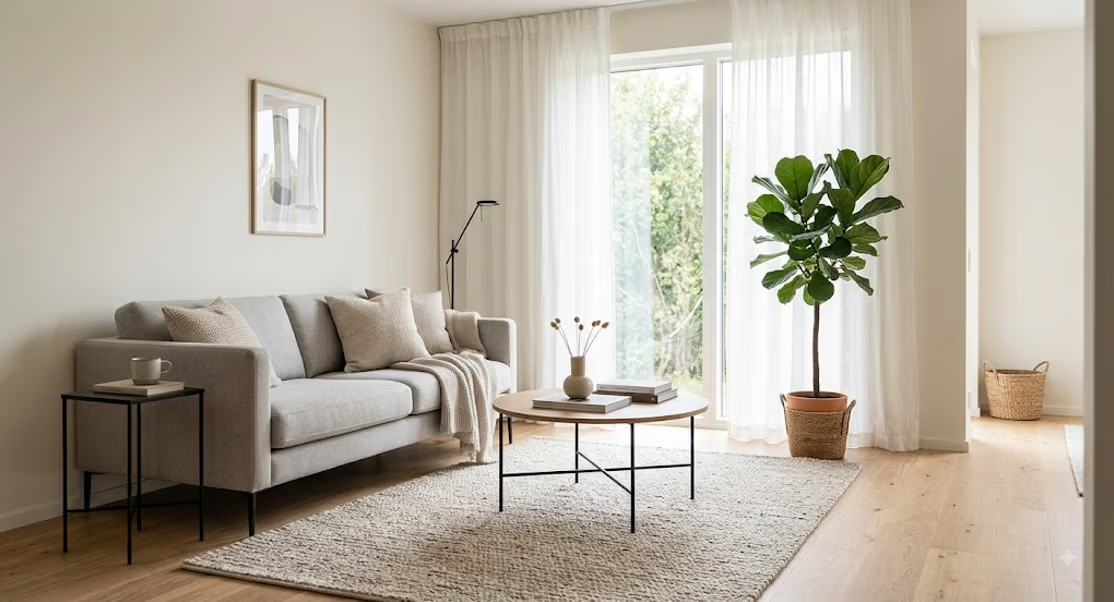
A reader in Grants Pass may be sitting on a sofa that looks perfectly fine but never quite feels right. The back is too upright for an evening book, the feet have nowhere to go, and the coffee table is doing work it was never designed to do. A well-fitted chair and ottoman can give that corner a clearer purpose, whether it becomes a reading spot beside the fireplace, a quiet place in a bedroom, or the most comfortable seat in the living room.
The right combination isn't chosen by appearance alone. Seat height, cushion compression, arm support, ottoman placement, upholstery, room clearance, and the user's ability to stand all affect whether the furniture remains useful after the novelty wears off. For homeowners and renters across Grants Pass, Medford, Central Point, Ashland, and the broader Rogue Valley, a personal showroom trial can reveal more than a product photograph ever will.
Why a Chair and Ottoman Set Belongs in Your Home
On a cool evening in a Grants Pass home, a chair-and-ottoman set can change the way a room gets used. A parent may settle into the chair with a book while someone else watches television nearby. A guest may use it as extra seating, then move the ottoman aside to open a walkway. By the fireplace, the same pairing can become a private retreat without requiring an entire new seating arrangement.
Comfort with a smaller footprint
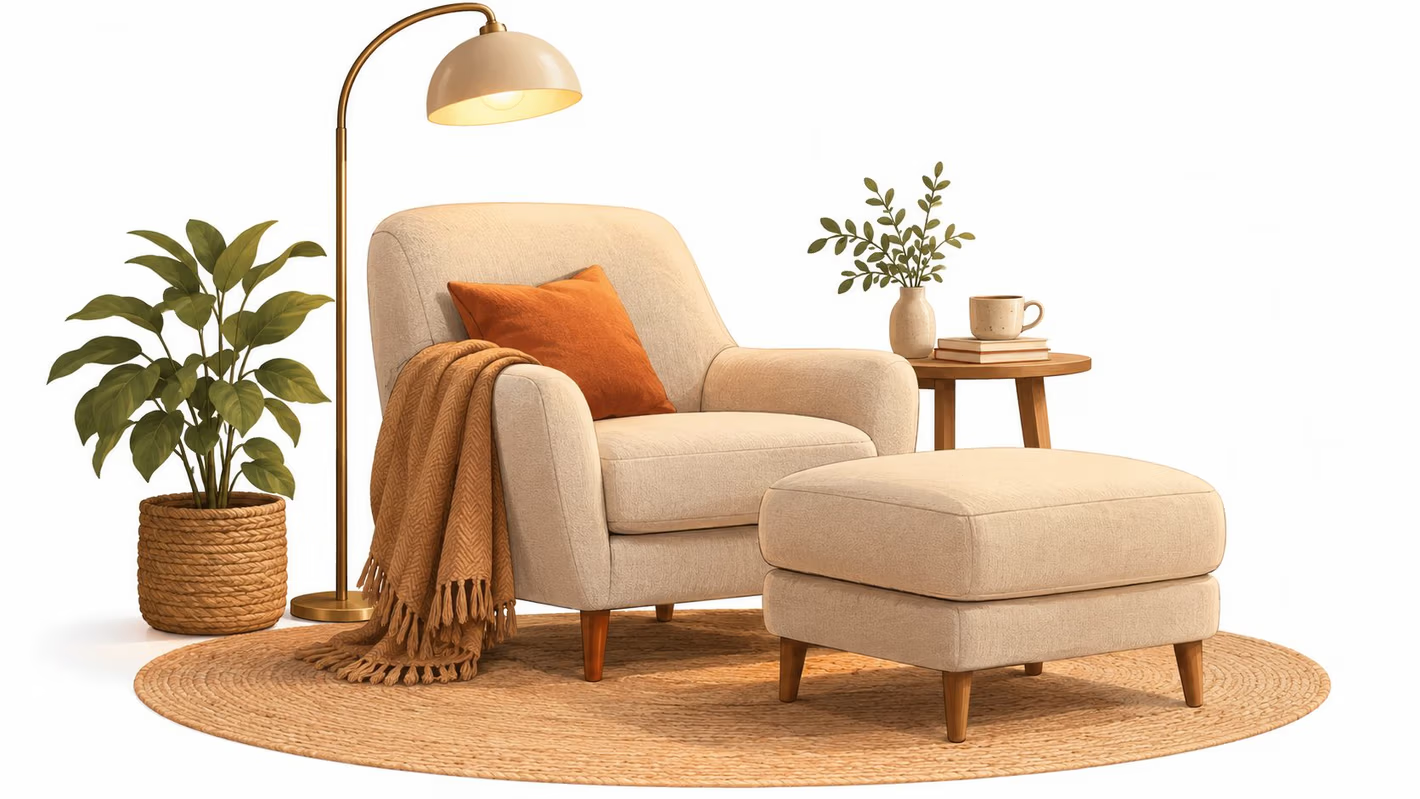
A separate ottoman gives the homeowner more control than a permanently attached footrest. It can face the chair for full leg support, shift toward a sofa when extra seating is needed, or move out of the way when the room needs a wider passage. That flexibility works particularly well in smaller Southern Oregon living rooms, apartments, bedrooms, and multipurpose dens.
Chairs have also carried meaning beyond simple utility. They were used for approximately 5,000 years, but for much of ancient and medieval history, chairs represented authority, rank, and dignity rather than everyday seating. Ordinary people more commonly used benches, chests, stools, or the floor, and chairs only became more widely used beyond elite settings in Western Europe from the 13th century onward. This history of the chair helps explain why a chair can function as both a practical object and a visible expression of personal taste.
A piece that can move with the household
A chair and ottoman set doesn't have to be locked into one decorating plan. A homeowner can use an accent chair in the living room today, move it to a bedroom reading corner later, or separate the ottoman for use beside another seat. A coordinated pair feels intentional, while a contrasting pair can create a collected look.
For additional ideas about using a single chair effectively, the accent chair arrangement guide offers practical direction. The main principle remains simple: the chair should serve a real habit in the home, not occupy space merely because an empty corner seems to need filling.
Exploring Different Types of Chair and Ottoman Sets
The useful question isn't which chair-and-ottoman style looks most attractive in a photograph. It's what the set needs to do every day. A recliner supports extended relaxation, an accent chair adds flexible seating, and a lounge chair may prioritize posture and visual lightness over deep cushioning.
Match the set to the activity
A recliner with an ottoman suits someone who wants adjustable relaxation without committing to a large sectional. Manual mechanisms keep operation straightforward, while power options can help users fine-tune the back and leg position. A separate ottoman creates a different experience from an attached footrest because the user can reposition it, but the space around the chair must allow that movement.
An accent chair paired with a small ottoman works well when the room needs occasional seating and a touch of personality. It may be upholstered in a distinctive fabric, framed in wood, or designed with a narrower profile. The trade-off is that a highly sculptural chair may offer less shoulder, lumbar, or arm support than a deeper lounge model.
A vanity chair or bedroom chair often needs to slide easily beneath a surface or sit neatly beside a window. These chairs tend to make sense for short periods of sitting, while a reading chair should be judged more carefully for seat depth, back angle, and arm height.
Consider how the ottoman changes the room
An ottoman can be a footrest, extra seat, surface for a tray, or concealed storage. Storage ottomans accounted for 28.5% of the estimated 2025 worldwide ottoman market, while poufs and other flexible styles represented 25.1%. The referenced ottoman market overview connects those categories with the broader demand for furniture that performs more than one job.
That versatility has limits. A large cocktail ottoman may be useful in front of a sofa but too broad for a compact chair corner. A lightweight pouf can move easily, yet it may not provide the stable, raised support needed for someone seeking sustained leg comfort. A storage model adds organization, but its firmer top may feel less relaxed than a dedicated footrest.
A practical showroom shortcut
Customers comparing categories can start with three questions:
- Primary use: Will the seat support reading, television, conversation, napping, or occasional guests?
- Movement needs: Must the ottoman move frequently, or should it stay planted?
- Support needs: Are arms, lumbar support, power adjustment, or lift assistance important?
A recliner with ottoman collection can help shoppers compare separate ottomans, manual recliners, power recliners, and lift-chair configurations before testing specific pieces.
Sizing and Ergonomics Getting the Fit Right
Soft cushions can make a chair feel inviting for the first minute. Fit determines whether it remains comfortable through a full conversation, reading session, or television program. A chair should be tested with the intended user seated fully back, not judged by standing beside it or pressing the cushion with one hand.
Step 1 Measure the seated body
Seat height should be compared with the user's popliteal height, the distance from the floor to the underside of the knee when seated. A practical target is approximately 88–95% of popliteal height, which helps the feet stay supported without creating excessive pressure beneath the thighs. The relevant measurement is the compressed cushion height, not the unoccupied height of the frame. The seating-fit guidance explains why this distinction matters.
Seat depth should generally equal 80–95% of buttock-to-popliteal length. A deeper seat may suit a taller user, but it can prevent a shorter user from reaching the backrest. A shallow seat can improve access for a shorter user, although it may not support enough of a taller user's thighs.
Seat width should be approximately 10–30% greater than hip width. That provides room for ordinary clothing and posture changes without making the chair unnecessarily oversized.
Step 2 Check the seated position
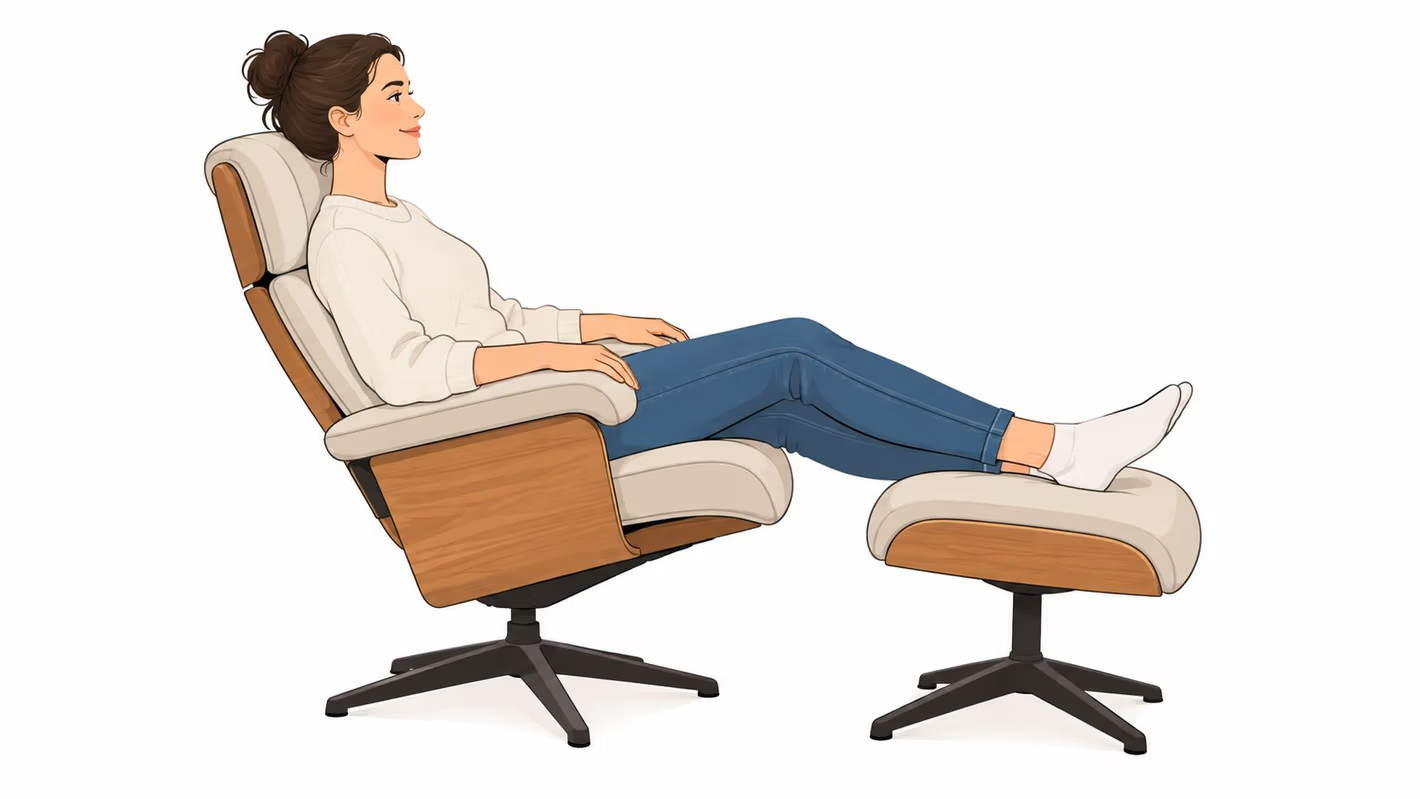
With both feet flat on the floor, the user should be able to sit back without sliding forward. The lower back should meet the backrest, the knees should remain comfortable, and the arms should rest without the shoulders lifting. A chair that is too tall can leave the feet unsupported, while one that is too low may make standing harder and increase knee and hip flexion.
Practical rule: A showroom trial should include sitting fully back, shifting naturally, placing both feet on the floor, and standing without pulling on the chair.
Step 3 Test the ottoman as part of the system
A typical footrest is often placed around 16–20 inches high, but that range is only a starting point because leg length and cushion compression vary. The ottoman should be close enough to reach without leaning forward or stretching. One cited guideline recommends keeping it within 18 inches of the primary seat. This furniture ergonomics guidance also cautions that excessive elevation can flatten the lower-back curve and increase disc pressure by as much as 40% compared with an upright posture with proper lumbar support.
The practical test is more useful than a dimension alone:
- Sit fully back in the chair.
- Place both feet on the ottoman.
- Check that the knees aren't forced above the hips.
- Confirm that the pelvis hasn't slid forward.
- Adjust the distance until the lower back remains supported.
The furniture measuring guide can help with room planning, but body fit still deserves an in-person test at the 30,000-square-foot Grants Pass showroom.
Choosing the Right Upholstery and Fill
Upholstery affects far more than a chair's color. It determines how the surface feels, how easily marks show, how the piece ages, and whether repairs or reupholstering remain practical. A home with pets, children, frequent guests, or strong sunlight may need a different covering than a quiet reading corner used by one person. Choose for daily use first, then match the look to the room.
Leather and fabric make different promises
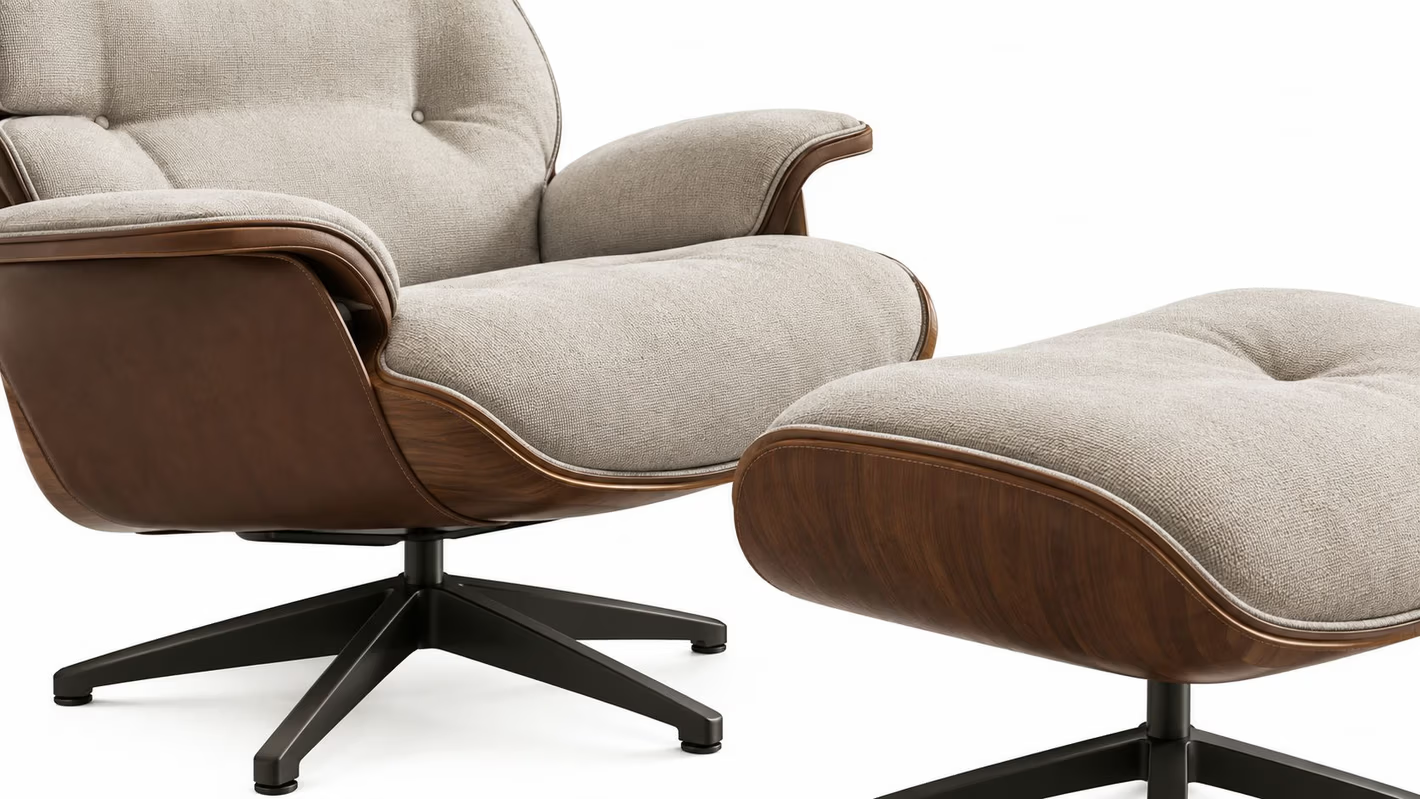
Leather has a structured appearance and can be wiped clean more easily than many textiles. Over time, it may develop visible character, which some owners appreciate. It can also show scratches, so ask about care, conditioning, and placement near heat or direct sunlight before choosing it.
Performance-oriented fabric usually offers a softer, warmer touch and more options in patterns and colors. It can suit an active family room, but the specific care instructions matter more than a broad material label. Removable covers can make cleaning easier and may simplify future replacement, provided the fabric and construction support that option.
Woven textures and patterned upholstery can hide everyday visual variation better than very pale, flat surfaces. They add depth and interest, but pronounced texture may require more careful vacuuming. Consider whether that maintenance fits your household before choosing fabric by appearance alone.
Look inside the cushion and frame
A soft seat is not automatically a supportive seat. Foam, fiber, spring systems, and layered fills produce different balances of initial plushness, resilience, and shape retention. Sit long enough to notice whether the cushion supports your posture, lets you stand without excessive effort, or leaves you searching for support. The right fill depends on whether you prefer a firmer perch, a sink-in feel, or a middle ground.
Frame construction deserves the same attention. Solid wood, engineered components, joinery, and the ability to tighten or replace parts all influence service life. A material label alone cannot tell you whether a chair will remain useful. If the upholstery cannot be replaced or the frame cannot be repaired, a supposedly sustainable choice may have a shorter practical life. Durability and repairability should be part of the buying decision.
Buy for the whole ownership period
The store's Unique Finds, including reclaimed wood, teak, and one-of-a-kind statement pieces, can add character that coordinated production furniture may not. Inspect each piece for stable joinery, finish-care requirements, replaceable components, and maintenance you can realistically handle.
The curated showroom selection at Gates Home Furnishings lets shoppers compare construction, comfort, and intended use across different build styles in one place. Ask what happens if a cushion softens, a seam needs attention, or a cover eventually needs replacing. Those answers reveal more about long-term value than appearance alone.
Use this upholstery materials guide to compare covering options, then choose based on your household's habits rather than a passing trend.
Styling Your Chair and Ottoman for Any Room
A chair and ottoman should look connected to the room without disappearing into it. Matching upholstery creates a calm, designed appearance. A related fabric with a contrasting frame or a nearby accent color can feel more collected and gives the room greater visual movement.
In the living room
Start with the room's traffic pattern. The chair shouldn't block a doorway, create a narrow path around the coffee table, or force the ottoman into the sofa's walking space. Angle the chair toward the conversation area when social use matters. Point it toward a window, lamp, or fireplace when the primary purpose is reading or quiet relaxation.
Color should relate to something already present, such as a rug, curtain, artwork, wood tone, or throw pillow. That doesn't require an exact match. A warm neutral chair can soften a room with darker wood, while a richer color can anchor a mostly pale space.
In the bedroom or den
A smaller accent chair can turn an unused corner into a useful landing place for reading or getting dressed. The ottoman may remain close for comfort, or it may serve as a temporary surface for a folded blanket. In a den, a recliner and ottoman can create a personal retreat without competing with the room's primary sofa.
Texture helps a room feel comfortable, but too many competing textures can make the arrangement look busy. A useful guide to ways to make a home comfortable offers complementary ideas involving atmosphere and finishing details.
Keep the arrangement honest
The most successful styling choices support how people live. A decorative ottoman that is always covered with objects isn't functioning as a footrest. A chair placed too far from its ottoman may look balanced from across the room but feel awkward in use.
For additional room-planning ideas, the living room styling guide can help connect seating scale, lighting, rugs, and accent pieces into one practical arrangement.
Accessibility and Comfort for Everyone
Comfort needs to include the act of sitting down and standing up. For older adults, people with arthritis, and anyone managing limited mobility, a chair that feels soft may still be difficult to use if the seat is too low, the arms are too weak for push-off support, or the mechanism demands awkward movement.
Support should be tested, not assumed
A supportive chair should let the user place both feet securely, reach the armrests naturally, and stand without pulling on a nearby table. Low seats can make standing more difficult for people with knee problems, while deeper seats often suit taller users and shallower seats can accommodate shorter users more effectively.
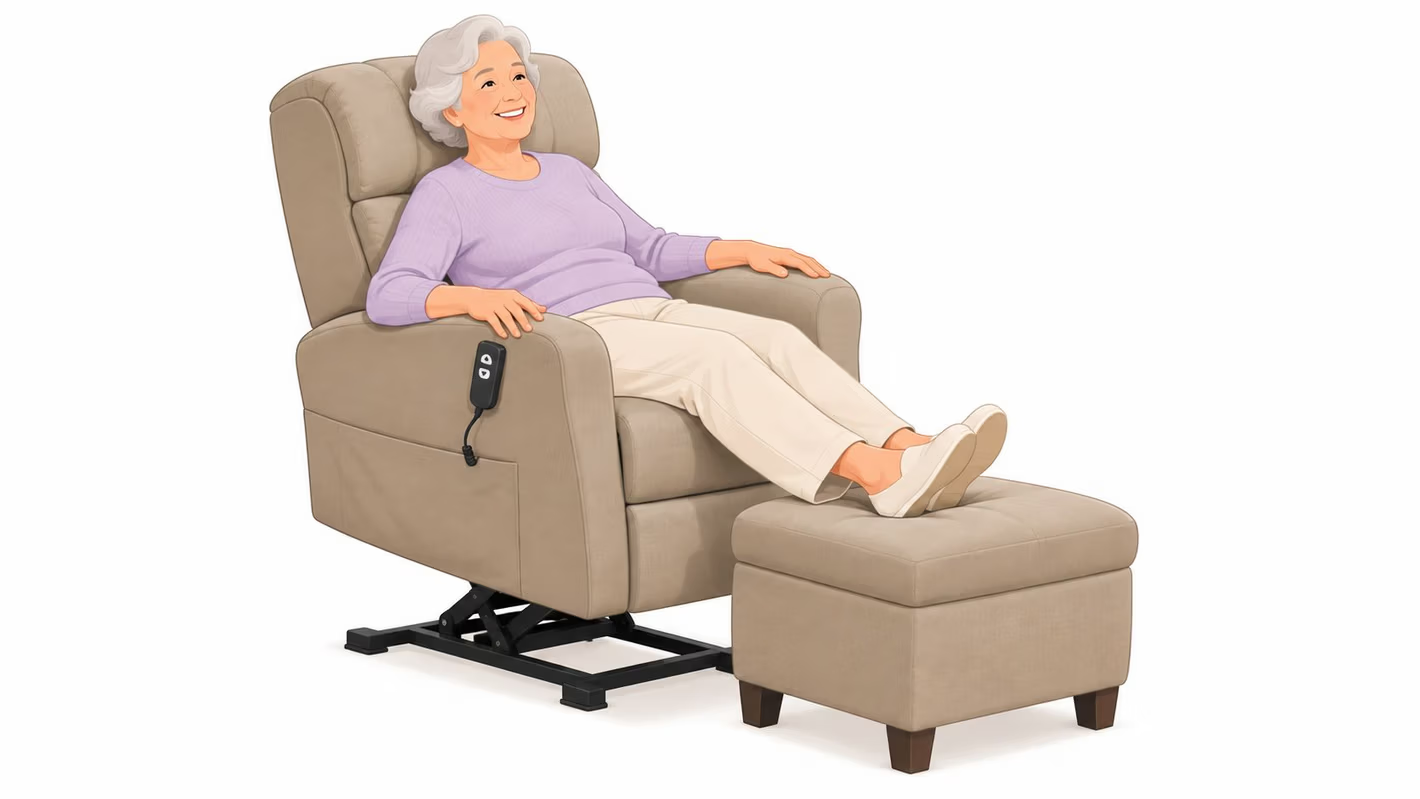
Lift chairs add powered assistance during the transition from sitting to standing. Recliners with adjustable back and leg positions can reduce the need to find a single fixed posture. A separate ottoman may improve leg support, but it can also become an obstacle if it sits in the transfer path.
Test the whole movement
The Grants Pass showroom gives seniors and comfort-focused shoppers an opportunity to evaluate the complete sequence:
- Approach: Can the user reach the chair without stepping around the ottoman?
- Sit: Does the seat height allow a controlled descent?
- Relax: Do the back, arms, and leg support remain comfortable?
- Stand: Can the user rise without gripping unstable furniture?
A household should bring the person who will use the chair most often and allow enough time for repeated trials. Comfort is personal, and a dimension that works for one family member may not work for another.
Shopping at Gates Home Furnishings in Grants Pass
A chair and ottoman set is easier to judge when both pieces are in front of you. At a local showroom, sit fully back, check how the cushion supports your weight, and move the ottoman until your legs rest comfortably. You can also see whether the chair's scale suits the room instead of relying on screen images and estimated measurements.
Gates Home Furnishings has served Grants Pass, Medford, and the Rogue Valley since 1946. George Gates Jr., a WWII veteran, started the business with a promise of “Service and Value.” That principle still supports practical guidance, including help with fit, construction, and long-term use.
Service beyond the sales floor
The 30,000-square-foot Grants Pass showroom includes living room seating, recliners, bedroom and dining furniture, mattresses, and distinctive Unique Finds made with reclaimed wood and teak. Shoppers can compare everyday seating with one-of-a-kind pieces, along with a curated range of living room, recliner, and bedroom collections selected for comfort, construction, and long-term value.
Gates Easy Pay is advertised with $0 down, six equal payments, and a six-month interest-free promotional option when the balance is paid in full under the stated agreement. No-credit-needed and lease-to-own choices are also available. Before signing, confirm the total paid, payment schedule, promotional deadline, late-payment consequences, and whether delivery or protection-plan costs are included.
White-glove delivery includes bringing furniture into the intended room, completing required assembly, checking stability, and testing moving mechanisms when applicable. Professional setup and mattress haul-away are also included. Measure exterior doors, interior openings, hallways, stairs, and tight turns before delivery, then clear rugs, lamps, baskets, and small tables from the route.
Gates Home Furnishings offers chair-and-ottoman seating, recliners, lift chairs, Unique Finds, Gates Easy Pay financing, and white-glove delivery from its Grants Pass location. Visit the Gates Home Furnishings showroom to test the fit in person, or browse the collection online before choosing a set for a Southern Oregon home.