Teak Dining Table and Chairs: Buyer’s Guide 2026


The search often starts the same way. A family in Grants Pass or Medford has a table that no longer fits the way the household lives now. Maybe the kids are bigger, maybe holidays feel crowded, or maybe the current set just doesn't have the warmth they want when everyone gathers for dinner. They want something solid, attractive, and lasting, but they also want to avoid buying the wrong wood for daily indoor life.
That's where teak enters the conversation. Teak has a reputation for strength and beauty, but many shoppers still have fair questions. Is it too formal for a family home? Does it need a lot of maintenance? Will it fit a smaller dining nook as well as an open-plan room? Those are the questions local furniture shoppers tend to ask when they're comparing dining options for homes across the Rogue Valley.
Table of Contents
- Your Guide to Choosing a Timeless Teak Dining Set
- What Makes Teak a Premier Furniture Wood
- The Pros and Cons of a Teak Dining Set
- Evaluating Quality in Teak Tables and Chairs
- Finding the Perfect Fit for Your Rogue Valley Home
- Caring for Your Indoor Teak Investment
- Bring Your Teak Dining Set Home with Gates
Your Guide to Choosing a Timeless Teak Dining Set
A dining table usually becomes more than a place to eat. It holds school projects, birthday cakes, late coffee, and the kind of ordinary evenings that turn into family memory. That's why shoppers looking at teak dining table and chairs aren't only picking a style. They're choosing the piece that will sit at the center of daily home life.
In Southern Oregon, that choice often has to balance a few realities at once. A family in a newer Medford home may need a table that anchors a larger open dining area. A couple in an older Grants Pass bungalow may need something with a smaller footprint but enough substance to feel permanent. Renters often want durability without giving up good design. Teak appeals to all three because it feels grounded, practical, and classic.
Teak also isn't a passing look. It has a long design history, and it still reads as relevant because the wood itself has so much visual depth. Grain, color variation, and solid feel all matter when a table is used every single day.
A good dining set should feel right on the busiest Tuesday night, not just during holiday photos.
Since 1946, local shoppers have looked for furniture guidance built on George Gates Jr.’s promise of Service and Value. That same approach helps take the mystery out of teak. A buyer can start by learning what teak is, how quality shows up in the details, and what size and finish make sense for the room. Shoppers who want a broader starting point for layout and shape can also review this dining table selection guide.
What Makes Teak a Premier Furniture Wood
A wood with a long furniture history
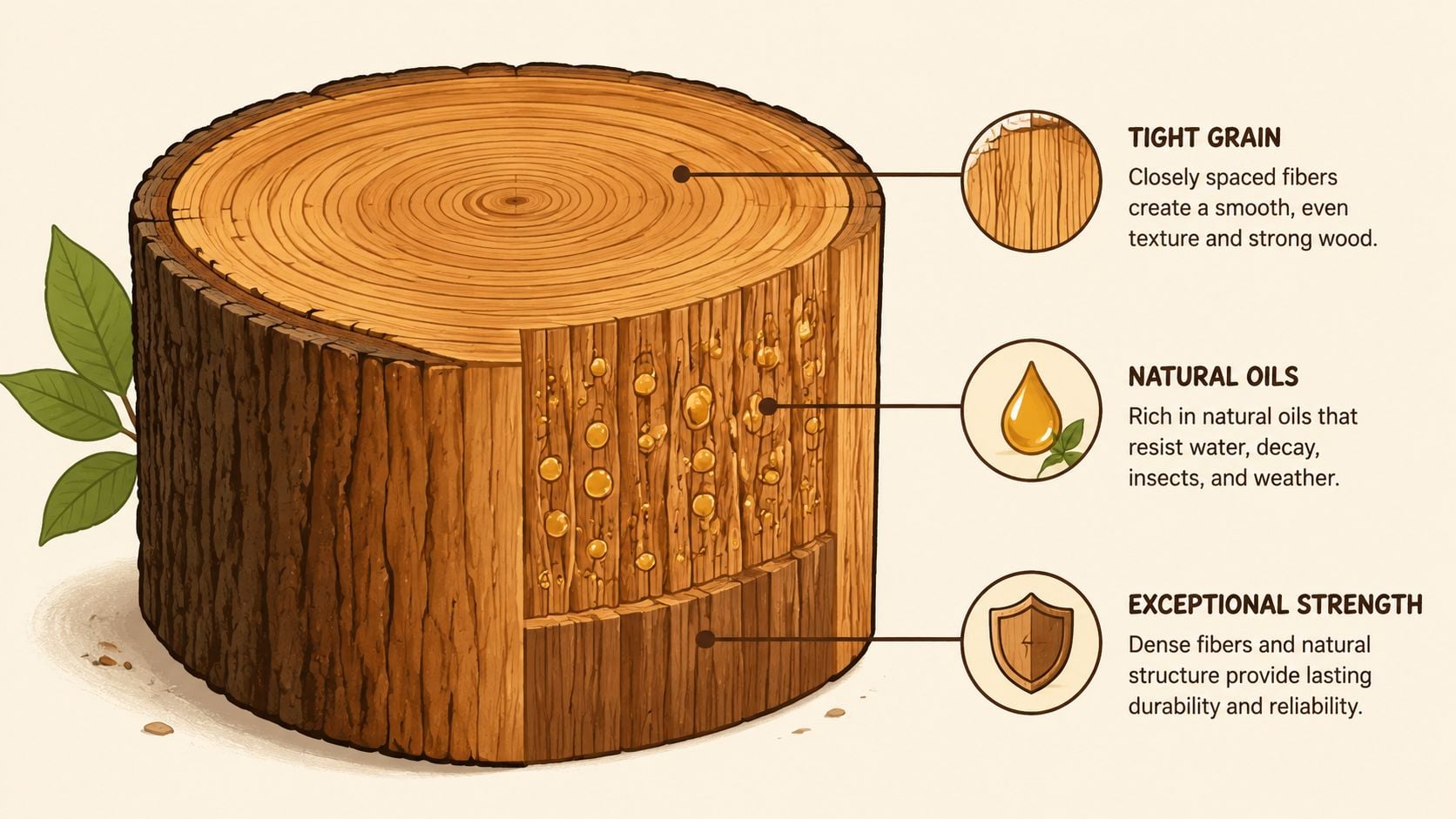
Teak comes from Tectona grandis, a species native to South and Southeast Asia. Historical accounts note that local communities used it for homes, tools, and furniture before it became widely valued in global furniture markets, and mature teak trees can grow up to 200 feet tall according to this history of teak. That physical scale helps explain why teak became such a strong candidate for substantial furniture pieces like dining tables and chair frames.
Later, teak became closely associated with Danish mid-century furniture. That connection still shapes how people see it today. Clean lines, visible grain, and solid construction made teak an easy fit for dining rooms where buyers wanted furniture that felt refined but still lived-in.
For indoor dining furniture, that history matters. It tells shoppers that teak earned its place over time. It wasn't adopted because of a temporary trend. It stayed because it performs and because it looks better with real use than many woods do.
Why teak behaves differently indoors
The technical reason teak stands apart is simple to explain. It contains high natural oil and silica content, which reduces moisture uptake and helps resist rot, fungi, and insect attack, as noted in this teak dining material overview. In everyday terms, teak has some built-in protection that helps it maintain structural stability better than many untreated hardwoods.
That doesn't mean it's invincible. It does mean it tends to stay dependable in homes where indoor conditions change with the seasons. Southern Oregon households know that one room can feel cool in winter and dry in summer. A dining table that stays steady through those swings is a practical advantage.
A useful way to think about teak is this:
- Natural oils: The wood has its own internal defense, instead of relying only on a surface coating.
- Silica content: That contributes to durability and helps explain why teak has a reputation for toughness.
- Dense structure: Tabletops and chair frames feel substantial, which many buyers notice immediately when they test them.
People drawn to reclaimed and statement materials often end up gravitating toward teak for those reasons. It's one of the wood categories that shows why construction and character belong together, especially in rooms shaped by everyday use and collected pieces like these unique home furnishings and decor.
The Pros and Cons of a Teak Dining Set
Why many households choose teak
Teak keeps showing up in dining rooms because it checks several boxes at once. It looks warm without feeling fragile. It has enough visual texture to stand on its own, yet it also pairs well with upholstered chairs, benches, or simpler room finishes.
It's also part of a large and active furniture category. The worldwide teak furniture market was valued at USD 58.9 billion in 2023, and indoor teak furniture is expected to represent 73.4% of the market, reflecting strong consumer demand for durable interior pieces like dining sets, according to this global teak furniture market report. That scale matters because it shows indoor teak furniture isn't some narrow specialty item. Buyers continue to seek it out for everyday home use.
Here's the upside in plain terms:
| Consideration | What buyers usually like |
|---|---|
| Durability | It feels solid and built for long-term use |
| Appearance | The grain gives the room warmth and depth |
| Design range | It works in modern, rustic, classic, and mixed interiors |
| Long-term value | Many households see it as a buy-once, keep-it piece |
What to think through before buying
Teak does have tradeoffs, and honest advice matters here.
The first is cost. Teak usually asks for a higher upfront investment than more common dining woods. For some households, that's fine. For others, it needs to be planned carefully and compared against how long they expect to keep the set.
The second is weight. A real teak table often isn't something a person wants to drag around the room every weekend. That matters if the dining area doubles as a project space or if a move is coming soon.
The third is finish preference. Some buyers love teak's warm honey-brown look and want to preserve it. Others are comfortable letting the appearance change with age. Neither choice is wrong, but the buyer should know which look they want before choosing a finish plan.
Practical rule: Teak is easiest to love when the household treats it like a long-term furniture decision, not a temporary stopgap.
Those concerns are manageable. Professional delivery helps with the weight. Financing can make the investment easier to spread out. Clear finish guidance prevents regret later. That's why buyers do best when they compare teak not only by price tag, but by how it will function over years of meals, guests, and daily family use.
Evaluating Quality in Teak Tables and Chairs
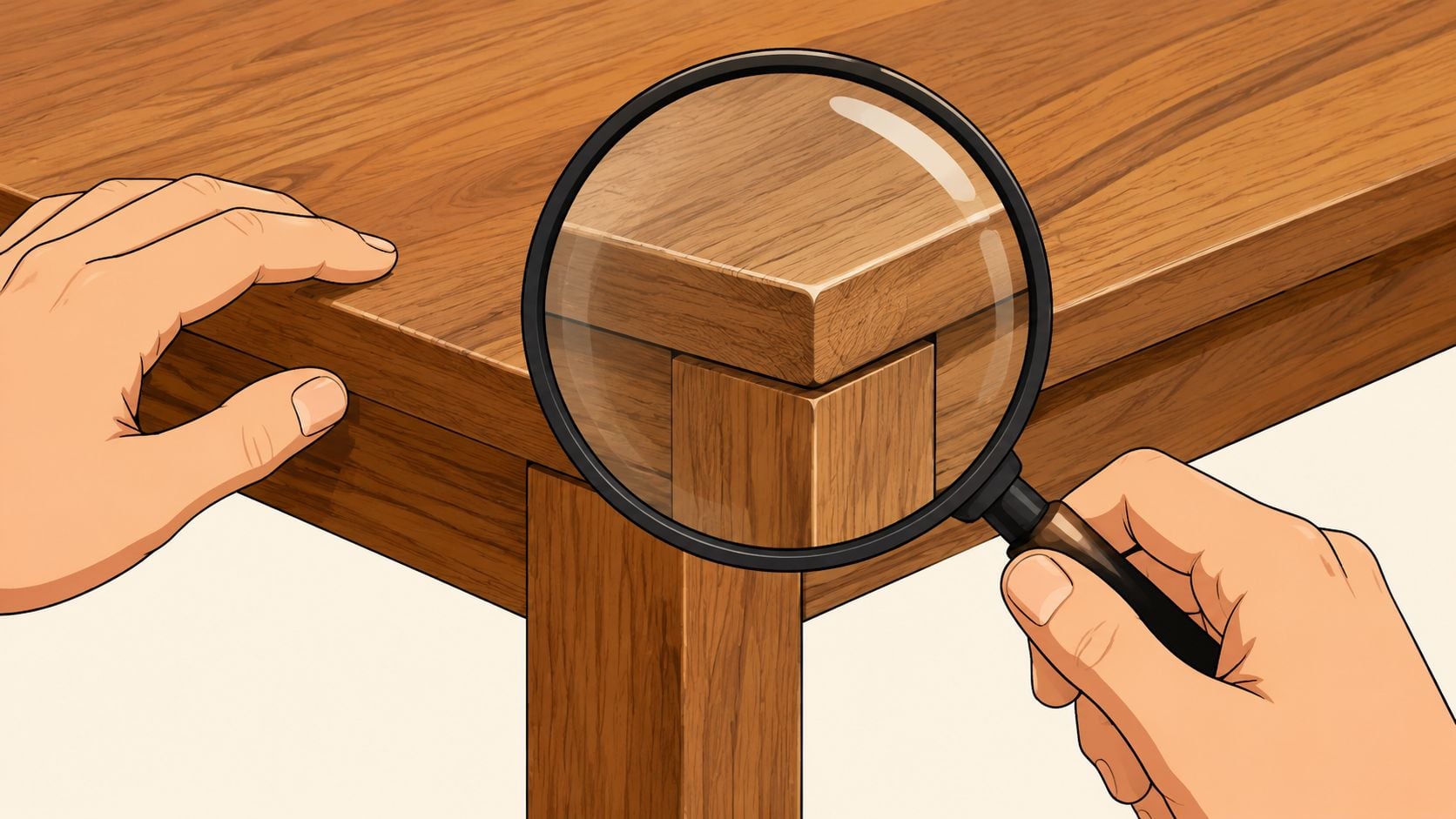
A lot of teak furniture looks good from across the room. Distinct differences appear when a shopper gets close. That's where quality starts to separate itself from a piece that only photographs well.
What to inspect up close
The first check is the tabletop itself. A quality teak top should feel consistent, substantial, and well finished. Buyers should run a hand along the edge and across the surface. A good hand-sanded finish feels smooth without feeling plastic-coated.
Joinery matters just as much. Chair frames and table bases take daily stress, so the build method counts. Buyers should inspect how rails meet legs, how stable the chair feels when weight shifts, and whether the construction looks deliberate rather than quickly assembled.
A simple showroom checklist helps:
- Look at the grain: Teak with attractive grain variation usually feels more furniture-grade and less commodity-grade.
- Test for wobble: A chair should sit level and feel composed when someone leans back slightly.
- Check the underside: Clean underside construction often tells more truth than the top view.
- Study the edges: Sharp, rough, or uneven edges can signal rushed finishing work.
Many shoppers also hear terms like A, B, and C grade and aren't sure what to do with them. In practical shopping terms, the goal is to focus less on labels alone and more on visible consistency, feel, and structural confidence. Grade language can be helpful, but it shouldn't replace an in-person inspection.
For buyers who want a broader understanding of wood selection and long-term performance, this guide to choosing hardwood furniture is a useful companion.
The sourcing question matters
Quality isn't only about what the table looks like today. It also includes where the teak came from and how clearly that story is told. A key overlooked issue is sustainability, especially the difference between reclaimed teak and certified teak, and many style-focused articles don't explain what buyers should verify when comparing sustainable claims, as noted in this discussion of teak sourcing and sustainability.
That matters because reclaimed teak and certified teak answer different buyer concerns.
- Reclaimed teak: Often chosen for character, variation, and a visible sense of history.
- Certified teak: Often chosen by shoppers who want clearer sourcing documentation.
- Mixed-source teak: Can still be worth considering, but the buyer should ask better questions about origin and consistency.
Buyers don't need a forestry degree. They do need clear answers about sourcing, finish, and build quality.
For many Southern Oregon shoppers, reclaimed teak is especially appealing because it gives a dining room personality without looking overly polished. That's one reason teak often shows up among one-of-a-kind statement pieces and Unique Finds in a large showroom setting. It gives shoppers something they can't mistake for flat-pack furniture.
Finding the Perfect Fit for Your Rogue Valley Home

Start with the room, not the table
The most common sizing mistake happens before anyone ever looks at wood tone or chair style. People measure the table they want instead of the room they have.
That's especially important across the Rogue Valley, where floor plans vary so much. Some Medford and Central Point homes have open dining areas that can handle a larger rectangular table without crowding traffic paths. Many Grants Pass homes and older cottages near established neighborhoods need more careful planning around walls, windows, and pass-through space. Ashland buyers often balance dining needs with rooms that serve more than one purpose.
A practical measuring routine looks like this:
- Measure the full room first. Include wall lengths, door swings, and any nearby walkway.
- Mark the usable dining zone. Rugs, built-ins, and traffic paths often reduce the true footprint.
- Mock up the table shape. Painter's tape on the floor can quickly show whether the table will dominate the room.
- Account for chairs in use. A table that fits on paper can still feel crowded once chairs are pulled out.
For buyers who want help visualizing proportions, this dining table size guide gives a helpful starting point.
Comfort comes from the right pairing
A beautiful table won't save an uncomfortable chair. The pairing has to work together.
For comfort, dining table heights are typically in the 28-30 inch (71-76 cm) range, while chair backrests are roughly 400-450 mm above the seat, according to this teak dining tender specification document. Matching these dimensions helps preserve knee clearance and supports more comfortable posture during longer meals.
That matters more than many buyers expect. If the seat sits too high relative to the table, people lift their shoulders and tire faster. If the backrest offers poor support, they lean forward and stop lingering at the table. A good dining set should support dinner, homework, and long conversations without making the body work for it.
A few shape choices help too:
- Rectangular tables: Usually suit larger gatherings and longer rooms.
- Round tables: Encourage conversation and soften tighter spaces.
- Chairs with open visual lines: Help compact dining areas feel less crowded.
- Fully solid, heavier silhouettes: Often look best in rooms with enough breathing room around them.
In a 30,000 sq. ft. showroom in Grants Pass, shoppers can test these differences instead of guessing from a photo. That matters because chair comfort, elbow space, and visual scale are easier to judge in person than online.
Caring for Your Indoor Teak Investment
Choose the look you want to keep
Indoor teak care confuses people because most online advice talks about patio furniture, not dining furniture used every day inside the home. That gap is real. A major weakness in current advice is indoor teak dining maintenance, especially questions about whether to oil or seal a table, how to handle water rings, and how to care for a high-use family table, as described in this indoor teak maintenance discussion.
For indoor use, the first decision is visual, not technical. Does the household want to preserve a warmer, richer teak look, or are they comfortable letting the surface change more naturally over time? Once that preference is clear, care becomes simpler.
Two common approaches make sense:
- Maintain the warmer look: Follow the finish guidance for the specific piece and keep maintenance consistent.
- Accept a more natural aging process: Clean gently and focus on protection from spills and rough use rather than chasing one exact color.
There isn't one universal answer because finish type matters. Some teak pieces are best left with minimal intervention. Others are easier to maintain with a compatible sealer or finish system. The mistake isn't choosing one path or the other. The mistake is switching back and forth without a plan.
Simple habits that protect the finish
Indoor teak responds well to calm, steady care.
Daily use habits matter more than dramatic treatments. Wipe spills promptly. Use placemats or trivets for hot or wet items. Don't let standing moisture sit under a glass, vase, or planter. Those little routines do more for a dining table than occasional aggressive treatment ever will.
A smart indoor routine usually includes:
- Regular dusting: Use a soft cloth so grit doesn't act like sandpaper.
- Prompt spill cleanup: Water rings and food stains are easier to prevent than reverse.
- Gentle cleaning: Mild products and soft cloths are safer than harsh scrubbing.
- Periodic review: If the surface starts to look dry, dull, or uneven, check the care instructions before applying anything.
Indoor teak care should match the finish on the piece, not random outdoor advice from the internet.
For households that want more finish-specific direction, this teak furniture care resource is a useful next step. The best care plan is the one that fits the actual piece, the room, and the way the family uses the table every day.
Bring Your Teak Dining Set Home with Gates

See and feel the difference in person
A teak dining set is one of those purchases that gets easier once shoppers can touch the tabletop, pull out the chair, and sit for a few minutes. Photos help with style, but they don't show weight, edge finish, grain depth, or how the chair supports the back through a full meal.
That's why many Southern Oregon shoppers prefer to test furniture in person. In Grants Pass, near everyday local routes through town, a showroom visit makes it easier to compare reclaimed teak, cleaner-lined modern looks, and one-of-a-kind Unique Finds without guessing. Gates Home Furnishings offers that kind of in-person comparison, along with dining room furniture, design help, and professional in-home delivery that includes assembly rather than just dropping off boxes.
For households planning a larger relocation, it also helps to think ahead about how substantial furniture is moved safely. A practical outside resource on how to move furniture in Perth gives a useful example of the kind of handling and planning heavy furniture requires.
Make the purchase easier to manage
Since 1946, George Gates Jr.’s promise of Service and Value has set the tone for how furniture buying should feel. Clear advice. No pressure. Real help after the sale.
That matters with teak because the purchase usually involves more than picking a color. Buyers often want to compare reclaimed and smoother finishes, confirm sizing, and make sure the investment fits the household budget. Flexible options help there. Gates Easy Pay includes $0 down, 6-month interest-free options, and no-credit-needed choices, which can make a premium dining purchase more manageable for families, first-time buyers, and renters setting up a long-term home.
White-Glove Delivery matters too. Teak isn't a lightweight impulse buy. Professional delivery and setup remove the burden of lifting, carrying, and assembling a heavy table and chair set, which is especially helpful for homes throughout Grants Pass, Medford, Central Point, Ashland, and the wider Rogue Valley.
A well-chosen teak dining table and chairs set can serve a household for years while still feeling relevant, welcoming, and sturdy. The key is to buy with open eyes, inspect quality closely, size it to the room, and choose a care path that fits real indoor life.
For shoppers across Grants Pass, Medford, Ashland, Central Point, and the Rogue Valley, Gates Home Furnishings offers a practical next step. Visit the Grants Pass showroom to test comfort, compare teak and reclaimed wood options, and see one-of-a-kind dining pieces in person, or browse the collection online to start narrowing down the right fit for the home.