Scratch and Dent Furniture: Southern Oregon


A lot of families around Grants Pass, Medford, Central Point, and Ashland are in the same spot right now. They want a home that feels comfortable and pulled together, but they also want to stay smart with the budget. That's often when scratch and dent furniture starts to make sense.
A sofa with a small scuff on the back, a dining table with a nick under the edge, or a dresser with a tiny finish mark can be the difference between settling and bringing home something that really fits the room. For Southern Oregon households furnishing a first place, refreshing a guest room, or replacing a worn-out recliner, those imperfect pieces can open the door to much better value.
That practical way of shopping lines up with a long local tradition. Gates Home Furnishings was founded in 1946 by George Gates Jr., a WWII veteran whose original promise was “Service and Value.” That idea still matters in Grants Pass. Smart furniture buying isn't about chasing hype. It's about understanding what matters, what doesn't, and how to spot a piece worth bringing home.
Readers who enjoy seasonal value shopping may also like these end-of-season furniture finds to love year-round.
Table of Contents
- Finding Value in a World of Imperfect Treasures
- What Exactly Is Scratch and Dent Furniture
- The Real Pros and Cons of As-Is Furniture Deals
- Your Essential In-Store Inspection Checklist
- Easy DIY Restoration for Minor Imperfections
- Why Shopping Local Matters for Scratch and Dent Finds
- Securing Your Find and Bringing It Home With Ease
Finding Value in a World of Imperfect Treasures

A common Southern Oregon story goes like this. A family moves into a home near downtown Grants Pass, or maybe into a place outside town with a little more room to spread out. They need a sofa, a bedroom set, maybe a dining table, and they need it all without turning the move into a financial headache.
That's where imperfect treasures often earn a second look. A piece may have a small cosmetic mark from handling, a showroom life, or a return, yet still offer the comfort, scale, and style the room needs. Instead of paying full price for perfection no one will notice, many shoppers choose value they can see and use every day.
Practical rule: A minor blemish matters a lot less when the piece feels right in the room and functions exactly as it should.
This way of buying isn't new. In Grants Pass, the furniture tradition at Gates Home Furnishings goes back to 1946, when George Gates Jr. built the business around “Service and Value.” That phrase still fits scratch and dent furniture better than almost anything else. It's about helping neighbors make informed choices, not pushing them toward something that won't hold up in real life.
The best scratch and dent finds also have personality. Some are smart, budget-friendly versions of everyday essentials. Others feel more special, especially one-of-a-kind statement pieces and natural-material designs that don't need flawless factory perfection to look beautiful in a lived-in home.
What Exactly Is Scratch and Dent Furniture
Scratch and dent furniture sounds worse than it usually is. In plain language, it refers to furniture with minor cosmetic imperfections, such as dings, scratches, or discolorations, and those flaws usually bring the selling price down by 30% to 50% compared with new retail equivalents. These pieces are also often one-of-a-kind, limited-quantity deals.
That definition helps clear up the first big confusion. Scratch and dent doesn't automatically mean broken, worn out, or structurally unsound. It usually means a piece has a visible blemish somewhere on the finish, edge, fabric, or frame surface.
Where these pieces usually come from
Most of these items pick up their imperfections in ordinary ways:
- Shipping and handling: A corner gets bumped, or a surface gets rubbed during movement.
- Manufacturing touchups: A finish may come out with a slight inconsistency.
- Floor display use: Shoppers sit on the sofa, open the drawers, or brush past the table edge.
- Customer returns: The piece comes back with a mark that keeps it from being sold as perfect new inventory.
A simple analogy helps. Think of a new vehicle with a small paint scuff on a part that would largely go unnoticed. It's still new in every way that matters to the owner's daily use, but the cosmetic issue changes the price.
What it is not
Scratch and dent furniture is not the same as standard clearance. Clearance often means a style is being discontinued or rotated out. Scratch and dent means the specific item has a visible imperfection, and that exact piece is usually the one being sold.
It also isn't the same as ordinary used furniture from an unknown source. A scratch and dent item may have a story, but it hasn't automatically lived through years of household wear.
The smartest buyers treat the flaw as part of the description, not the whole identity of the piece.
This is also where shoppers start to see the appeal of one-off inventory. A marked-down dresser with a tiny finish issue, a leather recliner with a scuff at the base, or a reclaimed wood console with natural character can feel far more interesting than a standard boxed piece ordered sight unseen. In a market where many homes need to be furnished quickly and thoughtfully, scratch and dent furniture gives budget-minded buyers access to style, comfort, and individuality in the same trip.
The Real Pros and Cons of As-Is Furniture Deals

A good as-is purchase often feels a lot like buying a house with one cracked tile in the laundry room. If the structure is strong and the price reflects the flaw, the deal can make good sense. If the problem runs deeper than it first appears, the savings disappear in a hurry.
That is why experienced showroom shoppers do two things at once. They appreciate the markdown, and they stay clear-eyed about what they are accepting.
One of the biggest advantages is access. An as-is tag can put a better-built sofa, recliner, dining set, or mattress within reach of a family that would otherwise have to settle for a lower tier of furniture. For many households, that trade is worth considering because comfort, frame quality, and long-term use matter more than a small mark in a less noticeable spot.
There is also a practical benefit that online marketplaces rarely offer. You are looking at the exact piece you would take home, not a stock photo and a vague description. In a local showroom, you can sit on the cushion, open the drawers, check the finish in person, and ask direct questions. A family-owned store with decades in the community has a reason to be candid. Our name stays attached to every recommendation.
Common advantages include:
- More quality for the budget: A cosmetic flaw can make room for better construction, materials, or comfort.
- Faster solutions: The piece is available now, which helps when a guest room, living room, or bedroom needs furniture right away.
- More distinctive finds: As-is inventory often includes one-off pieces, floor samples, and discontinued looks that give a home more personality.
The trade-offs deserve just as much attention.
Warranty coverage is often narrower on as-is merchandise, and in some cases certain protections may not apply at all. That is not a reason to avoid these pieces. It is a reason to ask plain, specific questions before you commit. What is covered? What is excluded? Is the issue strictly cosmetic, or could it affect daily use over time?
That last question matters most. A scratch on the side of a dresser is very different from a drawer that sticks every time it opens. A scuff near the base of a recliner may be harmless. A sofa with uneven support in one seat cushion deserves a closer look. If you want a better sense of how to judge comfort and build quality in upholstered pieces, this guide on what to look for in a new sofa or chair gives a helpful foundation.
A bargain works best when the flaw changes the price, not the performance.
A steady way to judge any as-is deal is to ask three questions:
- Does the flaw affect appearance only, or does it affect function?
- Will you notice it in normal daily use once the piece is in your home?
- Do the savings fairly match the limitation that comes with the as-is terms?
That third question protects buyers from getting distracted by the markdown alone. A small imperfection with meaningful savings can be a smart buy. Uncertainty about durability, comfort, or support usually is not.
The local expert advantage stands out. An anonymous seller can disappear after the sale. A trusted Grants Pass showroom has to stand behind its guidance in front of neighbors, friends, and returning customers. That does not remove every risk, but it does give you a better shot at finding a piece with honest value instead of an expensive surprise.
Your Essential In-Store Inspection Checklist
A scratch and dent piece can look like a bargain from ten feet away and feel like a mistake the moment you sit on it, open the drawer, or test the recliner. That is why the showroom matters. In person, you can judge the flaw, the comfort, and the build quality all at once, with someone nearby who can answer questions plainly.
At our Grants Pass showroom, shoppers can compare pieces side by side instead of guessing from a photo. That local advantage matters with as-is furniture. A longtime store has a reputation to protect, so the goal is to help you spot the difference between a harmless blemish and a problem that will bother you every day.
Start with the flaw, then test the furniture like you plan to live with it
The markdown can pull your attention fast. A better habit is to inspect the imperfection first, then handle the piece as if there were no discount attached.
Look at the flaw from normal room distance, then up close. Showroom lighting can make a small scuff look dramatic, much like a tiny speck on a windshield looks bigger in direct sun. At home, some marks fade into the background. Others stand out more than expected, especially on arm fronts, seat edges, drawer faces, and the center of a tabletop.
Upholstery shoppers often benefit from a refresher on comfort and construction before they buy. This guide on what to look for in a new sofa or chair can help you judge what you are feeling when you sit, lean, and test support.
Scratch and Dent Inspection Checklist
| Area to Inspect | What to Look For | Pro Tip |
|---|---|---|
| Sofa or sectional frame | Push lightly on the arms and back. Check for wobble, shifting, or uneven movement. | A mark on the back panel may not matter much. Frame movement usually does. |
| Seat cushions | Sit in every spot. Notice support, sagging, and whether the cushions recover shape evenly. | Test the seat you will use most often, not only the middle cushion. |
| Reclining mechanisms | Open and close the unit several times. Listen for sticking, rubbing, or rough motion. | Cosmetic wear on the footrest cover is different from trouble in the mechanism. |
| Dining table top | Check edges, corners, and the finish from the angle you would see during a meal. | A nick underneath the edge is easier to live with than a scratch in the center. |
| Table legs and base | Grip and gently shake the piece. Watch for rocking or uneven contact with the floor. | Apply pressure from more than one side so you can catch instability. |
| Dressers and nightstands | Open every drawer fully. Check glide, alignment, and whether the drawer closes square. | Small side-panel nicks may be fine. A drawer that drags will keep reminding you. |
| Bed rails and headboards | Inspect connection points, hardware fit, and visible surfaces. | If the flaw faces the wall, sturdiness matters more than looks. |
| Wood finish pieces | Run your hand over scratches, chips, and rubbed areas. | Surface scratches are often easier to improve than crushed corners or split veneer. |
Bring room photos, rough measurements, and a short list of your must-haves. That keeps the decision tied to fit, comfort, and daily use.
For shoppers driving in from Medford, Ashland, Central Point, or elsewhere in the Rogue Valley, this kind of hands-on check often removes a lot of uncertainty. You are not left trying to decode an as-is tag on your own. You can see the piece, test it, and ask a real person whether the flaw is cosmetic, structural, or something in between.
Easy DIY Restoration for Minor Imperfections
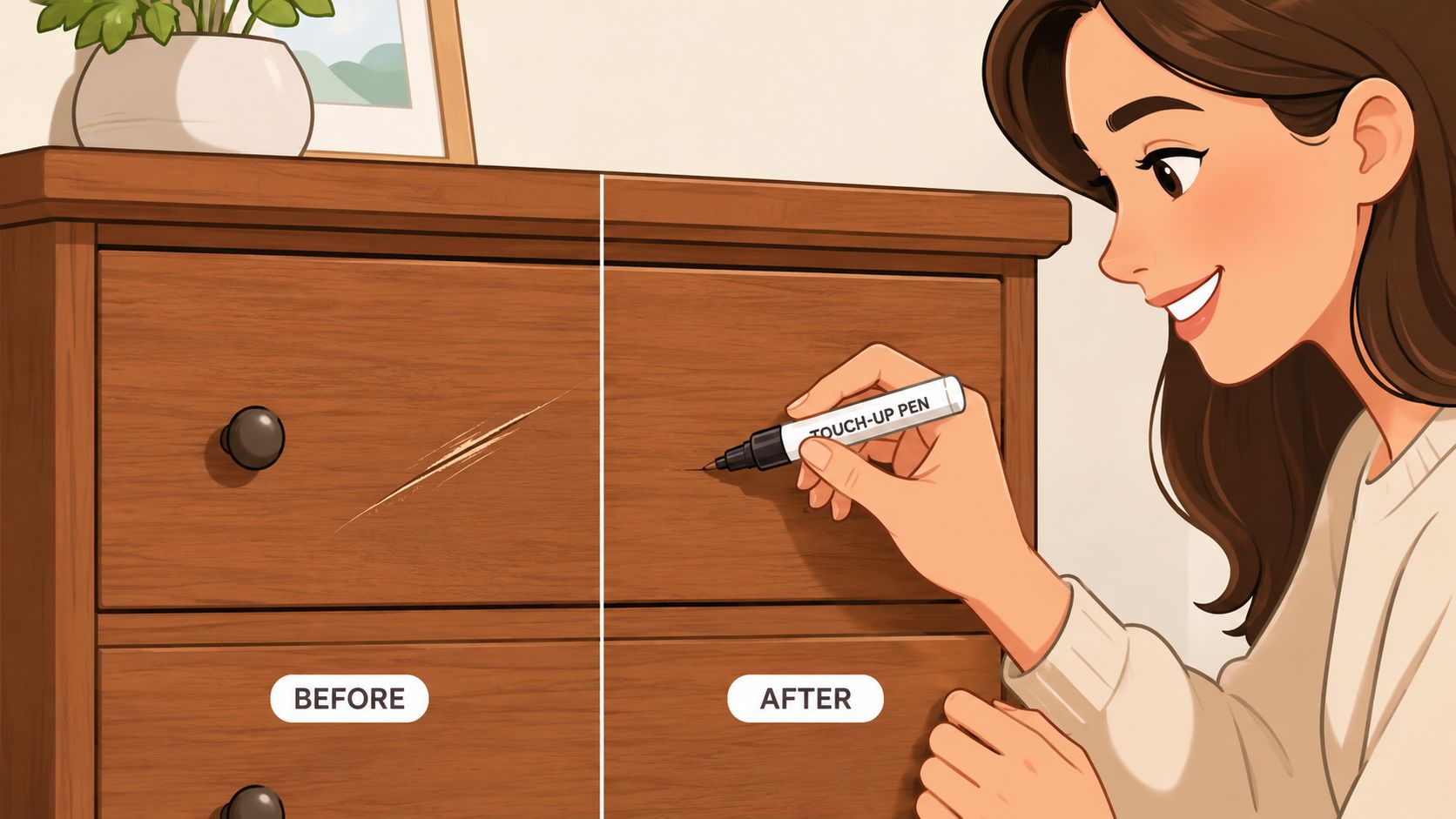
You bring home a dresser with one visible scratch on the drawer front. The piece is solid, the drawers glide well, and the price reflects that one flaw. After fifteen minutes with the right touch-up product, the scratch stops being the first thing your eye notices. That is often the difference between a risky purchase and a smart one.
Minor cosmetic wear is usually the easiest part of a scratch and dent piece to address. Surface scratches, small finish rubs, and tiny paint chips often improve with basic supplies and a patient hand. Structural damage is a different category. Cosmetic repairs are more like covering a scuff on a wall. You are improving what you see, not rebuilding the house.
Simple fixes that work
A few common imperfections respond well to careful touch-ups:
- Light wood scratches: Furniture markers or blending pencils can reduce the contrast so the line blends into the surrounding grain.
- Small finish rubs: A polish made for the correct finish can soften dull spots and help the surface look more even.
- Tiny chips on painted wood: A color-matched touch-up product can make a small missing spot far less noticeable.
- Minor dents: Wood filler can help if the area is shallow and the surrounding material is still sound.
If you want a clearer walkthrough before trying any of these, this guide to furniture scratch repair gives practical, step-by-step help.
Why some materials are easier to live with
Natural materials tend to be more forgiving. Wood with visible grain, variation, or texture often hides a small mark better than a glossy, perfectly uniform finish. A tiny scratch on a rustic table may disappear into the character of the top, while that same scratch would stand out on a smooth black lacquer piece.
That is one reason scratch and dent shoppers often find real value in better-made, character-rich furniture. A reclaimed wood chest, teak console, or textured dining table can age with grace because the surface already has depth and variation. In a local showroom, you can see that difference in person and ask whether a mark is likely to blend in with a simple repair or keep catching your eye every day.
Some pieces want perfection. Others only want a little care.
The goal is not to make every item look factory-new. The goal is to decide whether a small flaw is easy to improve, easy to ignore, or likely to bother you over time. That kind of judgment gets better when you can talk it through with a showroom team that has helped Rogue Valley families furnish their homes for generations.
Why Shopping Local Matters for Scratch and Dent Finds

Scratch and dent furniture asks the buyer to make a judgment call. That decision gets much easier when the piece is in front of them and a real showroom team can answer questions face to face. It gets harder when the listing is vague, the photos are selective, and the seller disappears after pickup.
That's why local shopping matters so much in this category. In Southern Oregon, a physical store isn't just a place to complete a transaction. It's where buyers can slow down, test, compare, and get honest context about a one-of-a-kind item before money changes hands.
A physical showroom changes the decision
A 30,000-square-foot showroom in Grants Pass, Oregon gives shoppers room to do what online browsing can't. They can sit in the recliner, open the drawers, check the finish from different angles, and see whether the mark that looked concerning in theory matters in practice.
That hands-on experience is one reason many local households make the drive from Medford, Central Point, Ashland, and across the Rogue Valley. Furniture is physical. Comfort is physical. Quality is physical too.
Readers who care about keeping dollars in the region may appreciate this perspective on how to support local businesses in everyday decisions.
Local trust matters with one-of-a-kind pieces
Scratch and dent inventory is often limited and unique. That means the buyer can't always “think about it and reorder later.” It also means guidance matters more.
A long-established local showroom has something at stake beyond a single sale. Its name is tied to the advice it gives, the way it treats people, and whether customers feel good about the choice after the furniture is in the home. In Grants Pass, that kind of accountability carries extra weight because word travels. People talk at school events, downtown shops, church, youth sports, and neighborhood gatherings.
That local advantage also shows up in selection. A shopper may come in for a practical value piece and discover something more distinctive instead, like Unique Finds made from reclaimed wood or teak. Those pieces offer character that flat online listings rarely communicate well.
For buyers who care about comfort brands, this kind of showroom environment also helps. A mattress or recliner from Beautyrest, a motion piece with familiar comfort expectations, or upholstery from brands such as La-Z-Boy, Flexsteel, and Ashley is easier to judge when the buyer can test it directly instead of guessing from a product page.
Buying local doesn't remove every risk. It gives the buyer a better way to measure that risk before bringing the piece home.
Securing Your Find and Bringing It Home With Ease
Once the right piece is chosen, the last thing most buyers want is a complicated checkout or a stressful delivery day. That's where the final part of the scratch and dent experience matters. A good value should still feel manageable from purchase to setup.
Payment options remove pressure
Under the Gates Easy Pay financing program, shoppers have access to $0 down with 6 equal payments, no-interest options, and no-credit-needed financing. For households furnishing a home after a move, replacing a mattress unexpectedly, or buying several pieces at once, flexible terms can make a practical difference.
The best financing approach is the one that keeps the furniture purchase aligned with the rest of the household budget. Scratch and dent savings help on the front end. Flexible payment options can help with timing.
Delivery should finish the job properly
Delivery matters more than many people expect. Large pieces can be damaged in a rushed move, and even a good purchase can feel frustrating if it arrives with setup left unfinished. White-glove service solves that problem by handling assembly and the in-home placement details that boxed-drop delivery skips.
Shoppers who want the details can review what white-glove delivery service includes. For anyone storing a purchase before a remodel, move, or room refresh, this MG Self Storage guide to furniture care is also a useful resource for protecting surfaces, fabric, and wood finishes.
White-glove delivery is especially helpful with heavier bedroom sets, dining tables, adjustable bases, and mattress purchases that need proper placement. Professional assembly and mattress haul-away keep the experience cleaner, easier, and much closer to the original promise of Service and Value that has shaped this Grants Pass furniture legacy since 1946.
For shoppers across Grants Pass, Medford, Central Point, Ashland, and the wider Rogue Valley, the next step is simple. Visit the Grants Pass Showroom at Gates Home Furnishings to test comfort in person, explore scratch and dent values, see one-of-a-kind Unique Finds, and get help bringing the right piece home with confidence.