Four Hands Ottoman Guide: Styling, Sizing & Care


A living room can look finished on paper and still feel wrong in daily life. The sofa sits too low, the chair feels isolated, and the center of the room never quite earns its keep. That is where a Four Hands ottoman tends to solve the problem, because it can add a place to rest feet, hold a tray, or create extra seating without making the room feel stiff.
For Rogue Valley homeowners, the decision usually comes down to scale, comfort, and how the room gets used. We see the same pattern in Grants Pass, Medford, Central Point, and Ashland, people want one piece that works with the sofa, leaves room to move, and still feels intentional. A Four Hands ottoman can do that well when the height, footprint, and material match the room instead of fighting it.

For a quick reference while planning the room, a helpful styling resource is unframed wall art ready to frame, especially when the ottoman sits in a reading corner or layered seating arrangement.
Why a Four Hands Ottoman Might Be the Missing Piece in Your Room
The modern ottoman carries a long furniture history. The term traces back to the Ottoman Empire, which was founded around 1299 and later spread its influence across three continents before lasting until 1922–1923 depending on how the end is dated, and the furniture term entered Europe in the late 18th century as the style moved westward Ottoman furniture history). That origin matters because the name still signals comfort, lounging, and a softer way to furnish a room.
A good ottoman usually fixes more than one problem at once. It can soften a hard seating arrangement, make a sectional feel grounded, and give a room a focal point without adding visual clutter. In homes where the sofa, recliner, and accent chair all need to coexist, that versatility is what keeps the layout from feeling improvised.
What to look for first
The smartest buyers start with function, not fabric. If the ottoman will live in front of a sofa, it should support feet comfortably and still leave room for traffic. If it needs to double as seating, the shape and height matter just as much as the upholstery.
Practical rule: the ottoman should solve a layout problem, not create a new one.
That's why the first question is never, “Does it look good?” It's, “What job does it need to do every day?” Once that answer is clear, the rest gets easier, whether the room leans casual, formal, or somewhere in between.
What Sets Four Hands Ottomans Apart
Four Hands stands out because the brand treats an ottoman as more than a padded cube. Its pieces often mix materials, shift between sculptural and practical, and use silhouettes that feel current without looking disposable. That gives the label a strong place in rooms where the ottoman needs to do real work, not just sit there and fill space.
The name itself carries furniture history. “Ottoman” began as a term tied to the Ottoman Empire and later became the standard word for the upholstered low seat people use today. Four Hands works within that tradition, then pushes the form into modern rooms with cleaner lines, larger scales, and sharper material contrast.
We see that same appeal in our own 30,000-square-foot showroom in Grants Pass, where shoppers compare Four Hands with other trusted names we carry. That broader mix matters because buyers rarely furnish a room from one label alone. They want a statement ottoman that fits with the rest of the home without forcing everything else to match.
Why the material mix matters
Four Hands often blends leather, upholstery, wood, iron, and textured fabrics in one collection. That creates a more collected look, and it also helps the pieces sit naturally beside our Unique Finds, especially reclaimed wood and teak accents. A polished leather ottoman and a rougher wood side table can work in the same room when the finishes are chosen with intent.
For readers who like to think through finishes before buying, professional cabinet paint systems offer a useful reminder that surface quality changes how a room ages. Furniture works the same way. Better finishes do more than look good on day one, they usually hold up more gracefully in daily use.
Four Hands also fits the growing interest in sustainable and eco-conscious furniture. The brand has emphasized sustainable and American-made collections, which makes it relevant for buyers who want design and responsibility in the same purchase. That matters most when the ottoman is expected to stay in a room for years, not months.
Before you judge size or style, use a clear measuring process. Our furniture measuring guide helps you check how much room the ottoman really has to work with, and that step prevents costly mistakes before anything gets ordered.
Matching Ottoman Height and Scale to Your Space
A room can look finished and still feel wrong if the ottoman sits at the wrong height. We tell homeowners to start with the seat line first. An ottoman should land level with or slightly lower than the sofa or chair seat, because that keeps it comfortable for lounging and practical for daily use. For relaxed setups, heights around 14 to 16 inches usually fit well. When the ottoman needs to double as extra seating or stand in for a coffee table, 18 to 20 inches is the safer range ottoman height guidance.
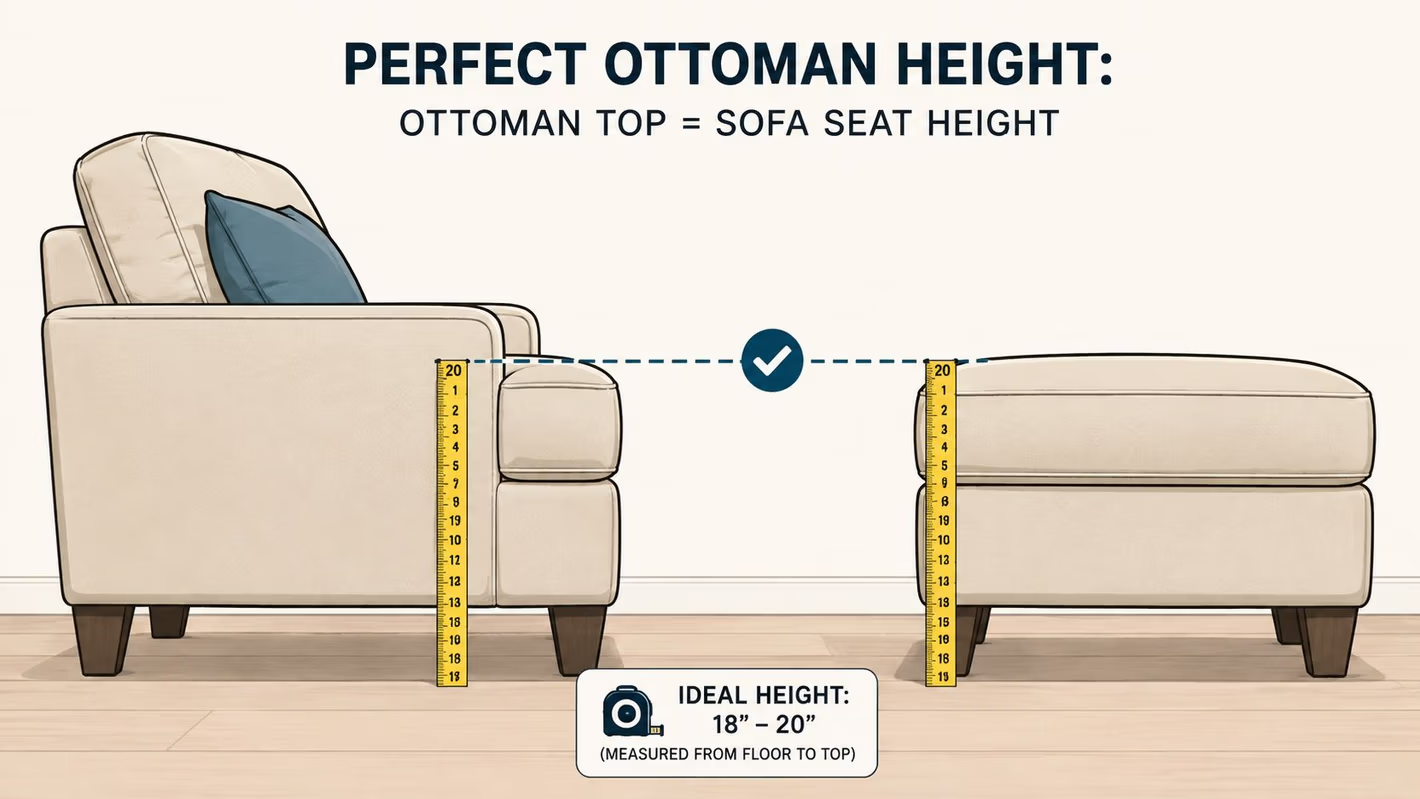
Scale matters just as much. A compact apartment in Central Point needs a different footprint than a large family room in Grants Pass, and the wrong size throws off the whole seating group. The ottoman should feel tied to the sofa and chairs around it, with enough clearance to walk through the room without sidestepping furniture. If it looks stranded in open space, it is too small. If it crowds the walkway, it is too large.
Real Four Hands dimensions tell the story
The Four Hands Aniston Ottoman is about 22.5 inches in diameter and 20.5 inches tall Aniston Ottoman dimensions. That puts it in a useful range for a round ottoman that can serve as a compact accent or an extra seat without taking over the room.
The Four Hands Edwyn Large Ottoman measures 39 inches in diameter and 16.25 inches high Edwyn Large Ottoman specs. That size reads more like a main surface in the seating area, so it suits a room with enough open floor around it for the piece to breathe.
The Four Hands Isle Ottoman measures 53.50 inches wide, 35.50 inches deep, and 16.00 inches high Isle Ottoman specs. Its size makes sense as a coffee table replacement in a larger seating arrangement, where it can handle more visual weight and still leave the room balanced.
Measure this before buying
- Seat height first: Measure the sofa or chair from floor to cushion top, then choose an ottoman that lands at or just below that line.
- Footprint second: Check the open floor space around the piece, especially in narrower rooms and apartment layouts.
- Use case last: Decide whether the ottoman is mainly for lounging, extra seating, or tray-top use, because each job pushes the size in a different direction.
A larger ottoman can calm a room when the seating group is wide and open. In a tighter space, a rounder, smaller profile usually keeps the layout from feeling crowded.
Before you order, use our furniture measuring guide to check the clearances and avoid a return that should have been prevented on day one.
Signature Materials and Finishes Worth Knowing
A Four Hands ottoman usually wins on material contrast, and that contrast should match how the room lives. Leather gives the room a warmer, more refined feel, shearling adds softness and texture, and wood or iron details give the piece enough structure to hold its own in the space. We should choose the finish for daily use first, then let the look support it.
Take a leather piece like the Halston Heirloom Black Genuine Leather Ottoman. It uses black top-grain leather, and the hide comes from one of Italy's oldest family-owned tanneries. The listing also says the leather is salvaged from upcycled hides, so natural markings and color variation are part of the character, not a flaw Halston leather details.
The Aniston Ottoman goes in a softer direction with faux Mongolian shearling and parawood legs that are wirebrushed for a vintage look. That finish fits a room that needs texture and comfort more than a formal edge. It also suits a reading corner, where the ottoman is there for easy resting and occasional use rather than constant traffic.
Construction matters just as much as the surface. The Bilbury ottoman uses webbing seat construction, butt-joint frame joinery, a fixed seat cushion, and a 250 lb rating, with a 15,000 rub count that points to moderate abrasion resistance in residential use Bilbury ottoman specs. That kind of build is the better bet when shoes, denim, pets, and daily contact are part of the picture.
Quick Comparison of Signature Four Hands Ottoman Materials
| Material | Look and Feel | Best For | Care Note |
|---|---|---|---|
| Top-grain leather | Smooth, grounded, premium | Family rooms, tray-top use, rooms that need definition | Wipe promptly and keep away from harsh direct wear |
| Faux Mongolian shearling | Soft, textured, relaxed | Reading nooks, accent corners, low-traffic spaces | Spot clean carefully and avoid rough abrasion |
| Upholstered fabric with webbing construction | Casual, versatile, supportive | Daily-use living rooms and sectional pairings | Rotate use and follow upholstery care guidance |
| Wood or iron accents | Structured, visual contrast | Rooms that need a statement piece or stronger outline | Dust regularly and protect finished surfaces |
For maintenance choices, the guide at https://gatesfurniture.com/everything-you-need-to-know-about-upholstery-materials/ is worth reading before you commit to a finish.
Styling Layouts for Living Rooms and Multi-Use Spaces
A round ottoman changes the center of a room fast. In a Rogue Valley family room, we like it in front of a sectional with a tray on top, then pulled back into casual seating when guests show up. That keeps the layout useful without making the room feel stiff or overly arranged.
The right placement matters more than a fancy shape. The ottoman should sit close enough to the main seats that people can reach it without stretching, and it should bridge the sofa and accent chair instead of floating out in the middle. If you want a clean planning reference before you order, our guide to placing furniture in a living room gives a practical way to sort out traffic flow and spacing.

Three layouts that actually work
- Sectional centerpiece: A square or round leather ottoman works best when you want a tray-top surface that still feels soft underfoot.
- Apartment reading nook: A compact shearling ottoman next to a chair keeps the footprint small and brings in texture without crowding the room.
- Hidden extra seating: A lower ottoman can stay near a console or along a wall until guests arrive, then move into the seating group.
A larger room needs more surface, and that is where a wide ottoman earns its keep. A long, low piece can handle books, a tray, and drinks while still looking softer than a hard coffee table. For rooms that need the strongest shape, a round profile reads calm and intentional. For rooms that already feel full, a simpler silhouette usually works better.
If the room already feels full, choose the simpler silhouette. If it feels bare, choose the ottoman with the strongest shape.
Care and Durability Tips for Real Daily Life
The smartest ottoman care routine is boring, and that's a compliment. Rotate where people sit, blot spills instead of rubbing them, and use a throw or tray when the piece is doing double duty as a footrest and table. Those habits do more for daily life than any decorative styling trick.
The Bilbury ottoman's 15,000 rub count and 250 lb rating show what moderate residential durability looks like in practice Bilbury ottoman specs. That doesn't mean indestructible. It means the piece is built for normal home contact, not for abuse, and the finish will still need common sense around pets, denim seams, and sharp objects.
A simple buying story
A family walks into the showroom with a sectional, a shedding dog, and a living room that doubles as a hangout space. The first thing the team does is test the height against nearby seating, because comfort starts there. Then the material choice gets narrowed down by how much cleaning the household is willing to do.
That is where protection becomes practical. The internal fabric protection guide at https://gatesfurniture.com/fabric-furniture-protection/ fits the same mindset, because a good plan helps shield against accidental spills and tears when daily life gets messy. It's a better conversation than hoping a beautiful piece stays perfect on its own.
Families who want a lower-maintenance path should lean toward sturdy upholstery or leather rather than delicate texture-heavy finishes. Homes that care most about softness and style can still choose shearling or lighter upholstery, but they should pair it with realistic expectations and regular care. Sustainability matters too, but long-life furniture only works when the owner can live with it.
Buying Locally at Our Grants Pass Showroom
The easiest way to choose the right ottoman is to sit with it in person. Our Grants Pass showroom gives Rogue Valley shoppers a place to test comfort, compare height against real seating, and see how a piece reads next to other furniture in the room. That hands-on step matters more than any photo online.
Since 1946, George Gates' original promise of “Service and Value” has guided how our team helps customers choose furniture that fits the home instead of forcing a trend. That approach still matters for ottomans, because scale mistakes are costly and the right guidance saves time, money, and regret. We also offer Gates Easy Pay with $0 down, 6-month interest-free, and no-credit-needed options, so the right piece does not have to wait for a perfect budget.
Our delivery team handles more than a box drop. With white-glove delivery, we provide professional assembly and mattress haul-away, which keeps the buying process simple from start to finish. For shoppers in Medford, Central Point, Ashland, and across Southern Oregon, that local support is often the difference between a piece that sits in storage and one that gets used right away.
For a broader look at how we help people furnish their homes, https://gatesfurniture.com/best-places-to-buy-living-room-furniture/ is a useful next stop.
Gates Home Furnishings helps Southern Oregon shoppers choose the right ottoman, from size and style to delivery and protection. Visit Gates Home Furnishings in Grants Pass to test Four Hands options in person and find the piece that fits your room, your routine, and your budget.