Custom Upholstered Sofa Guide: Grants Pass, Southern Oregon


A lot of Southern Oregon shoppers start in the same place. The old sofa has one seat everyone avoids, the color never quite worked, or the size made sense in the last house but not this one. In Grants Pass, Medford, Ashland, and across the Rogue Valley, families often want something more exact. Not just a new couch, but a piece that fits the room, the way the household lives, and the comfort level people will still like years from now.
That's where a custom upholstered sofa starts to make sense. It can sound complicated at first, but it doesn't have to be. Since 1946, when George Gates Jr. opened the original 5,000-square-foot store at 7th and H Street in Grants Pass with a promise of “Service and Value”, the focus has been helping neighbors make practical, long-term choices for their homes. For anyone still sorting out size, style, or seating priorities, this earlier look at how to buy a sofa for your living room is a useful starting point.
Table of Contents
- Your Guide to the Perfect Custom Sofa in Southern Oregon
- Deconstructing the Custom Sofa Frame and Support
- The Science of Comfort Cushions and Firmness
- Fabric Selection for Your Rogue Valley Lifestyle
- The Gates Ordering Experience From Dream to Delivery
- Bringing It Home Measuring Styling and Care
Your Guide to the Perfect Custom Sofa in Southern Oregon
A custom upholstered sofa isn't only for a formal living room or a fully designer-planned remodel. It's often the right answer for a very normal problem. A family in Grants Pass may need a shorter sofa for a tighter room near the front windows. A homeowner in Ashland may want a cleaner silhouette and a fabric that feels more refined. A household in Medford may need a deeper seat for movie nights and a tougher upholstery choice for kids and pets.
The appeal of custom furniture is growing well beyond a niche market. The broader upholstered furniture market is projected to grow from USD 73.71 billion in 2026 to USD 122.45 billion by 2034, with sofas holding 34.70% of total upholstered furniture sales in 2025, according to upholstered furniture market projections. That tells shoppers something important. Sofas remain the center of the room, and more buyers are paying close attention to comfort, durability, and personal fit.
What makes custom worth considering
Some people hear “custom” and assume it means expensive, risky, or overly complicated. In reality, custom can mean several things:
- A proven frame with a different fabric
- A standard style with adjusted seat depth or arm shape
- A larger sectional or smaller sofa built for a specific room
- A more personalized comfort choice based on its intended use
A sofa is one of the few pieces in a home that gets used every day, by nearly everyone, for years. Getting the fit right matters more than chasing a trend.
The custom furniture category reflects that shift in buyer priorities. The global custom furniture market is projected to rise from USD 44.76 billion in 2026 to USD 115.0 billion by 2035, growing at a 11.2% CAGR, according to custom furniture market analysis. That stronger growth rate suggests more households are choosing made-for-them pieces instead of settling for whatever happens to be in stock.
In Southern Oregon, that matters because homes aren't one-size-fits-all either. A cottage near downtown Grants Pass, a newer build in Central Point, and a hillside home in the Rogue Valley may all need very different proportions. The right custom upholstered sofa gives a room better scale, better comfort, and a much better chance of still feeling right years from now.
Deconstructing the Custom Sofa Frame and Support
A custom upholstered sofa may win you over with its shape, scale, and fabric, but its long life depends on the parts you cannot see. In Southern Oregon homes, where a sofa may serve as the family landing spot after school, a place to stretch out on smoky summer evenings, or the seat everyone claims during winter movie nights, that hidden build matters more than many shoppers expect.
What custom really means
Custom upholstery is not one single thing. Sometimes it means selecting a fabric on a proven frame. Sometimes it means adjusting seat depth, arm width, back height, leg finish, or sectional configuration so the piece fits the room and the people who use it.
The smart place to start is the frame and support system.
That may sound backward if you walked in focused on color or style. But it works like house shopping. Fresh paint is easy to notice. Foundation problems are what cost you later. A sofa with weak construction can feel fine in a quick sit test and still loosen, creak, or sag long before it should.
For a practical starting point, these sofa and chair quality points to look for can help you ask better questions on the showroom floor.
What to check inside the frame
The frame is the sofa's skeleton. The suspension carries the repeated stress of sitting down, shifting weight, and getting back up. The American Home Furnishings Alliance notes that better-made upholstered furniture often uses kiln-dried hardwood or engineered hardwood components because controlling moisture helps reduce later movement in the frame, and sound joinery helps the piece stay square over time, as explained in its upholstered furniture shopping guidance.
Here is what that means in plain language.
- Kiln-dried wood has had excess moisture removed before the sofa is built. That lowers the chance of twisting, cracking, or warping as your home moves through dry summers and damp winter periods.
- Reinforced joints matter because stress collects at the corners and connection points first. Corner blocks, dowels, and other reinforcements help keep the frame tight.
- A quality suspension system supports the seat above the frame. Depending on the manufacturer, that may be an 8-way hand-tied system, sinuous wire, or another well-built support design. What matters is that it feels even, supportive, and stable across the full seating area.
One point often gets missed in custom orders. Seat support is not just about the springs. It is also about how the deck, the fabric and materials beneath the cushions, carries weight from one side of the seat to the other. If one spot feels firm and another feels hollow, the problem may be below the cushion, not inside it.
Questions worth asking in the store
A good custom conversation should get specific. If it stays at the level of “it's well made,” press a little further.
Ask questions like these:
| Part of the sofa | What to ask about | Why it matters |
|---|---|---|
| Frame | What species or type of wood is used, and is it kiln-dried? | Helps you judge resistance to warping and loosening |
| Joinery | How are the corners and key stress points reinforced? | Tighter joints usually mean less wobble and fewer frame noises later |
| Suspension | What support system is under the seat cushions? | Affects how evenly the sofa carries weight over time |
| Seat foundation | How is the deck built, and does support feel consistent across the seat? | Helps prevent early dips and uneven sit comfort |
At Gates Home Furnishings, this part of the process is where a local shopper often gets more clarity than they expected. You are not just picking a silhouette off a screen. You can ask how a given frame is built, whether the support will suit daily family use, and whether the proportions make sense for your room in Medford, Ashland, Grants Pass, or elsewhere in the Rogue Valley.
That kind of conversation helps you buy for ten years, not ten minutes.
The Science of Comfort Cushions and Firmness
A shopper from Medford may call one sofa “perfect” while a shopper from Ashland says the same seat feels too hard. Both can be right. Comfort is personal, but it is not random. It comes from a few parts working together, and once you know what those parts are, custom ordering gets much easier.
Why comfort feels different from person to person
Start with how you use the sofa.
Some people want that first soft landing after a long day. Others want a seat that keeps them more upright for reading, visiting, or standing up without effort. A family room in the Rogue Valley may need cushions that bounce back after kids, guests, and daily use. A quieter formal room can allow a gentler, more relaxed sit and a slightly lived-in look.
Body size, posture, and routine all matter too. A taller person often notices seat depth first. Someone with hip or knee stiffness often notices whether the front edge gives enough support during sit-down and stand-up. That is why a quick showroom sit can mislead you if you only ask, “Is this soft?”
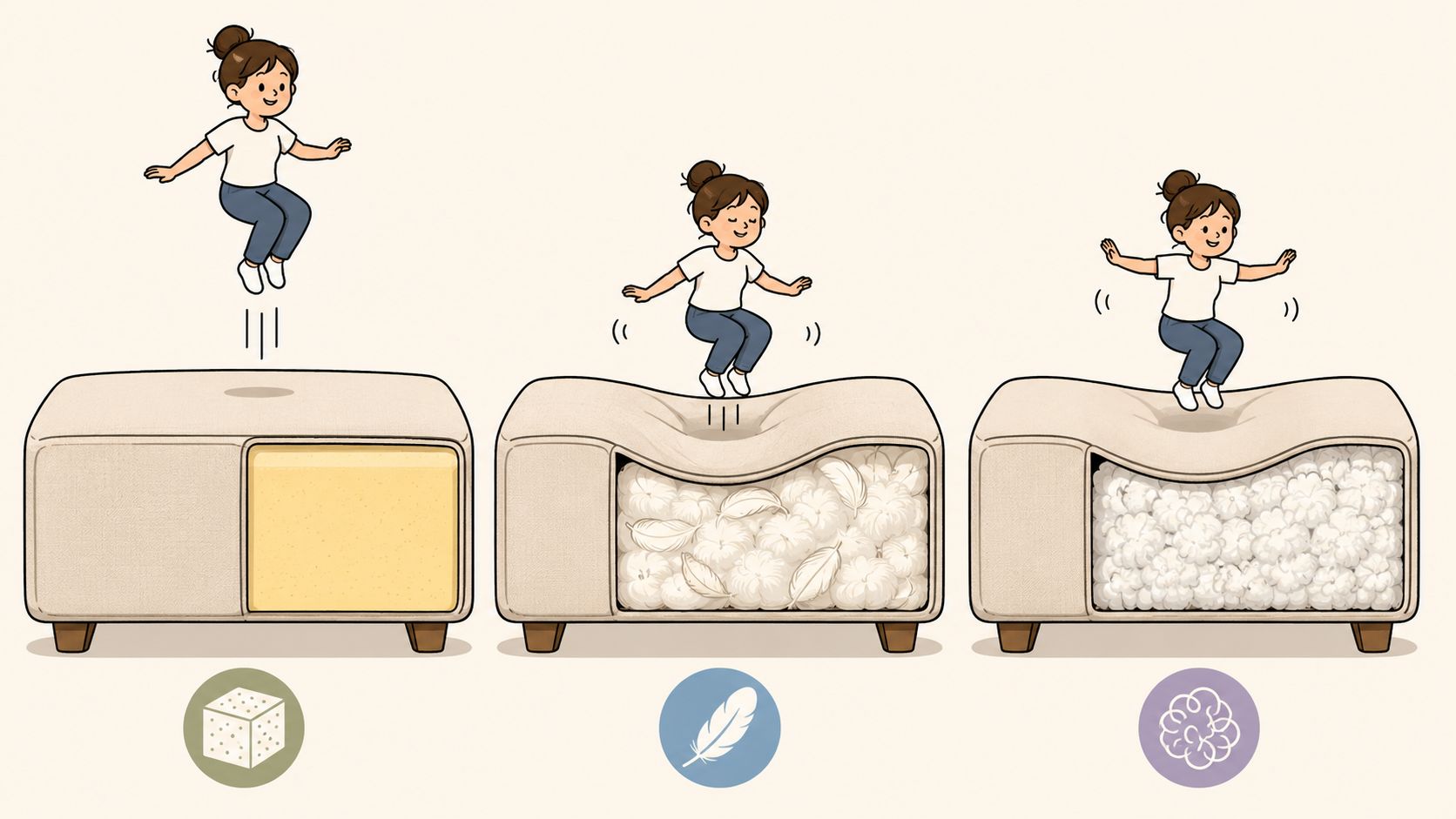
Cushion fill shapes that first impression. Foam usually feels more structured and keeps a cleaner line. Softer blends can feel more casual and wrapped-in. For everyday use, higher-density foam generally holds its shape better over time, which is why many manufacturers and furniture care guides treat density as one of the practical markers of durability.
The part many buyers miss
Firmness has layers.
The top of the cushion creates the handoff your body feels first. Under that, the core and the seat support determine how far you settle, how evenly your weight is carried, and whether the sofa still feels good after twenty minutes instead of twenty seconds.
A simple way to picture it is a mattress with a pillow top. The surface can feel plush, while the support underneath still keeps your body level. Sofas work the same way. You can order a seat that feels inviting on top without making it loose or saggy underneath. You can also end up with the opposite problem, a firmer-feeling cushion over support that still lets you drop too far.
That is where good custom guidance matters at Gates Home Furnishings. During the ordering process, shoppers can compare not just “soft” versus “firm,” but how the comfort layers are built. That includes details many stores rush past, such as cushion core choices, wrap materials, and whether the firmness is consistent from the front edge to the back of the seat.
Common comfort profiles
These combinations usually help narrow the conversation:
Soft top, supportive core
A welcoming sit with enough pushback to avoid that swallowed-up feeling.Medium cushion, balanced support
A practical fit for homes that use the sofa for both lounging and conversation.Firmer cushion, firmer support
Often easier for getting in and out, with a neater, more crisp look.
Back cushions matter too. A sofa can have a supportive seat and still feel tiring if the back pillows push your shoulders too far forward or fail to support your lower back. In custom upholstery, small changes in fill and tailoring can make a noticeable difference.
What to notice during a test sit
Give the sofa a real trial. Sit for a few minutes, not a few seconds.
Notice whether your hips stay level or drift into a low spot. Pay attention to the front edge when you stand up. Check whether the back cushion supports you in a natural position or makes you perch. If you are ordering a sectional or a longer custom sofa, ask whether the feel stays consistent across seats, especially near seams and cushion breaks.
This is also a good time to ask about cushion rotation, refill expectations, and fabric direction. Fabric direction can slightly affect how a seat feels and wears, especially on textured upholstery, and it is one of those small custom details that many shoppers are never told to ask about.
At Gates, seeing several comfort builds in person helps turn a vague preference into a clear decision. If you want a helpful checklist before you sit down and compare options, these sofa and sectional features worth comparing make the process easier.
A custom sofa should fit your body, your room, and your daily routine in Southern Oregon. The right cushion build does all three.
Fabric Selection for Your Rogue Valley Lifestyle
Fabric is usually the most emotional part of the decision. People respond to color first, then texture, then pattern. But the smartest choice usually starts with daily life.
Choose fabric by daily use, not just color
A living room in Southern Oregon can work hard. Some homes host grandkids every weekend. Some have dogs that claim one cushion as their own. Some are calmer spaces where the sofa is meant to anchor a polished room.
That's why fabric selection should answer a use question before it answers a style question.
A few common pairings make sense:
Busy family room
Performance-minded upholstery with texture or visual movement tends to be forgiving.Quiet formal space
A smoother or richer fabric can create a more elegant look when the room sees lighter use.Relaxed everyday seating
Softer, casual textures often suit homes that want comfort to read immediately.
The actual hand feel matters too. Some shoppers want crisp and structured. Others want cozy and softened. In a showroom, that difference becomes obvious fast. It's one reason many people like comparing options from lines such as La-Z-Boy, Flexsteel, Ashley, and Beautyrest across the broader store while narrowing the upholstery look they want for the living room.
For anyone sorting through materials before stepping into the store, this upholstery materials guide gives a helpful overview.
Why pattern direction matters
One of the most expensive-looking mistakes in custom upholstery can come from a very small detail. It's called fabric pattern direction, often referred to as railroading.
Railroading means a patterned fabric, especially stripes or large florals, may be applied in a horizontal direction rather than a vertical one. If no one talks through that detail clearly, the finished sofa can look off even when the fabric itself is beautiful.
That's not a minor issue. Data from 2024 to 2025 showed that 68% of custom upholstery complaints came from misaligned patterns because customers weren't guided on how to specify orientation for stripes or florals, according to this article on commissioning upholstered furniture.
A striped fabric can be exactly the right color and still look wrong if the stripe runs in the wrong direction across the body of the sofa.
Shoppers in Ashland and the Rogue Valley who care about detail usually appreciate this once they see it in person. The sofa doesn't just need the right fabric. It needs the right application of that fabric. That's the difference between “close enough” and a finished piece that feels intentional.
The Gates Ordering Experience From Dream to Delivery
For many buyers, the most intimidating part of a custom upholstered sofa isn't choosing the style. It's wondering how the order process works, how many decisions there are, and whether the final step will be a hassle.
The cleanest process usually moves in a simple order. First comes room fit. Then comfort. Then fabric and details. That sequence keeps a sofa from becoming beautiful but impractical.
How the process usually unfolds
A typical custom order comes together through a few key decisions:
Start with the room
The buyer brings measurements, photos, or a rough floor plan. That helps narrow the size and shape before anyone gets lost in fabric books.Test the sit
Seat depth, back feel, and arm height matter more than many people expect. The difference between “looks right” and “lives right” becomes evident during this test.Choose the covering and details
Fabric, leg finish, pattern scale, and tailoring choices refine the final look.Review delivery access
Doorways, turns, stairs, and placement in the room should be checked before the order is finalized.
For shoppers who want a practical overview before visiting, this custom order getting-started guide lays out the process clearly.
Making the purchase manageable
Budget matters, and custom doesn't have to mean all-or-nothing. Gates Home Furnishings offers Gates Easy Pay, including $0 down, 6 equal payments, no-interest terms if paid in full within the promotional period, and no-credit-needed financing or lease-to-own programs. For many households in Grants Pass, Medford, Central Point, and across Southern Oregon, that flexibility makes it easier to buy the right piece instead of settling for a short-term choice.
Service on delivery day matters just as much. Some furniture deliveries stop at the doorstep. This one doesn't.
Our commitment to service includes White-Glove Delivery, where the professional team handles in-home assembly, setup, and heavy lifting, so the new furniture is placed properly without the customer lifting a finger.
That same service approach reaches back to the beginning. George Gates Jr. built the business in 1946 around “Service and Value,” and the delivery side is where buyers often feel that most directly. The team doesn't just bring furniture in. They place it, assemble it, and help the room feel finished. Mattress haul-away is also available, which is useful for households updating more than one room at a time.
Why this matters for Southern Oregon homes
Homes in the region vary a lot. A newer development near North Valley may have easier access and open layouts. An older home near central Grants Pass may have tighter corners and narrower entry points. A custom order works better when those realities are considered before the truck arrives.
That's also why the showroom matters. In a 30,000 sq. ft. space in Grants Pass, shoppers can test comfort, compare silhouettes, and see how a sofa pairs with other pieces in the store. Alongside upholstered seating, the showroom includes Unique Finds such as reclaimed wood, teak, and one-of-a-kind statement pieces that can help finish the room in a way that doesn't feel mass produced.
Bringing It Home Measuring Styling and Care
The final step is practical. A well-chosen sofa still needs to get through the house, sit in the room correctly, and stay looking good.
Measure the path, not just the room
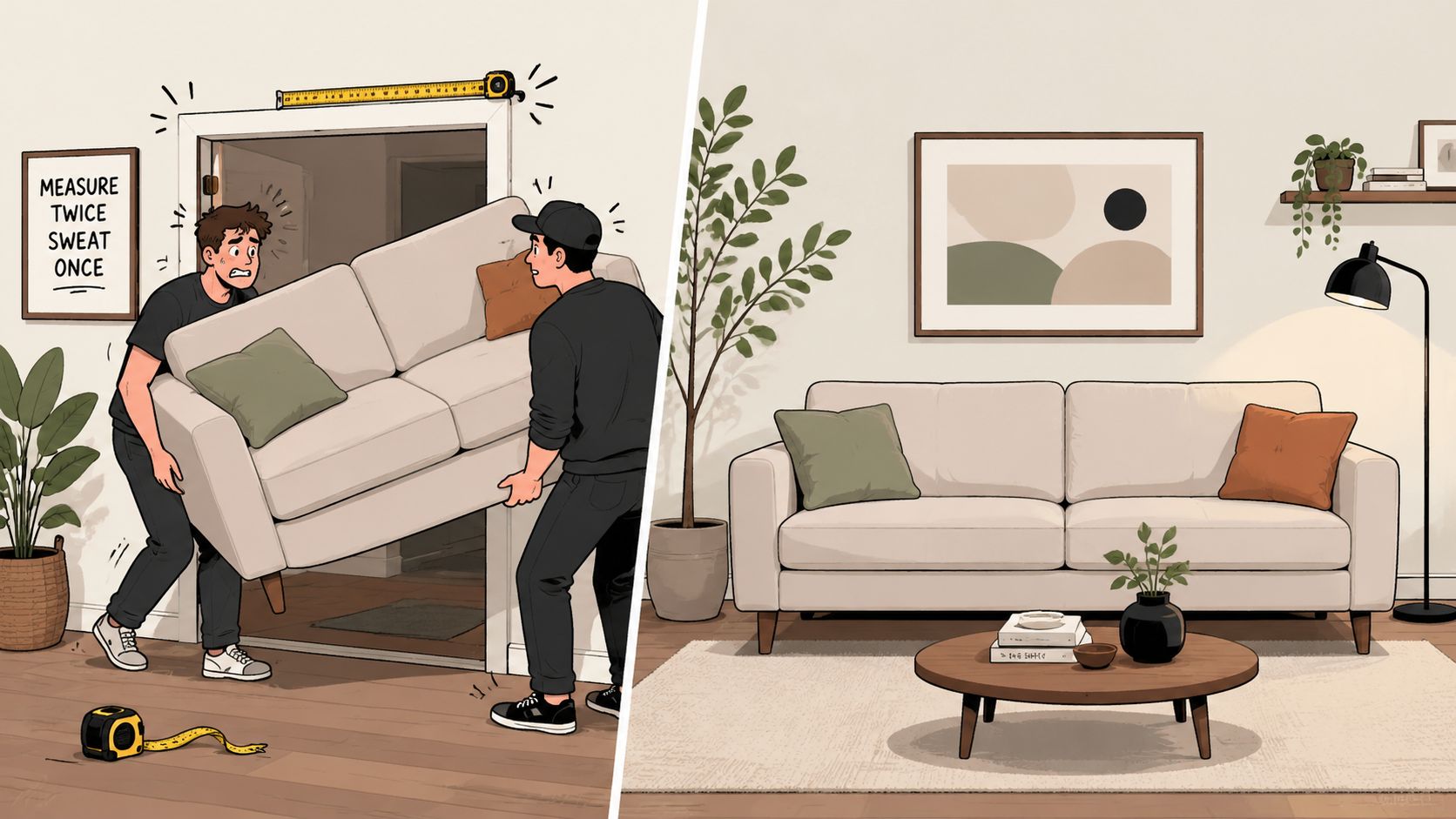
Many delivery surprises happen because people measure the wall where the sofa will sit, but not the route it has to travel.
A better checklist looks like this:
Front entry width
Measure the door opening itself, not just the frame from trim to trim.Hallways and turns
Note tight corners, ceiling drops, stair rails, and any sharp pivots.Final room clearance
Confirm the sofa length works with side tables, traffic paths, and nearby chairs.Obstacle points
Watch for low hanging lights, narrow landings, and decorative posts.
Measure the path in sequence from outside to inside. That catches the problem spot before delivery day does.
Finish the room with character and easy upkeep
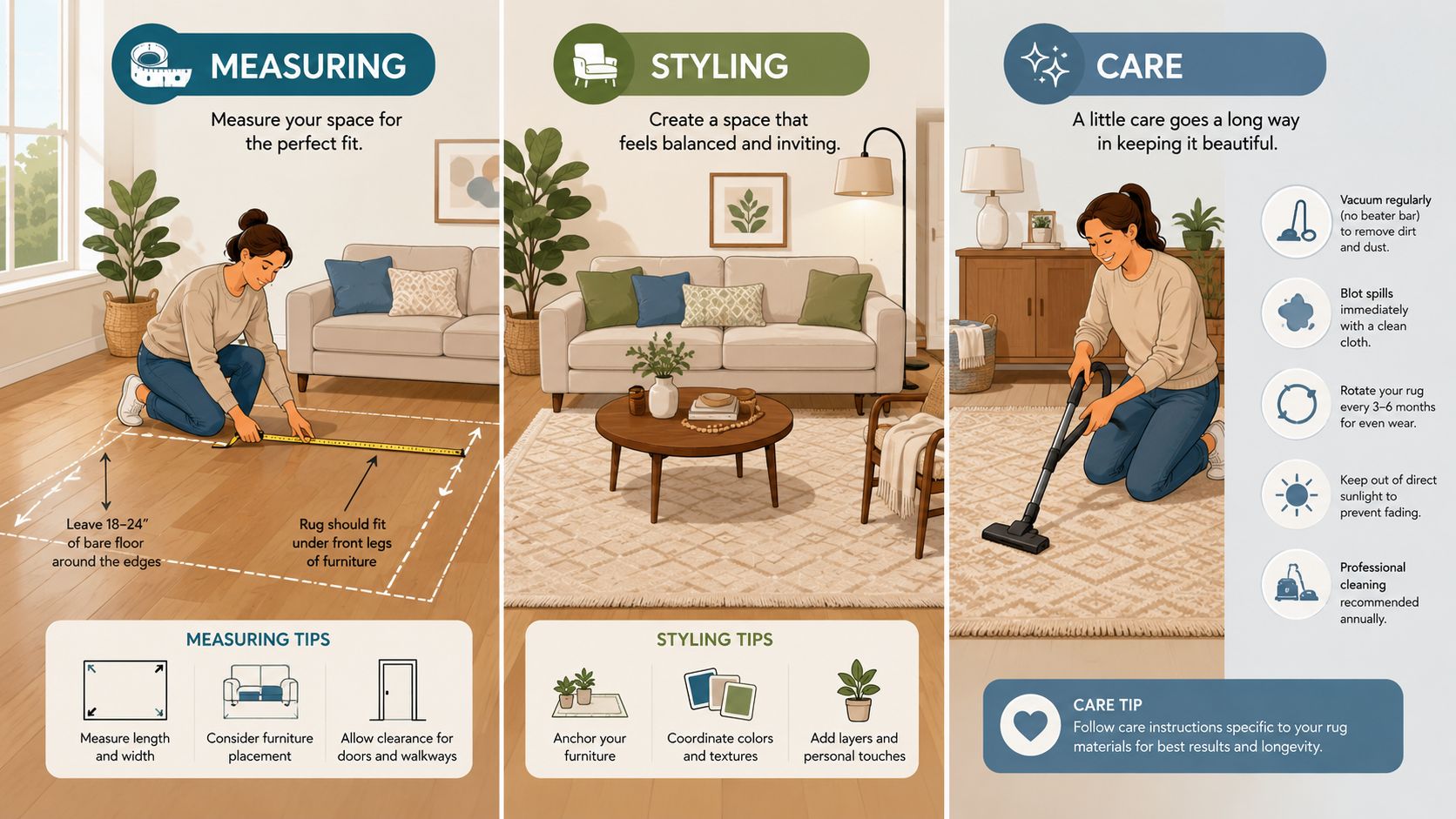
Once the sofa is in place, styling should support the room rather than crowd it. A custom upholstered sofa often looks best when it has some breathing room around it. The coffee table should be close enough to use comfortably, while walkways should still feel open.
Texture helps the room feel layered without overworking it. A rug can soften the seating area. Pillows can add contrast. For a relaxed finishing touch, this guide to draping a faux fur throw offers simple ideas that work well when a sofa needs warmth and softness without a full redesign.
The room also benefits from contrast in materials. That's where Unique Finds can make a big difference. Reclaimed wood and teak accent pieces add warmth and individuality beside an upholstered silhouette, especially in homes that want a collected look rather than a matching set.
Basic care keeps the investment in good shape:
Rotate cushions when appropriate
This helps seating wear more evenly.Vacuum creases and seams
Dust settles there faster than one might expect.Address spills quickly
Blot first, and follow the fabric care guidance for the specific upholstery.Use throws thoughtfully
High-contact spots like one favorite corner can be protected without hiding the sofa.
A well-made custom upholstered sofa should fit the room, support daily life, and still feel right years from now. For shoppers in Grants Pass, Medford, Ashland, Central Point, and across Southern Oregon, Gates Home Furnishings offers a practical place to compare comfort in person, explore custom options, see one-of-a-kind pieces, and make the purchase manageable with flexible financing and White-Glove Delivery. Visit our Grants Pass Showroom or browse our collection online.