Mattress Protection Plan Guide for Southern Oregon Homes

A pizza night in a Grants Pass bedroom can turn stressful when sauce lands on a brand-new Beautyrest mattress. The same thing can happen with a tipped drink, a pen left in a child's hand, or a pet that scratches while jumping onto the bed. A mattress protection plan gives households a defined way to handle certain sudden accidents, but it isn't a substitute for careful use, routine cleaning, or a manufacturer warranty.
For Southern Oregon homeowners and renters, the practical question isn't whether coverage sounds useful. The better question is whether the plan's covered events, exclusions, deadlines, documentation rules, and local service fit the way the mattress will be used.
Understanding the Mattress Protection Plan
After pizza sauce reaches a Beautyrest mattress, the household needs clear next steps. Who receives the claim? What proof might be required? Does the damage fit the plan's terms? Those questions matter more than insurance terminology.

A mattress protection plan is a risk-transfer product for specified accidental damage. In plain language, the household pays for a defined layer of help if a sudden event, such as a spill, tear, or puncture, affects the mattress. Plans commonly operate for several years, with examples of 3-year, 5-year, and 10-year coverage. Depending on the terms, coverage may begin on the purchase or delivery date (market examples of multi-year mattress protection plans).
Coverage works more like a raincoat than a structural repair. It can address a listed accident, but it does not correct fabric that gradually wears thin or damage caused by ordinary use.
A basic mattress pad serves a different purpose. It may add softness or provide a washable barrier, while a protection plan defines what cleaning, service, replacement, or other remedy may be available after a covered incident. The physical protector may be part of the arrangement, and some plans require its correct use.
George Gates founded Gates Home Furnishings in 1946 with a promise of “Service and Value.” That principle still shapes how we discuss mattress care. From our 30,000-square-foot showroom in Grants Pass, we help Rogue Valley shoppers test comfort in person and review practical protection before a white-glove delivery.
Practical rule: A protection plan is designed for a sudden, identifiable mishap. It does not replace normal care or a warranty for manufacturing defects.
The category has changed over time. Protect-A-Bed says it created the first mattress protector in 1990, expanded into U.S. operations in 2001, and reported products sold in 49 countries by 2015 (mattress protector history and category development). That history helps explain why mattress protection now may involve both a physical protector and a longer-term service plan.
What Your Mattress Protection Plan Covers
A coffee spills on a new mattress during breakfast. A child has an isolated accident. A pen leaks while someone reads in bed. Each event needs a clear path forward, and the protection plan provides that path when the incident matches its written terms.
Typical covered incidents can include:
- Food and beverage stains: A tipped coffee, juice, or dinner plate may qualify when the event is sudden and reported as required.
- Bodily-fluid stains: An accidental, single incident may be covered, while repeated soiling can fall outside the plan.
- Pen ink: A leaking pen or unexpected mark may qualify when ink appears in the listed coverage.
- Non-fire burns: Some plans include a localized burn that was not caused by fire.
- Physical damage: Covered examples may include accidental punctures, cuts, tears, or rips that affect the mattress's use or function (sample mattress protection terms).
The key detail is the event itself. A plan usually addresses a specific accident, not every mark that appears during ownership. At our Grants Pass showroom, we walk through that distinction with Rogue Valley customers before white-glove delivery, because claim friction often starts with an unclear description of what happened.
A bedroom arrangement built around a furniture collection also has everyday routines to consider. Children may bring snacks into the room, adults may read with a pen nearby, and pets may share the bed. Those details help explain why a plan can be useful, but the written terms still decide whether an individual incident qualifies.
Our complete guide to bedding, mattress protectors, and comforters explains how bedding barriers and protectors serve different purposes. Households concerned about pests can also review best covers for bed bugs. A protective encasement helps block exposure, while a protection plan addresses eligible incidents after they occur.
The practical dividing line is sudden versus gradual harm. One spill is easier to document than months of perspiration, body oil, or repeated soiling. Keep the plan terms available, record what happened promptly, and avoid assuming every stain receives the same treatment.
Common Exclusions and Claim Windows
A late claim can create more trouble than the original spill. Protection plans often require reporting within 3 to 30 days of the stain or damage, depending on the contract. Some also request photos, receipts, or professional service calls. At our Grants Pass showroom, we explain these steps before white-glove delivery, because a clear record of what happened can reduce claim friction in the Rogue Valley (example of claim timing and documentation requirements).
What commonly falls outside the plan
Protection plans generally address a distinct accident rather than conditions that build through ordinary use. Common exclusions can include:
- Perspiration and body oils, especially with repeated moisture exposure.
- Hair products, lotion, and similar residue that accumulates over time.
- Pet claw damage caused by repeated scratching rather than one accidental event.
- Chronic soiling or abuse, which does not describe a single incident.
- Normal wear, including pilling, fraying, scuffs, scrapes, or seam separation.
The distinction is easier to understand with a simple comparison. One child's nighttime accident may be a documented event, while months of moisture exposure may be treated as gradual soiling. A pet's single accidental tear may differ from damage caused by repeated scratching. The written terms decide the result.
A waterproof protector can still help limit moisture reaching the mattress and support everyday hygiene. That benefit does not automatically make a later condition eligible for a claim (consumer mattress guidance and protection-plan context).
Why timing changes the outcome
A plan may appear generous until a customer misses its filing window. Our practical routine is simple: note the date, take clear photographs, keep the receipt, and contact the plan administrator or selling retailer as soon as practical. Keep the paperwork accessible rather than storing it where it cannot be found after delivery.
The terms may also separate accidental damage from product failure. Foam loss, spring-resilience problems, and construction defects usually belong in a manufacturer-warranty discussion, not an accidental-damage claim. Reviewing those boundaries before an incident helps renters, families, and pet owners understand what the plan can and cannot address.
Protection Plan Versus Manufacturer Warranty
A drink spills across the mattress during an ordinary evening. That sudden event may belong under a protection plan. A sagging support layer that develops without an accident may belong under the manufacturer warranty. The two contracts answer different questions, so one does not automatically replace the other.
| Aspect | Protection Plan | Manufacturer Warranty |
|---|---|---|
| Primary purpose | Covers listed accidental stains or physical damage | Addresses qualifying manufacturing defects |
| Typical examples | Spills, ink, non-fire burns, tears, punctures, cuts, or rips | Spring, foam, seam, or construction problems when covered by the warranty |
| Treatment of normal wear | Usually excluded | Usually excluded |
| Coverage length | Terms vary by plan and are stated in its documents | Depends on the mattress manufacturer's written warranty |
| Claim focus | A sudden event and prompt reporting | A defect that meets the manufacturer's warranty conditions |
| Relationship | Adds accident protection | Provides product-defect protection |
The practical test is to identify the event first. A covered stain from one spill may send you to the protection-plan administrator. A qualifying construction problem with no accidental cause may require a warranty review. The written terms determine which route applies.
Some plans exclude foam loss, reduced spring resilience, pilling, fraying, and seam separation because these conditions may be treated as wear or product-quality concerns rather than accidental damage. Keep both documents together. A plan is not a substitute for the warranty, and the warranty does not necessarily cover household accidents.
Our Grants Pass showroom team also considers the delivery context. During white-glove delivery in the Rogue Valley, customers receive more than a mattress placed at the door. Delivery paperwork, setup details, and the condition observed at arrival can help clarify which contract to review later. They do not change the contract terms, but they can reduce confusion during a claim.
The mattress and furniture warranty information explains how coverage responsibilities can differ by product and manufacturer. Whether the bedroom includes a mattress, furniture, or both, match the incident to the document that addresses it. That simple habit keeps an accidental-damage question from becoming a product-defect claim, or the reverse.
How to File a Mattress Protection Claim
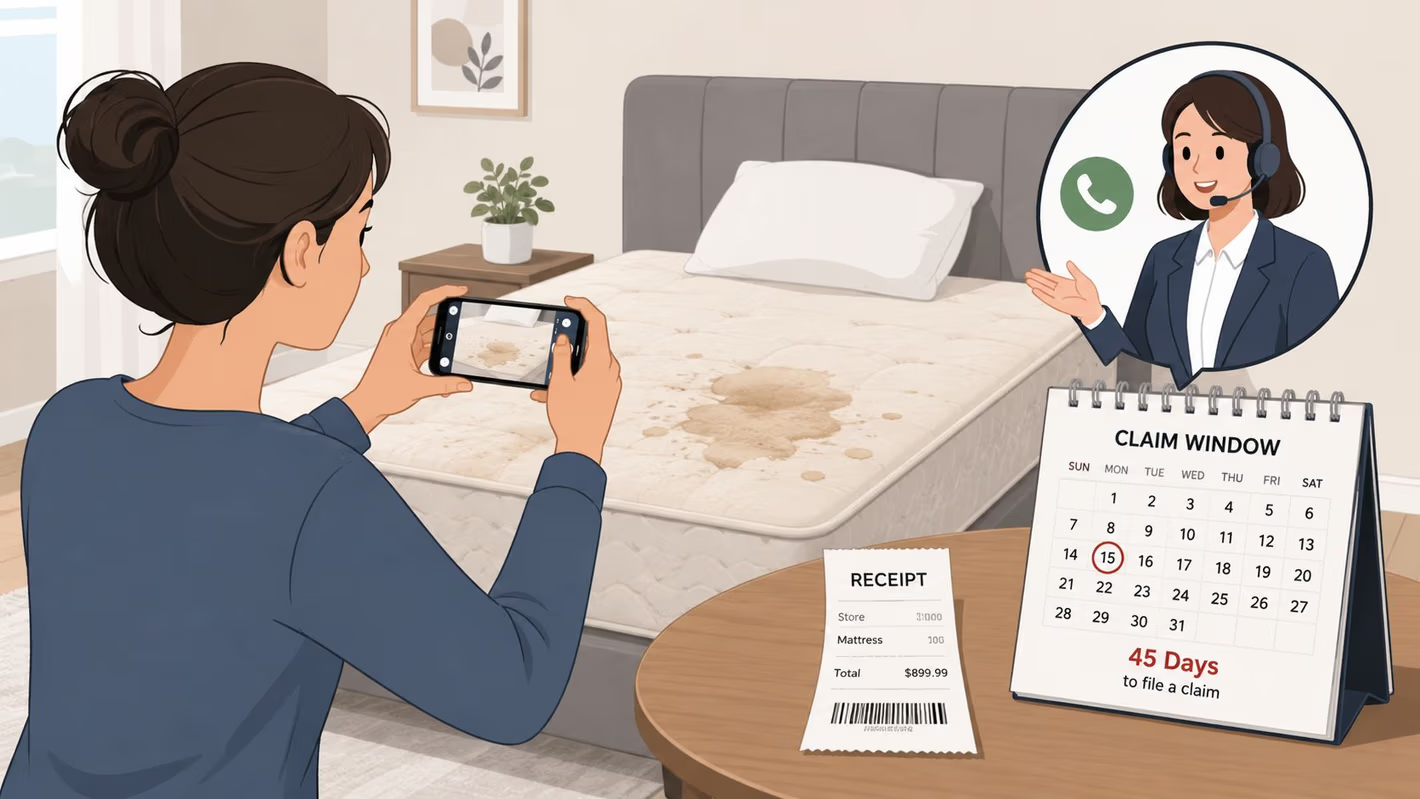
A spilled drink during a movie, a pet accident, or a snag while moving furniture can turn into a frustrating claim if the details are missing. We recommend treating the incident like a small recordkeeping task. Document it while the facts are fresh, before cleaning changes the evidence.
Record the incident immediately
Photograph the stain, tear, puncture, or other damage up close. Take wider images showing the complete mattress and its position in the room. Write down what happened, when it occurred, and what liquid or object caused the problem.
Keep the receipt and delivery paperwork together. The plan administrator may request proof of purchase, and eligibility may depend on whether the mattress protector was installed and used according to the plan's instructions. A short written timeline can also prevent confusion when the claim is reviewed later.
Contact the right service channel
Read the plan documents and submit the claim within the stated window. Waiting for the damage to “settle” can put the claim at risk because deadlines may be short. Use the exact instructions in your agreement rather than assuming the store, manufacturer, and plan administrator handle the same step.
The Gates service request page gives Southern Oregon customers a local starting point when they need help identifying the next service step. Our Grants Pass team can explain what information to gather, while the plan administrator decides eligibility under the contract.
Prepare for inspection or service
The remedy may involve cleaning, a replacement protector, a voucher, or another option listed in the plan. Keep the mattress available, follow the care instructions, and ask before applying a strong cleaner that could spread the stain or affect the cover.
Delivery details can also help organize the conversation. For households in Grants Pass, Medford, Ashland, or Central Point, our white-glove team can clarify setup information and related service records when those services apply. That support does not change the plan rules, but it gives Rogue Valley customers a clearer path from the first report to the administrator's decision.
Gates Care Shield and Local Delivery
A mattress can feel right in the showroom, yet the purchase involves more than comfort. In Grants Pass, we help customers consider the mattress, protection terms, delivery, setup, and future service as one connected decision. Customers can review the Gates Care Shield protection plan beside the mattress purchase and confirm which products and incidents qualify before committing.
Our 30,000-square-foot Grants Pass showroom gives shoppers from Grants Pass, Medford, Central Point, Ashland, and nearby Southern Oregon communities a chance to test mattresses in person. A few minutes lying on a mattress can reveal differences that photographs and specifications cannot. Once the feel and support suit the sleeper, protection terms become easier to discuss in practical terms.
Delivery that completes the job
A mattress purchase should not end at the front door. White-glove delivery includes in-home assembly and mattress haul-away, so customers do not have to manage difficult lifting, setup, or disposal on their own.
That help matters when a household is moving into a new home, furnishing a secondary residence near Ashland, or replacing a mattress upstairs or through narrow hallways. Delivery conditions can affect how smoothly the installation goes, so we review relevant details with customers before the scheduled visit.
Households planning moves in other regions may use Perth local removalist quotes as a general planning reference. Southern Oregon customers receive delivery support through our local team, with the home's access, setup, and removal needs considered together.
A broader home-furnishing setting
Our showroom also includes Unique Finds, such as reclaimed wood, teak, and one-of-a-kind statement pieces. These furnishings can give a bedroom or adjoining living area a more personal character than a room assembled from matching sets.
Financing can bring the mattress, bedroom furniture, and protection discussion into one household budget. Gates Easy Pay includes $0 down, 6-month interest-free options, and no-credit-needed financing options, subject to applicable program terms. This lets customers review the complete purchase while considering both monthly affordability and the service involved in bringing it home.
Buying Guidance for Southern Oregon Customers
A mattress protection decision should begin with the household and the room, not the brochure. A renter in Central Point, a family in Grants Pass, and a couple furnishing a secondary home in Ashland may choose similar mattresses but face different risks.
Use a practical checklist
Start with the mattress value. Some plans set a maximum covered purchase price, with one published example allowing coverage for mattresses up to $12,000. Compare that limit with the mattress price and the difficulty of replacing it. Protection should fit the purchase rather than become an automatic add-on.
Match the term to expected ownership. Available plan terms can include 3-year, 5-year, and 10-year plans. Choose a length that suits how long the household expects to use the mattress. A longer term may make more sense for a high-value mattress in a busy family bedroom than for temporary furnishing.
Consider the actual risk. Children, pets, meals in the bedroom, and mobility challenges can raise concern about accidental spills or physical damage. Those circumstances do not guarantee an eligible claim, because repeated soiling and pet claw damage may be excluded. They do make the contract's wording more relevant to the purchase decision.
Check the protector requirement. Some plans treat a specific protector as the first defense. Ask whether it is included, which mattress it fits, how to install it, and what the contract requires if the protector fails. Keeping delivery and purchase records can also make a later claim easier to document.
Review the service path. Before leaving our Grants Pass showroom, customers should know who receives a claim, which photos or documents may be requested, and whether help is available locally. A plan can look useful on paper but feel difficult when the household is trying to report damage after delivery.
For help comparing sleep surfaces, use this guide to what to look for when buying a mattress before discussing protection. We can also review the mattress, protector, plan terms, and delivery arrangements together, including how Gates Care Shield fits the household's needs in the Rogue Valley.
Gates Easy Pay may offer $0 down, 6-month interest-free, and no-credit-needed options, subject to program terms. Ask for the complete purchase breakdown so the mattress, protection, and related costs remain clear within the household budget.
Frequently Asked Mattress Plan Questions
Is a plan worth considering for renters?
A renter may benefit when replacing a damaged mattress would be difficult during a lease or move. The value depends on the mattress price, household habits, and the plan's exclusions. A renter should also confirm whether the contract stays with the original purchaser and mattress if the household moves within Oregon.
Does a protector requirement affect a claim?
It can. Some plans are built around the protector as the first line of defense, and the terms may require correct use. Customers should keep the protector installed as directed and retain any purchase or delivery information that shows which protector belongs with the mattress.
Can a customer transfer the plan after moving?
Transfer rules vary by contract, so a move from Grants Pass to Medford, Central Point, or Ashland shouldn't be treated as an automatic transfer. The customer should contact the plan administrator before moving and ask whether the same mattress, purchaser, and address remain eligible.
What about pet owners?
Pet ownership makes the exclusions especially important. A single accidental event may be treated differently from repeated clawing, chronic soiling, or gradual damage. A washable, correctly fitted protector can support everyday care, but it doesn't convert excluded conditions into covered claims.
Is a secondary home different?
A rarely occupied home may have a different risk pattern, but an unattended spill or leak can still create a documentation problem. Owners should keep plan details and purchase records where they can be found quickly, especially when the property is in another Rogue Valley community.
What should shoppers ask in the Grants Pass showroom?
They should ask about the covered incident types, claim deadline, protector requirement, exclusions, remedy, term, and maximum covered purchase price. Those answers help turn a general promise of protection into a clear household decision.
Gates Home Furnishings connects mattress selection with Gates Care Shield, professional assembly, and mattress haul-away from its Grants Pass showroom, serving customers throughout the Rogue Valley. Visit Gates Home Furnishings to test comfort in person, review protection options, and browse mattresses, bedroom furniture, and Unique Finds online.