Best Dining Room Tables for Small Spaces


That tape measure is probably sitting on the floor beside a breakfast nook that feels too narrow for a real dining table. The challenge isn't finding a table that technically fits. It's finding one that leaves room for pulled-out chairs, a child passing through, groceries moving from the kitchen, and the ordinary mess of a Southern Oregon home.
The best dining room tables for small spaces are chosen by usable clearance and daily flexibility, not by tabletop size alone. A compact round pedestal table may work beautifully in a square nook, while a narrow rectangular or drop-leaf table may serve a galley kitchen better. The right choice depends on how the household moves around it.
Measuring Your Room and Clearing the Air
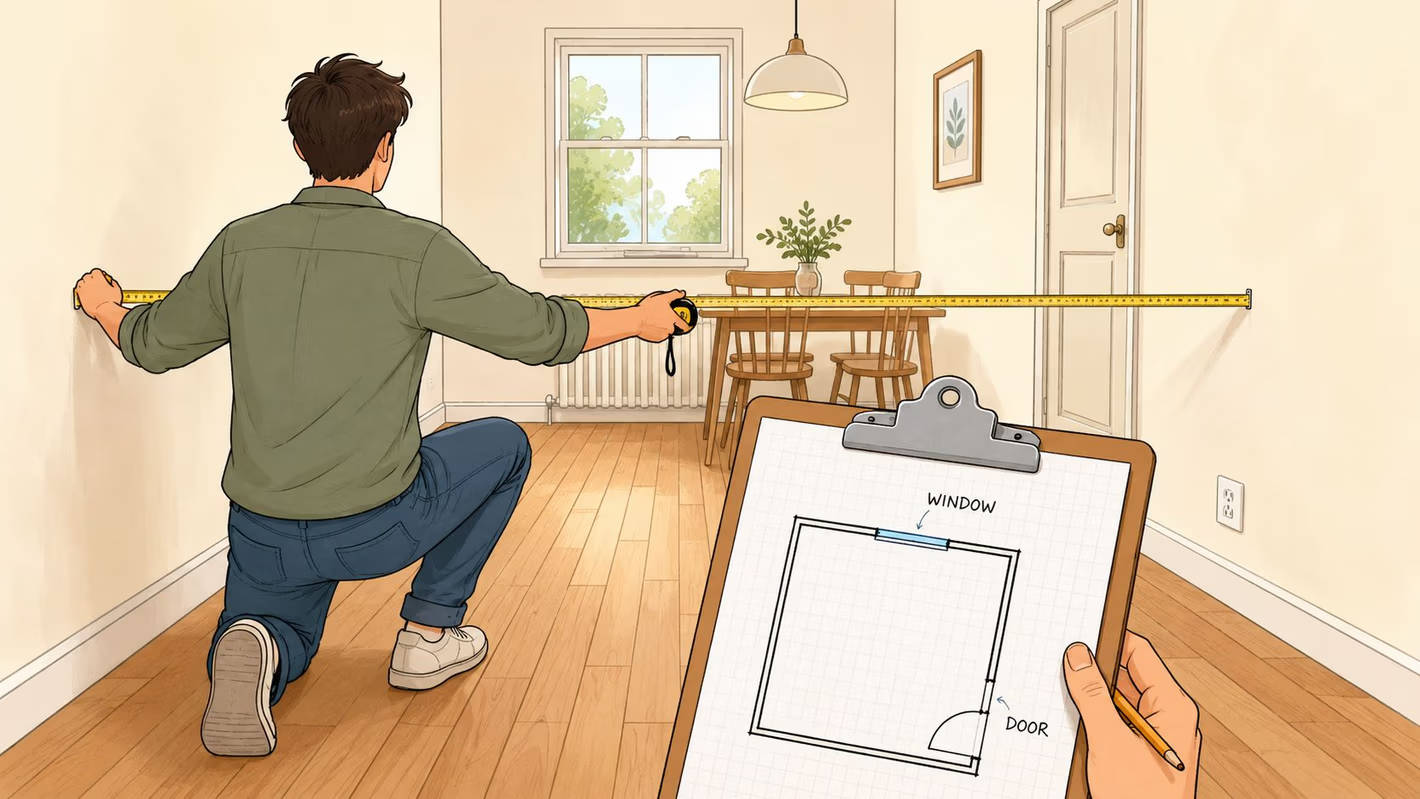
A tape measure gives useful information only when it captures the whole room. Start with the wall-to-wall length and width, then mark every door, window, built-in bench, radiator, vent, and outlet. Measure to the usable face of the wall, not past baseboards, and record the direction each door swings.
The table's footprint is only the beginning. Small-space dining guides consistently recommend about 36 inches of clearance between the table edge and nearby walls or furniture so chairs can pull out and people can pass behind seated diners. Povison's small dining table guide identifies compact two- to four-person tables in practical ranges of 24–36 inches wide and 30–48 inches long, with many four-person round tables around 36–40 inches in diameter. Coohom's small dining room guidance notes that 42–48 inches works better along a main traffic path, while one wall-facing side may tighten to about 30 inches when it serves a built-in bench or wall.
Practical rule: Measure the chair pulled out, not the chair tucked in. A usable pass-through behind that pulled-out chair needs about 24 inches, while the table-to-wall planning zone should generally preserve the larger clearance benchmark.
Measure the path, not just the nook
A galley kitchen needs a clear route between the refrigerator, sink, range, and the next room. A table that fits between two walls can still fail if a chair blocks the kitchen-to-living-room path. In an open-concept great room, measure from the table edge to the sofa, island, or media console, because those pieces form the actual boundary.
Breakfast nooks with built-ins can use the bench side more efficiently than the open side. Studios near downtown Grants Pass need a second test: mark the table in both dining and folded or pushed-aside positions so it doesn't interfere with the bed, entry, or living area.
Painter's tape or flattened cardboard provides a better test than visual guesswork. Mark the table's full top, then add chair positions with the chairs pulled out. Walk the route carrying a plate, open the nearest door, and sit down at each place. If someone has to turn sideways every time another person stands, the table is too large for that layout.
Common measuring mistakes
Homeowners often measure to a door's swing arc instead of the hinge-side wall, forget the thickness of baseboards, or overlook a radiator that makes part of the wall unusable. Another mistake is measuring only the table's everyday configuration and ignoring the space needed when a drop leaf or extension is open.
Before shopping, the quick checklist should include:
- Room dimensions: Record wall-to-wall length and width, including baseboards and fixed features.
- Traffic routes: Mark kitchen, hallway, bathroom, patio, and living-room paths.
- Chair clearance: Test every occupied seat with the chair pulled out.
- Table modes: Measure folded, daily, and expanded positions.
- Door operation: Open nearby doors and drawers while the taped layout is in place.
A complete floor plan makes showroom testing far more productive. The Gates dining table size guide can help shoppers compare those measurements with table dimensions before choosing a style.
Space-Saving Table Styles Compared
No single table style wins every small room. A drop-leaf model suits a wall-side kitchen, an extendable table helps a household that hosts occasionally, and a round pedestal table keeps a square nook from collecting corner collisions. The practical choice is the one that matches the room's shape and the household's daily seating pattern.
For broader browsing, a visual collection of space-saving dining tables can help shoppers see how folding, extending, and compact fixed designs differ before visiting a showroom. The comparison below keeps the decision grounded in footprint, seating, and trade-offs rather than appearance alone.
Space-Saving Table Styles at a Glance
| Table Style | Typical Footprint | Seating, Everyday / Expanded | Best-Fit Room Shape | Key Trade-Off |
|---|---|---|---|---|
| Drop-leaf | Compact wall-side footprint, larger with one or both leaves raised | Two / Three to four | Tight eat-in kitchen or breakfast nook | Hinges and supports need careful testing, and budget models can wobble |
| Extendable | Compact closed top, longer when opened | Four / More when extended | Narrow dining room or open-concept area | Requires storage or a self-storing leaf system, and the expanded footprint must be measured |
| Round pedestal | Often around 36–40 inches in diameter for two to four seats, as summarized by Coohom's round-table guidance | Two to four / More occasionally | Square nook or central apartment dining zone | Pedestal aprons can restrict leg placement |
| Wall-mounted drop-leaf | Very shallow when folded, full dining surface when open | One to two / More when raised | Studio apartment or tiny kitchen | It becomes part of the wall and needs secure installation |
| Square four-leg | Compact equal-sided top | Two to four / Limited expansion | Symmetrical room or studio work-and-dining zone | Corner legs reduce legroom and can interrupt chair placement |
| Narrow bistro | Slim linear footprint | Two / Occasional extra seat | Window wall, balcony edge, or narrow galley | Limited serving space and little room for larger gatherings |
Round tables frequently perform well in very small rooms because they remove corners from the traffic path. Compact round tops can serve two people efficiently, while the broader practical range supports four without forcing corner legs into the seating zone. Rectangular tables remain the stronger choice when the room is long and narrow or when one side can sit against a wall.
Wall-mounted tables are the most visually compact, but they're not automatically the most comfortable. A household that eats at the table every night may prefer a stable fixed or extendable model. A studio renter who needs the floor open for other activities may value the folding function more than formal dining comfort.
The guide to table shapes and seating arrangements offers another useful way to narrow the field. The key question remains simple: does the table preserve movement in its everyday position?
Shape, Base, and Edge Profiles in Real Rooms
Consider a Rogue Valley home with a 9-by-11-foot dining nook beside a galley kitchen. The nook is large enough for a proper family table, but only if the table respects the walkway leading back toward the kitchen. A round top softens that route, while a rectangular top may make better use of the long wall.
A round table eliminates the two corners most likely to catch a hip, sleeve, or chair back. Coohom's round-table guidance places compact two-person tops around 30–32 inches in diameter, with many two- to four-seat tables around 36–40 inches. Those dimensions can work well when the room's central path needs a smoother edge, but the actual chair clearance still decides whether the layout feels comfortable.
The base changes the seating experience
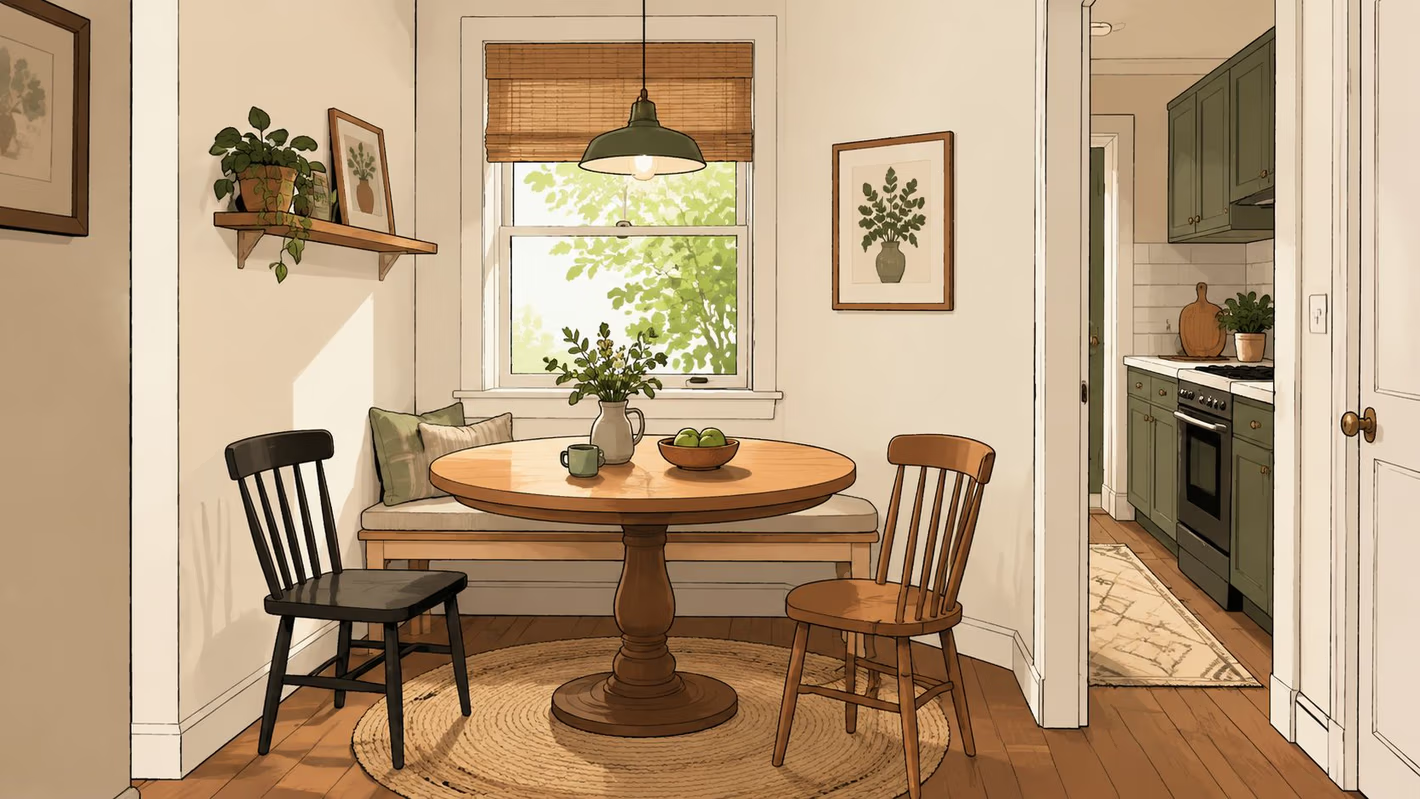
A pedestal base frees chairs from corner legs and gives diners more freedom to shift their knees. That advantage matters in a nook where two chairs and a built-in bench share the same top. The drawback is the pedestal apron. A wide apron or low support can limit where a child's knees fit, even when the tabletop itself seems generous.
Four-leg tables feel familiar and sturdy, and they pair naturally with benches. They also place obstacles at the corners, where a small room has the least spare space. In a narrow rectangular room, a slim-leg design may work better than a bulky trestle or broad corner structure.
Rectangular tops maximize linear wall space. A narrow table can sit parallel to a galley kitchen or behind a sofa, but the household should avoid making the passage side too tight. Oval tables can offer some of that length while softening the corners, especially when a straight rectangle feels too severe for the room.
Edges deserve a hands-on test
A bullnose or eased edge is kinder in a tight walkway, particularly for homes with children or anyone who regularly passes behind a seated diner. Thick square edges look substantial, but they can crowd knees and create painful shin encounters when chairs sit close.
The clear verdict for a table used three times a day is practical: choose the shape that protects the busiest path, then choose the base that lets every regular diner sit comfortably. Height matters alongside both. The dining table height guide helps shoppers distinguish standard dining surfaces from counter-height options before pairing chairs or stools.
Materials and Finishes That Work Hard
A small dining table rarely handles only meals. It may hold homework, a laptop, grocery bags, craft supplies, and a serving dish before dinner. Material selection should account for that workload, not just how light the table looks in a photograph.
Solid wood brings repairability and a familiar tactile quality, but it can show dents, scratches, and seasonal movement. Veneers use a real wood surface over an engineered core, which can help a compact table remain flatter through changing indoor conditions. In Southern Oregon, seasonal humidity swings make construction important. A well-made engineered core can be a practical choice for an apartment-sized table that needs dimensional stability.
| Material | Durability | Visual Weight | Maintenance | Best For |
|---|---|---|---|---|
| Solid wood | Strong and repairable, but can mark and move with conditions | Medium to substantial | Depends on finish and regular care | Families wanting a long-term natural surface |
| Wood veneer | Reliable when well constructed, with an engineered core that supports stability | Light to medium | Usually straightforward | Apartments and everyday multi-use dining |
| Glass | Resistant to some surface wear, but reveals fingerprints, dust, and chips | Visually light | Frequent wiping | Bright nooks where openness matters most |
| Metal | Strong base material, especially with a durable coating | Light to industrial | Simple wipe-down care | Rentals, studios, and vacation homes |
| Stone | Heavy, durable, and visually anchoring | Substantial | Surface-specific care | Rooms that can carry visual and physical weight |
| Laminate | Practical for routine spills and hard use | Light to medium | Easy daily cleaning | Busy households and flexible dining-work surfaces |
Lighter wood tones and reflective surfaces can make a compact nook feel more open. Dark stains and thick stone slabs add visual authority, but they can make a small room feel anchored and tighter. Glass offers the clearest sense of visual space, yet fingerprints and dust become part of the daily maintenance routine.
Edge grain and long grain also affect the impression and wear pattern of wood. A surface with visible directional grain can disguise minor marks better than a highly uniform finish, while a glossy piano-like surface tends to magnify micro-scratches and reflections. Matte finishes are usually more forgiving in a family dining area.
Care should match the finish. Oiled wood benefits from conditioning every three to four months, especially during dry Southern Oregon winters. Sealed woods wipe clean, lacquered surfaces handle water rings better, and hot pans still require trivets regardless of the material.
For a hardworking small table, the soundest choice is usually a sealed or well-finished wood surface, a durable veneer with a stable core, or a practical laminate. Glass and stone can work, but only when their maintenance and visual weight suit the household.
Planning Seating Without Crowding
Seat count becomes misleading in a small room. A tabletop may technically accommodate four chairs, yet the chairs can block a doorway or force diners into one another's elbows. Planning begins with 24 inches of elbow room per person, then adjusts for the actual chair width, arms, wall position, and traffic route.
A backless stool can disappear completely beneath a table when the meal ends. That makes it a strong choice for a studio or narrow galley where every inch of open floor matters. A fully upholstered armchair offers more comfort, but its arms and deeper footprint demand more room around the table.
Match the seat to the room
Side chairs and Parsons chairs provide a familiar dining experience, but their backs may prevent complete tuck-under storage. Upholstered stools give more comfort than basic stools while keeping the visual profile low. Swivel chairs can make entry easier in a galley layout because a diner can turn toward the aisle instead of dragging the chair backward.
A corner bench paired with two stools often beats four separate chairs in a breakfast nook. The bench uses the fixed wall zone efficiently, while the stools can move away when the floor needs to serve another purpose. In an open room, a bench may also slide beneath the table more cleanly than chairs with broad backs.
A useful bench rule is to subtract 8 inches from the table length per bench to allow comfortable seating overlap. That prevents a bench from being treated like a rigid row of full chair spaces.
Plan for guests without living around spare chairs
Overflow seating should live somewhere else until it's needed. Stackable or folding chairs can remain in a hall closet, while slipcovered chairs offer an easier refresh after a larger meal. A household that hosts occasionally shouldn't sacrifice daily circulation for seats used only on special occasions.
Pairing finishes helps a compact room look intentional. Matching every chair can feel heavy, but random finishes can make the space look crowded. A consistent wood tone, repeated metal detail, or shared upholstery color creates visual order without requiring a complete dining set.
The expandable dining tables collection can help households compare compact daily configurations with tables designed for occasional expansion. The final test is physical: pull out every regular seat, walk behind it, and check whether the table still supports normal household movement.
Styling, Multi-Use Ideas, and Care
Small-room styling should protect function. A pendant over a standard 30-inch dining table needs a different visual relationship than lighting over a 36-inch counter-height table, so the fixture should be chosen after the table height and seating are settled. Dimmable bulbs help the same compact area shift from homework to dinner to game night without adding more lamps or furniture.
A runner can visually lengthen a narrow table, while a small centerpiece keeps the center from becoming a permanent storage zone. Removable leaves should have a dedicated place, whether that's inside the table, in a nearby cabinet, or stored upright where they won't warp.
A wall-mounted drop-leaf table can become a dining surface, desk, craft station, or serving buffet during the week. A narrow console behind a sofa can hold decor most days and provide overflow serving space during a holiday meal. In a small home, the most useful table often performs several quiet jobs instead of dominating one room.
A practical care routine
- Protect the surface: Use trivets for hot pans and wipe spills before they sit.
- Even sunlight: Rotate the table position seasonally when the room allows it, so one area doesn't receive all the UV exposure.
- Check the base: Tighten pedestal bases twice a year and inspect extension hardware when leaves are used.
- Condition wood: Treat oiled wood every three to four months, particularly during dry winter conditions.
Those habits preserve both appearance and operation. A table that still opens smoothly, stays level, and tucks its seating away is doing more for a small room than decorative styling alone.
Why Shopping Local Matters for the Right Fit
Online dimensions can tell a shopper whether a table might fit. They can't show how a pedestal affects knees, whether a drop-leaf hinge feels solid, or how a thick edge meets the chairs already in the home. Those details matter more in a tight dining area than they do in a large formal room.
A local showroom gives shoppers the chance to test scale instead of guessing from a screen. At the 30,000-square-foot showroom in Grants Pass, a homeowner can sit at a round pedestal table, operate a leaf, compare edge profiles, and judge whether a chair tucks far enough beneath the top. That hands-on test is useful for residents driving from Medford, Central Point, Ashland, or elsewhere in the Rogue Valley.
The showroom also makes room for choices that don't appear in a national catalog. Gates Home Furnishings' Unique Finds include reclaimed wood, teak, and one-of-a-kind statement pieces, giving shoppers alternatives to overly bulky or visually predictable tables. Outlet closeouts and floor models can also provide practical options for buyers watching the budget, although every candidate still needs to pass the measurement test.
Service matters after the purchase
Tight staircases, second-floor apartments, older Rogue Valley homes, and narrow hallways can turn delivery into a real challenge. White-glove furniture delivery generally means more than curbside drop-off. It typically includes carrying the furniture into the home, placing it in the correct room, removing packaging, and assembling or setting it up before the crew leaves, as described in this white-glove furniture delivery explanation.
Gates' service also includes professional assembly and mattress haul-away, along with protection-plan options for furniture that works hard every day. Flexible Gates Easy Pay options include $0 down, 6-month interest-free financing, and no-credit-needed options, subject to the applicable program terms.
Since 1946, the business has carried George Gates' original promise of “Service and Value.” That philosophy makes local shopping more than a visual preference. It connects a measured floor plan with a table that can be tested, delivered, assembled, and supported for the way a household lives. Shoppers can also browse dining room furniture for compact layouts before making the trip.
Visit Gates Home Furnishings in Grants Pass to test compact dining tables, chairs, benches, reclaimed wood, teak, and flexible table designs in person. The team can help Southern Oregon homeowners match a table to measured clearances, daily seating, delivery needs, and a practical Gates Easy Pay option.