Power Recliner vs Manual Recliner: How to Choose

A recliner decision often looks simple until two chairs feel equally comfortable. In the Grants Pass showroom, shoppers regularly stand between a powered leather chair and a manual pull-tab recliner, trying to decide whether button-controlled movement is worth the added complexity. The better question isn't which chair looks more modern. It's which mechanism will make daily sitting easier for the person who'll use it.
That choice affects positioning, upfront cost, outlet placement, repair risk, and long-term satisfaction. Power recliners have become the higher-value segment globally, with 58.3% of unit sales and 63.2% of revenue in 2025, while manual recliners represented 41.7% of units and 36.8% of market value, according to market estimates for the recliner industry. Those figures don't make power automatically better. They show that shoppers are paying more for adjustability and features, while manual seating still serves buyers who value simplicity and lower initial cost.
Two Recliners, One Living Room
A Grants Pass couple recently faced the kind of choice that happens every day in a furniture showroom. One chair had a powered control on the arm, a smooth motorized footrest, and the polished look of a premium living room piece. The other used a familiar pull tab, offered a comfortable seat, and needed no cord at all. Both felt good during a short showroom test, and neither was priced dramatically beyond the other.
The deciding question was simple: how should the chair move at the end of a long day?
A manual recliner asks the sitter to pull a lever or shift body weight. A power recliner responds to a button, allowing the user to stop at a preferred point rather than accept only the positions built into the mechanism. That difference can determine whether a person uses the chair every evening or leaves it upright because reclining takes too much effort.
Practical rule: Choose the mechanism around the body using the chair, not the room displaying it.
A manual recliner can be the right call for a guest room, a compact apartment, or anyone who wants furniture that works during an outage without depending on an outlet. A power model makes more sense for someone who needs precise lumbar, headrest, or leg-rest positioning, or who finds standing from a fully reclined chair physically demanding.
The wider room matters, too. A recliner should support the home's style rather than look like an afterthought. Readers collecting references for a warm, relaxed space may find useful direction in these cozy farmhouse living room ideas, especially when combining leather, wood, and soft textiles.
The buying decision shouldn't end with a five-minute sit. A practical recliner buying guide helps shoppers consider fit, clearance, upholstery, support, and delivery before choosing a mechanism. In Southern Oregon, the best test is still personal. A chair that feels right in a showroom should also make sense for the household's routines, room layout, and plans for ownership.
How the Mechanisms Actually Differ
The two chairs may look similar from across the room, but their movement comes from very different hardware. A typical power recliner uses a 29V DC motor and a motorized scissor-lift mechanism, allowing continuous micro-adjustment rather than only fixed stop points, as explained in this power and manual mechanism comparison. Depending on the design, the backrest and footrest may move together or operate independently.
A manual recliner generally relies on a lever, pull tab, or body-weight mechanism. The sitter activates the hardware, leans back, and uses the chair's spring and frame system to reach one of a small number of established positions. That construction is mechanically simpler and doesn't need an electrical drive system.
Power movement and manual movement
Power seating gives the user a broader range of control. Holding a button or wand lets the sitter stop the chair at a preferred angle, which can help when one person wants a modest recline and another wants more leg elevation. The chair needs an outlet and a two-prong power supply, so placement requires more planning.
Manual seating has fewer dependencies. There's no cord to route, no transformer to position, and no concern about the chair's controls during an outage. The trade-off is physical effort and less precise positioning. Manual chairs also tend to use a lighter mechanism, while powered models commonly include a heavier steel-framed base to support the motorized movement.
| Feature | Power Recliner | Manual Recliner |
|---|---|---|
| Movement | Continuous adjustment | A small number of preset positions |
| User control | Button or wand | Lever, pull tab, or body weight |
| Power requirement | Requires an outlet and power supply | No electricity required |
| Positioning | Fine-tunes back, legs, and available headrest or lumbar features | Uses established mechanical stops |
| Service profile | More components and more involved repairs | Fewer parts and simpler servicing |
| Physical design | Often heavier because of the powered base | Usually lighter and easier to reposition |
A buyer considering upholstery protection should also think about how the mechanism affects the cover. A fitted cover needs to accommodate moving footrests and side controls, so guidance on custom fit reclining chair covers can be useful before ordering one.
Shoppers comparing styles can also review the broader range of power reclining seating to see how single-motor, multi-motor, lift, and specialized designs differ. The hardware matters, but the useful question remains practical: will that movement solve a daily comfort problem?
Comfort and Day-to-Day Use
Power earns its premium through control that can be adjusted while the sitter remains seated. A user can raise the footrest slightly, change the back angle, tilt a powered headrest, or refine lumbar support without committing to one preset position. That matters when a hip, lower back, neck, or recovering joint needs a very particular angle.
Manual seating still performs well for straightforward relaxation. Someone who settles in for television, pulls the handle once, and stays in that position may never miss finer adjustment. Some people also enjoy the physical ritual. Pulling the tab, easing back, and returning the footrest with the legs feels familiar and uncomplicated.
Different bodies need different controls
Shorter users often notice the value of power when a fixed footrest position leaves the legs unsupported. Someone managing back discomfort may appreciate incremental changes instead of having to choose between upright and fully reclined. A shared chair can also be easier to use when household members have different preferred positions, although the available controls depend on the model.
A senior or a person returning home after surgery faces a more important issue than convenience. A power lift mechanism can raise the chair toward standing height, reducing the effort needed to get upright. A standard manual recliner still requires the sitter to lean forward, engage the legs and upper body, and manage the footrest.
The right chair should be tested with the actual user. Sitting upright, reclining gradually, checking head support, and returning to standing reveal more than upholstery photographs.
A recliner succeeds when the person reaches for it without thinking about the mechanism.
For shoppers dealing with back discomfort, a closer look at recliners for back pain can help narrow the search toward supportive shapes and adjustable features. A salesperson can then check whether the chair supports the user's shoulders, lower back, knees, and feet at the same time.
Our 30,000-square-foot Grants Pass showroom gives families a practical place to compare these details. Customers from Medford, Central Point, Ashland, and nearby Rogue Valley communities can sit in both types, operate the controls, and see whether the chair fits the household rather than relying on a product description.
What Power and Manual Really Cost
The power recliner vs manual comparison becomes clearer when the price difference is treated as a bundle of hardware and function, not a simple surcharge. Independent retail analysis places the usual power premium at about $200 to $800 over a comparable manual model, with common bands around $400 to $1,500 for power and $200 to $800 for manual, according to this retail comparison of powered and manual seating.
Those ranges overlap because upholstery, frame quality, size, brand, and features change the price. A plain manual chair may cost less than a feature-heavy power model, while a well-built manual recliner can sit near an entry powered chair.
What the added money buys
The extra cost typically pays for the motor, controls, wiring, power supply, and additional adjustment options. USB charging, heat, massage, and battery-backup options may also appear on selected powered models. Manual buyers generally pay for the frame, springs, lever, padding, and upholstery without adding electrical hardware.
| Category | Manual Recliner | Power Recliner |
|---|---|---|
| Main value | Lower initial cost and mechanical simplicity | Adjustable comfort and effortless movement |
| Typical mechanism | Lever or body-weight operation | Motorized operation through buttons or a wand |
| Features | Basic reclining function | May include USB, heat, massage, headrest, lumbar, or lift functions |
| Placement | Doesn't need an outlet | Needs planned access to power |
| Ownership concern | Mechanical wear and physical operation | Electrical components and more complex service |
A buyer shouldn't pay for features that won't be used. Someone purchasing a chair for occasional reading may prefer a simple manual model. Someone sitting daily with hip or back concerns may receive more practical value from powered adjustment, even if the initial receipt is higher.
Financing can change how a household manages the purchase without changing the mechanism decision. Gates Easy Pay financing options include $0 down, six-month interest-free options, and no-credit-needed choices, subject to the applicable program terms. That can help a buyer choose the chair that fits the user instead of choosing only by the lowest sticker price.
The most useful budget question is not “Which one costs less today?” It is “Which chair will still be comfortable and usable after years of ordinary use?”
Durability and Long-Term Ownership
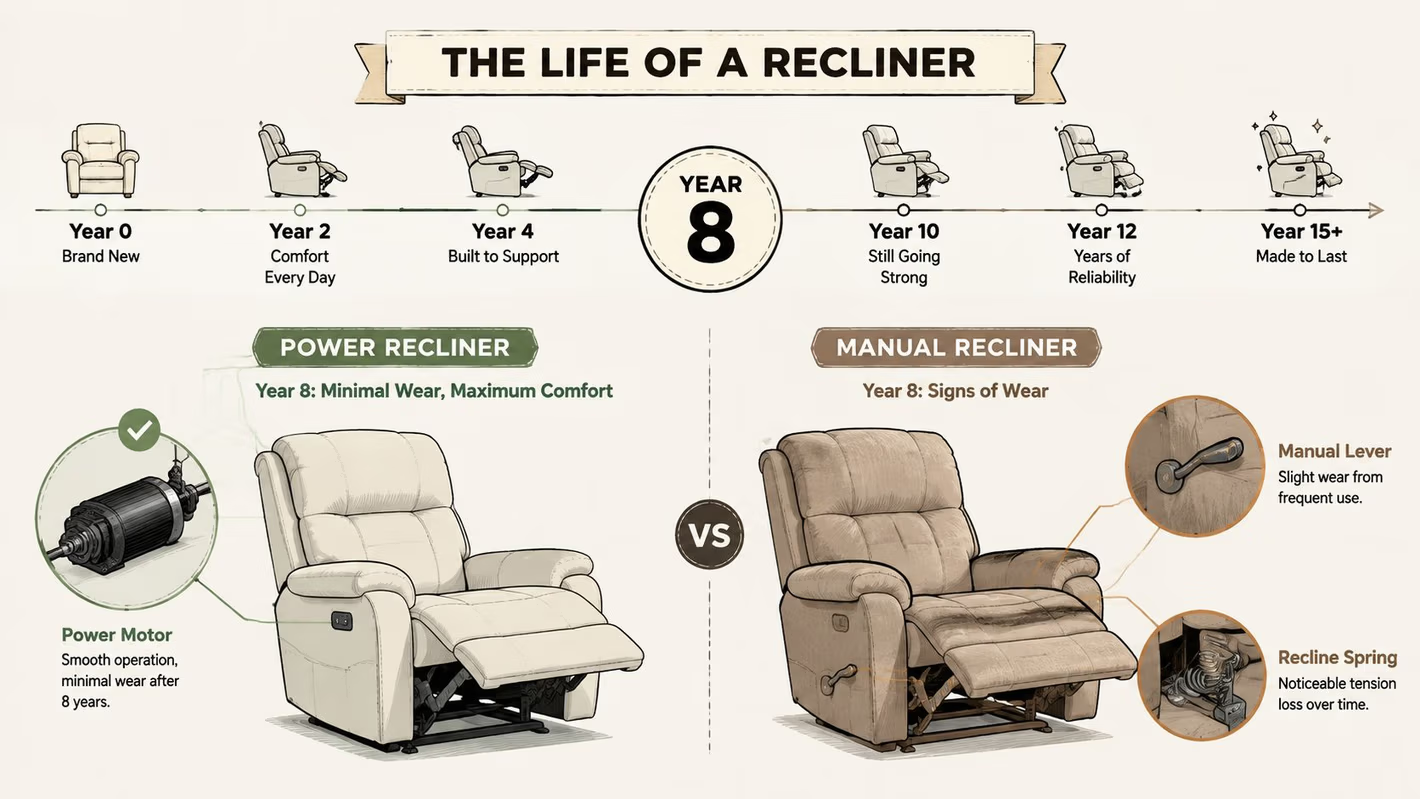
A manual recliner often earns its lower price through simpler construction. Fewer electrical parts mean fewer systems that can fail and, in many cases, easier service. Power seating gives you finer comfort control, but motors, wiring, and a power supply add repair points. That trade-off matters over five to eight years, not just on purchase day.
Both types can provide dependable comfort during the early years when used properly. Later, ownership depends on what happens when a component needs attention. A manual mechanism may need adjustment or a replacement spring. A power chair may involve a motor, control, transformer, or wiring issue, depending on the failure.
What changes after the purchase
Manual construction can make diagnosis more straightforward. A lever, spring, or linkage can wear, yet the chair does not rely on a transformer or electronic control system. Power owners should keep the cord away from pinch points, avoid trapping it under the frame, and ask about backup operation before buying.
Power also depends on a working outlet and an intact cord. In Southern Oregon, winter weather can disrupt household routines, so that dependency deserves a place in the decision. A manual recliner keeps working without household power.
Ownership test: Ask what happens if the chair stops moving, not only how comfortable it feels while everything works.
The market context reinforces the need to judge value over time. One projection places the global recliner market at USD 8.27 billion by 2032 with a 6.0% CAGR, while recliner sofas are projected to reach USD 6.69 billion by 2032 with a 4.8% CAGR. Growing demand does not answer the service question. Your warranty, repair access, and willingness to maintain the chair matter more at home.
A lower-priced manual chair may be practical to repair when a mechanical component wears. A higher-priced powered chair may require a technician or replacement part, and some households may replace it instead of paying for a complex repair. That does not make power a poor choice. It means the purchase should include a close look at warranty terms, service support, cord placement, and expected use.
For Grants Pass shoppers, durability includes delivery and setup. Proper assembly lowers the chance of installation problems, while a protection plan may help with accidental damage according to its terms. In our showroom, the practical recommendation is simple: choose manual for fewer dependencies, or choose power when the daily comfort benefit justifies added service risk.
Matching the Recliner to the Person
The marketing brochure can't tell whether a chair will help a particular body. The user can. A useful choice starts with the person's mobility, daily routine, room, and tolerance for cords and mechanical complexity.
Seniors and mobility limits
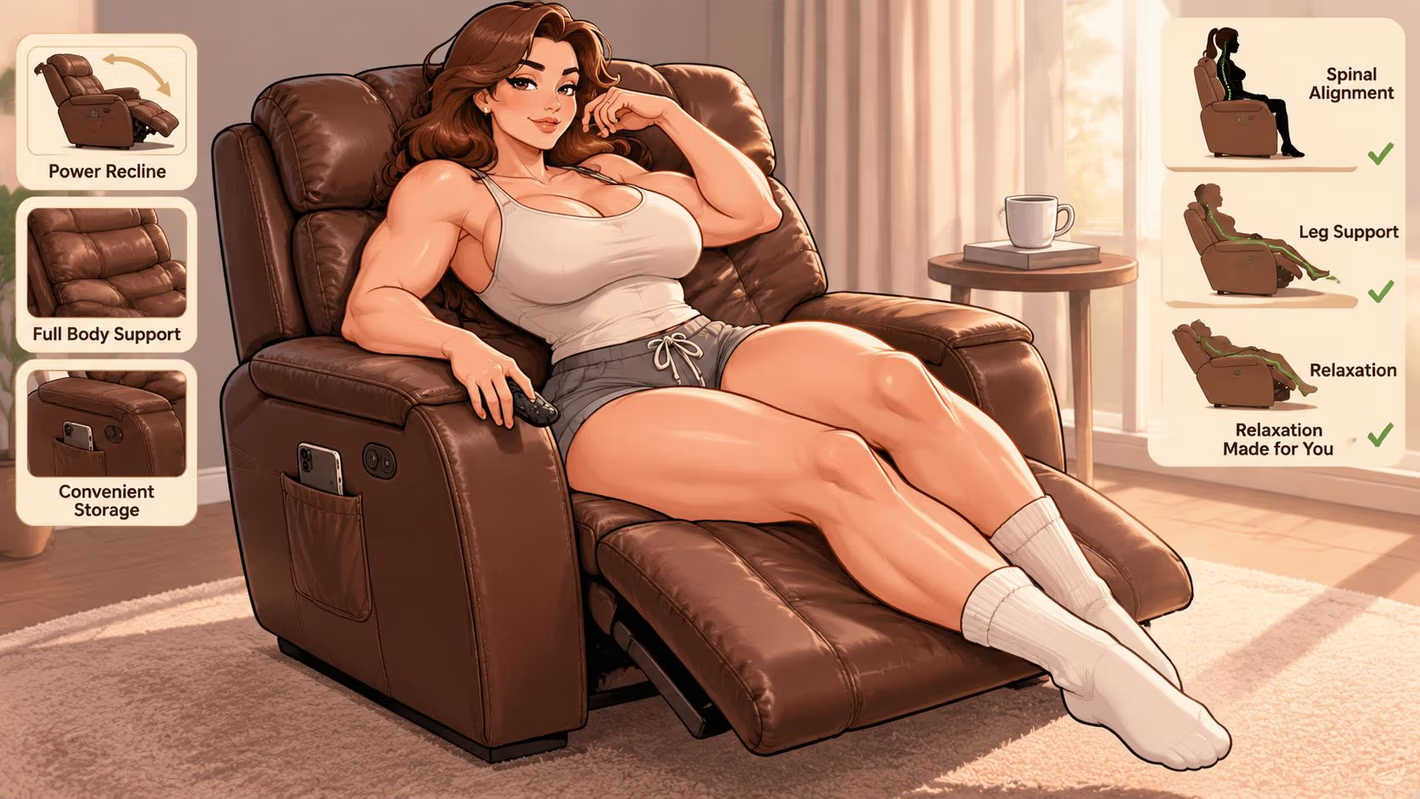
A power lift chair is the clearest recommendation for someone who struggles to rise from a low seat. The lifting motion supports the transition toward standing, while powered reclining reduces the need to pull a lever or shift body weight. A two-motor or three-motor design may offer more independent control, but the exact benefit depends on the model and the user's needs.
Anyone recovering from surgery should test the chair with medical guidance in mind. The most useful feature may not be maximum leg extension. A controlled back angle, powered headrest, or adjustable lumbar area can matter more when a fixed position places pressure near a healing area.
For a focused look at this category, power recliners for elderly users provide a useful starting point. The final selection should still be tested for seat height, arm support, control placement, and the ease of returning upright.
Television, gaming, and shared rooms
A dedicated television or gaming room usually rewards repeat-use ergonomics. Power controls let the sitter make small adjustments without standing, while USB charging and memory positions can be useful on models that include them. A manual chair remains sensible when the room is used casually or the user prefers a fixed, familiar position.
For a compact apartment, secondary room, or guest bedroom, a manual swivel-glider can be the cleaner answer. It avoids an outlet hunt, stays easier to reposition, and doesn't add electrical hardware to a room where the chair may see limited use.
Southern Oregon living rooms often call for a balance between comfort and texture. Top-grain leather power seating can suit an earth-tone room with substantial furniture, while performance-fabric manual seating may fit a casual family space where pets and everyday activity are central concerns. Those are style tendencies, not rules. The chair still needs to fit the user's body first.
A quick matching guide
- Mobility concern: Prioritize powered lift and easy return to upright.
- Post-surgery recovery: Test back, head, and lumbar adjustment carefully.
- Long viewing sessions: Consider continuous positioning and useful built-in features.
- Small or secondary room: Favor a lighter manual chair when power adds little value.
- Pets and family traffic: Compare cleanability and fabric performance before choosing leather or fabric.
Gates Home Furnishings carries seating from brands including La-Z-Boy, Flexsteel, and Ashley, along with power and manual designs that can be tested in person. The showroom also includes Unique Finds made from reclaimed wood and teak, which can help connect a new recliner to a room with more individual character than a standard big-box arrangement.
Which One Belongs in Your Home
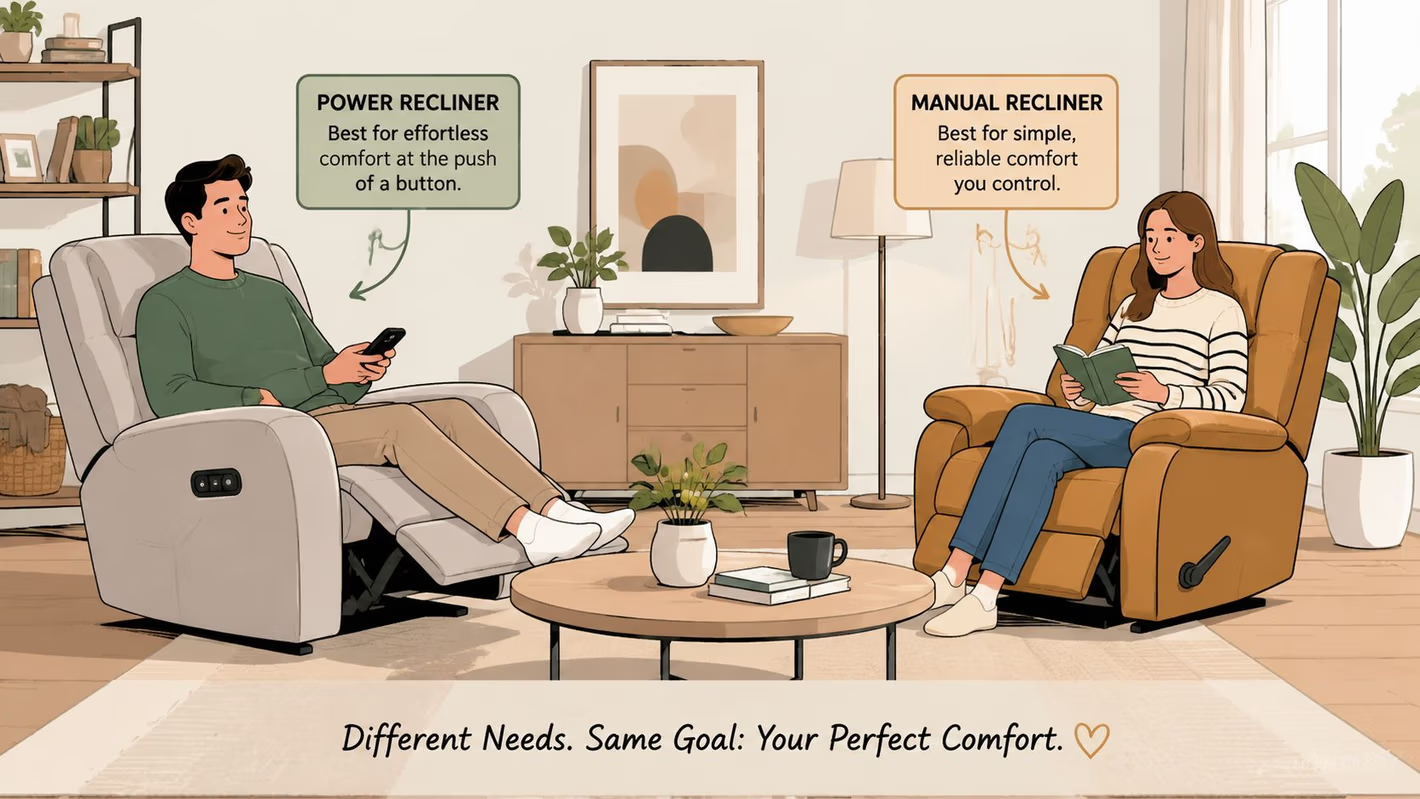
The strongest recommendation depends on the person, not the label. Power is the better choice for seniors with mobility limits, people recovering from surgery, and users managing ongoing discomfort who need to adjust position without physical strain. It also suits a daily-use chair where headrest, lumbar, leg, or lift control will be used repeatedly.
Manual is the better choice for younger households, smaller living rooms, guest rooms, and secondary seating. It works without an outlet, generally has fewer components, and can offer a lower long-term repair risk. Buyers who prefer straightforward furniture and don't need fine positioning shouldn't pay for powered movement they won't use.
Three profiles that make the decision easier
Choose power when the chair is part of daily physical support. The motorized return to upright and continuous adjustment can change whether the user feels independent and comfortable. For chronic pain or recovery, the ability to make a small adjustment without leaving the chair may matter more than a stylish finish.
Choose manual when simplicity carries more weight. A pull-tab chair can be a dependable fit for a family room, apartment, reading corner, or guest space. It doesn't need a cord, and its mechanical design is easier to understand when service is needed.
Consider a hybrid when one powered feature solves the problem. Some chairs offer a manual reclining action with a powered headrest or lumbar upgrade. That can give a buyer targeted adjustment without committing to full electric movement, though the available configuration should be confirmed on the specific model.
The showroom test should include more than sitting upright. Each user should operate the chair, check whether the footrest supports the legs, assess the headrest, return to standing, and picture the cord in the intended room. Customers from Grants Pass, Medford, Central Point, Ashland, and surrounding Southern Oregon communities can compare both mechanisms at the 30,000-square-foot Grants Pass showroom.

The household's daily routine should settle the power recliner vs manual decision. A power model is worth considering when movement, recovery, or precise support affects everyday use. A manual model is the sensible answer when the room needs flexibility, the chair won't see constant use, or mechanical simplicity matters most.
Gates Home Furnishings has served Southern Oregon since 1946, built around George Gates' original promise of “Service and Value.” That commitment includes professional white-glove delivery, assembly, and mattress haul-away rather than dropping boxes at the door. Shoppers can also explore flexible Gates Easy Pay options, including $0 down, six-month interest-free options, and no-credit-needed financing, subject to program terms.
Visit Gates Home Furnishings in Grants Pass to test power and manual recliners side by side, compare La-Z-Boy, Flexsteel, and Ashley seating, and explore Unique Finds in reclaimed wood and teak. The team can help match the mechanism to the user's comfort needs, arrange professional assembly and haul-away, or help shoppers browse the collection online before making the trip.