Lift Chairs for Seniors: A Complete Buyer’s Guide


A regular recliner can feel perfectly comfortable until standing becomes the hardest part of the visit. A senior may lean forward, grip the arms, rock several times, or wait for a caregiver before getting up. That's the point when comfort furniture needs to do more than recline. Lift chairs for seniors combine supportive seating with a powered lift that helps guide the occupant toward standing.
The right chair can support independence, but the wrong size can create new problems. Seat height, seat depth, body width, weight capacity, wall clearance, control simplicity, and safe placement all matter more than a long feature list. Families in Grants Pass, Medford, Central Point, Ashland, and throughout Southern Oregon can use this guide to evaluate a lift chair as mobility equipment, not just another living-room recliner.
Why Lift Chairs Matter for Aging in Place
A familiar situation often starts the conversation. A parent sits down to watch television, then struggles to rise when the phone rings. A spouse reaches for the person's hands, the user pulls against the armrests, and everyone worries about a slip. The chair may still look attractive, but it no longer supports a safe transfer.
A lift chair raises the seat and angles the occupant forward, reducing the effort required to move from sitting toward standing. It's an assistive device, not merely a plush recliner. The purpose is to help a person sit down and stand up with more control while preserving the ability to move around the home.
Falls are part of the reason demand for mobility seating remains strong. One cited Canadian source reports that 1 in 3 Canadians aged 65 and older experiences a fall each year, and the same source states that Canada had 8.1 million people aged 65 or older as of 2026. Broader market estimates project the global home electric lift chair market at USD 2.5 billion in 2025, with a 7% CAGR through 2033, while another estimate places the lift chair market at USD 3.19 billion in 2025. These figures use different market definitions, but they point to the same practical reality, more households need seating that supports aging in place. (Demand, demographics, and market context for lift chairs)
Independence starts with the transfer
The lifting action matters most during the transition between positions. A properly fitted chair can make it easier for a senior to answer the door, move to the kitchen, or get up for medication without immediately calling for help. It won't replace a walker, physical therapy, caregiver support, or medical advice, but it can reduce one recurring obstacle inside the home.
Families often consider other accessibility improvements at the same time. For broader planning ideas, a guide to handicap bathroom remodels Melbourne 2026 can help caregivers think about grab points, transfer areas, and safer movement beyond the living room.
The chair still needs to fit the individual. A seat that leaves feet dangling, a cushion that pushes into the knees, or a room that doesn't allow safe recline clearance can undermine the lift function. Gates Home Furnishings provides a dedicated mobility seating collection for seniors for shoppers who want to compare supportive options before making a decision.
Understanding Lift Chair Types and Features
Motor configuration determines how the chair moves. Buyers should decide what the occupant needs the chair to do before choosing upholstery, massage, or other extras.
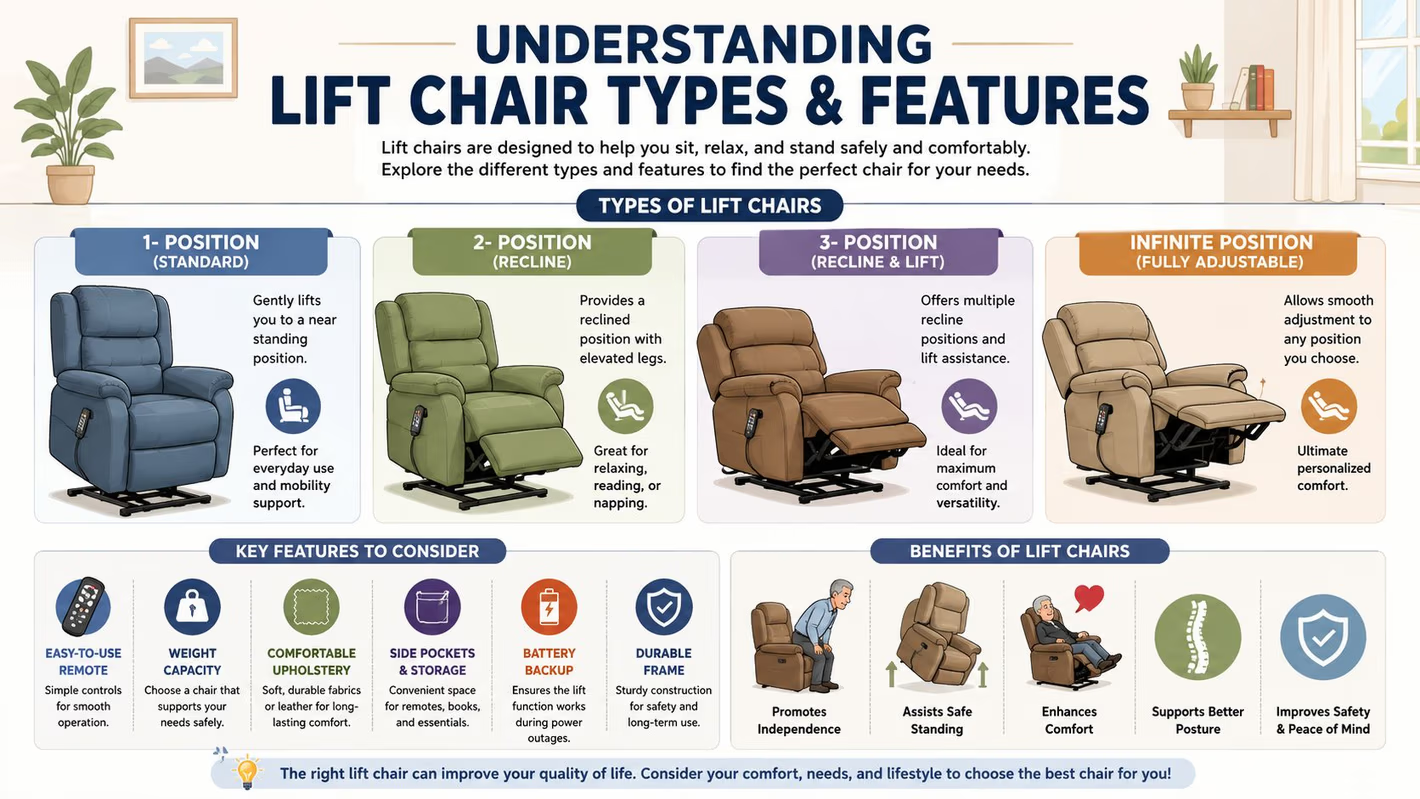
Single-motor chairs keep operation simple
A single-motor lift chair moves the backrest and footrest together. As the back reclines, the footrest rises in a linked motion. This arrangement suits someone who mainly needs help standing and wants straightforward reclining for reading, television, or resting.
The main advantage is simplicity. Fewer independent adjustments can make the remote easier to understand, especially for someone who dislikes complicated controls. The tradeoff is limited positioning. The occupant can't raise the legs without changing the backrest position.
Dual-motor chairs provide independent positioning
A dual-motor lift chair controls the backrest and footrest separately. That distinction matters for users who need more precise support, such as someone who wants the legs raised while keeping the upper body relatively upright. It can also help a person with limited hip or knee flexion find a position that feels manageable.
Dual motors aren't automatically worth the extra cost for every shopper. They make more sense when positioning needs are specific or the chair will be used for extended periods. Families should test the controls with the intended user, because a wider range of movement only helps if the person can operate it comfortably.
A practical overview of power reclining seating types can help shoppers distinguish basic synchronized movement from independently controlled positioning.
Separate essentials from comfort extras
Heat and massage may add comfort, but they don't replace a properly sized seat or a reliable lifting mechanism. A simple remote, sturdy frame, accessible controls, and appropriate weight capacity deserve priority.
Standard residential lift chairs commonly have a 300 to 350 pound weight capacity, while heavy-duty models are built for higher loads. One guide recommends selecting a chair rated about 50 to 100 pounds above the user's body weight, and some fit guidance recommends at least 20% above body weight. Those are sizing rules, not guarantees, so the manufacturer's capacity and the user's actual fit still control the final choice.
Getting the Fit Right for Your Body and Home
Fit is the decision that determines whether the chair will help during daily transfers. Shoppers often focus on fabric, heat, and massage, then discover that the seat is too deep or the chair can't recline safely in the room.
Start with the user's knee height
Measure the user while wearing the shoes normally worn at home. The seat height should closely match the user's knee height, and consumer guidance commonly places the target for seniors at about 19 to 21 inches. A close match helps the feet rest firmly and reduces the knee and hip flexion required during the sit-to-stand movement. (Seat-height and lift-recliner sizing guidance)
A chair that's too tall can leave the feet unsupported. A chair that's too low can force deeper bending at the knees and hips. Neither condition is a minor comfort issue when the occupant depends on the lift function.
Check depth, width, and back support
Seat depth should allow the user to sit fully against the backrest without the cushion pressing behind the knees. If the seat is too deep, a shorter user may slide forward, losing lumbar support and making the lift feel less natural. If it's too shallow, the thighs may lack support.
Seat width should hold the hips securely without squeezing. An oversized chair isn't automatically safer or more comfortable. Excess space can leave a smaller user unsupported, while a narrow seat can create pressure at the hips and make repositioning difficult.
Ask the user to sit as they would at home, with the back against the cushion and feet supported. Then check:
- Feet: Both feet should rest securely when the chair is upright.
- Knees: The seat edge shouldn't press sharply behind the knees.
- Back: The user should remain supported without sliding forward.
- Head and shoulders: The backrest should support the upper body during recline.
- Controls: The remote should be reachable without twisting or leaning.
Measure the room before ordering
Room clearance matters as much as body clearance. Measure the intended footprint, the path through doorways, nearby tables, and the distance needed for the chair to lift and recline. Keep walking routes and caregiver access open, especially beside the chair and in front of the footrest.
Compact lift chairs deserve more attention in apartments, smaller living rooms, and homes with narrow pathways. Larger models may offer deeper seats and taller backs for bigger users, but they can overwhelm a modest room or leave a smaller person poorly supported. Before shopping, review a practical furniture measuring guide and record the available space, doorway dimensions, and user measurements.
Practical rule: A lift chair should fit the person first and the room second, but both checks must happen before purchase.
Navigating Medicare Coverage and Financing Options
Medicare coverage creates confusion because the covered item and the purchased furniture are not the same thing. Under Medicare Part B guidance, coverage may apply to the seat-lift mechanism, not the complete lift chair, when a physician certifies medical necessity.
The cited requirements generally involve severe hip or knee arthritis or severe neuromuscular disease, an inability to rise from a regular chair, and the ability to walk once standing. After the deductible, Medicare may pay up to 80% of the approved amount for the mechanism. The chair's upholstery, frame, and non-covered reclining or massage features remain out of pocket. (Medicare lift-chair coverage explanation)
Ask the right reimbursement questions
A family should confirm the details before assuming insurance will pay for the chair. Useful questions include:
- What exactly is covered? Ask whether the plan addresses only the mechanism or also any approved equipment components.
- Who must certify necessity? Confirm the physician documentation and supplier requirements.
- What remains out of pocket? Include upholstery, frame, delivery, comfort functions, and any non-covered accessories.
- Which suppliers qualify? Medicare rules can depend on approved suppliers and billing procedures.
A reimbursement explanation can clarify why lift-chair coverage is often confused with other mobility-equipment benefits, but families still need to verify the current rules with Medicare, the physician, and the supplier. (Senior mobility-equipment reimbursement guidance)
Compare total cost, not sticker price
The least expensive chair isn't always the most sensible choice. A basic single-motor model may suit a user who only needs lift assistance and modest reclining. A dual-motor chair can justify a higher purchase price when independent back and leg positioning will be used every day.
Gates Easy Pay gives Southern Oregon shoppers flexible ways to manage the purchase, including $0 down, 6-month interest-free options, and no-credit-needed programs. Financing terms still require careful review, including payment schedules and promotional conditions. A plain-language Southern Oregon furniture financing guide can help families compare options without confusing chair coverage with financing.
Safety Features and Setup Considerations
A power lift recliner can improve mobility, but it has moving parts and must be treated as assistive equipment. Safe use starts with installation, clear instructions, and supervision appropriate to the occupant's abilities.
Protect hands, feet, and balance
Manufacturers warn about pinch points around the lift and scissor mechanisms. Hands and feet should stay clear whenever the chair is lifting, lowering, or reclining. Users also shouldn't sit on the armrests or footrest, because those positions can tip the chair or cause injury. (Manufacturer lift-chair safety instructions)
The chair should have enough surrounding space for movement and emergency access. Cords shouldn't cross walking paths, and the power connection should remain accessible. A caregiver should watch the first several uses and confirm that the occupant understands the remote.
Take cognitive decline seriously
Power activation creates a particular risk for someone with memory loss or impaired judgment. A coroners' report response notes that older users with cognitive decline have been injured or killed after accidental activation of power recliner lift chairs. That warning makes supervision, remote placement, and family judgment essential when the user may press controls impulsively or misunderstand the chair's movement. (Safety information about accidental lift-chair activation)
A chair with a complicated remote may be a poor choice for someone who can't reliably follow operating instructions. The safest setup may include caregiver supervision and a consistent routine for using the lift function.
Keep the electrical environment safe
Safety guidance says to use the chair only for its intended purpose, with one person occupying the seat and only the occupant activating the control switch. The chair should stay away from moisture, damp areas, and heat sources. It shouldn't be operated if wiring, parts, or the electrical system appear damaged. (Lift-chair care and safety guidance)
Families considering additional positioning support can review chairs with seat-belt options, then discuss suitability with a qualified professional. A belt isn't a substitute for supervision or correct chair fit.
Why Testing and Professional Setup Matter
Ordering a lift chair without testing it creates avoidable uncertainty. Product dimensions can show whether a chair might fit, but they can't reveal whether the occupant feels stable during the lift, can reach the remote, or receives enough shoulder support while reclining.
The 30,000-square-foot Gates showroom in Grants Pass gives Southern Oregon families a place to sit in multiple chairs and test the movement before choosing. Shoppers from Medford, Central Point, Ashland, and nearby Rogue Valley communities can evaluate seat height, cushion firmness, arm position, recline range, and control simplicity in person.
The right question isn't “Does this chair have enough features?” It's “Can this person use it safely, comfortably, and repeatedly?”
Test the transfer, not just the upholstery
A useful showroom test follows the user's actual routine:
- Sit fully back with both feet supported.
- Reach for and operate the remote.
- Raise the chair without pulling on the arms.
- Stand only when the chair reaches its proper lift position.
- Sit again and check whether the knees, back, shoulders, and head remain supported.
- Recline far enough to determine whether the intended room can accommodate the chair.
This process quickly exposes a chair that's too deep, too tall, too wide, or too complicated.

Delivery should remove the physical burden
Lift chairs are heavy and awkward to assemble. Gates Home Furnishings provides white-glove delivery, including professional assembly and placement, rather than leaving a senior or caregiver to manage a box and complex setup. The service also includes mattress haul-away when a mattress is part of the same home furnishing need, so the delivery team handles more than a basic drop-off.
The company was founded in 1946 by WWII veteran George Gates Jr. on the promise of “Service and Value.” That philosophy still matters when a mobility chair needs careful placement, demonstration, or follow-up. Gates Care Shield also provides protection-plan coverage for accidental spills and tears, subject to its terms.
The showroom includes La-Z-Boy, Flexsteel, Ashley, and Beautyrest selections across the broader home-furnishing collection, along with Unique Finds made from reclaimed wood and teak. Those one-of-a-kind statement pieces won't solve a transfer problem, but they help families build a comfortable home without making every room look like a medical supply space.
Making Your Decision and Next Steps
The right lift chair decision comes down to five checks:
- Motor type: Choose single-motor simplicity for basic lift and recline needs. Choose dual-motor control when independent positioning matters.
- Body fit: Match seat height closely to knee height, then verify depth, width, back support, and weight capacity.
- Room fit: Measure doorways, walking paths, nearby furniture, and full recline clearance.
- Safety: Confirm clear mechanisms, accessible controls, sound wiring, and supervision needs.
- Real cost: Separate Medicare's possible mechanism benefit from the chair and comfort features, then review financing terms carefully.
Maintenance should remain simple. Keep the chair clean according to the upholstery instructions, inspect cords and moving areas, and stop using it if the electrical system or parts appear damaged. Warranty details vary, so buyers should review coverage for the frame, motor, electronics, upholstery, and accidental damage before finalizing the order.
Gates Home Furnishings has served Southern Oregon families since 1946, helping households in Grants Pass and the wider Rogue Valley choose furniture around real bodies, real rooms, and real budgets. A showroom visit can turn uncertain online research into a practical fit check.
Visit Gates Home Furnishings in Grants Pass to test lift chairs in person, compare supportive seating, and discuss Gates Easy Pay financing with a local team. Professional white-glove delivery, assembly, placement, and mattress haul-away are available for a smoother transition to safer everyday comfort.