Teak Furniture Care: Restore & Protect Your Investment


A teak set in Southern Oregon usually looks its best right after it's been set on the patio. Then summer dust rolls in, oak leaves start dropping, winter moisture hangs around longer than people expect, and the questions begin. Why is the color changing? How often should it be cleaned? What happened to the cushion under that new bench?
Teak rewards owners who keep things simple. It doesn't need fussy treatment, but it does need the right treatment. That matters in Grants Pass, Medford, Central Point, Ashland, and across the Rogue Valley, where hot dry summers and damp stretches in the cooler months can push outdoor furniture in two different directions over the course of a year.
Embracing a Lifetime of Beauty with Teak Furniture
A good teak dining set fits Southern Oregon living. Family dinner outside in Grants Pass. Coffee on the patio before the heat kicks up. Friends gathered after sunset while the furniture stays solid, steady, and comfortable season after season.

That long-term appeal isn't hype. Quality Grade A teak furniture can endure 50+ years of outdoor use with minimal maintenance, and with proper care, some sources indicate it can last nearly 100 years. This is thanks to its extreme hardness, tight grain structure, and high natural oil content, which prevent warping, splitting, or cracking according to teak wood characteristics and care details.
Why teak holds up so well
Teak stands apart because the wood is naturally equipped for outdoor use.
- Dense structure: Tight grain helps the surface resist everyday wear.
- Built-in protection: Natural oils help the wood handle moisture.
- Stable performance: It's far less likely to warp, split, or crack than cheaper outdoor woods.
Practical rule: Teak is an investment piece, not a disposable seasonal set.
That's why teak often becomes part of the home instead of just patio furniture. It ages with the house. It picks up character. With proper teak furniture care, it can stay useful long enough to be handed down.
Why local guidance matters
Southern Oregon homes don't deal with one flat climate pattern. A backyard near the Rogue River handles moisture differently than a sunnier patio out toward the drier parts of the valley. Furniture under trees near Grants Pass often faces debris buildup that generic advice doesn't account for.
That local reality is where a long-running furniture store earns trust. Est. 1946, with George Gates' original promise of Service and Value, Gates Home Furnishings has spent generations helping Rogue Valley households choose materials that last. The 30,000 sq. ft. showroom in Grants Pass gives shoppers a place to test comfort in person, and it's also where many people discover the store's Unique Finds, including reclaimed wood, teak, and one-of-a-kind statement pieces that big-box stores don't carry.
Your Simple Routine for Everyday Teak Care
Most teak problems start when dirt sits too long. Not because teak is fragile. Because pollen, food residue, leaf debris, and grime slowly settle into the surface and stay damp longer than they should.
Everyday teak furniture care should feel like basic patio housekeeping, not a weekend project.
The routine that keeps teak easy
A simple approach works best:
- Dust it off regularly: Use a soft dry cloth to remove loose dust, pollen, and debris.
- Clean spills quickly: A damp cloth handles most food and drink messes before they settle.
- Use mild soap when needed: For a more thorough wipe-down, clean with a solution of 1 part mild dish soap to 4 parts warm water, then rinse right away with clean water, as outlined in this teak cleaning method.
That final rinse matters. Soap residue attracts dirt and leaves the surface looking dull faster.
What Southern Oregon owners should pay attention to
Patios in Grants Pass and the broader Rogue Valley collect a lot of fine dust in summer. Furniture near landscaping or trees also gathers organic debris that can hold moisture after rain or irrigation. That's why a light check every week is smarter than waiting for furniture to look obviously dirty.
Teak does best when owners remove buildup early and avoid letting grime bake in during hot weather or sit wet during cooler months.
For homeowners who want a broader seasonal overview, this outside teak furniture care guide offers useful context alongside local care habits.
Surface protection also starts with the habits used on other wood pieces around the home. The same common-sense approach in this guide to protecting wood furniture from scratches and stains applies outdoors too. Clean promptly, avoid harsh tools, and don't let preventable messes sit.
How to Deep Clean and Restore Your Teak
A quick wash won't fix teak that has sat through a Rogue Valley winter and then baked in summer heat. When dirt, pollen, mildew, and smoke residue settle into the grain, the wood needs a proper cleaning and a careful reset.
Southern Oregon owners usually need this heavier cleaning once or twice a year. The best times are early spring, after the wet season grime has built up, and early fall, before cooler weather holds moisture on the surface for days at a time.
The safe deep-clean process
Start with water and patience. Rinse the furniture with a low-pressure hose to remove loose grit, then apply a teak cleaner or a mild cleaning solution made for outdoor wood. Scrub with a soft-bristle brush and always follow the grain. Rinse thoroughly and let the wood dry completely before you decide whether to sand, seal, or leave it natural.
If mildew or dark organic buildup has formed, use a stronger cleaning mix sparingly. The goal is to remove contamination from the surface, not strip the wood down every time you clean it.
What to do step by step
Rinse first
Use a regular hose setting, not a blasting nozzle. You want to lift off dirt, not drive it deeper into the grain.Apply your cleaner
Use a teak cleaner or a wood-safe cleaning solution suited for outdoor buildup.Scrub with the grain
Use a soft-bristle brush and steady pressure. Elbow grease helps. Aggression does not.Rinse all residue away
Cleaner left behind makes teak look flat and dirty faster.Dry it fully
Give the piece time to dry all the way before sanding or adding any protectant. In Southern Oregon, dry summer air speeds this up. Cooler, damp stretches can make it take much longer than people expect.
Teak responds well to consistent, careful cleaning. Harsh cleaning leaves it rough, thirsty, and older-looking than it should.
What never belongs in this job
Skip the pressure washer. Skip steel wool. Skip stiff metal brushes.
Those tools chew up the surface, raise the grain, and can leave behind metal particles that stain the wood. I have seen good teak furniture ruined faster by one overzealous afternoon of cleaning than by a full season outdoors.
A soft-bristle brush is the right tool. It always has been.
When sanding makes sense
Light sanding helps when the surface feels rough, shows light staining, or has raised grain after weather exposure. Use fine sandpaper, work with the grain, and keep it light. You are freshening the surface, not reshaping the furniture.
This step matters in Southern Oregon because wet winters can leave teak feeling fuzzy by spring, especially on arm tops, table edges, and horizontal slats where water sits longest.
If you want a clear local walkthrough, follow this step-by-step teak restoration guide for Southern Oregon homes. It covers the same practical approach we recommend in the store for pieces that need more than routine care.
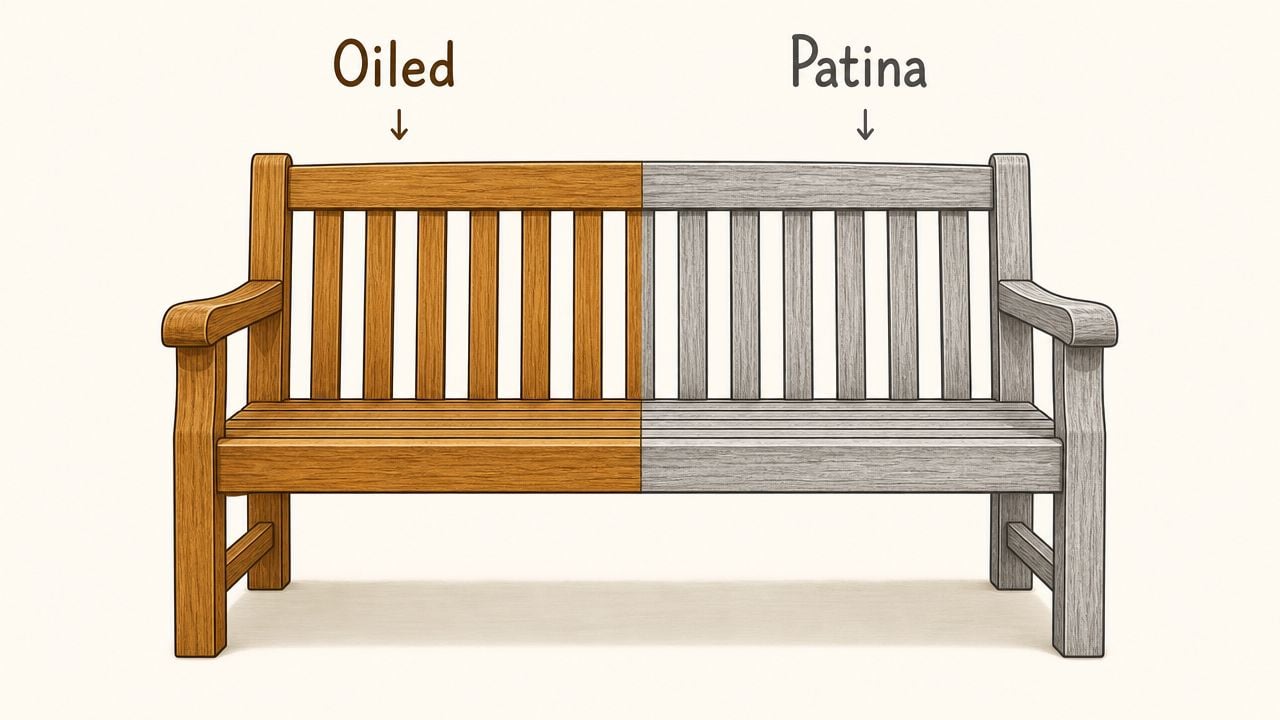
Choosing Your Look Oiling vs a Natural Silver Patina
This is the question people ask most when they see teak in person. Keep the warm golden tone, or let it turn silver-gray?
Both looks are valid. One isn't “better.” But the maintenance commitment is different, and homeowners should be honest about what they want to keep up with.
The natural patina route
When teak sits outdoors, UV exposure changes the surface color. Teak naturally blanches from golden-brown to a silvery-gray patina within 6–12 months, and that shift is surface-level, not structural according to this summary of teak weathering and UV protection.
That means gray teak isn't damaged teak. It's just weathered teak.
This route is the lower-maintenance choice. Owners clean it properly, keep debris off it, and let the wood do what it naturally does.
The silver-gray patina is not a warning sign. It's an aesthetic outcome.
The golden-tone route
Some people love the fresh honey color and don't want to lose it. That's fine too. It just takes more follow-through.
The same source notes that a teak sealer can slow the color change by blocking up to 90% of UV rays. Teak care guidance also recommends applying a Teak Protector at the beginning and end of the season to maintain the original golden tone, while a Teak Shield helps inhibit mold and mildew while still allowing silvering.
Side-by-side comparison
| Look | Appearance | Maintenance style | Best for |
|---|---|---|---|
| Natural patina | Soft silver-gray | Routine cleaning and occasional surface care | Owners who want a relaxed, low-fuss finish |
| Protected golden tone | Warmer honey-gold | Seasonal product application after full drying | Owners who want the newer-look color to last longer |
A lot of shoppers decide only after seeing both finishes in person. That's one advantage of a 30,000 sq. ft. showroom in Grants Pass. It gives people room to test comfort, compare finishes, and see how teak fits with other materials, including Unique Finds in reclaimed wood and one-of-a-kind statement pieces. For anyone planning a full outdoor setup, the teak dining table and chairs collection is a useful place to compare styles before heading into the store.
Solving Common Problems Like Stains and Scuffs
A teak table on a Southern Oregon patio takes a beating. Summer dust grinds into the grain, winter moisture leaves dark marks in shaded spots, and one wet cushion can pick up an oily stain that surprises even careful owners.
Start with the mildest fix. Teak usually responds well when you do not overreact.
What works for common surface issues
For everyday problems, use a simple order of attack:
- Food and drink spots: Wash the area with mild soap and water, then rinse and let it dry.
- Light scuffs: Clean first. A lot of marks sit on the surface and come off without sanding.
- Rough patches or stubborn discoloration: Sand lightly with 150-grit sandpaper, following the grain so you blend the repair instead of creating a bright patch.
- Deeper scratches: Slow down and match the fix to the damage. Surface scuffs are one job. Gouges are another.
That last point matters. Teak is forgiving, but careless sanding leaves obvious low spots and color differences. If you are dealing with a more serious mark, this guide to hardwood scratch restoration for Richmond homes explains the repair mindset well. The wood species and climate are different, but the principle is solid. Use the least aggressive repair that solves the problem.
The teak oil stain problem most guides ignore
This is the issue generic teak articles miss. Newer teak can release natural oils, and in our region that becomes a bigger headache during wet winters and long damp stretches in spring and fall. A light cushion pressed against damp teak can end up with yellow or brown oil marks that do not respond to the usual fabric cleaner.
Many homeowners make the same mistake first. They reach for a standard water-based upholstery cleaner, scrub hard, and set the stain deeper into the fabric. For oil transfer, use an oil-based fabric cleaner instead. That gives you a real shot at lifting the stain without damaging the cushion cover.
A better response to cushion stains
Use this order and do not skip steps:
- Remove the cushion from the teak right away
- Blot the stain with a clean cloth
- Do not scrub
- Use an oil-based cleaner made for fabric
- Let the cushion dry fully before putting it back on the furniture
If the cushion has a removable cover, treat the stained area before washing the whole cover. If not, spot clean carefully and test the cleaner in a hidden area first.
For wood damage that goes beyond basic cleanup, this furniture scratch repair guide for wood surfaces is a useful reference. Protection plans can also help with the bigger ownership picture. Gates Home Furnishings offers Gates Care Shield as one option for coverage against accidental spills and damage.
Protecting Teak Through Southern Oregon Seasons
The Rogue Valley demands a different rhythm than generic teak advice suggests. Summer bakes dust onto every surface. Fall drops debris. Winter moisture lingers in shaded spots and under covers. A twice-a-year cleaning schedule is a strong baseline, but it isn't always enough here.
Sources note that while most guides suggest cleaning twice a year, humid environments or furniture placed under trees may require a light monthly rinse to prevent organic buildup that can lead to mildew in damp conditions, according to this teak care guidance for humid settings.
The schedule that fits this region
| Time of Year | Task | Local Tip |
|---|---|---|
| Spring | Deep clean and inspect surfaces | Wash away winter residue before pollen season ramps up |
| Summer | Light rinse as needed | Dust builds fast in hot dry weather, especially on uncovered patios |
| Fall | Full clean before wetter conditions | Remove leaf tannins and debris before they sit damp |
| Winter | Keep furniture clean, dry, and sheltered if possible | Covered patios and garages work better than sealed plastic wraps |
Storage advice that actually helps
The best winter move is simple. Clean the furniture thoroughly, let it dry completely, then store it in a sheltered space like a garage if conditions are severe. If it has to remain outside, use breathable vented covers. Don't use plastic tarps. They trap moisture and invite mildew.
Teak furniture care in Southern Oregon is less about constant work and more about timing. Light rinses when debris builds up. Proper cleaning before the wet season. Dry storage whenever possible.
This same seasonal mindset helps with the rest of the house, too. The fall furniture maintenance checklist is a useful companion for anyone getting the home ready before cooler weather settles in.
Practical service matters here as much as the wood itself. White-Glove Delivery means heavy furniture gets placed and assembled instead of dropped in boxes at the curb, and mattress haul-away is handled too. Flexible buying matters as well. Gates Easy Pay includes $0 down, 6-month interest-free, and no-credit-needed options, which makes long-lasting outdoor furniture easier to bring home without cutting corners on quality. Brands throughout the store include La-Z-Boy, Flexsteel, Ashley, and Beautyrest, and the Grants Pass showroom remains a favorite stop for homeowners from Medford, Central Point, Ashland, and across Southern Oregon.
For homeowners ready to compare finishes, test comfort in person, and find teak that fits the Southern Oregon lifestyle, Gates Home Furnishings is worth the stop. Est. 1946 and built on George Gates' promise of Service and Value, the Grants Pass showroom offers 30,000 sq. ft. of furniture, Unique Finds, flexible financing, and White-Glove Delivery that goes beyond box drop-off. Visit our Grants Pass Showroom.