Chest of Drawers with Mirrors: A Buying & Styling Guide


A lot of shoppers start in the same place. They type “chest of drawers with mirrors” into a search bar, then get stuck because the results don't match what they had in mind.
The confusion is understandable. The issue lies not with an incorrect idea, but with the use of the wrong furniture term. What is usually wanted is a dresser with a mirror, or a chest paired with a separate wall mirror. That distinction matters because it changes how the piece fits the room, how it functions every day, and what options are available in stores.
Table of Contents
- Finding the Right Mirrored Storage for Your Home
- Dresser vs Chest of Drawers What Is the Difference
- Choosing Your Style Materials and Mirror Type
- Sizing Placement and Safety in Your Home
- How to Shop for Quality Construction and Hardware
- Styling Your Dresser and Making It Yours at Gates
Finding the Right Mirrored Storage for Your Home
Furnishing a bedroom or entryway usually starts with a practical need. Clothes need a home, daily essentials need a landing spot, and the room needs something that looks finished instead of pieced together.
That's where the search for a chest of drawers with mirrors usually begins. The problem is simple. That isn't commonly a standard furniture category. Industry guidance notes a persistent misconception that “chest of drawers with mirrors” exists as a regular product type, when mirrors are almost never integrated into true chests of drawers and are far more common on dressers and vanities, which is why shoppers often can't find what they expected.
Practical rule: If someone wants a place to store folded clothes and get ready in front of a mirror, they usually want a dresser and mirror, not a tall chest.
That doesn't mean the search was pointless. It means the shopper is probably describing a need instead of naming a category. That's common, and it's fixable.
Why this confusion matters
A true chest of drawers is usually about vertical storage. A dresser is usually about width, surface area, and mirror pairing. Buying the wrong one creates frustration fast. The room feels cramped, the mirror placement gets awkward, and the piece doesn't support the routine it was supposed to help.
A better approach is to answer three questions first:
- Getting-ready use: Will the piece be used for grooming, jewelry, or daily bedroom routines?
- Storage priority: Does the room need maximum folded storage, or more tabletop surface for lamps, trays, and decor?
- Mirror flexibility: Is an attached mirror the goal, or would a separate wall mirror work better?
Shoppers who want a little more guidance on bedroom storage planning can also review features to know in bedroom furniture storage.
The smart way to shop the idea
Start with function, not the search phrase. If the room needs a visual focal point and a getting-ready station, go dresser first. If the room is tight and storage matters more than mirror integration, shop a chest and choose a separate mirror above it.
That's the cleanest way to avoid the dead end that so many people hit when they search for a chest of drawers with mirrors and expect to see a standard, all-in-one category.
Dresser vs Chest of Drawers What Is the Difference
A customer walks into our Grants Pass store asking for a chest of drawers with a mirror. After a few questions, what they usually need is a dresser. That mix-up happens all the time, and it matters because these two pieces solve different problems.
Here's the plain answer. A dresser is usually shorter and wider. A chest of drawers is usually taller and narrower.
That one difference affects how the piece works in your room every day. A dresser gives you a broader top, a lower profile, and a natural place for a mirror. A chest gives you vertical storage and takes up less wall width, which is often the better answer in a tighter bedroom.
Why shoppers mix them up
The names overlap in everyday speech. Regional language research summarized in the LAMSAS language study shows that people use both terms often enough that confusion is normal, not careless shopping.
What matters more is the job the furniture needs to do.
If you want one piece that stores clothes and supports a getting-ready routine, start with a dresser. If your room is narrow, your traffic path is tight, or you need to build upward instead of outward, start with a chest. If you like the chest look but still want reflection and light, add one of our bedroom and accent mirrors above it.
The mirror itself also changes the feel of the setup. Frame style, edge detail, and glass quality all affect how polished the piece looks, especially in a primary bedroom. If you want to compare finishes and reflection styles, it helps to review premium glass and mirror designs before you buy.
Dresser vs. Chest of Drawers At a Glance
| Feature | Dresser | Chest of Drawers |
|---|---|---|
| Shape | Shorter and wider | Taller and narrower |
| Best use | Clothing storage plus everyday surface space | Vertical storage in tighter rooms |
| Mirror pairing | Commonly paired with a mirror | Usually paired with a separate wall mirror, if any |
| Room fit | Better in bedrooms with more wall width | Better in compact rooms or narrow layouts |
| Top surface | More room for lamps, trays, and decor | Less surface area, more vertical emphasis |
| Search confusion | Often what shoppers mean when they ask for mirrored storage | Often what shoppers call any drawer storage piece |
Which one should get the final nod
Choose a dresser if you want the classic mirrored bedroom setup.
It's the better pick when the room needs a place for daily prep, a lamp, a jewelry tray, or a broad surface that makes the wall feel finished. In our store, this is usually the right answer for shoppers who start with the phrase "chest of drawers with a mirror" but are really picturing a standard bedroom dresser.
Choose a chest of drawers if space is tighter and storage matters more than surface area. It fits spots where a wide case piece would crowd the room, and it gives you more freedom to hang a mirror at the height and style you want.
That's the cleanest way to shop it. If you want an attached or coordinated mirror, look at dressers first. If you want compact storage with more flexibility, buy a chest and pair it with a separate mirror.
Choosing Your Style Materials and Mirror Type
Style should come before minor details. If the overall look is wrong, the room won't feel settled no matter how many drawers the piece has.

Style comes first, then mirror format
A modern room usually looks best with clean lines and a simpler mirror shape. A traditional room can handle framed mirrors, richer finishes, and more visible detail. Rustic spaces often benefit from wood texture and a mirror that softens the heavier grain and tone.
Mirrors have long carried more than a practical role. Historical furniture writing notes that mirrored furniture became popular in the 17th and 18th centuries not only for function but also as a charming diversion in court settings, tied to interest in optics and “games of light,” making mirrors a symbol of status and aesthetic refinement (history of antique chests and mirrored furniture).
That history still shows up in modern rooms. A mirror does two jobs at once. It helps with daily use, and it changes how light moves through the space.
Attached mirror or separate mirror
An attached mirror usually works best when the goal is a cohesive bedroom set. It feels classic and intentional. It also makes shopping easier because the proportions are already planned.
A separate mirror gives more control. It can hang higher, go wider, or shift with the room later if the furniture gets rearranged.
- Attached mirror: Better for a matched look and easier decision-making.
- Separate wall mirror: Better for flexibility, especially above a chest.
- Leaning mirror nearby: Better when wall mounting isn't ideal and the room needs softness.
For readers comparing shapes, frames, and finishes, premium glass and mirror designs offer a useful look at how mirror style can shift the mood of a room.
Materials that change the whole feel
Material choice is where furniture either gains character or loses it. A painted finish can brighten a room. Warmer wood tones make a bedroom feel grounded. Mixed materials can sharpen the look if the space feels flat.
Reclaimed wood and teak tend to stand out because they don't look factory-neutral. They bring variation, texture, and a little history into the room. That matters when a bedroom needs one strong piece instead of a full suite that all blends together.
A mirror choice should also respect the furniture material. A heavily textured wood chest often looks better with a simpler mirror. A cleaner, smoother dresser can carry a more defined frame.
A good mirror doesn't compete with the case piece. It finishes it.
Readers looking for mirror decor ideas and wall options can browse home mirrors for different interiors.
Sizing Placement and Safety in Your Home
You get the furniture home, set it against the wall, and then the problem shows up fast. The mirror hits the window trim, the drawers stop short against the bed, or the whole piece feels too tall for the room. That is usually when shoppers realize they were picturing a dresser with a mirror, but searching for a chest of drawers with a mirror.
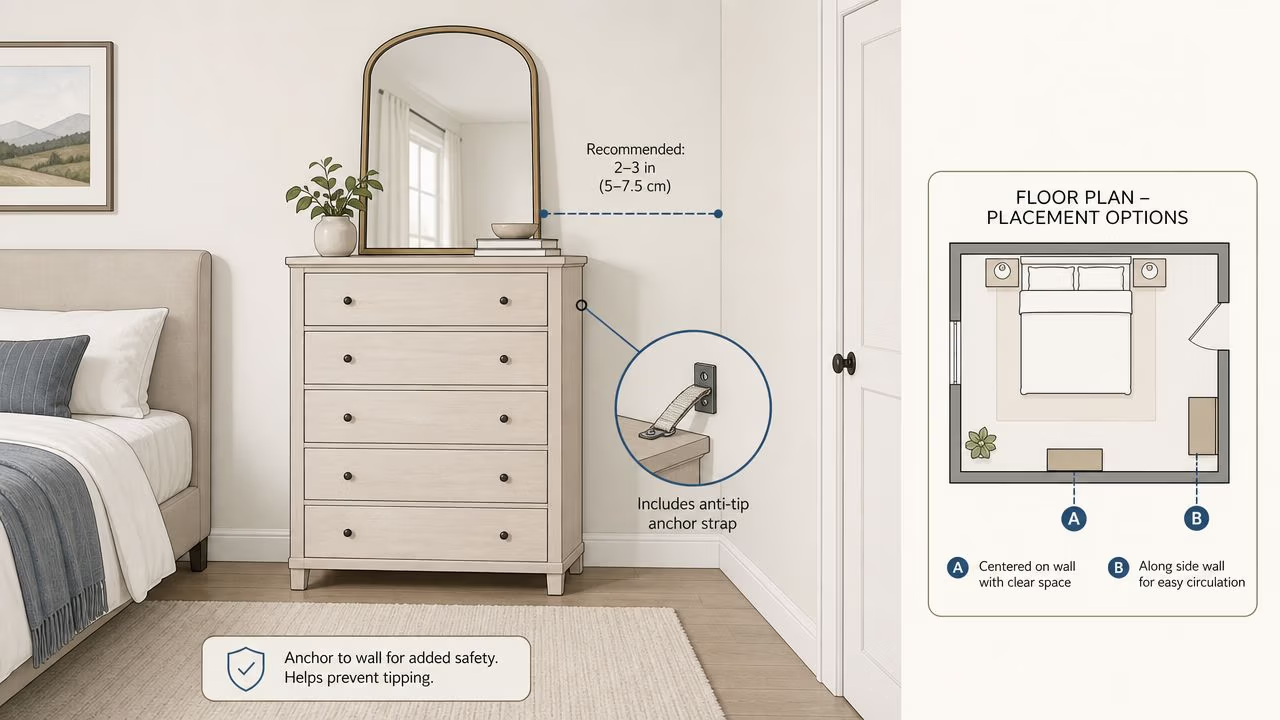
A chest and a dresser ask for different space. A chest goes up. A dresser spreads out. Add a mirror, and you need to plan for both the furniture and the reflection zone above it.
Measure the room like you actually use it
Start with the wall, then stop there for a second and look at the room as a whole. You need clearance for door swings, space beside the bed, room to walk, and enough depth to open drawers without bumping into a bench or footboard.
A common dresser-and-mirror setup can run about 66 inches wide, 19 inches deep, and more than 80 inches tall once the mirror is included. In the right room, that looks balanced. In a bedroom with low windows, sloped ceilings, or tight wall sections, it can dominate the space.
Use this checklist before you buy:
- Wall width: Leave visual breathing room on each side so the piece does not look wedged in.
- Total height: Measure the case piece and the mirror together.
- Drawer clearance: Check how far drawers project into the room when fully open.
- Traffic path: Keep everyday walking routes clear, especially between the bed, closet, and bathroom door.
- Outlet and trim placement: Small details can force a big piece to sit awkwardly.
If you want a solid method, use Gates' furniture measuring guide for bedrooms and storage pieces.
Put the right piece in the right spot
This is where the chest-versus-dresser confusion really matters. A taller chest with a mirror can work well on a narrower wall, but only if the ceiling height and nearby trim give it room. A wider dresser with a mirror usually fits better on a longer wall and gives you more elbow room across the top.
My advice is simple. If your room is tight side to side, look at vertical storage first. If your room feels short or crowded, skip the tall visual stack and keep the profile lower.
Safety is part of the purchase
Any tall or top-heavy storage piece needs to be secured. That includes a chest with a mirror, a dresser with an attached mirror, or a separate mirror mounted above either one.
Anchor the case piece to the wall. Mount the mirror securely. Place the furniture where drawers can open fully before you load it up, because a top drawer packed with clothing changes the balance.
Homes with kids, pets, or uneven floors need even more attention here.
Humidity matters too. Furniture placed against a damp exterior wall or near a bathroom can put extra stress on wood joints, finishes, and mirror backing over time. Give the piece a little breathing room from moisture-prone walls and avoid spots where steam or condensation are a regular problem.
How to Shop for Quality Construction and Hardware
A mirrored case piece can look great on the sales floor and still disappoint you six months later. The ultimate test is how the drawers, frame, and mirror are built. That matters whether you walked in asking for a chest of drawers with a mirror or a dresser with a mirror. The search term is not the point. The build quality is.

What to check before buying
Start with the drawers. Open every one. Pull them all the way out and close them again a few times. A good drawer should glide smoothly, stay aligned, and feel steady under your hand.
Then look closer.
- Full-extension glides: You should be able to reach the back without digging blindly.
- Dovetail joinery or other strong drawer-box construction: The drawer should look built to last, not stapled together as an afterthought.
- A solid drawer bottom: Press lightly inside. It should feel firm, not thin or springy.
- A stable case: Put a hand on the top corner and give it a light shake. Quality furniture stays planted.
- Mirror attachment that feels secure: If the mirror is part of the piece, it should sit tight and square, without wobble.
Good construction shows up fast. Cheap construction does too.
What separates a better piece from a throwaway one
Hardware should disappear in daily use. You should not have to fight a sticking drawer, slam one side shut, or wonder if the mirror frame is loosening. If you feel drag, racking, or wobble in the showroom, it usually gets worse at home after the piece is loaded with clothing.
This is also where shoppers get tripped up by the chest versus dresser wording. A taller chest with a mirror puts more visual weight and structure in a narrower footprint. A wider dresser with a mirror spreads that weight across a longer case. Either can be well made or poorly made. Do not assume one is better just because the label sounds more substantial.
Why in-store testing matters
Photos can show style. They cannot show how a drawer tracks, how the corners are joined, or whether the mirror feels firmly mounted. You need your hands on the piece.
At Gates, we encourage people to test furniture the way they will use it. Open the drawers. Check the inside corners. Look underneath. Ask what the drawer glides are made of and how the mirror attaches. If a store does not want you checking those details, I would keep shopping.
If you want a practical checklist, read these five things to look for when buying chests dressers and cabinets.
One last piece of advice. Buy the piece that fits your room and holds up to real life, not the one that only wins on finish color under bright lights. That is how you end up with furniture you still like years from now.
Styling Your Dresser and Making It Yours at Gates
The piece is in place. Now it needs to look lived in, not staged. Good styling makes storage feel intentional and helps the mirror earn its place in the room.

A bedroom setup that feels finished
A dresser with a mirror usually looks best when the top isn't overcrowded. A lamp on one side, a tray in the middle, and one personal accent usually does the job. That could be a framed photo, a small plant, or a jewelry box.
If the room feels dark, the mirror should face useful light, not glare. Natural light from a side window can brighten the room beautifully. Direct harsh reflection usually doesn't help anyone getting ready in the morning.
A bedroom can also benefit from contrast. If the dresser is heavy and substantial, keep the decor lighter. If the case piece is simple and painted, add warmth with wood accents or woven texture.
An entryway setup that works hard
A chest paired with a mirror can be excellent in an entry. It creates a drop zone without looking sloppy, and the mirror adds depth in a narrow hall or smaller landing area.
A practical entry setup often includes:
- A tray for daily carry: Keys, sunglasses, and wallet don't end up scattered.
- A small lamp or soft light: The area feels welcoming in the evening.
- One vertical accent: Branches, a vase, or artwork keeps the arrangement from feeling squat.
Shoppers looking for ideas that blend storage and decor can explore storage cabinet decor inspiration.
For households around Grants Pass, Medford, Central Point, Ashland, and the wider Rogue Valley, store service starts to matter as much as the furniture itself. A family business established in 1946 and built on George Gates Jr.’s promise of “Service and Value” should help people get the right piece, not just the closest keyword match. That includes access to a 30,000 sq. ft. showroom in Grants Pass where shoppers can compare styles in person, plus Unique Finds in reclaimed wood and teak for rooms that need more personality than a standard suite can offer.
The support side matters too. Gates Easy Pay gives shoppers flexible options, including $0 down, 6-month interest-free, and no-credit-needed programs. Delivery should also be done properly. White-glove service means professional assembly and setup, not someone dropping boxes at the door, and mattress haul-away makes the process easier when the room is getting a full refresh.
For shoppers in Grants Pass, Oregon, and across Southern Oregon, Gates Home Furnishings remains a trusted local destination for bedroom furniture, mirrors, and one-of-a-kind home pieces. Visit our Grants Pass Showroom on Rogue River Highway to test quality in person, explore Unique Finds, and get help built on George Gates' promise of Service and Value since 1946, or browse our collection online today.