Dining Room Furniture Sideboard: Styles & Storage Tips


A lot of dining rooms look almost finished. The table works. The chairs fit. The rug feels right. But the room still asks for one more piece, usually because everyday storage is landing in the wrong places. Extra placemats end up in a kitchen drawer, serving pieces get buried in a cabinet, and holiday hosting turns into a scavenger hunt.
That's where a sideboard earns its keep. A good one gives the room weight, gives the household storage where it's needed, and gives dinner service a proper landing zone. In Southern Oregon homes, that matters whether the dining room is a larger dedicated space in Ashland or a tighter layout in Grants Pass where every inch has to work harder.
Since 1946, George Gates Jr.’s promise of Service and Value has shaped how local families shop for furniture. That same practical mindset applies here. A sideboard shouldn't be picked because it looks good in a photo. It should fit the room, support the way the household eats and entertains, and still look right years from now. Small details matter too, especially the hardware and trim, and this guide on cabinet finishing touches is useful for anyone thinking through the final visual details.
Table of Contents
- The Finishing Touch Your Dining Room Is Missing
- What Exactly Is a Dining Room Sideboard
- Finding the Perfect Fit How to Measure for Your Sideboard
- Styles and Materials From Classic to Unique Finds
- Unlocking Your Sideboards Functional Potential
- Budgeting and Bringing Home Your Perfect Piece
- The Gates Promise Delivery Care and Lasting Value
The Finishing Touch Your Dining Room Is Missing
The missing piece in many dining rooms isn't another chair or a bigger table. It's a storage piece that makes the whole room function like it should.
A sideboard usually solves three problems at once. It gives serving space during meals, it hides the clutter that shouldn't stay on the table, and it visually anchors the wall so the room doesn't feel unfinished. Without it, even a nice dining set can look like it stopped halfway through the plan.
That's especially true in real homes, not staged rooms. In Grants Pass, some households need a slim cabinet that won't crowd a tighter eating area. In Ashland, there may be room for a statement piece with more presence. In Medford and across the Rogue Valley, families often want both. Storage that works hard and furniture that still feels warm and intentional.
Why sideboards fix the room so quickly
A sideboard earns attention because it solves practical frustration, fast:
- Serving gets easier: platters, utensils, and drink accessories stay close to the table.
- Storage gets cleaner: linens, candles, and special occasion pieces stop drifting into unrelated rooms.
- The room looks complete: one long, low cabinet can balance a wall better than scattered decor ever will.
A dining room furniture sideboard isn't filler. It's the piece that makes the room make sense.
For households that host often, the payoff shows up on busy evenings. For households that don't entertain much, the payoff still shows up every day in cleaner surfaces and better organization.
What Exactly Is a Dining Room Sideboard
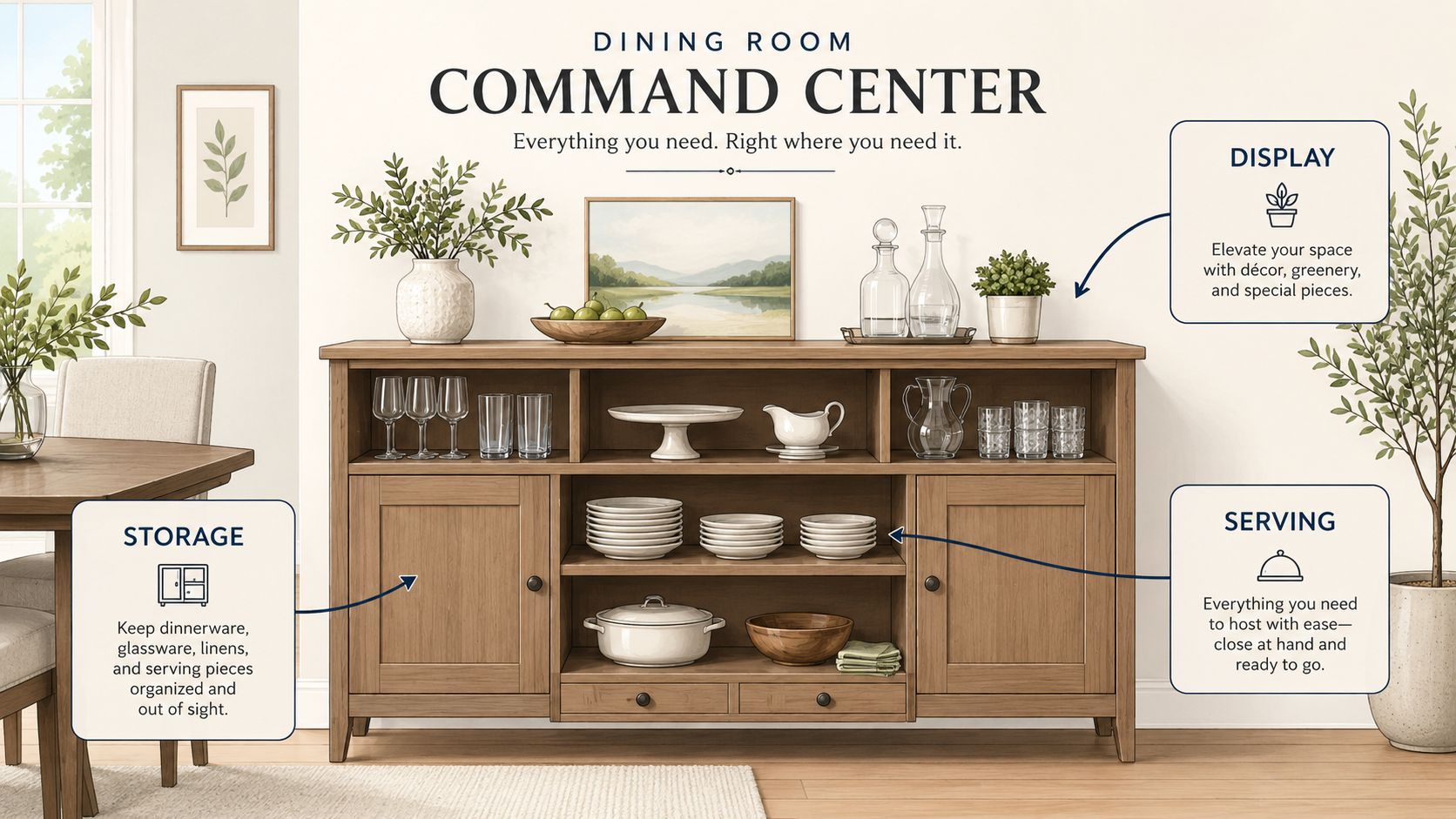
A sideboard is a long, low storage cabinet designed to sit near the dining table and support meal service. Historically, it wasn't decorative fluff. It was built to hold dining essentials close at hand.
A piece built for serving and storage
The sideboard emerged in the 18th century to hold plates, decanters, and silverware near the table. By the early 19th century, it was already a standard piece in mass-produced dining room suites, which says a lot about how useful households found it for dining and entertaining (historical sideboard background).
That original purpose still defines the modern version. A proper sideboard gives the household drawers and cupboards for dining gear, plus a top surface that can handle serving dishes, drinks, or everyday display. It's one of the few dining pieces that pulls storage and presentation together without asking for much floor space.
How it differs from similar dining storage
People use sideboard, buffet, and credenza almost interchangeably. That's understandable, but the easiest way to think about it is by job.
A sideboard belongs naturally in the dining room because it's tied to serving and storing meal essentials. A buffet is often treated much the same way. A credenza tends to get used more broadly in other rooms. The labels overlap, but the smart question isn't what the tag says. The smart question is whether the piece works like a dining room command center.
For shoppers comparing options, this collection of buffets and servers shows the range of dining storage formats that can fill that role.
Practical rule: If it stores what the household uses at the table and gives a clean serving surface nearby, it's doing the sideboard's real job.
That's the definition worth caring about. Not the label. The function.
Finding the Perfect Fit How to Measure for Your Sideboard
You see this all the time in Southern Oregon homes. A family in Ashland has a generous dining room and can handle a longer, more substantial sideboard. A homeowner in Grants Pass has to protect every inch of walkway. Same category of furniture, completely different sizing decision.
That is why measuring comes before style, finish, or brand. A sideboard should help the room work better every day, not create a traffic jam every time somebody pulls out a chair.
The three measurements that matter most
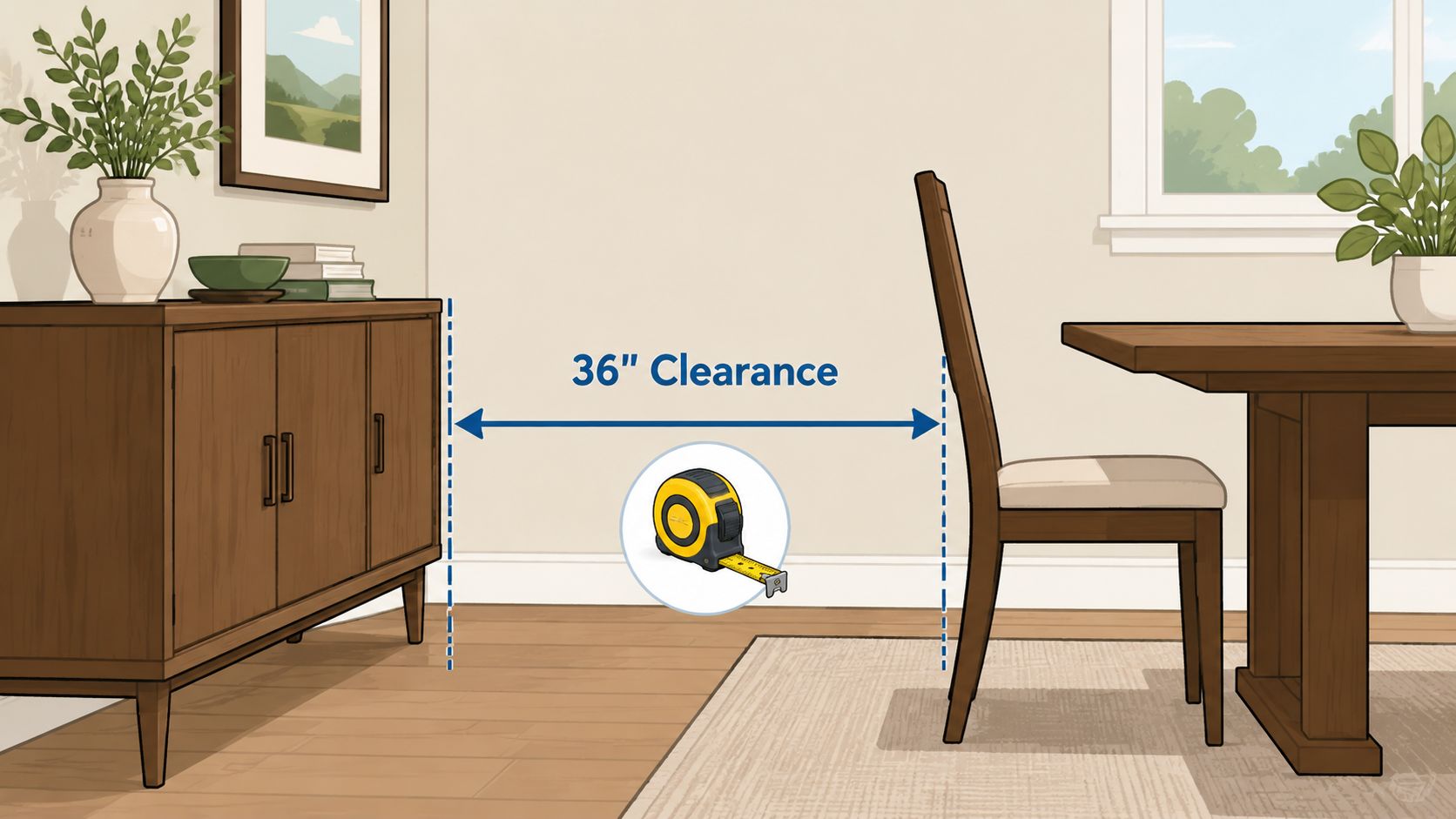
Start with clearance. If chairs cannot pull out comfortably or cabinet doors hit the traffic path, the piece is too big for the room, no matter how good it looks on the sales floor.
Then check length. A sideboard usually looks balanced when it has enough presence to relate to the dining table without stretching so wide that it takes over the wall. Height and depth matter too, especially depth. That is the number that causes trouble fastest in real homes because it steals walking space before people notice it.
A simple measuring routine keeps shoppers out of trouble:
- Measure the wall width first: Get the maximum span the room can handle.
- Measure from the sideboard location to the nearest chair path: Make sure people can move around the table without squeezing.
- Measure depth with drawers and doors in mind: The cabinet itself is only part of the story. The room also needs space for it to function.
If you want a practical refresher before you shop, this guide on how to measure furniture lays out the steps clearly. For room layout help, planning with accurate furniture sizes is useful for seeing how a piece will sit in the floor plan instead of judging by guesswork.
What works better in smaller dining rooms
Compact dining rooms need discipline. In many Grants Pass homes, the smart answer is not the biggest cabinet that fits the wall. It is the piece that keeps the room easy to use on a normal weeknight.
That usually means choosing a shallower profile, cleaner lines, and storage that opens without eating up the walkway. Drawers often outperform wide doors in tighter rooms because they keep access more controlled and predictable. If the room is narrow, extra depth is a bad trade.
| Room concern | Better sideboard choice |
|---|---|
| Narrow walkway | Slimmer depth |
| Tight chair clearance | More drawers, fewer wide-swing doors |
| Short wall | Cleaner, simpler silhouette |
| Daily use storage | Easy-access top drawers |
Larger Ashland dining rooms give you more freedom. You can go longer, use a heavier case piece, or bring in one of our one-of-a-kind Unique Finds if the room has the scale to support it. Even then, I still recommend measuring first. A large room can handle more furniture, but it still needs balance.
Seeing pieces in person helps because proportions are easier to judge side by side than on a screen. In our 30,000 sq. ft. showroom in Grants Pass, shoppers can compare slim cabinets, longer servers, and statement pieces directly, then match the right scale to the way their room functions.
Styles and Materials From Classic to Unique Finds
A sideboard has to look right in the room, but looks alone are a fast way to buy the wrong piece. In Ashland, a larger dining room can carry a longer case piece with richer wood, heavier detail, or a standout one-of-a-kind find. In Grants Pass, where many dining spaces need to stay open and easy to move through, a cleaner profile usually wins.
Style should match the room, not fight it
Traditional sideboards bring weight, detail, and a settled feel. They make sense in formal dining rooms, older homes, and spaces that already have deeper finishes or more classic trim work. If your table has presence, a traditional sideboard can hold its own.
Rustic and farmhouse pieces fit Southern Oregon well because they feel welcoming and relaxed without looking sloppy. They pair nicely with mixed wood tones, everyday family use, and homes that want warmth more than polish. Modern and mid-century styles do the opposite job. They keep the room visually lighter, which is often the better call in open-concept homes or tighter dining areas.
Here is the straightforward version:
- Traditional: Best for formal rooms, substantial tables, and richer finishes.
- Rustic or farmhouse: Best for warmth, texture, and easy everyday living.
- Modern: Best for compact spaces, simple lines, and a cleaner overall look.
- Mid-century inspired: Best when you want storage that feels less bulky because the raised-leg design shows more floor.
Materials change how the piece ages
Material choice decides how a sideboard will wear, how much care it needs, and whether it still looks good years from now.
Solid wood is still the benchmark if you want depth, character, and a piece that can age gracefully. Veneer can also be a smart buy if the construction is good and the finish is done well. It often gives you a polished look at a friendlier price. Metal, stone, and glass accents can sharpen the design, but they need to support the room instead of stealing attention.
If you want a better sense of what different woods mean in day-to-day use, read this guide on choosing the right hardwood for longevity and style.
Unique materials deserve a serious look too. Reclaimed wood, teak, and one-of-a-kind mixed-material pieces bring personality that a standard catalog piece rarely has. That is often the right answer in homes that already feel personal and collected. In a large Ashland dining room, a distinctive piece can anchor the whole space. In a smaller Grants Pass home, one memorable sideboard can give the room character without crowding it with extra furniture.
One caution from years on the showroom floor. Do not chase personality so hard that you ignore scale and function. The best sideboards balance three things at once: the room's size, the home's style, and the kind of wear the piece will get every week. Reliable big-brand construction has its place. So do true one-off finds. The smart choice depends on whether your room needs consistency, character, or a little of both.
Unlocking Your Sideboards Functional Potential
A sideboard should never be bought as a blank box. The inside layout matters as much as the outside look, sometimes more.
The smartest purchase starts with the frequently overlooked question: what needs to live in it every week?
Choose storage by what the household actually uses
Different storage setups solve different problems. That sounds obvious, but many people still buy based on exterior appearance first and interior layout second. That's backwards.
A better way to shop is to match the cabinet layout to the household's real habits:
- Deep drawers: Better for table linens, chargers, serving utensils, and bulky accessories.
- Shallower top drawers: Useful for flatware, candles, matches, and smaller hosting pieces.
- Adjustable shelves: Best for platters, bowls, pitchers, and mixed-size dish storage.
- Closed cabinets: Good when the goal is a cleaner visual line with less visible clutter.
Families who host larger meals often need flexible shelf space more than decorative wine cubbies. Households using the piece every day may get more value from easy-access drawers and simple compartmentalization.
For readers thinking beyond storage alone, this piece on styling a storage cabinet with purpose offers good ideas for making the inside useful and the outside attractive.
The top surface should work, not just decorate
The top of a sideboard is prime real estate. It should stay usable.
On a holiday, it might hold serving dishes or desserts. During the week, it can work as a coffee station, a place for a tray and lamp, or a controlled display area for bowls, books, and seasonal decor. The best setups leave enough open surface that the piece can shift roles without needing to be cleared off completely.
A simple formula works well:
- Keep one zone practical.
- Keep one zone decorative.
- Leave breathing room between them.
That approach prevents the top from becoming a clutter shelf. It also lets the sideboard keep doing the work it was bought to do.
Budgeting and Bringing Home Your Perfect Piece
Budget matters. It always has. The mistake is thinking budget only means the price tag on day one.
A sideboard's real value comes from the balance between construction, storage usefulness, finish quality, and how long the piece will still make sense in the home. Some buyers need a straightforward practical piece. Others want a statement cabinet with stronger materials and more character. Both can be sensible purchases.
Where to spend and where to stay practical
The best place to spend more is on the parts that affect everyday use. Good drawer action, solid-feeling doors, stable construction, and a finish that can live with normal wear all matter.
The place to stay practical is on trendy details that may age out faster than the cabinet itself. A cleaner silhouette usually gives a sideboard more staying power than a heavily gimmicked look.
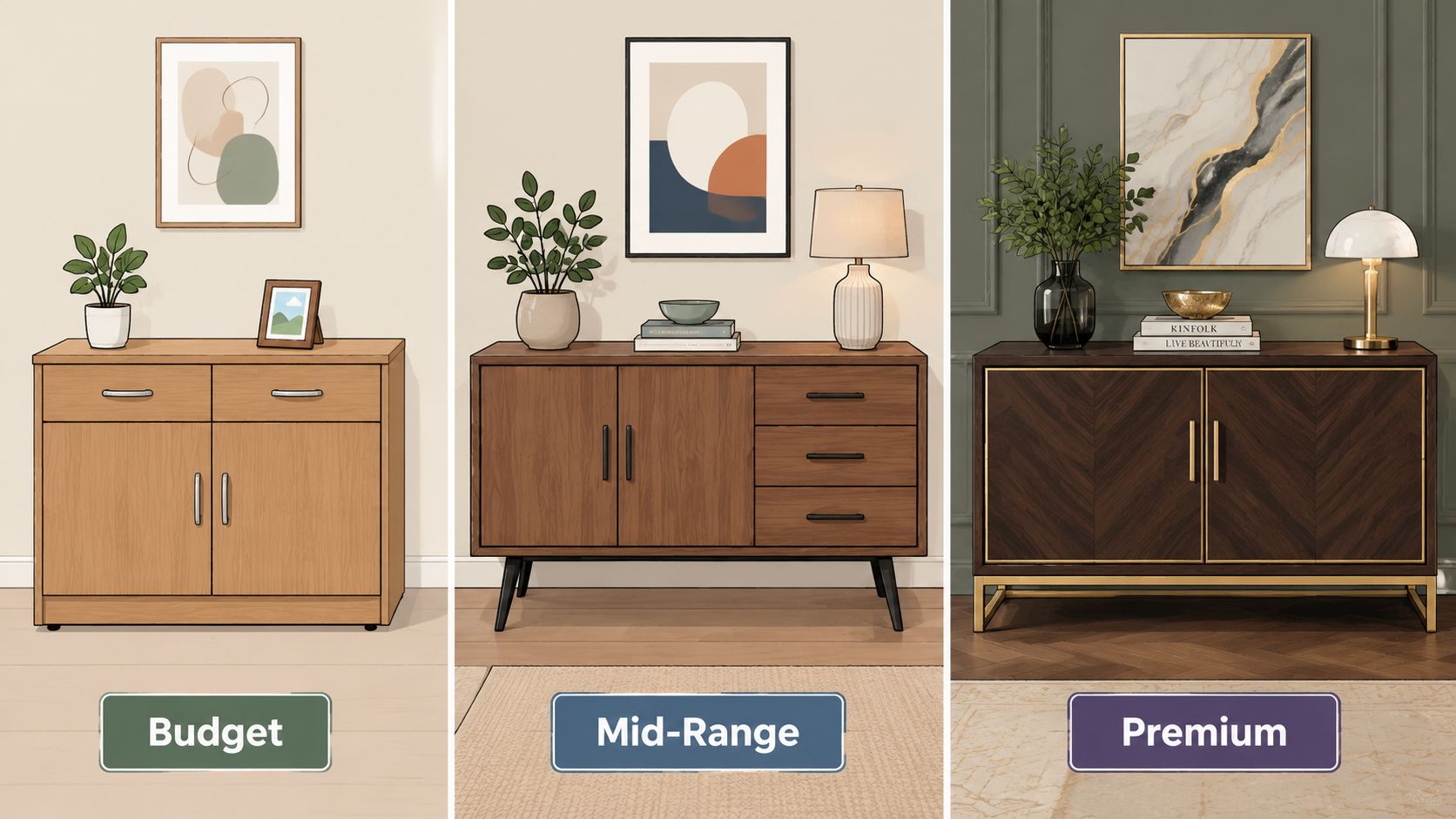
Shoppers can think about sideboards in three broad lanes:
| Buying priority | What to focus on |
|---|---|
| Budget-conscious | Clean construction, useful storage, simple finish |
| Mid-range | Better materials, stronger hardware feel, more refined proportions |
| Premium | Distinctive craftsmanship, statement materials, long-term presence |
For some households, outlet shopping is the right move. For others, waiting for the exact piece is smarter than settling for the wrong one just because it's available now.
Flexible payment matters more than shoppers admit
Furniture shouldn't force a bad compromise between what fits the room and what fits the month. That's where financing can be practical instead of flashy.
Gates Easy Pay includes $0 down, 6-month interest-free options, and no-credit-needed programs. Those tools give shoppers room to choose a sideboard that works for the home without forcing a rushed decision or a lesser fit.
Local service still matters. A family-owned store founded in 1946 on George Gates Jr.’s promise of Service and Value should make the buying process easier, not more stressful. That applies whether the shopper is furnishing a first apartment dining nook or a larger formal room in Southern Oregon.
The Gates Promise Delivery Care and Lasting Value
Buying the right sideboard is only half the job. Getting it into the home properly, placing it correctly, and protecting it over time matter just as much.
That's where service stops being a slogan and starts becoming visible.
Why setup matters as much as selection
White-glove delivery saves buyers from the common mess that comes with furniture arriving as a problem to solve. Professional in-home setup means the piece is carried in, assembled as needed, and placed where it belongs. That's very different from a box left at the curb.
For households that want to understand what that service includes, this overview of white-glove delivery service breaks down the process clearly. It's a practical option for heavier dining storage pieces, especially in homes with tighter entries, stairs, or rooms that need careful placement.
Good delivery protects the furniture, the walls, and the buyer's back.
White-glove service can also include mattress haul-away, which speaks to the larger point. Service should continue after the sale, not disappear once payment goes through.
Simple care keeps a sideboard looking right
A sideboard doesn't need fussy treatment, but it does need basic respect.
Keep drinks on trays or coasters when possible. Wipe spills promptly. Don't let heat sit directly on the surface. Dust with a soft cloth instead of anything abrasive. If the piece has natural wood character, expect it to look even better with time when it's cared for consistently.
That's lasting value. Not hype. Just furniture chosen well, delivered properly, and lived with for years.
For shoppers in Grants Pass, Medford, Central Point, Ashland, and across the Rogue Valley, Gates Home Furnishings offers a practical way to compare dining storage in person. The Grants Pass showroom spans 30,000 sq. ft., with trusted brands like La-Z-Boy, Flexsteel, Ashley, and Beautyrest, along with one-of-a-kind Unique Finds in reclaimed wood and teak. Visit our Grants Pass Showroom to see sideboards at full scale, test finishes and storage layouts, and get help choosing a piece that fits the home the first time.