Explore Office Chairs Mesh: Perfect Fit in Grants Pass


A lot of people in Grants Pass, Medford, and around the Rogue Valley found out the hard way that a dining chair isn't a work chair. It feels fine for an hour. By the end of the week, shoulders are tight, lower backs are irritated, and sitting down for another video call feels like a chore instead of a routine.
That's usually when office chairs mesh starts showing up in the search bar. The appeal makes sense. Mesh looks lighter, feels cooler, and often seems like the modern answer to all-day desk work. Sometimes it is. Sometimes it isn't.
Since 1946, the team at Gates has helped Southern Oregon families furnish their homes around George Gates Jr.’s promise of “Service and Value.” That same approach matters in a home office. A chair isn't just another piece of furniture. It's equipment you use every day, and the wrong one will remind you of that fast.
Table of Contents
- Your Guide to Finding the Perfect Office Chair
- What Exactly Is a Mesh Office Chair
- Pros and Cons of Working in a Mesh Chair
- Anatomy of a Great Mesh Chair Key Features to Test
- How to Choose the Right Mesh Chair for You
- Mesh vs Leather vs Fabric A Head-to-Head Comparison
- Experience the Gates Home Furnishings Difference
Your Guide to Finding the Perfect Office Chair
The usual story goes like this. Someone starts working from home at the kitchen table. Then a spare bedroom becomes an office. Then the back pain starts. By the time they're shopping for a replacement, they're tired of guessing.
That's where a little honest advice helps.
A mesh chair can be a smart fix, but only if it fits the person using it. Plenty of shoppers focus on the look first. That's backward. The right chair should support posture, move with the body, and feel comfortable at hour three, not just minute three.
For Southern Oregon households, the better approach is simple. Test before buying. Sit in the chair. Adjust it. Lean back. Raise the seat. Check whether the seat edge presses under the thighs or whether the back lands where the lower back needs support. Online photos won't tell that story.
Practical rule: If a chair can't be adjusted to fit the body in a few minutes, it probably won't feel better after a few weeks.
A good showroom visit saves a lot of frustration. Customers who are building a workspace can start with home office furniture options for desks and seating and then narrow down what kind of chair suits the room and the workday.
The local advantage matters here. In a real showroom, people can compare office chairs mesh styles against padded models, test recline tension, and figure out whether they want a full mesh seat or just a mesh back. That hands-on step is what turns a confusing search into a clear decision.
What Exactly Is a Mesh Office Chair
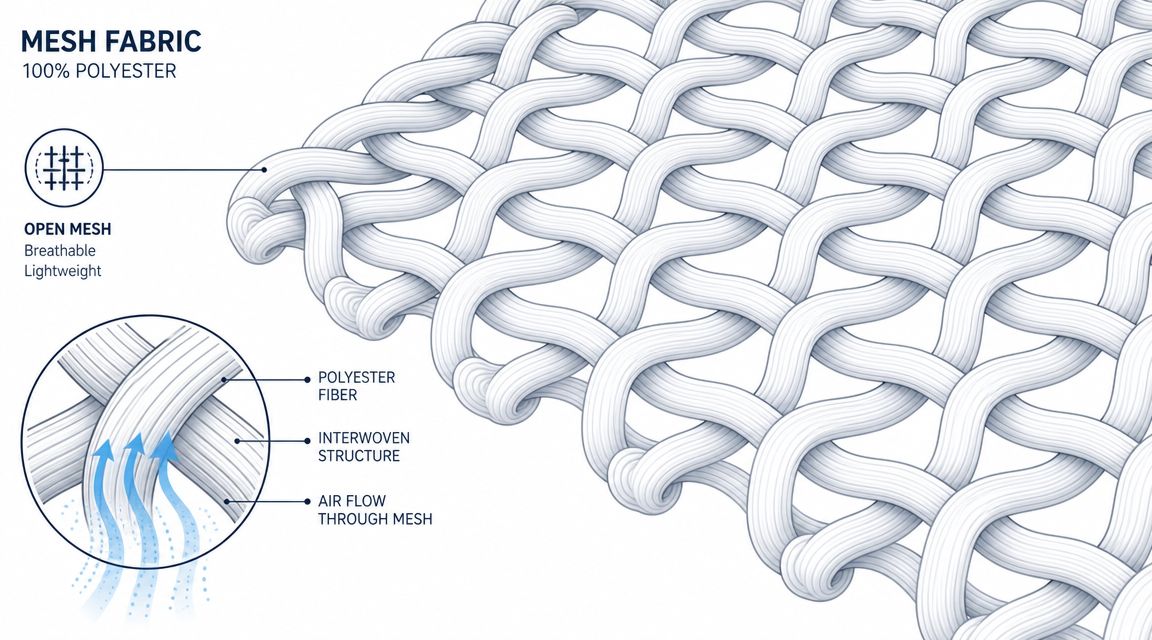
A mesh office chair uses a tightly stretched woven material on the back, the seat, or both, instead of relying mainly on thick foam and upholstery. The material is usually a synthetic textile chosen for flex, airflow, and durability. The result is a chair that feels lighter, looks cleaner, and responds differently than a heavily padded task chair.
Why mesh became mainstream
Mesh caught on because it solved a simple complaint. People got tired of sitting against hot, bulky backs for hours at a time. An open weave lets heat escape more easily, and the slimmer profile fits home offices better than oversized executive chairs.
You can see that shift clearly in Southern Oregon homes. A lot of customers want an office chair that does not overwhelm a guest room, bedroom office, or corner workspace. Mesh usually answers that need. It looks lighter in the room, and it often feels less stuffy through a long workday.
That does not make every mesh chair a good chair.
Why good mesh feels supportive instead of flimsy
The frame, tension, shape, and controls decide whether mesh feels supportive. Good mesh has enough give to follow the body, but enough structure to hold posture. Cheap mesh sags, pulls in the wrong spots, or goes slack too soon.
The back design matters most. If the lower back area is shaped well and the recline works with your movement, the chair feels steady instead of loose. A public ergonomic chair specification also describes synchronized seat and back movement, along with BIFMA-based durability and stability expectations, in this ergonomic office chair specification document.
In our showroom, this is easy to spot in five minutes. Sit down. Lean back. Come upright again. If the chair keeps you supported through that full motion, you are looking at a useful mesh chair. If it feels bouncy, flat, or tense across the shoulders, keep shopping.
We also tell customers to pay attention to where the mesh is used. A mesh back with a padded seat gives many people the best balance of airflow and comfort. A full mesh chair can work well too, but it needs better tension and better build quality to feel right.
If you are planning the whole workspace instead of buying one chair in isolation, our design tips for home spaces and work areas can help you pull the room together. Then come test chairs in person, compare seat styles side by side, and use our local delivery and financing options to make the right fit practical, not stressful.
Pros and Cons of Working in a Mesh Chair
A mesh chair can be a smart buy. It can also be the chair people regret after a week of real work.
We see that all the time in our Southern Oregon showroom. Someone comes in convinced mesh is the answer because they want a cooler chair. Then they sit in three or four models back to back and realize one feels supportive, one feels stiff, and one already feels tired before lunch. That side-by-side test changes the decision fast.
Where mesh works well
Mesh earns its reputation for one clear reason. It lets heat escape instead of trapping it against your back. If your office runs warm, if you work long hours, or if you hate that hot, sticky feeling from thick upholstery, mesh is usually the better call.
It also fits the way many home offices look now. The profile is lighter, cleaner, and easier to place in a bedroom office, guest room, or shared workspace without making the room feel crowded.
A few advantages stand out:
- Better airflow: Good for warm rooms and long sitting sessions.
- Lighter visual footprint: Easier to live with in smaller spaces.
- Simpler cleanup: Dust and everyday debris are usually easier to manage than on heavily upholstered chairs.
Where mesh falls short
Mesh does not fix a bad chair.
That is the mistake buyers make. They focus on the material and ignore the fit. A cool back will not save a chair with the wrong seat depth, weak lumbar support, or a seat that feels hard after an hour.
Full mesh seating is where we tell customers to be more careful. Some people love it. Plenty do not. If the seat tension is too firm or the frame hits in the wrong spot, comfort drops fast. Lower-quality mesh can also stretch out over time, which leaves the chair feeling unsupportive.
Here is our advice. If you work full days at a desk, start by testing a mesh back with a padded seat. For many shoppers, that setup gives the best balance of airflow and everyday comfort.
Our honest recommendation
Buy mesh for temperature control and a lighter look. Do not buy it on looks alone.
The best way to decide is to sit in it, adjust it, and stay in it long enough to notice what your body is telling you. Before you visit, it helps to read through our customer chair feedback and furniture reviews. Then come into our showroom and test a few options the way you would use them. We will help you compare styles, talk through financing if you need it, and set up local delivery so getting the right chair feels practical from start to finish.
Anatomy of a Great Mesh Chair Key Features to Test
A customer walks into our Southern Oregon showroom, sits in a mesh chair for 20 seconds, and says, "This one feels good." We stop them right there.
A chair that feels fine for 20 seconds can feel terrible by lunch.
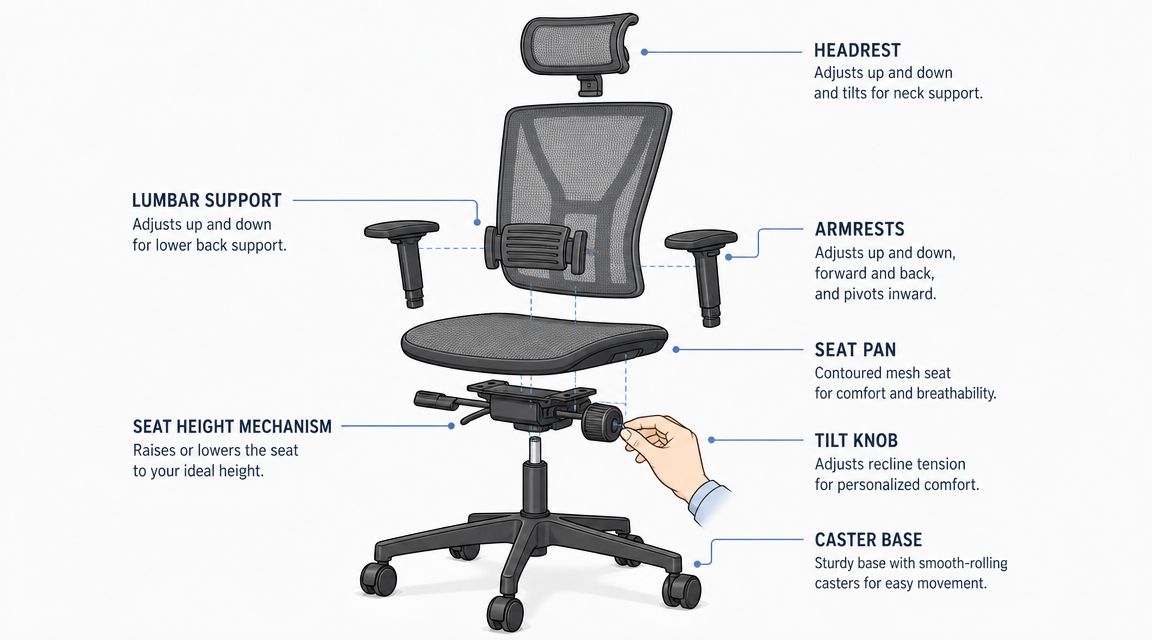
The right way to test a mesh chair is simple. Check the parts that affect support first, then pay attention to comfort. In person, those differences show up fast.
Start with the back and lumbar support
The backrest has to meet your body in the right place. If the lumbar support presses too high, misses your lower back, or feels stiff in one fixed spot, you will notice it every day.
Here is what we tell shoppers to test:
- Lumbar contact: You should feel support in the lower back without being pushed out of a natural posture.
- Mesh tension: The back should feel supportive and even, not loose in the center or harsh around the frame.
- Recline support: When you lean back, the chair should keep supporting you instead of dropping you away from the backrest.
Stay seated for a few minutes. Shift positions. Lean back, then sit upright again. A good mesh back keeps up with you instead of fighting you.
Test the adjustments with your body, not your eyes
Buttons and levers matter because they decide whether the chair can fit you. A chair with limited adjustment often looks fine on the floor and falls apart once real work starts.
Focus on the controls people use every day:
- Seat height: Adjust until your feet rest flat and your knees feel natural.
- Seat depth: Slide the seat so your thighs are supported without the front edge crowding the back of your knees.
- Tilt tension and lock: Recline should feel controlled. It should not snap back or drift.
- Armrests: Raise, lower, and move them until your shoulders can relax.
We recommend making several adjustments before you judge the chair. The right chair gets more comfortable as you dial it in.
Check the seat and frame like a long-term purchase
Mesh gets the attention, but the seat and frame decide how the chair holds up. Look closely at the construction. Press on the seat. Grab the arms. Lean into the back. If anything creaks, flexes too much, or feels cheap on day one, do not expect it to age well.
Pay attention to three things:
- Frame stability: The chair should feel planted and aligned, not wobbly.
- Material quality: Good mesh should stay taut and supportive with regular use.
- Use pattern: A chair for occasional paperwork is different from a chair used all day, five days a week.
In-person shopping proves beneficial. Side-by-side testing makes weak frames and limited adjustments obvious. Before you come in, you can use our side-by-side furniture comparison tools to narrow your options. Then visit our showroom and test chairs back to back with us right there to help. We can also talk through financing and local delivery, so once you find the right fit, the buying part stays easy too.
How to Choose the Right Mesh Chair for You
You sit down at 9 a.m., and by lunch your shoulders are tight, your legs are restless, and you are already shifting around trying to get comfortable. That usually means the chair was picked for looks, price, or a quick online spec check instead of real fit. We tell customers the same thing every day in our Southern Oregon showroom. Start with your body, then your space, then your budget.
Match the chair to your body first
Body fit decides whether a mesh chair helps you work or distracts you all day. A taller person usually needs more seat depth so the legs feel supported. A shorter person often needs a chair that drops low enough to keep both feet flat on the floor. Bigger users need a frame and seat built for steady daily use, not light occasional sitting.
You do not need a brand name to judge this well. You need to sit in the chair and pay attention to what your body is telling you.
Use this quick showroom test:
- Feet flat on the floor: If your feet hang, the chair is too high or does not adjust low enough.
- Support under the thighs: If the seat feels too short, your legs will work harder than they should.
- No pressure behind the knees: If the front edge crowds the knee area, the seat depth is off.
- Stable support under your full weight: If the chair feels stressed, springy in the wrong way, or flimsy, skip it.
We see this all the time. A chair can look great online and still fit you poorly in person.
Match it to the way you actually work
Your routine matters just as much as your size. Someone who stays parked at a desk for long stretches usually does best in a mesh chair with strong back support and enough seat comfort to avoid constant shifting. Someone who gets up all day may care more about easy movement, simple adjustments, and a lighter frame that does not feel bulky in the room.
Room setup matters too. In a dedicated office, you can choose a chair based almost entirely on performance. In a guest room, bedroom corner, or shared family workspace, scale and appearance matter more because the chair has to live with the rest of the furniture.
Bring that real-life context with you when you shop. We want to know where the chair is going, how many hours you sit, what kind of desk you use, and whether you run warm or prefer more cushion. That is how we help narrow the field fast.
Buy in person if you can
Mesh chairs are one of the worst categories to buy blindly. Two chairs can look nearly identical online and feel completely different once you sit down.
That is why we push in-person testing at our Southern Oregon showroom. Sit in several models back to back. Adjust them. Roll them. Recline in them. Stay in the chair long enough to notice whether your lower back feels supported and whether the seat still feels right after a few minutes. A good fit gets obvious quickly. A bad one does too.
Set your budget around use, not just price
A chair used five days a week deserves a better standard than a chair used for paying bills once in a while. Cheap chairs often cost more in the long run because they wear out fast, feel bad fast, or both.
We recommend a simple buying order:
- Fit first
- Daily use second
- Style third
- Payment method last
That order keeps you from getting distracted by a low sticker price on the wrong chair.
If budget is the sticking point, we can help there too. Gates Home Furnishings offers Gates Easy Pay with $0 down, 6-month interest-free options, and no-credit-needed programs for qualified buyers. For many families, that makes it easier to choose a chair that will hold up instead of settling for a short-term fix.
If you live in Southern Oregon, come test them with us. We will help you sort out what fits, what feels right, and what makes sense for your home and budget. Delivery can be part of the plan too, which makes the whole purchase a lot easier once you have found the right chair.
Mesh vs Leather vs Fabric A Head-to-Head Comparison
Material changes the feel of a chair more than generally expected. Mesh isn't automatically better. It's better for certain people, rooms, and routines.
Here's the clearest way to compare them.
| Feature | Mesh | Leather | Fabric |
|---|---|---|---|
| Breathability | Strong airflow and cooler feel | Less breathable, warmer feel | Usually more breathable than leather, less open than mesh |
| Durability | Varies a lot by mesh quality and frame construction | Can feel substantial and long-lasting with proper care | Depends on fabric quality and daily wear |
| Feel | Supportive, springy, lighter | Smooth, cushioned, more executive feel | Softer, warmer, often more familiar |
| Maintenance | Generally easy to dust and wipe down | Needs routine care to keep appearance up | Can hold dust and spills more easily depending on texture |
| Visual style | Modern and airy | Traditional, polished, formal | Versatile and easy to blend into home décor |
Mesh is the practical choice for buyers who run warm, like a lighter silhouette, and want a chair that feels more performance-driven. Leather fits people who want a classic office look and a more substantial seat. Fabric works well for homeowners who want comfort and softer texture in a room that still has to feel like part of the home.
That's why in-person testing matters so much. A buyer may think mesh is the obvious answer, then sit in a padded chair and realize the seat feel is a better match. Another may expect leather to feel premium, then decide it's too warm for daily use.
Brands carried in the showroom, including La-Z-Boy, Flexsteel, Ashley, and Beautyrest, help build that side-by-side comparison across categories. And while the office side of the floor is the priority here, the same visit can also uncover the kinds of Unique Finds that make a home office feel finished, including reclaimed wood and teak pieces that big-box rooms rarely match.
Experience the Gates Home Furnishings Difference
Good chair advice is one thing. Sitting in the right chair is what solves the problem.
That's where local shopping still wins. A 30,000 sq. ft. showroom in Grants Pass gives Southern Oregon shoppers the chance to test comfort instead of guessing at it from a product page. That matters for customers coming from Medford, Central Point, Ashland, or anywhere else in the Rogue Valley who want to feel the difference before making a decision.

Why buying local changes the decision
A chair isn't a flat-packed gamble when people can try it first. They can check the seat depth, test the arm height, lean into the backrest, and decide whether mesh is the right material for their workday.
Since 1946, the Gates team has built its reputation around George Gates Jr.’s promise of “Service and Value.” That kind of history still matters because it changes how customers get helped. The focus stays on fit, function, and long-term use, not just what looks good under showroom lights.
For readers who want to learn more about the company background, the Gates story and local history adds useful context.
A better way to finish the job
The purchase isn't finished when the chair is paid for. It's finished when the chair is in place and ready to use.
That's why White-Glove Delivery matters. The team doesn't just drop boxes at the door. They handle professional assembly and setup, and the same service approach includes mattress haul-away on qualifying sleep purchases. Add in flexible financing through Gates Easy Pay, and the buying process becomes much easier for households trying to improve a workspace without blowing up the budget.
For shoppers across Southern Oregon, that combination is hard to beat in practical terms:
- Try before buying in Grants Pass
- Use flexible payment options when a better chair makes more sense
- Get professional setup instead of wrestling with parts on the floor
A good office chair should make the workday easier. It shouldn't create another project.
Visit Gates Home Furnishings to test office chairs mesh in person at the Grants Pass showroom or browse the collection online. Shoppers from Grants Pass, Medford, Ashland, Central Point, and across Southern Oregon can get hands-on help, flexible financing, and delivery that ends with a ready-to-use chair, not a box on the porch.