Organic Modern Design: A Practical Guide for Every Room


A homeowner in Grants Pass may have a saved folder full of calm, light-filled rooms, yet still wonder how to bring that feeling into a lived-in house. The answer usually isn't a complete renovation. A softer sofa, a warm wood table, a textured rug, or a better arrangement can shift a room toward organic modern design without erasing the furniture that already works.
The style feels especially at home across Southern Oregon, where newer builds, older houses, natural light, and views of the Rogue Valley all call for a balance between clean structure and natural warmth. The showroom approach is practical: look at the materials, sit in the furniture, notice how the shapes feel, and choose one or two pieces that will improve daily life.
What Organic Modern Design Really Means
A Grants Pass homeowner might begin with a familiar problem. The living room has a gray sofa, a few hard-edged tables, and plenty of open space, but it feels colder than the inspiration photos saved online. The room doesn't need more decoration. It needs contrast in texture, warmer color, and forms that feel easier to live with.
Organic modern design brings together the discipline of modern interiors and the comfort of natural materials. Clean lines keep the room from feeling cluttered, while wood grain, woven fibers, linen-like upholstery, stone, plants, and rounded silhouettes make the space feel grounded. The result should resemble a calm home, not a showroom display with every object placed for appearance alone.
The style can be traced to a formal milestone in 1940 and 1941, when the Museum of Modern Art in New York sponsored its “Organic Design in Home Furnishings” competition. Curator Elliot Noyes described the winning approach as furniture achieving a “harmonious organization of the parts within the whole, according to structure, material, and purpose.” The 1941 exhibition helped introduce the movement to a broad audience, while its manufacture and distribution arrangements connected modern furniture with more accessible home furnishing. MoMA's catalog documents the competition and exhibition.
How the style differs from nearby looks
Organic modern isn't farmhouse, although both styles may use wood. Farmhouse usually leans more rustic, decorative, and traditionally shaped. Organic modern keeps the lines cleaner and the visual weight lighter.
It also isn't strictly Scandinavian or fully bohemian. Scandinavian rooms often emphasize pale woods and disciplined simplicity, while bohemian spaces may layer stronger patterns, colors, and collected objects. Organic modern design sits between restraint and richness. It leaves room for personality without making every surface compete for attention.
The style's broader roots are generally placed in the 1930s, with wider growth through the 1940s and 1950s in the United States and Scandinavia. The related mid-century modern movement developed from experimental ideas into mass-produced furniture across several decades, including important molded-plywood and curved-form milestones. This design-history timeline provides useful context for organic modern's development.

For a practical foundation, homeowners can also explore these simple eco efficient home ideas, especially when reducing clutter and choosing materials that support everyday use. A helpful overview of modern home structure is available in the elements of a modern home.
The Visual DNA of Organic Modern Spaces
Before choosing furniture, it helps to learn the visual vocabulary. Organic modern rooms feel coherent because materials, color, texture, and form support one another. A reclaimed wood console beside a glossy plastic table may share a neutral color, but the finishes tell different stories.
Start with material honesty
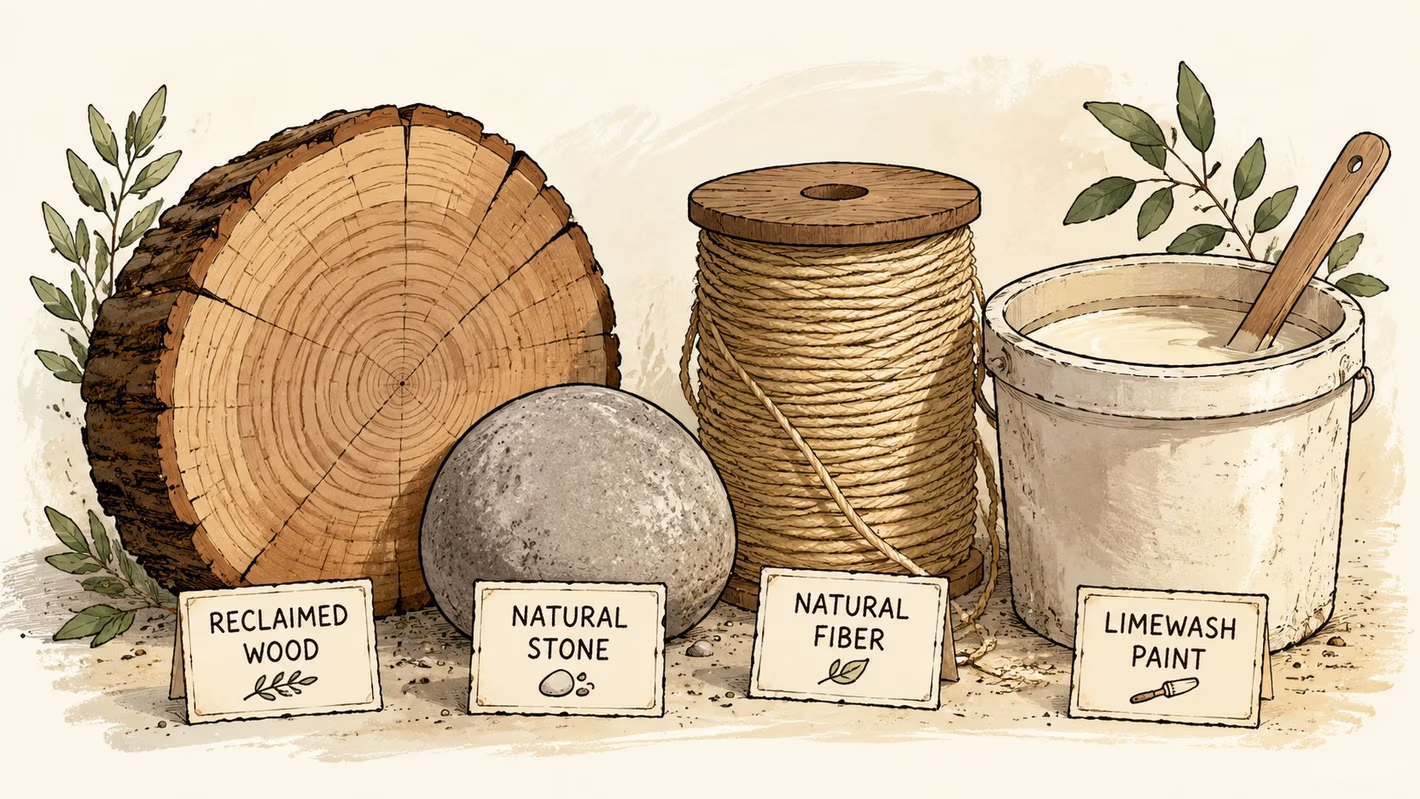
Wood provides visible grain and a sense of age. Reclaimed wood can bring irregular marks and history, while teak offers a naturally expressive surface with a more refined presence. Stone, limewash, plaster, woven fibers, and matte ceramics add variation without relying on busy patterns.
Natural doesn't automatically mean low-emission or healthy indoors. Wood products can release terpenes, aldehydes, and organic acids, so indoor-air performance depends on selecting lower-emission woods and wood-based materials, choosing suitable finishes, and planning ventilation around the room's sources. The German Environment Agency explains these indoor-air considerations for wood construction and furnishings.
Warm the palette
Stark gray and bright white can make natural materials look flat or disconnected. Organic modern palettes usually work better with creamy off-whites, sand, clay, moss, warm taupe, and muted earth tones.
A room doesn't need to be beige from floor to ceiling. One deeper wood tone, a moss-colored cushion, a clay vessel, or a charcoal accent can give the eye somewhere to rest. The aim is tonal calm with enough contrast to keep the space from looking washed out.
Let texture do the decorating
Visible grain, slubby linen, boucle, woven rugs, plaster-like walls, and matte ceramics create interest that color alone can't provide. A smooth wood table beside a nubby chair and a subtly irregular ceramic vessel gives the room a tactile rhythm.
Biophilic design can also serve a functional role. Reviews connect natural textures and biophilic elements with lower stress indicators, stronger attention and cognitive performance, improved productivity, and better perceived indoor environmental quality. The same review notes that wooden surfaces can be less stress-inducing than synthetic surfaces, while common indoor plants reduced indoor pollutants by up to 85% under tested conditions. The review in this building and environment research source discusses these findings.
Choose gentle forms
Organic modern shapes soften the architecture. Rounded edges, soft arches, kidney-shaped tables, oval tops, and curved chair backs create movement without ornament.
A useful Southern Oregon analogy is the bend of the Rogue River. Its curve feels natural and continuous, unlike the abrupt angle of a freeway off-ramp. Furniture can create that same sense of ease when its edges guide movement rather than interrupt it.
Practical rule: Choose one strong curved form, then let the surrounding pieces stay quieter.
Inside our 30,000-square-foot showroom in Grants Pass, these ideas can be understood by touch and proportion. Customers can compare reclaimed wood, teak, upholstery textures, curved seating, and natural-looking finishes side by side. For help coordinating artwork with these materials, a botanical wall art guide for 2026 can offer another way to bring nature-inspired shapes into the room. A related guide to choosing a coordinated palette is available through an expert's guide to the perfect color palette.
Room-by-Room Guide to Getting the Look
Organic modern design works best when each room answers a practical question. Where does the household gather? What needs to feel restful? Which piece should carry the visual weight? A room-by-room approach prevents the style from becoming a collection of unrelated neutral accessories.
Living room
Start with seating, because comfort and scale define the space. A curved-back sectional, a softly shaped sofa, or a recliner with rounded arms can make a room feel more welcoming without adding clutter. Boucle or another tactile upholstery can introduce texture, while a wood coffee table or woven rug grounds the seating area.
Brands such as La-Z-Boy, Flexsteel, and Ashley offer different ways to approach the modern side of the look, from supportive recliners to coordinated seating and clean-lined sofas. The right choice depends on how the room is used. A household that reads and watches television may need deep comfort and reclining support, while a formal sitting area may prioritize a lower profile and open sightlines.
A curved coffee table or oval ottoman improves circulation in a compact room. A low media console in wood or a matte finish can hide everyday items and keep the room from becoming visually noisy. For smaller spaces, these ideas for making a small room feel big can help with scale and placement.
Bedroom
The bedroom should feel quieter than the living room. A low-profile wood bed frame creates a simple foundation, while linen bedding, cotton layers, and a woven bench add softness without excessive decoration.
Warm wood nightstands can repeat the bed frame's material, but they don't need to match perfectly. Closed storage helps preserve the calm atmosphere, especially where open shelves would collect personal items. A ceramic lamp, textured throw, and softly curved ottoman can provide enough character without turning the bed into a display.
Mattress comfort matters more than visual style. A neutral bedroom can look balanced and still fail if the sleep surface doesn't support the person using it, so shoppers should spend time testing mattresses and evaluating the feel of the bed as a complete setup.
Dining and entry spaces
A trestle table gives a dining room presence without ornate detailing. An oval dining table creates a softer outline, while woven chairs keep a solid wood or stone surface from feeling too formal.
The Unique Finds collection of reclaimed wood and teak can be especially useful in dining and entry spaces. One statement console, bench, or cabinet may provide more character than a group of small accessories. In an entryway, pair that anchor with a simple mirror, a tray for keys, and closed storage for bags or shoes.
A room feels collected when every major piece has a job. The table gathers people, the console organizes arrivals, and the texture makes the space comfortable.
Budgeting, Financing, and Smart Splurges
Organic modern design doesn't require a high-end renovation. The most useful budgeting decision is to separate the pieces that change a room's structure from the items that add finish.
A sofa, bed, or dining table usually deserves more attention because people use it frequently and see it from multiple angles. Supporting furniture can build continuity, while textiles and accessories let renters or cautious shoppers adjust the mood without replacing everything.
A practical spending framework
| Priority | What it does | Examples |
|---|---|---|
| Anchor pieces | Establishes comfort, scale, and material direction | Sofa, sectional, bed, dining table |
| Supporting furniture | Adds function and visual balance | Accent chair, side table, storage console, bench |
| Easy swaps | Changes the atmosphere with limited commitment | Rug, pillows, bedding, lighting, baskets, plants |
The anchor should solve the biggest daily problem first. If the sofa is uncomfortable, a new ceramic vessel won't fix the living room. If the dining table is too small, decorative chairs won't improve how the household gathers.
Supporting pieces can be chosen to bridge existing furniture with the desired style. A teak side table may warm up a room with contemporary upholstery. A woven accent chair may add softness beside a sharper-lined sofa. A textured rug can connect different wood finishes by placing them within one shared visual field.
Where Gates Easy Pay fits
Gates Easy Pay offers options that can help shoppers spread the cost of eligible purchases, including $0 down, six-month interest-free options, and no-credit-needed programs. Lease-to-own options may also serve buyers with limited or rebuilding credit. Terms and eligibility apply, so customers should review the available details before choosing a plan through the furniture financing options.
The Gates Outlet gives budget-conscious shoppers another route, with clearance inventory that changes frequently. Organic modern staples can also be modest purchases outside a sale, including boucle pillows, ceramic vessels, woven baskets, and plant containers.
The physical test matters before committing. The 30,000-square-foot showroom in Grants Pass gives customers room to compare pieces side by side and test comfort rather than ordering sight unseen. That is particularly valuable for recliners, sectionals, mattresses, and upholstered dining chairs, where appearance tells only part of the story. The showroom's comfort-testing approach is described here.
Renter-Friendly Swaps and Common Mistakes to Avoid
A renter doesn't need permanent wall treatments or built-in cabinetry to create organic modern warmth. The look often begins with movable layers, which makes it suitable for new movers, budget-conscious buyers, and homeowners who want to experiment before making a larger purchase.

Reversible changes with visible impact
An area rug with natural fibers can soften hard flooring and define a seating zone. Linen or cotton drapery adds movement at the windows, while plug-in sconces can provide warmer, layered lighting without electrical work.
Peel-and-stick limewash-style samples can help renters test a wall direction before choosing a removable treatment. Live or faux plants add height, color, and biophilic warmth, especially in rooms where the existing furniture is mostly upholstered or painted.
Renter's shortcut: Change what sits underfoot, beside the sofa, and at the windows before changing the walls.
A new coffee table, bedding set, or reclaimed-look console can create a stronger impression than a shelf full of small objects. Reversible choices also travel well when a lease ends or a household moves elsewhere in the Rogue Valley.
Mistakes that flatten the look
The first common mistake is neutral-on-neutral monotony. Cream walls, a pale sofa, and a light rug can feel peaceful, but they need wood grain, darker accents, texture, or plant life to avoid resembling a waiting room.
Over-curated shelves create another problem. If every object looks selected for a photograph, the room loses the relaxed quality that makes organic modern design comfortable. A few larger, useful, or meaningful pieces usually create more presence than many small objects.
Mixing too many wood tones at the same visual weight can make the room feel accidental. One dominant wood family and one supporting tone are easier to manage, with upholstery, stone, or a rug separating pieces that don't naturally belong together.
Glossy synthetics can also work against the style's matte, tactile character. That doesn't mean every synthetic material is unsuitable. It means the finish should support the room's overall texture rather than imitate natural materials without adding real depth.
Organic modernism remains a durable design direction. One large designer survey identified it as a 31% carryover style for 2025, while recent trend coverage also reported strong search interest for rooms such as bedrooms, dining rooms, and kitchens. The trend overview provides that survey context.
A quick room audit
- Check contrast: Make sure the walls, furniture, floor, and accessories don't blend into one tone.
- Count the textures: Look for at least a few distinct surfaces, such as wood, upholstery, woven fiber, ceramic, or stone.
- Review the shelves: Remove objects that add neither function, meaning, nor visual weight.
- Test the wood mix: Identify the dominant tone and move competing pieces apart if they clash.
- Walk the room: Confirm that rounded pieces improve movement instead of blocking it.
White-Glove Delivery, Care, and Your Next Step
Organic modern design should become easier to live with after the furniture arrives. Delivery is part of that experience, especially when a large sectional, bed, dining table, or mattress needs careful placement in an older Grants Pass home or a newer Southern Oregon build.
White-glove delivery generally goes beyond curbside drop-off. It can include room-of-choice placement, setup or unboxing, packaging removal, and, depending on the retailer and order, assembly of a bed frame or foundation and removal of an old mattress. This explanation of white-glove mattress delivery outlines those service elements.
At Gates, professional in-home delivery includes assembly and setup for new pieces, with mattress haul-away when a sleep upgrade is part of the project. Customers can review the service details through the white-glove delivery service guide.
Protecting natural-looking materials
Natural textures bring character, but they also benefit from sensible care. Wood finishes should be cleaned according to their surface requirements, upholstery should be treated promptly after spills, and rugs should be vacuumed with methods suited to their fibers.
The Gates Care Shield protection plan is designed to help protect organic modern textiles and wood finishes against everyday accidental spills and tears. Coverage terms should be reviewed before purchase, particularly for households with children, pets, frequent guests, or high-use dining areas.
A local way to make decisions
Gates Home Furnishings began in Grants Pass in 1946, when George Gates Jr. founded the business around the promise of “Service and Value.” The original store occupied a 5,000-square-foot location at the corner of 7th and H Street, and the company now operates a 30,000-square-foot showroom at 700 SW 6th Street in Grants Pass. The company's history and showroom information are available on its main site, while the BBB profile confirms the Grants Pass address and home-furnishings categories.
Customers from Medford, Central Point, Ashland, and the broader Rogue Valley can use the showroom to test La-Z-Boy, Flexsteel, Ashley, and Beautyrest products, compare supportive seating, and explore Unique Finds made from reclaimed wood and teak. That hands-on process helps shoppers judge comfort, scale, finish, and maintenance before bringing a piece home.
| Tier | What to Buy | Example in Our Showroom | Best Financing Fit |
|---|---|---|---|
| Anchor | Sofa, bed, or dining table | Curved seating, a low-profile bed, or a reclaimed-wood table | Gates Easy Pay options, including $0 down and available promotional plans |
| Supporting | Accent chair, console, side table, or bench | Teak occasional furniture, textured seating, or storage | Flexible payment options based on eligibility |
| Easy swap | Rug, bedding, lighting, basket, or ceramic accent | Tactile accessories and smaller decorative pieces | Cash purchase, Outlet value, or an eligible financing plan |
Visit the Gates Home Furnishings showroom in Grants Pass to test organic modern seating, mattresses, reclaimed wood, teak, and natural textures in person. Customers can also browse the collection online and use the Gates team's local guidance to choose comfortable, lasting pieces for homes across Medford, Central Point, Ashland, and the Rogue Valley.