Office Chairs on Wheels: A Southern Oregon Guide


That extra hour at the kitchen table doesn't feel like much at first. Then your shoulders creep up, your lower back starts talking, and every small reach for the printer or notebook turns into an awkward scoot across the floor. We've seen that story again and again across Grants Pass, Medford, Ashland, and the wider Rogue Valley. A chair that “works for now” often stops working the moment your part-time setup becomes your everyday workspace.
Since 1946, families in Southern Oregon have looked for furniture that solves real problems, not just showroom problems. George Gates built that trust on a simple promise of Service and Value, and that same mindset still matters when you're choosing office chairs on wheels. A good chair should move when you need it, support you where you need it, and keep doing both long after the novelty wears off.
Your Guide to Finding the Right Wheeled Office Chair
A lot of people start their home office the same way. They borrow a dining chair, reuse an old accent chair, or pull in whatever seat happens to be nearby. It seems practical until the workday gets longer, the desk gets busier, and the body starts asking for better support.
The appeal of office chairs on wheels is simple. They let you move without repeatedly twisting, reaching, or standing up for every little task. That sounds modern, but the idea has been around much longer than is commonly recognized. Even Charles Darwin saw the value of mobility, attaching wheels to his study chair in the 1840s to move more efficiently between his specimens, as noted in this history of office chair innovation.
Why wheels matter in a real workspace
Mobility isn't just about rolling around the room for fun. It matters when your desk setup has more than one active zone.
Think about a common home office routine:
- Computer work: You're centered at the keyboard for long stretches.
- Paperwork: A side surface holds bills, folders, or a planner.
- Shared space living: You may need to shift around storage, a printer, or a file cart without scraping your floor.
That's where a wheeled chair can feel less like an accessory and more like a tool. If your office is squeezed into a guest room or spare corner, pairing the right chair with smart organization makes an even bigger difference. We often tell people to look at compact storage ideas before they buy anything else, especially in smaller work zones like those covered in these small home office storage solutions.
A chair should match the way you work, not just the way it looks in a product photo.
What people often get wrong
Many shoppers focus on the top half of the chair first. They notice the fabric, the arm shape, or whether the back looks modern. Those things matter, but the base matters too.
When you're choosing office chairs on wheels, start with three practical questions:
- How often do you need to move while seated?
- What kind of floor is under the chair?
- Do you want easy rolling, more stability, or a balance of both?
Those answers shape everything else. They affect which casters make sense, whether a locking option would help, and how stable the chair will feel over a full workday. Once you understand that, the rest of the chair starts to make more sense.
Why Ergonomics Matter for Your Health and Productivity
A chair can feel soft and still be wrong for your body. That's where people get tripped up. Ergonomics isn't a fancy word for padding. It means the chair helps your body stay in a healthier working position while still allowing natural movement.
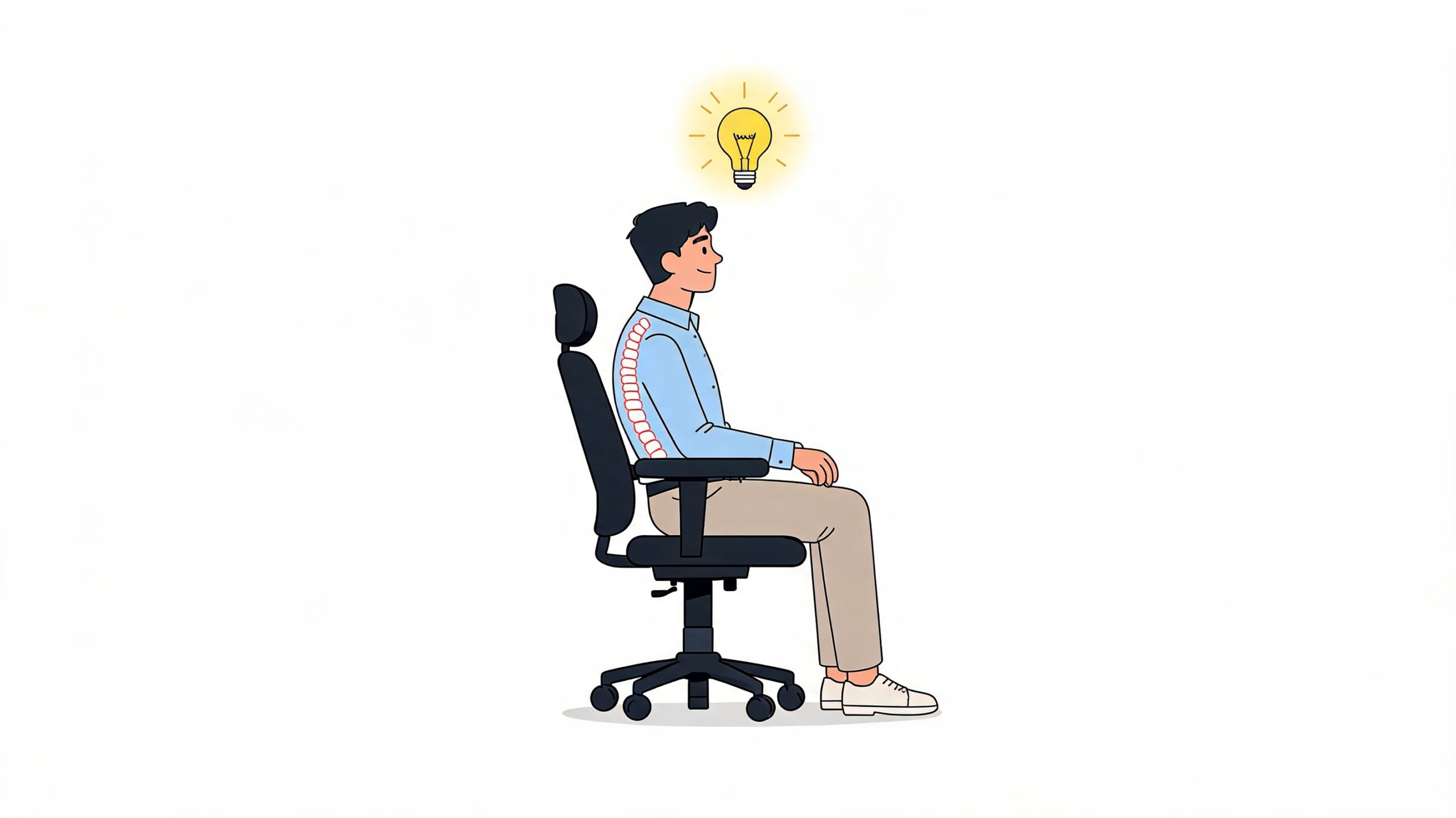
If you spend hours at a desk, the wrong chair usually shows up in predictable places. Your neck leans forward. Your shoulders tighten. Your lower back takes the brunt of poor support. Over time, that can make focused work harder because discomfort keeps interrupting your attention.
The feature that people overlook
One of the most useful upgrades in better office chairs on wheels is the synchronous tilt mechanism. Premium chairs often use a synchronous tilt mechanism, where the backrest and seat move in a specific 1.8:1 ratio. This maintains the spine's natural curve and can reduce lower back pressure by up to 30%, according to these ergonomic chair specifications.
That matters because reclining isn't just about relaxation. In a well-designed chair, the seat and back move together in a way that keeps support where you need it. Instead of collapsing your posture, the chair follows your body more intelligently.
Comfort helps, but fit does the work
A supportive chair usually combines several small adjustments rather than relying on one big “ergonomic” label.
Look for these basics:
- Lumbar support: Keeps your lower back from flattening out against the backrest.
- Seat height adjustment: Helps you place your feet flat on the floor instead of dangling or over-bending your knees.
- Arm positioning: Lets your shoulders relax instead of hunching upward.
- Tilt tension and lock: Gives you controlled movement instead of forcing one rigid posture.
If you're already dealing with hand, wrist, shoulder, or forearm discomfort from desk work, getting the chair right is only part of the picture. Good seating works best alongside broader habits and care, and this guide on repetitive strain injury treatment is a useful resource for understanding that bigger health picture.
Practical rule: If a chair forces you to “hold yourself together” all day, it's not supporting you well enough.
For shoppers who want to compare support styles more closely, these office chairs with lumbar support can help you see how different back designs approach the same problem. The key is noticing how the chair feels after several minutes, not just the first sit.
Decoding Chair Features and Adjustments
People often sit in a chair, spot three levers, and immediately wonder if they need an instruction manual. That's normal. Most office chairs on wheels use a handful of adjustments that sound technical but are easy to understand once you connect each one to a body part or movement.
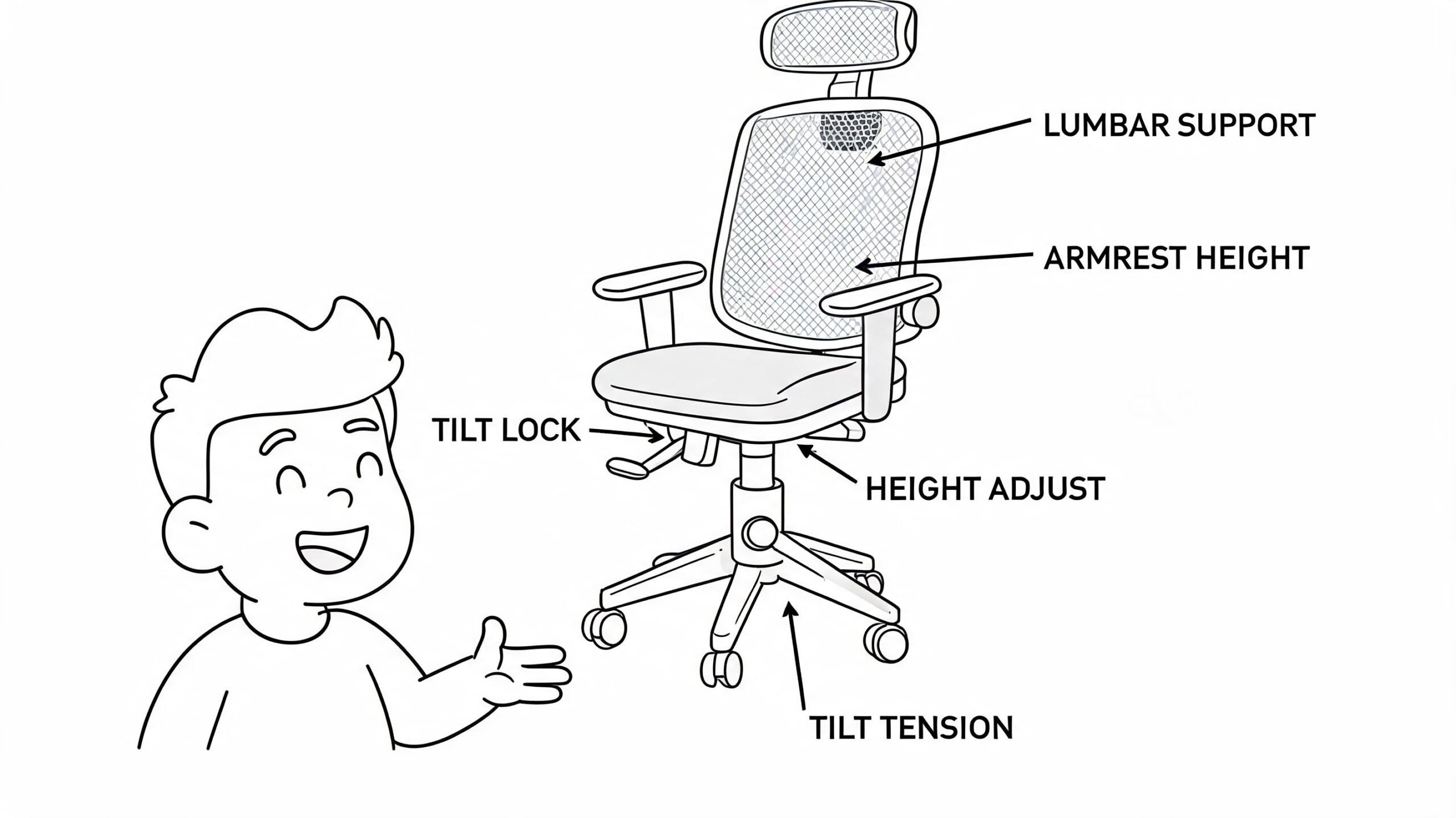
What each adjustment actually does
A chair doesn't need every premium feature to be a good chair. But you should know what you're testing.
- Seat height lever: Raises or lowers the chair so your feet can rest properly and your desk height works with your elbows.
- Tilt lock: Holds the chair in an upright or reclined position you prefer.
- Tilt tension knob: Changes how easily the chair reclines when you lean back.
- Seat slide: Moves the seat pan forward or backward to better support your thighs.
- Armrest adjustments: Help your elbows rest naturally instead of splaying out or lifting up.
A few labels can sound more complicated than they are. For example, 4D arms usually means the armrests can move up and down, forward and back, side to side, and pivot inward or outward. That's helpful if your shoulders are broad, narrow, or sensitive to fixed arm positions.
How to test a chair in person
When someone tries a chair for only ten seconds, they usually miss the details that matter most. A better test is slower and more deliberate.
Use this quick checklist:
- Sit all the way back so your spine meets the backrest naturally.
- Adjust the height until your feet feel planted and your knees feel comfortable.
- Lean back gently to test whether the tilt feels supportive or loose.
- Rest your arms and check whether your shoulders drop into a relaxed position.
- Roll side to side and notice whether movement feels smooth or distracting.
If the controls are confusing at first, that isn't a deal breaker. What matters is whether the chair becomes easy to live with after a minute or two of adjustment.
Some shoppers also ask whether wheels belong only on office chairs. Not at all. Mobility shows up in other furniture categories too, and details like these ottoman caster wheel options can help you recognize how rolling bases affect both function and floor contact across the home.
The biggest thing online shopping can't do is let you feel the difference between “good enough” and “right for me.” That difference often lives in the adjustments.
Choosing the Right Wheels for Your Floors
The wheels under your chair deserve more attention than they usually get. A beautiful chair with the wrong casters can scratch a floor, drag across carpet, or feel noisy every time you move. The right match makes the chair feel smooth, controlled, and much easier to live with.
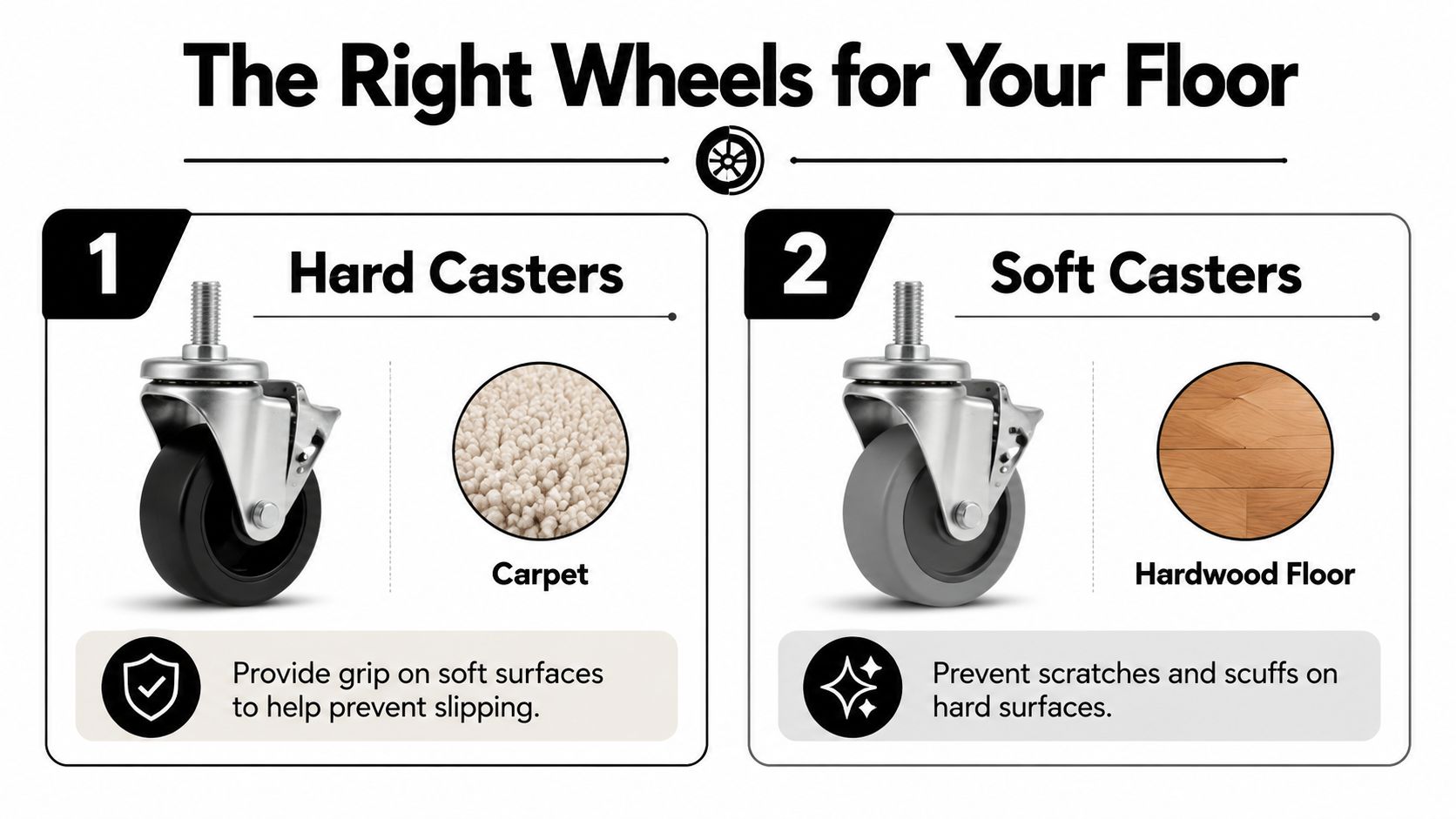
Hard wheels and soft wheels
Many professionals do not realize there are different wheel materials for different surfaces. That's why a chair that works fine in one room may feel terrible in another.
For hardwood floors, soft polyurethane casters are essential. They reduce friction and distribute pressure evenly, which can extend the life of your floor's finish by 2 to 3 years compared to using standard hard nylon wheels, according to this rolling chair caster reference.
Harder nylon wheels are usually a better fit for carpet because they don't sink in as much. Softer wheels are kinder to hardwood, laminate, and many tile surfaces.
Caster and floor compatibility
| Flooring Type | Recommended Caster | Reason |
|---|---|---|
| Hardwood | Soft polyurethane | Helps reduce scratching and rolls more gently |
| Laminate | Soft polyurethane | Offers smoother movement with less surface wear |
| Tile | Soft polyurethane or rubber-style caster | Adds grip and can reduce harsh contact noise |
| Low-pile carpet | Hard nylon | Rolls more freely on soft surfaces |
| Thicker carpet | Hard nylon | Better movement where softer casters may drag |
A few practical floor questions
If you're setting up a home office from scratch, your floor choice and your chair choice should work together. People comparing surfaces may find this guide to best home office flooring options helpful because it frames flooring around daily use, not just appearance.
Here are the questions we'd ask in a real conversation:
- Do you hear the chair every time it moves? Softer casters are often quieter on hard surfaces.
- Are there visible scuffs already? Your current wheel type may be too hard for the floor.
- Does the chair feel stubborn instead of smooth? The floor-wheel pairing may be fighting you.
- Do you use a desk mat? That changes how the caster behaves.
If you're trying to prevent wear before it starts, these tips on protecting floors from furniture are worth reviewing. A floor doesn't get damaged all at once. It usually happens through repeated daily contact that didn't seem serious in the moment.
Finding Your Perfect Fit and Sizing
The right chair for your neighbor may be the wrong chair for you. That's true even if you both work from home, both like the same style, and both want wheels. Fit depends on your height, your leg length, your torso length, and how you sit during the day.
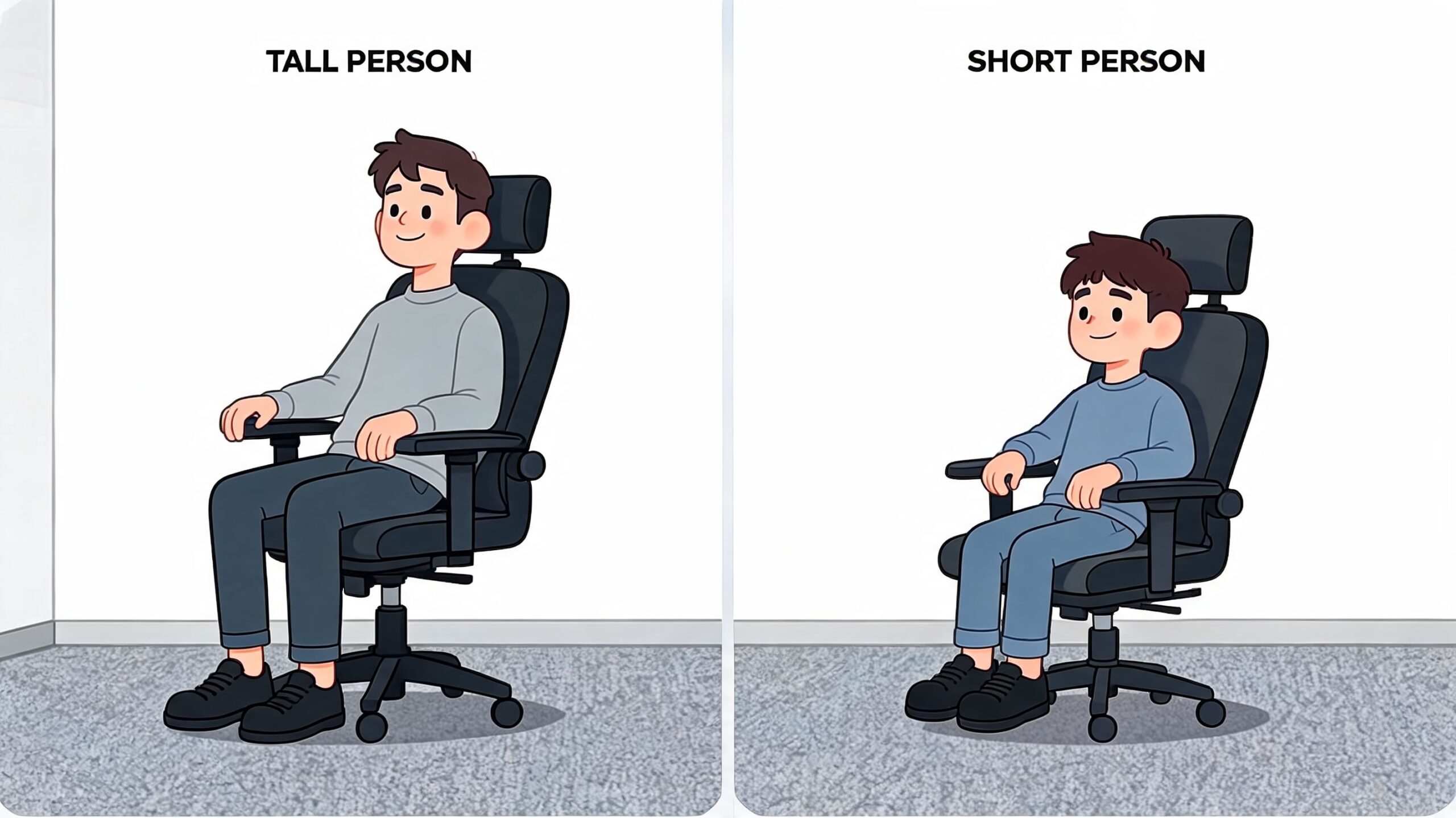
One reason sizing matters so much is that proper fit has a long health tail. The first ergonomic chairs, introduced in the 1970s, were found to reduce musculoskeletal issues by 20 to 30% in workplace studies, proving the direct link between proper fit and long-term health, as described in this history of ergonomic office chairs.
Start with your feet and knees
A simple fit test tells you a lot. Sit back fully, place your feet flat, and notice what happens to your knees. If your feet can't rest comfortably or your knees feel too high, too low, or pinched, the chair height or seat depth may be wrong.
A good fit often includes:
- Feet flat on the floor
- Knees in a comfortable bend
- Thigh support without pressure behind the knees
- Back contact that feels natural, not forced
If you're taller, a high back and headrest may matter more. If you're shorter, a deep seat can feel like the chair is swallowing you, even if the cushion itself feels nice.
Stability matters in shared homes
This part gets overlooked. Not every household needs the freest-rolling chair possible.
In multi-generational homes, or homes with seniors, kids, or mobility concerns, extra movement can be a drawback. A chair that rolls too easily may feel less secure during sit-to-stand transitions or when someone wants a more planted seat for focused work. In those situations, locking casters or even a more stable non-rolling setup may make better sense than the default office-chair base.
The best fit isn't just body size. It's body size, room layout, floor type, and who else uses the space.
Bring your real work habits into the decision
Before choosing among office chairs on wheels, think about these daily patterns:
- Do you perch forward while typing?
- Do you recline often while reading or on calls?
- Do you share the chair with another person?
- Do you need an easier sit-to-stand experience?
Fit is personal. Two chairs can look nearly identical online and feel completely different once you sit in them correctly.
Caring For Your Investment to Ensure Longevity
A good chair puts in serious hours. Considering the average US office worker spends over 1,700 hours per year seated, a small amount of preventative maintenance is key to ensuring your chair provides consistent support and comfort over its entire lifespan, as noted in the earlier section's source on office chair history and use.
That's one reason chair care shouldn't be treated as an afterthought. If you rely on the chair daily, a little maintenance protects both comfort and value.
The simple maintenance routine
Most office chairs on wheels don't need complicated care. They need consistency.
A practical routine looks like this:
- Wipe the surfaces regularly: Use a cleaner that matches the material, whether that's leather, fabric, vinyl, or mesh.
- Check fasteners now and then: Screws and bolts can loosen gradually with everyday movement.
- Look at the arms and controls: If something starts to wobble or stick, deal with it early.
- Clean the casters: Hair, thread, and dust build up faster than often expected.
The part people forget most
Casters are the first place to inspect when a chair starts feeling rough or noisy. If the wheels stop turning freely, the chair may drag, veer, or force you to push harder than usual.
Try this every so often:
- Turn the chair carefully to access the wheels.
- Pull away visible hair or fibers by hand.
- Wipe away dust and grime.
- Check whether each wheel spins without resistance.
A chair can seem “worn out” when it really just needs the base cleaned and tightened.
Small upkeep done on time is easier than replacing a chair before you should have to.
Think in years, not weeks
A quality chair isn't just another household purchase. It's something you use while working, paying bills, studying, gaming, and handling all the little tasks that fill a week. Caring for it protects your comfort, your floor, and the investment you made in the first place.
If spills, pet activity, or everyday household wear are part of the picture, it's also worth asking about protection coverage when you buy. Prevention always costs less stress than surprise repairs.
Experience the Gates Difference in Person
Reading about office chairs on wheels can only take you so far. Specs help. Photos help. Reviews help a little. But comfort is physical, and the final answer usually shows up the moment you sit down and start adjusting the chair for your body.
That's where a local showroom still matters. In a real visit, you can test seat depth, feel how the tilt responds, compare caster movement, and notice whether the back support still feels good after several minutes instead of several seconds. National online sellers can describe a chair, but they can't let you try it before you commit.
Why in-person testing changes the decision
At our 30,000 sq. ft. showroom in Grants Pass, shoppers from Medford, Central Point, Ashland, and across Southern Oregon can compare support styles side by side. You can sit in options from brands such as La-Z-Boy, Flexsteel, Ashley, and Beautyrest, ask questions, and get help from a team that understands furniture in real homes, not just in catalog language.
There's more to explore while you're here too:
- Unique Finds: Reclaimed wood, teak, and one-of-a-kind statement pieces that don't feel mass-produced.
- Outlet values: A fast-changing mix of clearance and special-purchase pieces.
- Real setup help: Guidance on matching your chair to your desk, room, and flooring.
Service that continues after the purchase
Comfort doesn't end at checkout. Delivery matters too.
Our team offers professional in-home setup through White-Glove Delivery service, so we don't just leave a box at the door. We handle assembly and setup, and for mattress customers we also offer haul-away support. That kind of follow-through reflects the same standard George Gates set back in 1946 with his promise of Service and Value.
Budget matters just as much as comfort for many households in the Rogue Valley. That's why Gates Easy Pay includes $0 down, 6-month interest-free, and no-credit-needed options, so people can choose better furniture without forcing a one-size-fits-all payment path.
If you're ready to stop guessing and start testing, visit Gates Home Furnishings in Grants Pass. Our 30,000 sq. ft. showroom gives you the chance to compare office chairs on wheels in person, explore Unique Finds, and get honest help from a local team that's served Southern Oregon since 1946. If you'd rather start from home, you can also browse our collection online and plan your visit with confidence.