Top office chairs small for Small Spaces


That little work corner often starts the same way. A laptop lands on a spare desk, a dining chair gets pulled in, and everyone says it's temporary. A few weeks later, your shoulders hurt, the chair sticks out too far into the room, and the whole setup feels cramped.
We see that problem every day in Grants Pass, Medford, Ashland, and around the Rogue Valley. Shoppers come in asking for office chairs small, but they usually mean two different things at once. They need a chair that fits a tight room, and they need a chair that fits their body.
Those are not always the same chair.
Since George Gates opened our family business in 1946 on a promise of Service and Value, we've helped neighbors solve exactly this kind of furniture puzzle. A compact home office can work beautifully, but only if the chair is chosen with a little more care than “small enough to squeeze in.”
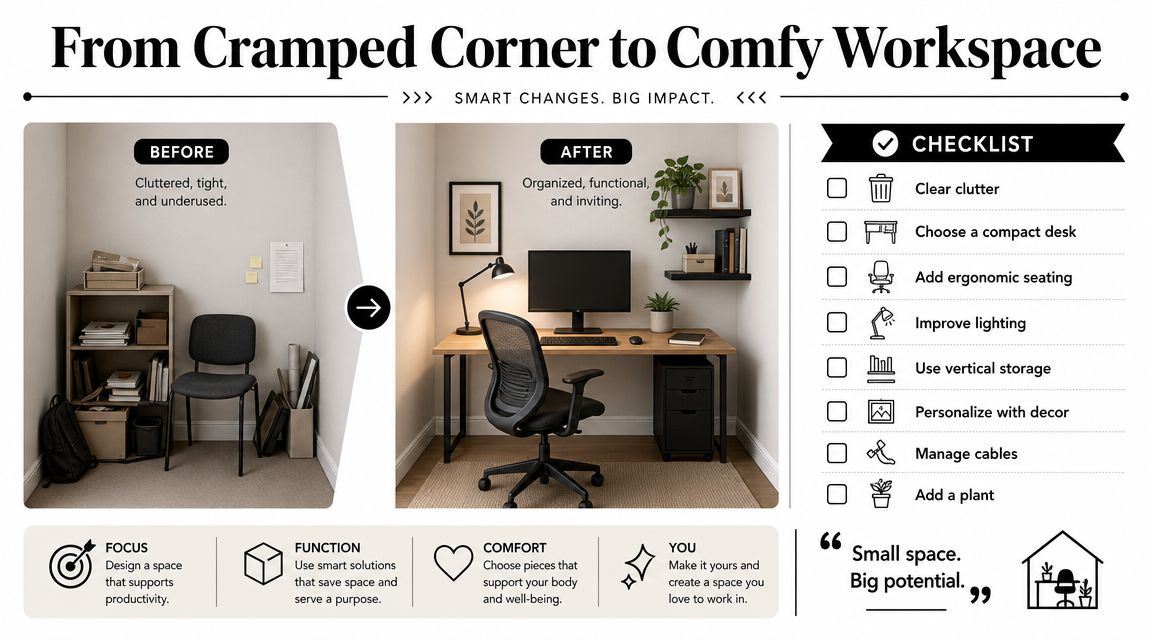
From Cramped Corner to Comfy Workspace
A small office can live almost anywhere. We've seen productive setups tucked into guest bedrooms, hallway alcoves, apartment living rooms, and spare corners near a window. The room doesn't have to be big, but the chair does need enough space to move, turn, and slide in without banging walls or crowding a walkway.
Before you shop, measure the room first. That sounds obvious, but many people only measure the desk opening and forget about the chair base, the pull-out distance, and the space your body needs when sitting down.
Start with the movement zone
A chair isn't just a footprint on paper. It rolls, swivels, and gets pushed back from the desk. In a small room, that movement matters as much as the chair's width.
Use this simple measuring routine:
Measure desk width and clearance
Check the open space between desk legs or storage panels. If you want the chair to tuck in, that under-desk width matters.Measure depth from desk edge to wall
You need room for the chair while seated, not just while pushed in.Check side obstacles
File cabinets, bed frames, heater vents, and outlet placement can all affect where arms and wheels land.Notice traffic flow
If the chair sits in a path to the closet or bathroom, a bulky model will get annoying fast.
Practical rule: In a small room, buy for the chair's working position, not just its parked position.
Look at the room, not only the chair
A compact office feels better when the chair matches the room visually too. A heavy padded chair can make a corner feel crowded even if the measurements technically work. A lower-profile chair or one with an open back can keep the space from looking overfilled.
That's the same principle we use when helping customers rethink a tight room layout in our showroom. Sometimes the fix isn't “smallest possible chair.” Sometimes it's better spacing, better leg clearance, or a chair shape that reads lighter in the room. If you're also reworking the rest of the space, our guide on how to make a small room feel big can help you see the whole setup more clearly.
A quick reality check
Many people try to solve a workspace problem with whatever chair is already in the house. Dining chairs and accent chairs may save space, but they usually don't support long hours of computer work well. Once you sit in one day after day, the compromise catches up with you.
That's why measuring first helps. It narrows the field before you fall in love with a chair that's too wide, too deep, or awkward for the room. It also keeps you from going too small and ending up with something that disappears nicely under the desk but feels lousy after lunch.
Ergonomics for a Perfect Personal Fit
A chair can fit the room and still fit the person poorly.
That mix-up happens all the time with small office chairs. A model may have a narrow frame that works in a tight corner, yet the seat can still be too high, too deep, or poorly shaped for a shorter user. If you are shopping for a small room and a smaller body frame at the same time, you have two fit problems to solve together.
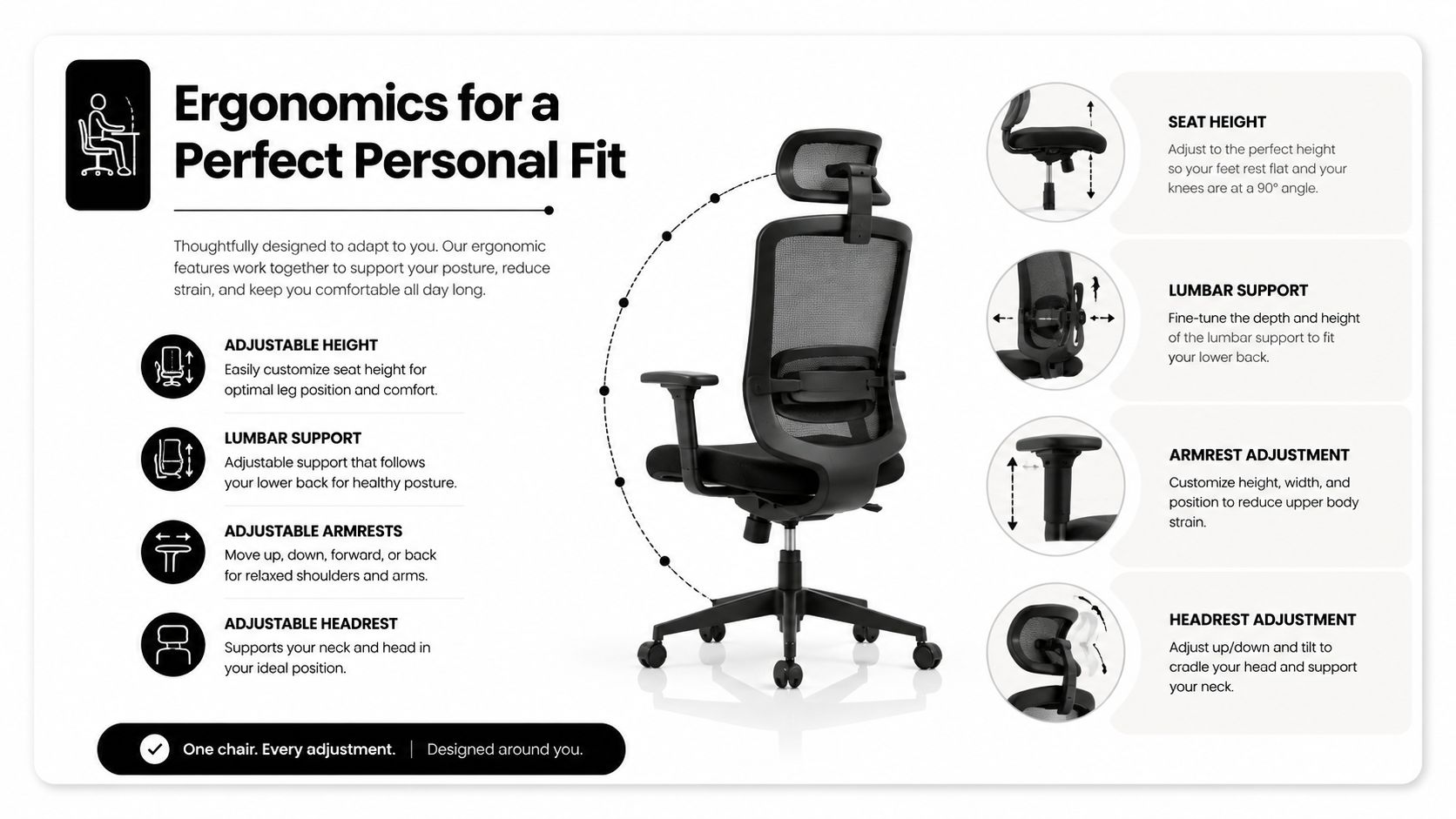
The easiest way to sort it out is to stop looking only at the outside dimensions. Start with the parts of the chair your body touches. Seat height, seat depth, lumbar placement, and arm position decide whether a chair feels supportive at 9 a.m. and still feels good after lunch.
What a proper fit feels like
A good fit starts with your back fully against the backrest.
From there, your feet should rest flat on the floor, your knees should bend comfortably, and the front edge of the seat should stop short of the backs of your knees. A chair works like a pair of shoes in that respect. If the size is wrong in one key spot, you feel it all day, even if everything else looks fine.
For shorter users, seat height is often the first trouble spot. Many office chairs do not lower enough, so the user ends up with pressure under the thighs or feet that cannot plant firmly. Seat depth is the next common problem. A deep seat can push a petite user forward, which breaks contact with the backrest and turns lumbar support into decoration instead of support.
One guide for petite users explains that a chair adjusting down to 15 to 16 inches can make a real difference, especially when paired with a shallower seat and better back support, as explained in this petite ergonomic chair guide.
A simple showroom test helps. Sit all the way back. If the seat edge presses into your legs, or if you have to point your toes down to reach the floor, the chair is not fitted to you.
The features worth checking in person
When someone visits our 30,000 sq. ft. showroom in Grants Pass, we usually walk through four checkpoints before talking about upholstery, brand, or style name.
Minimum seat height
The chair has to lower enough for your feet to rest properly on the floor.Seat depth
Petite users usually do better with a shallower seat, and a depth-adjustable seat is even better in shared workspaces.Lumbar position
Lower-back support needs to meet the curve of your back in the right place. Our guide to office chairs with lumbar support explains what to look for if this part has been bothering you.Arm adjustability
Armrests should support your forearms without forcing your shoulders upward or blocking the desk.
OSHA also notes that seat pan depth adjustment helps shorter users sit back in the chair with full back support, which is exactly the problem many compact-looking chairs fail to solve.
Why trying the chair matters
Online photos can show scale. They cannot show personal fit.
They will not tell you where the seat edge hits your legs, whether the lumbar support lands too high, or whether the armrests make your shoulders tense. That is why this category is so much easier to shop in person, especially if you are trying to solve for both a small workspace and a smaller body frame.
We carry trusted names like La-Z-Boy, Flexsteel, and Ashley, and the lesson is the same across all of them. A chair can be well built and still be wrong for your proportions. In our showroom, we can watch how you sit, help adjust the chair properly, and point out fit issues that are easy to miss when you are buying from a product photo alone.
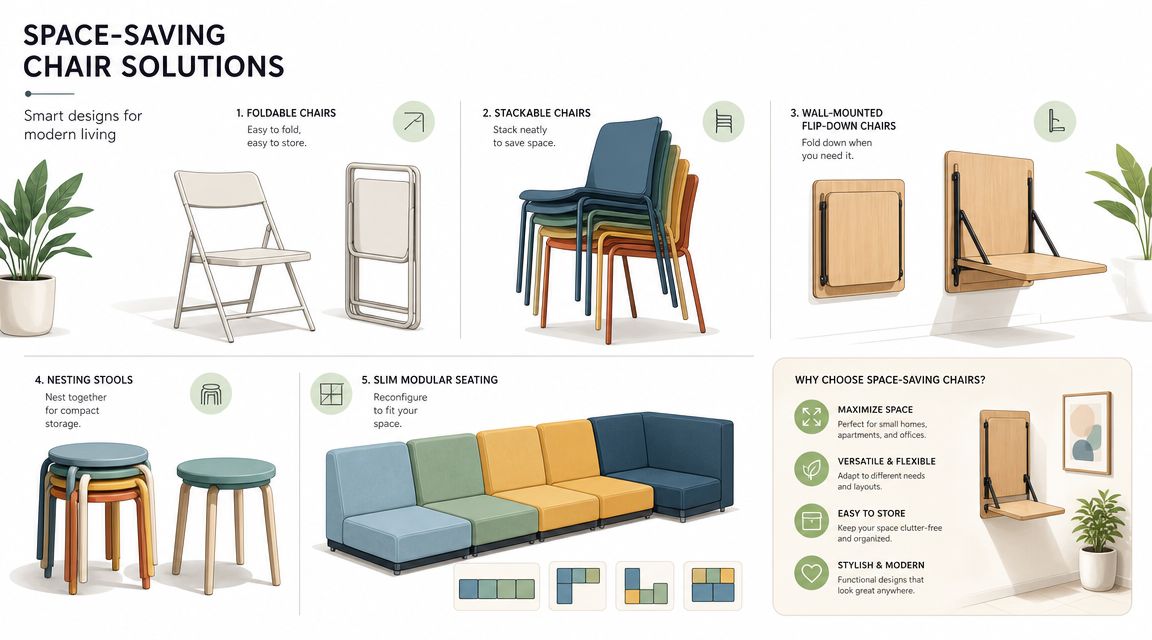
Exploring Space-Saving Chair Styles
Once the chair fits your body, style becomes a practical decision. In small rooms, style changes more than appearance. It affects how easily the chair tucks away, how open the room feels, and whether the setup works for your daily habits.
Armless or arms
This is the biggest fork in the road for most small-space shoppers.
The ergonomic guidance is clear on one point. Armrest height should allow elbows to sit at about 90 to 100 degrees with shoulders relaxed, which means fixed or wide arms can become a real problem when desk clearance is tight, as noted in this small-space chair guide discussing armrest fit.
Here's the tradeoff:
| Chair style | Helps with | Watch for |
|---|---|---|
| Armless | Slides under desks easily, works in very narrow spaces, gives freedom for cross-legged sitting | Less forearm support during long keyboard sessions |
| Adjustable arms | Better shoulder support, can help with long desk work | Needs enough desk clearance, wider overall footprint |
| Fixed arms | Simple look, less adjusting | Can block the chair from tucking in and may not fit your body well |
In a tight home office, armrests aren't automatically good or bad. They're only helpful if they fit both your body and your desk.
If you know you'll be pulling the chair fully under the desk each evening, an armless model often wins. If you spend long hours typing, adjustable arms may be worth the extra width. For shoppers comparing options, our selection of office chairs with no arms shows one end of that spectrum.
Mesh, upholstered, or leather-look
Material changes the feel of the room too.
- Mesh backs look lighter and more open. They often work nicely in corners where a solid chair back would feel visually heavy.
- Upholstered chairs can feel warmer and softer in multi-use rooms, especially if the office lives inside a bedroom or living area.
- Leather-look finishes can look polished, but some compact spaces do better with less visual bulk.
In our showroom, this is also where customers start branching out from basic office furniture and get inspired by the rest of the room. A slim office chair might pair well with one of our Unique Finds in reclaimed wood or teak if the workspace is part of a larger living area and you want it to feel intentional instead of temporary.
Base and profile choices
A low-profile frame can make a room feel less crowded. Casters matter too. The right wheel setup helps the chair move smoothly instead of scraping or catching every time you shift position.
Office chairs small should be judged as a whole package. Not just width. Not just style. The best choice is the one that supports your posture, clears your desk, and leaves the room feeling usable when the workday ends.
Protecting Your Home Office Investment
A well-fitted office chair isn't just another piece of furniture. OSHA's computer workstation guidance emphasizes that a good chair should support the back, legs, buttocks, and arms while reducing awkward postures, contact stress, and forceful exertions, as summarized on this ergonomic office chair guidance page. That's why we encourage people to think of a chair as part comfort item, part everyday support equipment.
When you use something that often, maintenance matters. A chair that stays clean, tight, and properly adjusted usually feels better longer. Small issues like loose arms, grime in casters, or dried-out upholstery can make a good chair feel worn out before its time.
Simple care by material
Different materials need different habits.
- Mesh does best with regular dusting and gentle spot cleaning so debris doesn't settle into the weave.
- Fabric upholstery benefits from quick cleanup after spills and occasional vacuuming around seams.
- Leather or leather-look surfaces should be wiped down with appropriate care products so they don't get stiff or dull.
Don't forget the moving parts. Wheels collect hair and lint. Adjustment levers can loosen over time. A few minutes of upkeep every so often can protect both comfort and appearance.
Protection is part of the purchase
A small home office often lives inside real daily life. Kids run through. Pets jump up. Coffee gets carried from room to room. That makes protection more than an afterthought.
For customers who want that extra layer, warranty and protection plan details are worth reviewing before checkout so you know what's covered and how service works after delivery. This is one place where our family's old promise of Service and Value still guides the way we help people buy.
A chair that supports you every workday deserves the same kind of care you'd give any other frequently used piece in the home.
We also don't believe in the “box at the curb” version of furniture service. Our white-glove delivery team handles professional assembly and placement, and for mattress purchases we can haul away the old set. That kind of follow-through makes a difference, especially when you're trying to get a home office working without one more project on your weekend list.
Smart Budgeting for Your New Chair
A chair budget works best when you treat it like a floor plan for your day. Start with the pieces that affect comfort and fit every hour, then decide what deserves the remaining dollars.
That matters even more with office chairs small, because you are often solving two problems at once. The chair may need a compact footprint for a tight corner, and it may also need to fit a shorter sitter properly. Those are related, but they are not the same. A chair can look small in the room and still sit too high or feel too deep for the person using it.
If a chair leaves your feet dangling or pushes the seat edge into the backs of your knees, the low price stops looking like a bargain pretty quickly. We see that in the showroom all the time. A customer comes in asking for the smallest chair we have, then realizes their actual goal is a chair that fits both the room and the body.
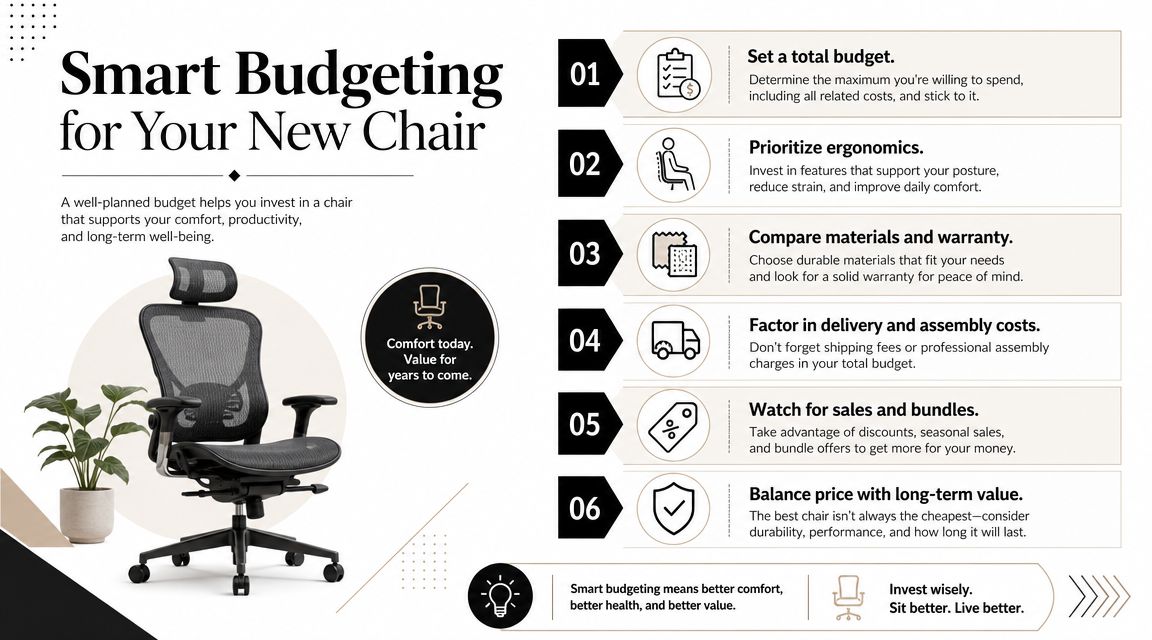
Build your budget around how the chair will be used
Before you settle on a price, ask four simple questions.
How often will the chair be used?
A chair used for full workdays needs better support and adjustment than one used for an hour of emails.Who needs to fit in it?
One person can shop for a more exact fit. A shared chair usually needs a wider adjustment range.Is the bigger problem the room, the person, or both?
A narrow desk nook calls for a smaller frame. A shorter user may need a lower seat height and a shorter seat depth. Some homes need all of that in one chair.Which features change daily comfort, and which are mostly visual?
Proper fit comes first. Fabric color and trim can come later.
Spend in the right order
If you need to rank priorities, use this order:
Personal fit
Seat height range, seat depth, lumbar support, and arm placement.Room fit
Overall width, how far the chair rolls back, and whether it tucks under your desk cleanly.Convenience features
Casters for your floor type, swivel, fold-up arms, or a lighter frame for easy movement.Looks
Upholstery, finish, and design details.
That order helps you avoid paying for a stylish chair that still feels wrong after lunch.
A better budget often means buying once
We have served Southern Oregon families since 1946, and one pattern stays the same. People are happiest when they buy for the actual job the chair has to do, not just the sticker price. If your chair needs to fit a small office and a smaller frame, spending a bit more on the right adjustments can save you from replacing it early.
For shoppers who want more breathing room in the budget, our furniture financing options for home office seating include $0 down, 6-month interest-free options, and no-credit-needed paths through Gates Easy Pay. That can help you choose a chair that fits correctly now instead of settling for one that only looks compact on paper.
A smart chair budget is plain and practical. Pay first for the parts you feel every day, then for the parts you see.
Experience the Gates Difference in Person
Office seating has become a major category because people are paying more attention to ergonomics and daily comfort. A 2022 market estimate placed the global office chair market at USD 15.35 billion, with one industry report projecting growth to about USD 85 billion by 2030, reflecting continued demand for adjustable and ergonomic designs, according to office chair industry statistics summarized here. That growth makes sense to us. More people are working from home, sharing flexible spaces, and realizing that the chair under them affects the whole day.
Still, online shopping only gets you so far.
You can read dimensions on a screen. You can't feel seat firmness, test the backrest, or learn in ten seconds that an armrest hits your desk. That's why so many local shoppers from Grants Pass, Medford, Central Point, Ashland, and the wider Rogue Valley make the trip to see chairs in person.
What happens in the showroom
Our 30,000 sq. ft. showroom in Grants Pass gives you room to compare styles side by side. You can sit in different models, check how low the seat goes, and feel the difference between a chair that looks compact and one that fits. We carry well-known names like La-Z-Boy, Flexsteel, Ashley, and Beautyrest, and our team can help you sort through what matters for your body and your room.
Because we've been here since 1946, people often come in with very practical questions. Will this fit under my desk? Is this chair better for a shorter user? Can I get it delivered assembled? Those are the kinds of conversations that are easier in person than in a product grid.
Local service still matters
Our white-glove delivery team doesn't just drop a box at the door. We provide professional assembly and placement, so your chair is ready to use where it belongs. That saves time, avoids setup mistakes, and makes the purchase feel finished.
That's still George Gates' promise of Service and Value, just carried forward in a modern showroom.
Visit Gates Home Furnishings to test office chairs in person at our Grants Pass showroom or browse our collection online. If you're furnishing a compact workspace anywhere in Southern Oregon, we'd love to help you find a chair that fits both your room and your body.