Your Guide to office chairs plastic in Rogue Valley


A lot of Southern Oregon shoppers start in the same place. A spare bedroom has turned into a work zone, the kitchen table isn't cutting it anymore, and a simple online search for office chairs plastic brings up everything from sleek modern seats to bargain models that look fine in photos but raise real questions about comfort.
That's usually when the practical questions show up. Is a plastic office chair a smart buy, or just a short-term fix? Will it hold up for daily use, stay comfortable through long work sessions, and still look good in a home office in Grants Pass, Medford, or Ashland?
Since 1946, Gates Home Furnishings has served Southern Oregon with George Gates' original promise of Service and Value. That same mindset still matters when helping neighbors sort through office seating. A plastic chair can be a sensible choice, but only when the materials, support, and structure are right.
Table of Contents
- Are Plastic Office Chairs a Smart Choice for Your Home
- Understanding the Different Types of Chair Plastics
- The Real Pros and Cons for Everyday Use
- How to Spot a High-Quality Plastic Chair
- Styling Plastic Chairs in Your Southern Oregon Home
- Your Local Partner for Lasting Value and Service
Are Plastic Office Chairs a Smart Choice for Your Home
A common showroom conversation starts with someone furnishing a new home office after a move or a remodel. The desk is picked out, the room is almost finished, and then the chair becomes the sticking point. Plastic often gets labeled as either “budget” or “temporary,” but that skips over how different today's designs can be.
Some plastic office chairs are exactly what people fear. They're stiff, lightly built, and better suited to short sitting periods than daily work. Others are designed with stronger shells, better geometry, and commercial-style components that make them much more useful in real life.
A plastic chair isn't automatically a cheap chair. The real question is whether the support system under the seat was built for everyday use.
That matters for Southern Oregon homes because one chair often has to do several jobs. It may serve a remote worker during the day, a student at night, and a guest desk on weekends. In that kind of space, easy cleaning and lighter weight can be a genuine advantage.
A smart buyer usually does better by looking at the whole setup instead of the material alone. Seat shape, back support, base stability, and adjustability tell a fuller story than “plastic” ever will. For shoppers planning a full workspace, this collection of home office furniture ideas can help tie the chair decision into the rest of the room.
Understanding the Different Types of Chair Plastics
The word plastic causes confusion because it sounds like one thing. It isn't. In office seating, plastic can mean a hard shell, a flexible back, a reinforced structural part, or a trim piece that doesn't carry much weight at all.
That difference is a lot like wood furniture. Pine, oak, and walnut are all wood, but they don't behave the same way. Plastic works the same way. Two chairs can both be called plastic chairs and feel completely different in strength, comfort, and lifespan.
Plastic is a category, not a single material
Many office chairs combine several materials in one product. One industry summary notes that office chairs often use ABS, PU, PVC, PP, and PA plastics, and that this material complexity makes component reuse more practical than trying to recycle the chair as one item. The same source also states that some reports indicate 80% to 90% of all furniture in Europe ends up in landfills. That's one reason durable material choices matter from the start, especially in mixed-material furniture like task chairs (environmental impact of office furniture).
For everyday shoppers, the takeaway is simple. A chair with better material quality usually feels more solid when pressure shifts, when the user leans back, and when the chair gets moved around the room over and over.
Common Plastics in Office Chairs
| Material Type | What It Means For You |
|---|---|
| Polypropylene or similar molded shell | Often used for backs and seats that need to be light, wipeable, and practical for shared spaces. |
| Reinforced polymer | Usually a better sign for structural strength. It tends to matter more in chairs built for repeated use. |
| ABS-type components | Common in molded parts and housings. Quality depends on thickness, design, and what role the part plays. |
| PU-related parts | Often show up in padded or coated elements rather than the visible shell alone. |
| PVC-free specified plastics | A positive sign in modern specifications where maintainability and environmental compliance matter. |
A buyer doesn't need to memorize chemistry. It's enough to ask whether the visible plastic is decorative, supportive, or structural.
Practical rule: If the chair description talks only about color and price, but says little about support, structure, or component quality, that's a sign to inspect more closely.
The Real Pros and Cons for Everyday Use
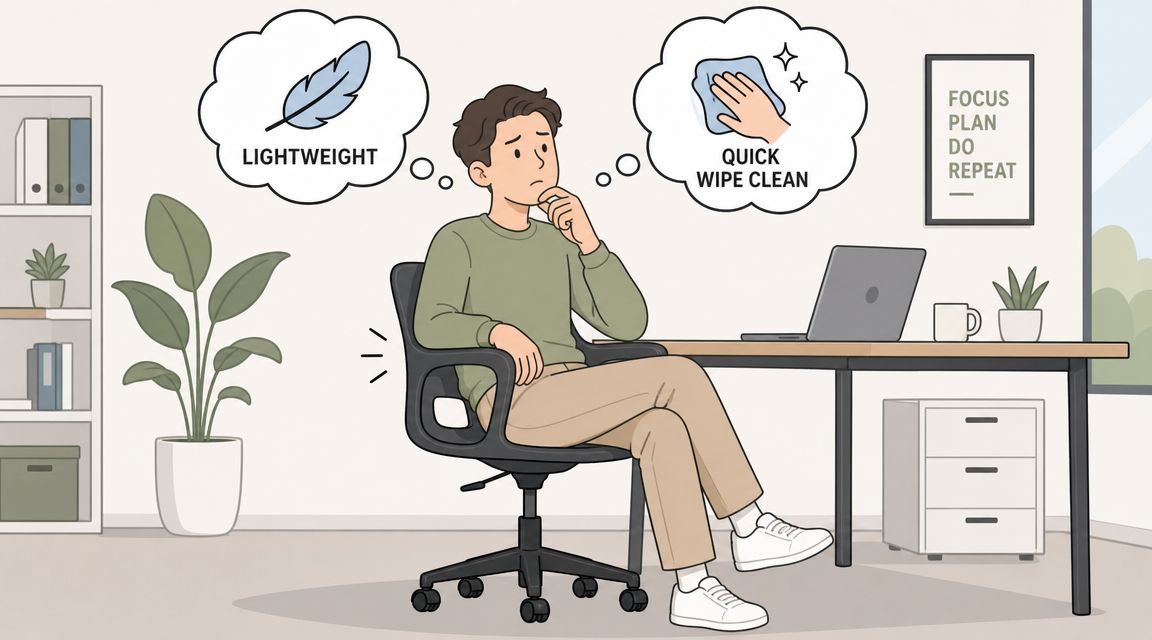
Plastic office chairs stay popular because they solve real household problems. They're often lighter to move, simpler to wipe down, and a natural fit for homes where one room serves several purposes. For a family in Grants Pass using a guest room as an office and homework zone, that convenience is easy to appreciate.
Still, day-to-day comfort is where the decision gets more serious. The World Health Organization identifies musculoskeletal conditions as a leading cause of disability worldwide, and that makes seating more than just a style choice. A useful buying question is whether a chair will support someone sitting 6 to 10 hours a day, not just whether it looks clean and modern in a product photo (WHO-related seating discussion).
Where plastic chairs make sense
Plastic chairs can be a strong fit in homes that need:
- Easy cleanup: Good for craft rooms, student spaces, shared desks, and homes with kids.
- Low visual weight: Many plastic-back chairs look cleaner in compact rooms than bulkier upholstered models.
- Multi-use flexibility: They're often easier to move between rooms when the workspace changes.
- Moisture resistance: Helpful in spaces that get warmer, brighter, or more exposed to seasonal changes.
For readers trying to improve your home office setup, it helps to think of plastic as one material option within a bigger ergonomics decision, not as the decision itself.
Where shoppers need to slow down
The drawbacks show up fast when the chair is poorly designed.
A rigid back can feel fine for a short task, then tiring by mid-afternoon. Some plastic surfaces also feel warmer over long sessions, which matters during Southern Oregon's hotter stretches. And a chair that looks supportive may still lack the shape and adjustability needed for proper posture.
A better way to evaluate office chairs plastic is to ask:
- How long will someone sit in it each day?
- Does the back support the lower spine, or just touch it?
- Does the seat stay stable when the user shifts, turns, or leans?
- Will the chair still feel solid after repeated daily use?
Shoppers focused on comfort can compare those features against these office chairs with lumbar support, especially when back fatigue is already part of the problem.
If a chair is for occasional use, plastic may be perfectly practical. If it's for full workdays, support geometry matters more than easy cleaning.
How to Spot a High-Quality Plastic Chair
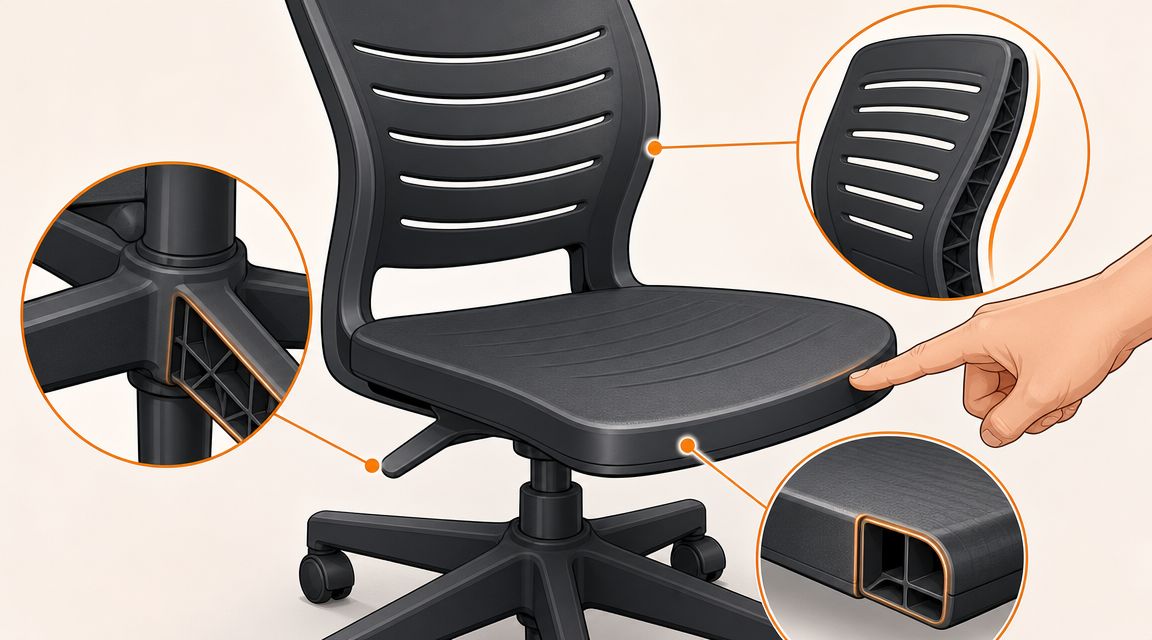
The strongest clue about chair quality usually isn't the shell. It's the structure underneath. Office chairs are typically built around a central post with a gas lift, wheeled base, and a load-bearing layout that transfers force through the center and down to the casters. In practical terms, that means the visible plastic back may not be the part doing the hardest work.
One technical summary notes that the durability of a plastic office chair depends less on the visible shell and more on the quality of its reinforced polymer, base, and gas lift, along with compliance with standards such as ANSI/BIFMA for office seating (office chair construction overview).
What to inspect first
When testing a chair in person, several details tell the story quickly.
- Base stability: A chair should feel planted when weight shifts from side to side.
- Lift function: Pneumatic height adjustment should move smoothly without a loose or shaky feel.
- Back flex: A polymer back can flex in a supportive way, but it shouldn't feel flimsy.
- Joint quality: Pay attention where the back, seat, and arms meet. Weak connection points often show themselves early.
- Caster behavior: Wheels should roll evenly and not feel undersized for the chair.
A chair can look sleek and still feel unconvincing the moment someone leans into it. That's often the best warning sign.
A simple showroom checklist
In a large showroom, the easiest way to compare office chairs plastic is to sit in several back to back and check the same things each time.
- Sit all the way back in the chair.
- Adjust the seat height so feet rest comfortably.
- Lean gently from side to side.
- Recline a little, then return upright.
- Roll the chair a short distance and turn it.
- Notice any creaks, wobble, or delayed response.
A good plastic office chair should feel calm under movement. If the chair twists, rattles, or fights the user during basic motion, it probably won't improve at home.
That kind of hands-on comparison is where a 30,000 sq. ft. showroom in Grants Pass is useful. It gives Southern Oregon shoppers room to test different builds, including familiar names such as La-Z-Boy, Flexsteel, Ashley, and Beautyrest across the store's broader collections, and to compare seating feel instead of relying on a product photo. For buyers who want extra homework before visiting, these office chair reviews can help narrow the field.
Styling Plastic Chairs in Your Southern Oregon Home
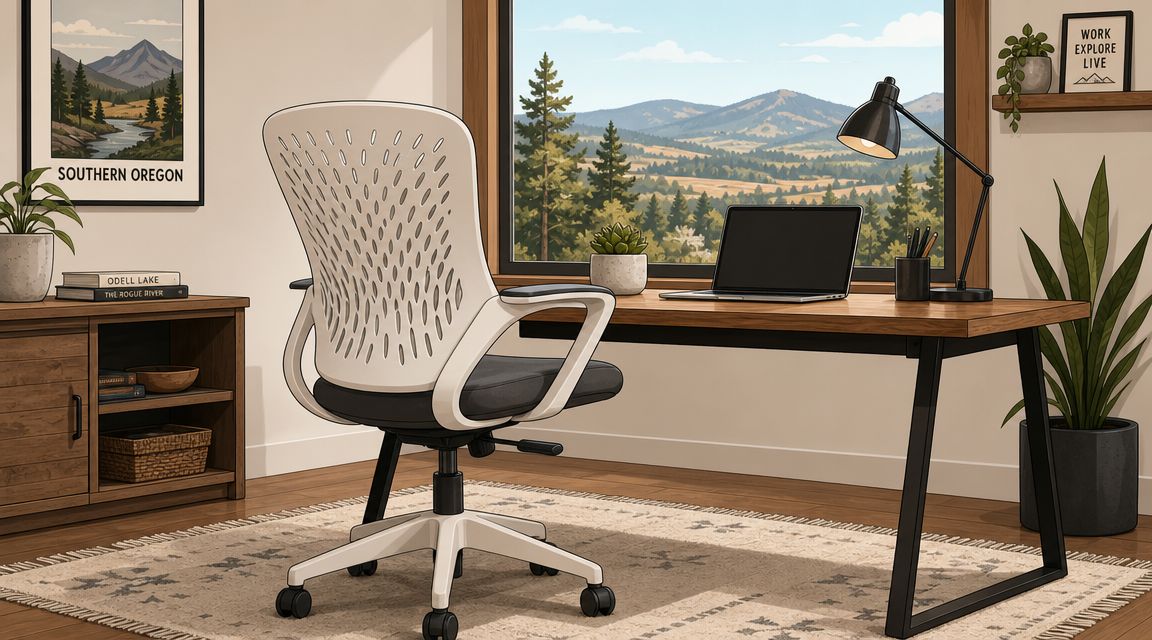
Plastic office chairs work best in homes where function and style need to share the same room. In Southern Oregon, that's common. A desk may sit in a bedroom, off the living area, or in a corner that also handles schoolwork, bills, and hobby projects.
One commercial seating source notes that plastic back chairs are often chosen in schools and labs because they're easy to sanitize, resist moisture, and keep maintenance low. For home use, the same qualities make sense in flexible rooms, as long as the chair still offers proper support and stability.
Good fits for real local spaces
A few examples make this easier to picture.
In Medford, a student bedroom might benefit from a bright, easy-clean chair that can handle homework, gaming, and quick room resets. In Ashland, a smaller apartment office may call for a compact white or black plastic-back chair that doesn't crowd the room visually. In Grants Pass, a covered sunroom office can benefit from a chair that handles changing light and a little moisture better than heavily upholstered seating.
For renters or anyone working with a tighter floor plan, this guide to maximizing small apartment space offers useful ideas for making a work area feel efficient without feeling cramped.
How to keep the room from feeling cold
Some shoppers worry that plastic chairs look too clinical. That usually happens when every surface in the room is hard and smooth.
A warmer mix often solves it:
- Pair a clean-lined chair with wood grain: A plastic chair beside a reclaimed wood desk creates contrast that feels intentional.
- Add texture underfoot: A rug softens the look and helps the workspace feel grounded.
- Use warmer finishes nearby: Lamps, baskets, and framed art keep the room from reading like a break room.
- Mix styles carefully: A modern chair can work surprisingly well with rustic or collected pieces.
That's especially true in homes using reclaimed wood or teak accents. The right chair doesn't have to match every piece. It just has to belong in the room. For more ideas on blending modern and rustic elements, this guide on mixing furniture styles is a useful starting point.
Your Local Partner for Lasting Value and Service
A durable chair is more than a convenience purchase. It's often the better long-term decision for comfort, budget, and waste. Industry estimates suggest that up to 8.5 million tons of office assets end up in U.S. landfills annually, and office chairs are hard to recycle because they mix plastic, metal, and foam. That makes a longer-lasting chair the more sustainable choice in many real households (office furniture landfill estimates).
That approach fits the promise George Gates made back in 1946. Service and Value still means helping Southern Oregon households buy furniture that works hard and lasts, rather than pushing a quick replacement cycle.
For shoppers in Grants Pass, Medford, Central Point, Ashland, and across the Rogue Valley, practical support matters too. Gates Easy Pay includes $0 down, 6-month interest-free, and no-credit-needed options, which can make a better chair more reachable when the budget is tight. Delivery matters just as much. With white-glove delivery and setup, the process goes beyond dropping a box at the door. Assembly is handled professionally, and mattress haul-away is available for other home projects as well.
For Southern Oregon shoppers who want to test comfort in person, compare materials side by side, and see how a chair fits with reclaimed wood, teak, and other Unique Finds, Gates Home Furnishings offers a practical next stop. Visit the Grants Pass showroom to try seating firsthand, or browse the collection online and explore options that bring George Gates' long-standing promise of Service and Value into a home office that works.