Hooker Coffee Table: Styles & Care Guide 2026


A lot of living rooms reach the same almost-finished stage. The sofa fits. The rug is close. The lamps work. Then the middle of the room feels empty, or worse, awkward. That's usually the moment people start searching for a Hooker coffee table and realize there are more questions than expected.
The confusion usually isn't about whether the table looks good online. It's whether it will feel right in daily life. Will knees bump it? Will it block the walkway? Will a round top soften a tight seating area better than a square one? Those are showroom questions, not just search-bar questions.
For homeowners and renters around Grants Pass, Medford, Ashland, and the wider Rogue Valley, the smartest coffee table choice usually comes down to fit, function, and finish working together. Styling matters too, of course. Even small accents can change how the whole room reads, and Leaves & Soul bonsai design insights offer a helpful example of how natural elements can bring calm and balance to a living area. Once the table is in place, surface styling becomes much easier, and coffee table decorating ideas from this practical guide can help tie the room together without making it feel cluttered.
Table of Contents
- Your Living Room Centerpiece Starts Here
- Why Choose a Hooker Coffee Table
- Exploring Hooker Coffee Table Styles and Features
- The Practical Guide to Size and Placement
- Caring for Your Hooker Furniture Investment
- Find Your Hooker Coffee Table in Grants Pass
Your Living Room Centerpiece Starts Here
A coffee table does more than fill the space between the sofa and the TV. It often decides how the room moves, how people gather, and whether the seating area feels complete. In many homes, that center piece has to do several jobs at once. It holds drinks, stacks books, catches remotes, and gives the room a visual anchor.
That's why a Hooker coffee table gets attention from shoppers who want something more substantial than a quick fix. The brand sits in that part of the market where style and everyday use are expected to work together. The right choice doesn't just photograph well. It has to make the room easier to live in.
A local furniture store sees this play out every week. Someone comes in thinking they need a rectangular table because that's what they've always had. Then they stand in front of a round option and realize it would make their narrower seating area much easier to walk around. Another shopper starts with a glass top in mind, then switches to wood because the room needs warmth.
A coffee table should make a room feel easier to use, not harder to walk through.
That practical mindset matters in Southern Oregon homes, where rooms vary so much. A larger Ashland living room can carry a bold centerpiece. A cozier Central Point or Grants Pass space may need softer corners, lighter visual weight, or hidden storage. The best decisions usually happen when shoppers stop asking, “Does this look nice?” and start asking, “Will this work every day?”
Why Choose a Hooker Coffee Table
A brand name only matters if it tells a shopper something useful. With Hooker Furnishings, the biggest reason people pay attention is history. The company says its story began in 1924 in Martinsville, Virginia, and it marked its centennial in 2024, giving it a 100-year operating history. Its origin story also notes a starting capital base of about $28,000, and the company later described its 2016 acquisition of Home Meridian International as effectively doubling sales volume, which helps show the scale of its growth over time, according to Hooker Furnishings company history.
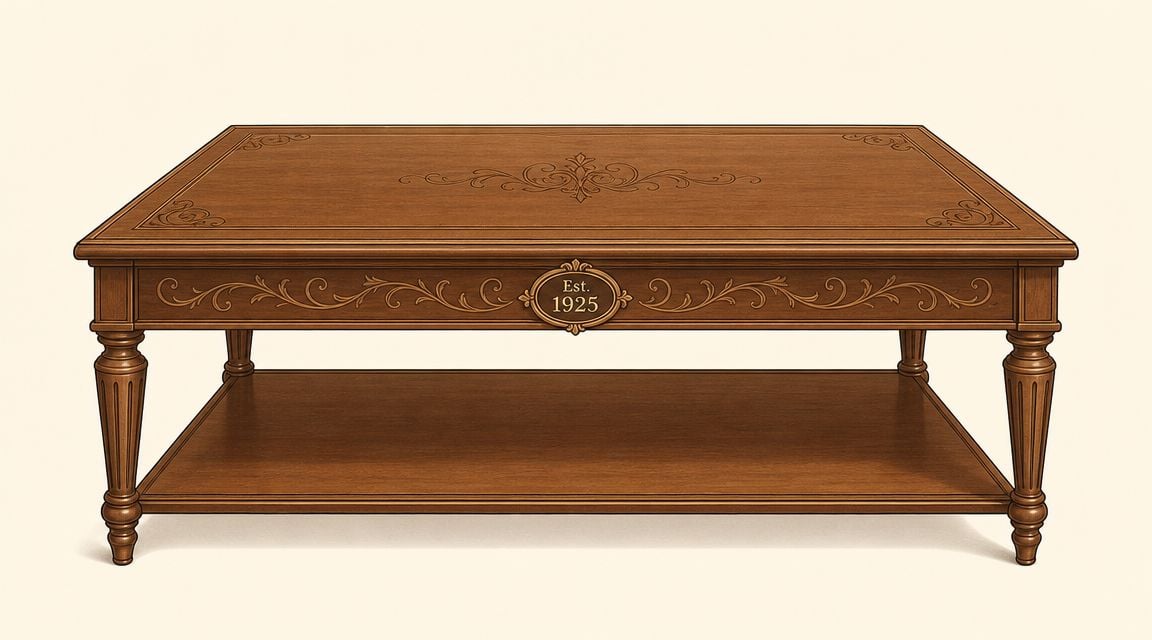
Heritage can show up in the details
A long company history doesn't guarantee the right table for every room. What it can suggest is consistency in how a furniture maker approaches proportion, finish, and construction. That matters with coffee tables because they take constant use. People rest feet near them, set heavy objects on them, and move around them every day.
Shoppers often notice a few things first in a showroom:
- Finish depth: Wood tones usually look layered rather than flat.
- Shape balance: Tops, legs, bases, and shelves tend to feel proportionate.
- Material mix: Wood, metal, glass, and stone looks are often combined in a way that feels intentional rather than trendy.
Those details are easy to miss online. In person, they're usually what separate a table that feels disposable from one that feels settled into the room.
Why it appeals to practical buyers
Some people hear “premium furniture” and assume it only means formal or decorative. That's not really the issue with a Hooker coffee table. The better question is whether the table earns its place in the room over time.
A useful coffee table should do three things well:
Fit the seating area
The table shouldn't look stranded on the rug or oversized against the sofa.Support daily habits
It needs the right top surface, the right edges, and sometimes storage or lift-top functionality.Hold its style
The table should still make sense if pillows, rugs, or wall color change later.
Practical rule: The best coffee table purchase usually feels less like adding decor and more like solving the center of the room.
That's one reason established brands continue to matter. They often build around classic room problems. A family wants storage. A couple wants a cleaner modern look. A downsizing homeowner wants one table that won't overwhelm a smaller living room. Good furniture answers those needs without forcing the whole room to revolve around a single trend.
Exploring Hooker Coffee Table Styles and Features
Coffee tables didn't start as the style centerpiece they are now. One design history notes that the modern coffee table became a distinct category in the early 20th century, with roots reaching back to 18th-century England and Victorian tea tables. Early versions were often foldable and made from solid wood, while today the category includes shapes such as round, oval, square, plus sculptural forms like S-shaped and U-shaped, and materials including wood, resin, glass, marble, and metal, as explained in this history of coffee table design.
How the coffee table became a design feature
That evolution helps explain why choosing a Hooker coffee table can feel harder than expected. Buyers aren't just choosing one shape anymore. They're choosing how the room should behave.
A few style directions show up often in the category:
- Traditional looks usually lean on carved details, richer wood tones, and classic silhouettes.
- Modern looks tend to simplify the profile and reduce ornament.
- Transitional looks land in the middle, which is often helpful for homes mixing older and newer pieces.
- Statement designs use unusual bases, sculptural forms, or bold materials to become the room's focal point.
One common mistake is thinking style and practicality are separate decisions. They aren't. A heavy square table can look grounded in a larger room but feel crowded in a tighter one. A softer round table can make movement easier while still looking polished.
Choosing by lifestyle, not just appearance
Function matters just as much as style. Hooker Furnishings has invested heavily in functional designs, and a significant portion of its coffee table catalog features lift-top mechanisms that raise the surface for more convenient use during everyday activities.
That kind of feature makes sense for people who use the coffee table all day, not just when guests are over. Some homes need storage for blankets and remotes. Others need open shelving to keep the room feeling lighter.
For shoppers who enjoy furniture craftsmanship, it can also be fun to compare a finished retail piece with the raw building process. This walkthrough on how to build a river coffee table offers a useful look at the design thinking behind statement-table construction. For buyers trying to compare mobility and adjustable-top ideas, this guide to coffee tables with wheels and lift tops is another practical reference.
| Hooker Coffee Table Types at a Glance | ||
|---|---|---|
| Table Type | Best For | Key Feature |
| Traditional wood table | Formal or classic living rooms | Rich finish and timeless detailing |
| Transitional table | Mixed-style homes | Flexible look that bridges old and new |
| Round cocktail table | Tighter seating areas | Easier flow around corners |
| Square statement table | Large seating groups | Strong visual anchor |
| Lift-top table | Multi-use living spaces | Raised surface for convenient everyday use |
| Storage coffee table | Busy family rooms | Hidden or open space for essentials |
A shopper standing in a showroom often figures this out faster by walking around each shape than by reading a spec sheet. The table that feels “right” usually matches both the room's style and the way the household lives.
The Practical Guide to Size and Placement
Most coffee table mistakes come from proportion, not color. A beautiful table can still feel wrong if it sits too high, blocks the path, or leaves the room looking off-balance. Shoppers usually need the most help with these specific challenges.
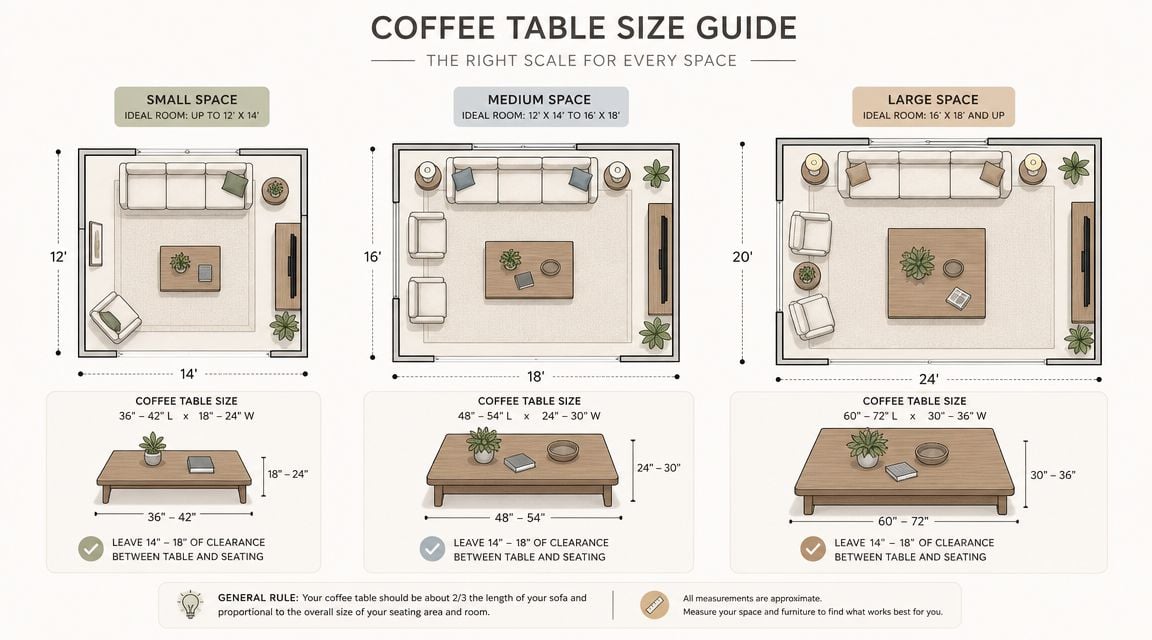
Start with height and reach
Hooker coffee tables are commonly designed to a low cocktail-table height of about 17 to 18.25 inches, which lines up with standard living-room ergonomics and keeps the top within easy reach from a sofa, as shown in these Hooker table dimensions and specs.
That number matters because people often shop by length and shape first, then forget height until the table is in the house. A table that's too tall can feel intrusive. Too low, and everyday use becomes less comfortable.
When shoppers measure at home, three checks usually help most:
- Seat relationship: The tabletop should feel easy to reach from the main seat.
- Knee comfort: There should be enough room to sit naturally without feeling boxed in.
- Visual line: The table shouldn't cut awkwardly across the sofa front when viewed from the room entry.
Anyone unsure where to start can use this furniture measuring guide before heading to a showroom.
If the table looks good but people start walking around the whole seating area to avoid it, the room isn't working.
Match the shape to the room
Shape changes traffic flow more than many shoppers expect. This is especially true in smaller homes, apartments, and tighter seating layouts. Product pages often focus on the finish or collection name, but the bigger question is whether the table will fit the room well in daily use. That gap in guidance is one reason room-scale advice remains so important for coffee table shoppers, as noted by this overview of Hooker coffee table shopping needs.
A few simple placement principles make the decision easier:
- Round tables tend to work well where people need to pass by frequently or where sharp corners would feel crowded.
- Rectangular tables often suit standard sofas and longer seating layouts.
- Square tables can anchor larger seating groups, especially when the room needs a strong center.
- Open-base designs usually feel lighter in smaller rooms because more floor stays visible.
Common showroom lessons that save trouble later
A person can learn a lot by standing next to a table in person. In a real showroom, buyers quickly notice things online photos hide.
For example:
- A thick top can make a table feel larger than its listed dimensions suggest.
- A dark finish can feel visually heavier in a compact room.
- A pedestal base may improve leg movement compared with four corner legs.
- A shelf adds storage, but it also adds visual density.
That's why “will it fit?” isn't only a tape-measure question. It's also about how the table occupies space. In homes across Southern Oregon, the best placements usually leave the room feeling open enough to move through, while still giving the seating area a defined center.
Caring for Your Hooker Furniture Investment
A coffee table gets touched more than almost any other occasional piece in the living room. Cups land on it. Keys get set down in a rush. Cleaning products get used on it, sometimes too aggressively. Good care isn't complicated, but it does need to be consistent.
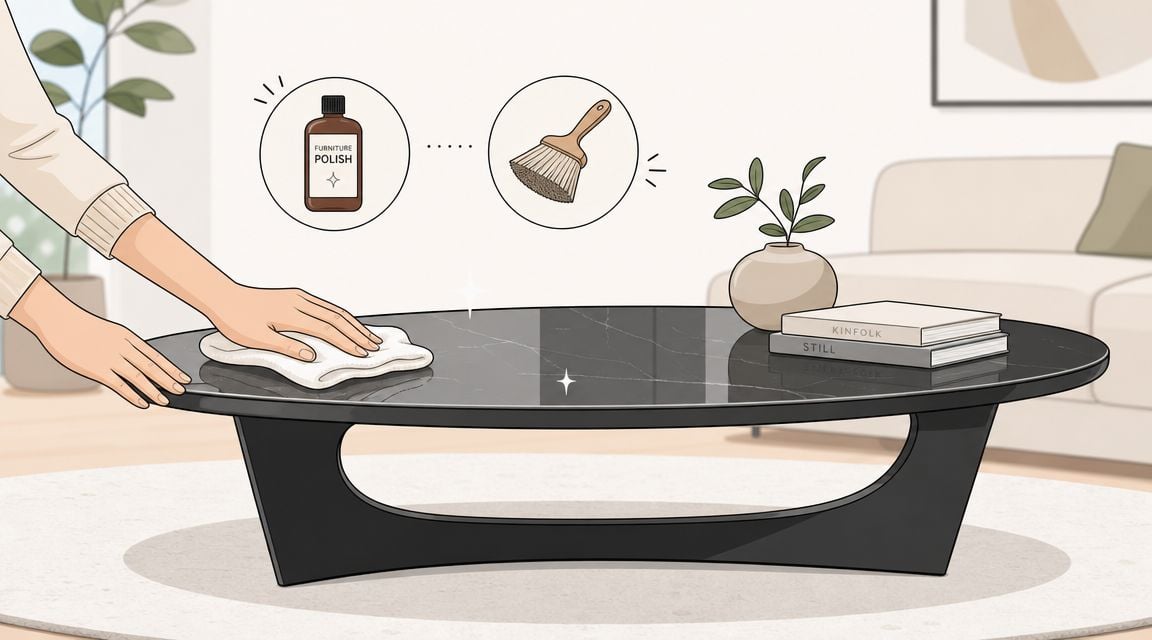
Daily habits that prevent wear
Most damage starts with small habits, not big accidents. A wet glass, a rough decorative tray, or a cleaner that's too harsh can dull a finish over time.
A few simple routines help protect a table's appearance:
- Use soft barriers: Coasters, felt pads, and trays reduce direct wear.
- Wipe spills quickly: Even a small spill is easier to manage right away than after it sits.
- Lift, don't drag: Decorative objects can scratch when slid across the surface.
- Dust gently: A soft cloth removes grit that could otherwise act like sandpaper.
Wood and mixed-material tables usually age better when cleaning stays gentle and consistent.
Cleaning by material
Different surfaces need different care. A one-product-for-everything approach is where many people get into trouble.
For common coffee table materials, these guidelines usually help:
Wood and wood veneers
Use a soft, dry or slightly damp cloth. Avoid soaking the surface or using anything abrasive. This wood furniture care guide is a helpful starting point for routine maintenance.Glass tops
Spray cleaner onto the cloth first rather than directly onto the table, especially if the glass sits in a wood or metal frame.Metal accents
Wipe with a soft cloth and keep moisture from sitting in seams or joints.Stone-look or resin surfaces
Stick with mild cleaning and avoid rough scrubbers that can cloud the finish.
One more practical tip from the showroom floor. Bring home care habits into the buying decision. A household with young kids may prefer a forgiving wood finish over a glossy glass top. A minimal, low-traffic room might do beautifully with a more delicate mixed-material design. Furniture care starts before the purchase, because the easiest table to maintain is usually the one that fits the household's real habits.
Find Your Hooker Coffee Table in Grants Pass
Online browsing helps narrow the field. It doesn't answer everything. Color shifts on screens, scale is hard to judge, and details like edge shape or finish depth usually make more sense in person.
Why in-person shopping still matters
That's especially true with a Hooker coffee table. A buyer may think one style is the right fit, then change direction after seeing how the base, top thickness, or finish interacts with nearby upholstery. A showroom visit then becomes useful, because the decision turns from abstract to physical.
A family-owned store serving Southern Oregon since 1946 can be helpful in that process when it focuses on George Gates' original promise of Service and Value. In a real showroom setting, people can compare tables side by side, test the visual weight of different shapes, and see how wood tones play against fabrics and rugs. For broader planning before a visit, this living room furniture buying guide can help organize the search.
Practical help for Southern Oregon homes
For shoppers in Grants Pass, Medford, Central Point, Ashland, and across the Rogue Valley, local availability matters almost as much as style. Seeing furniture in person saves guesswork, especially when the room is small, the seating layout is unusual, or the buyer wants a specific finish character.
A showroom visit can also answer practical questions that product pages rarely solve on their own:
How does the table feel next to actual seating?
Scale is easier to read beside sofas, chairs, and rugs.Does the finish have warmth or formality?
That difference often shows up only under real lighting.Will the table support everyday life?
Lift-top designs, shelves, and base styles make more sense when handled in person.Is there something less expected available?
Reclaimed wood, teak, and one-of-a-kind statement pieces often appeal to shoppers who want more character than a standard catalog look.
For people furnishing on a budget, financing can matter too. Gates Easy Pay includes $0 down, 6-month interest-free, and no-credit-needed options. Delivery matters just as much. White-glove service means the team handles professional assembly rather than leaving boxed furniture at the door, and mattress haul-away is available when needed. A larger showroom also helps because shoppers can compare coffee tables with other categories in one trip, including brands such as La-Z-Boy, Flexsteel, Ashley, and Beautyrest.
Southern Oregon buyers often want one thing above all else. Confidence that the table will work once it gets home. That confidence usually comes from seeing, touching, measuring, and asking practical questions before the purchase is made.
A Hooker coffee table is easiest to choose when the focus stays on fit, function, and how the piece will live in the room every day. For shoppers who want to test options in person, compare finishes, explore Unique Finds, and get help with financing and white-glove delivery, Gates Home Furnishings offers a 30,000 sq. ft. showroom in Grants Pass for Southern Oregon households. Visit the Grants Pass showroom or browse the collection online.