Ottoman Caster Wheels: Your Complete Upgrade Guide


A lot of ottomans look flexible on the sales floor and turn into dead weight at home. You slide one into place, load it with blankets or board games, and then realize moving it for vacuuming, guests, or a new layout is a chore every single time.
That’s where ottoman caster wheels earn their keep. They’re one of the simplest furniture upgrades you can make, and when you choose the right ones, they protect your floors as much as they improve movement. In Southern Oregon homes, that matters. We see plenty of mixed surfaces under one roof, from hardwood to low-pile carpet to rugs that catch the wrong wheel and turn a handy ottoman into a nuisance.
Giving Your Ottoman the Freedom to Move
A good ottoman should work harder than it looks. It might serve as a footrest in the evening, extra seating on the weekend, and hidden storage all week long. If it takes two people and a grunt to shift it six inches, it’s not doing its job.
That problem isn’t new. The modern swivel caster changed furniture mobility in a major way when David A. Fisher patented it in 1876, making it possible for one person to move heavy items that previously required multiple workers, according to this historical overview of caster evolution. That same basic convenience still matters in a living room today.
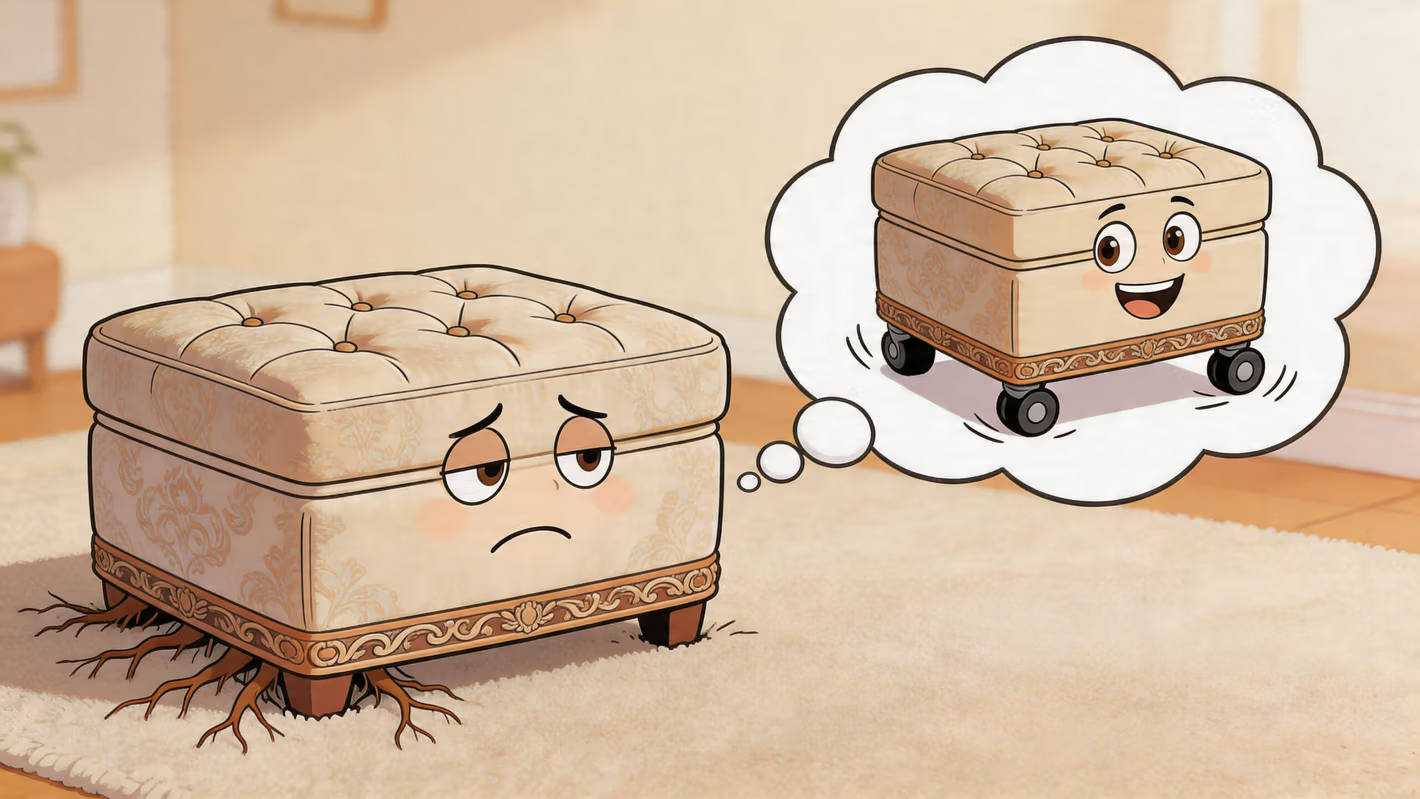
If you’re starting with a piece from a broad selection of ottomans, think of casters as a function upgrade, not a gimmick. The right set makes cleaning easier, rearranging faster, and everyday use less annoying.
When casters make the most sense
Some ottomans benefit more than others.
- Storage ottomans: These get heavy fast, especially when they’re filled with throws, toys, or seasonal decor.
- Recliner companions: If you like to shift furniture for comfort or traffic flow, mobility matters.
- Multipurpose rooms: A home office that turns into a guest space needs furniture that moves without a fight.
- Tight living rooms: Smaller spaces need pieces that can tuck away, pivot, and come back out easily.
Practical rule: If you move your ottoman often enough to notice the hassle, it’s a candidate for caster wheels.
What a good upgrade actually does
The best setup gives you three things at once. It rolls smoothly, stays stable when parked, and doesn’t punish your floors. Miss any one of those and you’ll regret the project.
That’s why picking wheels by looks alone is a mistake. Size, tread material, mount type, and the shape of the ottoman’s base all matter more than the finish on the hardware.
How to Choose the Right Ottoman Caster Wheels
A common pitfall arises when individuals purchase a set that “should work,” install it, and end up with wobble, drag, or scuff marks. The solution is to choose by floor type first, then by mounting method, then by load and stability needs.
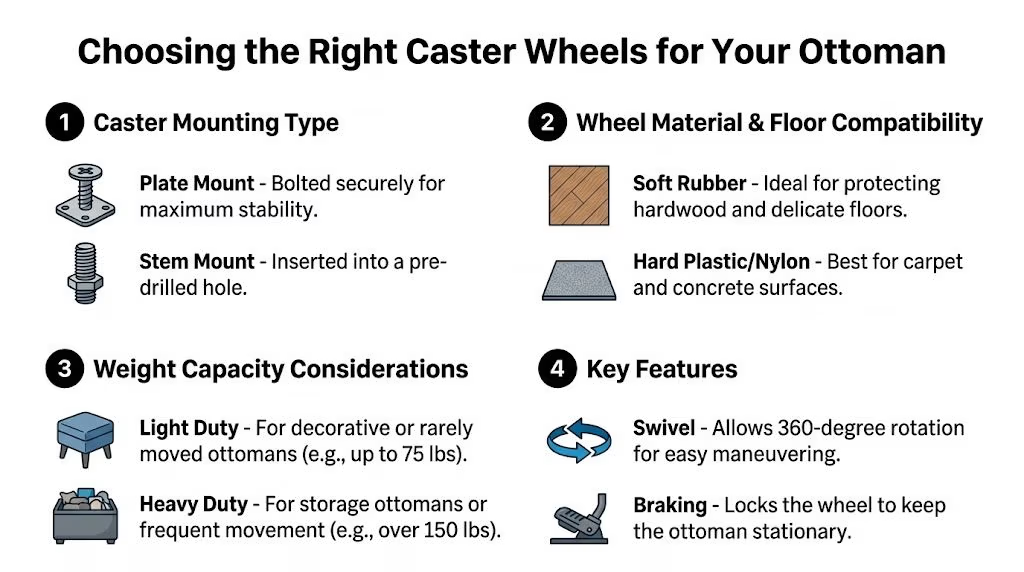
A lot of people assume there’s a universal wheel for every room. There isn’t. A wheel that rolls beautifully on carpet can be rough on hardwood. One that protects wood floors can feel weak or grabby on certain rugs.
Start with the floor, not the ottoman
For Southern Oregon homes with hardwood, reclaimed wood, tile, rugs, and carpet all in the same space, wheel material makes or breaks the result. Polyurethane wheels can reduce the risk of marks on hardwood floors by up to 70 to 80 percent compared with hard nylon or metal, and hybrid rubber-nylon casters can reduce marks by 40 percent while still rolling smoothly, based on this buyer guidance on furniture caster materials and floor compatibility.
Here’s the plain-English version. Hard wheels roll easily, but they’re less forgiving. Softer treads are kinder to floors, but they can struggle more on some carpeted surfaces.
Caster wheel material vs floor type
| Caster Material | Best For (Floor Type) | Pros | Cons |
|---|---|---|---|
| Polyurethane | Hardwood, tile, laminate | Good floor protection, quieter movement, smooth rolling | Can feel less efficient on thicker carpet |
| Soft rubber | Delicate hard floors | Gentle contact, helps limit marks | Can wear faster on abrasive surfaces |
| Nylon | Carpet, utility surfaces | Easy rolling on carpet, durable feel | Harsher on hardwood and more likely to mark |
| Hybrid rubber-nylon | Mixed flooring | Good compromise for homes with rugs and hard floors | Not as specialized as a wheel chosen for one single surface |
If your ottoman crosses from hardwood to an area rug every day, don’t buy the hardest wheel in the bin just because it spins freely in your hand.
Pick the mount that matches the base
Most ottoman caster wheels use one of two mounting styles.
Plate mount
A plate mount bolts to the underside of the ottoman with multiple screws. It spreads force across a wider area, which is exactly what you want on a larger or heavier piece.
Plate mounts are the better choice when the ottoman has:
- An irregular base
- Reclaimed wood construction
- A wide corner frame
- Heavy stored contents
- Any hint of wobble with the current feet
Stem mount
A stem mount inserts into a socket, threaded insert, or compatible opening. It’s neat and compact, and it’s often right for ottomans that already have removable screw-in feet.
Stem mounts make sense when:
- You’re replacing existing screw-in legs
- The frame already has compatible hardware
- You want a cleaner look with less visible metal
- The ottoman is light to medium duty
Don’t ignore locking casters
A rolling ottoman is handy. A rolling ottoman that won’t stay put is irritating.
If the ottoman sits next to a recliner, acts as extra seating, or gets used by someone who needs predictable support getting up, choose at least two locking casters. You don’t need every wheel to lock on every piece, but you do need enough control that the ottoman behaves when parked.
Think about how you use it, not just what it weighs
A lightly loaded ottoman that moves ten times a day needs better hardware than a heavier ottoman that rarely leaves the corner. Movement frequency matters. So does who’s using it.
A family room piece takes more abuse than a decorative ottoman in a guest room. If you’re unsure, choose the sturdier option. If you want to see how mobile furniture works in a real room setup, a coffee table with wheels and lift top is a useful reference point for balancing movement and stability.
Preparing for Your Project Measuring and Removal
Good installs start with boring details. That means measuring carefully, checking the base, and not assuming all feet or legs attach the same way.
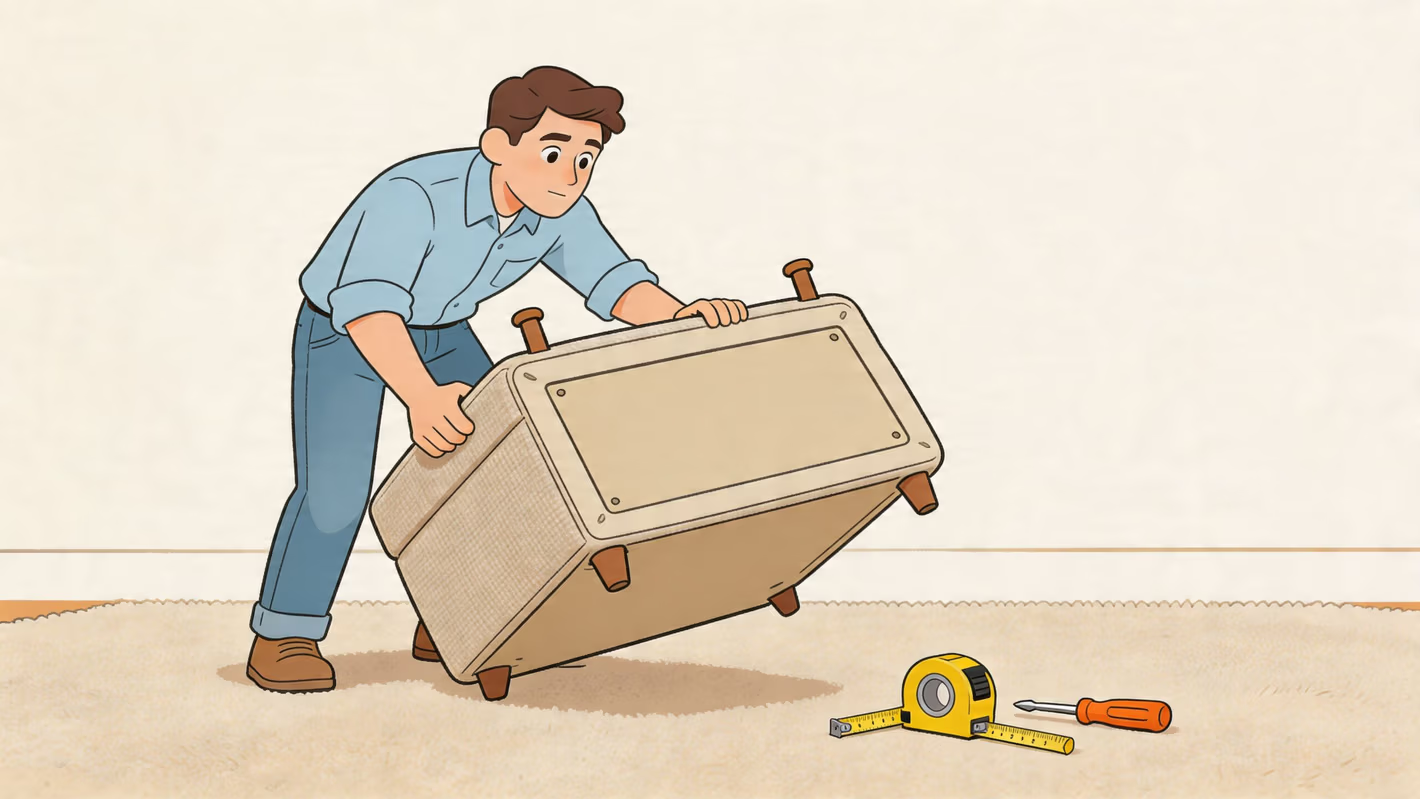
Flip the ottoman over on a blanket or rug so you don’t damage the upholstery or scratch a finished floor. Then inspect what’s there now. Some ottomans have feet screwed into threaded inserts. Others use a plate with multiple screws. Some have no removable feet at all, just a wood frame wrapped in fabric.
What to measure first
Take your time here. A rushed measurement is how people end up with hardware that almost fits.
Check the current foot style
Look for a threaded stem, a mounting plate, or a fixed leg that will need removal.Measure attachment points
For a stem, confirm the diameter and thread pattern. For a plate, measure the plate size and the spacing between screw holes.Inspect the underside material
Solid hardwood, plywood, upholstered dust cover, and thin corner blocks all require different approaches.Look at corner clearance
Swivel casters need room to rotate. If a skirt, trim, or overhang blocks the wheel, you need a different wheel size or placement.
Common problems people miss
The biggest one is assuming the visible foot tells the whole story. It doesn’t. The strength of the frame matters more than the style of the old leg.
Another common miss is measuring only one corner. On handmade or older pieces, especially reclaimed wood or teak, the base may not be perfectly uniform. Measure all four corners. If you need a good process for sizing furniture before any room or hardware change, this guide on how to measure furniture is worth keeping handy.
A fabric-covered underside can hide weak attachment points. Don’t screw into upholstery and hope the wood underneath is where you think it is.
A simple tool kit helps
You don’t need a full workshop. A tape measure, screwdriver, drill, pencil, and level usually handle the job. Add a flashlight if the underside is dark or fully covered.
Installing New Ottoman Casters A Step-By-Step Guide
This part is straightforward if you matched the hardware correctly. It becomes frustrating only when people force the wrong mount onto the wrong base.
There’s one rule we feel strongly about. Don’t treat a heavy storage ottoman like a light office chair accessory. Furniture moves differently, carries awkward loads, and gets leaned on from the side.
A useful point from practical retrofit guidance is that plate-mount casters can support up to 30 percent more weight for stability on irregular bases than threaded stems, and tool-free grip-ring stems can work well for fabric-covered ottomans if there’s a compatible mounting socket, as noted in this small-space caster installation article.
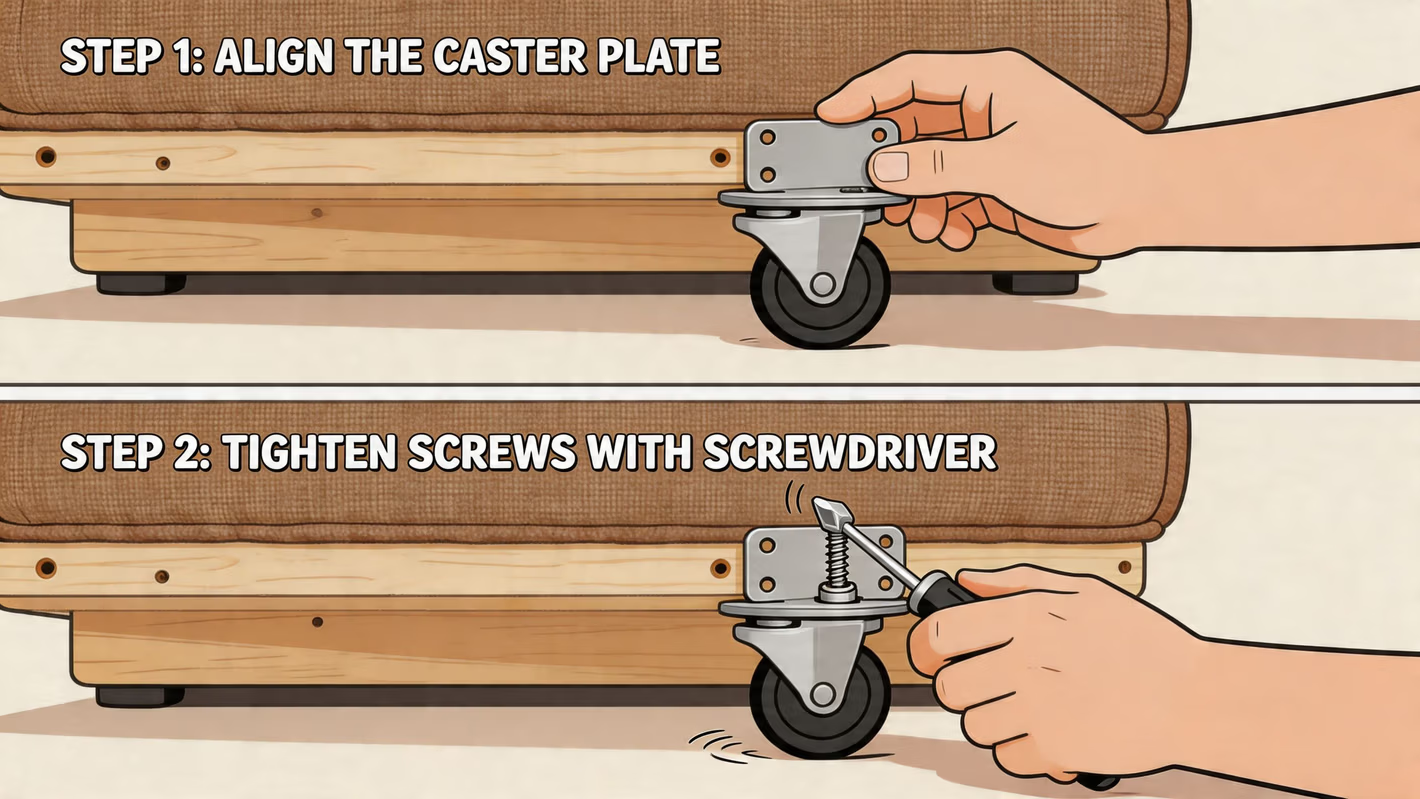
Installing plate-mount casters
Plate mounts are our first choice for heavy, valuable, or uneven ottomans.
Step 1
Remove any old feet and clean the underside. If there’s a dust cover, fold it back neatly or open only the area you need. Don’t shred it.
Step 2
Position each caster plate near the corner where the frame is strongest. You want solid wood under every screw location, not just one side of the plate.
Step 3
Mark screw holes with a pencil. Pre-drill pilot holes if the frame material calls for it. That helps prevent splitting and keeps the screws straight.
Step 4
Fasten one plate at a time. Tighten the screws firmly and evenly. If one side of the plate sits proud, loosen it and reset before moving on.
Step 5
Set the ottoman upright and test for level. If one caster doesn’t fully contact the floor, the base may be uneven or one mounting point may be off.
Installing stem-mount casters
Stem mounts are cleaner, but less forgiving.
What to confirm before you start
- Existing insert compatibility: Match the stem to the hardware already in the ottoman.
- Socket condition: If the old insert is stripped or loose, replace it before installing the caster.
- Frame strength: A weak block inside the corner won’t magically become strong because the new wheel looks substantial.
The install sequence
If the ottoman already has threaded inserts, remove the old feet and screw in the new caster stems by hand first. Don’t cross-thread them. Once they seat cleanly, snug them down without overdoing it.
If there’s no insert, you may need to add one. That can be simple on exposed wood and annoying on upholstered bases. Work slowly, keep the hole straight, and make sure the insert is fully secure before adding the wheel.
How to avoid a wobbly result
Most wobble comes from one of four mistakes:
- Uneven mounting height: One caster sits lower or higher than the others.
- Weak attachment points: The wheel is mounted to thin wood or a decorative skirt.
- Poor corner placement: The caster sits too far inward, which shifts the load awkwardly.
- Mismatched hardware: Different wheel sizes or mount types create instability.
On reclaimed wood or vintage-style ottomans, choose stability over convenience. A slightly more involved install beats a repair later.
A note on hollow or soft bases
If the underside feels hollow, stop and inspect before drilling. Some ottomans have a thin bottom panel that looks structural but isn’t. In that case, you need to anchor into the internal frame or use a different strategy entirely.
Caster Maintenance and Troubleshooting Tips
A well-installed caster usually doesn’t ask for much. But if you ignore it for too long, hair, lint, rug fibers, and dust will pack around the axle and swivel raceway. Then the wheel starts dragging, squeaking, or refusing to turn cleanly.
According to the ISO 22878 wheel play test standards, inadequate lubrication can lead to a 20 percent increase in friction coefficients, and regular cleaning plus proper lubrication of swivel bearings can prevent over 95 percent of common performance issues like squeaking and sticking, based on this ISO caster standards overview. That lines up with what we’ve seen in real homes. Neglect causes most of the annoyance.
A simple maintenance routine
Do this as part of seasonal home care, especially if the ottoman lives near rugs or pets.
- Flip and inspect: Turn the ottoman carefully and check each wheel for wrapped hair, thread, and debris.
- Clean the axle area: Use tweezers, a dry brush, or a small pick to remove buildup.
- Lubricate the swivel bearing: A small amount is enough. Don’t soak it.
- Test every lock: Engage and release the brake to make sure it still catches properly.
Troubleshooting by symptom
Squeaking
That usually means dirt or dry moving parts. Clean first, lubricate second. Don’t jump straight to replacing the caster.
Wheel won’t roll smoothly
Check for carpet fibers or thread around the axle. If the wheel is clean but still resists, inspect whether the caster is overloaded or mounted crooked.
Ottoman drifts when parked
That’s usually a locking issue, not a wheel issue. Confirm the lock is fully engaging and that the ottoman is on a surface the brake can grip.
If you like practical upkeep routines, a seasonal fall furniture maintenance checklist pairs well with caster care.
When to Call for Support Professional Help in Southern Oregon
Some ottomans are perfect DIY candidates. Others aren’t worth the risk.
If you’re working on an antique, a custom piece, a leather storage ottoman with an awkward base, or a one-of-a-kind reclaimed wood design, professional help is the smart call. The same goes for ottomans that need frame reinforcement before wheels can be added safely.
Jobs that deserve an expert hand
- Antiques and heirlooms: You don’t experiment on irreplaceable furniture.
- Custom upholstery: Hidden structure can make drilling risky.
- Uneven or damaged frames: A caster won’t fix a weak base.
- Complex retrofits: Hollow bottoms, trim interference, and unusual leg geometry all raise the stakes.
Professional support is also worth it when you want the result done right the first time. That matters for households that rely on predictable stability, especially around recliners, lift chairs, or multi-use living spaces.
If you need direct help with setup or furniture service, use the service request page. It’s the sensible route when you’d rather avoid trial and error.
Enjoy Your Newly Mobile Furniture
A good caster upgrade changes how an ottoman behaves in the room. It stops being a heavy object you work around and starts acting like a flexible piece you use. That’s the whole point.
Done right, ottoman caster wheels make cleaning easier, room changes faster, and everyday living more comfortable. They also help protect the floors you already paid for, which is reason enough to choose carefully and install them properly.
George Gates started this business in 1946 on a promise of Service and Value, and that standard still holds up because it’s practical. Furniture should look good, work hard, and make home life easier, not more complicated.
If you’d like help choosing the right ottoman, comparing mobility-friendly living room pieces, or seeing materials and construction in person, visit Gates Home Furnishings in our 30,000 sq. ft. Grants Pass showroom. We’ve served Southern Oregon since 1946, and we’re proud to help families in Grants Pass, Medford, Central Point, Ashland, and across the Rogue Valley find furniture that fits real life. Ask about our Unique Finds, including reclaimed wood and teak statement pieces, plus White-Glove Delivery with professional assembly and mattress haul-away. If you’re buying new furniture and want flexible payments, Gates Easy Pay includes $0 down, 6-month interest-free, and no-credit-needed options. You can also browse our collection online from home.