Living Room Sets Decor: Your 2026 Style Guide


A lot of homeowners hit the same wall. The new sofa is in place, the chairs are delivered, the coffee table fits, and yet the room still looks unfinished. It feels furnished, not styled.
That's where living room sets decor usually goes sideways in Southern Oregon homes. The furniture is often fine. The problem is scale, layering, and the lack of a clear plan for how the room should function on a Tuesday night, a holiday weekend, or a quiet morning with coffee and the dog at your feet.
Table of Contents
- From New Furniture to a Finished Room
- The Foundation Scale Layout and Flow
- Building Your Color and Textile Palette
- Layering Rugs Lighting and Window Treatments
- Accessorizing With Personality and Purpose
- Your Perfect Southern Oregon Living Room Awaits
From New Furniture to a Finished Room
A common scene plays out in homes from Grants Pass to Medford. The living room set arrives, everyone agrees the sofa is comfortable, and the room still feels flat. The walls look bare, the rug seems a little off, and nothing ties together yet.
That frustration makes sense because decor isn't a small afterthought. Households in the Pacific region spend an average of $3,021 per year on decor, and Mountain States spend even more, which shows how seriously families treat the look and feel of home according to home decor spending across U.S. regions. People aren't just buying objects. They're shaping the room where the household gathers most.
Since 1946, George Gates' promise of Service and Value has matched that reality. A living room isn't finished when the furniture lands. It's finished when the room feels balanced, useful, and personal.
A finished room doesn't require more stuff. It requires better decisions.
A Grants Pass family might start with a sectional, then realize the room still needs softer light, a rug that anchors the seating, and one strong accent piece that gives the eye somewhere to land. A retired couple in Ashland might have the opposite issue. Their room already has plenty in it, but the pieces don't support comfort, conversation, or easy movement.
That's why living room sets decor works best when it follows a sequence instead of impulse buys.
- First, fix the layout: If traffic flow is awkward, no pillow can save the room.
- Then, set the palette: Color and fabric should support the furniture, not fight it.
- Next, add layers: Lighting, rugs, and curtains do more heavy lifting than people expect.
- Last, add personality: Art, books, reclaimed wood, and meaningful objects make the room feel lived in.
That order keeps the room from looking random. It also keeps homeowners from wasting money on accessories that never had a chance to work.
The Foundation Scale Layout and Flow
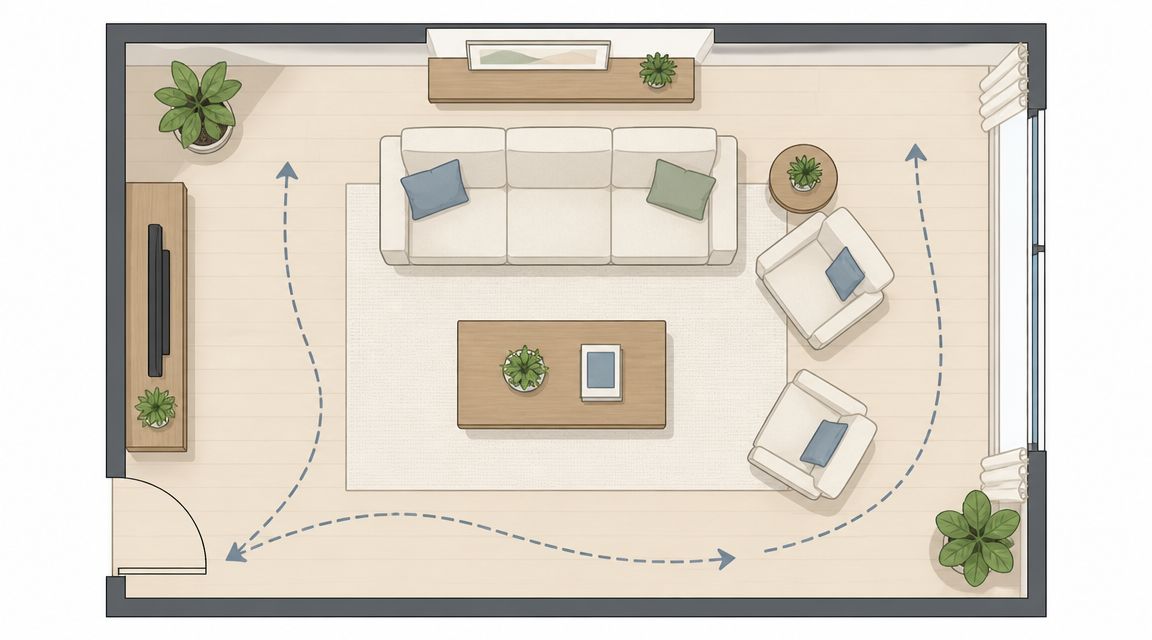
Bad layout makes good furniture look wrong. That's the truth. Before anyone buys lamps or pillows, the room needs a structure that feels natural to walk through and easy to live in.
Start with the room, not the sofa
Measure the room first. Then measure the major pieces. That sounds obvious, but plenty of people still choose furniture by showroom impression alone and only think about pathways later.
A better approach is simple:
- Mark the traffic path: Identify how people enter, cross, and exit the room.
- Locate the anchor wall or focal point: That may be a fireplace, windows, or the main TV wall.
- Set the largest piece first: Usually the sofa or sectional.
- Add support pieces second: Chairs, coffee table, and side tables come after the anchor is right.
For rooms with wood flooring, surface tone matters too. A rug, sofa leg finish, and table material should relate to the floor instead of blending into it. Homeowners sorting through wood-tone decisions may find these expert tips for decorating hardwood floors useful while planning the room.
Use zoning to make the room feel intentional
A practical layout uses zoning. The easiest way to create that zone is with a rug. Place the main seating so the sofa's front legs sit on the rug, and the arrangement will feel connected instead of floating apart.
A practical rule from living room layout guidance on zoning and scale is to keep about 18 inches between the coffee table and seating. That distance is close enough to reach comfortably and open enough to protect circulation.
Practical rule: If people have to twist sideways to pass through the room, the layout is too tight.
For awkward rooms, the old habit of pushing everything against the walls usually makes the problem worse. Floating the sofa slightly inward often improves the room immediately. It creates a proper conversation area and leaves cleaner walkways around the edges.
A few layout decisions solve most living room headaches:
- Keep one clear path: Don't force traffic through the center of the seating group.
- Mix heights: Low pieces need taller elements nearby, such as shelving or a bookcase, so the room doesn't feel visually flat.
- Use room shape effectively: Long narrow rooms need fewer bulky pieces and better spacing, not more tables.
Homeowners who want a deeper planning reference can review practical guidance on placing furniture in a living room.
The smartest move is to test comfort and scale in person before committing. That's where a 30,000 sq. ft. showroom in Grants Pass becomes useful. Seat depth, arm height, and overall bulk look very different in real life than they do in a product photo.
Building Your Color and Textile Palette
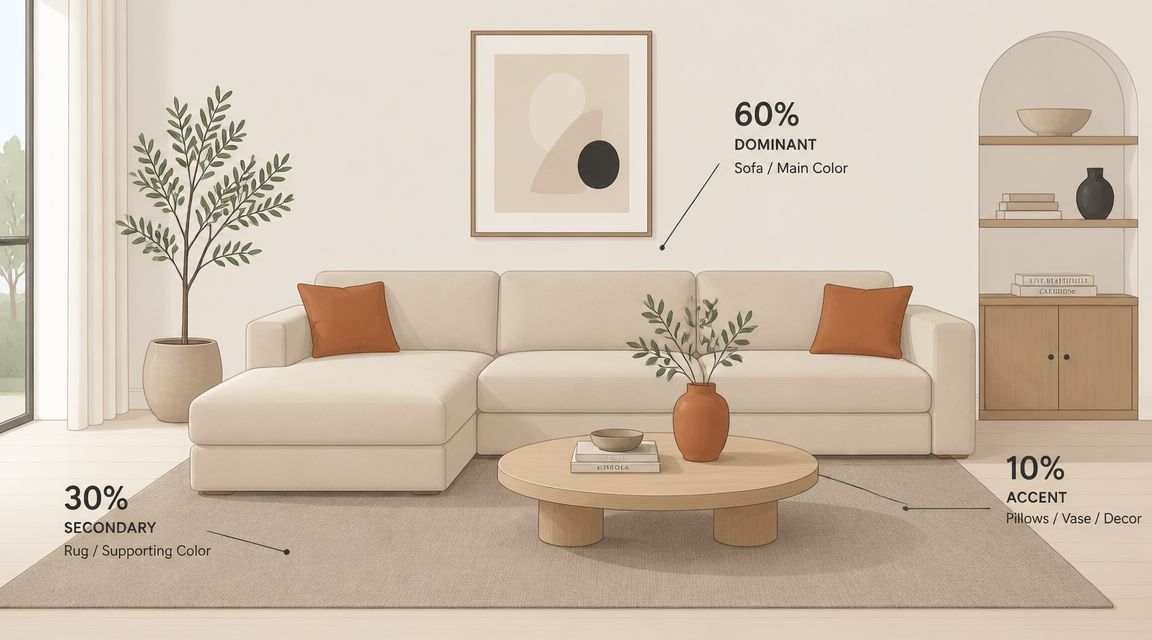
Most color mistakes happen because people keep adding options instead of choosing a lead direction. A room needs one voice, not six opinions fighting for attention.
Pick a lead color and stop second-guessing it
The easiest framework is the 60-30-10 rule. Use the dominant color for the largest surfaces, a secondary color for supporting pieces, and a smaller accent color for energy. That keeps the room from turning muddy or overly matched.
In practical terms, that might look like this:
| Area | Role in the room | Typical application |
|---|---|---|
| Dominant color | Sets the base | Sofa, walls, large rug |
| Secondary color | Adds depth | Curtains, accent chair, ottoman |
| Accent color | Adds life | Pillows, art, objects |
The biggest mistake is making every piece the same tone and material. Matching too hard makes a room feel stiff. Living room sets decor should feel coordinated, not cloned.
Color also affects mood more than commonly understood. Anyone trying to decide between warm, grounded shades and cooler, calmer ones may get helpful direction from this piece on transforming your space with colour.
A more detailed local planning guide is also available in this expert's guide to the perfect color palette.
Choose fabric for real life
Quality matters more than trend. According to furniture purchase data on consumer preferences, 81% of consumers rank quality as the top factor in furniture purchases. That lines up with what works in busy households. If the fabric can't handle everyday life, the room won't stay beautiful for long.
For Southern Oregon homes, fabric choice should follow lifestyle.
- Homes with kids or pets: Performance fabrics, tighter weaves, and forgiving colors make daily use easier.
- Quieter households: Linen-look textures, soft neutrals, or richer accent fabrics can work well if wear is lighter.
- Comfort-first rooms: Softer hand-feel and supportive cushions matter more than chasing a trendy fabric story.
The right textile palette should survive real life and still look pulled together on an ordinary Wednesday.
Brands such as Flexsteel and La-Z-Boy are often part of these conversations because they offer a broad range of upholstery choices and comfort profiles. The point isn't to choose what looks best on a swatch card. The point is to choose what still looks right after regular use.
Layering Rugs Lighting and Window Treatments
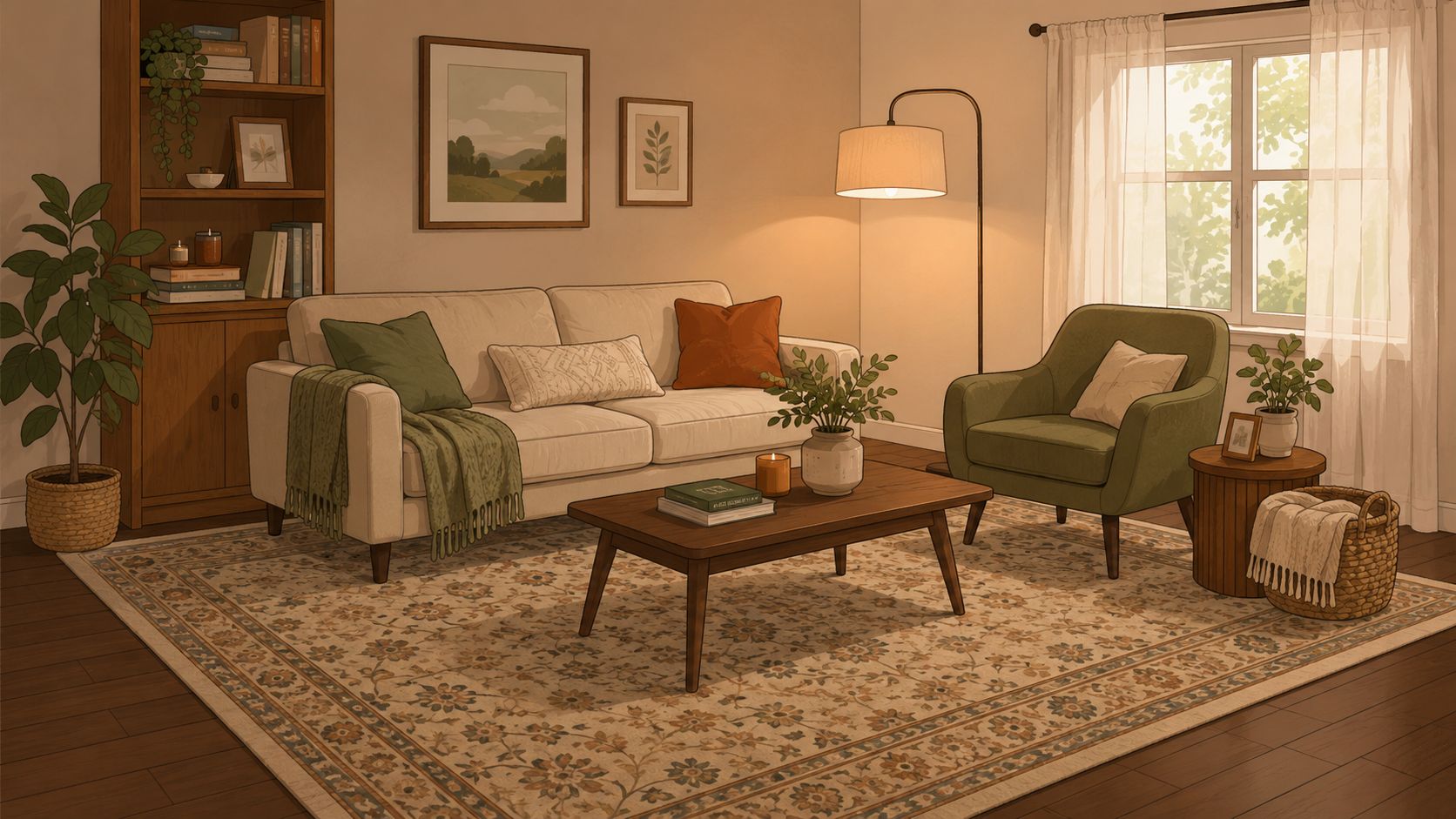
A room can have the right sofa, the right chair, and the right table and still feel incomplete. That flat feeling usually comes from a lack of layers.
A room needs layers, not more furniture
Budget-conscious homeowners often assume they need another piece of furniture to make the room feel richer. Usually they don't. Small, intentional changes such as layering multiple light sources and increasing curtain height can materially change how a living room set reads in the room, as noted in this decorating guidance on high-impact upgrades.
That means three things matter more than people think:
- Rugs that are large enough: A too-small rug shrinks the room visually.
- Lighting at different heights: One ceiling fixture won't create warmth.
- Curtains with presence: Low, skimpy panels make a room feel shorter and cheaper.
For readers reworking a dim room, this article on putting your living room in the best light offers practical next steps.
Do this instead of the usual shortcuts
A better living room follows a few direct rules.
- Use one overhead light plus lamps: Place a floor lamp near a chair and another light on a console or side table.
- Hang curtain rods higher and wider than the window frame: This makes the window look larger and the ceiling feel taller.
- Choose a rug that serves the seating group: The rug should support the furniture arrangement, not sit like a small island in the middle.
A room lit from one harsh ceiling fixture will never feel finished, no matter how expensive the furniture is.
Often, homeowners get the biggest visual return without replacing major pieces. The room starts to feel softer at night, more balanced during the day, and much more intentional all week long.
Accessorizing With Personality and Purpose
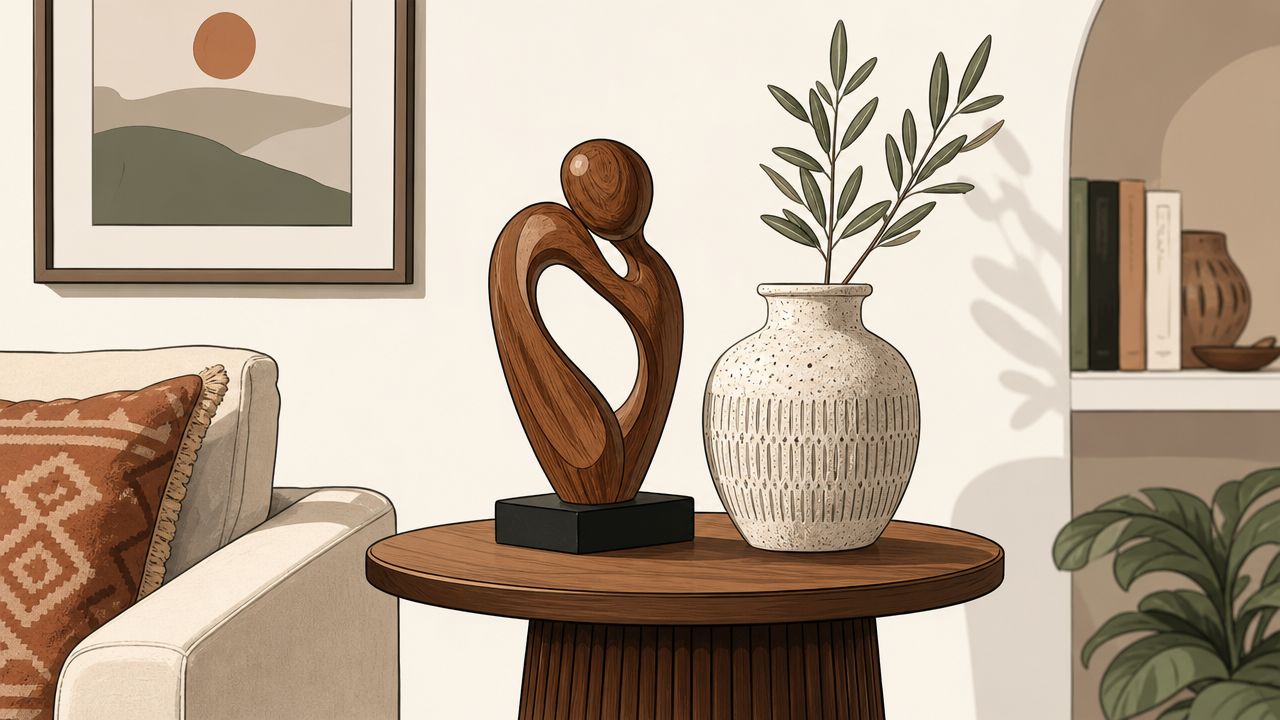
Accessories are where a room either wakes up or falls apart. Random objects create clutter. The right pieces give the room identity.
What makes a room feel personal
A Southern Oregon living room shouldn't feel like it came out of a catalog all at once. It should feel collected. That usually means mixing clean core furniture with character pieces such as reclaimed wood, teak accents, handmade pottery, books, framed family photos, or one strong piece of art.
It is Unique Finds that can carry a room. Reclaimed wood consoles, one-of-a-kind accent tables, and statement pieces with texture add depth fast because they break up the sameness that full sets can create.
For smaller or awkward rooms, shape matters as much as style. Guidance on furnishing awkward or angled rooms for better circulation recommends options like L-shaped sectionals or rounded tables to preserve movement. That advice matters in rentals, older homes, and living rooms with odd corners or angled walls.
A few accessories tend to earn their place:
- One large visual anchor: Oversized art or a substantial mirror beats a bunch of tiny filler decor.
- Natural texture: Wood, woven fibers, stone, and greenery soften upholstery-heavy rooms.
- Useful surfaces: A side table beside the main seat should hold a drink, book, or lamp.
Coffee tables often become clutter magnets, so a simple styling approach helps. This foolproof guide to the perfectly styled coffee table gives a clean framework for balancing function and display.
Comfort matters just as much as style
Some of the most successful rooms in Southern Oregon are built around comfort first. Seniors, readers, and anyone who spends serious time in the living room need soft layers, reachable surfaces, and furniture that supports the body instead of just looking good in photos.
A recliner corner, for example, feels finished when it includes a small table, a good lamp, and a throw that's easy to grab. Readers looking for a polished way to style that final layer may like these Pandemonium Millinery style tips for draping a throw on a sofa.
One practical option in the region is Gates Home Furnishings, which offers living room furniture along with reclaimed wood and teak accent pieces that can help break up an overly matched room. That combination works well for homeowners who want comfort-focused seating without losing character.
Your Perfect Southern Oregon Living Room Awaits
A good living room doesn't happen by accident. It comes together when the layout makes sense, the palette feels settled, the layers soften the room, and the accessories reflect the people who live there.
That's why decorating a living room set should be approached with discipline. Don't start with trendy extras. Start with flow, scale, comfort, and a clear point of view. Everything looks better once those decisions are right.
For households around Grants Pass, Medford, Central Point, Ashland, and the broader Rogue Valley, practicality matters just as much as style. People want furniture that feels good after a long day, holds up over time, and doesn't leave them handling delivery headaches or unfinished assembly.
Since 1946, George Gates' promise of Service and Value has stayed relevant because homeowners still want the same things. They want honest guidance, dependable quality, and a process that feels manageable instead of stressful.
That's also why support beyond the sale matters.
- Gates Easy Pay: Flexible options include $0 down, 6-month interest-free, and no-credit-needed choices.
- White-Glove Delivery: Professional teams handle setup and assembly rather than dropping boxes at the curb.
- In-person comfort testing: A 30,000 sq. ft. showroom gives shoppers the chance to sit, compare, and judge scale before buying.
- Trusted brands: Selections often include La-Z-Boy, Flexsteel, Ashley, and Beautyrest.
Homeowners who are still deciding where to begin can review these best places to buy living room furniture and then bring a floor plan, measurements, and a few room photos into the decision.
The fastest way to get unstuck is to stop guessing and start editing. Keep the pieces that serve the room. Add the layers that finish it. Choose fewer accessories, but choose them better.
For homeowners across Grants Pass and Southern Oregon, Gates Home Furnishings is a practical place to test comfort, compare living room styles in person, and find finishing pieces that don't look mass-picked. Visit the Grants Pass showroom near the heart of the Rogue Valley, or browse the collection online to start building a living room that feels settled, useful, and distinctly your own.