Expert Living Room Set Design: Gates Home Furnishings

You walk into the living room, look at the blank walls, the odd window placement, the TV cord you're already trying to ignore, and suddenly every sofa you liked online feels wrong. That's normal. What's often needed isn't more inspiration. It's a plan.
We've seen that moment play out for generations across Grants Pass, Medford, Ashland, and the wider Rogue Valley. Since 1946, families have come in with a rough sketch, a phone full of screenshots, or just a simple question: “How do we make this room work?” That's the kind of problem George Gates built this business around with his promise of Service and Value.
A good living room set design isn't about copying a showroom display. It's about fitting real life. The living room became the center of home life when television changed the room from a formal sitting area into an entertainment hub in the 1950s, and that shift still shapes how we arrange furniture today, as noted in the history of the modern living room. That's why the room has to handle everything at once: relaxing, gathering, talking, watching, and living.
Your Living Room Design Journey Begins Here
A family from Southern Oregon usually starts in one of two places. They've either moved into a home and have nothing in the room but echo, or they've got a mix of older pieces that never quite worked together. In both cases, the problem isn't taste. It's that the room has never been planned as a whole.

We like to start with a simple question. What do you want this room to do on a Tuesday night? If the answer is movie night, stretching out with a recliner, kids on the rug, and decent lamp light for reading, then your layout needs to support that from the first decision.
Start with the room you have
Most living room mistakes happen before anyone buys a sofa. People choose a style first, then try to force it into a room that needs different proportions, better traffic paths, or more flexible seating. That's backwards.
If you want a little help organizing ideas before you shop, the Roomstage AI living room staging guide is a useful way to think through focal points, furniture grouping, and visual balance. We also recommend browsing our own guide on where to begin with home design if you need help turning scattered ideas into a usable plan.
A living room set should solve a room. It shouldn't just fill it.
Keep the room personal, not precious
We've been helping Rogue Valley families furnish homes since 1946, and the best rooms are rarely the fussiest ones. They're the rooms that get used. A solid sofa, chairs that invite people to sit down, a table that lands in the right spot, and finishes that can take daily life. That's the work.
That's also why the showroom matters. It's one thing to like a setup on a screen. It's another to sit in it, walk around it, and decide whether it feels right for your home and your people.
First Assess Your Space and Family Needs
Before you shop, stand in the room with a notepad. Don't decorate yet. Assess.
The biggest mistake we see is treating every living room like it serves one purpose. Most don't. One room might need to handle TV viewing, overnight guests, holiday visits, reading, napping, and everyday conversation. If you skip that reality, your living room set design will look fine and live badly.
Ask the right questions first
Start with these:
- Daily use: Is this your main family room or a quieter front room that gets occasional use?
- Primary activity: Do people mostly watch TV, talk, read, or lounge?
- Household mix: Do you need easy access for kids, pets, or older adults?
- Focal point: Is the room built around a TV, fireplace, windows, or all three?
- Problem spots: Which areas already feel cramped, awkward, or wasted?
Write your answers down. Don't trust memory. A room plan gets better when it's specific.
Don't treat accessibility like an afterthought
This matters more in Southern Oregon than many people realize. Living room design often overlooks accessibility, even though over 20% of Rogue Valley residents are over 65, which makes planning for lift chairs and recliners a practical need for many households, not a niche feature, according to this accessibility-focused design note.
If a parent or grandparent needs a lift chair, plan for it now. Don't tuck it in later and hope the room figures itself out.
Practical rule: A recliner needs room to function, but the person using it also needs clear, safe movement around it.
That changes the layout. It might mean placing a recliner on a straight wall instead of forcing it into an angled corner. It might mean skipping an oversized ottoman. It might mean choosing a cleaner table profile with fewer shin-level obstacles.
Build a real design brief
A short design brief helps more than a mood board. Ours would look something like this:
| Household need | What it means for the room |
|---|---|
| TV and conversation | Seating should face the focal point without isolating guests |
| Senior comfort | Recliner or lift chair gets priority placement |
| Easy walking path | Major pieces can't pinch movement |
| Durable daily use | Fabrics and finishes need to handle regular wear |
If you haven't measured yet, do that next. A tape measure will save you from bad decisions faster than any style quiz. Our guide on how to measure furniture is a good place to start before you fall in love with the wrong scale.
Planning Your Layout with Confidence
You get the measurements home, start sketching, and suddenly the room makes more sense. The traffic path stops cutting through the seating area. The sofa has a clear wall to live on. The chairs stop floating in the middle of nowhere. That is how good layout work starts.
A balanced room comes from measurement and placement, not guesswork. If you want the room to feel calm, comfortable, and easy to use, decide where people will walk first and where they will sit second.
Use the wall to size the sofa
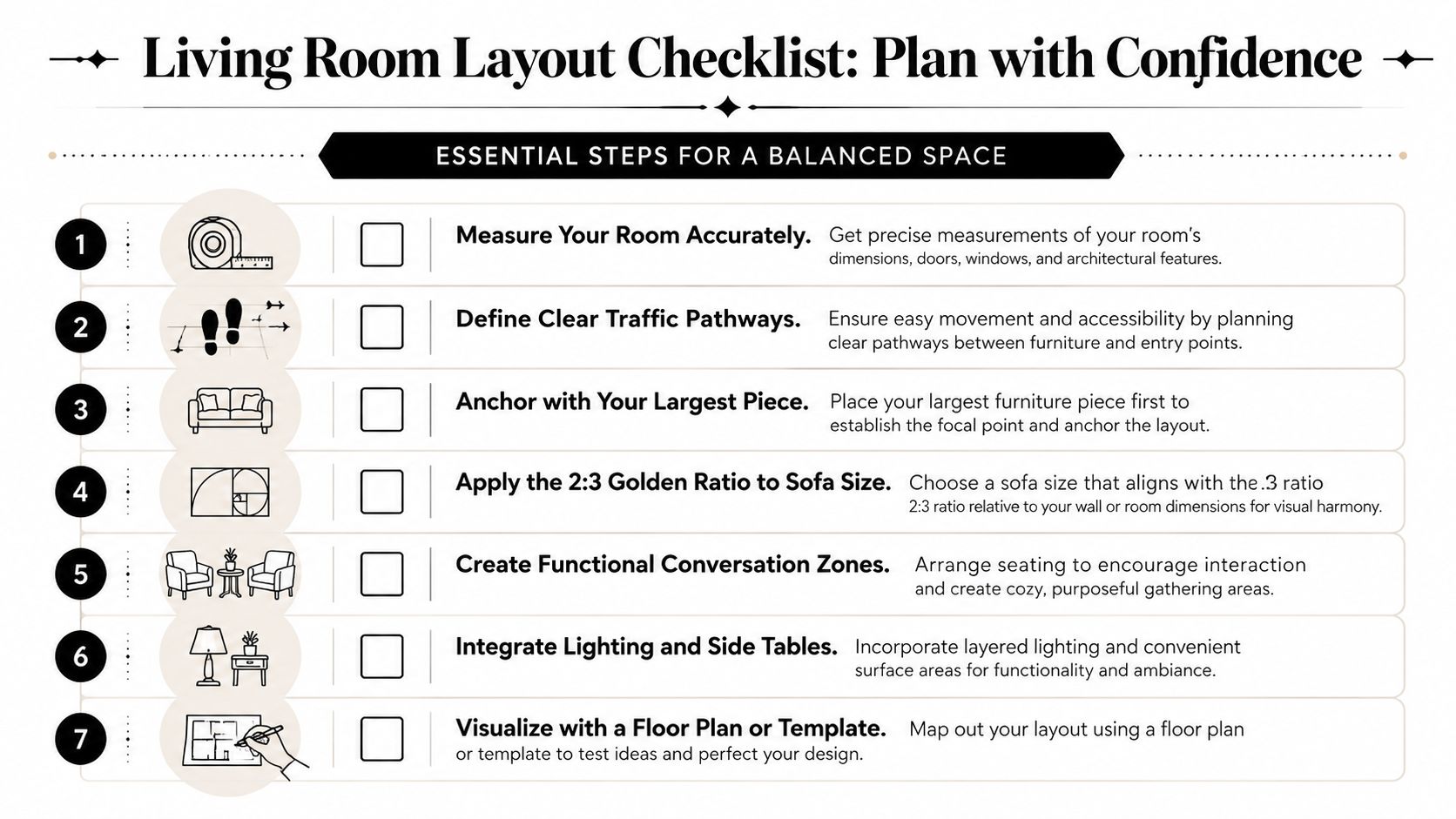
A sofa should look like it belongs on the wall behind it. One reliable rule is to keep the sofa around two-thirds the length of that wall, as outlined in these living room layout rules.
That guideline solves a lot of bad layouts before they start.
A too-small sofa makes the wall look bare and disconnected. A too-large sofa crowds every table, chair, and pathway around it. Start with the anchor piece at the right scale, and the rest of the room gets easier to place.
Sketch the room before you shop
Do this on paper before you fall in love with a set on the showroom floor.
- Measure each usable wall.
- Mark windows, doors, vents, outlets, and floor registers.
- Leave room for door swing and reclining motion.
- Draw the anchor piece first.
- Add chairs, tables, and storage only after the main traffic path is clear.
That last step matters more than people expect. A room can look fine in a photo and still be annoying every day because you have to sidestep a corner table or squeeze past an ottoman to reach your seat.
If you want a practical reference while you plan, use our guide on placing furniture in a living room. It helps you spot common layout mistakes before anything gets delivered.
Protect your walkways
Main walkways should stay open enough for people to move without brushing furniture on both sides. The National Kitchen and Bath Association planning guidelines recommend at least 36 inches for a walking path, and that is a smart target for living rooms too. In tighter rooms, you can work with less in secondary spots, but the primary path should feel open.
That is the difference between a room that looks finished and one that feels cramped the minute family comes over.
At our Grants Pass showroom, this is one of the most useful things to test in person. Walk around a sofa and chair group. Check how much room your knees, shins, and elbows need near a coffee table or recliner. A good local furniture store helps you judge layout with your body, not just with a tape measure.
If you need to turn sideways to pass between the sofa and the table, you have too much furniture in the room.
Selecting the Right Sofa and Chairs
You walk into the showroom, sit on a sofa that looked perfect online, and your feet barely touch the floor. Two cushions later, you know more than a product page could ever tell you. That is how you choose seating that works.
Online photos can show size and style. They cannot tell you if the seat is too deep for your knees, if the arms sit too high for a nap, or if the back angle makes you slouch after ten minutes. In our Grants Pass showroom, that part gets simple. Sit in three different sofa styles back to back. Test a firmer Flexsteel seat, then an easygoing Ashley sectional, then a La-Z-Boy recliner made for daily support. Your body will sort out the right choice fast.

Choose the anchor piece first
Start with the sofa. Always.
It sets the room's scale, seat count, and comfort level. Once that piece is right, the chairs, tables, and rug have something honest to respond to. If the sofa is wrong, the whole room spends years trying to compensate for it.
At Gates Home Furnishings, the 30,000 sq. ft. showroom in Grants Pass gives you a practical advantage. You can compare arm styles, seat heights, chaise lengths, reclining options, and sectional layouts in person instead of guessing from a screen.
Match seating to how people actually use the room
A TV room and a conversation room should not get the same seating plan. If your family stretches out for movies, a sectional or sofa with a chaise usually earns its keep. If you host neighbors, chat after dinner, or want the room to feel open, a sofa with two chairs often does a better job.
Keep the spacing comfortable and usable:
- Coffee table spacing: Leave about 14 to 18 inches between the sofa and coffee table. The Better Homes & Gardens living room layout guide uses that range because it keeps the table close enough to reach without crowding your legs.
- Chair spacing: Give accent chairs enough breathing room to face the sofa comfortably and still allow for a side table if needed. The House Beautiful living room furniture arrangement guide shows how wider spacing helps conversation feel natural instead of cramped.
- Motion matters: If anyone in your home reclines fully, uses a lift chair, or likes an ottoman pulled close, test that movement in the showroom before you pick nearby tables.
That last point saves people trouble all the time.
Don't buy a set because it matches
Matching pieces can make a room look flat, heavy, and too rehearsed. Good living room set design has some contrast. A custom-fit sofa can sit well with wood-framed chairs. A clean-lined sectional can work with one swivel chair that softens the corners. The room feels better when every seat has a job.
Use a simple formula:
- One main sofa or sectional that fits the way your household sits
- One or two chairs that add flexibility without blocking the room
- Tables sized for reach and movement
- One material or color thread that keeps the group tied together
If you want help sorting out cushion types, frame quality, and the sizing mistakes people regret later, read our ultimate sofa buying guide for your living room.
One more practical detail. Seating does not live on its own. If your room includes a fireplace wall, entry transition, or hard-wearing floor update, it helps to browse curated living room tile selections before you finalize upholstery colors and wood tones. That way, your sofa and chairs look like they belong in the room, not just in the cart.
Choosing Durable Materials and Unique Finishes
Walk through our Grants Pass showroom and you can spot the difference fast. One cocktail table has flat color, thin veneer, and no real character. Another has honest grain, a finish that will hide daily wear, and enough heft to anchor the room for years. Buy the second one.
A good living room set design needs materials that hold up and finishes that give the room some backbone. Generic pieces make the whole space feel forgettable, even when the layout is right. I'd rather see you choose fewer pieces with real presence than fill the room with matching surfaces that all look factory-safe.
Choose materials that earn their keep
The old Bauhaus rule still makes sense. Furniture should be useful first, then handsome. That idea still shapes smart buying, as explained in this history of furniture and interior design trends.
Here's the plain version. If a finish shows every fingerprint, every water ring, and every tiny scratch, it is going to irritate you. If a fabric feels delicate in the store, it will not get tougher at home. Pick materials that can handle actual family life and still look respectable on a Tuesday night.
Good materials wear in with dignity.
What I recommend for busy households
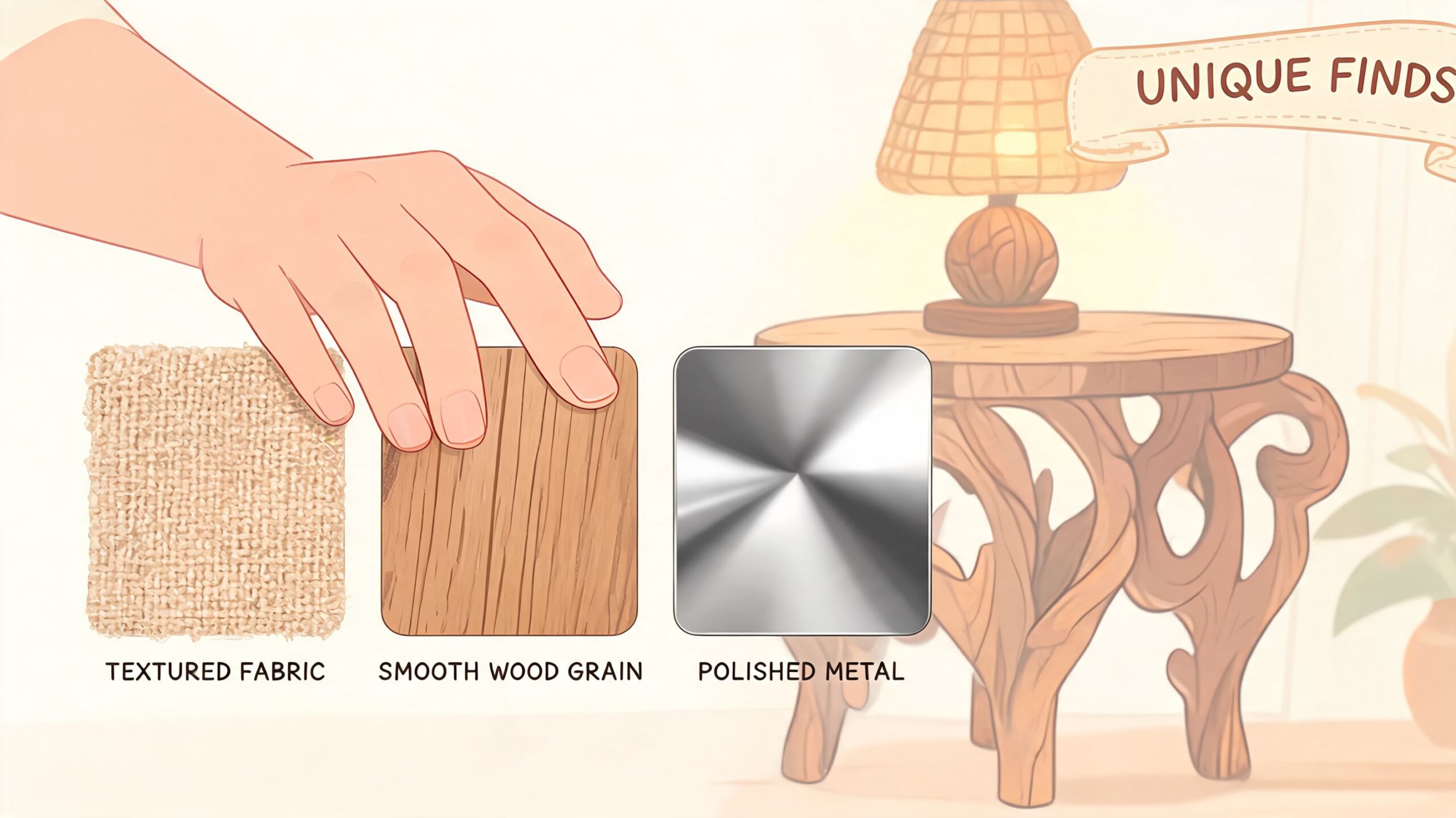
Start with forgiving surfaces. Tight woven fabrics, textured upholstery, medium wood tones, and low-sheen finishes age better than anything too polished or precious. They hide the little marks that come from kids, pets, guests, and everyday use.
This is one of the biggest advantages of shopping local. In our showroom, you can run your hand across the fabric, compare wood samples side by side, and open drawers to see whether the finish feels substantial or flimsy. That kind of comfort test beats guessing from a screen every time.
If your room includes a fireplace wall, hearth, or entry transition, pull those surface choices into the plan now. It helps to browse curated living room tile selections so your upholstery, wood tones, and hard surfaces work together instead of fighting for attention.
Add one piece with real character
Every living room needs at least one piece that breaks up the sameness. Reclaimed wood does that well. So does teak with visible grain and natural variation. A sofa table with age in the boards, a solid cocktail table, or an accent cabinet with texture can steady the whole room.
Family-owned stores have an advantage here too. We can walk you over to the reclaimed wood and Unique Finds pieces, show you what mixes well with your upholstery, and help you avoid finishes that clash. That's how a room starts to feel collected instead of ordered as a bundle.
Before anything is wrapped up, ask how the store will protect those finishes once the furniture leaves the floor. A clear white-glove delivery service for in-home setup and placement matters more with wood, stone, and specialty finishes than people expect.
Finalizing Your Purchase and Delivery
Once the plan is right, the final steps should feel simple. They often don't, unless the store handles them well.
A lot of shoppers stall at the finish line because they're worried about budget, setup, or timing. That's fair. A living room set is a major purchase, and the process matters almost as much as the product.
Make the purchase workable
Flexible financing can be the difference between settling and getting the room right. Gates Easy Pay includes $0 down, 6-month interest-free options, and no-credit-needed paths, which gives households a few practical ways to move forward without forcing every decision into one payment.
If you're replacing furniture in stages and need pieces out of the way first, these tips for short-term furniture storage are worth reviewing before delivery day.
Don't overlook setup
White-glove service saves frustration. Professional in-home delivery means the team brings pieces in, assembles them, and places them where they belong instead of leaving you with boxes, hardware, and a sore back. If you want to know what that includes, this guide on white-glove delivery service lays it out clearly.
That level of service fits George Gates' original promise of Service and Value. It did in 1946, and it still does now. Add a protection plan like Gates Care Shield if you want extra peace of mind for the years ahead.
If you're ready to stop guessing and start planning, visit the Gates Home Furnishings showroom in Grants Pass to test comfort in person, compare living room sets, and work through your layout with real people. If you'd rather start from home, browse our collection online and take the first step toward a living room that finally feels right.