How to Care for Teak Furniture: A Rogue Valley Guide


A lot of Southern Oregon homeowners end up in the same spot. The teak set looked beautiful the day it arrived, then a season of sun in Grants Pass or Medford changed the color, winter rain left grime in the grain, and suddenly nobody's sure what the right move is. Scrub it? Oil it? Cover it? Leave it alone?
The good news is teak isn't fragile, and it doesn't need fussy care. It needs the right care. That means gentle cleaning, smart storage, and a clear decision about whether the goal is a natural silver patina or that warm golden look teak has when it's newer. To care for teak furniture without ruining it, the answer is simple. Be consistent, be gentle, and stop overcomplicating it.
Table of Contents
- Why We Love Teak Furniture and You Should Too
- The Two Paths for Teak The Silvery Patina or the Golden Hue
- Your Essential Teak Care Toolkit
- Our Simple Routine for Regular Teak Maintenance
- Bringing Teak Back Restoring and Refinishing
- Teak Care for the Southern Oregon Climate
Why We Love Teak Furniture and You Should Too
A teak dining set on a warm July evening just looks right in Southern Oregon. It fits a backyard in Grants Pass, a covered patio in Medford, or a hillside deck in Ashland because it has presence without trying too hard. Teak feels substantial, ages with character, and doesn't ask for constant attention.
That's the first reason teak deserves its reputation. The second is value over time. Grade A teak can last for nearly 100 years with proper care, according to guidance on Grade A teak durability. That kind of lifespan changes the conversation. Teak isn't a throwaway purchase. It's the kind of furniture people keep, move, and pass along.
Practical rule: Teak rewards steady maintenance, not aggressive treatment.
That matters because many homeowners assume premium wood means high-maintenance wood. Teak is the opposite. Its natural durability is exactly why so many owners choose it for outdoor spaces. It handles real life well, and it still looks handsome when it's allowed to age naturally.
There's also a design reason teak stays popular. It works in polished patios, relaxed backyard settings, and mixed-material spaces with stone, metal, or upholstery. It doesn't need a matching catalog look. It stands on its own, especially in homes that lean toward natural textures and pieces with some story behind them.
That's why teak remains such a strong fit for collections of one-of-a-kind home decor and Unique Finds. The wood has warmth, variation, and a lived-in quality that mass-market furniture usually can't fake.
A family furniture business built on George Gates' 1946 promise of Service and Value would've recognized that immediately. Good teak gives homeowners what they want. Beauty, durability, and less upkeep than people expect. That's a combination worth respecting.
The Two Paths for Teak The Silvery Patina or the Golden Hue
Before any cleaner touches the wood, one decision matters more than anything else. Should the teak age naturally, or should it keep its original warmer color?
That's not a technical question. It's a taste question. Both options are valid. The mistake is drifting into one path while maintaining for the other.
Choose the look before choosing the product
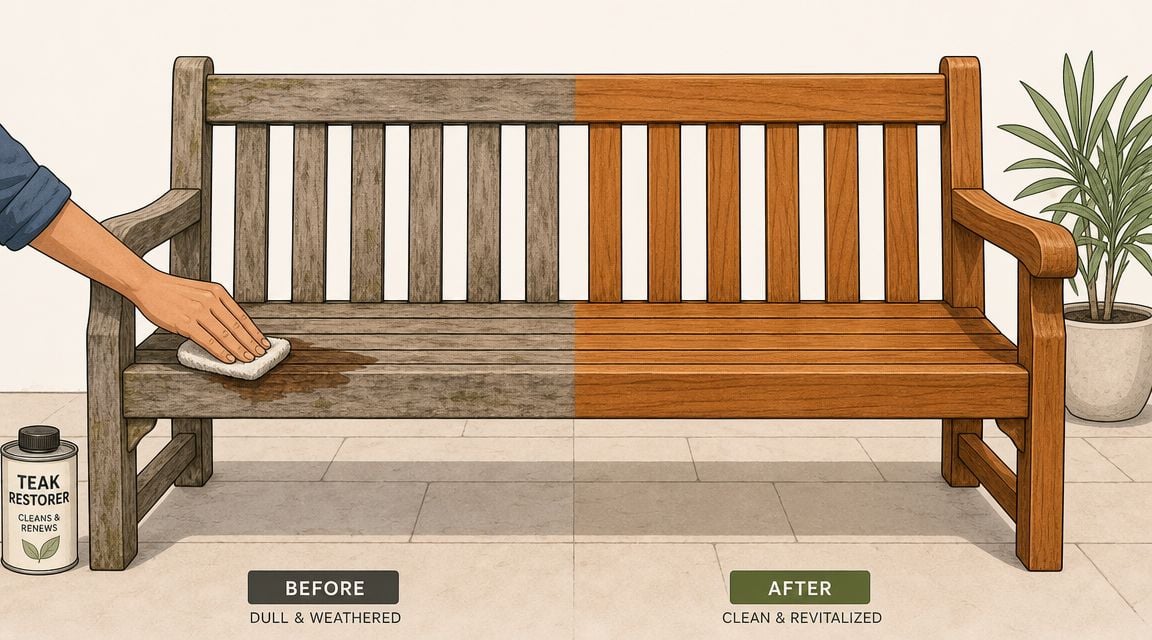
If the goal is a silvery-gray patina, the best approach is restraint. Clean the furniture properly, keep debris from sitting on it, and let sun and weather do their work. Plenty of homeowners prefer this look because it feels settled and timeless.
If the goal is the golden-brown hue, maintenance becomes more active. A protective sealer should be reapplied about once or twice per year, according to teak sealer guidance for color retention. That same guidance is clear on another point. Sealed teak should not be oiled, because oil can trap moisture and promote mildew.
That's where many people create avoidable problems. They see faded color, grab oil, and assume more product means more protection. It doesn't. If teak is sealed, adding oil works against the finish instead of helping it.
For homeowners comparing patio materials and layouts, seeing teak in context helps. A curated look at essential outdoor furniture pieces often makes the finish decision easier because the surrounding style matters as much as the wood tone itself.
A quick side-by-side view
| Choice | Best for | Ongoing approach |
|---|---|---|
| Natural silvering | Homeowners who like a softer, weathered look | Gentle cleaning and basic upkeep |
| Golden finish | Homeowners who want the newer teak color preserved | Sealer or protector reapplied once or twice per year |
A good showroom makes this decision easier because both looks can be seen in person. In a 30,000 sq. ft. showroom in Grants Pass, the difference between fresh-looking teak and weathered teak becomes obvious fast. Some people walk in sure they want golden teak and leave loving the silver patina. Others do the opposite.
Teak doesn't have one “correct” final look. It has the look the homeowner is willing to maintain.
That's the honest answer. Pick the appearance first. The care routine follows from that.
Your Essential Teak Care Toolkit
Teak care doesn't require a garage full of specialty products. A small, sensible kit handles nearly everything. That's one reason teak remains practical for busy households.
What actually belongs in the kit
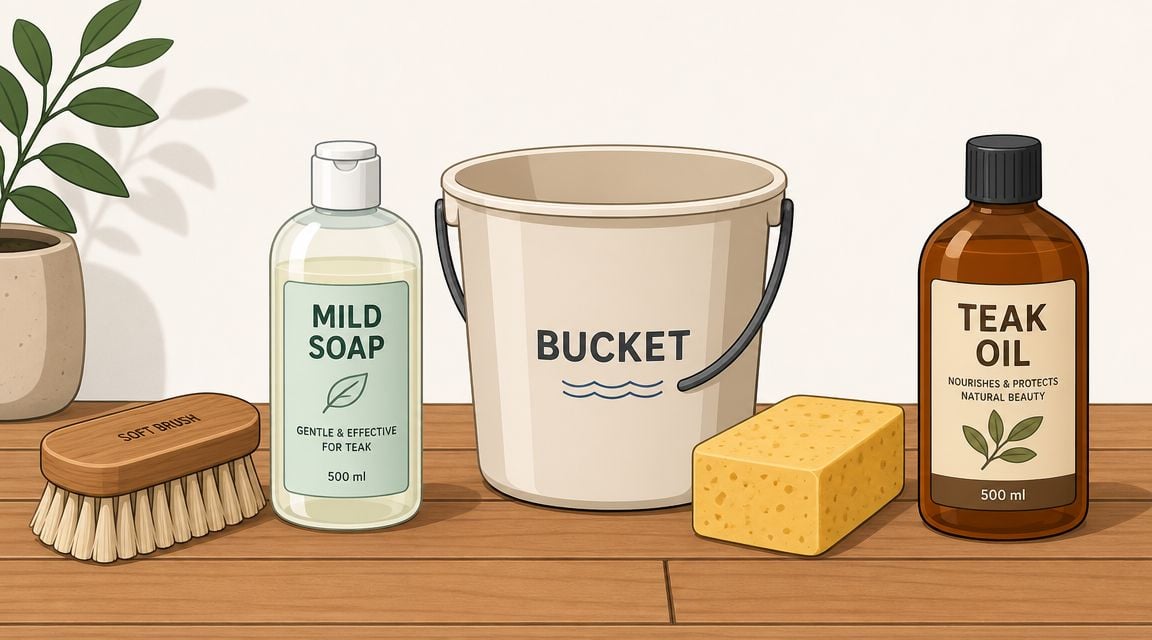
Soft-bristle brush
This is the workhorse. It lifts dirt from the grain without gouging the surface. Hard brushes and metal scrubbers are a bad idea on teak.Mild soap
Teak responds well to a simple cleaner. There's no prize for using the harshest product on the shelf.Bucket and clean water
Nothing fancy. A bucket keeps the process controlled, and clean rinse water matters more than people think.Soft cloths or sponges
These help with wiping, spot cleaning, and drying details around arms, legs, and corners.Optional fine sandpaper
Useful for rough spots or light restoration work. It's not for routine scrubbing, and it should always be used gently.Breathable cover for off-season protection
This matters in wet weather. The cover should protect the furniture without trapping moisture against it.
For indoor teak, many of the same habits overlap with broader wood furniture protection tips. The difference is exposure. Outdoor teak deals with dirt, UV, and seasonal moisture. The tools stay simple, but the challenges are greater outside.
A teak toolkit should feel manageable. If the setup looks complicated, it's probably headed in the wrong direction.
Our Simple Routine for Regular Teak Maintenance
Routine care is where teak wins people over. The process is straightforward, and it doesn't need to happen constantly. For most outdoor pieces, a mild soap solution made with 2 tablespoons of dish soap per gallon of water, gentle scrubbing with the grain, a 10 to 15 minute dwell time, and a thorough rinse done once or twice a year is usually sufficient, based on routine teak cleaning guidance.
That's the baseline. Not weekly. Not every sunny weekend. Once or twice per year is enough for routine maintenance in most cases.
The cleaning routine that works
Start by wetting the furniture. A damp surface helps the cleaning solution spread evenly and keeps the wood from soaking up soap too quickly.
Then mix the mild soap solution and apply it across the teak. Use a soft brush or sponge and scrub with the grain, not across it. That sounds minor, but it's one of the biggest differences between cleaning and scuffing.
Let the cleaner sit for 10 to 15 minutes. That short wait gives the solution time to loosen grime so the brush doesn't have to do all the work. After that, rinse thoroughly and let the piece dry completely.
A clean routine looks like this:
Wet first
Damp wood is easier to clean evenly.Use mild soap
Stronger isn't better here. It just raises the risk of surface damage.Scrub with the grain
The grain direction matters because it protects the surface texture.Let the solution dwell
A brief soak does more than extra scrubbing.Rinse well and let it dry fully
Leftover cleaner and trapped moisture both create trouble.
Clean teak gently. Most damage comes from overdoing the job, not from underdoing it.
For homes with patios, pergolas, or covered outdoor rooms, layout affects maintenance too. Shade changes how quickly furniture dries and how much grime settles on it. Homeowners planning broader backyard upgrades may find useful ideas for Prescott outdoor living because the same principles of cover, airflow, and sun exposure apply to teak furniture care.
Mistakes that do more harm than dirt
Some cleaning habits should be retired for good.
Pressure washers
They can damage the wood surface and raise the grain. Fast doesn't mean safe.Steel wool or metal pads
These can scratch teak and leave behind material that creates ugly staining issues.Hard scrubbing when patience would work
If dirt doesn't lift right away, the answer is usually dwell time and another gentle pass, not brute force.Sealing damp wood
Moisture trapped under a finish creates avoidable headaches later.
Regular seasonal attention helps because grime doesn't get the chance to settle in. That's especially true after leaf drop, smoke, dust, or a wet stretch of weather. A seasonal checkup, like the one outlined in this fall furniture maintenance checklist, keeps small issues from becoming restoration projects.
There's also a practical ownership point here. Furniture that starts life assembled correctly and placed properly tends to age better. White-glove delivery matters for that reason. A team that handles professional assembly and setup doesn't just save lifting. It helps ensure the piece starts out level, stable, and ready for years of use instead of being dragged, forced together, or stressed from day one.
Bringing Teak Back Restoring and Refinishing
Sometimes routine cleaning isn't enough. The teak has gone patchy. Dirt has settled deep into the grain. The surface feels rough, tired, or uneven. That's when restoration makes sense.
Neglected teak can often come back beautifully, but the right mindset matters. Restoration is not aggressive cleaning with more force. It's a slower reset.
When a simple wash isn't enough
Heavy grime, mildew staining, and uneven weathering usually need more than soap and a quick scrub. Start with a full cleaning first. Dirt needs to come off before any sanding or refinishing decisions happen.
Once the furniture is clean and dry, inspect the surface by hand as much as by sight. Roughness, fuzzy grain, and dark patches usually tell the story clearly. Some pieces only need spot attention. Others need a more thorough surface refresh.
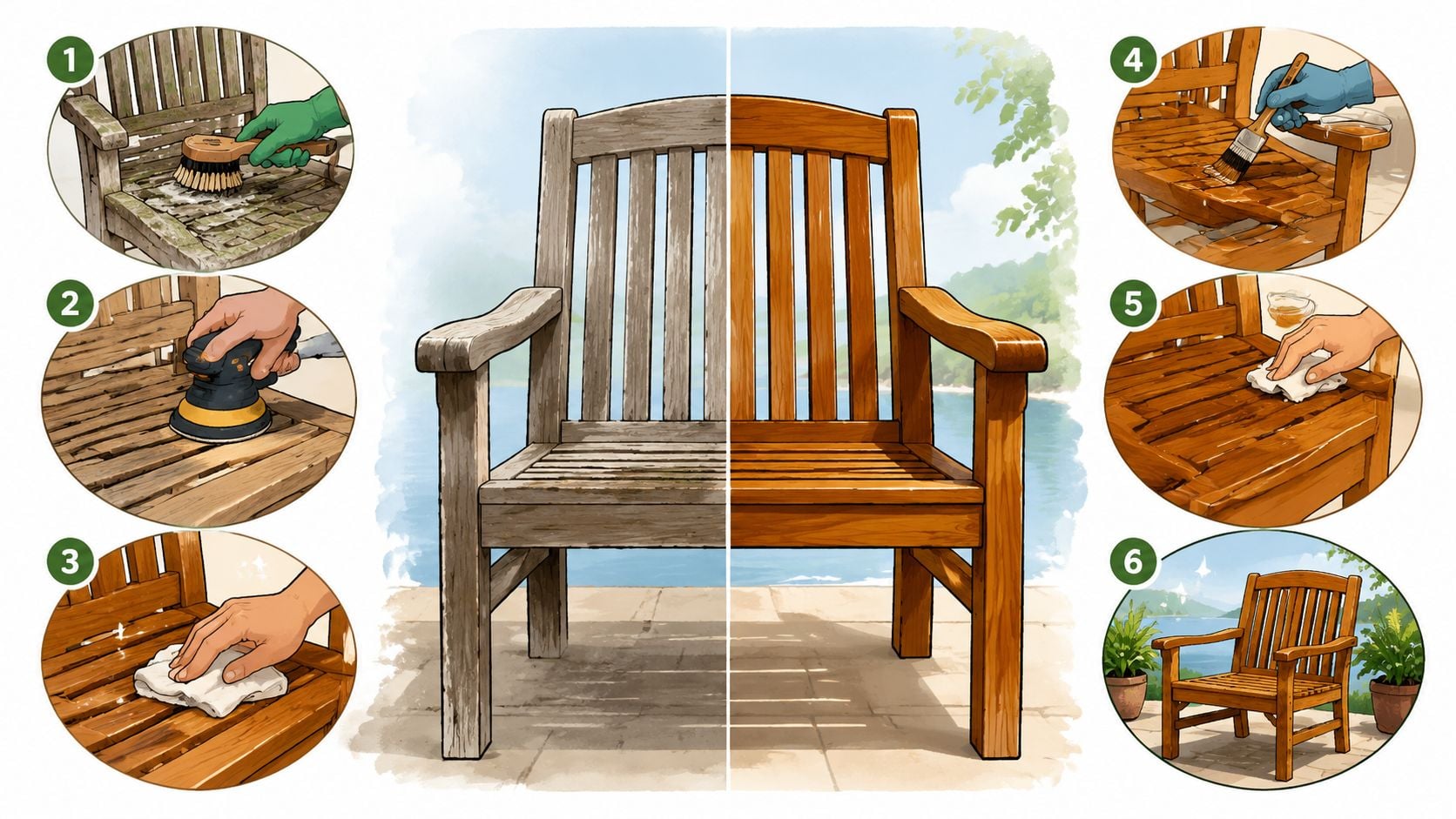
A sensible restoration sequence usually includes:
Clean the piece fully
No shortcuts here. Sanding over dirt only grinds it deeper into the wood.Let it dry completely
Teak should be dry before sanding or sealing.Lightly sand rough or weathered areas
Sand with the grain to remove the tired surface and reveal fresher wood beneath.Remove dust thoroughly
A clean surface gives any finish a fair chance to adhere evenly.
Weathered teak usually looks worse than it is. Patient surface work fixes more than most homeowners expect.
If the furniture has become a bigger project than expected, that's the point where some homeowners decide replacement makes more sense than repair. In a large Grants Pass showroom, seeing fresh teak side by side with reclaimed wood and other Unique Finds often helps clarify whether to restore the old piece or move on to something new.
How to refinish without creating more work
Refinishing should follow the finish goal, not impulse. If the aim is to preserve or return to a warmer tone, a teak sealer or protector makes more sense than random oiling. The wood also needs to be fully dry before a sealer goes on. Some care guidance even advises giving the wood extended dry time before sealing so the coating bonds better. That patience pays off.
If a homeowner is specifically researching oil application methods because they're dealing with a specialty teak project, this walkthrough on how to apply boat teak oil gives useful process context. For everyday outdoor furniture, though, restraint is smarter than product overload.
A few restoration rules are worth keeping plain:
Don't chase perfection
Teak is supposed to have character. A flawless, plastic-looking finish misses the point.Don't mix products blindly
Sealer, protector, and oil are not interchangeable.Don't rush the drying stage
A finish applied too soon creates more maintenance, not less.
For more furniture-specific restoration guidance, this practical look at how to restore teak helps homeowners decide whether the piece needs a touch-up or a full reset.
The smartest restoration projects are the ones kept simple.
Teak Care for the Southern Oregon Climate
Southern Oregon asks teak to handle two very different jobs. Summer brings hot sun, dry heat, and long stretches of UV exposure. Winter brings rain, damp air, and the kind of moisture that lingers in shaded spots. Teak can handle both, but homeowners should adjust their habits to the season.
What Rogue Valley summers do to teak
In Grants Pass, Medford, Central Point, and much of the Rogue Valley, summer sun pushes teak toward weathering faster. That isn't damage by itself. It's the natural aging process at work.
For homeowners who like that silvered look, summer is mostly about keeping the furniture clean so dust and debris don't bake into the surface. For homeowners trying to preserve the warmer hue, summer is when a protective approach matters most. Placement under shade structures, covered patios, or breathable seasonal protection can help slow color change.
Anyone comparing stain and finish behavior across wood surfaces may appreciate this piece of expert wood finishing advice because the broader lesson holds true here too. Surface prep and dry conditions matter just as much as the product itself.
What wet winters change
Winter is where Southern Oregon teak care gets more specific. In rainy stretches or winter storage, teak should be fully dry before it's covered with a breathable cover, because trapped moisture can support mold and mildew growth when dirt and debris remain on the surface, according to guidance on breathable covers and damp storage.
That point gets ignored all the time. People cover wet furniture to protect it, then accidentally create the exact damp environment mildew likes.
A smart Southern Oregon winter routine looks like this:
Clean before storage
Dirt left on the surface gives moisture something to work with.Wait for full drying
Covering damp teak is a mistake.Use breathable covers
Teak needs airflow, especially in wet months.Check shaded areas
Covered porches, tree-heavy yards, and river-adjacent properties often stay damp longer.
Spring is usually when outdoor spaces get refreshed, and that's also when many households decide whether to repair, replace, or expand patio seating. Flexible options like Gates Easy Pay, including $0 down, 6-month interest-free, and no-credit-needed options, can make that timing easier for homeowners planning ahead.
For homeowners in Grants Pass, Medford, Ashland, Central Point, and across Southern Oregon, Gates Home Furnishings remains a trusted local destination for quality furniture, real service, and long-term value. Since 1946, that commitment has reflected George Gates' promise of Service and Value. Shoppers can test comfort in the 30,000 sq. ft. Grants Pass showroom, explore distinctive teak and reclaimed-wood Unique Finds, and count on white-glove delivery with professional assembly instead of box-drop service. For anyone ready to update a patio, replace a worn piece, or furnish a whole room with confidence, visit the Grants Pass showroom or browse the collection online.