Office Chairs No Wheels A Buyer’s Guide for Your Home


Your office chair keeps drifting backward. The wheels leave you half-turned away from the desk. You hear that little grind across hardwood or vinyl plank, and now you're wondering if the chair is working for you or against you.
We hear this a lot from homeowners around Grants Pass, Medford, and across Southern Oregon. A rolling office chair makes sense in a corporate setting. It doesn't always make sense in a guest room office, a dining-room workspace, or a carefully finished home with floors you care about.
Welcome from Gates Home Furnishings
We've helped Southern Oregon families furnish their homes since 1946, and we still believe in George Gates Jr.'s original promise of Service and Value. That's why we're writing this guide. Office chairs no wheels aren't a fad. They're a practical answer to a very real home-office problem.
Modern rolling office chairs took over because mobility improved desk work. One of the widely cited early milestones was Charles Darwin's 19th-century armchair fitted with casters, and over time wheeled chairs became the standard. But no-wheel office chairs never disappeared. They remain a separate category because they serve a different purpose: stability-first seating for fixed workstations and floor-sensitive rooms, as noted in this history of office chair design.
If you're setting up a workspace in a Rogue Valley home, that difference matters. A chair that stays put can look cleaner, feel calmer, and fit better in a room that pulls double duty as an office, bedroom, or den.
Why local advice matters
A lot of online chair advice comes from people writing for giant, generic markets. We don't sell furniture that way, and we don't advise customers that way. We think about the actual homes around here. Wood floors. Smaller work nooks. Shared spaces. Style that feels warm instead of corporate.
You can learn more about our background on the Gates family story, but the short version is simple. We've spent decades helping neighbors test what feels right, not just what looks good on a screen.
The right office chair for a home office isn't always the one with the most moving parts. It's the one that fits the room, the desk, and the way you actually work.
We also know a no-wheel chair isn't right for everyone. If you reach for files, printers, or multiple screens all day, you may want more mobility. But if your biggest complaint is rolling, floor wear, or visual clutter, a stationary chair deserves a serious look.
Why Choose an Office Chair Without Wheels
You pull out your chair at 8 a.m., answer email, pay bills, or log into a meeting, and by lunch the chair has crept sideways across the floor. We hear that complaint all the time in Southern Oregon homes. A stationary office chair fixes it fast.
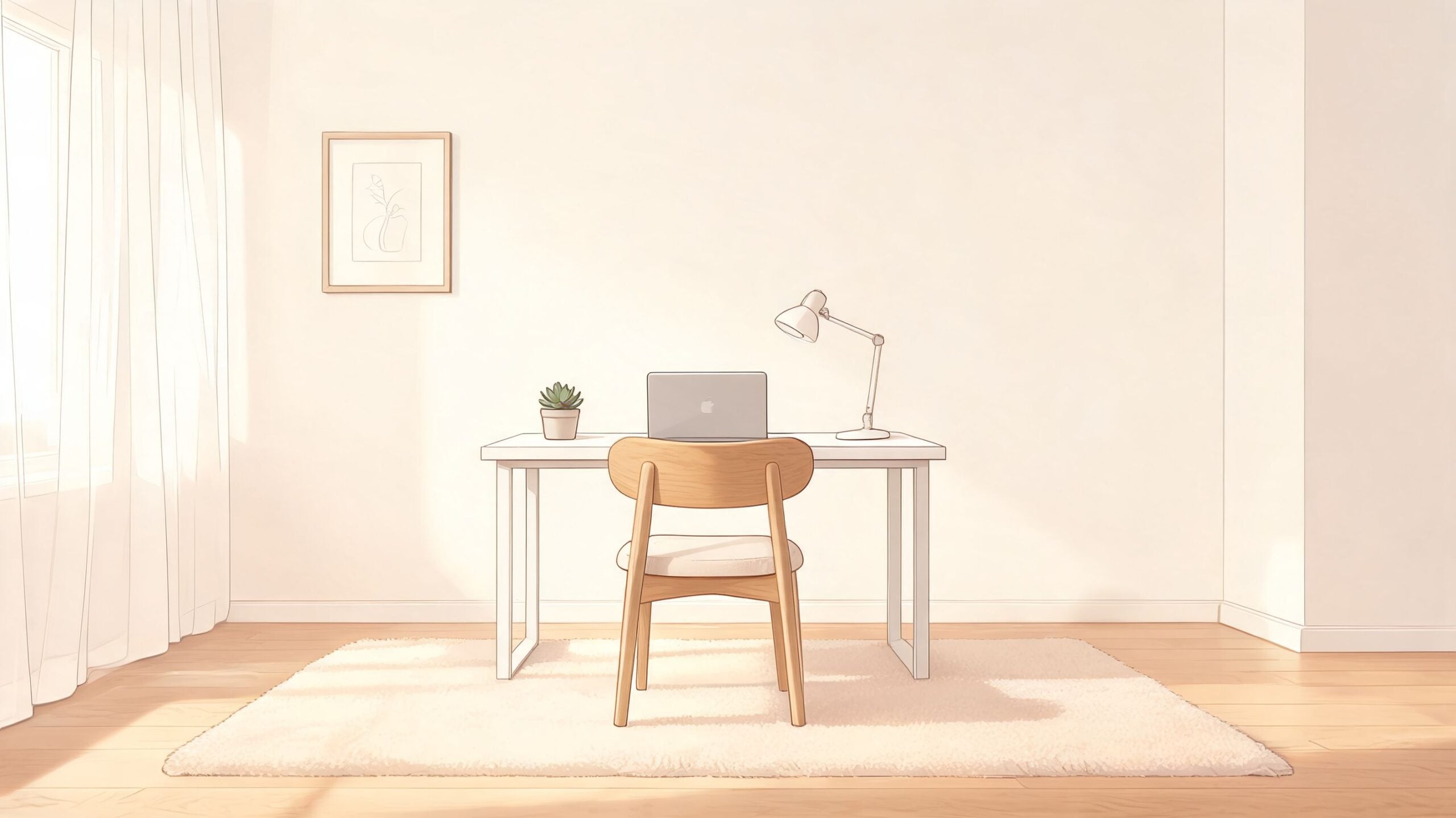
A chair without wheels makes sense when your workspace is fixed, your room serves more than one purpose, and you want your furniture to respect the house around it. Around Medford, Ashland, and Grants Pass, that usually means wood floors, tighter layouts, and a style that feels at home with the rest of the room.
They protect the room better
This is the biggest reason many homeowners choose a stationary chair. If you have hardwood, laminate, tile, or luxury vinyl, cutting down on constant rolling is a smart move. Less motion usually means less scuffing, less grit ground into the finish, and fewer marks from a chair drifting in and out all day.
You still need good floor contact points. Felt pads, glides, or a proper base matter. But starting with a chair that stays planted is often the cleaner, safer setup for floor-sensitive rooms.
They fit the way Southern Oregon homes are actually used
A lot of local home offices are not full spare rooms. They're carved into a bedroom, set along a dining wall, tucked into a den, or worked into a guest room that still needs to look like a guest room by evening.
That is where a no-wheel chair earns its keep. It keeps a tighter footprint, stays lined up with the desk, and usually looks more settled in the room.
A few practical advantages stand out:
- Less shifting at the desk: You sit down and stay centered instead of nudging yourself back into place.
- Better use of compact space: You do not have to allow extra room for rolling back and repositioning.
- Cleaner look in shared rooms: Many stationary chairs resemble accent or desk chairs, not commercial task seating.
- Lower total cost of ownership: Simpler bases and fewer moving parts often mean fewer parts to replace over time.
If you're comparing layouts before you buy, use a planning tool first. The Home Office Planner can help you check chair width, clearance behind the desk, and whether an armless or swivel design fits the room better.
They usually look more at home
Style matters. If your desk sits next to built-ins, warm wood tones, or a window seat, a bulky rolling chair can feel out of place fast.
A no-wheel chair often blends in better with the rest of the furniture, especially in homes that lean traditional, casual, farmhouse, or updated rustic. That is a big deal here. Southern Oregon homeowners usually want a workspace that works hard without making the whole room feel like a corporate cubicle.
If your day involves constant reaching between file cabinets, printers, or multiple work zones, a rolling chair may still be the better tool. If your work happens mostly in one spot, a stationary chair is often the smarter choice. If you need more mobility, compare these office chairs on wheels for active workstations.
Wheeled vs Stationary Chairs A Direct Comparison
A chair changes how a room works. In a Southern Oregon home office, that decision often comes down to two practical questions. Do you need to move all day, and what will that chair do to your floors and your space over time?
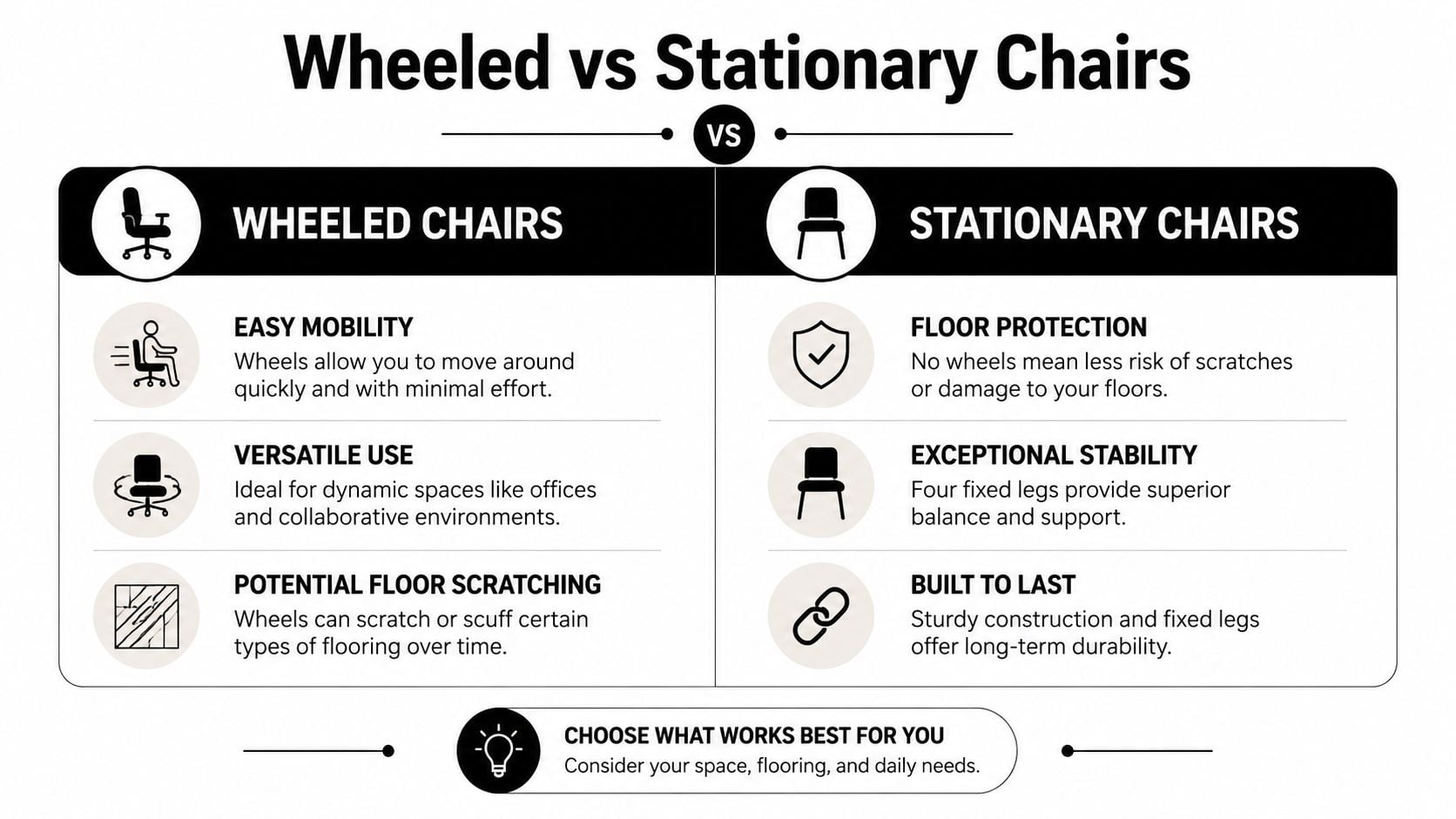
Here is the plain answer. Wheeled chairs suit active desk setups. Stationary chairs suit focused work in one spot, especially in smaller offices, guest rooms, and work corners where every inch matters.
Comparison of Wheeled vs. Stationary Office Chairs
| Feature | Wheeled Office Chair | Stationary Office Chair (No Wheels) |
|---|---|---|
| Mobility | Easy to move around the desk | Limited movement by design |
| Stability | Can shift during use | Stays planted in one spot |
| Floor compatibility | Depends on casters, mats, and surface type | Often easier on hardwood, laminate, and other hard floors |
| Ergonomic flexibility | Often includes more built-in adjustments | Depends on the model, so seat height, back support, and arm position need a closer look |
| Visual style | More task-focused and office-like | Often fits better with home furniture |
| Assembly | Usually more parts and hardware | Often simpler to put together |
| Cost | Can cost more because of the base and mechanism | Often puts more of the budget into the seat, frame, and upholstery |
That last point matters more than shoppers expect. If you are furnishing a home office in Medford, Ashland, or Grants Pass, you are usually trying to make one room do two jobs. A wheeled task chair can work well, but it often looks and behaves like office equipment. A stationary chair usually feels more settled and more appropriate in a bedroom office, den, or dining-room workspace.
When a rolling chair is the right tool
Choose wheels for work that keeps you in motion. If you slide between two monitors, turn to a credenza, reach a printer several times an hour, or share a larger work surface, a rolling base saves effort and time. In that setup, mobility is not a luxury. It is part of how the station functions.
If that sounds like your desk, review these office chairs on wheels for active workstations.
Choose wheels if you need:
- Frequent side-to-side movement: You reach across a wide desk or use multiple screens.
- Several work zones nearby: Your printer, files, or supplies sit just outside arm's reach.
- Task-chair adjustments: You want more options for tilt, arms, and seat settings.
When no wheels is the better buy
Choose stationary if your work happens in one main seated position. That covers a lot of home offices. Paying bills, writing, video calls, studying, and focused computer work usually do not require you to roll around the room.
This is also where local homes change the decision. Many Southern Oregon homeowners have real wood floors, smaller offices, and a strong preference for furniture that looks like it belongs with the rest of the house. In those rooms, a stationary chair is often the smarter purchase.
Choose stationary if you want:
- A chair that stays put: Better for typing, meetings, and concentrated desk work.
- Less worry about floor wear: A strong choice for hardwood and other finished hard surfaces.
- A smaller visual footprint: Helpful in guest rooms, alcoves, and multi-use spaces.
- A more residential style: Easier to pair with warm woods, painted built-ins, and the casual Northwest look many families here prefer.
We have sold both for years at Gates Home Furnishings, and the pattern is consistent. If the room is compact and the desk is fixed, stationary usually wins. If the workday involves constant motion, wheels earn their keep.
Types and Styles of Stationary Office Chairs
A lot of shoppers think office chairs no wheels means one stiff, boring style. That's not the market anymore. There are several designs, and each one solves a different problem.
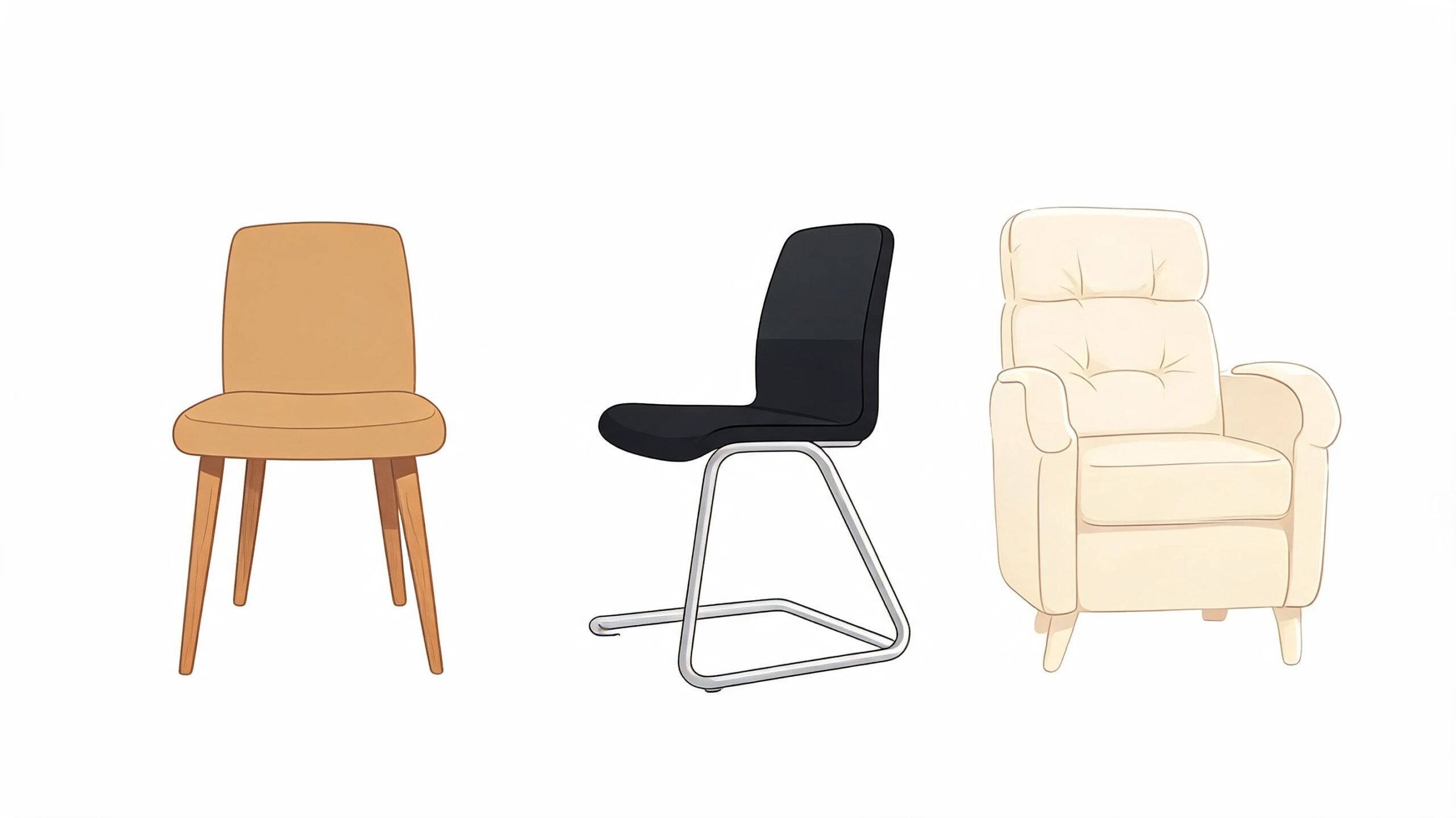
Four-leg chairs
This is the most familiar look. Four-leg office chairs often resemble dining or accent seating, which makes them excellent in multi-use rooms. If you want your desk area to feel integrated with the rest of the home, start here.
They work well for:
- Writing desks
- Bedroom offices
- Vanity-workspace hybrids
- Traditional or farmhouse interiors
Sled base chairs
Sled base chairs have a clean, modern profile and can be easier to move in short, controlled adjustments. They're often a smart choice in carpeted rooms or spaces where you want a contemporary line without the visual bulk of a caster base.
They tend to suit:
- Tight wall desks
- Minimalist rooms
- Guest room offices
- Shorter work sessions
Cantilever and flexing designs
Some stationary chairs include a base that gives a little movement even without wheels. That's useful if you like a bit of spring in the seat and don't want a fully rigid feel.
That slight give can make a no-wheel chair feel less static, especially in a home office where you're seated for long stretches.
If you dislike rolling but still want a chair that doesn't feel stuck, look for controlled movement in the frame or swivel, not wheels.
Armless, armed, and wide-seat models
Armless chairs are excellent in compact spaces. They tuck under desks easily and often feel visually lighter. If you sit cross-legged, shift positions often, or need more side clearance, an armless chair is worth a hard look. We have a related guide on office chairs with no arms if that's the direction you're leaning.
Armed chairs give more structure and resting support. They're better for people who spend long sessions at the desk and want help settling into one posture.
Some current no-wheel designs also emphasize wider seats, thicker cushions, and lumbar support. One retail example lists a 23.22-inch seat width and 19.8-inch seat depth with high-density sponge, while another highlights a 3.15-inch thick seat cushion with lumbar support in a mesh design, as shown in this no-wheel chair product example.
We also tell shoppers to keep an eye out for pieces that don't look like office furniture at all. Our showroom often includes Unique Finds in reclaimed wood and teak, and those one-of-a-kind pieces can inspire a home office that feels personal instead of pieced together.
Ergonomics and Materials to Look For
Wheels don't make a chair ergonomic. Fit does.
That's the point many shoppers miss. A no-wheel chair can support long work sessions, but only if the chair's shape, height, cushion, and back support match your body and desk.
Start with the workstation, not the chair photo
Stationary chairs reduce mobility on purpose, so their ergonomic value depends more heavily on base geometry and adjustability. Some fixed-base models lose seat-height or recline adjustment, which means you have to match the chair to your desk height and expected sitting time. That's why testing in person matters, as explained in this buyer guide for no-wheel desk chairs.
If a chair sits too low, your desk feels high and your shoulders creep upward. If the seat is too deep, you stop using the backrest properly. If the back support lands in the wrong spot, you'll know by lunchtime.
What to inspect before you buy
Don't get distracted by upholstery first. Check these features first.
- Lumbar shape: You want support where your lower back curves. Our selection of office chairs with lumbar support shows the kind of built-in back structure worth looking for.
- Seat cushion quality: High-density foam generally holds shape better than soft, flattening fill.
- Seat width and depth: Make sure the seat fits how you sit, not just how the chair looks online.
- Swivel or slight movement: A stationary chair with swivel can reduce the feeling of being locked in place.
- Arm height and clearance: Arms should work with your desk, not fight it.
Materials matter more than people think
Mesh can feel airy and light, especially in warmer rooms. Upholstered seats often feel more residential and warmer in appearance. Wood-framed styles can look beautiful, but they still need proper cushion and back design if you're sitting for serious work.
We often suggest shoppers compare a few comfort-focused brands side by side, including names like Flexsteel and La-Z-Boy, because the engineering under the fabric is what you feel after a full week of use.
Buy for the third hour, not the first five minutes.
And if you're unsure, test before you commit. Our 30,000 sq. ft. showroom in Grants Pass gives you room to sit, adjust, compare, and feel the difference. That's still the best way to avoid buying a chair that looks right but doesn't work in real life.
Proper Placement and Long Term Care
The wrong chair in the right room is still the wrong setup. Placement matters. Floor protection matters. Maintenance matters.
Set the chair up correctly from day one
Start with the desk height and clearance under the apron or drawer. Then check how far the chair can tuck in, whether the arms hit the desk, and whether you have enough room behind you to stand up comfortably.
A good placement checklist looks like this:
- Measure desk height: Don't guess.
- Check seat-to-desk relationship: Your arms shouldn't be reaching upward to type.
- Confirm pull-out space: Even no-wheel chairs need room to slide back.
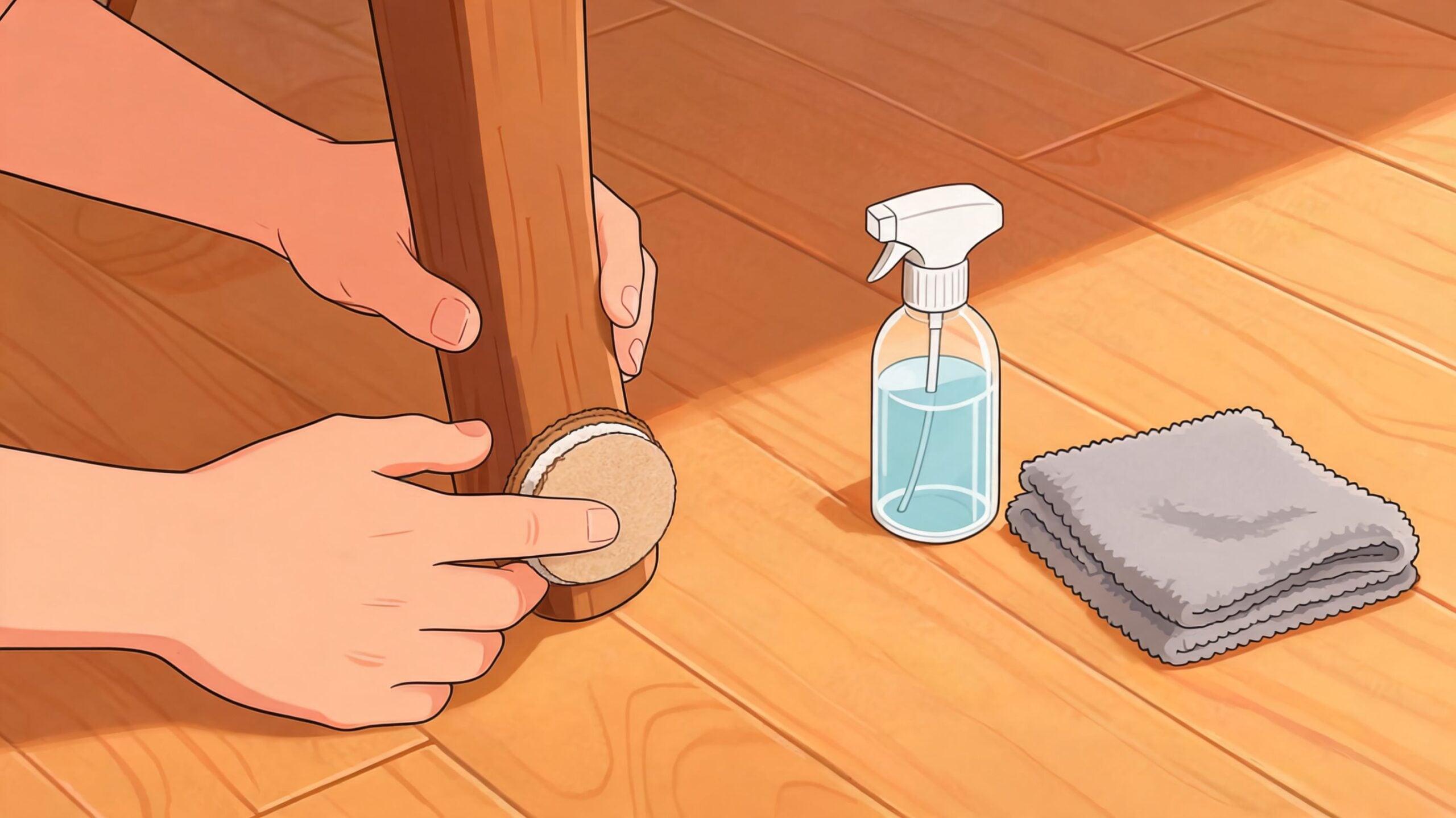
- Protect the floor before use: Don't wait until you see marks.
Protect the floor and lower the real ownership cost
Many people get sloppy at this stage. No-wheel chairs are often chosen specifically for expensive hard flooring, but that doesn't mean the feet are automatically harmless. Buyers should check whether the chair's base will glide safely or if it needs protective pads to prevent floor damage and hidden long-term costs, as noted in Home Depot's No Wheels office chair category.
Use:
- Felt pads for many hard surfaces
- Rubber or soft protective feet when extra grip is helpful
- Routine checks so worn pads get replaced before they scratch
Keep the underside of the chair clean, too. Dust, grit, and pet hair under the feet can act like sandpaper.
Delivery and setup count
We take setup seriously because service doesn't stop at checkout. Our White-Glove Delivery means we don't just drop boxes at the curb. We handle assembly, placement, and setup, and for mattress purchases we also provide haul-away. That's still the kind of hands-on service Southern Oregon families expect from a local store.
Your Questions Answered and How to Buy
You finally set up the spare bedroom or carved out a corner of the living room. The desk fits. The floor looks great. Then the wrong chair turns that tidy setup into a daily irritation. That is why these questions matter.
Is a no-wheel chair ergonomic enough for a full workday
Yes, if the chair is built for work and not just for looks.
A stationary office chair can handle a full day if it gives you effective back support, a seat that fits your frame, and a sitting position that works with your desk height. Wheels are not what make a chair comfortable. Fit does. A lot of shoppers get distracted by a clean silhouette and forget that a pretty chair in a small Ashland bungalow office still has to support eight hours of typing.
If you work full-time at a desk, choose a stationary chair with a supportive back, a stable seat cushion, and arm height that does not force your shoulders up. If the chair feels good for three minutes but fidgety by ten, keep shopping.
That simple test saves people a lot of regret.
Are no-wheel chairs good for seniors
Often, yes.
Many older customers tell us they want a chair that stays put when they sit down and stand up. That added stability can make a home office feel safer and easier to use. What matters most is a sensible seat height, dependable arm support, and a cushion firm enough to push off from without sinking too far.
For Southern Oregon homes with hardwood, tile, or luxury vinyl, a stationary chair also avoids the drifting and rolling that can be frustrating in a smaller multi-use room.
Can you add wheels later
Sometimes, but treat that as a bonus, not a plan.
Some bases accept casters. Some do not. Even when wheels can be added, the chair may sit higher or handle differently afterward. If future flexibility matters, ask that question before you buy and read through our guide on how to shop for furniture smartly so you start with the right priorities.
What's the smartest way to buy one
Start with how the chair will be used. A chair for checking email twice a day is different from a chair for bookkeeping, remote work, or student study hours.
Then judge the chair in this order:
- Use case first: full workday, part-time desk use, homework, or a shared guest room office
- Body fit next: seat depth, back shape, arm position, and ease of sitting down and standing up
- Room size after that: make sure the chair suits a smaller office nook, bedroom corner, or dining-room workspace
- Style last: choose a look that fits your home, whether that means warm wood tones, clean farmhouse lines, or a more customized leather look
Do not buy by photo alone. Sit in it. Check whether your feet plant comfortably, whether the back hits you in the right place, and whether the chair looks at home with the rest of the room instead of like a leftover corporate piece.
For shoppers coming from Medford, Central Point, Ashland, or elsewhere in the Rogue Valley, that is the advantage of shopping in person. You can test the height, feel the materials, and see how a chair will work in a Southern Oregon home where one room often has to do more than one job.
Visit Gates Home Furnishings in Grants Pass to test office chairs in person in our 30,000 sq. ft. showroom, explore comfort-focused seating from brands like Flexsteel, La-Z-Boy, Ashley, and Beautyrest, and browse the one-of-a-kind Unique Finds that help a home office feel like part of your home. We also offer Gates Easy Pay with $0 down, 6-month interest-free options, and no-credit-needed programs, plus White-Glove delivery with professional assembly. If you'd rather start from home, browse our collection online.