How to Choose a Mattress for Side Sleeper Comfort

You wake with a sore shoulder, a tight hip, or a neck that feels twisted, then wonder why the mattress felt comfortable at bedtime. For side sleepers in Grants Pass, Medford, and throughout Southern Oregon, that pattern usually means the mattress and pillow aren't working together. The right choice cushions the shoulders and hips while keeping the spine reasonably aligned, but the ideal feel changes with body weight, shoulder width, pain points, and preferred materials.
A showroom test can reveal details an online description can't. At Gates Home Furnishings, shoppers can compare sleep surfaces in a 30,000-square-foot showroom in Grants Pass, then get practical guidance from a local team that has served Rogue Valley households since 1946.
Why Side Sleepers Need a Different Mattress Strategy
A side sleeper often starts the night comfortably on a mattress that feels soft enough at first contact. Several hours later, the shoulder may feel compressed, the hip may ache, or the waist may lack support. The problem isn't necessarily the sleeping position. It's the way the mattress responds to the body's widest and most heavily loaded contact points.
The shoulders and hips carry much of the load in side sleeping. A surface that's too firm can concentrate pressure in those areas, while one that's too soft can allow the midsection and pelvis to sink too far. Either result can pull the spine away from a neutral line and encourage repeated repositioning during the night. Guidance from the MedAmerica Rehab Center sleep-position resource can also help readers understand how position and alignment affect comfort.
Why shoulder width changes the feel
Two people can lie on the same mattress and experience completely different support. A broader-shouldered sleeper may need more surface cushioning and enough depth for the shoulder to settle into the comfort layer. A narrower sleeper may not need as much sinkage and could feel unsupported on a very plush surface.
The waist matters, too. If the mattress doesn't fill the space between the rib cage and pelvis, the spine can bend downward toward the bed. That's why a simple showroom label such as “medium” doesn't settle the decision. Firmness describes a general feel, but body shape determines how each person engages the mattress.
Practical rule: A side-sleeper mattress should let the shoulder and hip settle slightly without allowing the pelvis to collapse.
Why body weight changes mattress response
Weight affects compression. A lighter sleeper may remain closer to the surface and need more forgiving cushioning to reach pressure relief. A heavier sleeper may compress the same comfort layer farther and need stronger underlying support to prevent excessive hip sinkage.
Pain location provides another useful clue. Someone with shoulder soreness may prefer a softer surface, while someone with hip discomfort may need a little more support beneath the pelvis. Those needs can overlap, but they shouldn't be treated as identical.
A mattress that feels pleasant for a few minutes may still fail after hours of concentrated pressure. Side sleepers should judge the complete setup, including the mattress layers, pillow height, and alignment in the actual sleeping position.
Finding Your Ideal Firmness Level
Firmness should be the first filter, not the final answer. For most side sleepers, the practical starting range is 4 to 6 on a 10-point scale, from medium-soft through medium-firm. Expert testing places a particularly useful middle ground around 5 to 6, while beds rated 7 to 8 may feel too rigid for many side sleepers because they don't allow enough shoulder and hip cushioning. These ranges are summarized in independent side-sleeper mattress guidance.
A very soft mattress isn't automatically comfortable. If the hips sink farther than the shoulders, the torso can angle downward and the pelvis can rotate. A very firm mattress creates the opposite problem, with the shoulder and hip pressing against a comparatively unyielding surface.
Use body weight as a starting point
Weight-based guidance gives shoppers a more useful starting point than a showroom label:
- Under 130 lb: A softer feel around 3 to 4 out of 10 may provide enough compression for the shoulders and hips.
- 130 to 180 lb: A medium-soft feel around 4 to 5 out of 10 often balances cushioning and support.
- Over 230 lb: A medium-firm feel around 6 to 7 out of 10 can help limit excessive hip sinkage.
These ranges and the underlying compression mechanics are outlined in weight-based firmness guidance for side sleepers. They're starting points, not rules that override the sleeper's actual alignment and pressure response.
Match firmness to the pain point
Shoulder pain usually calls for more cushioning near the surface. A rating near 4 to 5 may be worth testing, particularly for a lighter sleeper or someone with prominent shoulders. Hip pain may respond better to a feel around 5 to 6, especially when the mattress uses zoning to provide firmer support under the hips and more give under the shoulders.
The safest test is simple. Lie on the side, settle into a normal position, and check whether the shoulder feels compressed, the waist feels supported, and the pelvis stays in line with the chest. A mattress that feels hard to leave or exceptionally soft at first may not be the right long-term match.
For a more detailed explanation of how labels, body type, and construction interact, readers can review this mattress firmness guide. The useful question isn't “Is this mattress medium-firm?” It's “Does this surface support this body in this position?”
Understanding Pressure Relief and Comfort Layers
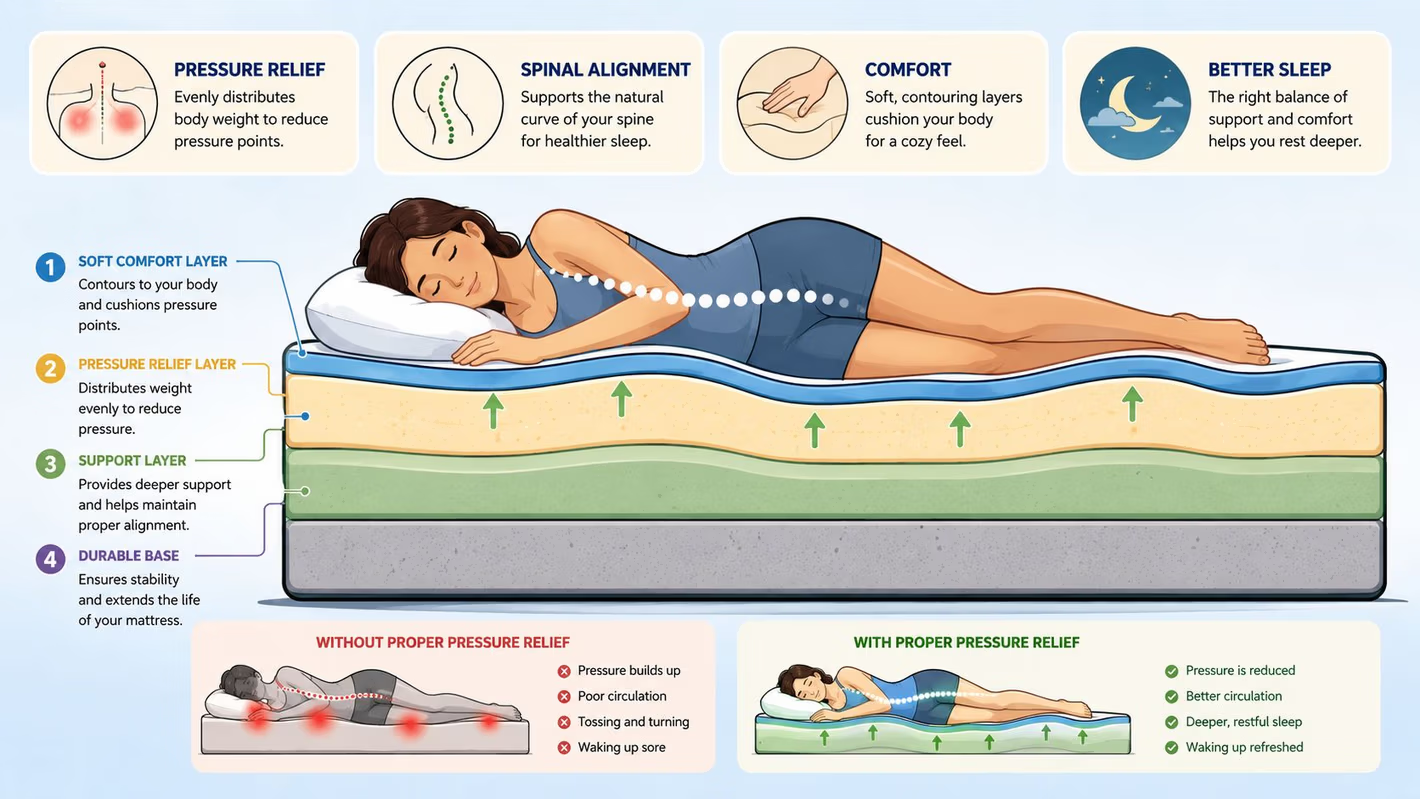
Pressure relief comes from how the comfort layers deform under the sleeper's weight. Memory foam, latex, and pillow-top materials compress beneath the shoulder and hip, spreading contact over a larger area instead of concentrating force at one point. That mechanical distribution explains why side sleepers generally need cushioning rather than a rigid, unyielding surface, as described in this technical overview of pressure relief for side sleepers.
Look beneath the surface
A side sleeper shouldn't shop by the cover feel alone. The top comfort material determines how readily the shoulder and hip settle, while the transition and support layers limit how far the body continues to sink.
Some guides recommend a 2 to 4 inch comfort layer for side sleepers, paired with a medium to medium-soft overall feel. That depth can provide room for the shoulder and hip to engage the surface without making the sleeper depend entirely on a thin layer of padding, according to this side-sleeper comfort-layer guidance.
A thicker comfort layer isn't automatically better. If the support core doesn't resist the pelvis, extra softness can turn into sagging. The useful combination is cushioning above, controlled support below, and enough responsiveness for comfortable movement.
Consider zoning for uneven pressure
A uniform surface treats the shoulder, waist, and hip almost identically, even though those areas have different shapes and loading patterns. Zoned construction can offer more give under the shoulder and stronger resistance beneath the pelvis. That arrangement may suit side sleepers whose body shape makes a single firmness level feel inadequate.
Side sleepers should ask where the mattress changes its support, not just whether the word “zoned” appears in the description. During testing, the shoulder should settle without feeling trapped, while the hips should remain supported rather than dropping noticeably below the torso.
A pressure map or laboratory rating can provide useful evidence, but showroom testing still matters because body shape and personal comfort vary. The best candidate is the one that combines measurable construction logic with a comfortable, aligned feel for the individual sleeper. A focused pressure-relief mattress guide can help shoppers prepare before visiting a store.
Comparing Mattress Materials for Side Sleepers
Material choice changes the way a mattress cushions, responds, cools, and supports. Memory foam usually emphasizes contouring, latex tends to feel more responsive, and hybrids combine comfort materials with a coil-based support system. None of those categories guarantees the right result, so the choice should follow the sleeper's priorities.
| Material | Pressure Relief | Cooling | Support | Best For |
|---|---|---|---|---|
| Memory foam | Deep contouring at shoulders and hips | Can feel warmer for some sleepers | Even, close body support | Side sleepers who prefer a cradled feel |
| Latex | Contouring with a more responsive surface | Often feels more breathable than dense foam | Buoyant support with easier movement | Side sleepers who dislike feeling stuck |
| Hybrid | Comfort layers cushion pressure points | Coil space can promote airflow | Strong underlying support with surface give | Sleepers wanting a balance of cushioning and lift |
Memory foam
Memory foam can be a strong fit for a side sleeper who wants the mattress to mold closely around the shoulder and hip. It reduces the sensation of surface hardness and can limit movement across the bed. The trade-off is that a contouring feel may make repositioning less immediate, and some sleepers may prefer a cooler, more buoyant surface.
Latex
Latex generally provides pressure relief without the same enveloping sensation as slow-response foam. That responsiveness can help a side sleeper change positions more easily. It may suit sleepers who want contouring but don't want the body to sink into the mattress.
Hybrid construction
A hybrid can provide the most balanced starting point for shoppers who want cushioning above and firmer support below. The comfort layer handles shoulder and hip pressure, while the support system helps limit excessive pelvis sinkage. Construction still matters, so the side sleeper should test whether the upper layers offer enough give before the underlying support becomes noticeable.
Weight should guide material selection as well as firmness. A sleeper under 130 lb may need softer comfort materials to create enough compression, while a sleeper over 230 lb may need a stronger support feel and sufficient cushioning depth. The latex mattress versus memory foam comparison offers another way to sort responsiveness and contouring preferences.
Temperature preference also belongs in the decision. A sleeper who wakes warm may favor a more breathable, responsive construction, while someone who values close pressure relief may accept a more enveloping foam feel. The material should solve the sleeper's main problem without creating a new one.
Testing Mattresses and Pairing Your Pillow
A mattress test should resemble a normal night position, not a quick sit on the edge. Side sleepers need to evaluate the shoulder, hip, waist, neck, and ease of movement together. The 30,000-square-foot Gates showroom in Grants Pass gives Southern Oregon shoppers room to compare comfort categories and test different constructions without relying only on product descriptions.
Use a repeatable showroom test
Follow a consistent process:
- Bring the usual pillow. A pillow changes the neck angle and can make a mattress feel more or less aligned.
- Lie on the side in a natural position. Avoid bracing the body or holding an unusual pose just because someone is watching.
- Stay long enough to settle. The shoulder and hip need time to engage the comfort layers.
- Check the waist. The mattress should support the space between the ribs and pelvis rather than leave it hanging or push it upward.
- Assess movement. Turn as normally as possible and notice whether the surface helps or resists repositioning.
- Repeat on another candidate. Immediate comparison makes differences easier to identify.
A mattress that feels good only while sitting isn't a tested mattress. Side sleepers should lie down and let the comfort layers do their work.
Treat the pillow as part of the mattress
Side sleeping can create a neck gap of 10 cm or more, depending on shoulder width. The pillow must fill that space without tilting the head upward or letting it fall toward the mattress, which is why independent guidance recommends testing the pillow and mattress together. This pillow selection guide can help shoppers evaluate height, shape, and support as one setup.
A broader shoulder often requires more pillow loft. A softer mattress may allow the shoulder to sink farther, reducing the required loft, while a firmer mattress can leave the shoulder higher and require more support beneath the head. That interaction is easy to miss when shoppers test pillows on a showroom chair.
A companion can also check whether the neck looks reasonably level with the rest of the spine. If the head tips toward the mattress or angles noticeably upward, the pillow height or mattress feel needs adjustment.
Making Your Purchase with Confidence
A comfortable test is only one part of a sound mattress purchase. Shoppers should review the available sleep trial, exchange terms, warranty coverage, and delivery details before committing. The practical mattress buying guide helps organize those questions.
Gates Home Furnishings has served Southern Oregon since 1946, founded by George Gates Jr. on the promise of “Service and Value.” That philosophy still matters when a side sleeper needs help comparing brands such as La-Z-Boy, Flexsteel, Ashley, and Beautyrest, or wants guidance choosing a mattress that matches an existing bedroom.
Local service reduces the logistical burden
Gates Easy Pay offers $0 down, 6-month interest-free financing, and no-credit-needed options, subject to applicable program terms. Flexible payment choices can make it easier for homeowners, renters, seniors, and new movers to choose a suitable sleep setup without reducing the decision to the cheapest surface available.
Delivery should also be part of the evaluation. White-glove service means the team doesn't drop boxes at the door. Professional delivery includes in-home assembly, setup, and mattress haul-away, so the old mattress doesn't become the customer's problem.
The showroom also includes Unique Finds, including reclaimed wood, teak, and one-of-a-kind statement pieces. That makes it possible to coordinate a carefully tested mattress with bedroom furniture that has more character than standard big-box selections.
Southern Oregon side sleepers can visit Gates Home Furnishings to test mattresses and pillows together in the Grants Pass showroom, with help choosing a feel based on body shape, weight, and pressure points. Gates offers flexible Gates Easy Pay financing, white-glove delivery with assembly and mattress haul-away, and bedroom furnishings that include distinctive reclaimed wood and teak Unique Finds.