Gate Home Design Guide for Southern Oregon Homes


A lot of homeowners start gate home design too late. They pick a look first, then discover the driveway slope is wrong, the swing arc hits a planter, or the material choice won't hold up through Southern Oregon's rainy winters and dry summers.
A better approach is simpler. Start with function, test the style against the site, and only then lock in materials and hardware. That order saves rework and helps the finished gate look intentional instead of patched together.
Defining Your Gate Home Design Goals
You pull into the drive after a long day, and the gate is the first thing you deal with. If it sticks, blocks sight lines, feels too exposed, or looks out of place with the house, you notice it every single time. Good gate design starts there. It should make arrival feel secure, easy, and finished.
Around Grants Pass, the right goal set changes from one property to the next. A compact in-town lot near older homes needs a gate that respects the street view and works within tighter space. A wider property outside town often needs better vehicle access, tougher materials, and a design that stands up to wet winters, hot dry summers, and plenty of dust.
Start With Three Core Priorities
Choose the three jobs your gate must handle every day. Keep it plain.
- Manage access: Decide whether the gate is meant to discourage walk-ins, keep kids or pets contained, or control who can drive onto the property.
- Fit daily routines: Count how often it opens, who uses it, and whether you want simple manual use or easier entry with upgraded hardware later.
- Belong to the house: Match the gate to the home's trim, siding, roofline, and metal finishes so the entry feels planned, not added as an afterthought.
Cut any feature that makes the gate harder to live with.
Walk the Entry Like a Visitor
Start at the street. Then walk toward the house and back out again. That quick site check tells you more than a folder of saved photos because it forces you to see the entry the way guests, delivery drivers, and family members will use it.
Look closely at the opening, the fence connection points, how the approach feels from the driver's seat, and what the gate needs to frame. In Southern Oregon, climate belongs in this conversation from day one. Sun exposure, pooled rainwater, and wind all affect what will age well. If you want wood, decide early whether reclaimed wood is the right fit. It can bring real character, but only if the boards are selected, sealed, and detailed for exterior use.
Homes near Riverside Park or older streets close to downtown usually benefit from a softer visual fit. Rural properties and edge-of-town lots usually need stronger emphasis on access, durability, and privacy.
We have been helping local families make these calls for 78 years, and the pattern is consistent. The best results come from testing ideas against the property before anyone falls in love with a style. That is also why showroom visits matter. You can put your hands on finishes, compare reclaimed wood tones against metal options, and make better decisions before the build starts.
If you need a clearer starting point, our guide on where to begin with home design planning lays out the process in a practical order.
Selecting Gate Styles Materials and Interiors
Style matters, but material choice decides whether that style still looks good after seasons of use. In Southern Oregon, that isn't a small detail.
Which Gate Style Fits the Property
Some styles work because they suit the lot. Others only work in photos.
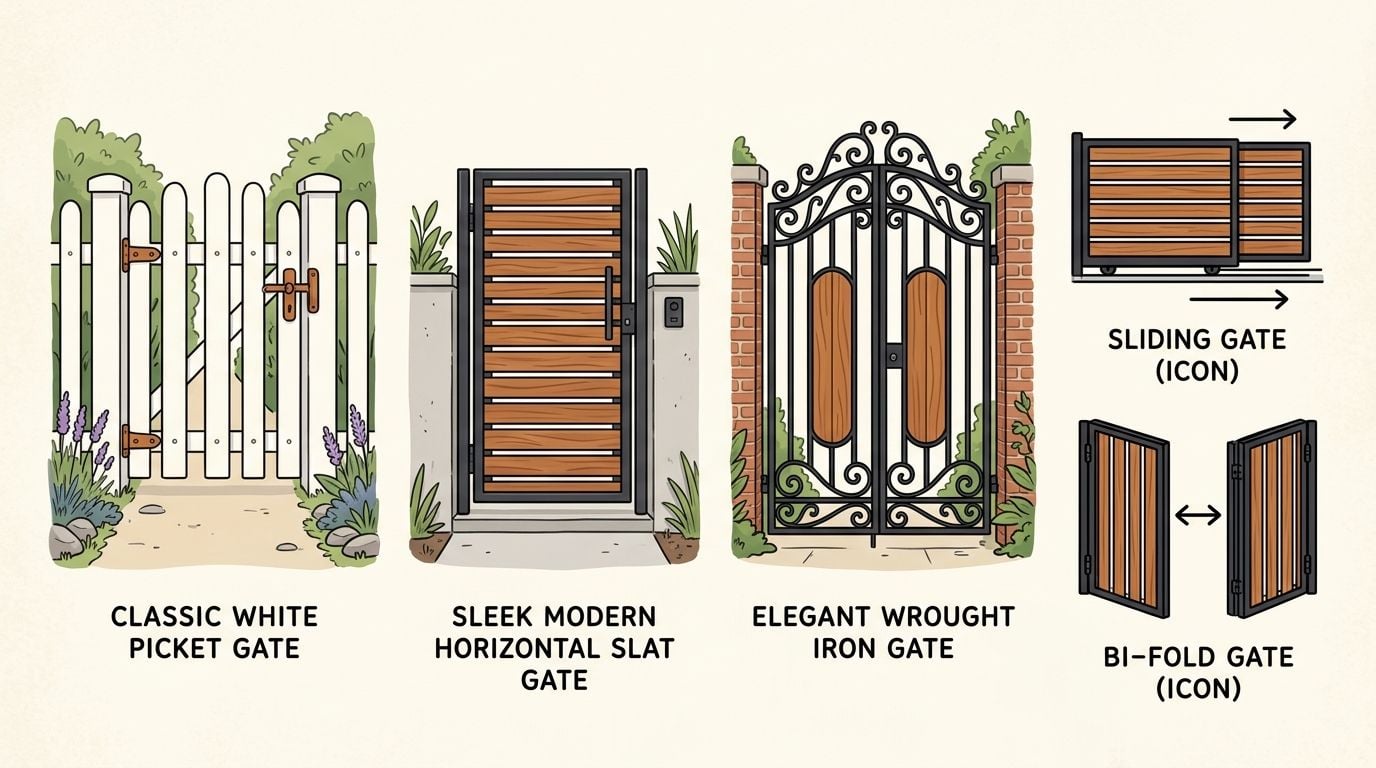
| Style | Best fit | Watch for |
|---|---|---|
| Traditional picket | Cottage, farmhouse, older neighborhood homes | Less privacy |
| Horizontal slat | Modern and transitional exteriors | Needs clean spacing and precise alignment |
| Wrought-look metal | Formal entry and stronger visual security | Can feel heavy on smaller lots |
| Sliding gate | Tight driveways or limited swing space | Needs side room and track planning |
| Bi-fold gate | Compact sites with restricted approach area | More moving parts |
Traditional picket gates keep things approachable. Horizontal slat designs give a cleaner line and often pair better with contemporary homes in Medford, Central Point, and newer Rogue Valley developments. Sliding and bi-fold layouts are practical choices when the lot won't allow a full swing.
Material Choices That Hold Up
Material selection should follow the climate, not the trend. Wood can look outstanding, but not every wood detail belongs outdoors without protection. Metal can be durable, but lower-grade options create avoidable rust and maintenance issues.
Most gate guides ignore how reclaimed wood and teak need UV-stable finishes and marine-grade hardware to withstand Southern Oregon's rainy winters and dry summers, as noted in this regional material durability discussion.
That point matters if the home already features reclaimed wood furniture, teak accents, or natural textures inside. A gate can echo those tones without copying them outright. The best results usually come from restraint. A wood accent panel, a capped top rail, or a matching stain note is enough.
For homeowners choosing wood tones that connect exterior design with interior pieces, this guide to choosing the right hardwood for longevity and style helps narrow the decision.
Match the Gate to the House Interior, Not Just the Fence
A gate is part of the home's first impression. If the front entry has black hardware, warm wood, and simple lines, carry that language through the gate. If the house leans rustic, a colder polished finish may feel disconnected.
Use this filter:
- Warm homes: Pair wood accents with darker metal finishes.
- Modern homes: Use flatter profiles and simpler hardware shapes.
- Traditional homes: Favor symmetry, vertical rhythm, and classic detailing.
The cleanest gate home design always feels tied to the architecture and the lived-in style of the home.
Planning Measurements Sizing and Driveway Access
Most gate problems begin with bad measurements. Not bad intentions. Bad measurements.
A gate can't be sized by guesswork from the curb. Width, height, grade, and vehicle turning space all need to be measured on site. That's especially true on larger Rogue Valley properties where pickups, trailers, and RVs use the same entrance as standard cars.
The Measurements That Matter First
Take these in order:
- Opening width: Measure the clear distance between finished post faces or planned post locations.
- Grade change: Check how much the driveway rises or falls across the gate path.
- Swing arc or slide path: Mark the movement area on the ground before choosing the operating style.
- Approach clearance: Observe the vehicle's true entry path, rather than an assumed one.
A sloped driveway often pushes the decision toward sliding rather than swinging. Homeowners comparing layouts may find FenceScape's sliding gate guide useful for understanding where a sliding setup makes the most sense.
Recommended Turning Radii by Vehicle Type
Rural Southern Oregon properties often need wider, more forgiving vehicle access. A turning radius of 5–6 m works for most cars, while SUVs need 6–7 m and RVs may require 8–12 m.
| Vehicle Type | Turning Radius |
|---|---|
| Most cars | 5–6 m |
| SUVs | 6–7 m |
| RVs | 8–12 m |
Those numbers should shape the gate location, not just the gate width. A wide opening placed at the wrong angle still creates awkward entry.
Measure for the vehicle that's hardest to bring in, not the one used most often.
Common Access Mistakes
Some issues show up only after the posts are set. That's when changes become expensive.
Watch for:
- Branches overhead that interfere with taller vehicles
- Mailbox placement that pinches the turning path
- Fence returns that block a smooth approach
- Decorative columns that reduce usable clearance
This measurement mindset is similar to sizing interior pieces correctly. The same practical habit used in how to measure furniture for the right fit applies outdoors too. Measure the actual use path, not just the opening itself.
Incorporating Security Hardware and Local Codes
A nice-looking gate with weak hardware is a short-term project. Security starts at the hinge, latch, operator, and post connection. If those parts are wrong, the style won't save it.

Use Exterior-Ready Metal and Real Safety Specs
For outdoor use, material grade isn't optional. 304 or 316 grade stainless steel is essential for exterior gates; lower-grade metals corrode rapidly, compromising security and lifespan.
That same technical guidance also sets out practical automation and installation rules worth following:
- Photocell sensor placement: 500–600 mm for cars and 100–1200 mm for heavy vehicles
- Vertical pale spacing: Keep gaps at a maximum 100 mm on automated gates
- Control equipment location: Position it at least 1500 mm away from the gate line
- Curing before hardware install: Allow a minimum 7-day curing period after concrete work
- Hinge choice: Avoid pipe hinges for most gates
- Hinge extension: Extend hinges 4–6 inches if the gate swings back against a fence
These aren't cosmetic details. They affect reliability, injury prevention, and long-term alignment.
Balance Access Control With Code Questions
Local code review should happen before fabrication. Height limits, setback issues, and neighborhood restrictions can change what's practical. Historic-adjacent areas and visually sensitive streets may require a more restrained design even when a larger or more enclosed gate seems appealing.
Homeowners adding remote entry or app-based access should understand how those systems connect. This overview of how cellular gate openers work gives a useful plain-language look at that option.
A secure gate should never create a new hazard. If hardware placement invites pinched fingers, reach-through access, or climbing points, the design needs work.
A Better Hardware Checklist
Use this short review before approving a build:
- Confirm metal grade: Exterior hardware should be specified in writing.
- Verify operator suitability: Match the system to gate weight, site conditions, and expected use.
- Check reach points: Keep latches, controls, and gaps from creating easy access or entrapment points.
- Ask about drainage: Water near posts and automation shortens the life of the system.
Good gate home design always blends appearance with prevention.
Budgeting Financing and Showroom Experience
A good-looking gate can still become a money pit fast. We see it in Southern Oregon all the time. A homeowner spends heavily on a decorative face, then ends up paying again for post correction, drainage fixes, or a better frame after the first wet season and summer heat cycle expose the weak spots.
Spend First on What You Cannot Easily Redo
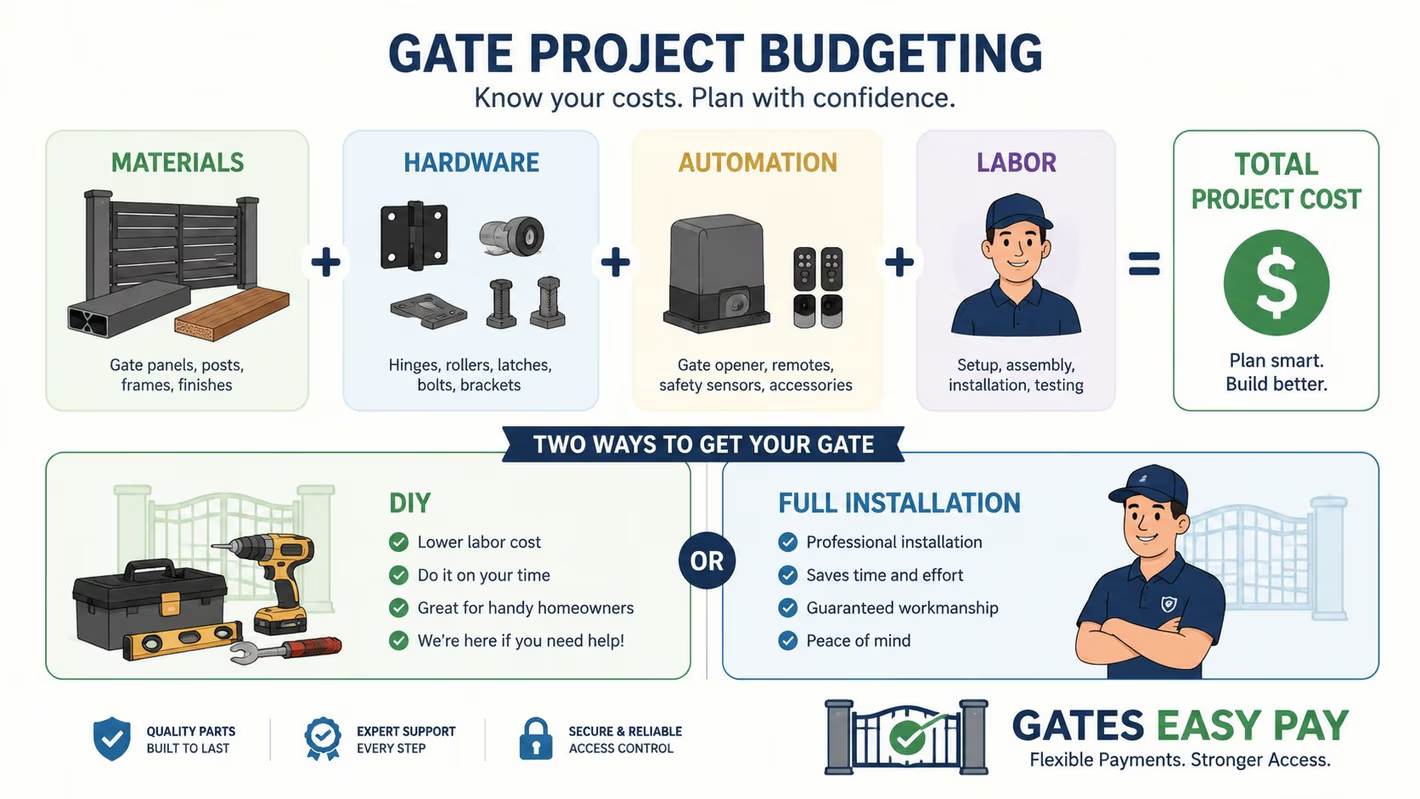
In Grants Pass, Medford, and across the Rogue Valley, freeze-thaw movement, heavy rain, and summer sun punish bad early decisions. Put your budget into the parts buried in the ground or built into the gate first. Those are the expensive corrections.
Use this order:
- Site prep and post support
- Gate frame and core material
- Hinges, latches, rollers, or track system
- Automation and safety hardware
- Finish details and decorative upgrades
That order works because structural mistakes keep costing money. Decorative upgrades are easy to admire and easy to overspend on. A reclaimed wood accent, custom iron detail, or richer stain only makes sense once the gate has the strength and alignment to carry it for years.
Finance the Better Build Instead of Settling for a Short-Term Fix
Too many homeowners cut quality at the exact point where quality matters most. They choose a lighter frame, skip better hardware, or postpone the finish they want because they assume the full project has to be paid in one shot.
That is not the only path. Gates Home Furnishings offers flexible furniture financing options that can help spread out costs while you choose better materials, stronger construction, and a gate design that fits the house instead of feeling temporary. If the project includes reclaimed wood elements, matching entry furnishings, or a broader exterior refresh, that flexibility gives you room to do the job once and do it right.
The Showroom Matters More Than a Screen
Photos flatten everything. Wood tone, grain variation, finish depth, metal color, and edge detail all read differently in person.
That is why we still tell customers to come put their hands on materials. Gates Home Furnishings has spent 78 years helping Southern Oregon families compare options in real life, not just on a phone screen. In the showroom, you can test reclaimed wood character, compare teak tones, and see whether a gate should integrate with the home or make a stronger statement at the entry.
That hands-on step saves money too. It is easier to reject a finish that feels too formal, too rustic, or too dark under local light before you commit to fabrication. It is also the best place to tie gate decisions to the rest of the property so the driveway entry, porch, and interior style feel connected instead of pieced together later.
Ensuring Longevity with Maintenance Strategies
A gate doesn't stay good by accident. It stays good because someone checks it before small problems turn into sagging, sticking, rust, or electrical failure.
Monthly Checks That Prevent Bigger Repairs
Use a simple monthly routine:
- Inspect hinges and moving points: Listen for grinding, binding, or uneven movement.
- Test locks and latches: Make sure alignment hasn't shifted.
- Check sensors and controls: Automated systems should respond cleanly and consistently.
- Clear debris: Keep tracks, drain paths, and post bases free of buildup.
That routine matters even more in wet periods. Drainage neglect can raise automated gate maintenance costs, and water around foundations creates trouble fast.
Small maintenance beats major correction. A loose hinge or blocked drain is easy to fix early and expensive to ignore.
Annual Work Worth Scheduling
Once a year, review the gate more thoroughly.
Focus on repainting or finish touch-ups where needed, electrical testing for automated parts, and a close look at foundations and post stability. Wood-accent gates also need finish review after seasons of sun and moisture exposure. Homeowners caring for exterior wood details can borrow a lot from these practical habits for how to care for wood furniture.
Service expectations matter too. White-Glove Delivery goes beyond drop-off; it includes professional assembly and mattress haul-away, plus the Gates Care Shield protection plan for accidental spills and tears. That standard of follow-through reflects the broader point. Good home investments deserve support after purchase, not just on delivery day.
Next Steps and Showroom Invitation
The strongest gate home design starts with honest priorities, accurate measurements, durable materials, and hardware that fits the site. A clean sketch and a nice inspiration photo aren't enough. The gate has to work in real weather, with real vehicles, and with the way the property is used.
In Southern Oregon, that practical approach has always mattered. Since Est. 1946, the local standard set by George Gates Jr. has been Service and Value, and that mindset still fits every home decision that's meant to last. For homeowners in Grants Pass, Medford, Central Point, Ashland, and across the Rogue Valley, seeing materials in person usually makes the final call easier.
Visit Gates Home Furnishings to Visit our Grants Pass Showroom at 700 SW 6th St or Browse our collection online. The 30,000 sq. ft. showroom offers a hands-on way to compare reclaimed wood, teak, and other Unique Finds, alongside trusted brands like La-Z-Boy, Flexsteel, Ashley, and Beautyrest. Flexible Gates Easy Pay options include $0 down, 6 equal payments, no-interest within the promotional period, and no-credit-needed programs, and the team's White-Glove Delivery includes professional assembly and mattress haul-away.