8 Common Mistakes When Buying a Sofa—and How to Fix Them


A sofa can look perfect in a showroom and still be wrong for a room, a body, or a daily routine. The trouble often starts when shoppers focus on appearance and leave questions about dimensions, construction, care, delivery, and payment until later. A sofa that won't fit through the entry, feels uncomfortable after an evening of use, or needs more care than a household can manage can quickly become a costly frustration.
Gates Home Furnishings has helped Southern Oregon families make confident furniture choices since 1946. Founded by George Gates Jr. on a promise of “Service and Value,” our family-owned business helps shoppers consider the whole purchase, from the fit of the sofa to delivery and aftercare. These common mistakes when buying a sofa are easy to avoid when each decision gets a practical check before checkout.
1. Buying Before Measuring the Space and the Path to It
Measuring the living room isn't enough. A sofa might fit the wall beautifully but fail at the front door, a hallway turn, or a stair landing. Measure the full route from the entrance to the room, and compare its narrowest points with the sofa's dimensions. The sofa measurement guide can help organize those measurements before shopping.
A sectional that looks like the right choice in a showroom may be difficult to maneuver through an older Grants Pass home's tight hallway. If access is limited, modular pieces can be assembled inside the room, though their connectors and seams may shift more than a one-piece sofa. Ask which parts can be removed, such as legs or cushions, and confirm the sofa's packaged dimensions as well as its assembled size.
Mark the room and check every turn
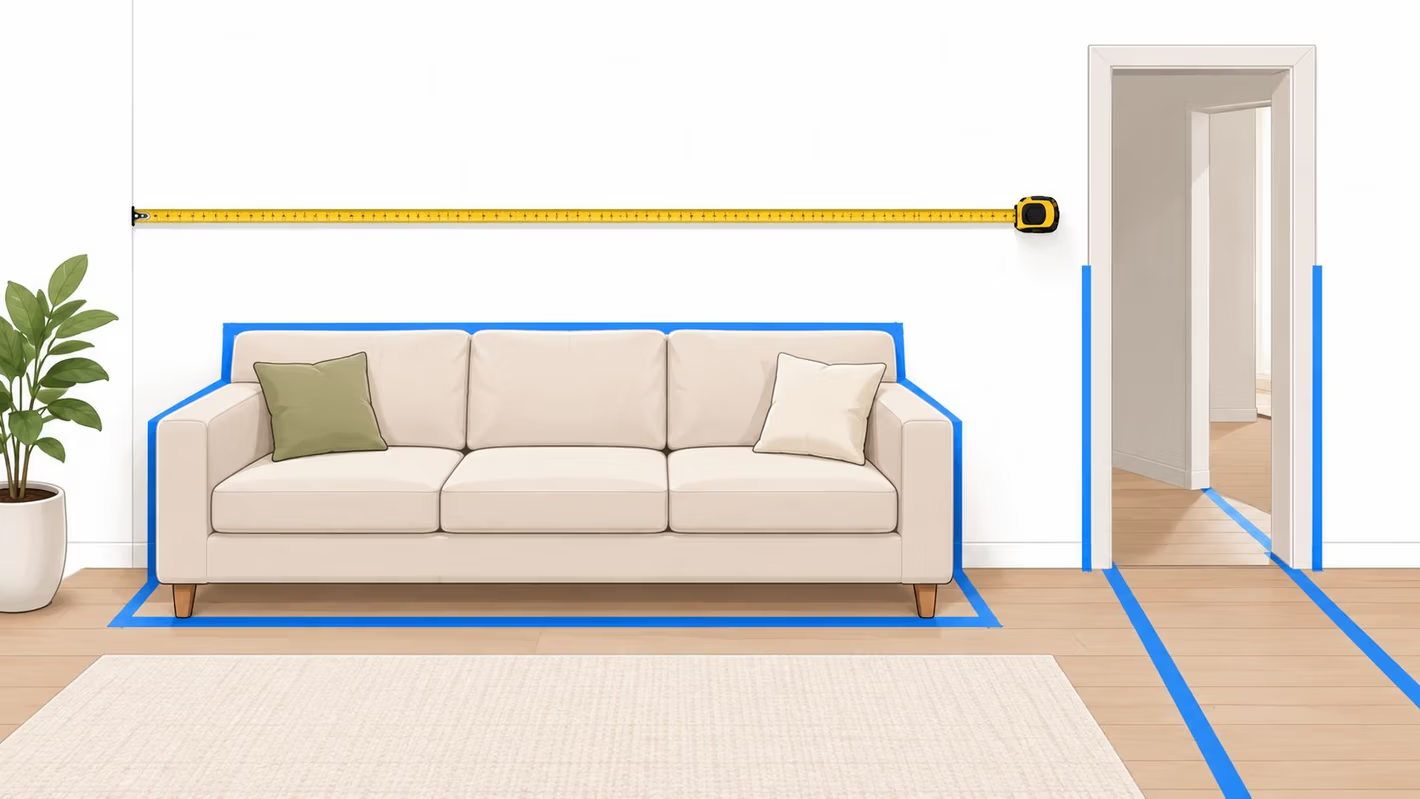
Measure the wall, doorway width and height, hallways, stairwells, elevator, and tight corners. Check for door swings, radiators, columns, and built-in shelves, then compare the narrowest opening with the sofa's depth, height, and diagonal depth. Leave at least 2 inches of clearance, as recommended in this sofa measurement guidance.
Use painter's tape to outline the sofa's footprint on the floor. Leave room for walkways, the coffee table, and recliner movement, then live with the outline before committing. Shoppers from Medford and Central Point often bring room photos and measurements to our 30,000-square-foot Grants Pass showroom, where our team can compare their plans with floor models.
Practical rule: Measure the delivery route before you fall in love with the sofa.
2. Skipping the Comfort Test or Relying Only on Online Shopping
Photos can show a sofa's shape, but they can't tell a shopper how its seat feels after a long visit or whether its arms support a favorite reading position. Seat height, usable depth, back support, and cushion firmness all affect comfort. The guide to evaluating sofa photos can help shoppers use online images thoughtfully, but an in-person test is the best way to assess how a sofa feels.
At our Grants Pass showroom, shoppers can sit, shift, lean back, and stretch out on different models. Compare how easily you can stand up, whether your feet rest comfortably, and whether the back and arms suit the way you sit. A senior shopper considering a La-Z-Boy or Flexsteel recliner, for example, can test how the footrest, back, and seat work together before choosing a style.
Test the seat, not just the look
Stay seated for 10 to 15 minutes, change positions, and try the sofa as you would at home. Check arm height if you read, eat, or use a laptop on the sofa, and ask whether a cushion feels supportive enough for everyday use. If a fabric color catches your eye, request a swatch and check it in your home's light, since a showroom and a screen can make the same material look different.
Our 30,000-square-foot showroom makes it possible to compare several seating styles in one visit. Shoppers can browse the collection online first, then bring room measurements and photos to Grants Pass to test their favorites. Whether a home is near the Rogue River or in Medford, Central Point, or Ashland, a side-by-side comparison can make the decision clearer.

3. Choosing Fabric or Leather Without Considering Your Lifestyle
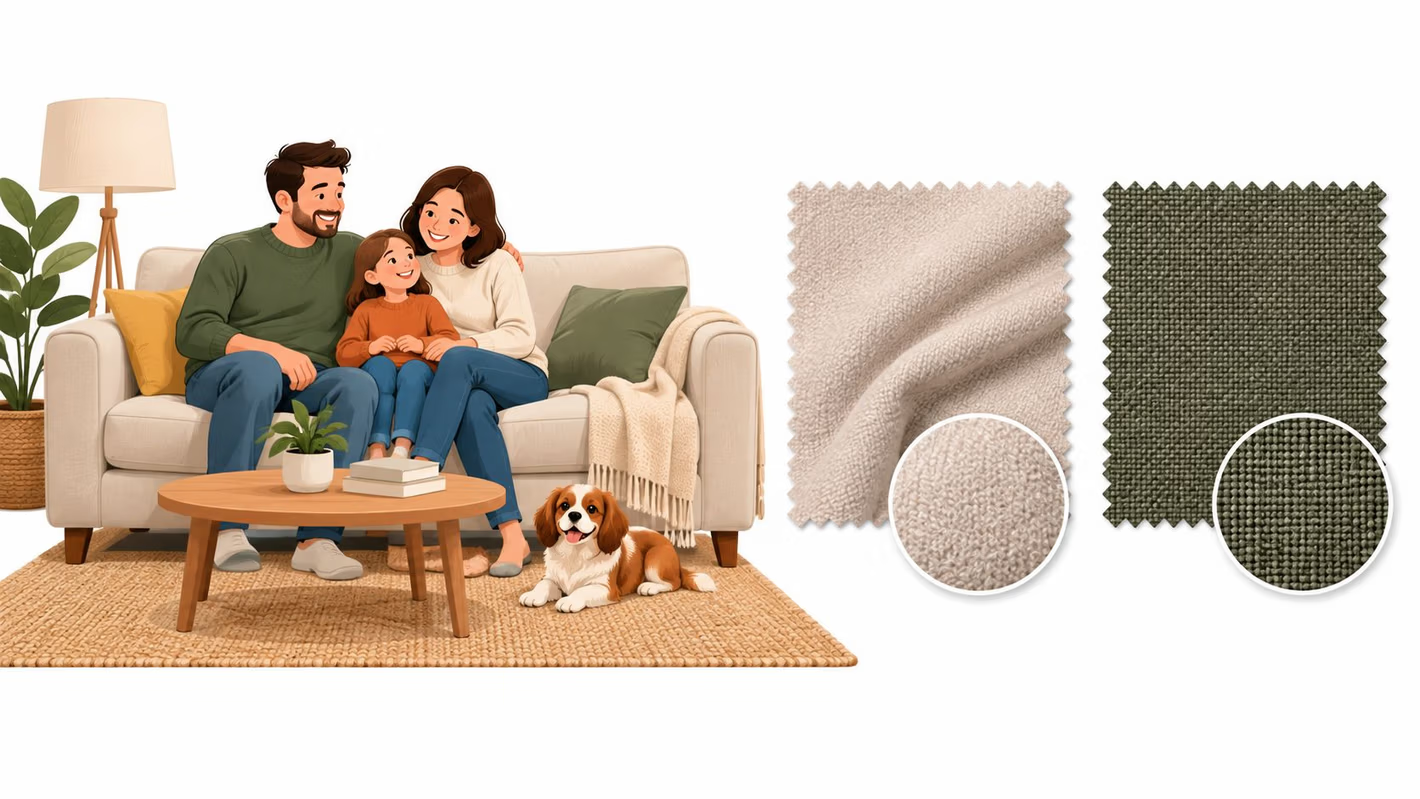
A fabric that suits a quiet sitting room may not suit a busy home with children, pets, or frequent guests. Choose upholstery for how the sofa will be used, cleaned, and lived with, not color alone. The upholstery materials guide can help shoppers compare options before deciding.
A Medford household with dogs might prefer a tight-weave or performance fabric that's easier to clean than a loose, delicate weave. A mid-tone color can disguise some everyday marks better than a very light shade, though it won't eliminate the need for regular care. A design-focused Ashland homeowner might instead pair a durable leather sofa with reclaimed wood from our Unique Finds collection for a mix of practical seating and distinctive character.
Ask how the upholstery holds up
Request the fabric's cleaning code and its abrasion test method. Roughly 15,000 to 20,000 rubs is a useful screening range for ordinary home use, while about 30,000 rubs may suit high-traffic areas, according to government upholstered-furniture testing guidance. Those figures describe abrasion performance, not every kind of wear or the sofa's overall lifespan.
Ask whether the rating applies to the exact fabric grade, and check care requirements, pilling, seam strength, and lightfastness. If comparing leather, confirm whether it's full-grain, top-grain, or bonded, since the material and its care needs differ. For leather furniture, shoppers can also consult guidance on vetting leather-cleaning professionals.
4. Judging Quality by Appearance Instead of Construction
A sofa can look impressive on the showroom floor and still disappoint if its frame, support system, or cushions don't suit daily use. Compare how each model is built, not just how it looks. Our guide to sofa and chair construction outlines the details to check.
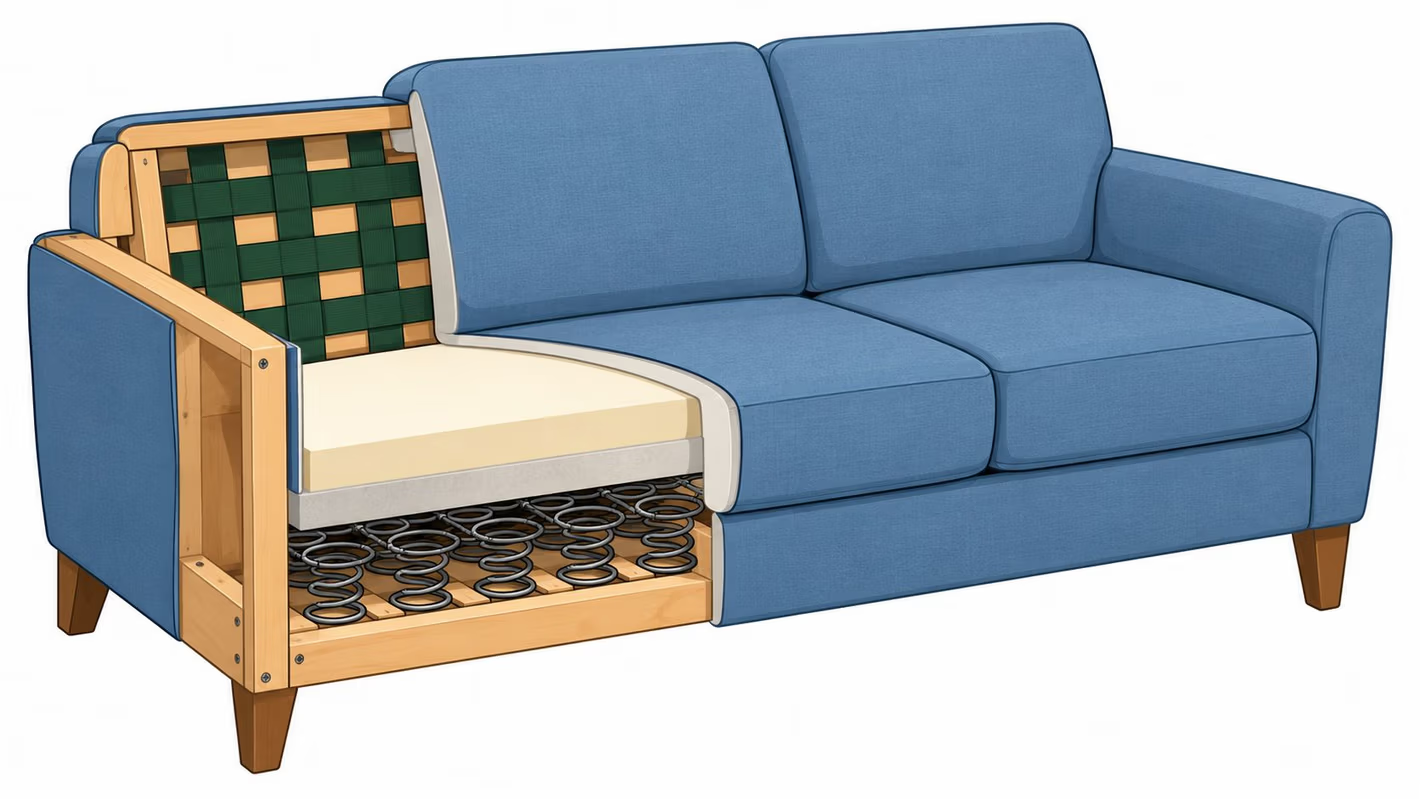
At our 30,000-square-foot Grants Pass showroom, ask what supports the seat and how the frame is joined. A sturdy frame and well-secured joints can help a sofa stay stable, while the suspension and cushion filling affect how it feels and holds its shape. Judge those parts together; one material alone cannot tell you how the whole sofa will perform.
Look underneath the surface
Ask whether the frame is made from hardwood, engineered wood, or metal, and how its joints are assembled. Check the suspension and cushion filling, then press down on the seat and arms. Uneven movement, creaks, or wobbling give you specific questions to raise with our team. For shoppers considering a made-to-order piece, these custom furniture tips from Interiors by DeX explain how custom choices can help prevent costly renovations.
A firm seat, a sturdy frame, and a comfortable sofa are separate qualities. Test each one for the way you plan to use the sofa at home.
Read the warranty terms for the frame and suspension, and confirm which components are covered. Our team can walk you through floor models and explain how their construction differs. Manufacturers use different frame, joinery, and suspension specifications, so compare the details of each model rather than relying on a brand name alone.
5. Ignoring Scale, Layout, and Sectional Orientation
A sofa should suit the room's overall layout, not just one wall. A large sectional can crowd a compact living room, while a small loveseat may seem out of scale in a spacious one. Before choosing, map the seating area, the walking routes, and the places where people will gather.
A couple in Central Point might use a teak console behind a sectional to create a clear visual anchor without making every piece match. In a compact Medford condo, a sofa with slim arms and raised legs can leave more visible floor space and help the room feel open. Our Unique Finds, including reclaimed wood and teak pieces, can add contrast and character alongside simpler seating.
Confirm the orientation before ordering
For a sectional, check which side the chaise or return should face from the viewpoint used by the manufacturer. Stand in the planned position and verify that the orientation suits doors, windows, and the main walkway. The sectional buying guide can help shoppers think through configuration before settling on a model.
Use painter's tape to mark the sofa, chaise, and coffee table on the floor. Check that the front legs of the sofa can sit on the rug, if that's part of the plan, and leave clear paths around the seating. For a recliner or reclining sectional, confirm the operating space behind or in front of the seat so the mechanism won't hit a wall or block a walkway.
6. Letting the Sticker Price Drive the Decision
The lowest advertised price doesn't always mean the lowest cost over time. A sofa that doesn't suit the household or wears out quickly may need replacing sooner, while a higher-priced model may include features and construction that suit long-term use. Compare the total delivered cost, including setup, disposal, financing charges, and any protection coverage.
A family moving to Grants Pass might use Gates Easy Pay to make a suitable sofa and recliner more manageable. Available options include $0 down, six-month interest-free financing, and no-credit-needed choices; shoppers should review the terms, payment schedule, and promotional period before agreeing to a plan. These options can help with budgeting, but a monthly payment should still fit comfortably within the household's finances.
Compare the whole purchase
Ask what delivery, assembly, and disposal cost, and whether the quoted price includes setup. Check whether financing terms change after a promotional period, and consider the full payment schedule rather than focusing only on the initial payment. Shoppers on a tighter budget can also look at the Gates Outlet, which offers clearance items and special values.
A Medford shopper, for example, could compare an Outlet sofa with a new model by checking dimensions, construction, delivery, and warranty rather than price alone. A lower price is useful only if the sofa fits the room, meets the household's needs, and works within the budget. Gates Easy Pay offers online application options for shoppers who prefer to review financing privately before visiting.
7. Overlooking Delivery, Assembly, and Old Furniture Removal
A sofa purchase isn't finished when the payment goes through. Someone still has to move it through the entry, carry it upstairs if needed, assemble its sections, attach its legs, and set it in place. Shoppers should confirm what delivery includes before scheduling the order.
A customer in Ashland with a narrow staircase can share photos and measurements before delivery so the team can plan the route. That advance check can help prevent a difficult delivery day, damage to walls, or a sofa that can't reach its intended room. For another practical perspective on couch delivery logistics, see this couch delivery service overview.
Clarify what the crew will do
Gates offers White-Glove Delivery with professional in-home delivery, heavy lifting, assembly, and setup. We don't just drop boxes at the door. Ask which tasks apply to the specific sofa, whether packaging removal is included, and what happens if the delivery team can't access the room.
Measure the entry route again, clear obstacles before the crew arrives, and have someone present to approve placement. Gates also provides mattress haul-away, so ask about the available options when replacing an old mattress. This kind of preparation reflects the promise George Gates Jr. made when he founded the business in 1946: “Service and Value.”
8. Skipping Protection Plans, Warranties, and Aftercare Questions
A manufacturer warranty and accidental-damage protection don't necessarily cover the same things. Before choosing a sofa, ask what the warranty includes, how long coverage lasts, and which exclusions apply. Then compare any protection plan with the kinds of spills, tears, or other accidents most likely in the household.
For example, a family with young children may want to ask how the Gates Care Shield plan handles accidental spills and tears. A Medford shopper choosing a light-colored sofa should check its cleaning code and understand the care routine before purchase. The right fabric depends not only on its appearance, but also on whether its maintenance suits the household.
Make the care plan part of the decision
Read the fabric tag and follow its cleaning instructions rather than guessing at a treatment. Ask what kinds of cleaners are permitted, whether professional cleaning is recommended, and which situations fall outside the manufacturer warranty or protection plan. Keep the purchase receipt and coverage documents together so they're easy to find if a question comes up.
A plan can offer peace of mind, but it shouldn't substitute for understanding the sofa's warranty and care requirements. At the showroom, shoppers can ask our team to explain the available coverage and compare it with their likely household needs. Make that conversation part of the purchase, not an afterthought once a spill happens.
8 Common Sofa-Buying Mistakes: Comparison Guide
| Common Sofa-Buying Mistake | Effort to Avoid | Resources or Checks Needed | Likely Outcome if Ignored | Key Advantage of Avoiding It |
|---|---|---|---|---|
| Buying before measuring the room and delivery path | Low; requires advance measuring | Room dimensions, doorway and stair measurements, painter's tape | Sofa may not fit the room or pass through the delivery route | Reduces delivery problems, returns, and sizing errors |
| Skipping the comfort test or relying only on online photos | Moderate; requires comparing options in person | Time to test seating, room measurements, fabric swatches | Sofa may feel uncomfortable or look different from expectations | Helps match comfort, support, color, and size to daily needs |
| Choosing upholstery without considering lifestyle | Low to moderate; requires comparing materials and care needs | Fabric durability and cleaning details, household needs, swatches | Upholstery may stain, snag, or wear faster than expected | Improves durability and makes upkeep more manageable |
| Judging quality by appearance instead of construction | Moderate; requires asking questions and checking components | Frame, joinery, suspension, cushion, and warranty details | Sofa may sag, loosen, or wear out sooner | Supports better long-term value and consistent comfort |
| Ignoring scale, layout, and sectional orientation | Moderate; requires planning the room layout | Room plan, furniture dimensions, sectional orientation, recliner clearance | Room may feel cramped or unbalanced; furniture may not function well | Creates better flow, fit, and visual balance |
| Letting the sticker price drive the decision | Moderate; requires comparing lifespan, terms, and value | Total cost, expected use, financing terms, outlet options | Lower upfront cost may lead to earlier replacement or financial strain | Helps balance affordability with long-term value |
| Overlooking delivery, assembly, and old furniture removal | Low to moderate; requires advance coordination | Delivery-route measurements, service details, scheduling | Delivery delays, access problems, or extra setup work | Makes delivery and setup more predictable and convenient |
| Skipping protection plans, warranties, and aftercare questions | Low; requires reviewing terms and care instructions | Warranty details, protection-plan terms, upholstery cleaning code | Accidents or maintenance needs may create unexpected costs | Clarifies coverage and supports longer furniture life |
Buy the Sofa You Can Live With
The best sofa isn't the most attractive one on the floor. It fits the room and the delivery route, feels comfortable for the people who'll use it, suits the household's habits, and comes with a clear plan for delivery and care. Measurements, comfort tests, construction details, upholstery requirements, and payment terms all help reveal whether a sofa makes sense for daily life.
Before choosing, bring room measurements and photos, then compare the sofa's full dimensions with both the room and the access route. Sit on the model long enough to assess the seat, back, and arms, and ask what's inside the frame and cushions. Check fabric care, warranty coverage, protection options, delivery, and the total cost before signing.
Gates Home Furnishings has served Grants Pass, Medford, and the Rogue Valley since 1946. George Gates Jr. founded the business on “Service and Value,” a promise that still guides how our team helps customers. Shoppers can compare La-Z-Boy, Flexsteel, Ashley, and Beautyrest products, explore financing through Gates Easy Pay, and ask about professional White-Glove Delivery and Gates Care Shield.
Our 30,000-square-foot showroom in Grants Pass gives shoppers room to test sofas and recliners, compare upholstery, and discuss layouts with our team. It also features our Unique Finds, including one-of-a-kind reclaimed wood and teak pieces that can bring individuality to a living room. For budget-conscious shoppers, the Gates Outlet offers clearance pieces and special values.
Bring the measurements, the questions, and a clear sense of how the sofa will be used. We'll help you compare options without pressure, so you can choose seating that fits your room, routine, and budget.
Visit the Gates Home Furnishings showroom in Grants Pass to test sofa comfort, compare fabrics, and discuss fit, delivery, financing, and care with our team. Or visit Gates Home Furnishings to browse the collection online before planning a showroom visit.