Office Chairs With Wheels: Southern Oregon’s Best


A lot of people start shopping for office chairs with wheels after the same moment. Their back gets stiff by lunch, their chair drags across the floor, and they realize the kitchen chair or old hand-me-down office seat just isn't cutting it anymore.
That happens all over Southern Oregon. We meet people from Grants Pass, Medford, Central Point, and Ashland who thought any rolling chair would do, until they spend full workdays in one. Then the small details matter. How the casters roll. Whether the seat depth fits your legs. Whether the base feels steady when you lean back. Whether the chair protects hardwood, tile, or reclaimed wood floors.
We've believed in helping neighbors buy smarter furniture since 1946, when George Gates Jr. built a local business around a simple promise of Service and Value. That same idea applies to office chairs with wheels. A good one should make daily life easier, not just look good at a desk.
Your Guide to Choosing the Right Office Chair
A Grants Pass customer recently described it in a way we hear often. She'd upgraded her internet, bought a proper desk, and carved out a work spot at home, but she was still ending every day with sore hips and a tired lower back. Her chair rolled poorly, sat too low, and never felt stable.
That's why office chairs with wheels deserve more attention than they usually get. Mobility isn't just a convenience. It changes how you reach your desk, how often you twist, and how easily you shift throughout the day. Interest in better ergonomic seating keeps growing. The global ergonomic office chair market was valued at USD 14 billion in 2023 and is projected to reach USD 22.37 billion by 2032 (Spaceist market overview).
What most people get wrong
Many shoppers focus on the backrest and ignore the base. Others pick by appearance alone, then wonder why the chair feels awkward after a week.
A better approach is to judge the chair in this order:
- Start at the floor: What surface will the chair roll on every day?
- Check body fit: Seat height, seat depth, arm support, and recline matter more than color.
- Think about use: A few emails a day is different from a full remote schedule.
- Plan for longevity: A chair is part of your daily routine, not a throwaway accessory.
The right office chair should fit your body and your floor at the same time.
If you like doing homework before you shop, our smart furniture buying guide is a helpful starting point. And if you're curious how furniture brands and retailers think about changing customer needs, these DTC furniture growth tools offer useful industry context.
Understanding Caster Wheels and Flooring
The wheels under your chair are called casters, and they act a lot like tires on a car. If the material doesn't match the surface, performance suffers. Sometimes that means a rough, noisy ride. Sometimes it means scratched floors.
In Southern Oregon homes, that matters more than people expect. We see home offices set up on hardwood, tile, luxury vinyl, and reclaimed wood surfaces. A chair that rolls fine in one room can be a poor match in another.
Why caster material matters
Harder wheels tend to work better on softer surfaces like carpet. Softer wheels tend to be kinder to hard surfaces like wood and tile. The common mistake is using a standard hard caster on a floor that needs more protection.
According to ANSI/BIFMA standards, soft polyurethane casters can reduce floor wear by 40 to 60 percent compared to standard nylon casters (Humanscale seating reference). If you've invested in hardwood, tile, or reclaimed wood, that's not a small detail.
For readers dealing with existing finish wear, this Richmond homeowner's guide to varnish repair is a practical resource on how surface damage shows up and what restoration can involve.
Caster wheel and flooring compatibility
| Caster Type | Material | Best For | Notes for Southern Oregon Homes |
|---|---|---|---|
| Hard caster | Nylon or similar hard plastic | Carpeted offices | Can feel easier on carpet, but may be rough on wood or tile |
| Soft caster | Polyurethane | Hardwood, tile, reclaimed wood, luxury vinyl | Better choice when floor protection matters |
| Mixed-use caster | Premium soft-roll design | Homes with more than one flooring type | Helpful if your chair moves between office and living spaces |
A simple showroom test
If you're not sure what your floor needs, use this quick checklist:
- Wood or tile under the desk: Lean toward a softer caster that rolls and won't scuff.
- Wall-to-wall carpet: A firmer wheel may move more easily.
- Mixed flooring nearby: Choose a caster that handles transitions smoothly.
- Older or custom floors: Protect the surface first, especially if the finish is part of the home's character.
Practical rule: If you're worried about floor damage, don't treat casters like an afterthought.
If you want to see how rolling bases work on other home furniture pieces too, our guide to ottoman caster wheels shows how wheel design affects mobility and floor contact in a different setting.
Decoding Ergonomic Chair Features
A chair can have wheels and still be a bad fit. The wheels help you move around your workspace, but the upper part of the chair determines whether your body feels supported or stressed.
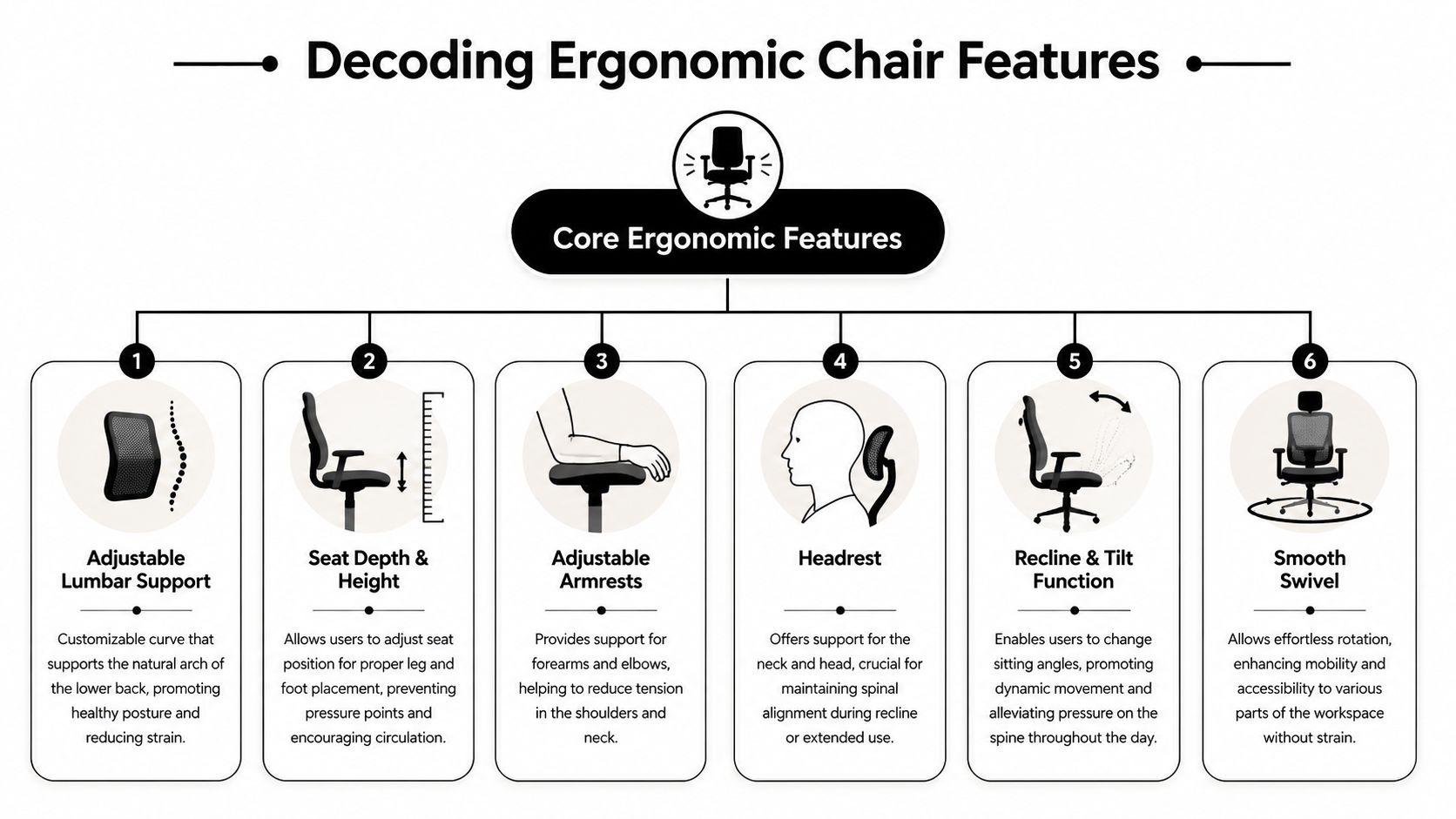
That's where people often get lost. Terms like lumbar support, synchro-tilt, seat depth, and adjustable arms sound technical, but each one solves a very ordinary problem.
The features that affect comfort most
A study in the Journal of Occupational and Environmental Medicine found that employees using mobile ergonomic chairs reported a 17 percent decrease in lower back pain and a 23 percent increase in productivity over a 12-month period (Millers at Work summary). That doesn't mean every ergonomic chair is automatically perfect. It means the right features, used correctly, can make a real difference over time.
Here's how to think about the main adjustments.
Lumbar support
If your lower back feels tired even when you're sitting upright, lumbar support is usually the first place to look. Good lumbar support fills the natural curve of your lower spine instead of leaving that area hanging.
A fixed back can work for some people. Adjustable lumbar is better when more than one person uses the chair, or when your body needs a more specific fit. Our page on office chairs with lumbar support shows what to look for if this is your main concern.
Seat depth and seat height
If the front edge of the seat presses into the back of your knees, the seat is likely too deep. If your feet don't rest comfortably, the height is off.
This is one of the easiest fit issues to miss because many people adapt without realizing it. They perch forward. They tuck one leg under. They keep shifting because circulation never feels right.
Real problems these adjustments solve
- Legs falling asleep: Often caused by poor seat depth or seat height.
- Shoulders creeping upward: Usually a clue that the armrests are too low, too high, or too far apart.
- Neck tension by afternoon: Can come from arm position, monitor height, or lack of upper-body support.
- Feeling locked in one posture: A sign the recline and tilt system isn't encouraging movement.
Armrests, recline, and swivel
Armrests shouldn't force your shoulders up or leave your arms dangling. The best ones support your forearms without making you sit stiffly. If you type a lot, this matters more than many buyers expect.
Recline and tilt are often misunderstood. Leaning back a little can reduce pressure on the body during long sitting sessions, but only if the chair stays supportive while you move. Smooth swivel helps too. Reaching for a file, printer, or side table should not require a twisting motion from the lower back.
For readers who want to pair chair setup with body habits, these tips for improving posture naturally are a useful companion.
A chair should support movement, not trap you in one position.
Matching a Chair to Your Body and Style
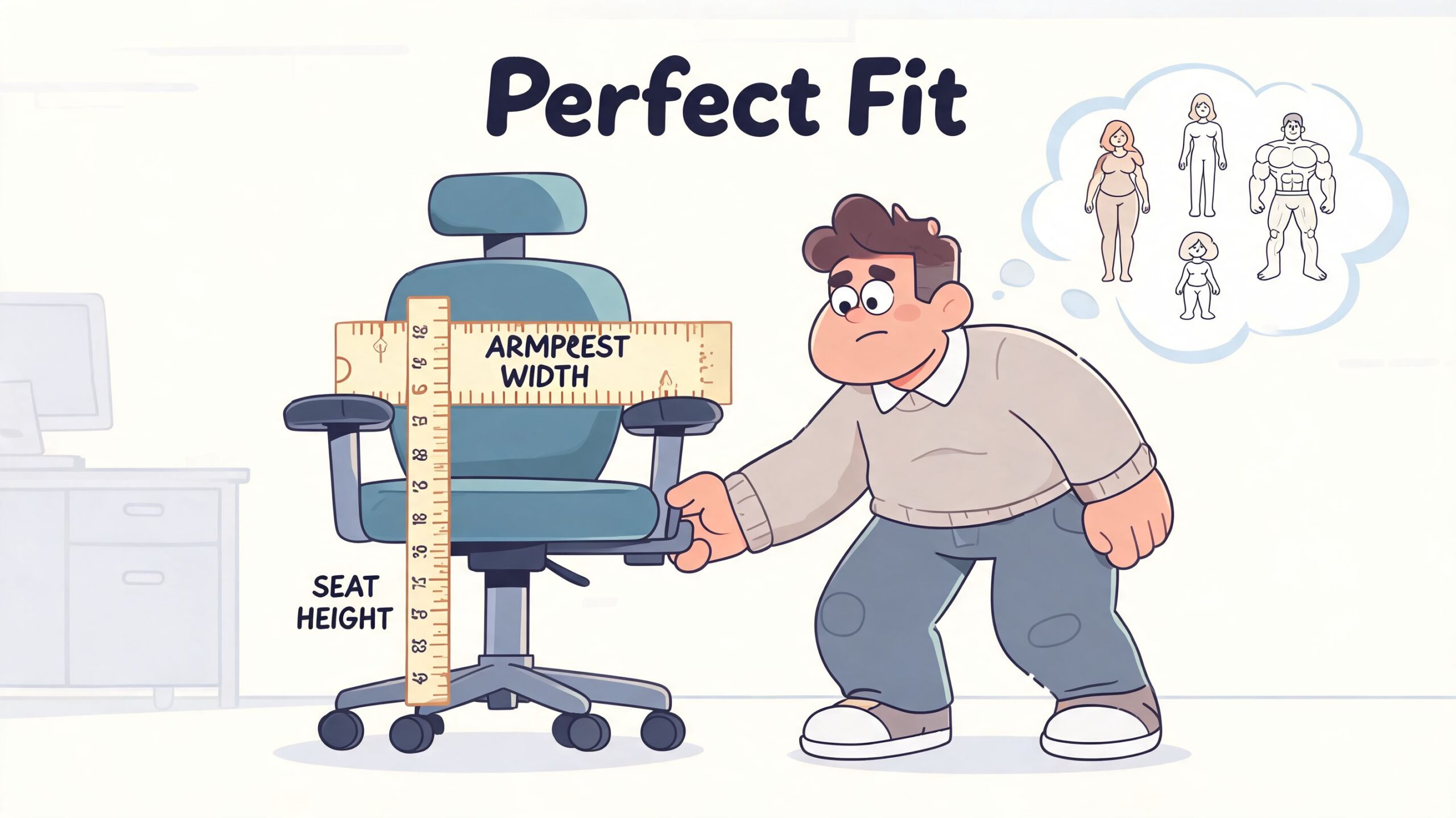
One of the biggest myths in furniture is that office seating is one-size-fits-all. It isn't. The chair that feels great for one person can feel wrong almost immediately for another.
Body size matters. Daily schedule matters. So does the look of the room, especially when your office is part of a bedroom, living room, or multipurpose space.
Three familiar shopper profiles
Take Daniel in Ashland. He's tall, works from home most of the week, and likes to recline while reading reports. For him, base stability matters as much as back comfort. Premium chairs often feature 5-star bases with 27 to 30 inch diameters, which provide more stability than a standard 24-inch base, especially during recline (X-Chair product reference).
Then there's Maya in Medford. She wants her office chair to work beside a reclaimed wood desk and not look like something borrowed from a cubicle farm. She may prefer a warmer fabric or a clean leather-look finish over a highly technical mesh design, even if the chair still needs strong support features.
And we often help shoppers in Grants Pass who want easier movement without a chair that feels slippery or hard to control. That's especially true for seniors, renters protecting floors, and anyone furnishing a smaller home office where every piece has to earn its keep.
How to match size first
A good fit starts with a few practical checks:
- Seat width: You want enough room to sit naturally without feeling squeezed.
- Back height: Taller users often need more upper-back support.
- Base footprint: A wider base can feel steadier, especially if you shift or recline often.
- Ease of entry and exit: Some shoppers need a chair that feels stable the moment they sit down.
If you're measuring your space and existing furniture before buying, our guide on how to measure furniture helps you avoid common fit mistakes.
Choosing the right upholstery
Material changes both feel and appearance.
Mesh works well for people who want a lighter visual look and more airflow. It often fits modern desks and smaller spaces nicely.
Leather or leather-look upholstery gives a more executive appearance. It can pair well with wood desks and traditional rooms, but comfort comes down to the quality of the cushioning and the shape of the seat.
Fabric often feels softer and more residential. In a home office that opens into a living area, fabric can help the chair blend in rather than shout "office."
The best-looking chair is the one you'll still enjoy sitting in at the end of the workday.
Style should follow use
A beautiful chair that doesn't fit your frame will become a frustration. A technically advanced chair that clashes with the room may always feel out of place. The sweet spot is finding one that supports your body and belongs in your home.
That's why testing matters. Sit upright. Lean back. Roll a little. Reach to the side. Your body will tell you quickly whether a chair is right.
Investing in Comfort at Any Budget
People sometimes treat office seating like a minor accessory. In real life, it often gets used more than the sofa. If you work from home, pay bills at a desk, take calls, or manage hobbies from a workstation, your chair becomes part of your daily health routine.
That changes how we think about price. The question isn't only what a chair costs today. It's what value it delivers over years of use.
Why the long view matters
According to Baylor University research, the average office chair has a lifespan of 7 to 8 years. Looking at a purchase across that span makes a durable ergonomic chair easier to evaluate as an investment rather than a short-term expense.
A budget chair may still be the right answer for light use. But if you sit for long stretches, a better mechanism, stronger base, and more adjustable fit often pay off in comfort and less frustration.
What different budgets usually buy
- Entry-level task chairs: Good for occasional desk work, homework, and light household use.
- Mid-range ergonomic chairs: Often the sweet spot for hybrid workers who need adjustability without going fully executive.
- Premium models: Better for long daily sessions, broader body-fit options, and stronger materials.
Not every shopper wants the same thing. Some want the simplest chair that works well. Others want a piece that looks refined beside high-quality furniture and will hold up year after year.
Financing can make a better chair practical
George Gates Jr. built his business in 1946 on Service and Value, and that idea still matters when people are making careful household decisions. Flexible financing is part of that value.
Gates Easy Pay helps make better seating more accessible with $0 down, 6-month interest-free options, and no-credit-needed choices. That can be the difference between settling for a chair you already doubt and choosing one that fits your body from the start.
For budget-conscious shoppers, that flexibility matters. So does being able to compare a practical task chair with stronger brands and better-built options in person, including names many people already know from other areas of the home such as La-Z-Boy, Flexsteel, Ashley, and Beautyrest.
Maintenance Tips to Make Your Chair Last
A good office chair doesn't need complicated care. It does need occasional attention. A few minutes now and then can keep it rolling better, looking cleaner, and feeling more supportive.
The simple routine that helps most
- Clean the casters: Hair, dust, and threads often wrap around the wheels. If rolling feels rough, check there first.
- Wipe the frame and arms: Dirt builds up where hands rest most.
- Vacuum fabric or mesh: This helps remove grit that can settle into the surface.
- Check moving parts: If an adjustment feels loose or uneven, inspect it before it becomes a bigger issue.
Match care to the material
Leather or leather-look surfaces usually do best with gentle cleaning and a soft cloth. Mesh benefits from light vacuuming and spot cleaning. Fabric needs prompt attention if something spills.
Don't forget the floor under the chair. Grit trapped under casters can be just as hard on flooring as the wrong wheel type.
Small maintenance habits protect both the chair and the room around it.
For extra peace of mind, Gates Care Shield adds protection against the kinds of accidents that happen in real homes, including spills and everyday mishaps that can shorten the life of a favorite piece.
Why Shopping Local for Your Chair Matters
Reading specifications online helps. Sitting in the chair tells you much more.
That's especially true with office chairs with wheels, because so much of the experience is physical. You need to feel whether the seat edge hits your legs wrong. You need to notice whether the armrests land naturally. You need to see how the chair rolls and whether the recline feels steady or unsettling.

What a showroom gives you that a product page can't
At a 30,000 sq. ft. showroom in Grants Pass, you can compare chairs side by side. That's valuable if you're choosing between mesh and upholstery, testing different seat heights, or deciding how much support feels right.
It also helps when your office is part of a larger home style. Some shoppers want a chair that blends with traditional wood furniture. Others want something cleaner and more modern. And some are furnishing entire rooms, mixing office seating with handcrafted accents or Unique Finds in reclaimed wood and teak that give a home more personality than a big-box setup ever could.
Local service is part of the product
A chair doesn't feel convenient when it arrives in a box with assembly left to you. Good service includes setup.
That's why White-Glove Delivery matters. Instead of dropping boxes at the curb, a professional team handles delivery, assembly, and in-home placement. The same service mindset extends across the store, including mattress haul-away when needed.
There's another reason local shopping matters. Advice gets more specific. A team serving the Rogue Valley understands the kinds of homes people live in, from hardwood floors near downtown Grants Pass to mixed-use family spaces outside Medford and Central Point.
If supporting community businesses matters to you, our piece on how to support local businesses speaks to why those choices strengthen the places we all call home.
The best chair is the one you've tested
A spec sheet can tell you dimensions. It can't tell you comfort. The most confident buyers are usually the ones who take a seat, make a few adjustments, and trust what they feel.
That's been true since 1946, when George Gates Jr. built a family business around Service and Value. Good furniture advice still works the same way. Listen carefully, ask good questions, and help people choose something that fits their lives.
If you're ready to compare office chairs with wheels in person, visit Gates Home Furnishings in Grants Pass. Our 30,000 sq. ft. showroom serves shoppers from Medford, Ashland, Central Point, and across the Rogue Valley, with friendly help, flexible Gates Easy Pay financing, White-Glove Delivery, and a curated selection that includes everyday comfort and one-of-a-kind Unique Finds. You can also browse our collection online and start narrowing down your options from home.