Biophilic Home Decor: Gates Furniture Guide 2026


A lot of Rogue Valley homeowners already know the feeling, even if they don't know the term. The windows are open in the morning, the light is softer than it was in winter, and suddenly a room feels better with wood, woven texture, a calmer color palette, and a chair angled toward the yard instead of the television. The instinct is simple. Southern Oregon's surroundings are beautiful, and people want more of that feeling indoors.
That instinct now has a name. Biophilic home decor is the practice of shaping a home around the things people tend to respond to in nature, such as daylight, organic materials, texture, views, and forms that feel less rigid. It's not a luxury idea reserved for custom homes. It's a practical way to make everyday spaces feel more settled, restorative, and lived in.
Table of Contents
- Bringing the Outdoors In A Southern Oregon Tradition
- What Is Biophilic Design and Why Does It Matter
- The Core Principles of Biophilic Decor
- Designing a Biophilic Living Room for Your Rogue Valley Home
- Creating Biophilic Sanctuaries in Bedrooms and Dining Rooms
- Bring Your Vision to Life with Gates Home Furnishings
Bringing the Outdoors In A Southern Oregon Tradition
In Grants Pass, Medford, Central Point, and Ashland, many homes share the same challenge. The setting is stunning, but the inside can still feel disconnected from it. A family might have a view of trees, hills, or a garden bed that's thriving in spring, yet the living room still feels flat because the finishes are dark, the furniture placement blocks the window, and the materials don't reflect the natural beauty outside.
That's one reason biophilic home decor has moved well beyond a passing trend. A 2025 report noted that nearly 70% of homeowners now consider natural elements like wood, plants, and daylight “essential” in their living spaces, as described in the Los Angeles Times coverage of biophilic design. People aren't just decorating with a few leafy accessories. They're rethinking what makes a home feel complete.
In Southern Oregon, that often looks less like a dramatic makeover and more like better choices. A reclaimed wood console near the entry. Linen instead of heavy synthetic fabric. A reading chair turned toward the best natural light in the room. A calmer, more grounded style like the one seen in mindfully rustic interiors often fits the region naturally because it echoes what residents already love about the outdoors.
Homes in the Rogue Valley don't need to imitate a forest lodge or a coastal retreat. They just need to feel connected to the place they're in.
That's where many readers get hung up. They assume biophilic design means a complete style change. It doesn't. It means noticing what already feels good in a room, then choosing materials, layout, and light that strengthen that feeling instead of fighting it.
What Is Biophilic Design and Why Does It Matter
Biophilic design comes from the idea of bringing nature into built spaces through natural light, living plants, water, and natural materials. A simple way to think about it is this. Instead of decorating a room first and hoping it feels restful later, biophilic design starts with the conditions that help a room feel calm from the beginning.
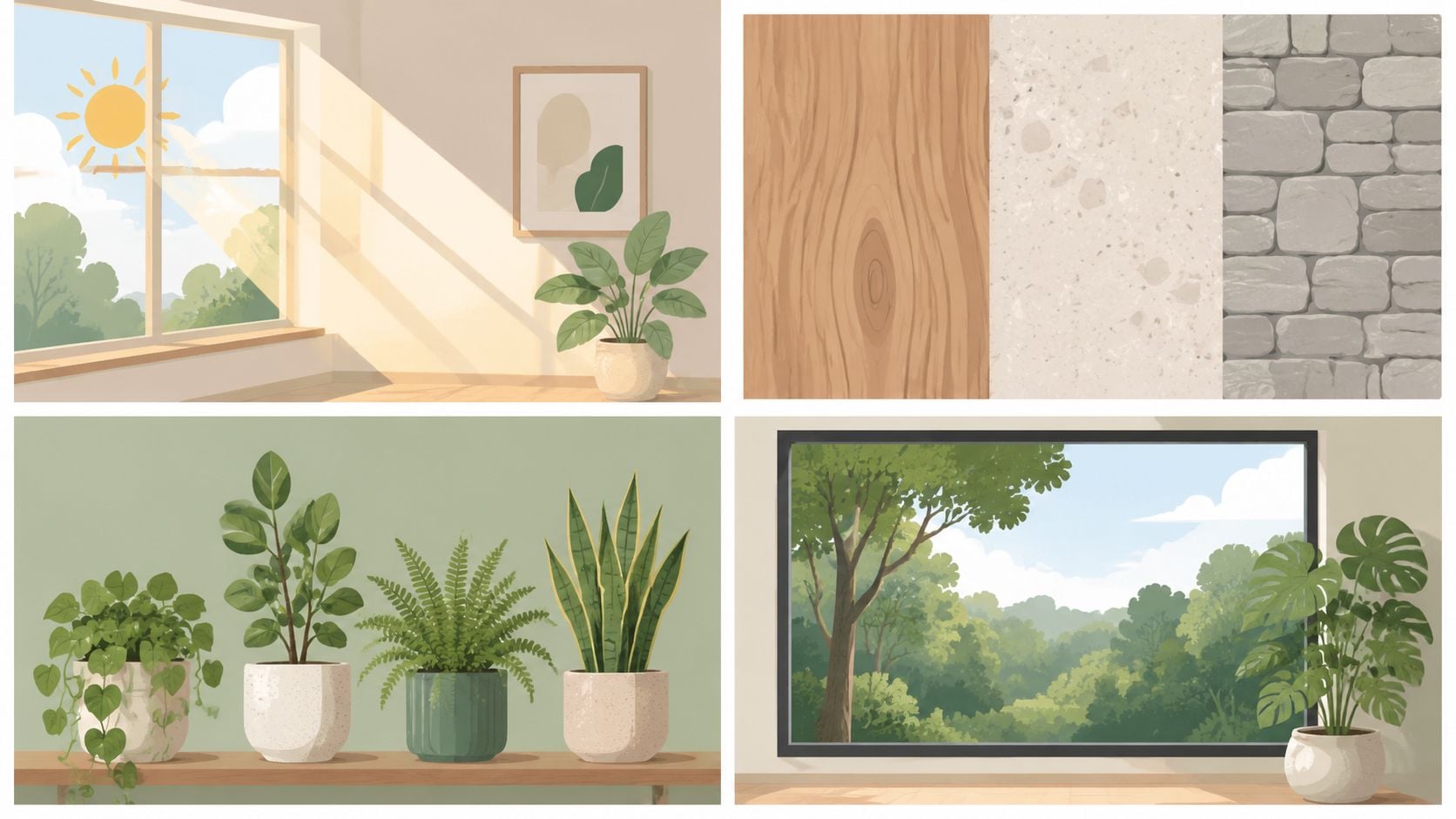
Many people reduce the idea to houseplants. Plants can help, but they're only one part of it. A room can feel biophilic because it has better daylight, softer sightlines, wood grain that reads as authentic, and finishes that don't feel harsh or artificial. For homeowners who want a calmer space, that distinction matters.
Nature, but not only plants
A useful test is to ask what the room gives the body and mind all day long.
- Light to live with: natural light that changes across the day
- Materials that feel grounded: wood, linen, stone, rattan, and other natural textures
- A visual exhale: less glare, less clutter, and less visual stiffness
- Connection outward: a seat, bed, or table that acknowledges a window, yard, or daylight source
Some households also pair biophilic updates with practical energy-efficient home strategies to make daylight work harder without making the room uncomfortable.
Why it matters in everyday life
The appeal isn't only emotional. Terrapin Bright Green's Economics of Biophilia report describes biophilic design as a value signal in real estate, including analyses reporting buyers willing to pay 7% more for homes with excellent landscaping and up to 127% more for properties with a direct waterfront view. Those examples are extreme in one sense, but the lesson is practical. People respond to homes that feel connected to nature.
A calmer interior can also support habits people already want. Better sleep in a less visually busy bedroom. A living room where conversation feels easier. A dining room that feels more welcoming because the materials are warmer and the layout is less cramped.
Readers often ask whether this means choosing a specific style. It doesn't. Biophilic home decor can lean rustic, modern, transitional, or classic. The common thread isn't the label. It's the way the room handles light, texture, and the feeling of being more in sync with the natural world.
For more on the stress-reducing side of design choices, this guide on designing a home to reduce stress is a helpful companion read.
The Core Principles of Biophilic Decor
Some design ideas stay fuzzy because they're too broad. Biophilic home decor gets easier once it's broken into a few working principles that can guide real decisions in a room.
Daylight as a design tool
Natural light does more than brighten surfaces. Biophilic design frameworks consistently treat daylight, airflow, and visual connection to nature as core elements, and they recommend lighter-toned finishes and low-gloss wood veneers so daylight can reach deeper into a room, as outlined in this biophilic design overview.
That idea helps solve a common Rogue Valley problem. A room may have decent windows but still feel dim because bulky furniture sits in front of the opening, heavy drapes absorb light, or dark finishes stop the light at the perimeter.
A few practical adjustments often help:
- Use lighter surfaces near windows: soft wall colors and lower-gloss finishes bounce light more gently.
- Choose translucent window treatments: they preserve privacy without shutting the day out.
- Place daily-use seating near a view: reading chairs, sofas, and beds benefit most when people experience the daylight.
Practical rule: If the best window in the room is behind a tall piece of furniture, the room is working against itself.
Natural materials with staying power
Natural materials matter because they age in a way many synthetic finishes don't. Wood develops character. Woven elements soften a room. Stone and linen add visual relief without adding clutter.
A common mistake homeowners make is to do too much. They scatter small nature-themed accessories everywhere instead of choosing a few meaningful materials. A better approach is to focus on one or two strong elements. A reclaimed wood table, a teak accent piece, or woven lighting can often do more than a shelf full of decorative objects. For readers exploring fixture inspiration, Golden Lighting's rope and rattan ideas show how natural textures can add warmth overhead without feeling heavy.
Texture, shape, and visual calm
A room doesn't have to be leafy to feel alive. Rounded forms, botanical patterns used sparingly, and materials with visible grain or weave all contribute to the biophilic effect.
This is especially helpful for anyone unsure about color. Instead of adding more shades, it's often smarter to add more texture. A room with a thoughtful palette of earthy neutrals, wood tones, and woven surfaces usually feels richer than a room with many competing colors. Readers refining that balance may also enjoy this guide to the perfect color palette.
Here's a simple way to judge the room:
| Element | Feels less biophilic | Feels more biophilic |
|---|---|---|
| Light | harsh glare or blocked windows | soft daylight spread across the room |
| Material | slick, overly shiny surfaces | wood grain, woven texture, matte finishes |
| Shape | rigid, boxy repetition | some curved or softened forms |
| Decor | many small accessories | fewer pieces with stronger natural character |
Designing a Biophilic Living Room for Your Rogue Valley Home
The living room is usually the best place to start because it does the most work. It hosts conversation, quiet evenings, visiting family, and the daily routines that make a home feel settled. When this room feels calmer, the whole house tends to feel more put together.
Start with the anchor piece
Instead of starting with small decor, start with the largest visual weight in the room. In most homes, that's the sofa or sectional.
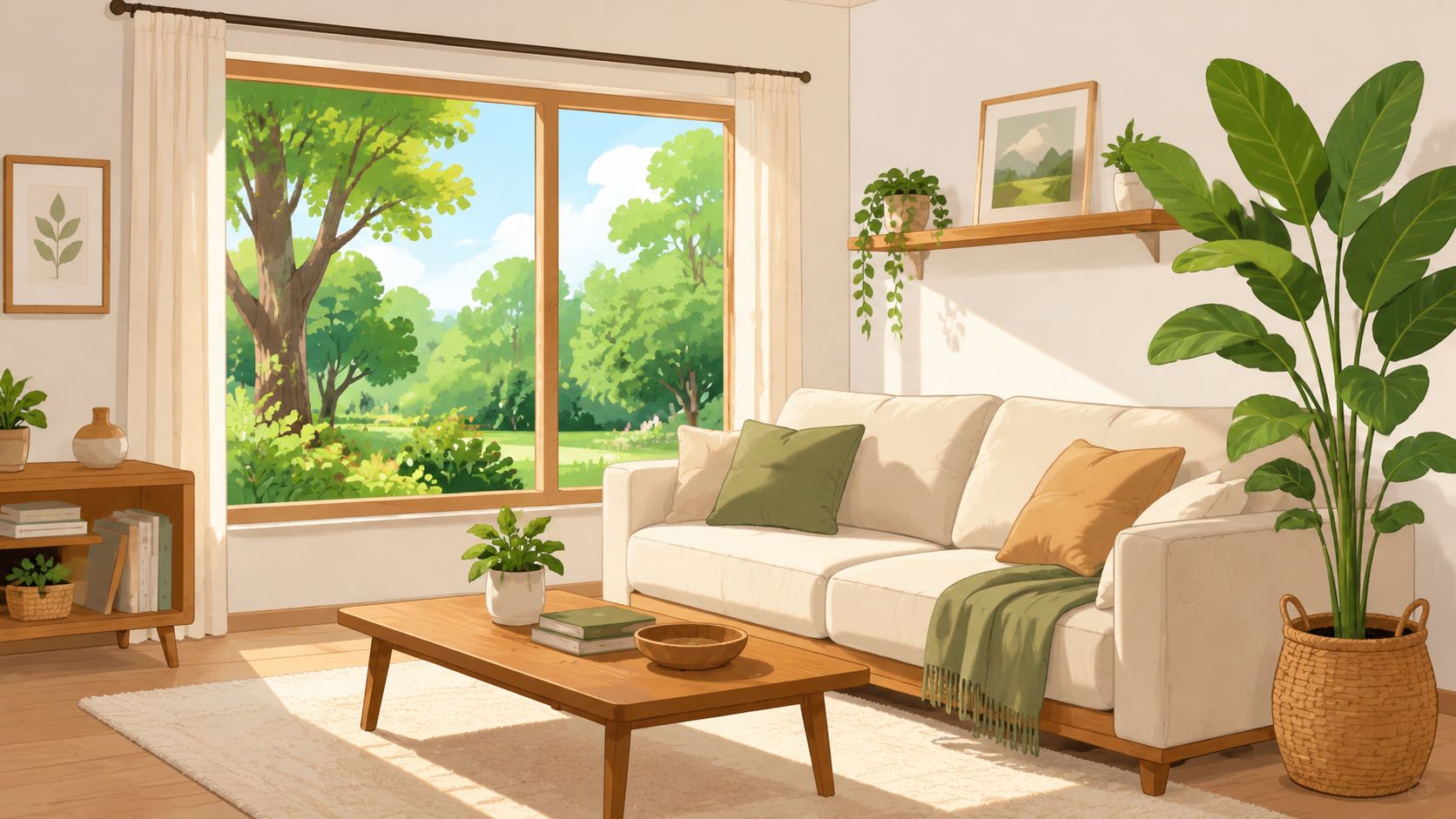
The best biophilic living rooms usually position the main seating to acknowledge a window, a fireplace with natural material around it, or a view into the yard. That doesn't mean every seat has to face outdoors. It means the room should allow people to notice daylight and the surrounding environment instead of turning completely inward.
A comfortable upholstered piece in a neutral, earthy fabric often pairs well with a solid wood coffee table or console. Durable upholstery from established collections such as La-Z-Boy, Flexsteel, or Ashley can support the softer side of biophilic design without becoming precious or hard to live with.
Build around fewer, better materials
A sustainable approach often works best here. Recent design coverage notes that a few anchor pieces in solid wood, teak, or rattan can create the effect more effectively than a room full of fragile accessories, especially for budget-conscious households, as discussed in this piece on durable biophilic interiors.
That idea fits real life in Southern Oregon. Dust, summer heat, pets, frequent guests, and everyday wear all reward materials that hold up well.
A practical living room checklist looks like this:
- Anchor with wood: a reclaimed wood coffee table, media console, or end table gives the room a natural center.
- Layer soft texture: linen-look upholstery, a woven rug, or a nubby throw keeps the room from feeling flat.
- Use plants selectively: if plant care is realistic, a few well-placed choices are enough. For smaller, easier-care options, this list of best indoor succulents can help narrow the field.
- Protect the light path: avoid tall shelving that cuts across the strongest daylight source.
A living room feels more restful when each major piece has room to breathe. Biophilic design isn't about filling every corner. It's about choosing what deserves to stay in view.
For homeowners trying to improve both comfort and atmosphere, this article on putting the living room in the best light offers a useful next step.
In Grants Pass especially, where homes can range from bright open layouts to darker interiors tucked under mature trees, the smartest move is often restraint. One strong wood piece. One comfortable sofa. One or two textural accents. The room doesn't need to shout “nature.” It only needs to feel more aligned with it.
Creating Biophilic Sanctuaries in Bedrooms and Dining Rooms
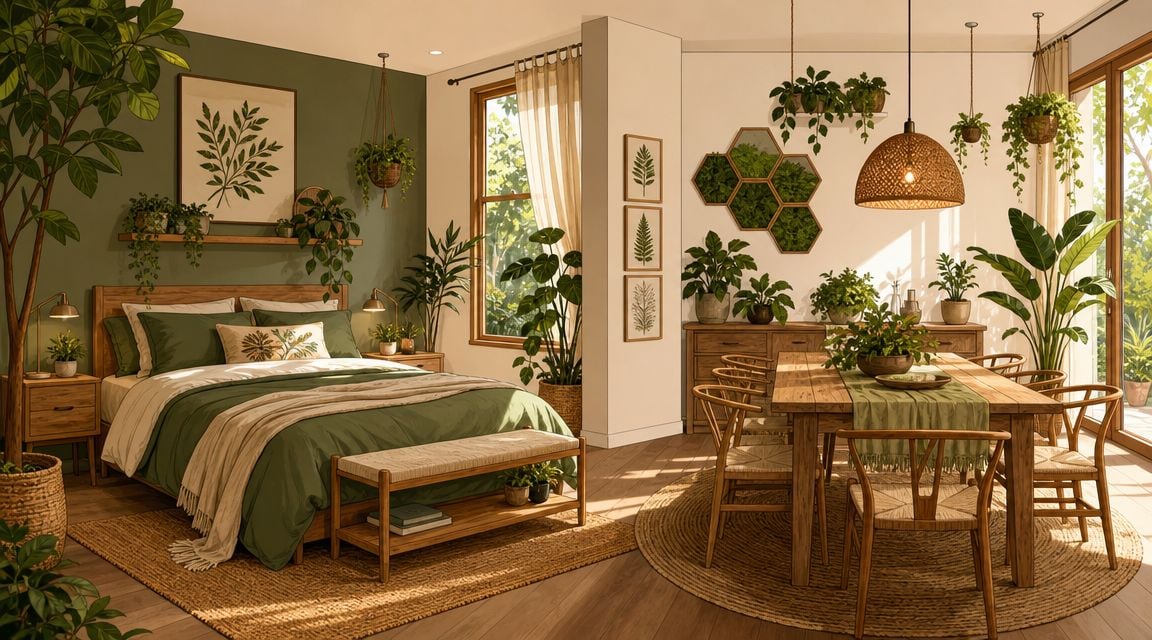
Bedrooms and dining rooms ask for a different touch. One needs to slow the body down. The other should bring people together without feeling stiff or overdesigned. In both rooms, biophilic home decor works best when the choices are tactile, steady, and easy to live with.
A bedroom that feels quieter
A good biophilic bedroom doesn't need much decoration. It needs fewer harsh cues.
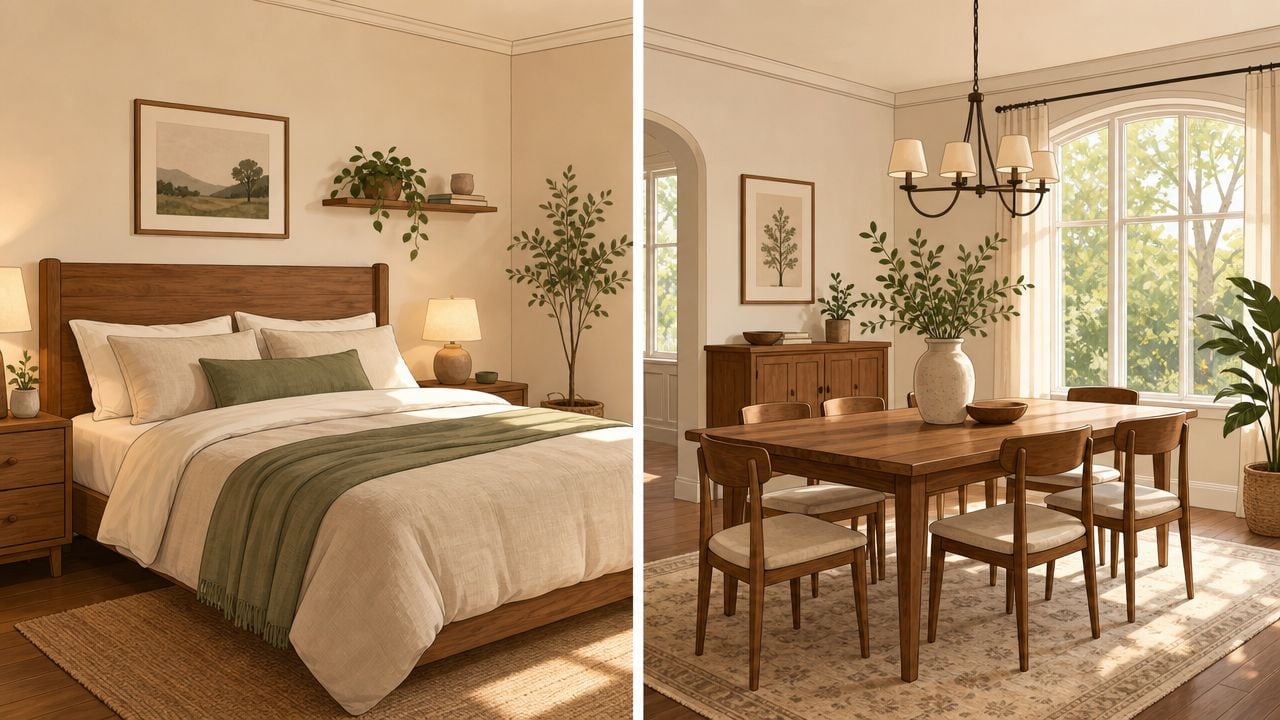
Start with the bed frame and bedding. Wood tones usually feel warmer and more grounded than glossy or heavily ornamental finishes. Natural-fiber textiles, softer lampshades, and a clearer path around the bed can all make the room feel less busy. Supportive mattresses from trusted lines such as Beautyrest also fit this approach because comfort is part of the environment, not separate from it.
Low-light bedrooms are common in some homes, especially when mature trees or neighboring structures reduce direct sun. That's where people often give up too soon. Yet biophilic design isn't just about plants and windows. Textured natural materials, curved furniture, and botanical art can provide much of the same aesthetic and wellness value in rentals or rooms with limited daylight, as described in this Houzz article on stress-reducing biophilic design.
A dining room that feels grounded
Dining rooms respond especially well to a single substantial piece. A sturdy wood table often does more for the room than several decorative accents because it creates a sense of permanence and gathering.
Consider these choices:
- Let the table lead: a solid wood surface brings weight and warmth to the room.
- Soften the edges around it: curved chairs or a rounded light fixture can balance a rectangular table.
- Keep the center simple: a bowl, branches, or a small seasonal arrangement usually feels better than a crowded centerpiece.
For renters, smaller homes, or anyone furnishing one room at a time, reclaimed pieces can help add character without requiring a full redesign. This look at reclaimed wood furniture near me shows why one well-chosen piece can carry so much of the room's identity.
When daylight is limited, texture becomes the stand-in for nature. Wood grain, woven seating, and botanical artwork can do a lot of the lifting.
The larger lesson is encouraging. A home doesn't need grand architecture to feel biophilic. It needs thoughtful choices that support rest, connection, and a more natural rhythm from room to room.
Bring Your Vision to Life with Gates Home Furnishings
For Southern Oregon households, biophilic home decor works best when it stays practical. The goal isn't to chase a showroom-perfect look. It's to create rooms that feel calmer, wear well, and reflect the outdoor beauty people already love outside their doors.
That's why Gates Home Furnishings remains such a trusted resource in Grants Pass and across the Rogue Valley. Since 1946, the business has carried forward George Gates' original promise of Service and Value, helping local families find furniture that feels right in daily life, not just under bright store lighting. The 30,000 sq. ft. showroom in Grants Pass gives shoppers room to test comfort, compare textures, and see how wood, upholstery, and scale work together in person.
There's also a practical side that matters just as much as style. Shoppers can explore Unique Finds in reclaimed wood and teak for one-of-a-kind character, along with familiar names like La-Z-Boy, Flexsteel, Ashley, and Beautyrest. Gates Easy Pay includes $0 down, 6-month interest-free, and no-credit-needed options, which makes it easier to buy durable pieces instead of settling for short-term fixes. And with White-Glove Delivery, the team handles professional assembly and mattress haul-away rather than leaving boxes at the door.
For homeowners and renters from Grants Pass to Medford, Ashland, and the wider Southern Oregon region, that combination of experience, comfort, and local care still matters.
Visit Gates Home Furnishings to explore biophilic-friendly furniture, test comfort in the Grants Pass showroom, or browse the collection online from anywhere in the Rogue Valley.